Why Choosing a Fence or Paver Contractor in Florida Is Harder Than It Looks
Most homeowners pick a fence or paver contractor the same way: three quotes, the middle price, and a good feeling about the person who showed up. That works often enough that people keep doing it. When it fails, it fails in ways that are expensive to undo: posts that lean after the first summer storm, a patio that settles into ruts because the base was never compacted, a fence two feet over the property line, or a lien on your house from a supplier the contractor never paid.
Florida adds a twist that catches many buyers off guard. For fences and patio pavers, there is no statewide contractor license the way there is for roofing, pools or general contracting. That means "are you licensed?" is not the clear yes-or-no question people expect. This guide explains what the law actually requires, what to verify instead, which questions reveal how a crew builds, and the red flags that should end the conversation.
What Florida Law Says About Fence and Paver Contractor Licenses
Florida licenses construction contractors under Chapter 489 of the Florida Statutes, with state categories such as general, building, residential, roofing and pool contractors. Fence installation and patio paver installation are not their own state categories. Section 489.117(4) goes further and limits what cities and counties can require.
- Job scopes that cannot be licensed locally: the statute lists work that does not substantially match a state category, including driveway installation, decorative stone and tile installation, painting, flooring and handyman services, and says local governments may not require a license for those scopes.
- Fence work is a special case: a local government may keep licensing fence installation and erection only if it already imposed that requirement before January 1, 2021. Some counties have a fence competency license, many do not.
- Permits are separate from licenses: even where no license is required, most cities and counties still require a permit for a new fence, and many require one for paver work in some situations.
The practical takeaway: ask the contractor which licenses or registrations apply in your city or county, then check that answer with the local building or licensing office. A contractor who says "Florida doesn't require anything" may be right about the state and wrong about your county. Our guide to fence permits in Florida walks through the permit side, and our paver patio permit guide covers hardscape.
The Five Things to Verify Before You Sign
Because a state license number is not available for most fence and paver work, verification shifts to things anyone can check online in a few minutes. Do this for every bidder, including the cheapest.
- The business is active: look up the company on Sunbiz, the Florida Division of Corporations site. Confirm the entity is active and that the name on the quote matches the name on the record.
- Local business tax receipt: Florida cities and counties issue local business tax receipts under Chapter 205. It is not a skills test, but a company that never registered locally is a warning sign.
- Any local fence license: if your county or city licenses fence work, ask for the number and confirm it with that office.
- General liability insurance: ask for a certificate of insurance sent directly from the insurance agent to you, not a PDF forwarded by the salesperson. Check the dates and the coverage limits.
- Workers' compensation coverage or exemption: Florida's construction industry rules generally require workers' comp once a business has one employee, and corporate officers can file an exemption. The Florida Division of Workers' Compensation has a public proof-of-coverage search. If an uninsured worker is hurt on your property, the problem can become yours.
Questions That Reveal How a Paver Crew Builds

A paver patio is a base with a decorative surface on top. The surface is what you see on day one. The base is what you see in year five. In Central Florida, with sandy soil, a high water table in many neighborhoods and 50 to 60 inches of rain a year, base work is where good and bad installs separate. Ask every paver bidder these questions and listen for specific answers.
- How deep is the base? The Interlocking Concrete Pavement Institute guidance calls for a minimum of 4 to 6 inches of compacted crushed stone for pedestrian areas such as patios and walkways, and more for driveways. A bidder who cannot give a number for your project is guessing.
- How is it compacted? The right answer involves a plate compactor and compacting in lifts, not one pass over a thick layer.
- What happens at the edges? Pavers need an edge restraint so the field cannot spread. Ask what restraint they use and how it is anchored.
- Where does the water go? Ask about slope away from the house and where runoff will discharge, especially next to pool decks and screen enclosures.
- What joint sand and sealer? Polymeric sand and sealing are maintenance decisions you should understand before the job starts. Our guides to polymeric sand in Florida and sealing pavers explain the trade-offs.
At KS Solutions, our brick paver installation quotes spell out base depth, compaction and edge restraint line by line, so you can compare them against any other bid.
(321) 353-7445Get Immediate Service
Questions That Reveal How a Fence Crew Builds
A fence looks finished the day it goes in, which is why shortcuts are easy to hide. The questions that matter are about what is underground and what holds the panels in a storm.
- How deep are the posts and how are they set? For a 6-foot fence in a hurricane-prone area, installation standards commonly call for concrete footings around 36 inches deep. Shallow posts are the most common cause of fences that lean or fall in the first big wind.
- What is the post spacing and what are the posts made of? Ask whether vinyl posts are reinforced, and whether wood posts are rated for ground contact.
- Who locates the property line? A good contractor will ask for your survey and will not guess. Our guide to fence property line rules in Florida explains why that matters.
- Who calls 811? Florida law requires anyone digging to contact Sunshine 811 before excavating so buried utilities are marked. The contractor should handle the ticket and wait for the marks.
- Is the fence part of a pool barrier? If so, height, gate hardware and gaps have to meet the pool barrier rules, covered in our Florida pool fence requirements guide.
For storm performance specifically, see our guide to a hurricane-rated fence in Florida. Our fence installation service lists post depth and spacing on every quote.
How to Compare Quotes Line by Line
Three quotes are only useful if they describe the same project. In our experience, a large price gap between bids usually means the scopes differ, not that one company is much more efficient. Put the quotes side by side and check each of these lines:
- Measurements: square feet of pavers or linear feet of fence, plus the number and width of gates.
- Materials by name: paver brand and style, fence material, post size and hardware, not just "vinyl privacy."
- Site work: removal of old fence or concrete, grading, sod removal and haul-away.
- Base and footing specs: base depth and compaction for pavers, post depth and concrete for fences.
- Permits and HOA: who pulls the permit, who submits the HOA application and whether the fees are included. Our HOA fence rules guide lists what associations usually ask for.
- Warranty: separate the manufacturer warranty on the material from the contractor's warranty on workmanship, and get both in writing.
To check whether a number is in a normal range, compare it with our fence cost by material and brick paver cost guides.
Contracts, Deposits and Lien Protection
The contract protects you only if it says what was promised. It should include the full scope from the quote, the material specs, the start window and estimated duration, the payment schedule, and what happens if the job finds something unexpected, like buried concrete or tree roots.
Florida's Construction Lien Law, Chapter 713, lets unpaid subcontractors and suppliers place a lien on the property they improved, even if you paid your contractor in full. For larger jobs, typically those over $2,500, a Notice of Commencement is generally recorded with the county, and you may receive a Notice to Owner from suppliers. Before final payment, ask for a final payment affidavit and lien releases from anyone who sent you a notice.
On deposits, a moderate deposit tied to ordering materials is normal. A large cash deposit with no start date, or pressure to pay in full before work begins, is not.
Red Flags That Should End the Conversation
- Cash only, or payment to a personal name: it removes your paper trail and often signals a business that is not registered.
- "You don't need a permit": said without checking your address. If a permit was required and not pulled, the fence may have to come down.
- No written scope: a price on a business card or a text message is not a quote.
- Storm chasing: door-to-door offers right after a hurricane, with out-of-area plates and urgency to sign the same day.
- Insurance that cannot be verified: a certificate that the insurer will not confirm is worth nothing.
- A price far below every other bid: the savings usually come out of the base, the post footings or the cleanup.
Local Knowledge Matters in Central Florida
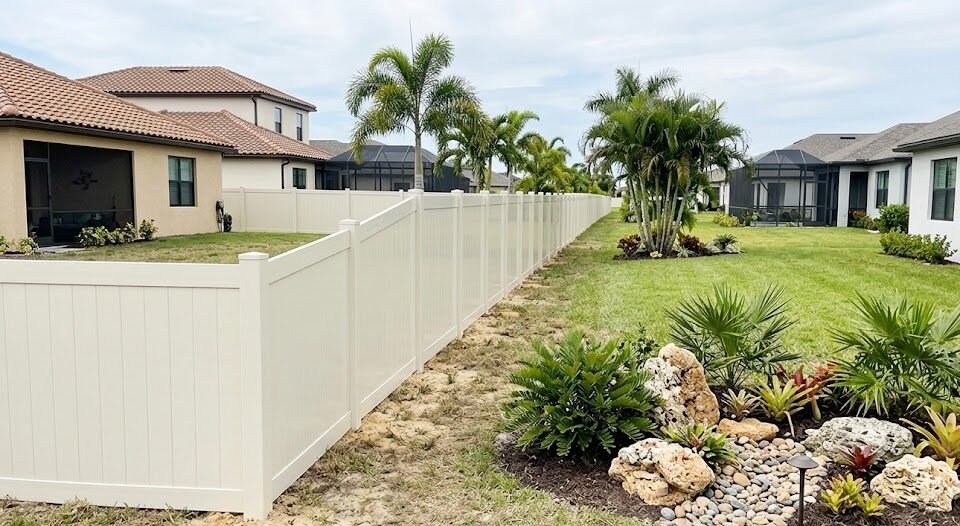
Permit rules, HOA review times and soil conditions vary a lot across Central Florida. A contractor who works your area every week already knows how the local building office handles fence permits, which neighborhoods have strict HOA design boards, and where the water table makes base prep harder. We serve homeowners across the region, including pavers and fences in Orlando, Lakeland and Kissimmee.
When you are ready to compare, KS Solutions provides written quotes with measurements, materials, base and footing specs, permit handling and warranty terms, so you can hold every other bid to the same standard.