Why Sealing Is Not Optional on a Florida Paver Deck
A sealed paver and an unsealed paver start out looking the same and end up looking nothing alike. Sealer does four concrete jobs on a Florida surface. It shields the pigment from ultraviolet light, which is what fades an unsealed driveway from warm terracotta to a washed-out gray over a few brutal summers. It creates a barrier that lets you lift oil, rust, leaf tannin, and barbecue grease off the surface before they stain into the pore. It binds the jointing sand so it resists washout and weed growth. And on the right product it deepens the color so the pavers look freshly installed.
None of that is cosmetic vanity in this climate. Florida delivers intense year-round sun, a wet season that dumps several inches of rain a month, and humidity that hovers around three-quarters saturation, and all three attack an unsealed paver. Sealing is the maintenance step that decides whether a deck looks five years old or fifteen at the same age. It is the finish that protects everything underneath it, which is why we treat it as part of the job on every KS Solutions brick paver installation, not an upsell after the fact.
Wait Before You Seal: The Efflorescence Window on New Pavers
The most expensive sealing mistake in Florida is sealing too soon. New concrete pavers release efflorescence, a natural whitish haze of mineral salts that works its way to the surface in the weeks after installation. If you seal over it, you trap that haze under the coating permanently, and the only fix is stripping the sealer and starting over.
So new pavers need a curing window before the first seal. Plan on a minimum of 60 days in the summer, closer to 90 days if the deck went down between November and February when the cure runs slower. During that window the goal is actually to get the pavers wet, because rain and rinsing pull the efflorescence to the surface faster where it can be cleaned off. Before sealing, hose the surface down well, let it dry a full 48 hours, and inspect for any remaining haze. Only seal a clean, dry, fully cured surface. Rushing this step to lock in the look of a new install is exactly how people end up with a cloudy deck they have to redo.
How Often You Actually Have to Reseal in Florida
This is where Florida rewrites the label. A sealer can might promise five years, and in a mild inland climate it might deliver. In Florida, the combination of ultraviolet intensity, rainfall volume, and sustained humidity creates the most aggressive sealer-degradation conditions in the continental United States, and the real-world schedule is shorter.
Plan on resealing most surfaces every 2 to 3 years. The exact interval depends on exposure, and the pattern is consistent.
- High-gloss and wet-look finishes: The shortest interval, often every 18 months to 2 years, because the film-forming coating that creates the shine is also the part UV breaks down first.
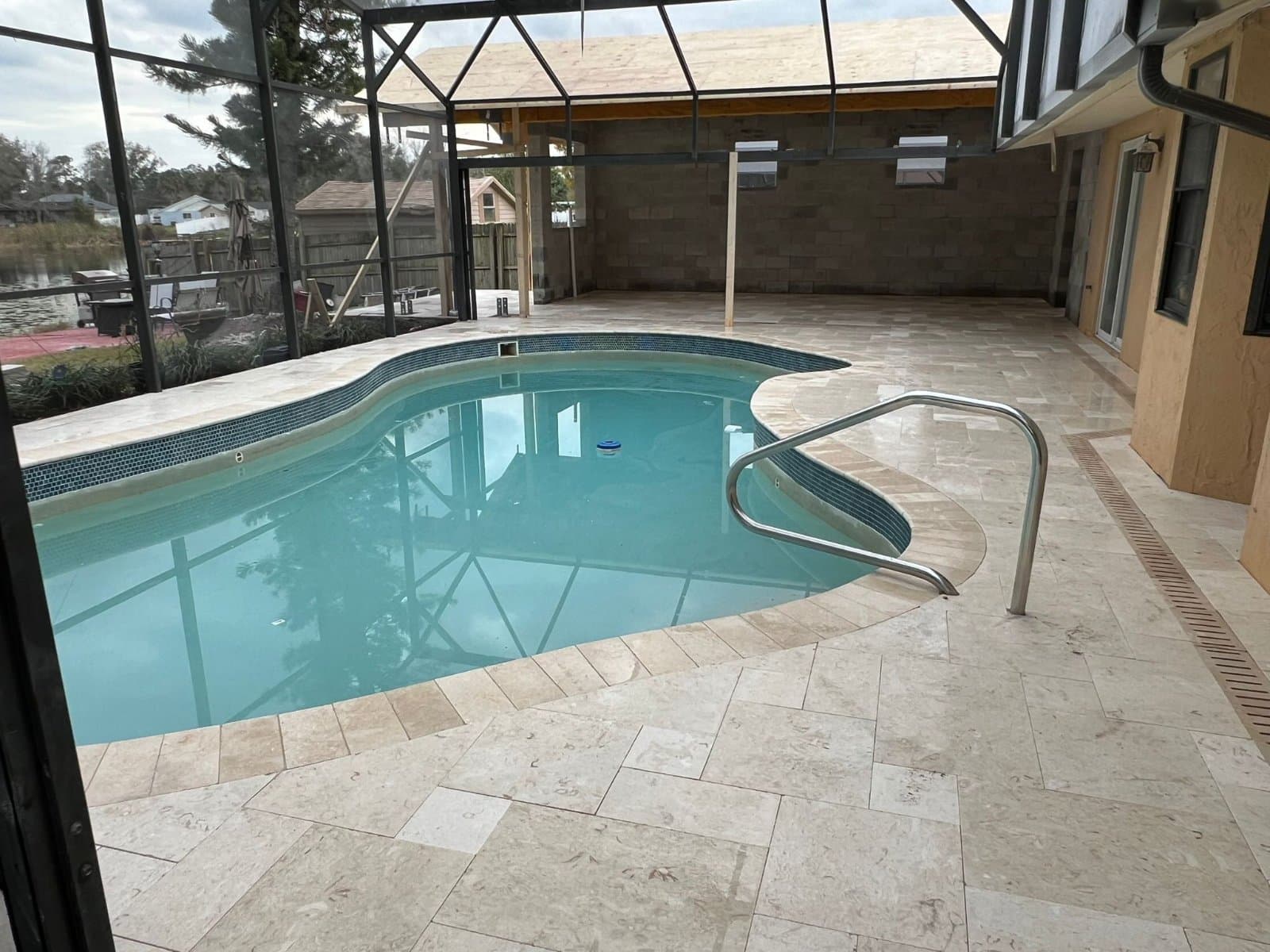
- Driveways and pool decks: Toward the 2-year end, because a driveway carries constant traffic and tire heat, and a pool deck bakes in full sun while sprinklers and splash-out keep it wet.
- Shaded patios and matte penetrating sealers: The longest interval, sometimes 3 to 5 years, because a penetrating sealer sits in the pore rather than on the surface and a shaded area escapes the worst UV.
The tell that it is time is easy to read: water stops beading and starts soaking in, the color looks dull and thirsty, and the surface loses its sheen. When you see that, the coating is spent and the pavers are exposed again. Resealing on schedule is far cheaper than letting the surface fade, stain, and lose its joint sand, which is the slow damage an unsealed deck takes in this state.
Wet-Look Versus Matte: Which Finish for Florida
The finish is a real decision, not just a look. A wet-look or high-gloss sealer produces the deepest, richest color and the maximum ultraviolet lock, and it makes a paver look permanently freshly rinsed. The trade-offs are that it costs a little more, it needs the most frequent resealing, and it leaves a smoother, slicker surface, which matters around a pool where bare feet meet wet stone.
A matte or natural-finish sealer protects just as well against stains and UV but keeps the paver looking close to its dry, natural state, with far less sheen and a subtler, less slippery surface. For a pool deck, many Florida homeowners choose matte specifically for traction and to avoid glare off a glossy surface in full sun. For a front entry or a driveway where curb appeal and deep color are the point, wet-look wins. There is no universally right answer, only the right match to the surface and how it is used, a choice we walk through on a pool deck paver installation where safety and heat both weigh in.
(321) 353-7445Get Immediate Service
Water-Based Versus Solvent-Based: Only One Belongs in Florida
This one is nearly settled for Florida. Solvent-based sealers are durable and have their place in dry, low-humidity climates, but in a state where humidity averages around 74 percent year-round and afternoon storms are a daily event for half the year, they cause more problems than they solve. A solvent-based film can trap moisture under the coating, and trapped moisture is the number one cause of the white, cloudy finish that ruins thousands of paver-sealing jobs across Central Florida every year.
Water-based sealer is the right default here. It breathes, so it handles humidity and does not trap moisture underneath. It tolerates a slightly damp surface, which is a real advantage in a climate where nothing stays bone dry for long. It has a milder odor, it is easier to apply evenly, and it lasts just as long as the solvent alternative in this environment. If a contractor is proposing a solvent-based product for an outdoor Florida deck, that alone is a reason to ask why.
What Paver Sealing Costs in Florida in 2026
Professional paver sealing in Florida generally runs about $1.25 to $3.50 per square foot in 2026, with the position in that range set by the quality of the sealer, the condition of the pavers, whether the joints need re-sanding first, and the finish chosen. Wet-look and high-gloss finishes require extra passes and more product, typically adding around $0.10 to $0.20 per square foot over a natural or matte finish.
Be skeptical of the bargain quote. A price near $0.75 to $0.99 per square foot almost always means a low-quality sealer that fails early and has to be redone, which makes the true annual cost higher than a proper job that lasts its full 2 to 3 years. The honest way to compare quotes is by cost per year of protection, not by the sticker, because a cheap seal that dies in a single Florida summer is the most expensive one you can buy. Sealing cost also travels with the surface it protects, which is why we fold it into the full picture in our guide to brick paver cost in Florida.
The Prep That Decides Whether the Seal Lasts
Sealer is only as good as the surface it goes onto, and prep is where a lasting seal is actually won.
- Clean thoroughly: The pavers have to be free of dirt, algae, oil, and old failed sealer. Anything left on the surface gets locked under the new coat.
- Re-sand the joints: Sealing binds the joint sand, so the joints should be filled and, on most jobs, fresh polymeric sand installed before sealing. A guide to that jointing step is in our breakdown of polymeric sand in Florida.
- Dry completely: After cleaning, the surface needs a dry window, generally 48 hours, so no moisture is trapped when the sealer goes down.
- Watch the weather: Seal in a dry stretch, not ahead of an afternoon storm, and avoid the hottest part of the day when the product can flash off before it penetrates.
- Match product to paver: Travertine, clay brick, and concrete pavers each take sealer differently, so the product should suit the stone, not just the finish you want.
Skip the prep and even the best sealer fails early, which is how a surface ends up needing a reseal a year in instead of three. Doing it right the first time is the entire difference between a schedule you can plan around and a redo you did not budget for.
Sealing as the Last Step of a Good Install
The right order for a Florida paver surface runs base first, paver and color second, jointing third, and sealing last, with each step protecting the one before it. A deck built on a compacted base with proper edge restraint, jointed with quality polymeric sand, and finished with the correct water-based sealer on the correct schedule is the one that still looks new when its neighbors look tired.
KS Solutions installs and maintains pavers, driveways, pool decks, fencing, and turf across Central Florida, including Lakeland, Winter Haven, and Orlando, and we treat sealing as a specified step with a real schedule, not an afterthought. If you are choosing a surface or planning a deck, our guide to pool deck pavers in Florida covers the material and color decisions that also change how a sealer looks and lasts, and you can reach out any time for a free on-site assessment.