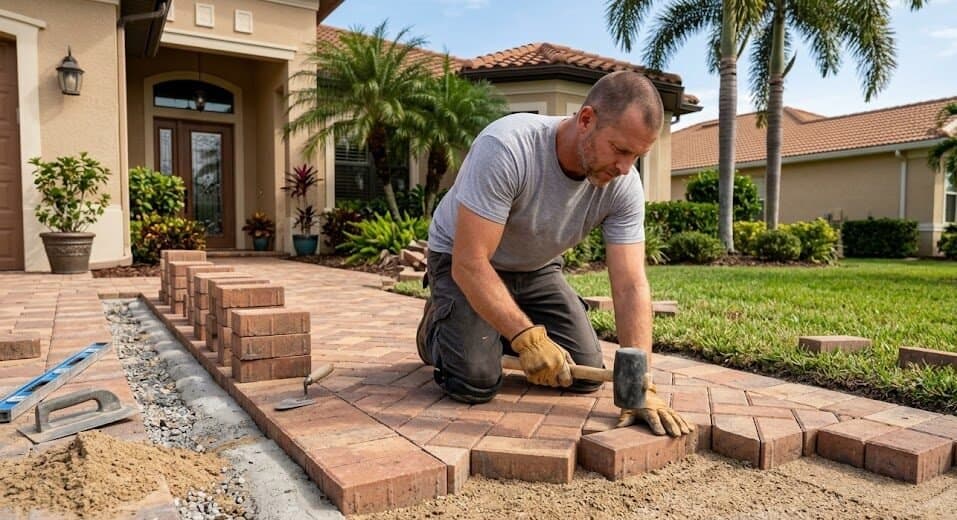
A Permeable Paver Is Not a Paver Style. It Is a Drainage Structure.
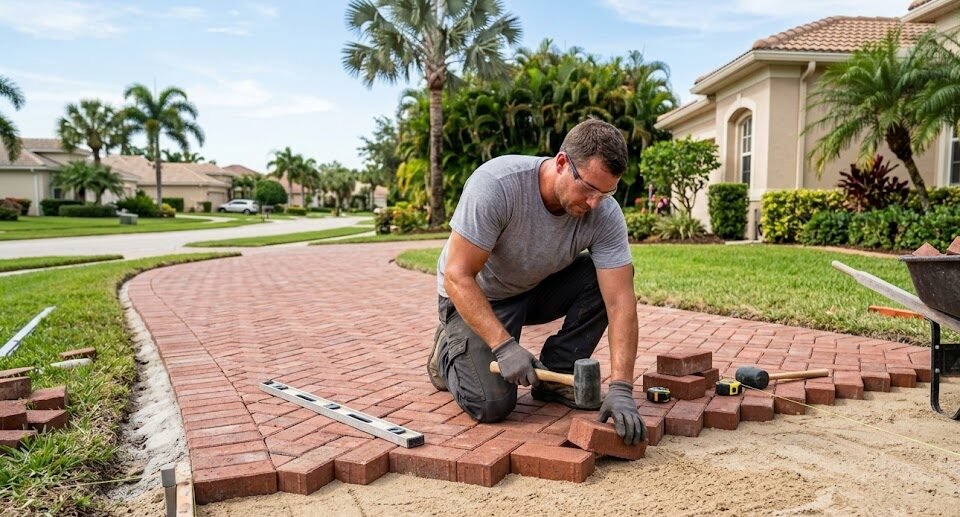
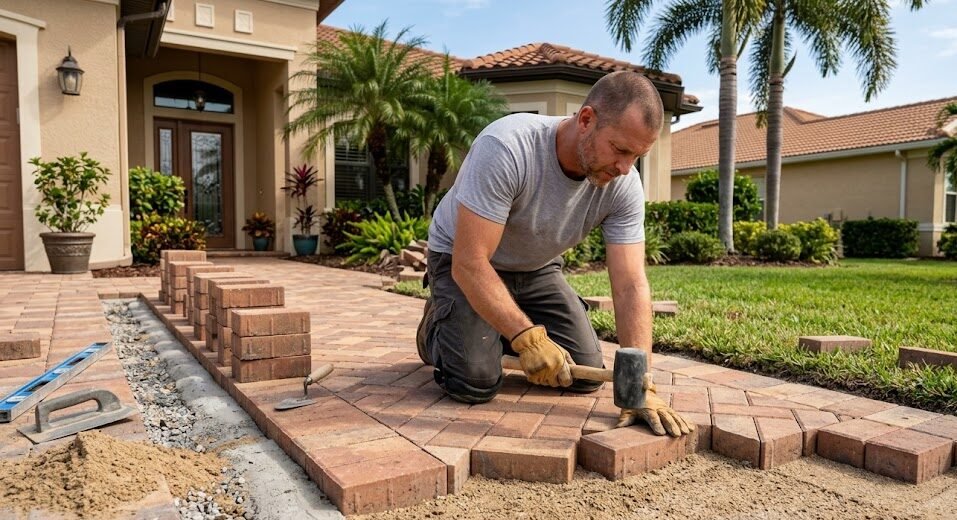
Almost everyone who calls us about permeable pavers is describing a look. They saw a driveway with wider joints filled with small stone instead of sand, and they want to know what those cost compared to regular pavers.
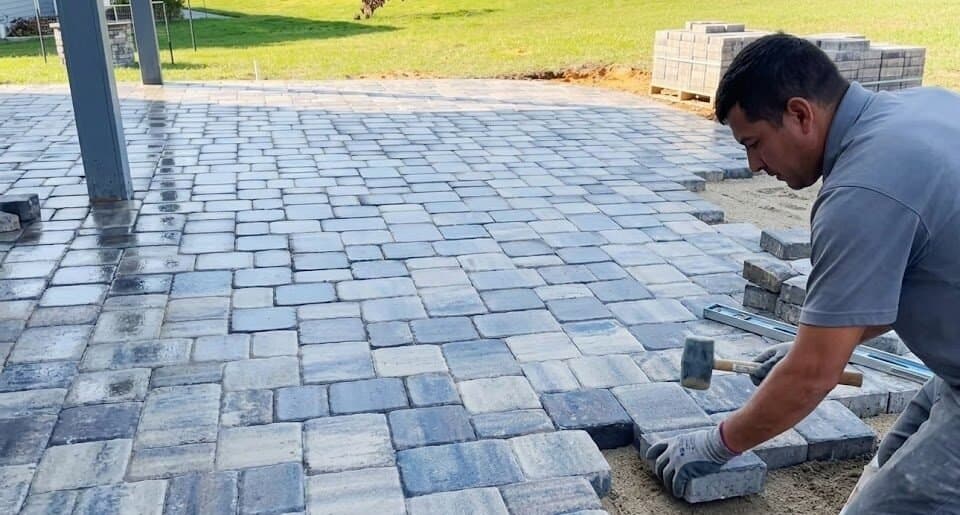
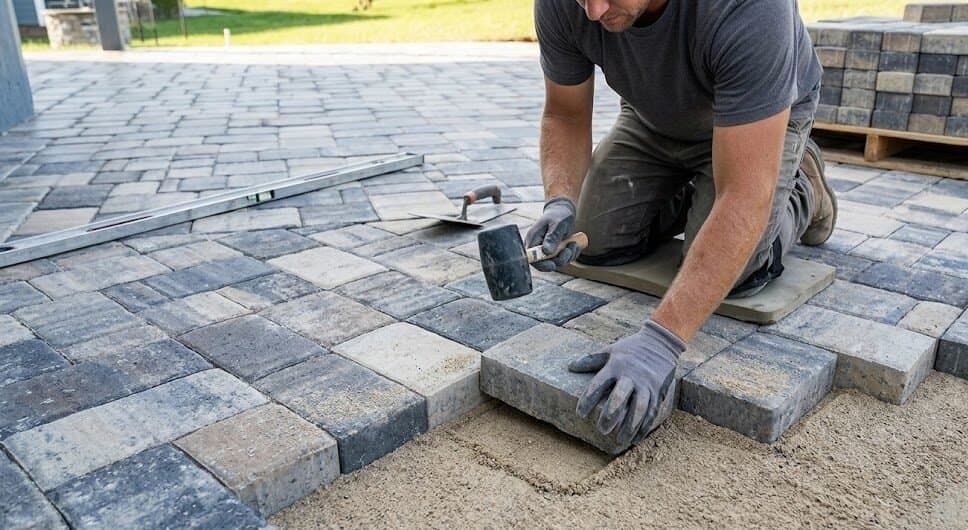
That framing is the root of most permeable paver disappointment in Florida. The paver on top is the least important part of the system. What you are actually buying is a stone reservoir under your driveway that is engineered to hold a specific volume of water and release it into the soil at a specific rate. The pavers are the lid. If the reservoir is undersized, if the soil beneath it cannot take the water, or if the surface clogs, you have an expensive driveway with wide joints and none of the performance you paid for.
That distinction matters more in Florida than almost anywhere else, for two reasons that pull in opposite directions. Our sandy soils infiltrate beautifully, which is the best possible starting condition. And our water table sits shockingly close to the surface in large parts of Central Florida, which is the worst possible constraint. The same lot can have great soil and no room to put the water.
So this guide is not about whether permeable pavers look good. They do. It is about the four things that decide whether they will work on your specific property, what the stormwater credit is actually worth, and the one piece of routine Florida maintenance that will destroy them.
The Credit Is Real, and It Is Smaller Than People Expect
The main financial argument for permeable pavers is the impervious surface credit. Most Florida jurisdictions cap how much of your lot can be impervious, and some assess stormwater fees based on impervious area. Permeable pavement reduces the number you are measured against.
Here is where expectations break. Homeowners generally assume permeable means pervious, as in it does not count at all. Real code language is nothing like that. The Low Impact Development Stormwater Technical Manual used in Walton County assigns reduction factors to each surface type, and they are worth seeing side by side because the ranking is the opposite of what most people guess:
| Surface type | ISR reduction factor | A 500 sq ft installation counts as |
|---|---|---|
| Pervious pavers | 0.75 | 375 sq ft impervious |
| Wood decking | 0.60 | 300 sq ft impervious |
| Porous concrete | 0.50 | 250 sq ft impervious |
| Geo-grid system | 0.25 | 125 sq ft impervious |
Read that table twice. Permeable pavers receive the least generous credit of the four options. A 500 square foot permeable paver driveway still counts as 375 square feet of impervious surface, a reduction of only 25 percent. A geo-grid system, which is the plastic honeycomb filled with gravel or grass, gets you a 75 percent reduction on the same footprint.
This is not a knock on permeable pavers. It is a reflection of what each surface reliably does under a design storm, and pavers are a hard surface with joints while a geo-grid is mostly void. But it means the credit math needs checking before it becomes your justification. If your goal is purely to get under a threshold, such as the 40 percent impervious surface ratio that can qualify a project for a stormwater management exemption, permeable pavers may not move you far enough, and a different surface in a different part of the yard may move you further for less money.
There is a second tier worth asking your jurisdiction about. In some Florida markets, a permeable paver system shown on a site plan with a proper cross section detail is credited at a default rate, and full credit is available only with a stamped engineering plan that includes subgrade infiltration testing, a base sized for the design storm, a defined overflow path and sometimes an observation well. If the credit is the reason you are doing this, find out which tier your county grants and what documentation it takes, before you sign anything. The difference between the default credit and full credit can be worth more than the entire cost premium of the system.
Number One Constraint in Florida: How Far Down Is the Water?
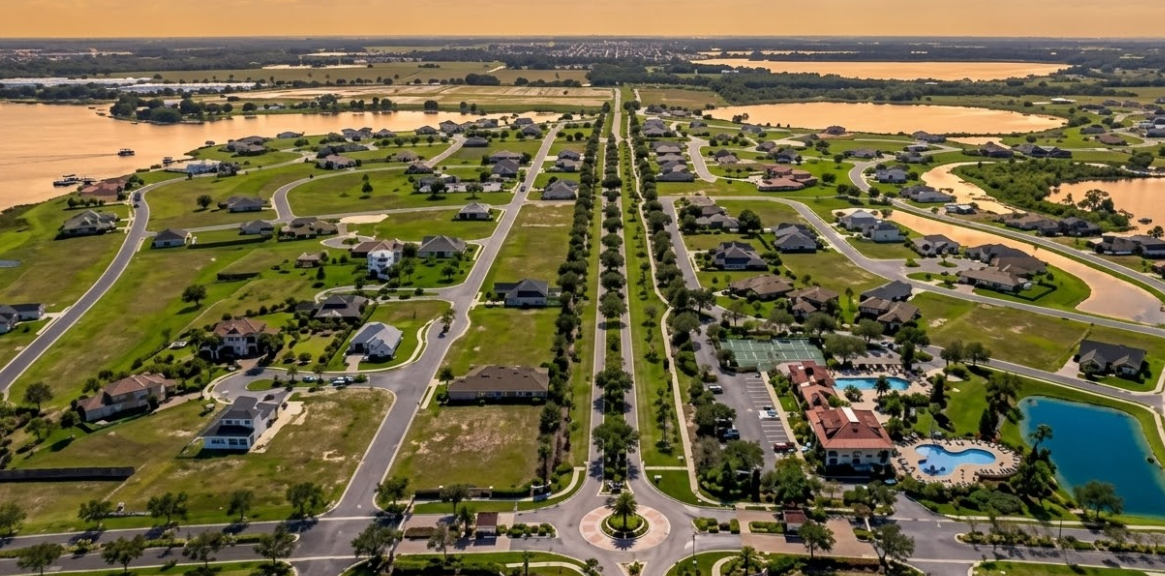
This is the question that disqualifies more Central Florida properties than any other, and it is almost never asked during a sales visit.
A permeable system works by holding water in a stone reservoir and letting it soak downward. For that to happen there has to be dry, unsaturated soil underneath it to soak into. The design guidance is specific: keep a minimum of two to four feet of separation between the bottom of the pervious pavers and the seasonal high groundwater table.
Note the word seasonal. It is not where the water is on the dry February day someone digs a test hole. It is where the water rises to in the wet season, which in Central Florida means late June through September. On plenty of lots near lakes, wetlands and low lying subdivisions, that difference is several feet.
Now stack the numbers. If your design calls for a 28 inch stone base, that is roughly 2.3 feet of structure. Add the required 2 to 4 feet of clearance below it, and you need somewhere between 4.3 and 6.3 feet of usable depth before you hit the seasonal high water table. That is a real requirement on a lot of Central Florida lots and an impossible one on some of them.
When the separation is not there, the reservoir fills from below during the wet season and stops accepting water from above, exactly when it is needed. The driveway does not fail dramatically. It just quietly stops being permeable in August, which is the only month it mattered. Then it ponds, and everyone blames the installation.
If you are anywhere near water, or in a neighborhood that has standing water in the swales after a summer afternoon, get the seasonal high groundwater elevation established before you spend anything else. This is the go or no-go test.
Number Two: the Base Is Three to Four Times Deeper Than You Think
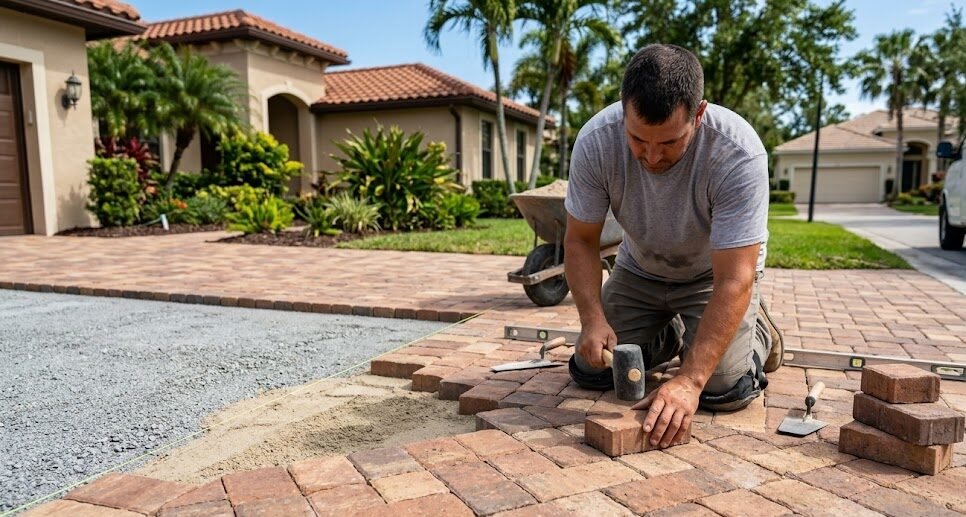
A standard paver driveway in Florida is built over roughly 6 to 12 inches of compacted base. Most homeowners assume the permeable version adds an inch or two of nicer stone.
Work through the actual design arithmetic from the LID manual and the number is different by an order of magnitude. Here is the worked example, using a standard two car driveway:
- Required storage volume: 421 cubic feet of stormwater to be retained for this example site.
- Adjust for the fact that the reservoir is full of rock: gravel porosity is taken as 0.3, meaning only 30 percent of the reservoir volume is actually open space for water. So 421 divided by 0.3 equals 1,403 cubic feet of total system volume required.
- Divide by the footprint: a 30 foot by 20 foot driveway is 600 square feet. 1,403 divided by 600 equals 2.33 feet.
- Result: the gravel base needs to be at least 28 inches deep.
Twenty eight inches. That is more than two feet of excavation and stone across the entire driveway footprint, versus 6 to 12 inches for a conventional paver driveway. That single number explains most of the cost difference, most of the excavation cost, and most of the reason a quote for permeable pavers that is only slightly above a standard paver quote should make you suspicious rather than happy.
Your number will differ, because required storage volume depends on your site, your design storm and your jurisdiction. But the structure of the calculation does not change, and neither does the lesson: ask what base depth the quote is built on. If nobody can tell you where the depth came from, the system was not designed, it was guessed.
The layering also has specifications that matter. The guidance calls for the pavement to be placed over a minimum 2 inch layer of pea gravel, followed by geotextile fabric, over a minimum 8 inch subbase of well-graded No. 57 gravel. Each layer gets separated by geotextile designed for stormwater applications, with fabric strips overlapping at least 16 inches and extending at least 4 feet beyond the edge of the system.
(321) 353-7445Get Immediate Service
Number Three: the Soil Must Not Be Compacted, Which Fights Everything Else
This is the requirement that is hardest for a construction crew to honor, because it contradicts a habit built into every other kind of paving work.
For a normal driveway, you compact the subgrade. Compaction is how you prevent settling, and a crew that does not compact is doing bad work. For a permeable system, the opposite is true: the infiltration rate of the native soil is the entire function of the system, and compacting the soil destroys that rate. The guidance is explicit that the underlying soil may not be compacted, and that if compaction happens anyway, the published infiltration rates can no longer be used and a professional infiltration test is required to determine what the compacted material will actually do.
If the parent soil has already been compacted, the remedy is not subtle. The soil has to be scarified to a minimum depth of 24 inches and re-graded.
The practical implication for a homeowner: heavy equipment driving over the excavated subgrade can quietly void the design. This is why permeable installations are sequenced differently, with excavation approached from outside the footprint where possible, and it is a fair thing to ask about. A crew that has done these before will have an answer immediately.
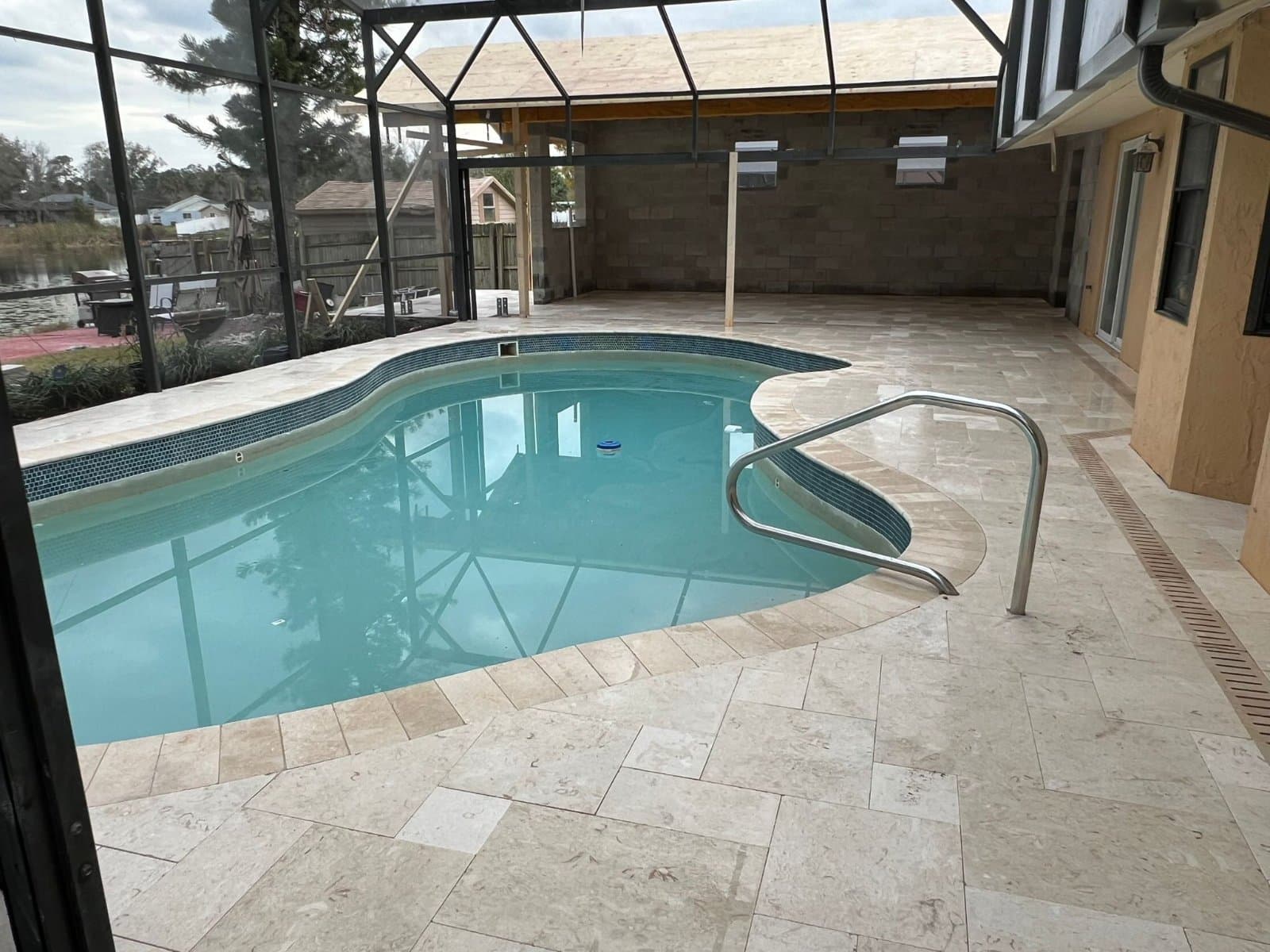
Two related site rules that get violated constantly. First, runoff from adjacent landscaped areas must not be directed onto the permeable pavement. Sending your roof downspouts or your lawn runoff onto the driveway sounds efficient and it is the fastest way to clog the system with sediment. Second, permeable systems are intended for low traffic applications such as driveways, pool decks and walkways, and the referenced guidance restricts them on sloped ground, so a steeply pitched lot is a different conversation.
Number Four: Never Pressure Wash It
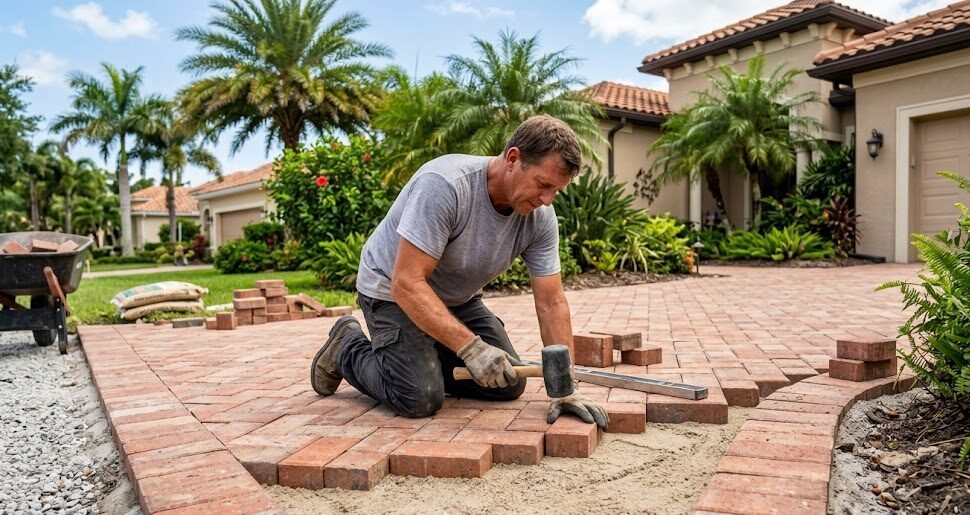
Here is the maintenance rule that undoes more Florida permeable installations than any design error, because it collides directly with standard Florida paver care.
Every Florida homeowner pressure washes their pavers. It is how you deal with algae, mildew and the general green film that our humidity produces. On a conventional paver driveway it is correct maintenance, and we recommend it within reason. On a permeable system it is destructive.
The guidance states it in bold: the surface must not be pressure washed to remove sediment, because pressure washing forces material deeper into the system where it is difficult to extract, thus permanently reducing infiltration rates.
Read that carefully. Not temporarily. Permanently. You are not cleaning the surface, you are injecting the clog. One well-intentioned afternoon with a pressure washer can take a system you paid a premium for and convert it into an ordinary driveway with wide joints, and there is no practical way to reverse it short of removing pavers and replacing the aggregate.
The correct maintenance regime is different in kind:
- Vacuum, do not wash. Sediment is removed with a vacuum or a regenerative air sweeper, which lifts material out rather than driving it down.
- Inspect quarterly. Visual inspection at least four times a year, with maintenance performed as needed rather than on a fixed schedule.
- Check the joints for missing aggregate. The stone in the joints is part of the filter. If it has settled or washed out, it gets replenished. This is the single most common item found on an inspection.
- Install the observation well. A small 4 inch diameter observation well placed within the footprint, away from vehicle traffic, lets you watch how long water takes to infiltrate after a storm. It is the only way to see a slow clog coming instead of discovering it as ponding.
- No pesticide or fertilizer within the permeable area or within a 10 foot perimeter around it. This one surprises people with lawns right up to the driveway edge, and it is worth knowing before the irrigation and landscaping get designed around the new driveway.
- Keep the edge restraint intact. Edge restraints such as ribbon curb must be installed around permeable pavement to prevent failure, and a damaged edge is an active failure rather than a cosmetic one.
If you already have a lawn service that pressure washes hardscape as part of the contract, tell them in writing before the first visit. We have seen a brand new system compromised inside its first year by a crew doing exactly what they were hired to do. If you want the full rundown on what safe paver cleaning looks like, our guide on how to clean brick pavers in Florida covers the conventional case, and everything in it about pressure needs to be inverted for a permeable system.
What Permeable Pavers Cost in 2026
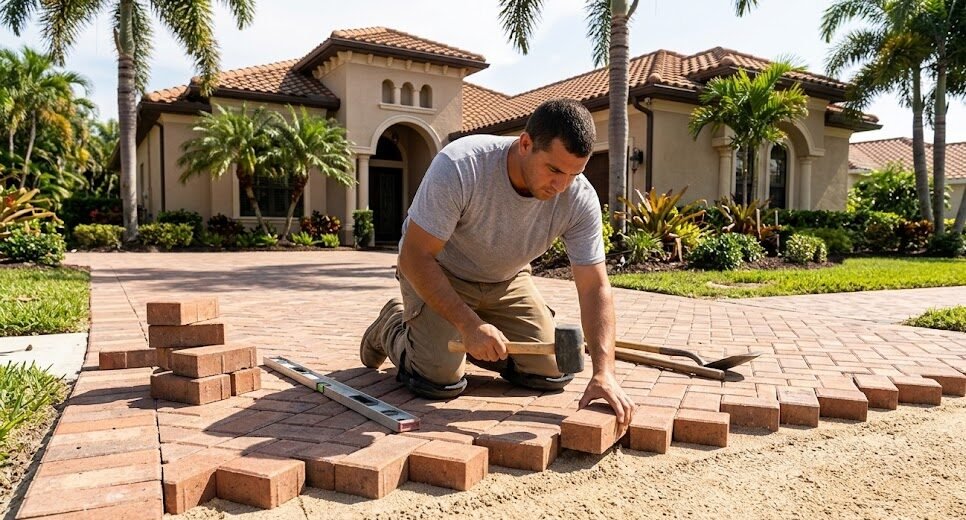
Published 2026 data puts a permeable driveway at roughly $8 to $25 per square foot installed. Within that, permeable concrete pavers generally run $8 to $12 per square foot and natural stone options run $15 to $25. For a standard 600 square foot two car driveway, most homeowners land between $4,800 and $15,000.
Against a conventional paver driveway, the premium is commonly cited at $3 to $5 per square foot, driven by the deeper excavation, the larger volume of open-graded stone and the geotextile layers.
| Element | Conventional paver driveway | Permeable paver driveway |
|---|---|---|
| Base depth | About 6 to 12 inches | Often 24 inches or more, per storage calculation |
| Joint material | Polymeric sand, designed to seal | Open-graded small stone, designed to pass water |
| Subgrade treatment | Compacted | Deliberately not compacted |
| Routine cleaning | Pressure washing is standard | Vacuum sweeping only, pressure washing prohibited |
| Installed cost | Lower | Roughly $3 to $5 per sq ft more |
Whether that premium returns depends almost entirely on your jurisdiction. Where stormwater utility credits exist, they typically run in the range of $5 to $25 per month, which is a payback measured in years rather than months. Where the real value is: getting a project approved that would otherwise be over an impervious cap, or being able to build the driveway and the patio you actually want rather than a smaller version. That is not a utility discount, that is buildable square footage, and it is usually worth far more than the monthly credit.
For comparison against the conventional option and the twenty year ownership math, we put the full numbers in our paver versus concrete driveway breakdown.
When Permeable Pavers Are the Right Call
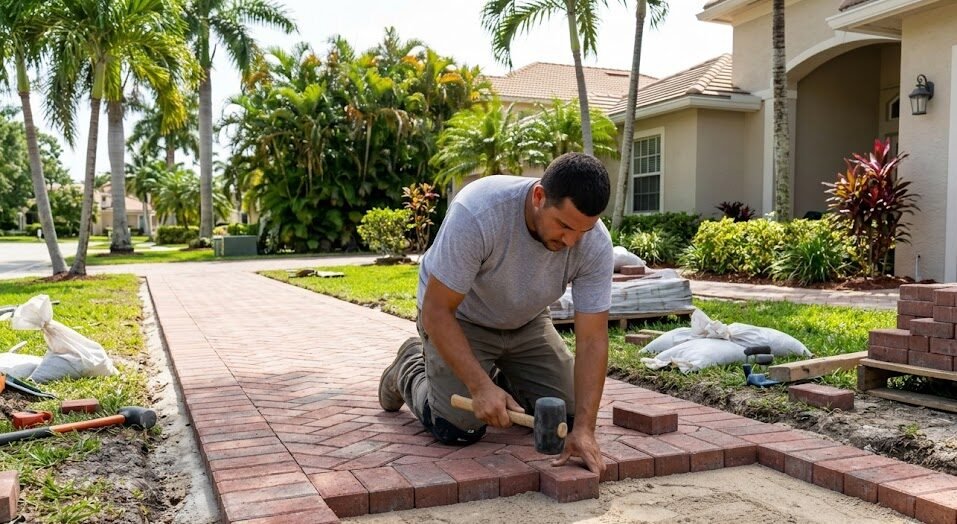
- You are over an impervious surface cap and need the credit to get a driveway, patio or pool deck approved at the size you want.
- You have a genuine ponding problem in a low traffic area, and the water has somewhere to go. Permeable pavement is a good answer in areas subject to ponding when the subsurface supports it.
- Your lot has deep sandy soil and a low water table. This is the ideal case and it exists in plenty of Central Florida, particularly on higher sandy ridges away from lakes and wetlands.
- You are handling runoff you would otherwise have to pipe. The cost comparison is not against a normal driveway, it is against a normal driveway plus a drainage system, and that changes the answer.
When They Are Not
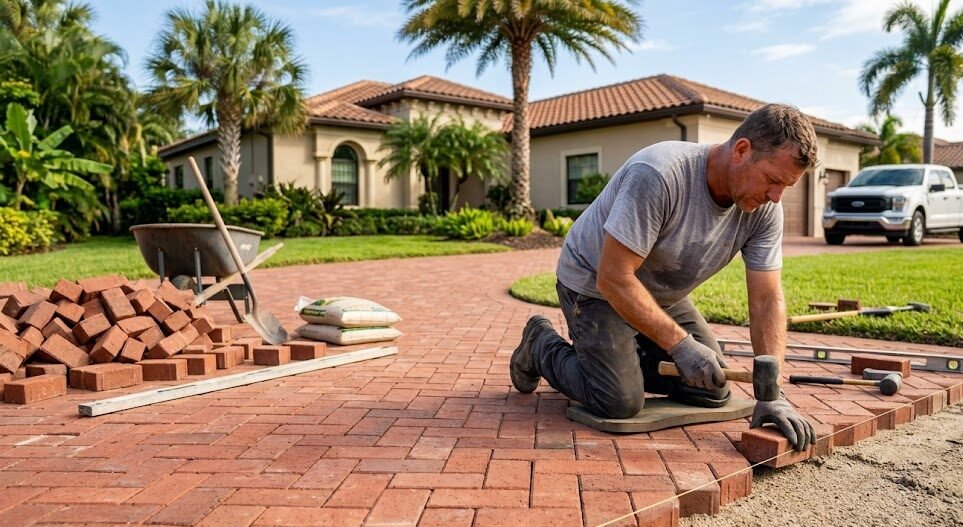
- The seasonal high water table is within a few feet of the surface. The system cannot function, no matter how well it is built.
- You want them only for looks. You are paying a large premium for a drainage structure and then maintaining it under restrictions. If the aesthetic is the goal, a conventional paver in the right pattern gets you there for less, and our guide to paver colors and patterns has better ways to spend that money.
- Heavy vehicles will use it. These systems are specified for low traffic applications.
- Nobody will maintain it. An unmaintained permeable system becomes an impervious one within a few years, and you lose the credit that justified it.
- You cannot keep the pressure washer away from it. This is not a joke. If the household or the lawn service will not change habits, the system will not last.
What to Ask Before You Sign
Five questions. A contractor who has genuinely built these will answer all five without hesitating, and a contractor who has not will get vague on the second one.
- What is the seasonal high groundwater elevation on this lot, and how was it determined?
- What base depth are you building, and what storage volume calculation produced that number?
- What credit does my jurisdiction grant, at what documentation tier, and are you providing that documentation?
- How will you avoid compacting the subgrade during excavation?
- Are you installing an observation well, and where?
If those answers come back solid, permeable pavers are a genuinely good system and they solve problems that no other surface solves. If they come back thin, what you are being sold is a conventional driveway with wide joints at a permeable price.
We install both conventional and permeable systems through brick paver installation, and permeable projects are exactly the kind that belong on a maintenance plan, because quarterly inspection and vacuum sweeping are the difference between a fifteen year system and a five year one. We work throughout Orlando, Lakeland, Kissimmee and Winter Park.
If you are trying to work out whether your lot can support a permeable system at all, get in touch and we will start with the water table, because if that answer is wrong nothing else matters.