What Each Driveway Costs in Florida in 2026
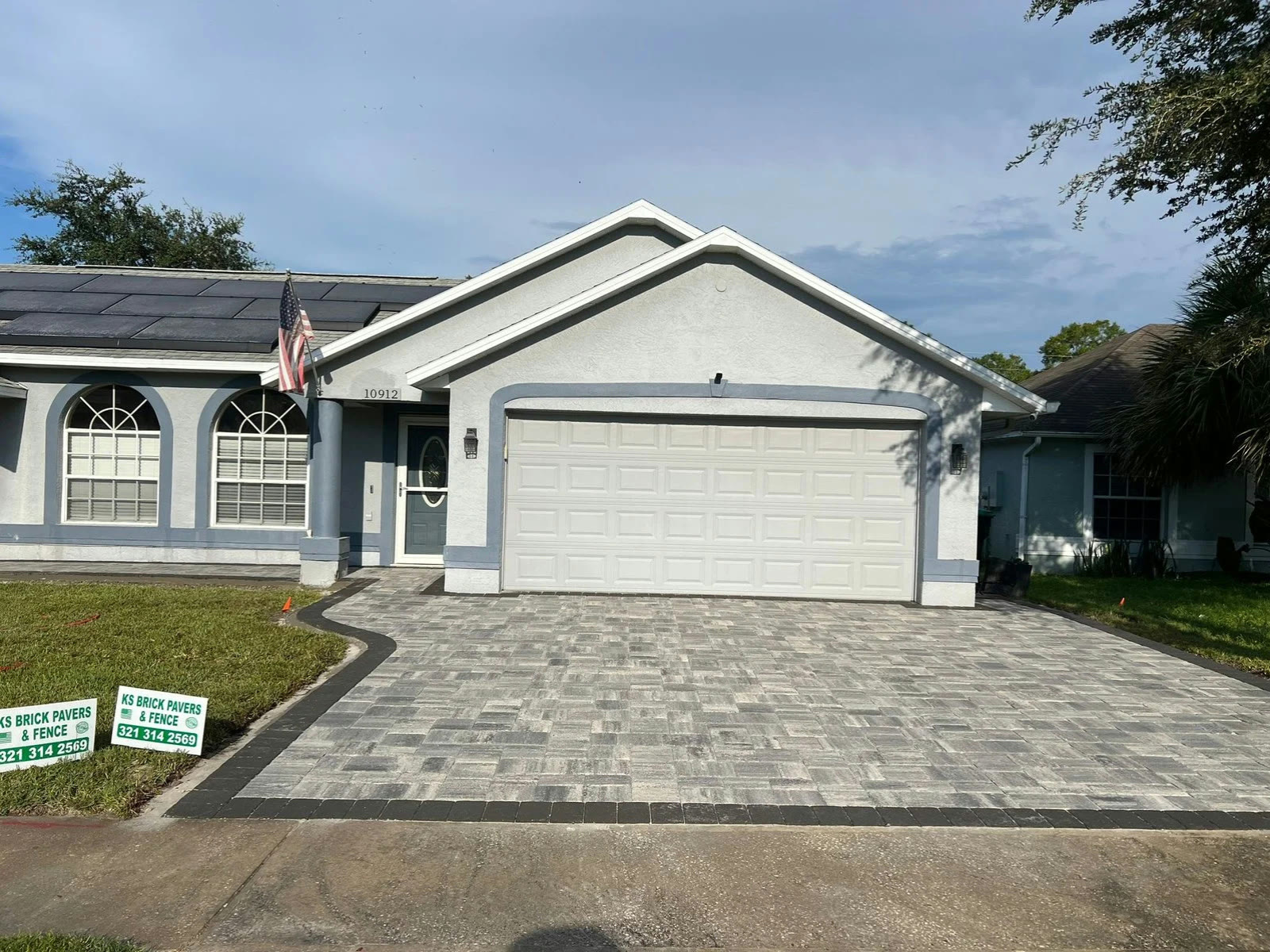
Published ranges for driveways are wide because they mix scopes. Some quote the surface only. Others include excavation, base, drainage and edge restraint, which on Florida sand is where a large share of the real cost lives. Here are the 2026 numbers with the scope stated.
- Broom-finished concrete: Roughly $8 to $18 per square foot in most of Florida. In Southwest Florida, where new-home driveway pricing was tracked in March 2026, concrete ran about $9 to $21 per square foot once prep, drainage and common add-ons were included.
- Stamped concrete: About $13 to $29 per square foot with prep and add-ons included. It sits between the two on price and, as the section below explains, does not sit between them on aging.
- Concrete pavers: Commonly $15 to $30 per square foot, averaging near $16 per square foot for widely available styles. With Florida prep, drainage and add-ons counted, the Southwest Florida tracking put pavers at $19 to $41 per square foot.
- Natural stone pavers: The top of the market, with material alone reaching $30 per square foot before labor. Beautiful, extremely long-lived and rarely the right answer for a driveway budget.
On a typical 600 square foot two-car driveway, that puts plain concrete somewhere around $5,000 to $11,000 and concrete pavers around $11,000 to $20,000 depending on how much site work the lot needs. The gap is real and it is the honest starting point of this comparison. What follows is where that gap goes.
For a deeper breakdown of what moves paver pricing specifically, including pattern complexity and cut waste, see our Florida brick paver cost guide.
Why the Cheapest Quote in Florida Is Almost Always a Base Problem
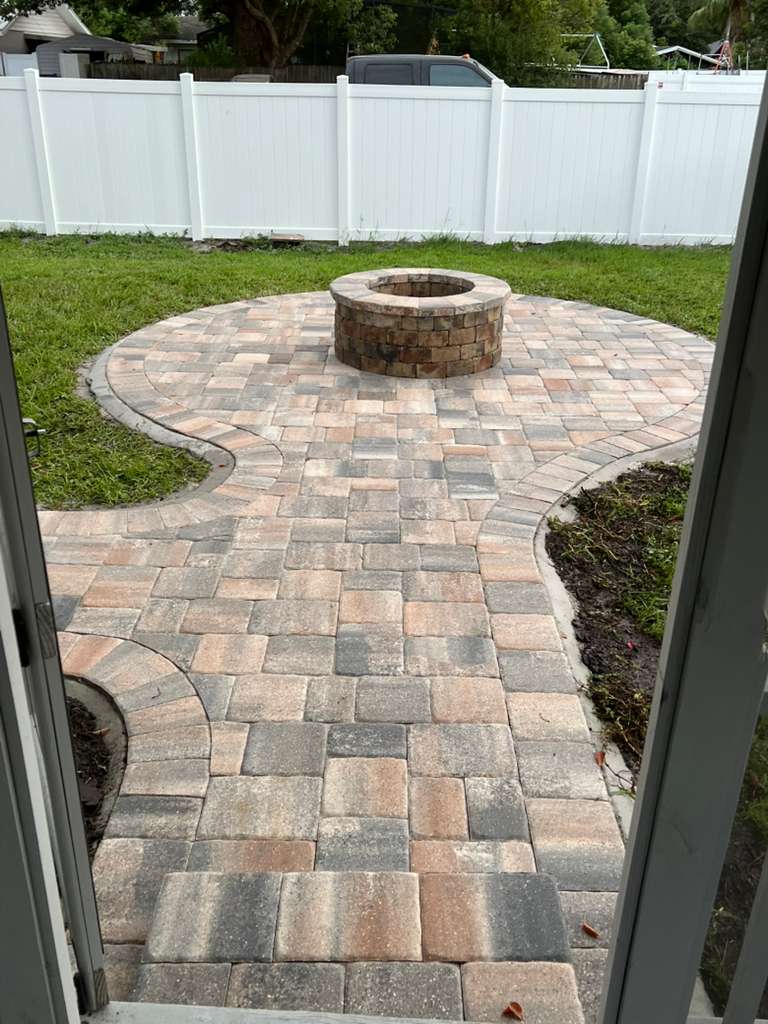
Florida driveways do not usually fail at the surface. They fail underneath it, and the failure mode is the same whether the surface is concrete or pavers: the subgrade moved.
Most of Central Florida sits on deep, well-drained sandy soils. That is a genuine advantage, because water moves through quickly instead of pooling and freezing, and there is no frost heave in this state. It is also the trap, because sand that drains beautifully also migrates beautifully. Water moving through an inadequately compacted base carries fine material with it, a void forms, and the surface above the void settles.
Under concrete that produces a crack, because a slab cannot settle differentially without breaking. Under pavers it produces a low spot, because the units articulate. Same cause, completely different repair bill.
This is why the cheapest quote deserves the most scrutiny. The savings almost never come from the surface material, which is priced by the pallet. They come from excavation depth, base thickness, compaction passes and edge restraint, none of which are visible on the day the job finishes. Ask any bidder for excavation depth, base material and thickness, number of compaction passes and how the edges are restrained. A contractor building for Florida sand answers all four without hesitating.
Lifespan in Florida Sand, Sun and Rain
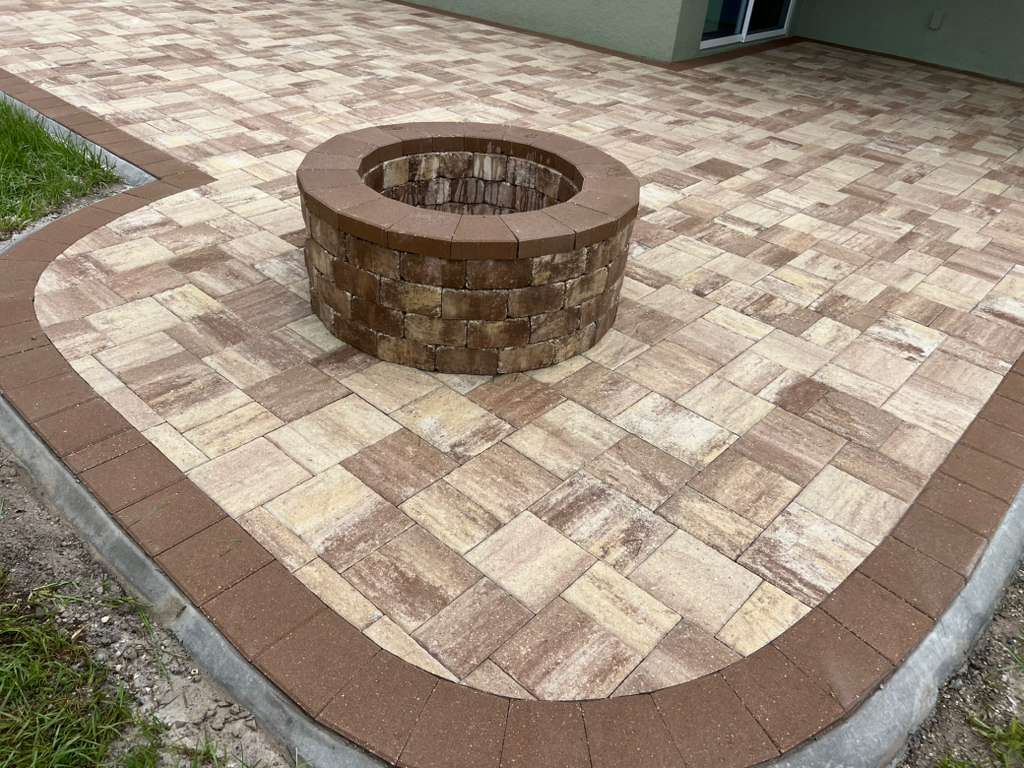
Published lifespans disagree, and the disagreement is informative rather than confusing. Sources put concrete driveways anywhere from 25 to 30 years at the conservative end to 30 to 50 years at the optimistic end. Pavers are commonly cited at 30 to 50 years with routine joint sand maintenance, with natural stone reaching 75.
The spread on concrete is explained by what counts as the end of life. A concrete slab that cracked in year twelve, got patched, and is still carrying vehicles in year thirty is technically alive and visually finished. That is the honest way to read the numbers. Concrete has a long structural life and a much shorter cosmetic life in this climate, where sun, rain and root pressure all work on it continuously.
Pavers invert that relationship. The units themselves are extremely durable, but the system depends on the joint sand and the edge restraint staying intact, which is maintenance rather than luck. Keep the joints full and the edges tight and a paver driveway looks like year one deep into its third decade. Neglect them and weeds, ants and shifting units arrive early.
Neither surface reaches its published lifespan on a bad base. That variable outranks the material choice, which is worth repeating because it is the one homeowners never see on a quote.
The Repair Difference Is the Entire Argument
If you take one thing from this comparison, take this section. The cost difference over time is not really about durability. It is about what happens when something goes wrong, and in Florida something always eventually goes wrong: a root lifts, a utility gets trenched, a heavy delivery truck parks on an edge, or the base under one corner settles.
- Pavers: Damaged units lift out and get replaced with matching stock. A documented example of a damaged paver edge repair came in under $200 and took an afternoon. When the repair is done, the driveway is uniform again, because the replacement units are the same units.
- Concrete: A crack or a settled section is either patched, which is permanently visible because new concrete never color-matches cured concrete, or saw-cut and replaced in sections, which is expensive and still shows the seam. There is no invisible repair for a concrete driveway.
- Utility access: Irrigation, electrical and plumbing runs cross driveways constantly in Florida. Under pavers, the units come up, the trench gets dug, the base gets recompacted and the units go back. Under concrete, that same job means demolition and a patch panel.
This is also why pavers tolerate Florida's most common driveway antagonist, tree roots, better than concrete does. A root that lifts a paver section can be addressed by lifting units, cutting or rerouting, recompacting and resetting. A root under a slab means the slab.
(321) 353-7445Get Immediate Service
Stamped Concrete: The Middle Option That Ages Worst
Stamped concrete is priced between the two at about $13 to $29 per square foot with prep included, and it is chosen for exactly that reason. It is worth understanding what that middle position buys and what it does not.
What it buys is appearance at a lower price than pavers on day one. What it does not buy is any of the structural advantage. Stamped concrete is a slab. It cracks like a slab, and when it cracks, the crack runs through the printed pattern, which makes it more visible than a crack in plain broom finish rather than less. It also carries a color and sealer layer that needs periodic resealing to keep the pattern from fading under Florida ultraviolet, so the maintenance obligation is closer to pavers than to plain concrete while the repairability stays at plain concrete.
The resale data reflects this. Stamped concrete is generally reported to return roughly 50 to 70 percent of installation cost at resale, well below what both plain concrete and pavers return relative to their cost. If the budget genuinely will not stretch to pavers, plain broom-finished concrete is usually the more rational spend, because it costs less and ages more gracefully than a stamped surface that has faded and cracked.
The 20-Year Number, Run Honestly
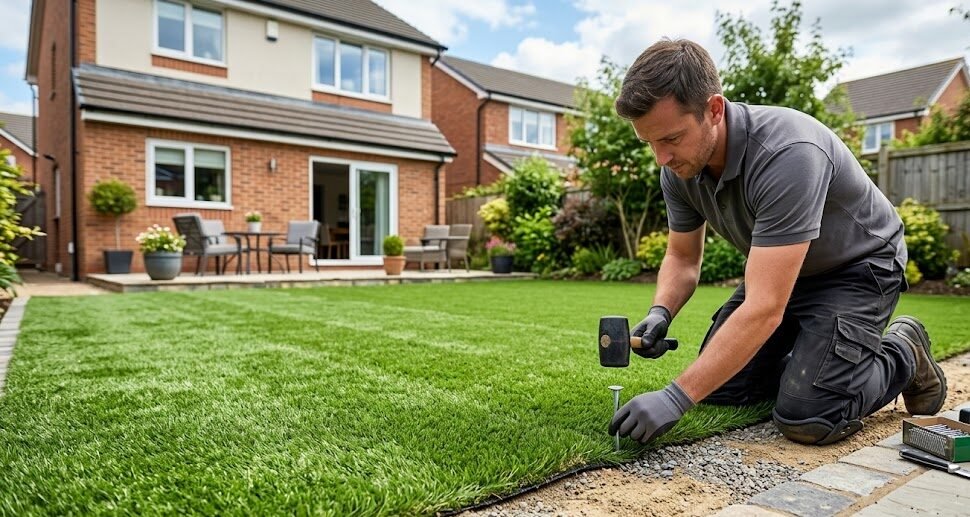
Here is the comparison that matters, and it is worth being precise about what is included. One widely cited 20-year model runs concrete at $3,600 install plus $8,000 in maintenance for $11,600 total, against pavers at $7,200 install plus $2,400 in maintenance for $9,600 total. In that model pavers cost less over twenty years despite costing double on day one.
Those specific dollar figures reflect a smaller driveway than most Florida two-car installations, so treat the ratio rather than the absolute numbers as the transferable part. The structure of the result is what holds up.
- Concrete's ongoing cost is repair: Crack sealing, patching, section replacement and eventually a full tear-out and repour when the cosmetic damage passes what the owner will tolerate. Every one of those events is priced at whatever concrete and labor cost in that year.
- Pavers' ongoing cost is maintenance: Joint sand replenishment, periodic sealing, occasional individual unit replacement. Smaller amounts, more predictable timing, no demolition.
- The crossover: Depends almost entirely on when the first significant concrete repair lands. On a well-built base in stable soil, that might be year fifteen and concrete wins on total cost. On a marginal base with tree pressure, it can be year six, and pavers are ahead before the first decade closes.
The practical reading: if you are certain about the base quality and plan to tolerate cosmetic aging, concrete is defensible. If the lot has trees, a history of settlement, or you intend to keep the property looking finished, pavers win the twenty year number more often than not.
What Pavers Actually Do for Resale, and What They Do Not
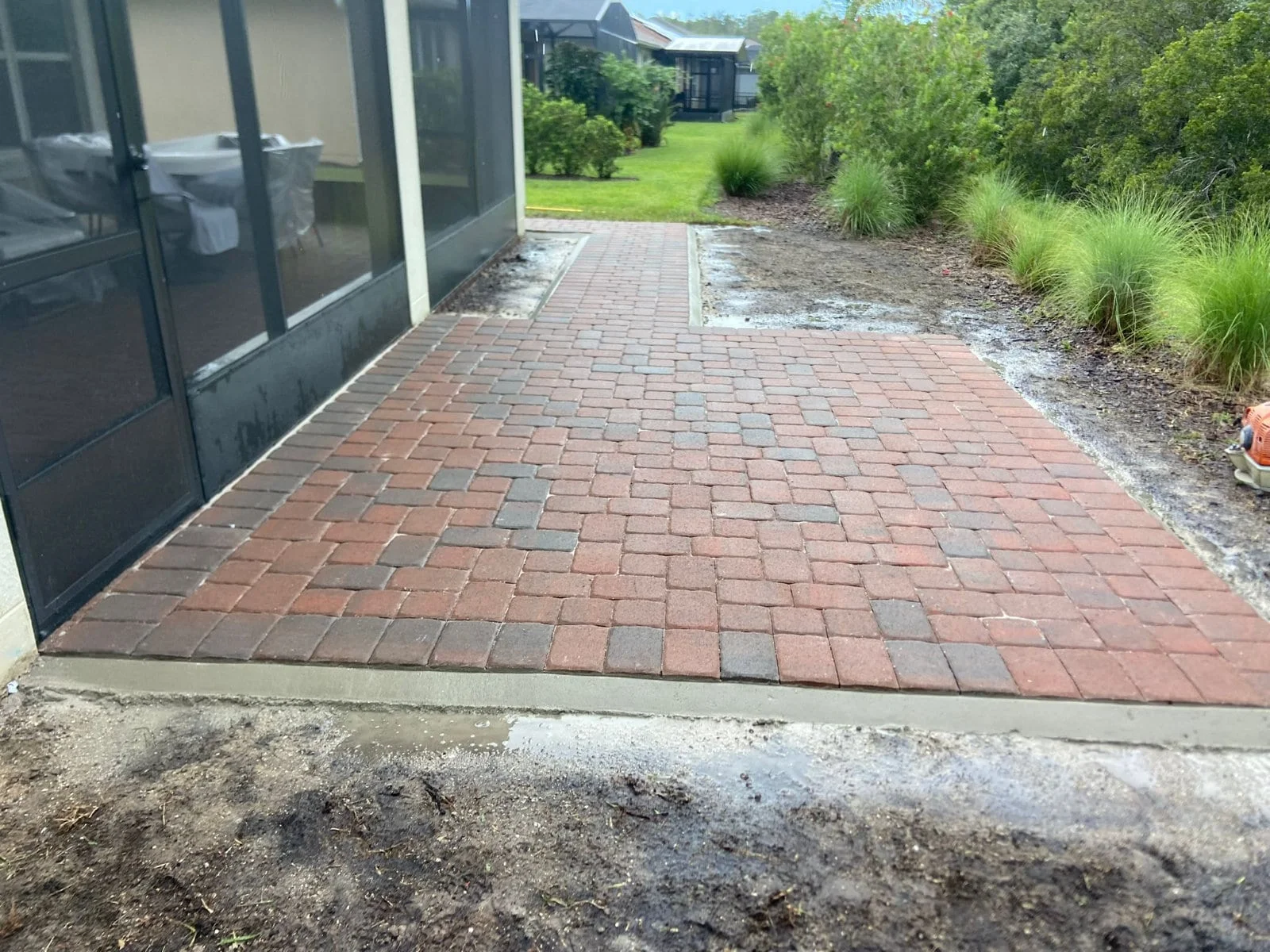
Resale claims in this category get inflated, so here is what the reporting actually supports.
Pavers are reported to add roughly $5,000 to $7,000 more in resale value than a comparable concrete driveway, while a new concrete driveway is credited with adding about $3,000 to $5,000. Real estate professionals in the Tampa Bay and Central Florida market report ROI near 100 percent on paver driveways, meaning the installation cost is largely recovered at sale, and homes with paver driveways are reported to sell measurably faster than identical homes with plain concrete. Stamped concrete, as noted above, sits well behind both at roughly 50 to 70 percent recovery.
Two honest qualifications. First, near-100 percent recovery means you get your money back, not that you make money. Anyone selling a driveway as an investment that appreciates is overselling it. Second, the resale effect is strongest when the driveway is visible from the street and matched to the rest of the property. A high-end paver driveway leading to neglected landscaping and a tired entry does not produce the same result, because buyers price the composition rather than any single element.
The most reliable version of the resale argument is the speed one. In a Central Florida market with plenty of comparable inventory, the surface a buyer sees before they open the car door affects how the rest of the showing goes.
Drainage: The Florida Variable Nobody Prices
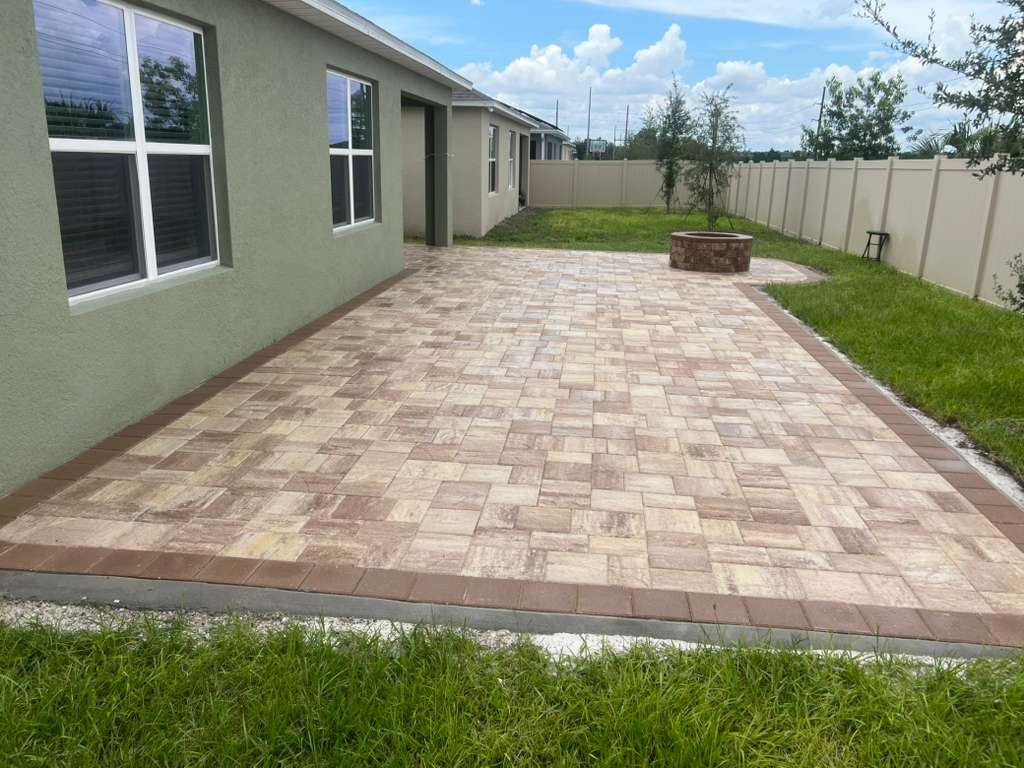
Central Florida takes 50 to 60 inches of rain a year, much of it delivered in violent afternoon thunderstorms between May and October. That rainfall pattern is why drainage decides driveway outcomes here more than in almost any other market.
- Slope and pitch: Both surfaces need positive drainage away from the house and the garage threshold. Water that stands against a garage door is a claim waiting to happen regardless of surface material.
- Permeability: Pavers with open or permeable joints allow some infiltration into the base, which reduces sheet flow across the surface. Concrete is impermeable, so 100 percent of what lands on it becomes runoff that has to go somewhere on your lot.
- Where the water ends up: Runoff directed into a neighbor's lot or a swale that cannot take it is the most common source of hardscape disputes in this region, and it is entirely a design decision made before anything is poured or laid.
- The base again: Water moving under the surface is what migrates fines and creates voids. Base thickness and compaction are drainage decisions as much as structural ones.
On a sloped Florida lot or a property with a low corner, the drainage plan should exist before the material conversation happens. It changes the excavation, the base depth and sometimes the layout, and retrofitting it after the surface is down costs more than getting it right did.
Maintenance Reality: Sand, Sealing and Weeds
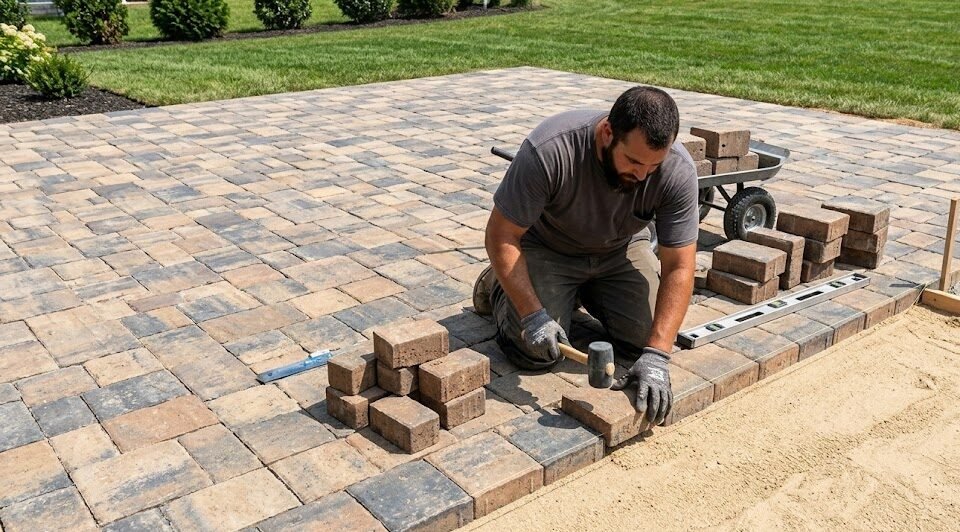
Paver maintenance is the most common objection and it is fair, so here is the actual workload rather than a sales version of it.
The joints are the system. Polymeric sand locks the units into a working surface, resists weeds and ants, and keeps the field from spreading. It also has to be installed correctly and replenished over time, and it is the single most common source of paver complaints in Florida, usually because of hazing from improper installation rather than because of the product. We covered which brands and methods hold up here in our guide to polymeric sand in Florida.
Sealing is the other recurring item. It is optional in the sense that pavers function unsealed, and worthwhile in the sense that it protects color against ultraviolet, resists oil staining from vehicles and stabilizes joint sand. The timing question, how often and when to reseal in this climate, is covered in detail in our guide to sealing pavers in Florida.
Concrete is not maintenance free either, which is a point the comparison usually skips. It needs periodic cleaning, benefits from sealing against oil staining, and requires crack sealing as cracks appear. The difference is that concrete maintenance slows deterioration while paver maintenance preserves appearance, and only one of those is reversible.
Which One Fits Your Property
A straight recommendation by situation, since the general comparison only gets you so far.
- Choose pavers if: The lot has mature trees, the property has any history of settlement, utilities run under the driveway, you plan to hold the home long term, or curb appeal is part of the goal.
- Choose plain concrete if: The budget is firm, the subgrade is known-good, the driveway is a long rural run where cost per square foot dominates, or the property is being prepared for a quick sale where the spend needs to be minimal.
- Choose stamped concrete if: You want a pattern, understand the crack and fade behavior, and have priced the resealing schedule. In most cases the honest advice is pavers if the budget allows and plain concrete if it does not.
- Consider a hybrid: A concrete field with paver borders, aprons or a paver entry ribbon delivers a meaningful share of the curb appeal at closer to concrete pricing. It is a common and sensible Central Florida compromise.
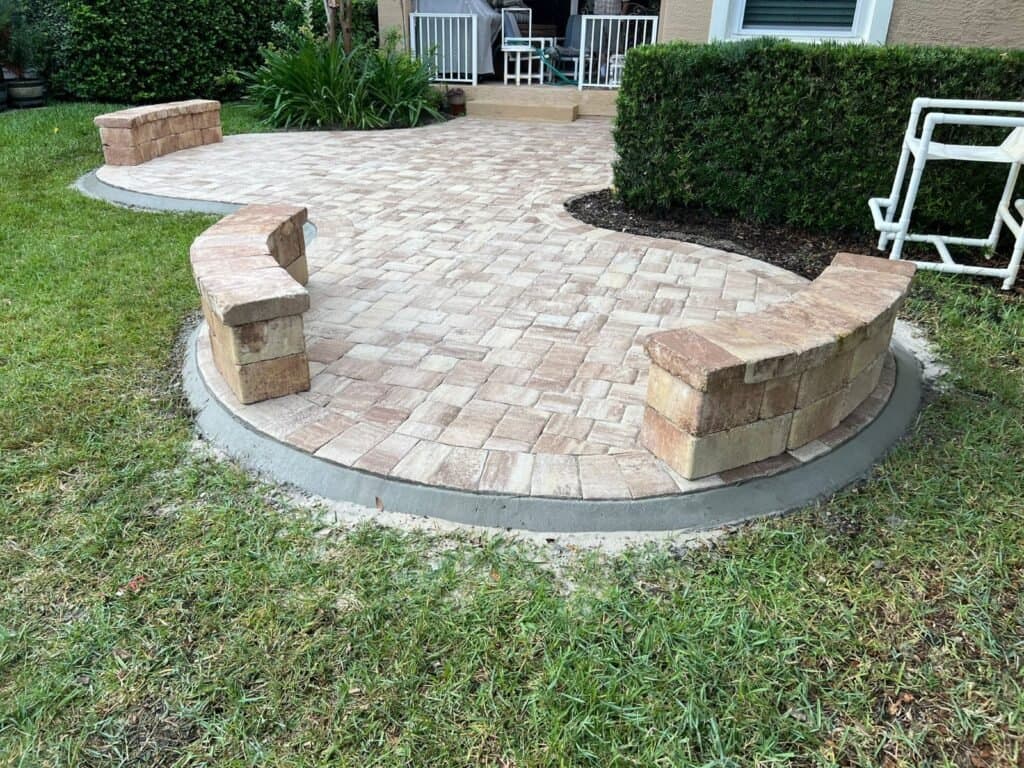
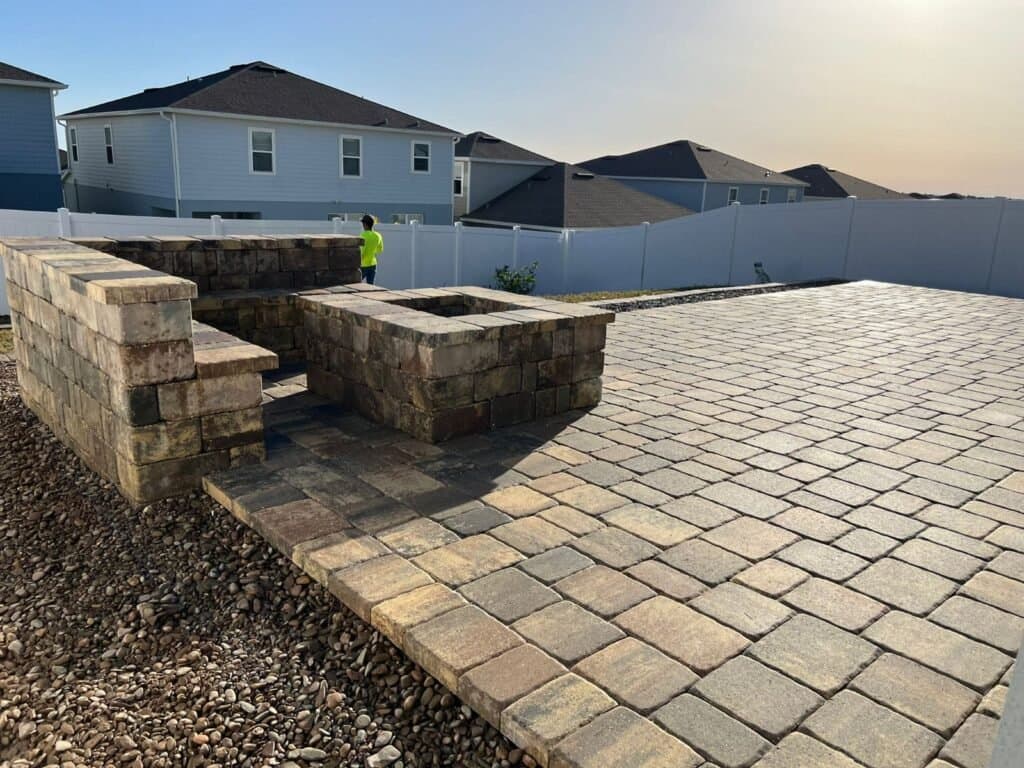
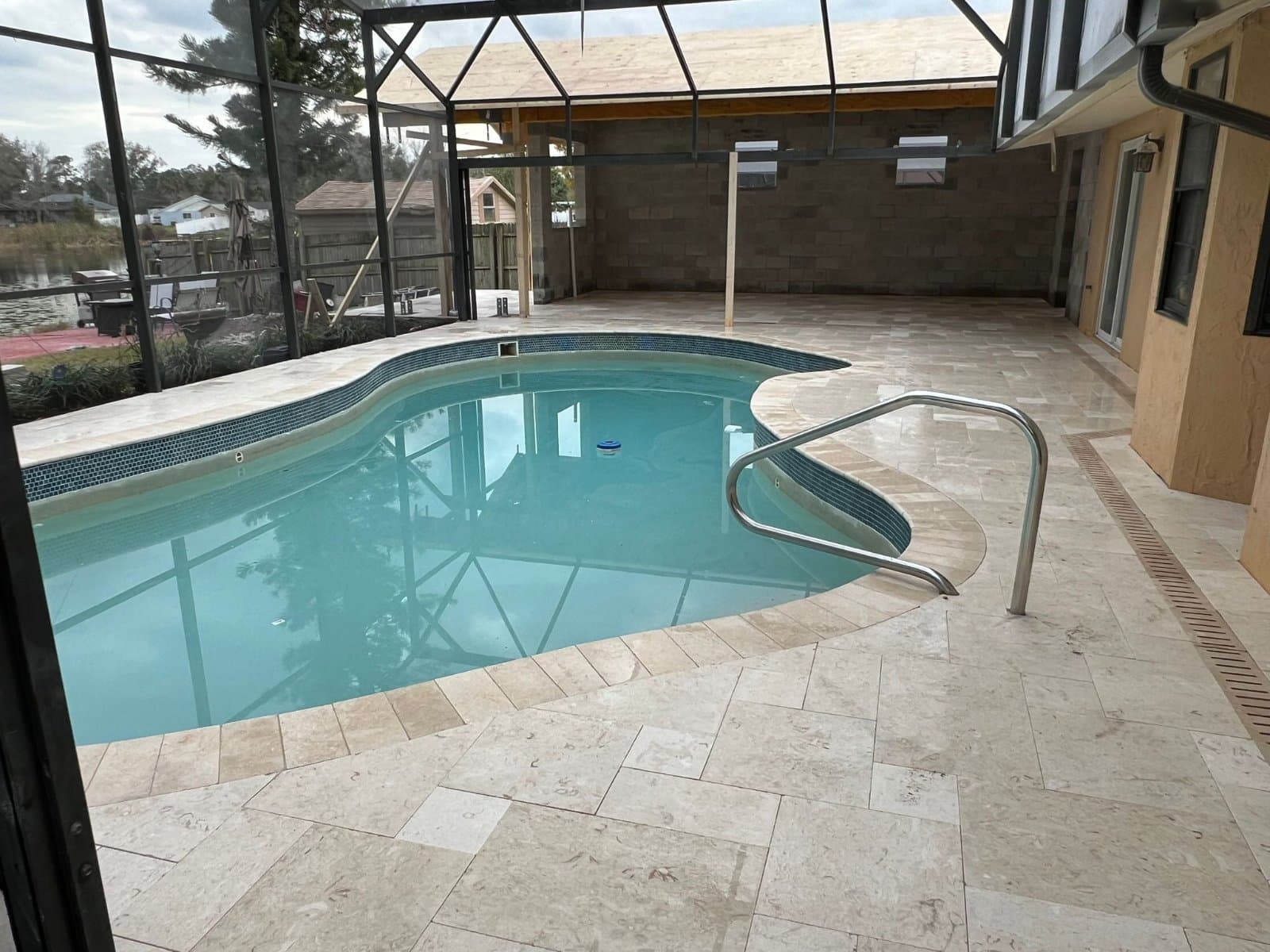
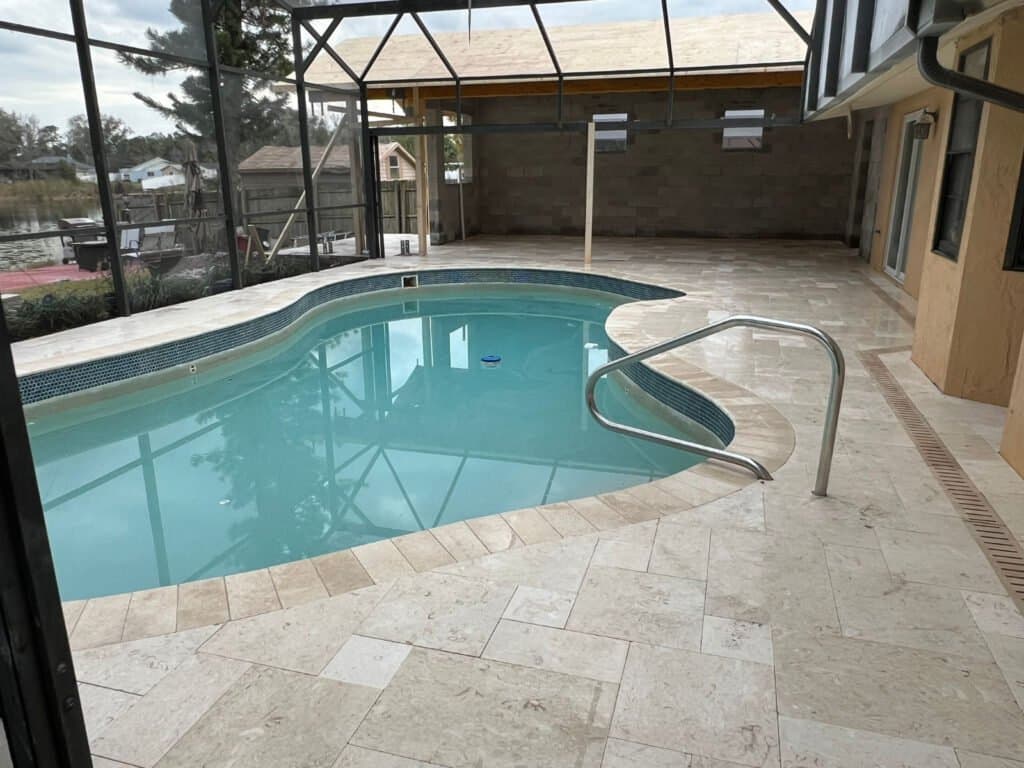
KS Solutions installs driveway, patio and pool deck paver systems across Central Florida, including Orlando, Lakeland and Winter Haven, and every estimate starts with the base and the drainage rather than the pattern catalog. You can see how the installation process runs on our brick paver installation page, or look at local project detail for brick paver installation in Orlando and brick paver installation in Lakeland.
What to Ask Before You Sign Either Quote
Six questions make two driveway bids comparable, and they work for concrete and pavers alike.
- Excavation depth and base thickness: Stated in inches, in writing. This is the number that separates a driveway that lasts from one that settles.
- Compaction method and passes: Base compacted in lifts rather than all at once, with the equipment named.
- Edge restraint: How the perimeter is held on a paver job. Unrestrained edges spread, and spreading edges are the beginning of every paver failure.
- Drainage plan: Where water goes, in a sentence you can repeat to your neighbor.
- Reinforcement and control joints: On concrete, what reinforcement is included and where control joints fall. Cracks go where you put the joints or where the slab decides.
- What happens to the apron: The transition to the street is a common failure point and is frequently excluded from the base bid without being mentioned.
Get all six in writing on both quotes. Two bids that answer them identically can be compared on price. Two bids that do not are not describing the same driveway, and the cheaper one is almost always the one that left something out below the surface.