Call (321) 353-7445 for professional fence installation in Orlando, FL from KS Solutions.
What Orlando Homeowners Need to Know About Fencing
Finding the right contractor for fence installation in Orlando, FL starts with understanding what makes this market different from the rest of the country. Orlando sits in the heart of Central Florida, where the climate, soil composition, and regulatory environment all shape the way a fence needs to be designed, built, and maintained. KS Solutions has been installing fences across Orlando and Orange County for years, and every project we take on reflects the local knowledge that only comes from working in this area day after day.
Orlando's weather is the first thing any fence builder has to reckon with. Mean annual temperatures run between 70 and 74 degrees, but summers push into the low 90s with August averaging 91 degrees and humidity that rarely drops below 70 percent. Annual rainfall hits 50 to 60 inches, with the heaviest concentration falling in strong afternoon thunderstorms from May through October. These aren't gentle showers. They're walls of rain driven by 40 to 60 mph wind gusts that test fence posts, panels, and hardware several times a week during peak season. UV exposure is intense from March through November, fading pigments, breaking down wood fibers, and degrading cheap fasteners. These conditions accelerate wear on every fence material differently, and choosing the wrong product for the wrong application leads to premature failure and expensive replacement.
Then there's the regulatory side. Orange County has specific zoning requirements for fences, including height limits that vary by yard zone, setback rules for corner lots and lakefront properties, and a permit process that requires dimensioned site plans submitted through the Fast Track online system. Most of Orlando's newer neighborhoods are governed by HOAs with their own architectural review boards and design standards that often exceed county code. Pool barriers fall under Florida statute and building code with strict safety requirements that carry real legal liability if they're not met. It's a lot to keep track of. KS Solutions handles all of this paperwork and compliance work for you so you can focus on picking the fence you actually want.
The soil under Orlando properties also plays a role that most homeowners don't think about. The Orlando soil series is a very deep, well-drained sandy profile. Sand and fine sand extend more than 80 inches down, with the water table typically sitting below 72 inches. Sandy soil drains fast, which is good for preventing water from pooling around post footings and causing rot or corrosion. But it also means post holes can collapse during excavation and concrete footings need to be sized correctly to anchor firmly in loose material. Our crews know exactly how to set posts in this ground for maximum stability, and we size our footings based on the specific fence height, material weight, and wind load exposure at your property.
Whether you need a tall privacy fence for your backyard in Thornton Park, a security perimeter around a commercial lot in SODO, or a decorative accent fence along your front yard in Windermere, KS Solutions builds it to last. Call (321) 353-7445 to schedule your free on-site consultation and get a detailed estimate.
Privacy Fencing Materials Built for Orlando Weather
Privacy is the number one reason Orlando residents call us about fencing. Homes in neighborhoods like College Park, Audubon Park, and Mills 50 sit on lots where neighbors are close, and backyards face walking paths, retention ponds, or busy streets. In Lake Nona and Baldwin Park, planned community layouts sometimes put homes within arm's reach of each other. A solid privacy fence transforms an exposed yard into a protected outdoor living space where you can relax, cook out, let kids play, and let dogs run without feeling like you're on display for the entire block.
Vinyl fencing
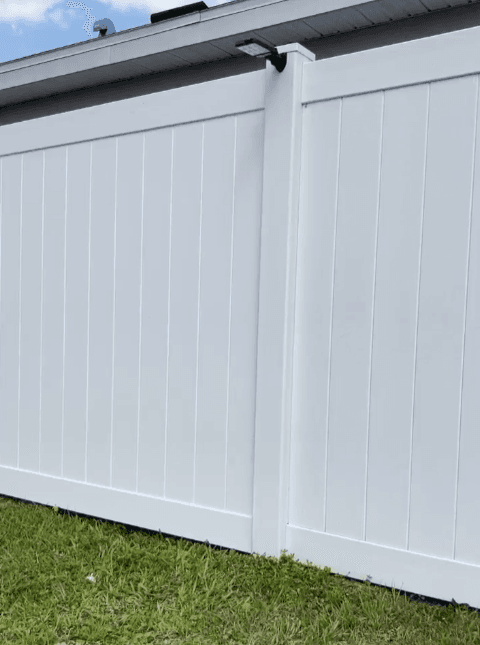
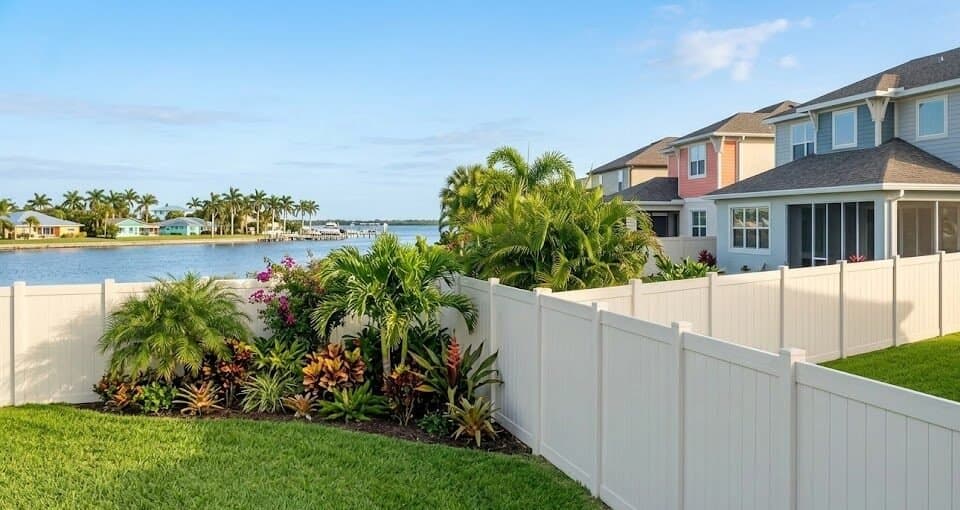
is our most recommended privacy material for Orlando properties, and there are solid reasons for that. Vinyl doesn't absorb moisture, so it won't rot, warp, crack, or attract termites. That's a serious advantage in a city where humidity stays above 70 percent for months and Formosan subterranean termites cause millions of dollars in property damage every year. Modern vinyl panels include UV stabilizers that prevent yellowing and fading under Orlando's punishing sun. The material is also roughly five times stronger than wood and four times more flexible, which gives it real wind resistance during thunderstorms and tropical weather events. Vinyl comes in white, tan, gray, and woodgrain textures, and tongue-and-groove construction eliminates gaps between boards for complete visual screening. You never have to paint, stain, or seal it. A garden hose and mild soap handle cleaning. For most Orlando homeowners, vinyl is the set-it-and-forget-it privacy solution.
Wood fencing
remains a popular choice for homeowners who prefer a natural look and feel. Pressure-treated pine is the most affordable wood option, and it holds up reasonably well in Orlando when maintained. Cedar offers better natural resistance to rot and insects and weathers into an appealing silver-gray tone over time. But here's the honest truth about wood in Orlando: humidity forces wood to absorb moisture constantly. That moisture causes expansion, contraction, warping, and splitting over the years. You'll need to seal or stain a wood fence every 2 to 3 years to keep it looking good and structurally sound. Skip that maintenance, and you'll see visible deterioration within 4 to 5 years. Wood fences in Orlando typically stand 6 feet tall with board-on-board or shadowbox construction that provides privacy while allowing some air circulation through the panel, which reduces wind load during storms.
Composite fencing
blends wood fibers with recycled plastic polymers to create panels that look and feel like real wood but resist moisture, insects, and UV damage the way vinyl does. Composite costs more upfront than either wood or vinyl, but the near-zero maintenance requirement often makes it the better value over the 20 to 25 year life cycle of the fence. The texture and color variation in composite panels closely mimics natural hardwood, giving you the aesthetic you want without the work that goes along with actual wood ownership in Orlando's climate.
KS Solutions carries all three materials and helps you compare them side by side during your consultation. We show you physical samples, discuss the maintenance commitment for each, and match the material to your budget, timeline, and long-term goals. Explore our full privacy fence installation options to see what's possible.
One thing we always tell Orlando homeowners about privacy fencing: don't forget about the gate. Your privacy fence is only as good as the weakest point, and that's usually the gate. A flimsy gate on a solid fence defeats the purpose. We install gates that match the fence material, swing smoothly on heavy-duty hinges, and latch securely every time. For privacy gates in windy areas of Orlando, we add cane bolts or positive latches that prevent the gate from blowing open during thunderstorms.
Security and Decorative Fencing for Orlando Properties
Not every fence needs to block sight lines. Security fencing creates a strong physical barrier that controls access to your property while still allowing visibility. Decorative fencing adds architectural character and defines property boundaries without creating a closed-off feeling. KS Solutions installs both types across Orlando, and we often combine them on the same property for a layered approach that addresses privacy, security, and curb appeal all at once.
Aluminum fencing
is the standout choice for both security and decorative applications in Orlando's climate. Unlike wrought iron or steel, aluminum naturally forms a thin oxide layer that protects it from corrosion without any additional coating. That means no rust, no flaking paint, and no orange staining on your driveway or sidewalk from corrosion runoff. In a city where humidity sits above 70 percent for half the year, that corrosion resistance matters more than almost anywhere else in the country. Aluminum fences come in flat-top, spear-top, and ring-top picket styles across two-rail, three-rail, and four-rail configurations. Spear-top designs add a real deterrent factor because climbing over pointed pickets is difficult and dangerous. Powder-coated finishes in black, bronze, and dark brown resist chipping and fading under Orlando's UV exposure. Most residential aluminum fences stand 4 to 6 feet tall, though we install custom heights for properties that need additional security. The open picket design also allows wind to pass through the fence, which significantly reduces wind load during Orlando's afternoon thunderstorms compared to solid panel fencing. See our full security fence installation services.
Chain link fencing
provides affordable perimeter security for larger residential lots, commercial properties, storage areas, and utility parcels. Modern chain link comes vinyl-coated in black, green, or brown, which blends into landscaping much better than the old galvanized silver look that most people picture. Chain link's open mesh design makes it extremely wind-resistant, an important trait in a city that sees powerful thunderstorm gusts multiple times a week during summer. It also provides excellent visibility for security monitoring. For Orlando homeowners, chain link works best along rear property lines bordering wooded areas, canals, or commercial parcels where aesthetics are secondary to function and cost. Be aware that many Orlando HOAs restrict or outright ban chain link in visible areas, so check your community guidelines before committing to this material.
Ornamental aluminum
and wrought iron are the premium decorative options. Ornamental aluminum delivers the elegant look of traditional wrought iron at a fraction of the weight and maintenance, with powder-coated finishes that hold up against Orlando's humidity and UV without repainting. Wrought iron itself offers unmatched strength and the ability to incorporate hand-forged scrollwork, custom finials, and unique panel designs that make a true architectural statement. But wrought iron's steel base will rust in Orlando's humidity if the protective finish gets compromised, so regular inspections and touch-up painting are part of ownership. For homeowners who want a showpiece fence across their front elevation and are willing to invest in periodic upkeep, wrought iron has no equal. Explore our decorative fence installation page for design inspiration.
Mixing fence styles on the same property is something we do regularly in Orlando. A common configuration is 6-foot vinyl privacy across the back and sides of the yard, with 4-foot ornamental aluminum across the front where curb appeal matters most. We design transitions between materials that look intentional and polished from every angle, so the finished installation reads as a cohesive design rather than a patchwork of different fences.
For commercial properties in Orlando, security fencing serves different needs. Retail centers, warehouses, storage yards, and office complexes need perimeter control that deters trespassing, protects inventory, and satisfies insurance requirements. We install commercial-grade aluminum and steel fencing with anti-climb features, along with automated gate systems that integrate with existing security infrastructure. Our commercial clients across SODO, the International Drive corridor, and the industrial areas around the Orlando airport rely on us for fencing that performs under constant use and meets their liability and security standards.
Gates, Pool Barriers, and Access Control
A fence without a well-built gate is incomplete. And in Orlando, where nearly every other home has a swimming pool, gate design isn't just about convenience. It's a safety and legal requirement that carries real liability if it's not done correctly. KS Solutions handles full gate and fence integration on every project, from simple pedestrian gates to automated vehicle entry systems.
Pedestrian gates
are the most common type we install. A single swing gate works for backyard access, side yard passages, garden entries, and transitions between fenced zones on your property. We hang every gate with heavy-duty hinges rated for the gate weight and material. Self-closing springs or hydraulic closers are standard on gates that lead to pool areas or front yards with sidewalk access. The latch hardware matches the fence material and style, and we adjust every gate for proper clearance so it swings freely without dragging on the ground or sticking on the latch post. A poorly hung gate is something you deal with every single day, and we don't leave until it operates perfectly.
Double drive gates
provide vehicle access through fenced areas. These are common on Orlando properties where homeowners want to fence the entire perimeter but still need to drive through to a side yard, boat parking area, RV pad, or rear garage. Double gates need extra-strong posts with oversized concrete footings because they carry significant weight and wind load when open. We install them with cane bolts or drop rods that lock the inactive leaf in place, plus a center latch that secures both gates when closed. Proper ground clearance is critical for double gates because they span a wider opening and any sag shows up immediately as dragging or binding.
Automated gate systems
add keypad entry, remote control operation, or smartphone integration to your driveway or side gate. Automated gates are standard in gated communities across Orlando, but individual homeowners are increasingly adding them to standard residential fences for convenience and enhanced security. We install motor-driven swing gate operators and sliding gate systems, complete with safety sensors that stop the gate if an obstruction is detected. The motor and control units are rated for outdoor use in Florida's humidity and UV conditions.
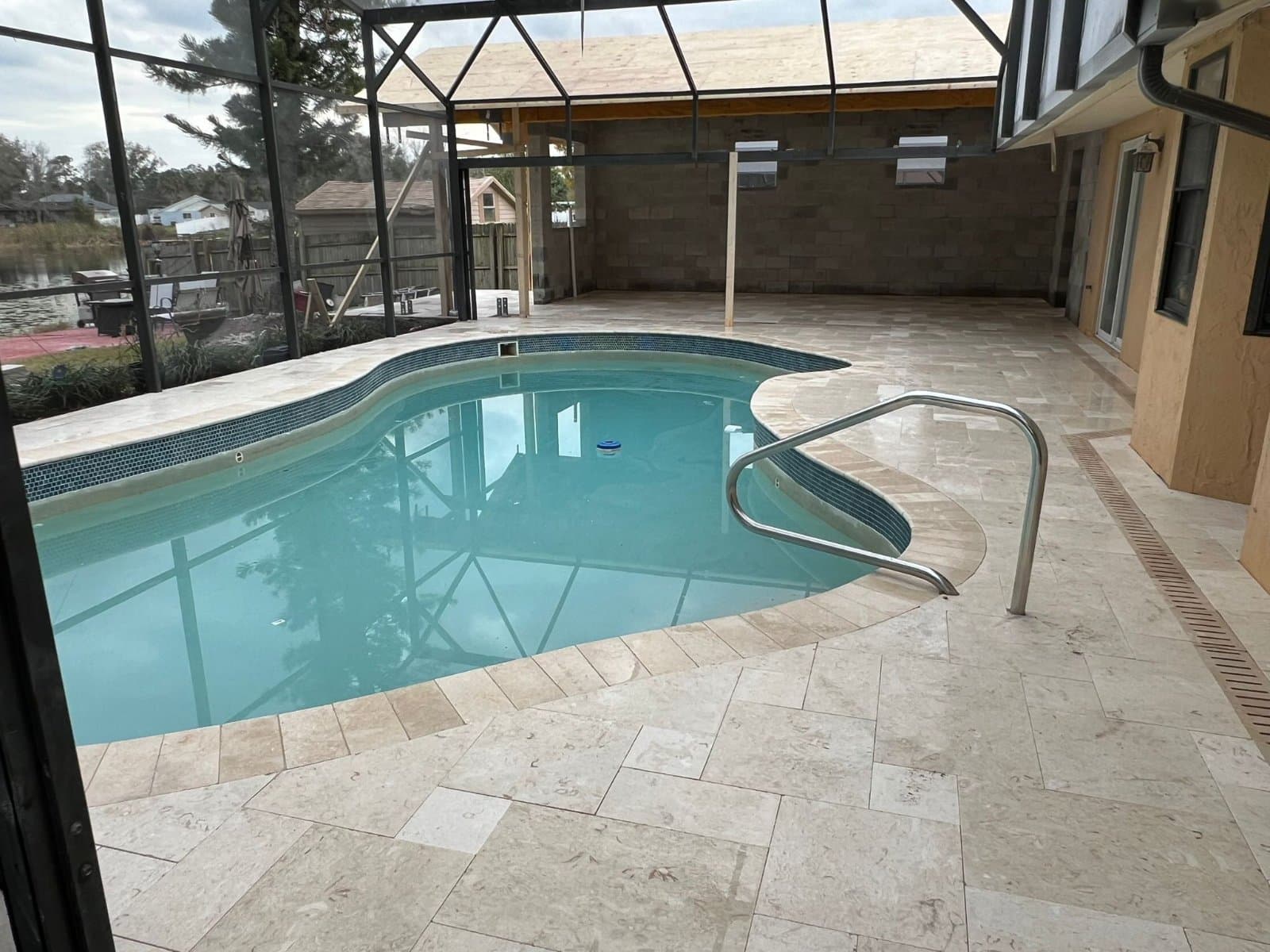
Pool barrier compliance
is non-negotiable in Orlando and across the state of Florida. Florida law under Statute 515 and the Florida Residential Building Code requires every residential swimming pool to be enclosed by a barrier at least 4 feet tall on the outside. No opening in the barrier can pass a 4-inch-diameter sphere. The barrier must sit at least 20 inches from the water's edge. All gates in pool barriers must open outward, away from the pool. They must be self-closing and self-latching, with the latch release on the pool side and positioned where a child cannot reach it from over or through the gate. The fence cannot have horizontal rails or other features that create a climbable surface on the outside. We build every Orlando pool fence and gate to meet or exceed these requirements, and we coordinate directly with county inspectors to make sure the installation passes on the first visit. Pool safety isn't something we take chances on.
Whether it's a simple side gate or a full automated entry system with keypad access, the gate is where people interact with your fence every single day. It needs to look right, swing smoothly, latch securely, and hold up through years of daily use in Orlando's weather.
We also want to mention pet containment, because that's a major reason Orlando families invest in fencing. If you have dogs, your fence and gates need to account for escape attempts. Dogs dig under fences, push through weak panels, and squeeze through gaps that look impossibly small. We install bottom rails tight to the ground, reinforce the base of fence panels in areas where dogs tend to dig, and make sure gate clearances are too tight for even a determined terrier to slip through. The goal is a fence that keeps your pets safely inside without turning your yard into a prison. We build fences that look great and function as reliable containment systems at the same time.
(321) 353-7445Get Immediate Service
Orange County Permits, Height Rules, and HOA Regulations
The regulatory side of fence installation in Orlando catches a lot of homeowners off guard, and it trips up contractors who aren't familiar with local requirements. Between county zoning rules, city permits, HOA covenants, and state building codes, there are layers of requirements that all need to be satisfied before a single post goes into the ground. KS Solutions manages every permit and approval on your behalf so nothing falls through the cracks.
Orange County zoning permits
are required for new fence installations and for repairs or replacements that affect more than 10 percent of an existing fence. You submit applications online through the Fast Track system. The submission must include a dimensioned site plan or survey showing the proposed fence location drawn to scale. The plan needs to identify property lines, setbacks, easements, and the location of any existing structures. Review typically takes about 4 business days for standard residential fences. If any portion of the fence falls within an easement, you'll also need a signed Easement Acknowledgment Form. Masonry walls with brick, stucco, or concrete columns require a full building permit rather than a zoning permit. Properties within the City of Orlando limits have their own fence permit application process that's separate from the county system. KS Solutions determines which jurisdiction applies to your address and handles the correct filing. Contact the Orange County zoning office at (407) 836-3111 or zoning@ocfl.net with questions about your specific property.
Height restrictions
in Orange County break down by yard zone and are strictly enforced. Side and rear yard fences can stand up to 8 feet tall. Front yard fences are limited to 4 feet within the required front setback. On corner lots, the 15-foot corner triangle at street intersections must remain clear of any fence taller than 4 feet to preserve driver sight lines and pedestrian safety. This triangle is measured from the intersection of the two property lines adjacent to the streets. Lakefront properties carry an additional restriction: fences within 50 feet of the lake setback (measured from the Normal High-Water Elevation line) cannot exceed 4 feet. These rules apply to unincorporated Orange County. The City of Orlando has similar but not identical height standards, and some differences can catch you off guard if you assume the county rules apply everywhere.
HOA requirements
add another layer of regulation on top of county code, and in Orlando they're often more restrictive. Most planned communities, subdivisions, and condo associations require you to submit fence plans to an Architectural Review Board (ARB) before installation and receive written approval. Common HOA restrictions include maximum heights of 6 feet in backyards and 3 to 4 feet in front yards, mandated materials such as vinyl, wood, or ornamental aluminum, specific color palettes that match the community aesthetic, minimum setbacks from sidewalks and neighboring structures, and requirements that the finished or "good" side of the fence face outward toward the street or neighbors. Some HOAs ban chain link entirely. Others require specific post cap styles or prohibit certain fence configurations. We review your HOA covenants during the planning phase and design every fence to satisfy both your community rules and the county code from the start. Getting HOA approval before pulling your county permit saves time and prevents costly do-overs.
Easement considerations
are something many Orlando homeowners don't think about until it's too late. Utility easements, drainage easements, and access easements run through many residential lots. Fencing within an easement is sometimes allowed, but the utility company or municipality retains the right to remove your fence for access without compensating you for the damage or replacement cost. We check your property survey for easements before finalizing the fence layout, and we design around them whenever it's practical to do so. That way your investment is protected from the start.
The bottom line on regulations is this: Orlando has more fencing rules than most cities, and the consequences of getting it wrong range from having to tear down and rebuild your fence to paying fines to your HOA or county. KS Solutions knows every requirement, and we design every project for full compliance before the first post goes into the ground. You focus on choosing the fence you want. We handle the rest.
Fence Installation Costs and Our Step-by-Step Process
Understanding costs upfront helps you plan with confidence and avoid surprises. KS Solutions gives every Orlando client a detailed, line-item estimate before work begins, and the number we quote is the number you pay. Here's what drives fence pricing in the Orlando market and how our process works from start to finish.
Material cost
is the biggest variable. Pressure-treated wood runs roughly $13 to $17 per linear foot for a standard 6-foot privacy fence. Vinyl falls between $20 and $35 per linear foot installed, depending on panel height, thickness, and style. Aluminum security and decorative fencing ranges from $21 to $28 per linear foot. Chain link with vinyl coating is the least expensive at $8 to $15 per linear foot for residential gauge. Composite and wrought iron sit at the premium end with prices varying based on design complexity, custom elements, and finish quality.
Linear footage
is the most straightforward cost driver. A typical Orlando backyard enclosure on a quarter-acre lot runs 150 to 250 linear feet. Full perimeter fencing around the same lot can push 300 to 400 linear feet. More footage means more materials, more post holes, more concrete for footings, and more labor hours. But there's a scale advantage too. Larger projects bring the per-foot cost down because fixed costs like mobilization, equipment transport, and permit fees spread across more footage.
Gates
add cost beyond the per-foot rate. A standard single swing gate with hardware runs $200 to $600 depending on material and size. Double drive gates for vehicle access cost $500 to $1,500 depending on width and material. Automated gate systems with motors, keypads, safety sensors, and remote controls add $1,500 to $4,000 or more depending on the technology and integration level you want.
Terrain and site conditions
affect labor costs. Flat, clear lots are the fastest and least expensive to fence. Sloped yards need stepped or racked panels, which take more time and skill to install level. Properties with heavy root systems, rocky fill, or restricted access require more effort and sometimes specialty equipment. Orlando's sandy soil actually makes digging easier in most cases, but loose sand can collapse around post holes and require more concrete to stabilize the footing. Demolition of an existing fence adds $3 to $5 per linear foot for removal and disposal.
Permit fees
in Orange County and the City of Orlando generally run $70 to $350 depending on the scope of the project. We include permit coordination in our service and let you know the exact permit cost before we submit.
Most Orlando homeowners spend between $3,000 and $8,000 for a standard residential fence installation. Premium materials, automation, and complex terrain push totals higher. Here's our step-by-step process for every project:
Step 1: On-site consultation where we walk the proposed fence line, take measurements, discuss materials, and evaluate site conditions including Orlando's sandy soil and any drainage patterns. Step 2: Design and material selection with physical samples and a detailed written proposal. Step 3: Permitting and HOA approval, fully managed by our team. Step 4: Utility locating through 811, which is free and required by Florida law before any digging. Step 5: Post installation in concrete footings, typically 24 to 36 inches deep depending on fence height and wind load. Step 6: Rail and panel installation with plumb and level checks on every section, using stainless steel or coated fasteners that won't rust. Step 7: Gate hanging with heavy-duty hardware and self-closing mechanisms where required. Step 8: Final walkthrough and inspection with you, including care instructions for your specific fence material.
Most residential fence installations in Orlando take 2 to 5 days of on-site work after permits are approved. The permitting process adds 1 to 3 weeks before construction begins, which is why we recommend starting the conversation early if you have a deadline in mind for having your fence completed.
We also offer an ongoing fence maintenance plan that includes inspections, cleaning, hardware checks, and minor repairs to keep your fence performing at its best in Orlando's demanding climate. It's the simplest way to protect your investment over the long haul.
Ready to start your fence project? And here's something a lot of people don't think about: the best time to install a fence in Orlando is during the drier months from November through April. The ground is easier to work with, scheduling is more predictable without daily rain delays, and you'll have your fence in place before the rainy season brings the afternoon storms that make outdoor work harder. That said, we install fences year-round and schedule around weather as needed. Orlando's climate never really shuts down the construction season.
Call KS Solutions at (321) 353-7445 for a free consultation and estimate. We serve every Orlando neighborhood from Lake Nona to Ivanhoe Village, Thornton Park to Dr. Phillips, Mills 50 to Audubon Park, and everywhere in between.