What Polymeric Sand Is and Why It Beats Regular Joint Sand
Polymeric sand is graded sand blended with binders, usually including polymers and in some formulas Portland cement, that harden when activated with water. Swept into the joints between pavers and then misted, it sets into a firm, slightly flexible fill that locks the units together. Compared to plain masonry sand, it does three things plain sand cannot: it resists washout from rain and pressure washing, it blocks most weed and ant intrusion, and it holds the joint tight so the field does not spread.
In Florida those advantages matter more than almost anywhere. The wet season delivers roughly 7 to 8 inches of rain a month from June through September, and plain joint sand washes out of an open joint fast under that volume. Once the joints empty, the pavers shift, the edges spread, and the trip lips appear. Polymeric sand is the defense against that, which is why it is standard on quality installs. The trade-off is that it is far less forgiving to install, and the price of getting it wrong is haze.
Why Polymeric Sand Hazes, and Why Florida Is the Worst Place for It
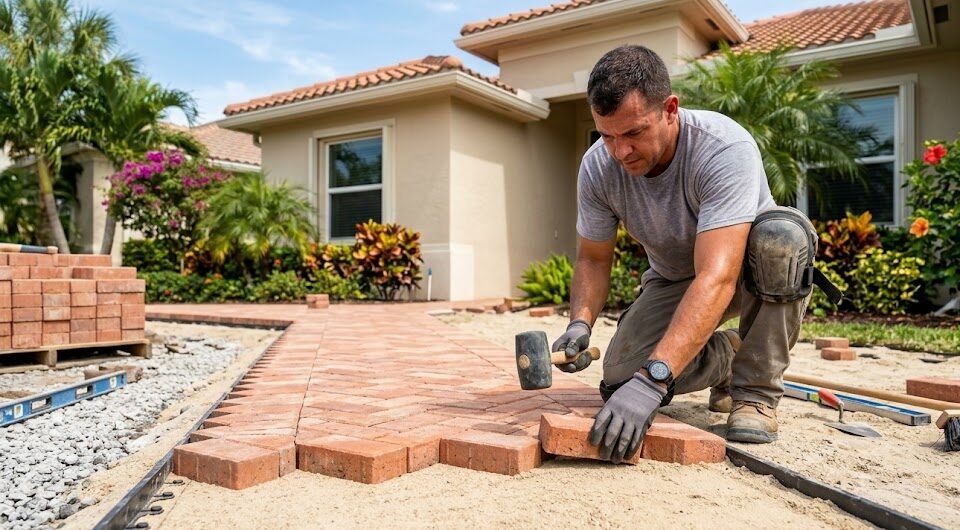
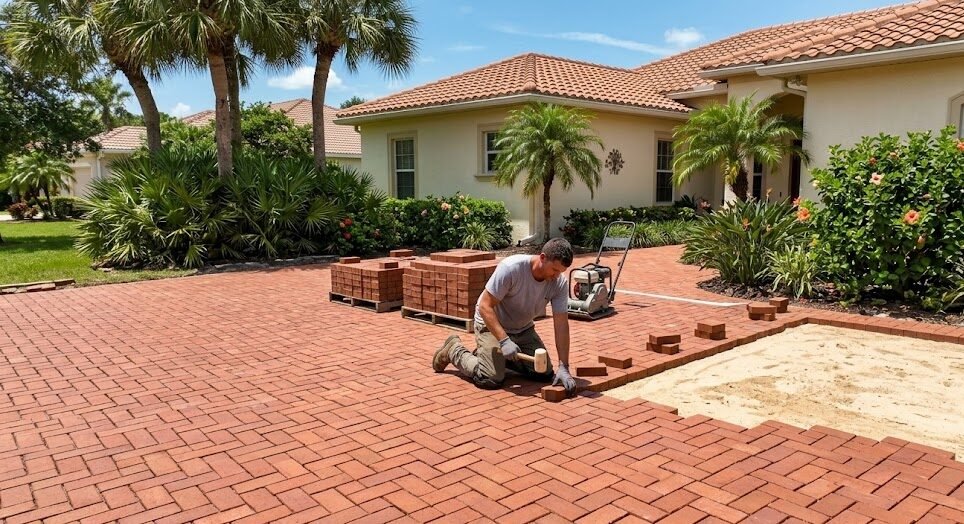
Haze is a thin white or gray film left on the paver surface after the sand is activated. It is not dirt and it is not efflorescence from the paver. It is polymer binder, and sometimes cement fines, that migrated up out of the joint and dried on the face of the stone. When the sand is activated with too much water, or when a residue of dust and binder is left sitting on the paver surface before watering, that binder spreads across the face and cures there as a haze that bonds to the texture.
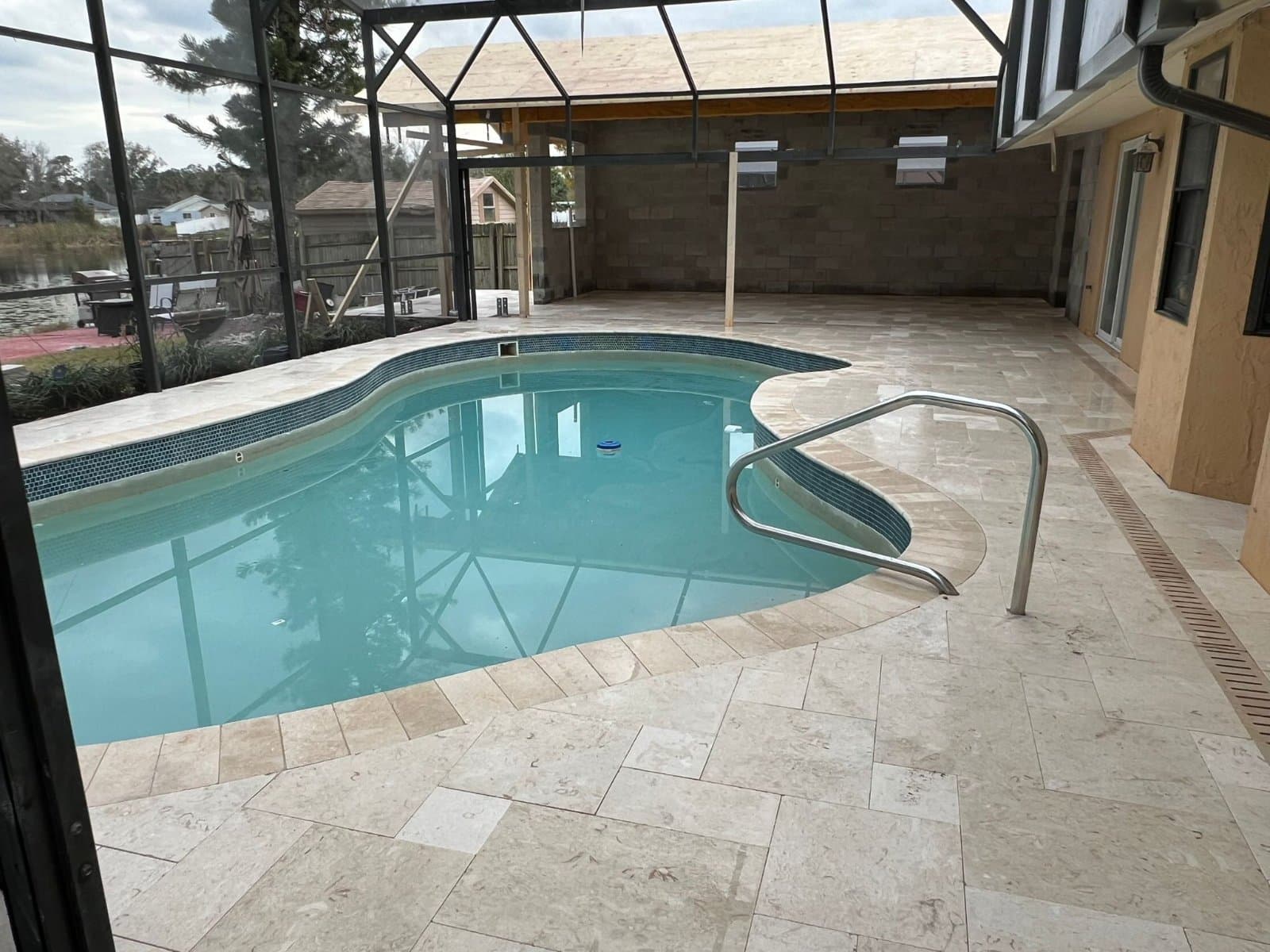
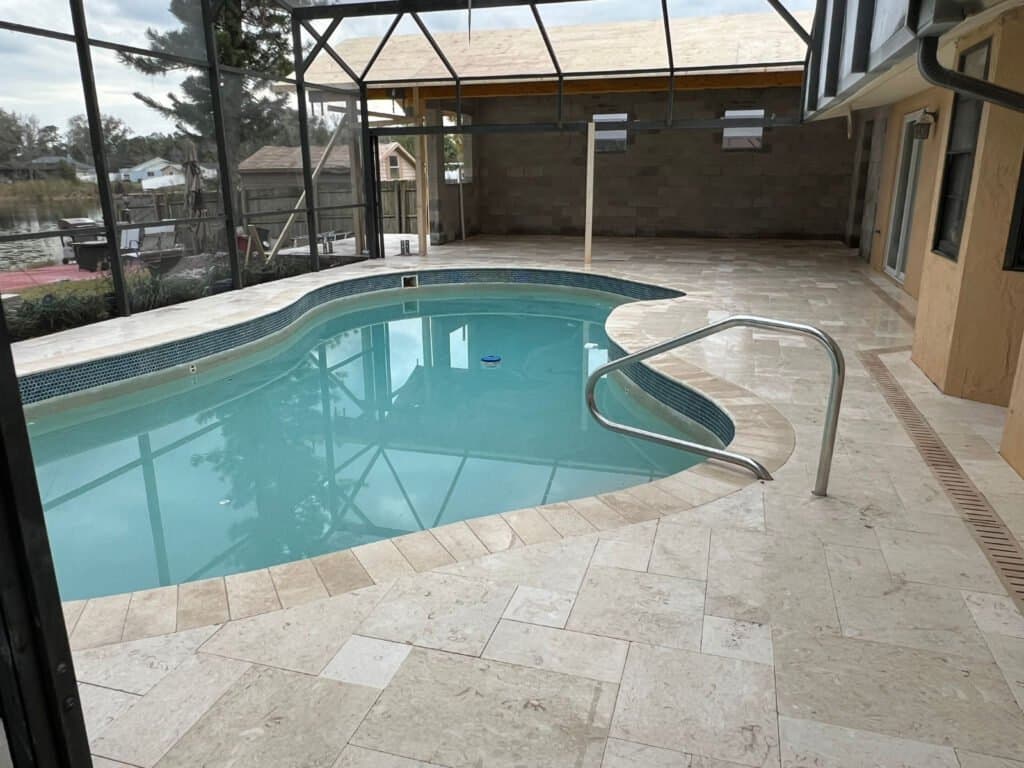
Florida stacks the deck against you in three specific ways. First, humidity slows evaporation, so the surface stays damp longer and the polymer has more time to migrate and set on the face instead of down in the joint. Second, the afternoon storm is a constant threat: sand that has been swept but not yet fully cured can be hit by rain and activated in an uncontrolled way, which is a classic haze trigger. Third, light-colored pavers, which dominate Florida for heat reasons, show haze far more than dark ones, so the same film that hides on charcoal is glaring on cream travertine or light gray concrete.
That combination is why the same product that installs cleanly in a dry climate can haze in a Central Florida backyard. The material did not change. The humidity, the rain window, and the light paver color did. Understanding that is what lets you prevent it, because every one of those factors is manageable with the right product and the right technique.
The Install Mistakes That Cause Haze
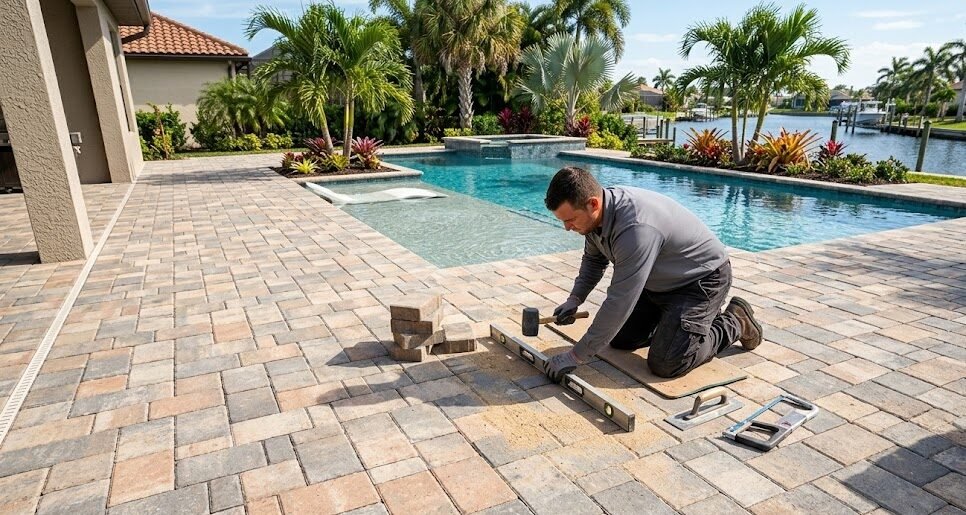
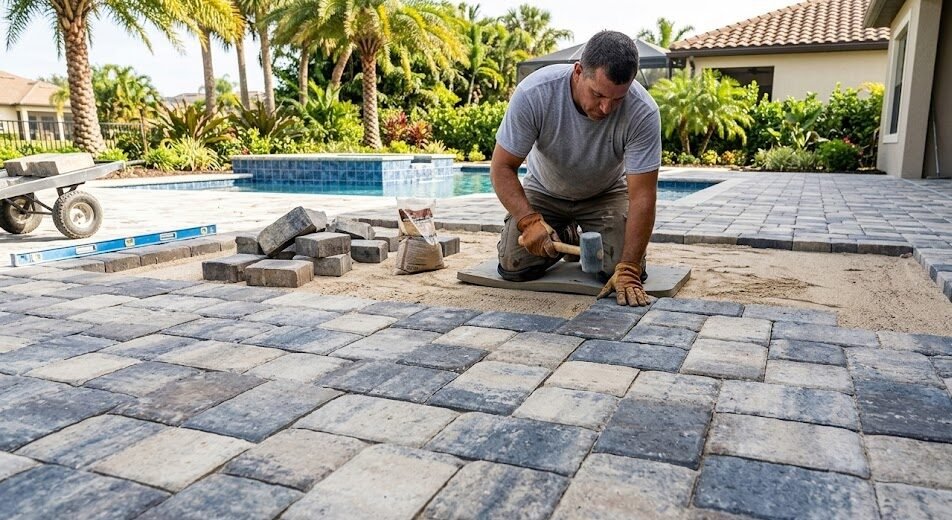
More haze is caused by technique than by brand. The same bag of sand produces a clean deck or a hazed one depending on how it is installed, and the failures are consistent.
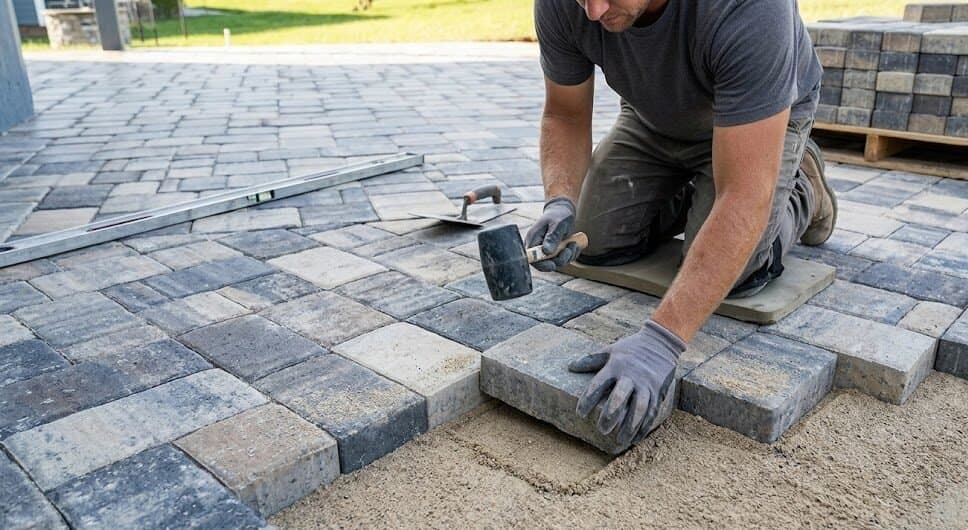
- Sweeping sand onto damp or dirty pavers: Any binder-laden dust left on the surface when water hits it cures as haze. The paver faces must be dry and clean, and the excess swept completely off before activation.
- Leaving dust on the surface: After filling the joints, the surface has to be blown or swept until no residue remains on the paver faces, only sand down in the joints. Skipping that final clean is the number one cause of haze.
- Over-watering during activation: Too much water floods the binder up and out of the joint onto the face. The correct method is a controlled mist in stages, not a heavy soak.
- Installing before rain: Sand that gets rained on before it has cured activates unevenly and hazes. In Florida that means watching the radar, not just the clock.
- Working in the wrong temperature or on a wet joint: Joints must be dry when the sand goes in, and the product needs its specified temperature and dry window to cure correctly.
The pattern is clear: haze comes from binder on the surface plus water. Get the paver faces clean and dry, sweep the excess off completely, activate with a controlled mist, and beat the rain, and most haze never happens. That discipline is part of why the jointing step belongs to the same crew that sets the base, a point we make in our breakdown of what actually drives brick paver cost in Florida.
Four Haze-Resistant Brands That Work in Florida Humidity
Manufacturers responded to the haze problem with formulas engineered to keep the binder in the joint and off the face, several of them explicitly built for humid, rain-prone climates. Four stand out.
- Techniseal HP NextGel: Marketed as no dust, no haze, and no waste, and specifically recommended for high-humidity areas and heavy traffic. It begins to set only a few minutes after activation and quickly resists water erosion, which is exactly the property that beats the Florida afternoon storm.
- Alliance G2 Maxx: Built around what the maker calls the Three No's, no dust, no haze, and no blower, powered by a rapid-set technology that eliminates residual material on the paver surface. The fast set is what limits the window in which binder can migrate to the face.
- DOMINATOR SOLID-FLEX: Positioned as the first haze-free polymeric sand, using a flexing, self-healing binder that stabilizes the joint while resisting the surface residue that causes haze.
- Rhino Power Bond Plus: Uses a haze-free formula designed to prevent cloudy residue on the paver surface, a straightforward option in the same category.
Two things matter more than picking a favorite from that list. First, in high humidity you want a rainfast, fast-curing formula, because the faster the product locks, the smaller the window for both rain activation and polymer migration. Second, even a haze-free product still hazes if it is installed on dirty faces or over-watered. The formula reduces the risk, it does not remove the need for clean technique. By contrast, slower-curing products such as Sakrete Paver Set are less forgiving of over-watering and take 48 to 72 hours for full hardness versus about 24 for the fast-set formulas, which is a real consideration when an afternoon storm is likely.
(321) 353-7445Get Immediate Service
How to Remove Haze That Already Set
If a deck already hazed, the fix depends on how bad it is and how long it has been there, and it is worth being honest that removal is harder than prevention.
- Fresh, light haze: A stiff broom and repeated rinsing sometimes lifts a very light film in the first day or two, before the polymer fully cures. This window is short.
- Cured haze: A polymeric sand haze remover, which is a specialized cleaner formulated to break down the cured polymer, is the standard next step. These are brand-specific in their chemistry, so match the remover to the type of binder when possible, and always test in an inconspicuous area first.
- Careful pressure washing: A controlled wash can remove haze, but too much pressure blows the sand back out of the joints and can etch softer stone, which means re-jointing afterward and the risk of hazing again. It is a last resort, not a first move.
The uncomfortable truth is that severe, fully cured haze on a textured light paver is sometimes impossible to remove completely, which is exactly why prevention is the whole game. On a high-value surface such as a pool deck, where the pavers are light and constantly wet, the cost of getting the jointing wrong is high enough that it is worth insisting on a crew that installs polymeric sand correctly, the same standard we apply on every pool deck paver installation.
When Polymeric Sand Is the Wrong Choice
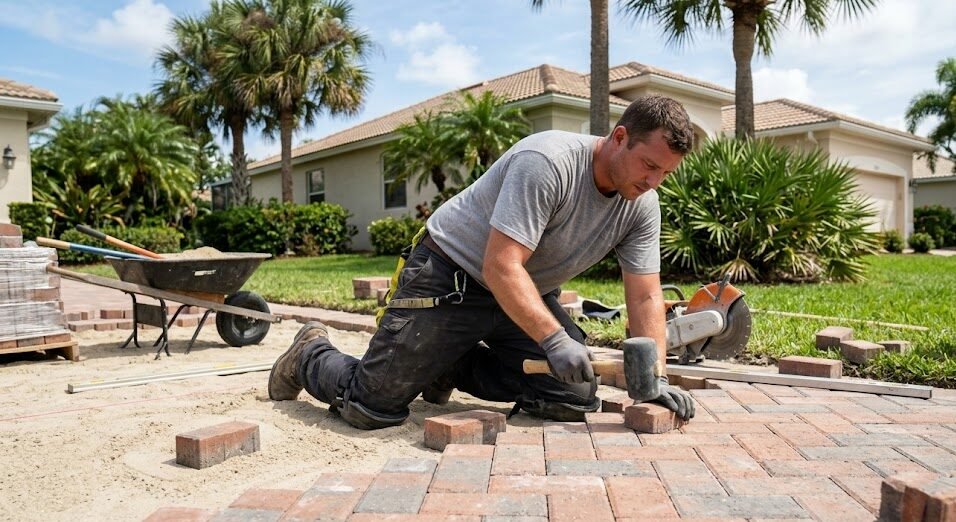
Polymeric sand is the right fill for most Florida paver joints, but not all of them, and using it in the wrong place creates its own problems.
- Constant standing water: Areas that never dry out fully, such as a poorly drained low spot, work the binder harder than it is meant to handle. The real fix there is drainage, not a different sand.
- Permeable paver systems: Permeable pavers are designed to let water pass through the joints into the base. Filling those joints with polymeric sand defeats the purpose, so they use an open-graded aggregate instead.
- Very wide joints: Most polymeric sands have a maximum joint width, often around an inch or slightly more. Wider joints need a product rated for the width or a different jointing approach.
- Flexible or heaving bases: Polymeric sand tolerates minor movement, but it cannot hold a joint together over a base that was never compacted properly. On a moving base, the joints crack regardless of the product.
That last point is the one that ties everything together. Jointing is the final step, and it can only be as good as the base underneath it. A deck built on sandy soil without proper compaction and edge restraint will open its joints no matter which polymeric sand fills them, which is why the base specification, not the sand, is where a lasting install is really decided.
Getting the Joints Right the First Time
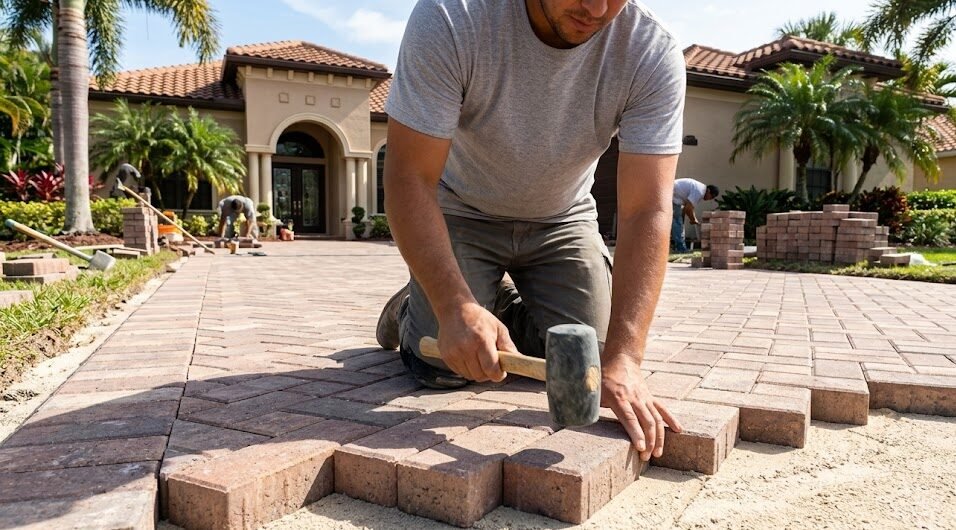
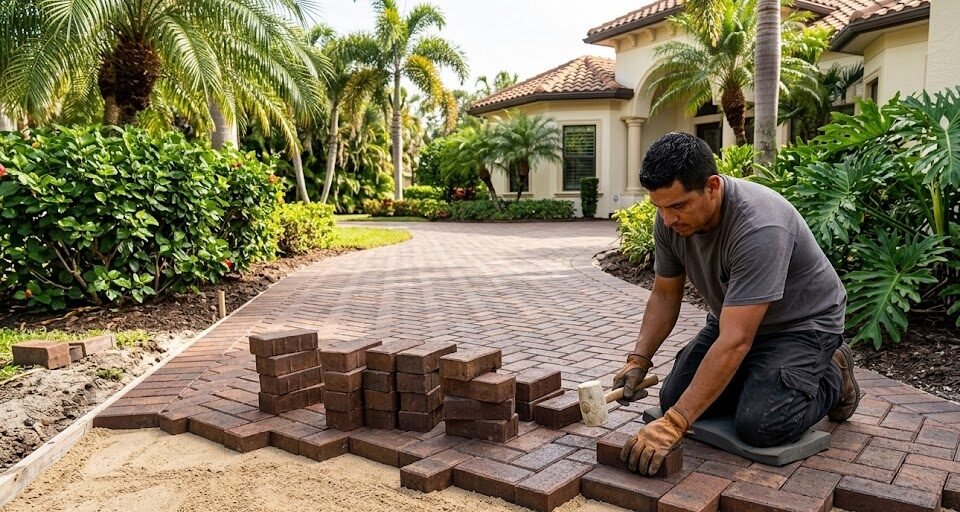
The order that produces a clean, durable paver deck in Florida is the opposite of how most people think about it. The base and drainage come first, the paver and color come second, and the polymeric sand is the finish that protects the whole thing, installed on clean dry faces, swept off completely, activated with a controlled mist, and timed to beat the rain. Get that sequence right and the joints stay locked, the weeds stay out, and the faces stay clean.
KS Solutions installs pavers, driveways, pool decks, fencing, and turf across Central Florida, including Lakeland and Winter Haven, and every paver job we scope treats the jointing as a specified step, not an afterthought. See our brick paver installation service for how we build the whole assembly, and reach out for a free on-site assessment before your next project. If you are still choosing a surface, our guide to pool deck pavers in Florida covers the material and color decisions that also affect how visible any haze would be.