What Central Florida Means for a Paver Project
Central Florida is not one market. It runs from the sand ridge in Polk County east to the Atlantic in Volusia, and it takes in Orlando, Kissimmee, Lakeland, Winter Haven, Clermont, Sanford, Deltona and everything filling in between them. KS Solutions works across six counties: Orange, Polk, Osceola, Seminole, Lake and Volusia. That footprint is the reason this page exists. A homeowner in Winter Haven and a homeowner in Lake Mary are buying the same product and dealing with two different building departments, two different soil profiles and often two very different kinds of neighborhood.
What the whole region shares is what makes pavers work well here in the first place. The subgrade is sand almost everywhere, which drains fast but compacts poorly if nobody makes it. The water table sits close to the surface across most of the interior. There is no freeze and thaw cycle to heave a surface, so the failure modes are different from what you read about in northern states. Instead, the enemies are water moving under the base, vehicle loads on a base that was never built for them, and a rainy season that dumps most of the year's water into about five months.
The other thing the region shares is scale of new construction. Huge stretches of Polk, Osceola and Orange filled in with master planned subdivisions over the last two decades. Those neighborhoods almost always come with an architectural review committee, which means your paver project has a second approval to clear on top of the county permit. Older neighborhoods in Seminole, Orange and Volusia usually have no HOA at all, but they come with mature oak roots, narrow side yards and driveways poured decades ago that have to come out before anything new goes down.
County by County: What Changes Across the Region
The same paver, the same base spec and the same crew produce different projects depending on which county you are standing in. Here is what shifts.
Orange County
Orlando, Winter Garden, Apopka, Ocoee and Windermere sit on top of the widest mix of housing stock in the region. You get 1950s and 1960s block homes with original narrow driveways a few streets away from builds finished last year. The practical issue in Orange County is jurisdiction: incorporated cities run their own building departments, so a permit for a home inside Orlando city limits is not the same submittal as one for an unincorporated address a mile away. Mature live oaks are the other constant. Roots run shallow and wide in sandy soil, and a driveway or patio laid over them without addressing the root zone will telegraph every root within a few years.
Polk County
Lakeland, Winter Haven, Davenport, Haines City and Auburndale sit along and around the Lake Wales Ridge, which is deep, clean sand. It drains beautifully and compacts poorly, which means base preparation carries more of the load here than almost anywhere else in the region. Winter Haven's chain of lakes puts a lot of properties on or near water, so lakeside patios and pool decks have to think about slope and runoff, not just layout. The Davenport and ChampionsGate corridor is some of the newest construction in Central Florida, and those communities tend to have the strictest architectural review packages, with approved color and material lists.
Osceola County
Kissimmee, St. Cloud and Celebration cover two very different jobs. On the east and south side you have owner occupied homes on larger lots. Along the US 192 corridor you have a dense concentration of vacation rental homes, where pool decks get more traffic in a month than a family deck gets in a year. That changes what surface makes sense. A textured, slip resistant paver around a heavily used pool holds up better than a smooth one, and joints that get regularly re-sanded stay tight longer under constant foot traffic.
Seminole County
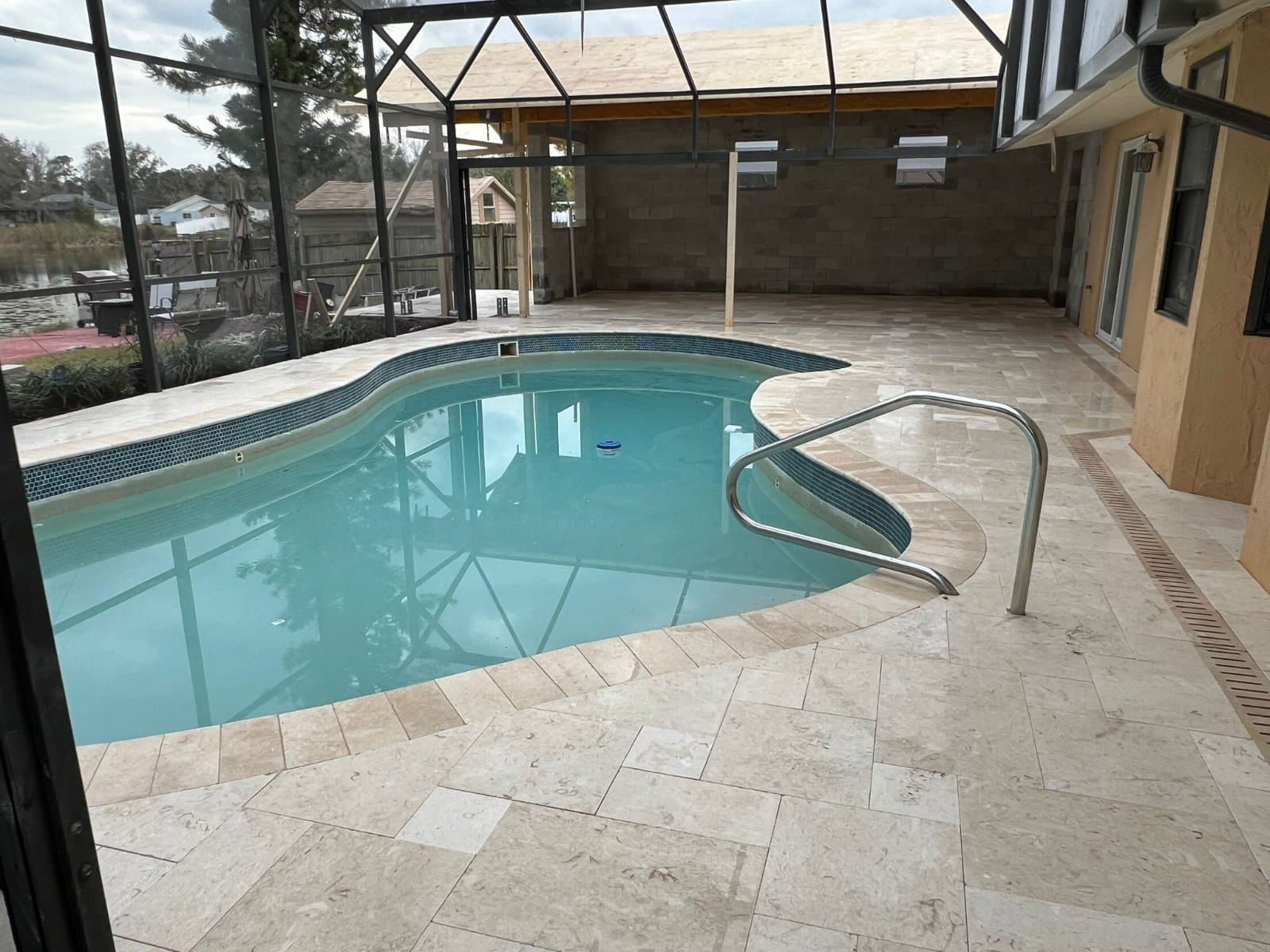
Sanford, Lake Mary, Longwood, Oviedo and Winter Springs are mature suburbs with heavy tree canopy. Screened pool enclosures are everywhere, which means a lot of pool deck work here is a resurface or a rebuild inside an existing cage, with limited access for equipment and material. Shade is a real design factor too. Deck surfaces under canopy stay damp longer and grow algae faster than the same paver in full sun, so cleaning and sealing schedules matter more.
Lake County
Clermont, Groveland and Minneola sit on genuinely rolling terrain, which is unusual for Florida and changes the whole conversation. Driveways with real slope need drainage planned into the design, not added after. Yards that step down toward the back frequently need retaining walls to create a usable flat area before a patio makes any sense. Grading is the first line item on a lot of Lake County jobs, and it is the one that decides whether the finished surface still looks right in five years.
Volusia County
Deltona, DeLand, Orange City and the coastal side toward Daytona bring wind and salt into the picture. Design wind speeds under the Florida Building Code increase as you move toward the coast, which affects anything vertical: fences, gates and the posts holding them. Salt air near the beach is hard on hardware and on anything ferrous. Pavers themselves handle it fine, but the details around them need to be chosen for the exposure.
What Goes Under the Pavers Decides How Long They Last
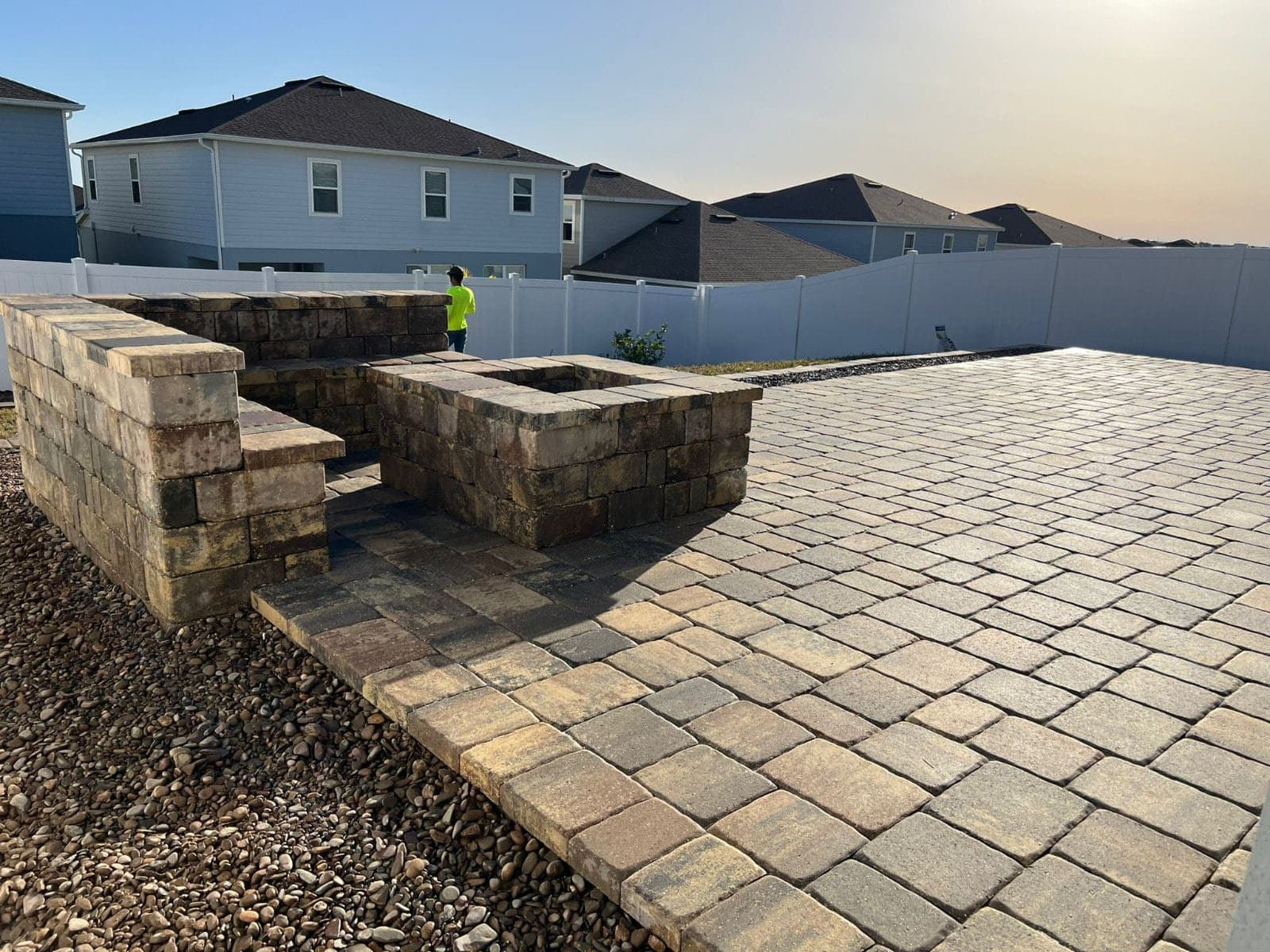
Almost every paver failure in Central Florida is a base failure, not a paver failure. The brick itself is a dense concrete unit that outlives the installation. What moves is everything below it.
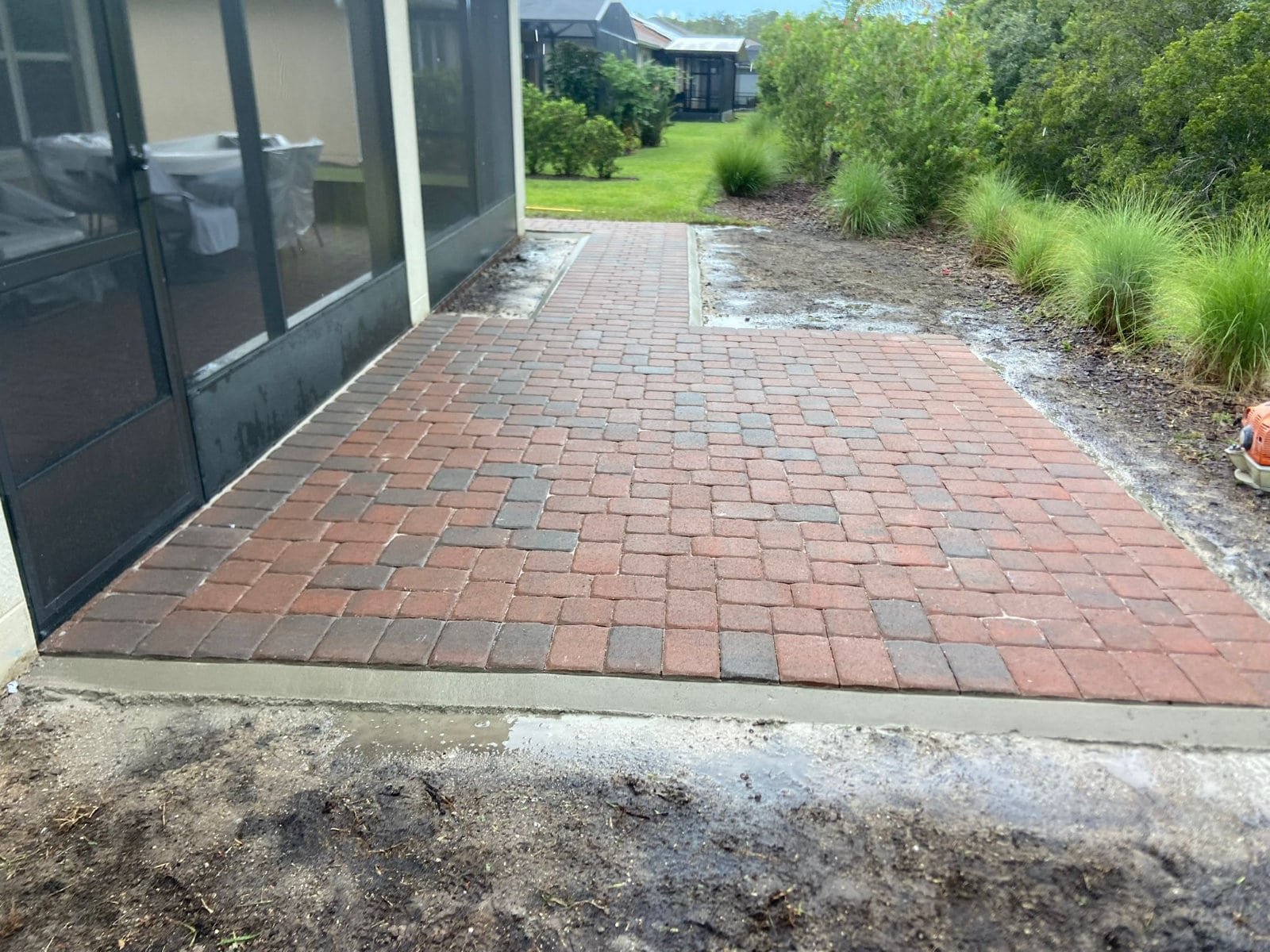
A correct installation starts by excavating well past the finished depth, because the base is the structure. Sand subgrade is stripped and compacted, then a compacted aggregate base goes in and gets built up in lifts. Compacting in lifts is not a detail you can skip. A thick layer compacted in one pass looks solid on top and stays loose underneath, and the surface will settle unevenly once real load hits it. The bedding layer over the base is thin and screeded flat, never used to make up for a base that was not graded right.
Depth is where driveways and patios separate. A patio or walkway carries people and furniture. A driveway carries a truck, and in a lot of Central Florida households it carries a boat or an RV on top of that. Those need a deeper, heavier base. Ask any contractor what base depth they are quoting for your specific use, and get it in writing. If the answer is the same number for your patio and your driveway, that is a problem.
Edge restraint is the other item that gets cut on cheap jobs. Pavers in a sand setting bed have nothing holding the outside row in place unless a restraint is installed and spiked into the base. Without it the perimeter spreads, joints open, and the failure works its way inward from the edges. Joint sand belongs in the same category. Properly swept and set joint sand locks the field together, keeps weeds from seeding and makes it harder for ants to tunnel out the bedding layer, which is a genuinely common problem in this part of the state.
Permits and HOA Approval Across Six Counties
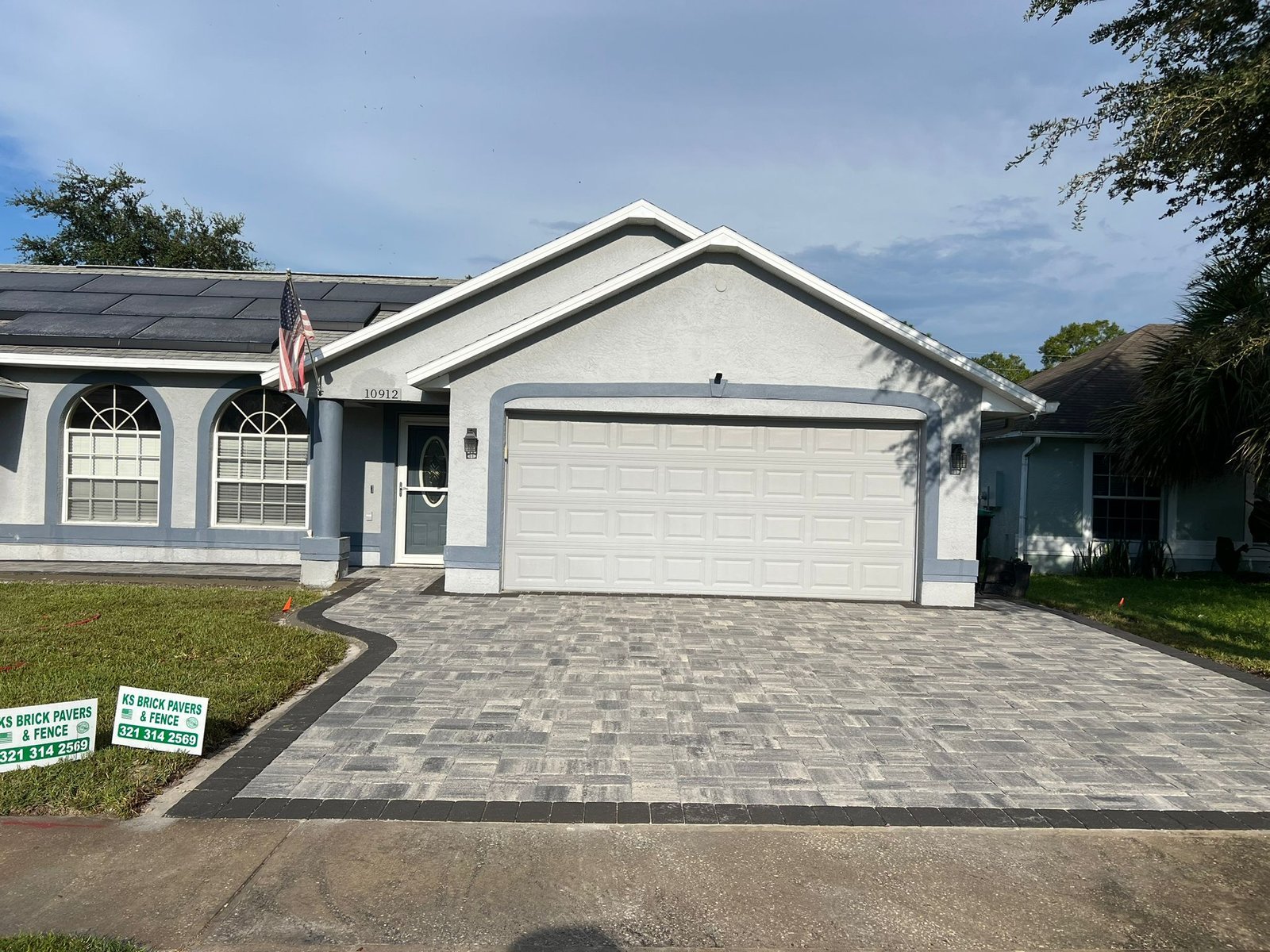
Hardscape work in Central Florida usually needs a permit, and which office issues it depends on whether your address is inside a city or in unincorporated county. Driveway work adds a layer, because the apron where the driveway meets the public road sits in the right of way and is reviewed by whoever maintains that road. Widening a driveway or adding a large patio can also run into impervious surface coverage limits, which cap how much of a lot can be covered by surfaces that shed water. Setbacks from property lines apply to walls and fences.
KS Solutions handles every permit and HOA submittal as part of the quote on brick paver work. On fence installation, the team handles the entire process, including submitting plans, paying permit fees and scheduling inspections. That matters more than it sounds like. Permit packages usually need a current survey with the proposed work drawn on it, and the review comment that comes back is not always obvious to a homeowner reading it for the first time.
HOA review is separate from the permit, runs on its own calendar, and is very common in the newer parts of Polk, Osceola and Orange. Architectural committees typically want the paver style, the color, the pattern and a site plan showing exactly where the work lands. Some communities publish approved product lists. The sequence that avoids trouble is simple: HOA approval first, permit second, demolition third. Doing it in any other order risks tearing out work that was never going to be approved as designed.
(321) 353-7445Get Immediate Service
Storm Season, Drainage and the Florida Summer
Hurricane season runs June 1 through November 30, and the daily afternoon thunderstorms that define a Central Florida summer start well before that. Most of the year's rain lands in that window, and it lands hard and fast. Any hardscape surface here has to be designed around that reality rather than around an average.
The design answer is slope and permeability. Every paver surface should carry a consistent fall away from the house, and the joints between units give water somewhere to go instead of sheeting across the surface toward a doorway. That is a real advantage over a monolithic poured slab, which sends all of its water to the edges. Around pools, the surface has to move water away from the coping and away from the equipment pad.
The second advantage shows up years later. When something does move, whether from a root, a settled spot or a utility repair, individual pavers can be lifted, the base corrected and the same units reset. There is no patch line and no color mismatch, because the original brick goes back down. A poured slab with the same problem gets saw cut and replaced in a section that will never match. That repairability is a large part of why pavers make sense in a climate that puts this much water through the ground every summer.
Storm season also shapes scheduling. Wet ground does not compact properly, and base work cannot be rushed through a downpour. Any honest contractor in this region will tell you that summer schedules move around the weather.
What Actually Drives the Price of a Paver Job Here
Square footage is the number most homeowners lead with, and it is the least useful one on its own. These are the factors that move a Central Florida paver quote up or down:
- Demolition. Removing and hauling an existing concrete driveway or pool deck is real work before the new work begins. A bare dirt area costs less to start on than a slab that has to come out.
- Access. Equipment and material have to reach the work area. A wide open front driveway is straightforward. A back patio reachable only through a narrow gate means more of the material moves by hand.
- Grade. Flat lots in Polk and Osceola are simpler than the slopes around Clermont and Minneola. Elevation change can mean grading, steps or a retaining wall before a single paver is set.
- Load. A driveway that carries a work truck, a boat trailer or an RV needs more base than a walkway, and that base is material and labor.
- Paver and pattern. Unit style and size change material cost. Pattern changes labor. Herringbone takes more cuts and more time than a running bond, and curved borders take more cuts than straight ones.
- Permits and HOA requirements. Some jurisdictions and some communities require more drawings, more detail and more review than others.
Anyone who quotes a Central Florida paver job by square foot alone, sight unseen, is guessing at four of those six items. Get the base spec, the demolition scope and the drainage plan itemized so you are comparing the same job across bids.
The Rest of the Yard: Fence, Turf and Maintenance
Most paver projects touch something else on the property, and it is usually cheaper and cleaner to plan them together than to bring a second crew back later. KS Solutions covers four services across the same six counties.
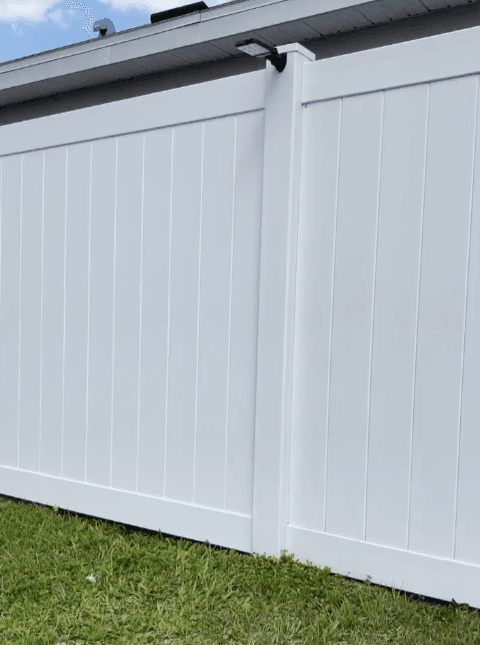
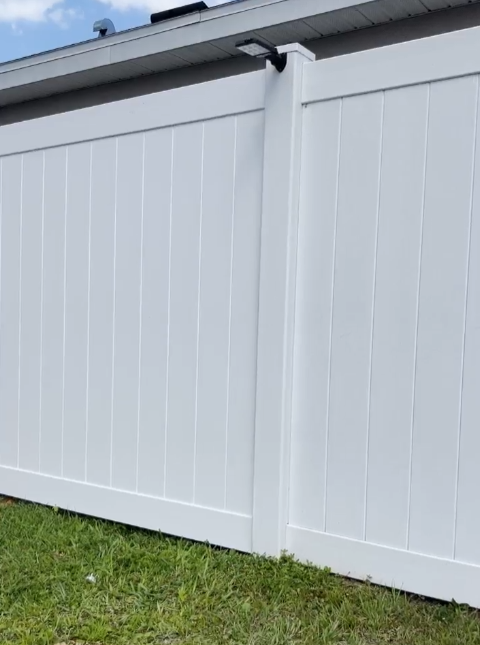
Fence installation is the most common pairing, because a new patio or pool deck often changes where the yard needs to be enclosed. Post depth and hardware selection are the details that matter in this region, especially in Volusia where coastal wind exposure and salt air both apply. The team handles plans, permit fees and inspection scheduling on fence work.
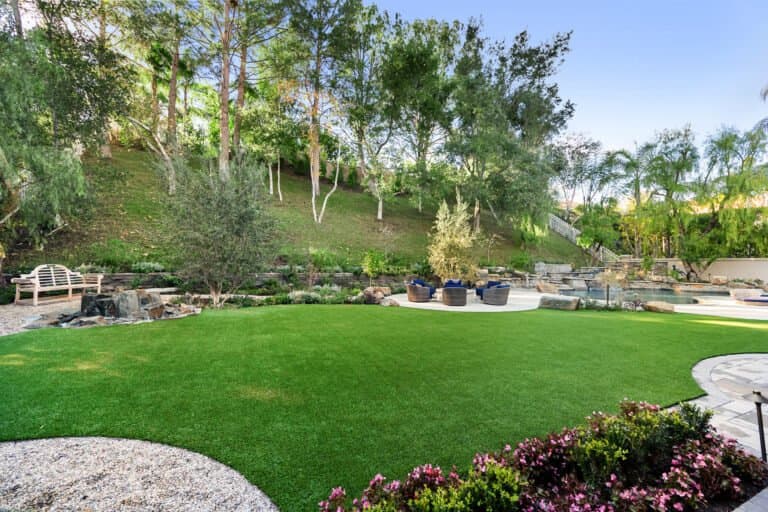
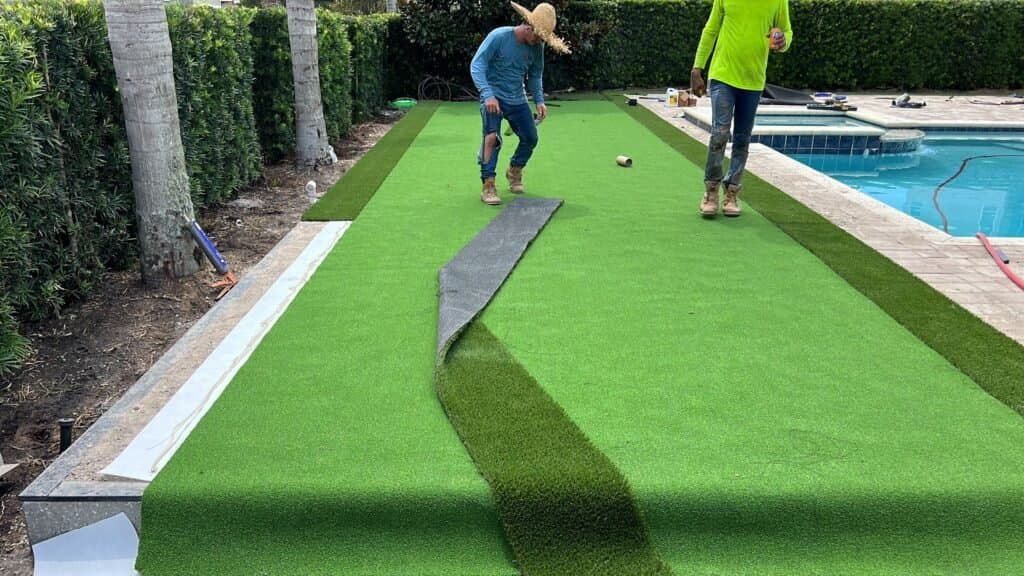
Artificial turf installation solves the strip of yard that never grows: deep shade under an oak canopy in Seminole, a dog run that has been worn to sand, or the narrow band between a pool deck and a fence. Turf and pavers share the same base work and the same edge detailing, so combining them in one scope avoids a second excavation.
Outdoor maintenance plans cover what keeps the work looking new. In this climate that means cleaning, re-sanding joints as they settle, and sealing on a schedule. Shaded surfaces in Seminole and Orange grow algae faster than sun exposed decks in Polk, so the right interval is not the same on every property.
How to Choose a Paver Contractor in Central Florida
The bids you collect will look similar on paper and describe very different work. These questions separate them:
- What base depth are you quoting, and is it different for the driveway than the patio? It should be. A single number for both is a warning sign.
- Do you compact in lifts, and how many? One pass over a deep layer is not compaction.
- What edge restraint are you using? If the answer is vague, the perimeter will spread.
- Who pulls the permit, and who submits to the HOA? If that lands on you, factor in the time.
- Are you licensed and insured, and can I see the certificate? Ask for it rather than assuming.
- What happens if a section settles? Get the answer before you sign, not after.
- Have you worked in my county recently? A crew that regularly pulls permits in Volusia knows that office. A crew that has only worked Polk does not.
Also look at how the quote is written. A scope that lists excavation depth, base material, bedding, edge restraint, joint sand, demolition and haul off is a scope you can hold someone to. A one line quote for a square footage number is not.
Getting Started Anywhere in the Region
KS Solutions installs brick pavers, fences, artificial turf and maintenance plans across Orange, Polk, Osceola, Seminole, Lake and Volusia counties, covering Orlando, Kissimmee, Lakeland, Winter Haven, Davenport, Clermont, Celebration, Sanford, St. Cloud, Deltona and the surrounding communities.
A useful first conversation covers the area you want to change, how it gets used, what is there now and whether your community has an architectural review committee. From there the work is a site visit to check grade, access and drainage, a written scope with the base spec included, then permit and HOA submittals before demolition begins. If you are weighing pavers against poured concrete, or trying to decide whether to do the driveway and the pool deck in the same phase, that is worth raising early, because the sequencing changes what the project costs to build.