What a Brick Paver Project in Eagle Lake Actually Involves
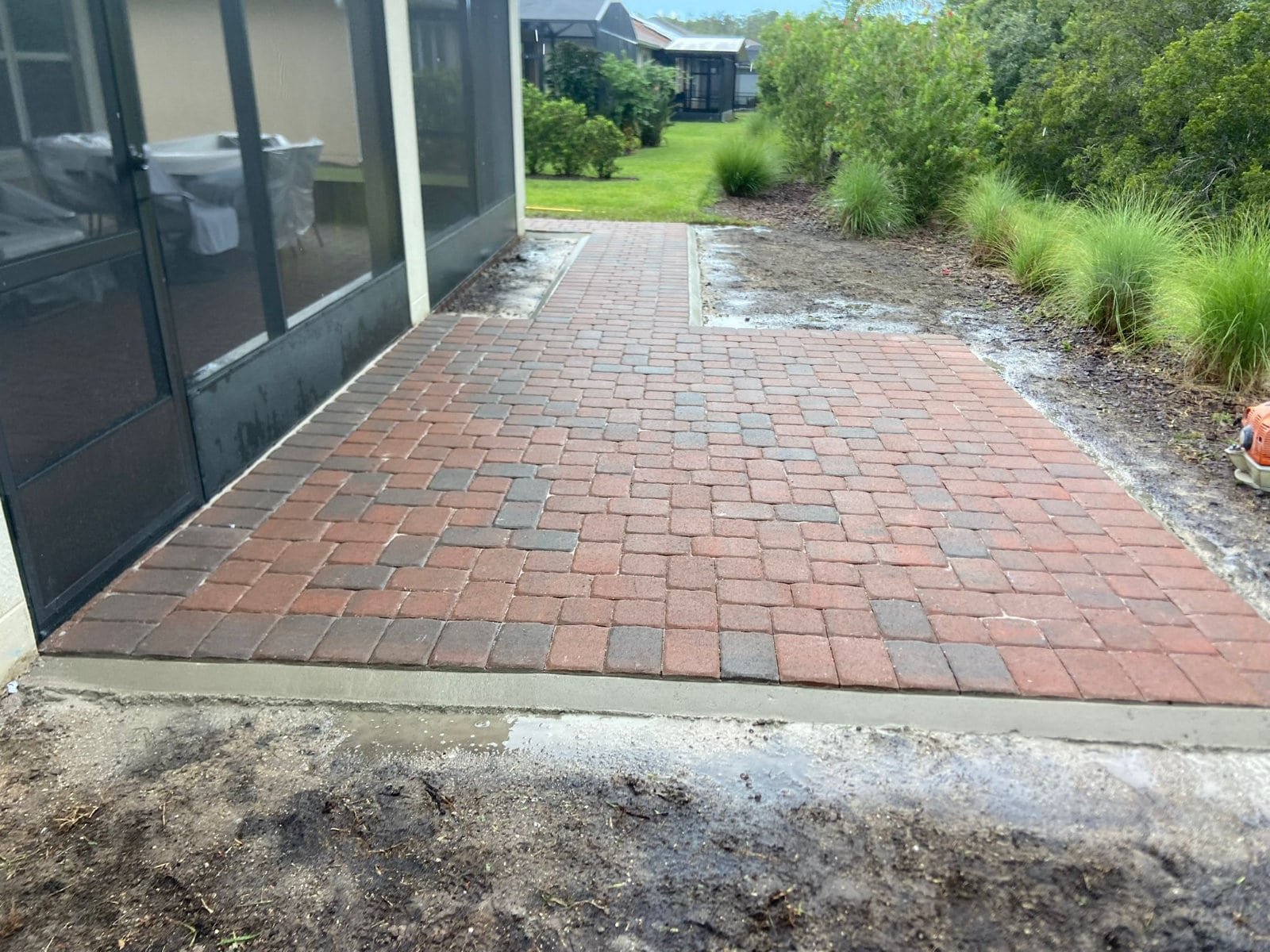
Most people shopping for pavers in Eagle Lake are looking at the top layer: the color, the pattern, the border. The part that decides whether the job still looks right in ten years is the part nobody ever sees. A paver surface is a compacted system. The pavers are the wear layer. The base underneath is the structure.
A real install starts with excavation, not with a pallet delivery. The crew digs out the existing grade to a depth set by what the surface has to carry. A garden walkway carries people. A driveway carries a loaded truck with a trailer behind it. Those are not the same hole, and a contractor who quotes them at the same base depth is quoting one of them wrong. The exposed subgrade gets compacted before anything goes back in, because a soft pocket left at the bottom will telegraph all the way to the surface within a couple of rainy seasons.
Then comes crushed base material, placed in lifts and compacted between each lift rather than dumped deep and rolled once at the end. On top of that goes a thin screeded bedding course, usually around an inch, that the pavers get set into. That layer is a leveling course and nothing more. Anyone using a thick sand layer to make up for a thin or uneven base is building a surface that will rut where the tires sit.
Edge restraint is the quiet failure point on most bad paver jobs. Pavers spread sideways under load if nothing holds the perimeter, and once the outside row creeps, the joints open, the field loosens, and weeds move into the gaps. Restraint has to be spiked into compacted base, not into loose backfill. After that, joint sand gets swept in and the whole surface is compacted with a protective pad so the sand works down and locks the units to each other.
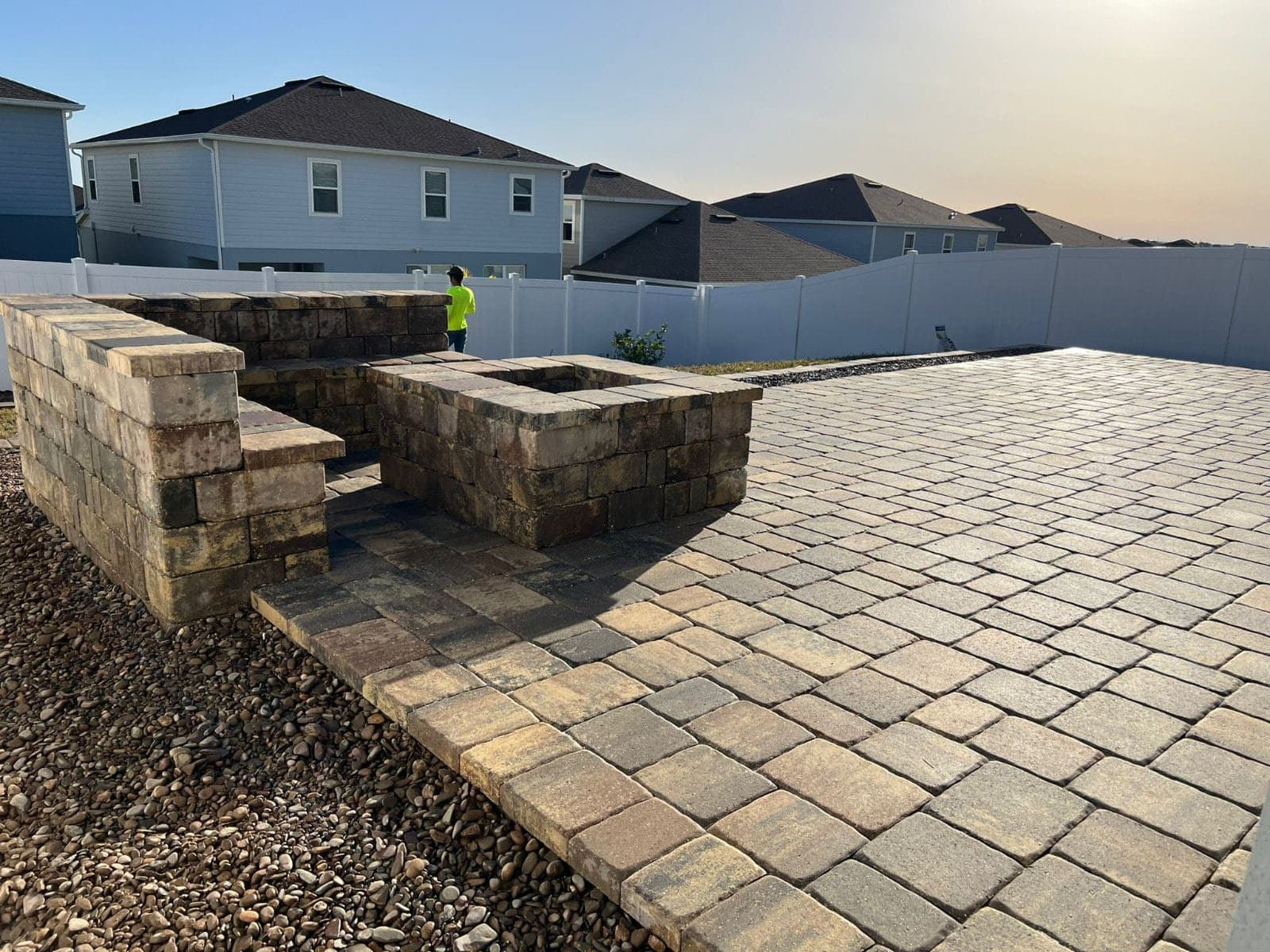
Central Florida sand is a mixed blessing in all of this. It drains fast, which keeps water from standing under your base. It also has very little natural cohesion, so it depends completely on compaction and confinement to hold a shape. That is why base depth, compaction passes, and edge restraint matter more here than the brand name stamped on the paver. KS Solutions covers this work under brick paver installation, which includes patios, driveways, pool decks, walkways, outdoor kitchens, and retaining walls.
Permits in Eagle Lake Go Through the City, Not Polk County
This is the single thing that trips up the most homeowners here, and it trips up contractors too, especially the ones who do most of their work out in the unincorporated parts of the county.
Eagle Lake is an incorporated city. It runs its own building department: the Eagle Lake Building Department, 75 N. 7th Street, (863) 229-5032. The Polk County Building Division does not serve Eagle Lake. It covers the unincorporated areas of the county. So if a contractor tells you he is going to go pull the county permit for your patio or your fence inside city limits, that is a useful signal about how much work he has actually done in this town.
The practical effect is that the requirements, the review, and the inspections for your project are set by the city, and the answers you find on a Polk County page or in a county fence guide may not apply to your address. The city does not publish the full detail of its residential ordinance online, and it directs residents to call the building department for project specifics. We are not going to invent numbers for you here. Call them, or let us do it.
KS Solutions handles this part. On brick paver work, in the company's own words, we handle every permit and HOA submittal as part of the quote. On fence work, our team handles the entire process, including submitting plans, paying permit fees, and scheduling inspections. That is not an upsell line, it is the reason a job gets scheduled instead of sitting in limbo while a homeowner tries to figure out which counter to walk up to.
There is also a new wrinkle in state law worth knowing. Since July 1, 2026, Florida's HB 803 exempts some residential work valued at under $7,500 on single family property from needing a building permit, as long as the owner submits a written exemption request to the city or county. It comes with real limits. It does not apply in flood hazard areas. It does not apply to electrical, plumbing, structural, mechanical, or gas work. And it specifically prohibits carving a larger project into smaller pieces to slip under the threshold. Whether your address sits in a flood risk area is something that has to be checked for your specific parcel, not assumed from the neighborhood. Treat the exemption as a possibility to ask about, not as a plan.
Driveways, Patios, Pool Decks, and Walkways Are Different Jobs
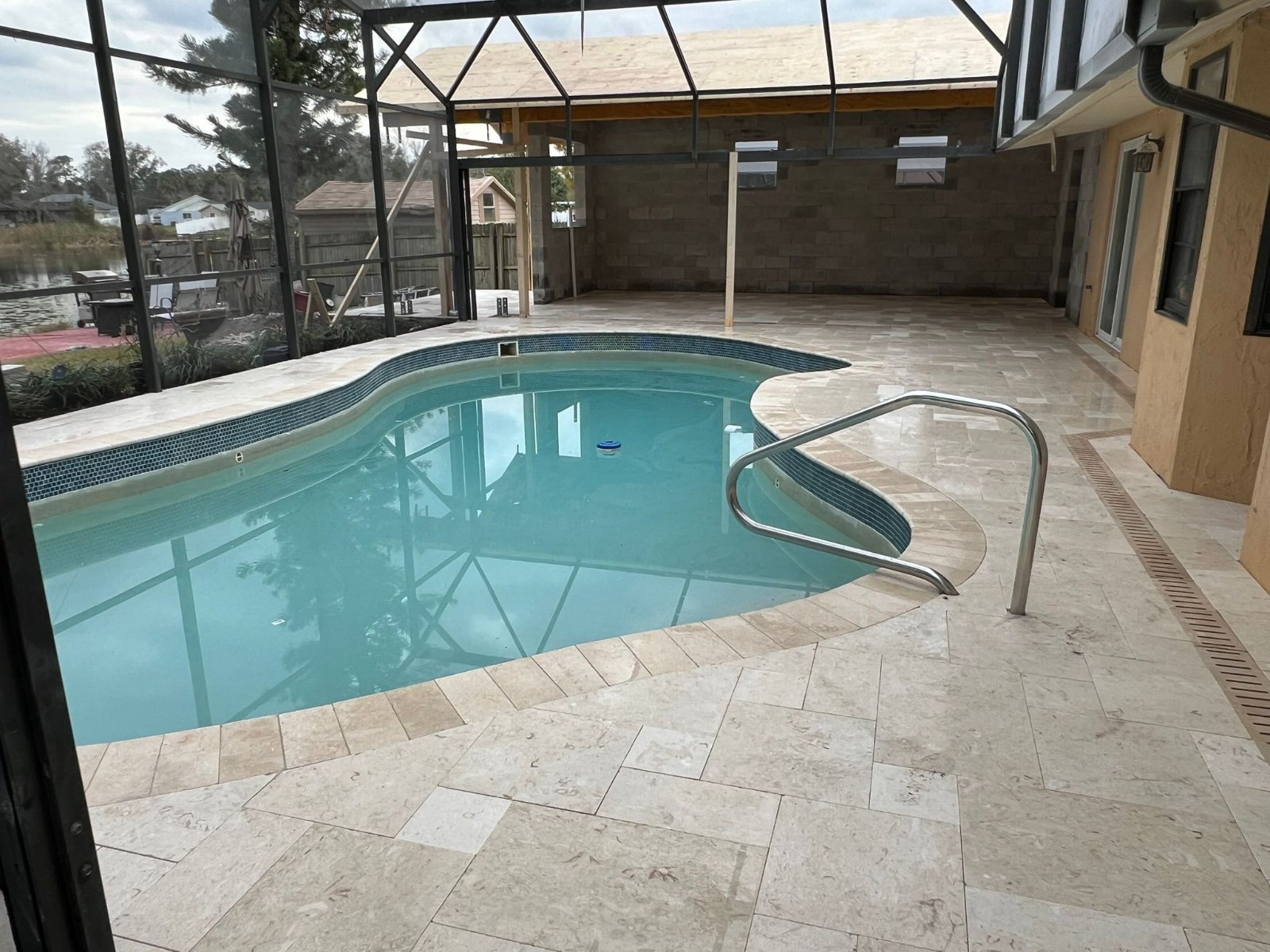
Pavers are one material and four or five separate engineering problems. Quoting them as one line item is how people end up disappointed.
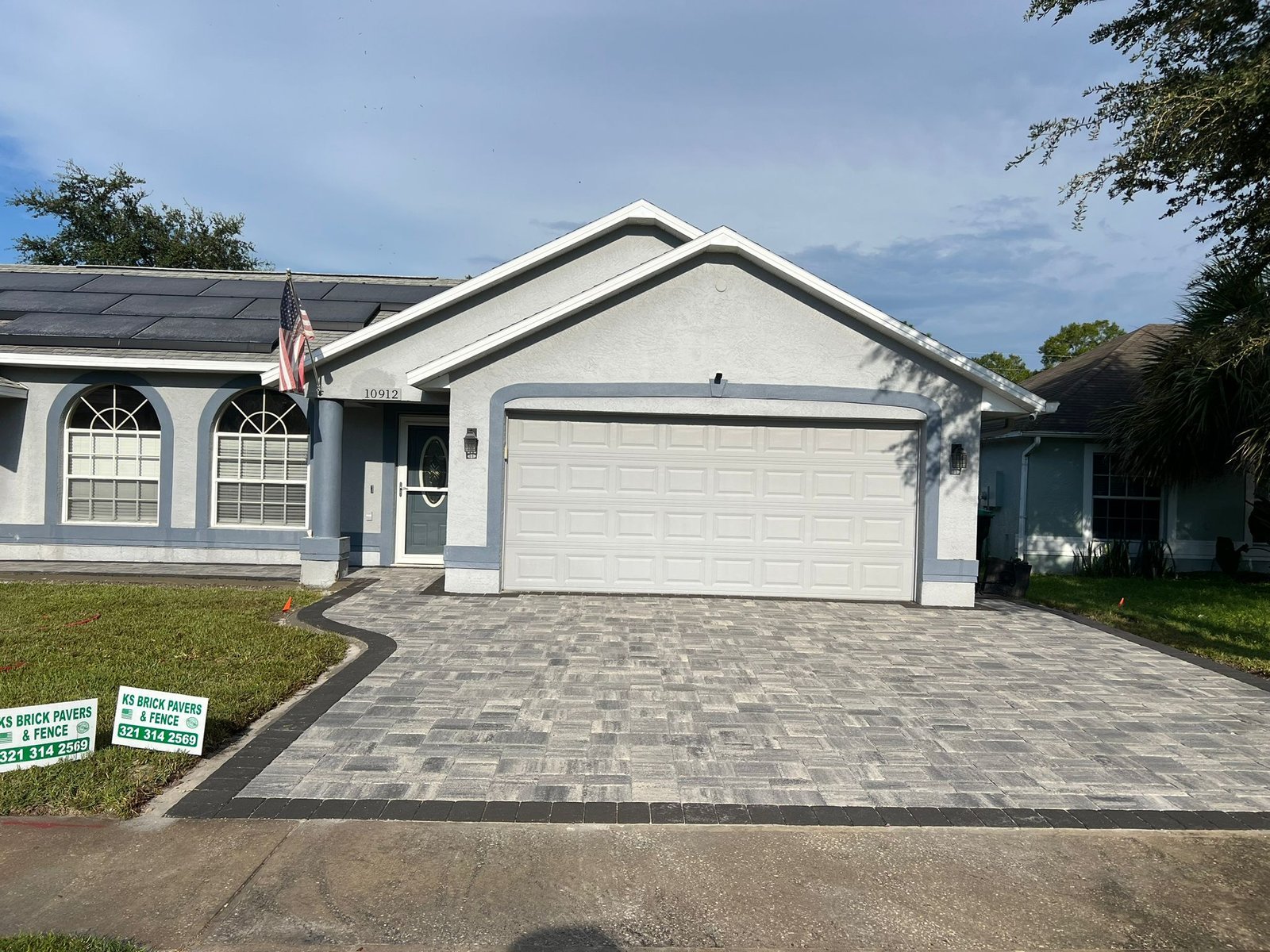
- Driveways. Heaviest base, thicker paver units, and an interlocking pattern such as herringbone that resists the twisting force of a turning tire. Edge restraint along the sides matters more here than anywhere else, because that is where the load pushes. The transition at the street and at the garage slab has to be planned, not improvised on the last day.
- Patios. Lighter loads, so more freedom in pattern and layout. The real design work is drainage. The surface has to fall away from the house, and any downspout that used to dump onto grass now dumps onto a hard surface that will send water somewhere. Deciding where is part of the job.
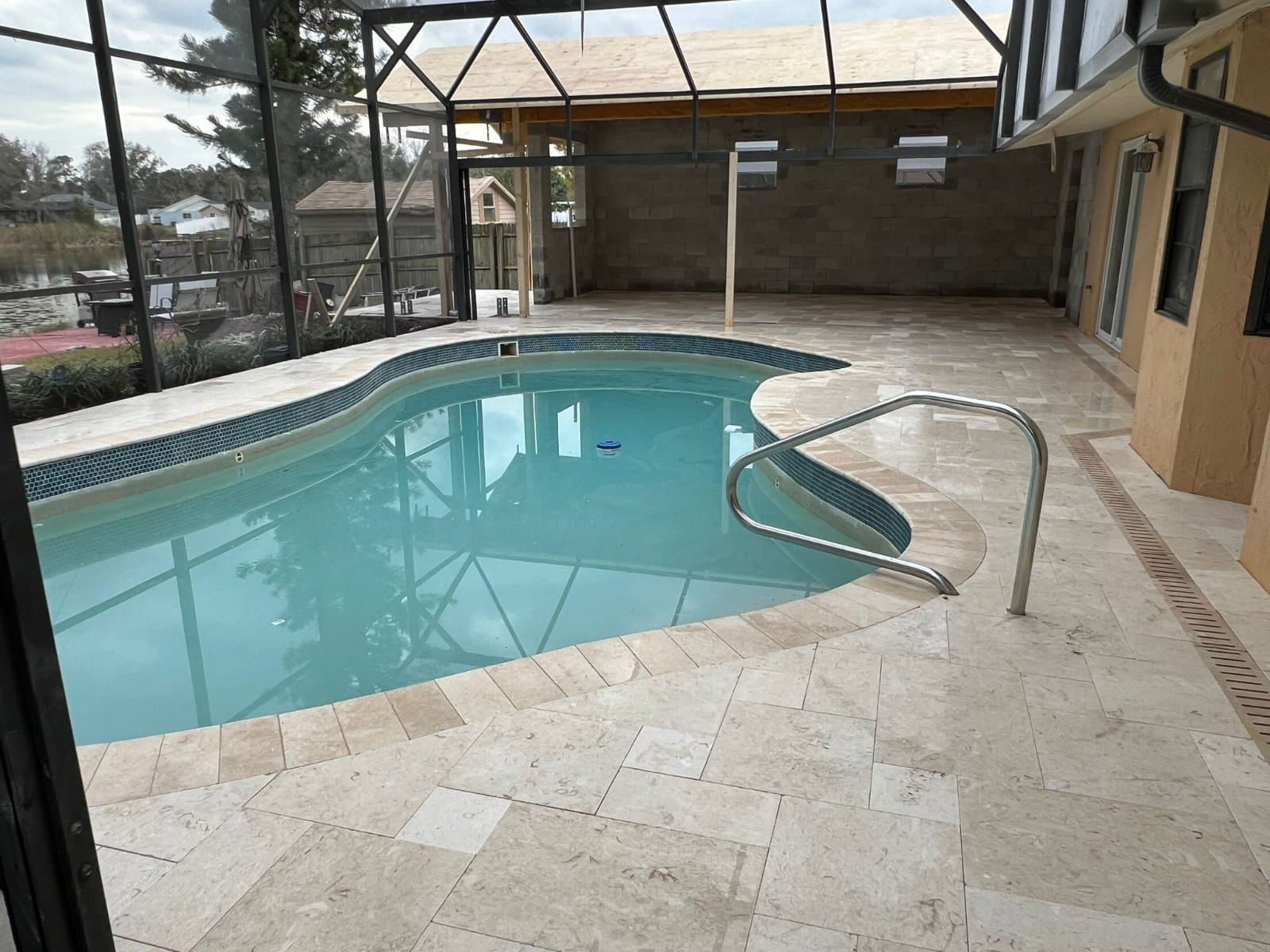
- Pool decks. Surface texture and heat matter as much as looks, since people walk on this barefoot in August. Pavers around a pool also have a maintenance advantage over poured concrete: individual units can be lifted and reset if you ever need to reach plumbing underneath, and then put back without a visible patch.
- Walkways. Narrow surfaces are almost all edge, so restraint on both sides is the whole game. A three foot wide path with weak edges loosens faster than a large patio built the same way.
- Overlays on existing concrete. Sometimes the right call, sometimes not. It depends on whether the existing slab is sound and stable. If the slab is moving or badly cracked, the movement comes straight through to the new surface. Overlay also raises finished height, which has to be checked against door thresholds and against where water will now run.
The honest version of this conversation happens on site. Access, grade, existing drainage, and what is already in the ground change the answer more than anything you can decide from a catalog.
What Actually Changes the Price of a Paver Project
We are not going to publish a per square foot number, because a number without a site visit is a guess dressed up as a fact. What we can tell you is what moves it, so you can read competing quotes and understand why they differ.
- Size and shape. Square and rectangular areas cut fast. Curves, radius borders, and tight bump outs mean a lot of saw time and a lot of waste, and labor is the bigger half of most paver quotes.
- Access. A backyard reachable by a machine through a wide gate is a different job from a backyard reachable only by wheelbarrow around the side of the house. This one difference can change a quote more than the paver you pick.
- Demolition. Breaking out and hauling off an old slab, an old deck, or a failed paver surface is real cost, and disposal is part of it.
- Required base depth. A driveway base is deeper than a patio base. This is where cheap bids get cheap. If one quote is far below the others, the base spec is the first place to look.
- Grade and drainage work. Steps, retaining walls, and regrading to move water away from the foundation are separate scopes with separate labor and materials.
- Pattern and detail. Soldier courses, contrasting bands, inlays, and multi size patterns all add cutting and layout time.
- Paper work. Permit fees and HOA submittals are part of the quote on our paver projects, so they are visible instead of showing up later as a surprise.
One more thing worth saying plainly. Two quotes for the same square footage with very different totals are usually not competing on profit margin. They are competing on excavation depth, compaction passes, and base material. Ask both contractors what base depth they are building to and how they are compacting it. The answer tells you almost everything.
(321) 353-7445Get Immediate Service
The Weather Window: Planning Around Rain, Lightning, and Hurricane Season
Outdoor construction in this part of Florida runs on a calendar, and pretending otherwise is how projects stall.
The Central Florida rainy season runs from late May to mid October. The National Weather Service describes the pattern for this region as daily afternoon and early evening thunderstorms, typically landing between about 1 p.m. and 5 p.m. That is not a rain delay, that is the normal shape of the day for roughly five months. It is why serious crews front load the day and get the excavation, compaction, and pour sensitive work done in the morning window.
Lightning is the other half of that. The Florida Climate Center identifies the corridor between Tampa and Orlando, which includes Polk County, as the highest lightning incidence region in the United States. When a crew stops work and pulls off a site because a cell is building, that is not padding the schedule. It is the correct call in the most lightning prone stretch of the country.
Then there is hurricane season, June 1 through November 30. More than 85 percent of Atlantic tropical cyclones historically form in August, September, and October, with a double peak around mid September and mid October. For fence work especially, that shapes the planning: a fence that is set, cured, and properly braced going into that stretch is in a very different position than one that is half installed with posts still green. If you are thinking about a new fence and you are reading this in spring, the useful move is to get it on the schedule before the busy stretch, not during it.
The dry stretch from late October into May is the comfortable window for exterior work, and it books accordingly. Neither season is unworkable. The difference is whether the schedule was built around the weather or is constantly being surprised by it.
Fences in Eagle Lake: The County Rule Is Not Your Rule
Here is a specific piece of misinformation worth correcting, because it circulates widely in Polk County.
You will find guides stating that in Polk County an opaque fence up to eight feet does not require a permit. That rule is written for the unincorporated areas of the county. The same guides say plainly that incorporated municipalities regulate fences under their own ordinances, and Eagle Lake is not among the municipalities listed as following the county rule. So do not budget or design an Eagle Lake fence around an eight foot no permit assumption. It is a county rule, quoted in a city where it may not apply.
What are the city's actual height, setback, and material limits? The city does not publish that detail publicly, and it points residents to the building department instead. We are not going to fill that gap with plausible sounding numbers. The building department at (863) 229-5032 is the source of truth, and on our fence projects our team handles the entire process anyway, including submitting plans, paying permit fees, and scheduling inspections. Corner lots are worth asking about specifically, since visibility at intersections is a common local restriction.
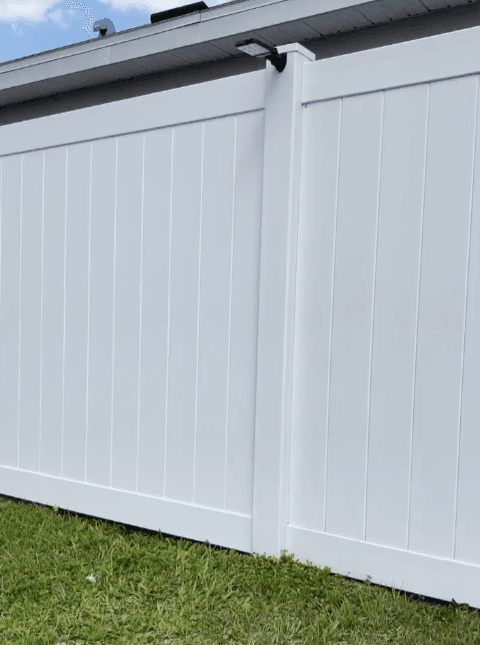
On the build itself, a few things hold true across Central Florida regardless of ordinance. Post depth and the concrete around it carry the wind load, so post setting is where a fence is won or lost. Vinyl handles the sun and the humidity without rotting or rusting but depends heavily on post spacing and rail engagement to stay stiff. Aluminum ornamental fencing resists corrosion and does not block airflow, which matters in wind. Wood is the warmest looking option and the one that asks the most of you over time in this climate. Chain link remains the practical choice for large enclosures and dog runs. Gates are where most fence complaints originate, because a gate is the only moving part, so hardware and post size at the gate deserve more attention than the run. Full details are on the fence installation page.
Artificial Turf and What Florida Law Now Says About It
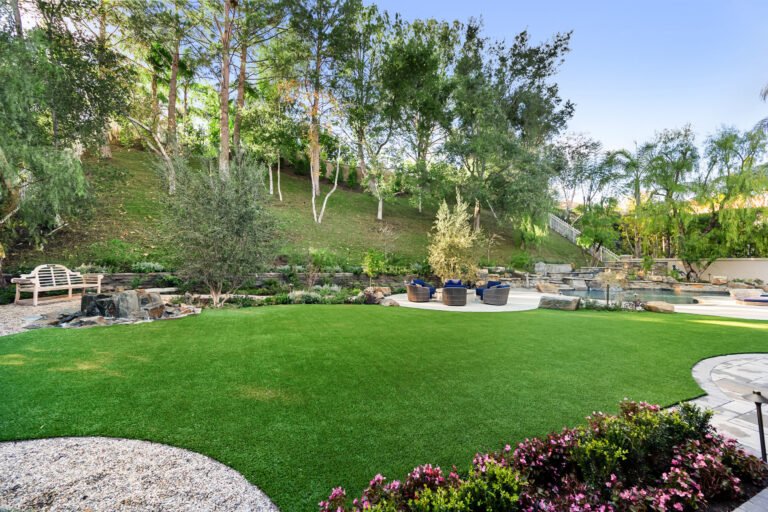
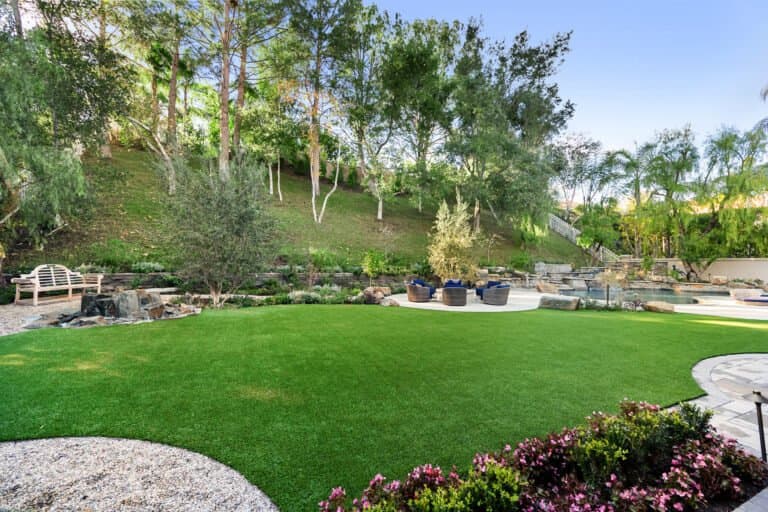
Artificial turf comes up constantly in Eagle Lake backyards, usually for one of three reasons: a dog has destroyed the grass, a shaded side yard will not grow anything, or the owner is tired of mowing a small area for very little return.
The legal picture has shifted in the homeowner's favor, and it is worth knowing before anyone tells you no. Florida's HB 683, in effect since July 1, 2025, requires the Florida Department of Environmental Protection to set statewide minimum standards for synthetic turf installation on single family lots of up to one acre, and it prohibits local governments from banning artificial turf that meets those standards. Separately, Florida Statute 720.3045 bars homeowners associations from restricting items that are not visible from the street or from a neighboring lot, and it names artificial turf specifically, unless state law or a broader local ordinance prohibits it. In plain terms: a fenced back yard that no one can see from the road is the strongest possible case for turf under current Florida law.
We are not going to tell you what Eagle Lake or Polk County requires for turf specifically, because we could not find a published local requirement, and we would rather say that than invent one. The state framework above is what governs, and the city building department is where to confirm anything address specific.
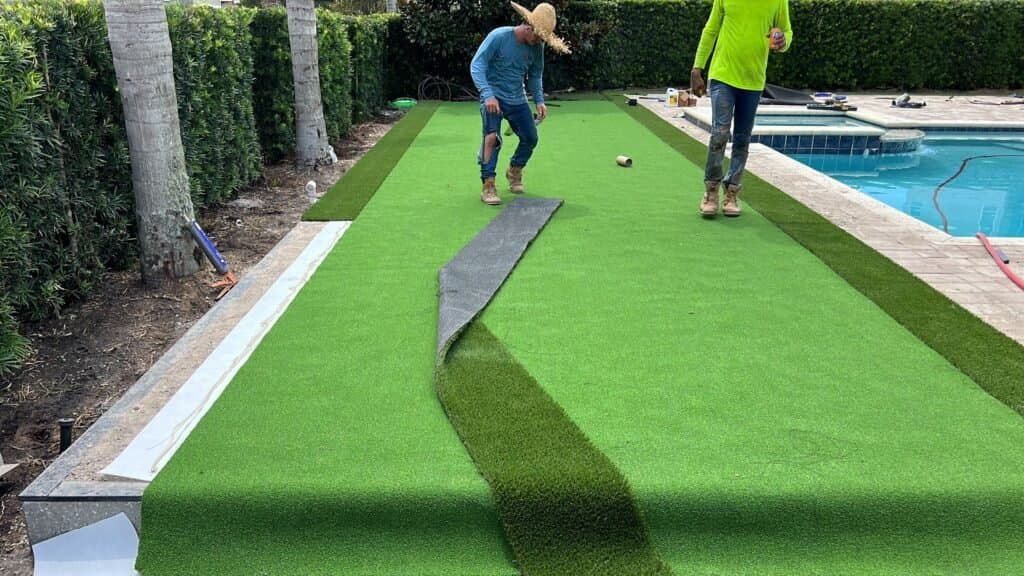
Installation quality is what separates turf that looks great for years from turf that looks like a mat thrown on dirt. It is a base job, much like pavers: excavate, install and compact a permeable base that drains, then lay, seam, and secure the turf around the perimeter so edges cannot lift. Infill is what keeps the blades standing up and gives the surface its feel underfoot. For dogs, drainage and the infill choice matter more than the turf face itself, because that is what determines whether the area stays clean. Sun exposure is worth discussing too, since dark, full sun turf gets hot in a Florida August. See artificial turf installation for the full breakdown.
Keeping It All Looking New After the Crew Leaves
Hardscape in this climate does not fail suddenly. It drifts. Joint sand washes down in heavy summer rain. Weeds and ants find the joints that opened. One corner settles an inch where a downspout has been quietly eroding the base. A gate that swung perfectly in January starts dragging by August. None of these are emergencies, and every one of them is cheaper to fix at year two than at year six.
For paver surfaces, the recurring items are joint sand replenishment, keeping organic debris off the surface so it does not stain or feed weed growth, and re-leveling any area that has settled. Pressure washing is where well meaning owners do damage: too much pressure blasts out the joint sand and etches the paver face, which then holds dirt worse than before. Sealing is a preference, not a requirement, and it has real tradeoffs in appearance and in how often it has to be redone. It is worth a conversation rather than a default yes.
For fences, the maintenance list is mostly hardware. Hinges, latches, and gate posts take the abuse. Vinyl and aluminum need cleaning more than repair. Wood needs a real plan, because sun and humidity work on it year round in Central Florida.
For turf, grooming keeps the blades upright in high traffic lanes, infill gets topped up as it migrates, and debris gets cleared so drainage stays open. KS Solutions bundles this recurring work under outdoor maintenance plans, so it happens on a schedule instead of when somebody finally notices.
Who We Build For in Eagle Lake, and What to Have Ready
Eagle Lake is an owner heavy town. According to the U.S. Census Bureau, median household income here is $70,523 and 65.7 percent of housing units are owner occupied. That shapes the work. Most of what we quote in this city is somebody improving the property they actually live in, which means the conversation is about how it will hold up and how it will look in five years, not about the cheapest thing that will pass a walkthrough.
The housing stock matters too. In the 33839 ZIP code, the largest concentrations of homes were built in the 1960s and the 1940s. That is a replacement market more than a new build market. Old fences at the end of their life. Original concrete walks and drives that have cracked, sunk, or been patched enough times that a fresh paver surface costs less than another round of repair. Side yards that have never drained properly because the grading was set decades ago and nobody has touched it since.
At the same time there is new construction being delivered here, including the Eagle Hammock community that Century Communities identifies as being in Eagle Lake. New builds arrive with a closed sale and a blank back yard: no patio, no fence, and grass that struggles in the spots that need it most. Those projects tend to be about turning an empty rectangle into usable outdoor space, often pavers and fence together, sometimes with turf in the areas where grass was never going to work.
If you want a quote, the useful things to have ready are simple: roughly where the work goes and how big, whether a machine can reach the area or not, whether anything has to come out first, and whether you are in an association that will need a submittal. Photos of the space and of any existing drainage problems save a lot of back and forth.
We work throughout Polk County and the surrounding Central Florida area. Nearby city pages include Winter Haven, Bartow, Lakeland, Auburndale, Haines City, and Lake Wales.