Why Yards in Davenport Start Out Bare
Davenport is a new town in the literal sense. The median home here was built in 2015, 44.9 percent of the housing stock went up between 2010 and 2019, and another 26.4 percent arrived in the building wave after that. If you bought in one of the planned communities off US 27 or near the ChampionsGate corridor, you did not inherit a mature yard. You inherited sod, a builder slab about the size of a card table, and a back property line nobody ever touched.
That is the starting point for most paver work we do in Davenport. The lanai is too small for a table and chairs. The pool deck is plain concrete that gets hot and stains. The driveway is a gray ribbon that looks like every other driveway on the street. None of it is broken. It is the minimum the builder had to deliver, and it is the first thing owners want to change.
The second thing shaping this market is the vacation rental stock. Davenport is full of large short term rental homes with private pools, including resort communities such as Solterra Resort near the ChampionsGate area, built for big groups and short stays. The City of Davenport requires a Vacation Rental Certificate to operate a short term rental, and that process includes notifying the property's homeowners association. Those homes get photographed, reviewed and turned over constantly. Their outdoor space is not decoration, it is the product. A cracked pool deck or a patchy backyard shows up in guest photos fast.
So paver projects here tend to fall into two groups: owners upgrading a new build they plan to live in, and investors making a rental photograph better and survive heavy use. The priorities are different, and we scope them differently.
Where Pavers Go in a Davenport Yard
Brick pavers are not a single product with a single use. On a typical lot here, the same material solves five different problems, and KS Solutions covers all of them under one service, brick paver installation.
Patio and lanai extensions
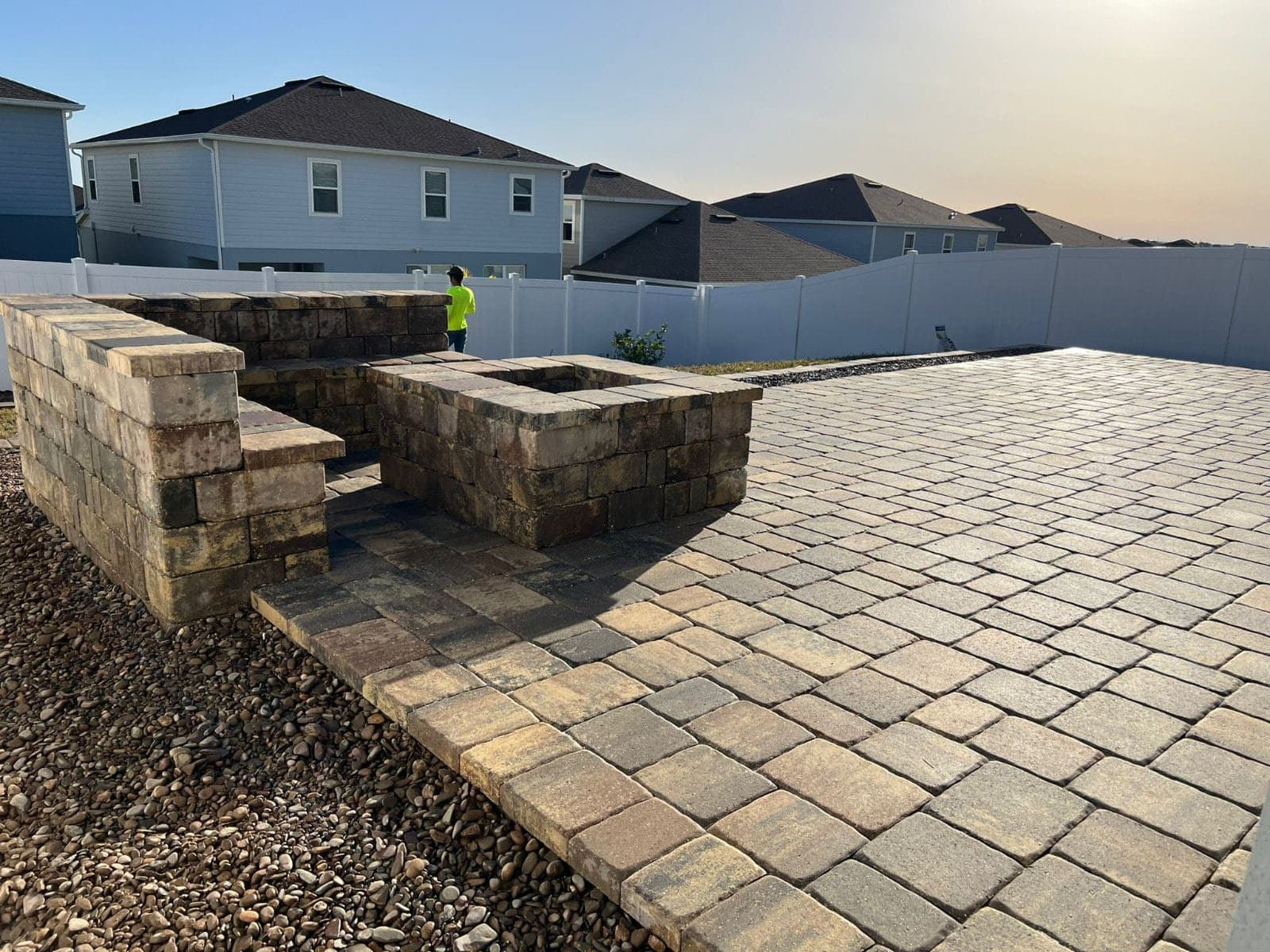
The most requested job in Davenport. The builder poured a slab inside the screen cage that fits two chairs and a small table. Extending past the cage in pavers gives you a grill area, a dining table and a fire pit zone without touching the original slab, and the transition can be built so the new surface reads as one space instead of an add on.
Pool decks
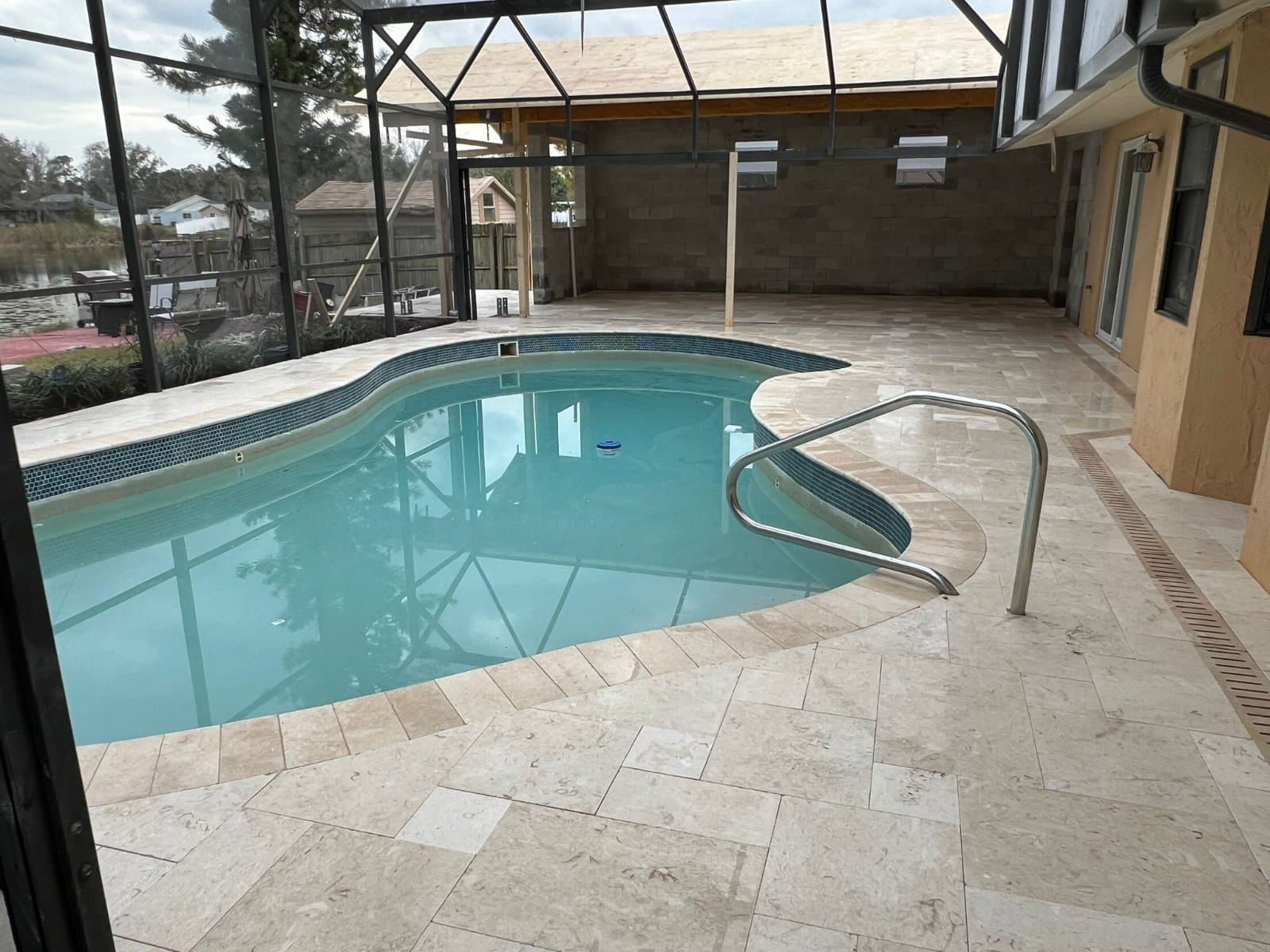
Either a full replacement or a paver overlay on sound existing concrete. This is the surface people actually stand on barefoot in August, so texture and color are functional decisions here, not only visual ones.
Driveways, aprons and parking pads
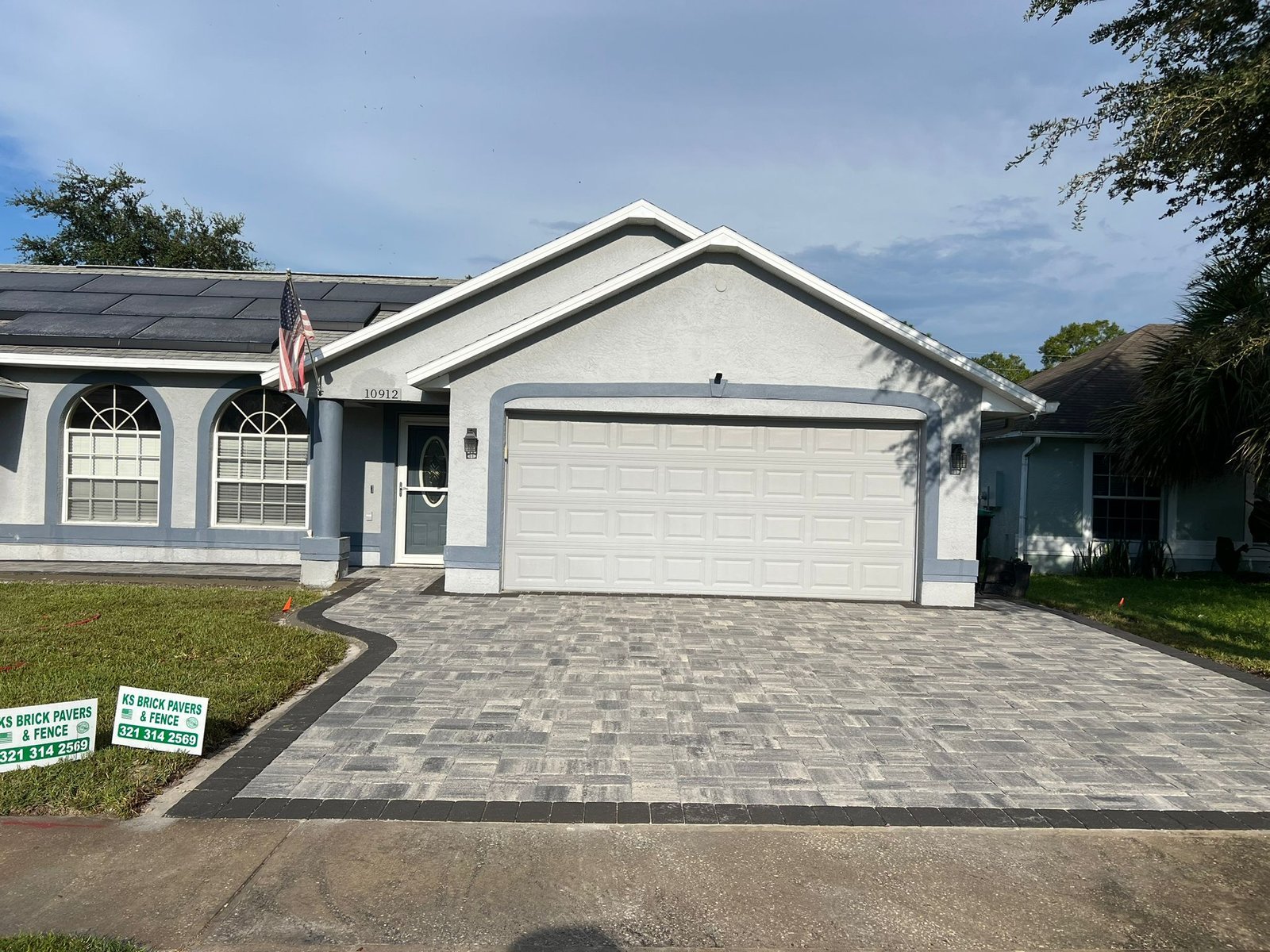
A paver driveway is the single biggest change you can make to how a new build reads from the street. It is practical too in rental communities, where guest vehicles outnumber the parking the builder provided, and a widened drive or an extra pad keeps tires off the sod.
Walkways and side yards
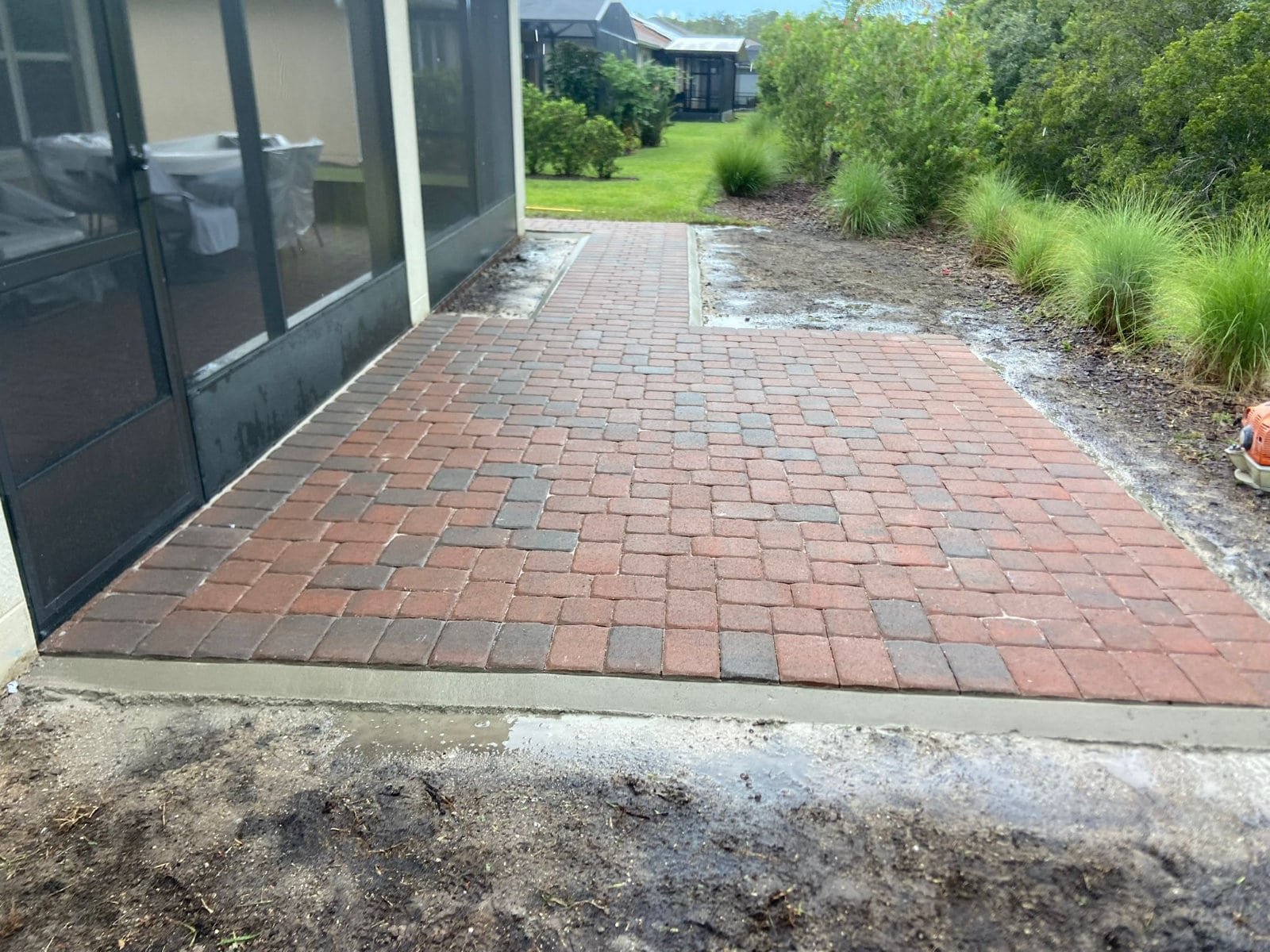
The narrow strip between houses is where grass gives up first. It gets little sun, takes roof runoff and turns into a mud track to the pool equipment and the trash gate. A paver path there solves a nuisance permanently.
Outdoor kitchens, seating walls and retaining walls
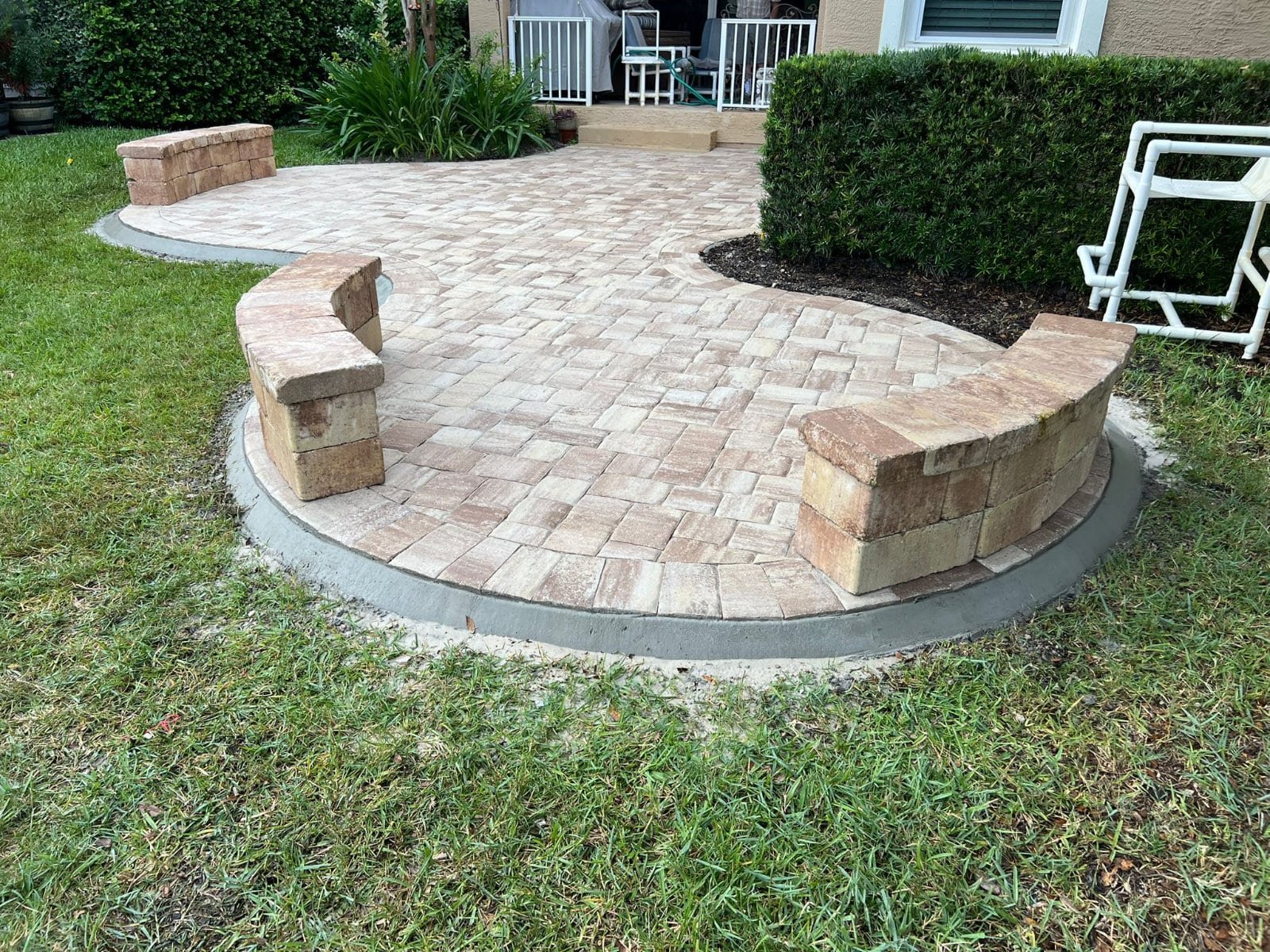
Once the flat surface exists, the vertical elements follow: a built in grill run, a seating wall around a fire feature, or a low retaining wall where the lot steps down. These are the pieces that turn a patio into an outdoor room, and they need to be planned with the base work rather than added two years later on top of a finished surface.
What Makes a Paver Install Last in Central Florida
A paver surface is a system, and almost every failure you see in Central Florida driveways and patios comes from the part nobody photographs. Here is what the work involves, in order.
Excavation and base
The old surface or sod comes out, and so does the soft material under it. Central Florida ground is sandy and drains quickly, which helps with water and hurts with stability, because loose sand moves under load. The excavation is cut deeper for a driveway carrying vehicles than for a walkway carrying people. Compacted base then goes back in layers, not in one dump, because a thick single layer compacts at the top and stays loose underneath. That hidden layer is what holds your patio flat in year eight.
Bedding, laying and cuts
A thin, screeded bedding layer goes over the compacted base, and the pavers are set on it, never pounded down into it. Pattern matters more on a driveway than on a patio: an interlocking pattern such as herringbone resists the twisting force of tires far better than a simple stacked layout. Cuts along curves, pool coping and house walls are made tight with a saw, so no sliver pieces sit at the edge where they will work loose.
Edge restraint and joints
Edge restraint is the piece most often skipped by the cheapest bid. Without a locked perimeter, the field of pavers spreads outward every time weight crosses it, and gaps open in the middle. Joint sand goes in last and gets vibrated down so the units lock against each other and behave like one flexible surface instead of thousands of loose blocks.
Water
Everything is pitched so water runs off the surface and away from the foundation, not toward the slider or into the pool cage footers. In a summer where afternoon rain is a daily event, drainage is not a detail. It is the difference between a patio you use and a patio with a permanent puddle in one corner.
What Changes the Scope of a Paver Project
We do not post a price on a web page, because the same square footage can be two very different jobs. These are the variables that actually move the scope of a Davenport project, and they are worth understanding before you compare bids.
- Square footage and shape. A large rectangle costs less per foot than a small one full of curves. Curves mean cuts, and cuts mean labor and waste.
- What is there now. Bare sod is the simplest start. An existing slab either has to be broken out and hauled away, or evaluated to see whether it can carry an overlay.
- Backyard access. This one surprises people. Many Davenport lots are tight, with a narrow side yard and a gate that will not pass a machine. When base material and demolition debris have to move by wheelbarrow, the labor changes.
- Grade. A flat lot is straightforward. A yard that steps down needs retaining walls, steps or fill to produce a usable, level surface.
- Drainage work. If water sits somewhere today, the new surface has to solve that, not pave over it.
- The paver itself. Unit style, thickness and color range vary in cost, and a driveway grade unit is not the same as a light patio unit.
- Pattern and borders. A soldier course border and an interlocking field take more labor than a plain running bond, and on a driveway they are usually worth it.
When two quotes come in far apart, the gap is almost never in the pavers themselves. It is in base depth, edge restraint, demolition, disposal, and whether the permit and HOA paperwork is included or handed back to you. Ask each bidder to put those lines in writing.
(321) 353-7445Get Immediate Service
Rain, Lightning and Hurricane Season: When to Schedule
Central Florida's rainy season runs June through September, with a consistent daily pattern of afternoon thunderstorms between roughly 3pm and 6pm, and this region is the most lightning prone in all of Florida. That is not trivia for an outdoor crew. It is the reason summer installs start early and get the wet work done before the afternoon cells build.
Rain affects paver work in a specific way. Base material compacts properly only at the right moisture content, and saturated base does not compact at all. Screeded bedding sand that takes a downpour has to be redone. A summer job is not impossible, it simply moves into shorter morning windows, and honest scheduling budgets for lost afternoons instead of pretending they will not happen.
The Atlantic hurricane season officially runs June 1 to November 30, with peak activity from mid August through late September, and it affects Central Florida including Polk County. Two practical consequences for Davenport homeowners. First, if you want a fence, a pool barrier or a reinforced backyard in place before the busiest stretch, start well before mid August, because architectural review, permitting and the install itself all take calendar time. Second, October through May is simply the better build window for pavers, fences and turf alike: drier ground, cooler working conditions, fewer weather cancellations.
If you own a short term rental, there is a third consideration. Your build window and your booking calendar compete for the same weeks. Shoulder season is usually easier to hand over to a crew than a holiday block, and pool deck work in particular takes the pool out of service for part of the job.
Permits, HOA Approval and the 2026 State Exemption
Two separate approvals can apply to outdoor work in Davenport, and people mix them up constantly. One is the building permit, which comes from government. The other is architectural approval, which comes from your homeowners association. Clearing one does not clear the other.
The building permit side
Florida House Bill 803 took effect on July 1, 2026. It exempts the owner of a single family property from a building permit for work valued under $7,500 on their own property, with carve outs: flood hazard areas are excluded, and so are structural items. In practice that can mean a spot fence replacement or a modest paver repair in Davenport no longer trips a permit it would have tripped before.
That does not make permitting disappear. Scope, value and location decide it, and flood zone status changes the answer for a given address. Polk County does not publish a simple public square footage threshold for hardscape that we would be comfortable repeating here as a rule, so instead of guessing we confirm the current requirement with the county for your specific address and scope before work starts. On paver projects, KS Solutions handles every permit and HOA submittal as part of the quote. On fence projects, our team handles the entire process, including submitting plans, paying permit fees and scheduling inspections.
The HOA side
In Davenport's HOA communities, exterior changes including landscaping, fences and additions normally require written approval from an Architectural Review Committee before any work begins. This is the step that delays projects most often, because owners sign a contract and only then discover that the committee meets on its own calendar. Start the submittal early. If you also run the home as a short term rental, note that the city's Vacation Rental Certificate process itself includes notifying your association, so the HOA is already watching the property.
Pool Decks and the Barrier the Law Requires
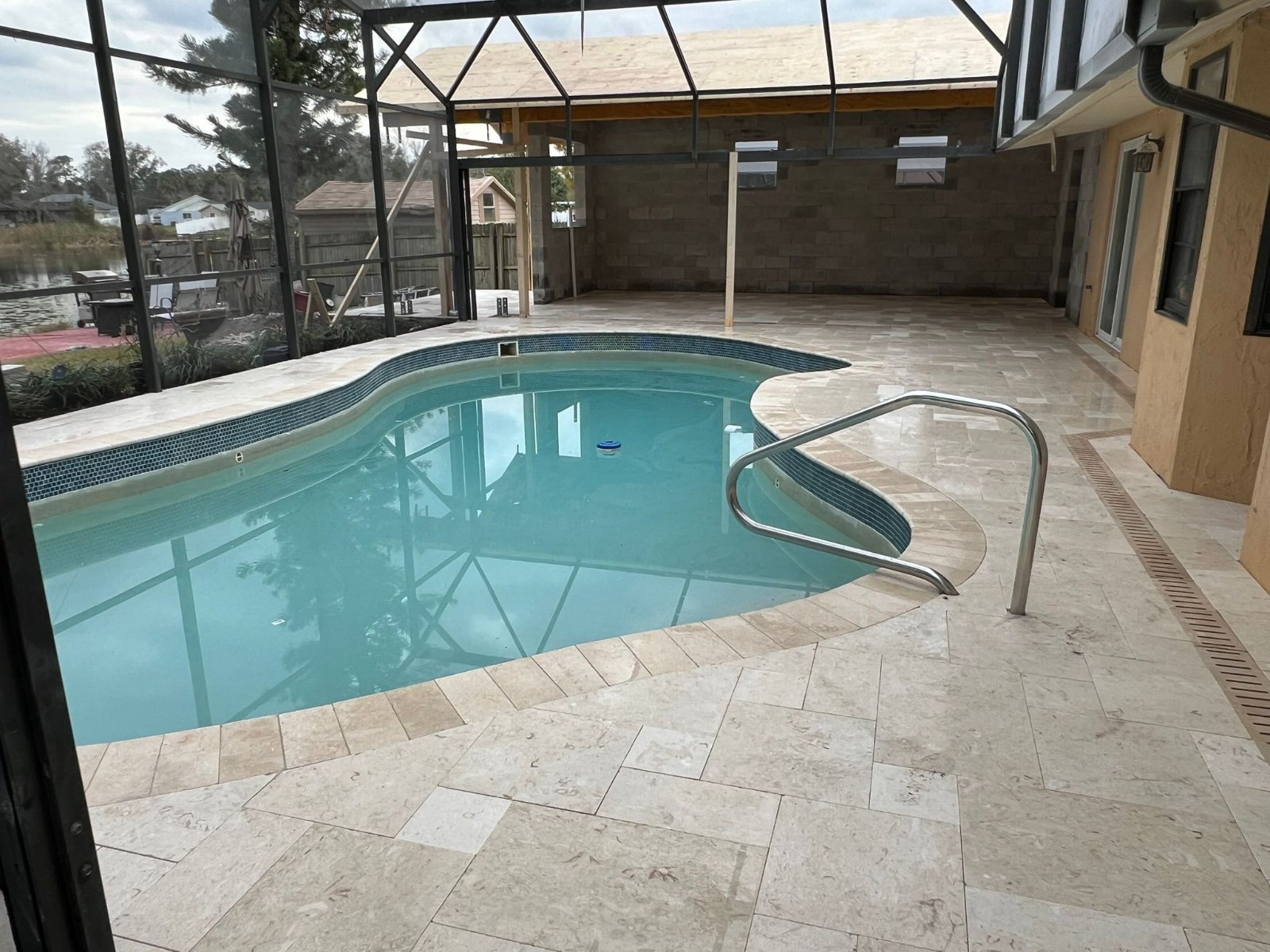
On a property with a pool, the deck is usually the highest value hardscape surface in the whole yard. It is the surface guests photograph, the surface bare feet land on all summer, and the one that has to stay safe when small children are on site. It also carries a specific legal requirement, and that requirement is not a matter of taste or preference.
Florida's Residential Swimming Pool Safety Act, Statute 515.29, requires every residential pool to have a barrier at least 4 feet high, with no gaps that would let a young child pass underneath, squeeze through or use as a foothold to climb. Gates giving access to the pool must open outward, away from the pool, and must be self closing with a self latching device on the pool side. Those are not preferences. That is the specification.
Practically, it means a paver pool deck and the barrier around it are one project, not two. The barrier line has to be settled before the deck is laid out, because the deck edge, the gate swing and equipment access all have to work together. Owners who build the deck first sometimes find that the only sensible gate location now opens into a paver step.
On the deck itself, material choice matters more here than anywhere else in the yard. A pool deck gets walked on barefoot, in the sun, wet. Surface texture, unit format and color all change how it behaves in July. If you are resurfacing an existing concrete pool deck instead of tearing it out, the slab underneath has to be sound and the finished height still has to work at door thresholds, at the coping and at the screen cage track. That is one of the first things we check on a walkthrough. See fence installation for the barrier side of the job.
Fence Heights and Turf Rules in Polk County
Most Davenport paver projects end up touching the rest of the yard, so the two rules that govern the other trades are worth knowing before you plan.
Fences
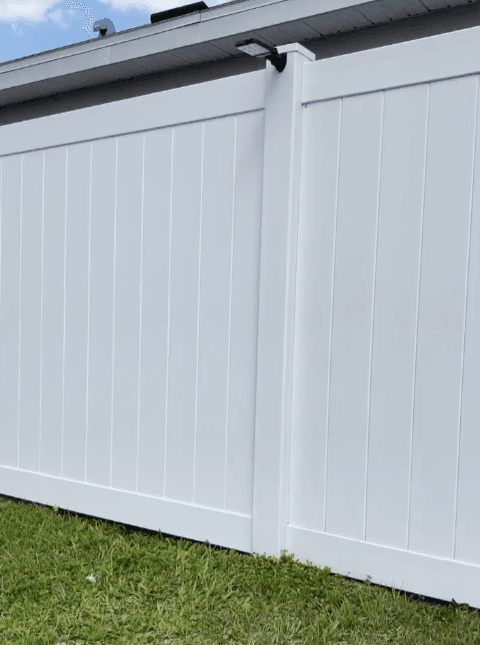
In Polk County, fences and walls on residential property may not exceed 4 feet in height in front of the lot or the residence. Opaque fences can reach 8 feet without a building permit, but masonry walls, fences with masonry columns and opaque fences taller than 8 feet do require a building permit. That is the county rule. Your HOA can be stricter, and in Davenport's planned communities it usually is, dictating material, color and style on top of the height limit. Both sets of rules have to be satisfied, and only one of them is public record.
Artificial turf
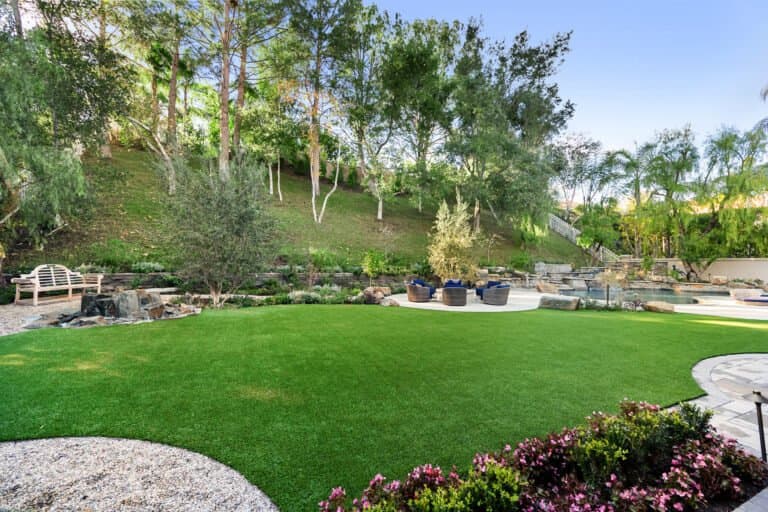
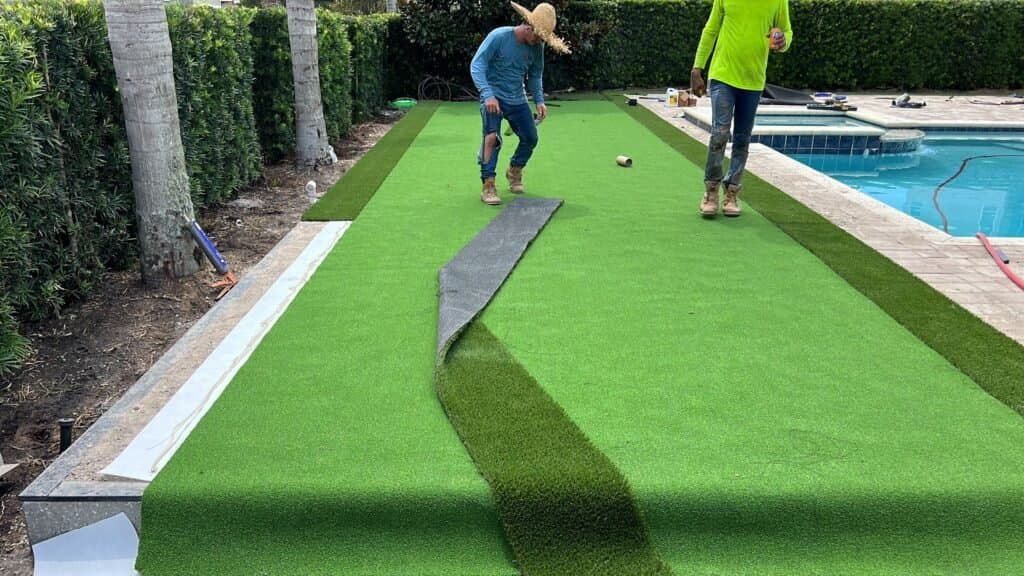
State law moved in the homeowner's favor here. Florida Statute 125.572 (2025) provides that for single family properties of one acre or less, local governments, and once the Department of Environmental Protection publishes its standards, homeowners associations as well, may not prohibit installation of artificial turf that meets the DEP standard. In a market as HOA dense as Davenport, that is a meaningful shift. An association can still run design review, but a blanket ban on compliant turf is no longer solid ground.
Turf and pavers also share a build. Both depend on excavation, a compacted base and correct drainage, and both fail the same way when the base is thin. Combining them on one mobilization, for example a paver patio with turf filling the rest of the backyard, is common on rental homes where the goal is a yard that photographs well and survives constant use without irrigation. Details on both: fence installation and artificial turf installation.
Keeping It Right, and How to Choose a Contractor Here
What upkeep actually looks like
Pavers are low maintenance, not no maintenance, and the Central Florida climate sets the schedule. Daily summer rain pulls joint sand out of high flow areas over time, and empty joints are where weeds start. Pavers in shade, under an oak or on the north side of the house, grow a green film in the wet months. Sealed surfaces need attention on a cycle, and unsealed surfaces stain more easily from grill grease and pool chemicals. None of this is dramatic when it is handled on a schedule, and all of it gets expensive if it is ignored for years and the base starts taking on water. Our outdoor maintenance plans cover pavers, fences and turf together, which matters most on rental properties where nobody lives on site to notice a small problem early.
Questions worth asking any bidder
- How deep is the excavation, and in how many lifts is the base compacted?
- What edge restraint are you using, and how is it fastened?
- Who pulls the permit, and who prepares the HOA architectural submittal?
- Where does water go once the new surface is in?
- Are demolition and disposal of the existing concrete included in the price?
- Is the joint sand vibrated in, and what happens if it settles later?
A contractor who answers those quickly has built the assembly many times. One who only wants to talk about paver colors has not.
Start your Davenport project
KS Solutions installs brick pavers, fences and artificial turf across Central Florida, working throughout northeast Polk County and the neighboring Osceola communities, including Haines City, Winter Haven, Lakeland, Celebration and Kissimmee. Call (321) 353-7445 to walk your property and get the paver project scoped, with the permit and the HOA submittal handled as part of the quote.