Four Corners Is Four Counties, and Your Paver Permit Depends on Which One
Four Corners is the only locality in Florida that sits at the confluence of four counties: Lake, Orange, Osceola and Polk. To most people that is a piece of trivia. To anyone building a paver patio, a driveway or a fence, it is the first practical question of the whole project. The building department that reviews your work is decided by the county line your parcel falls on, not by the name of your subdivision and not by the mailing address on your envelope.
That means two houses a short drive apart can sit under two different rulebooks. One owner files a site plan and pays a review fee. A neighbor across an invisible line faces a different fee, a different application and a different inspection sequence for a patio of the same size. It is the single most common source of surprise here, and it is entirely avoidable. Before we quote anything in Four Corners, we confirm which county the parcel is in and price the job against that county's actual process.
This matters more here than in most of Central Florida because of how fast the area filled in. The population went from 26,116 in the 2010 census to 56,381 in 2020, a jump of 115.9 percent, which puts Four Corners among the fastest growing areas in the state. Growth on that scale means a lot of newer homes handed over with a slab, a strip of sod and nothing else out back. The yard is a blank page. The paperwork behind filling that page in is not the same from one street to the next.
On brick paver work, KS Solutions handles every permit and HOA submittal as part of the quote. On fencing, our team handles the entire process, including submitting plans, paying permit fees and scheduling inspections. For the small slice of Four Corners that falls in Lake County, we confirm requirements with that county directly before scoping, rather than assuming a neighboring county's rules carry over. They often do not.
What a Brick Paver Installation Involves Here, Layer by Layer
A paver surface is a structure, not a decorative topping. Nearly every failed patio and sunken driveway we get called out to look at in this part of Central Florida traces back to what happened underneath the pavers, not to the pavers themselves. Understanding the layers is the fastest way to tell a real bid from a cheap one.
- Excavation. The area is dug out to a depth set by what the surface will carry. A driveway that parks vehicles needs meaningfully more depth than a walkway, because the load has to spread out before it reaches the subgrade.
- Subgrade preparation. Soft or organic material comes out. The exposed soil is compacted so the base is not resting on something that will consolidate later under load and rainfall.
- Compacted base. Crushed aggregate goes in and gets compacted in lifts rather than dumped in one pass. Compaction is where corners get cut, because nobody can see it once the pavers are down.
- Bedding layer. A thin, screeded sand layer sets the pavers at a uniform height. It is a leveling course, not a substitute for base depth.
- Laying pattern. Interlocking patterns such as herringbone resist the rotational push of turning tires, which is why they belong on driveways. Simpler running bond patterns are fine on patios and walkways where the loads are lighter.
- Edge restraint. Without a proper restraint at the perimeter, the field of pavers spreads outward over time and the joints open. This is the most commonly skipped step on budget installs.
- Joint sand and final compaction. Sand is swept into the joints and the field is compacted again so each unit locks against its neighbors. The finished surface behaves as one interlocked system rather than as thousands of loose pieces.
Central Florida soils are sandy and drain quickly, which is an advantage for base performance and a hazard for anyone who treats it as an excuse to skip compaction. Water still has to be sent somewhere deliberate. Grading should carry runoff away from the foundation and away from the neighbor's lot, and in yards with a screen enclosure or a low patio slab, the pitch has to be planned before the first layer goes in. Fixing drainage after the fact usually means lifting the field.
The failure modes are predictable. Ruts and dips mean the base was thin or poorly compacted. Pavers creeping outward at the perimeter means the edge restraint failed or was never installed. Persistent weeds and ant hills in the joints usually mean the joint sand was never brought up to full depth or has washed out and never been replenished. All three are cheaper to prevent than to correct. See the full scope on our brick paver installation page.
Patios, Driveways, Pool Decks and Outdoor Kitchens: What Changes With Each
People search for a paver contractor, but they rarely want the same thing. The material is similar across projects. The engineering behind it is not, and the differences drive both the build and the budget.
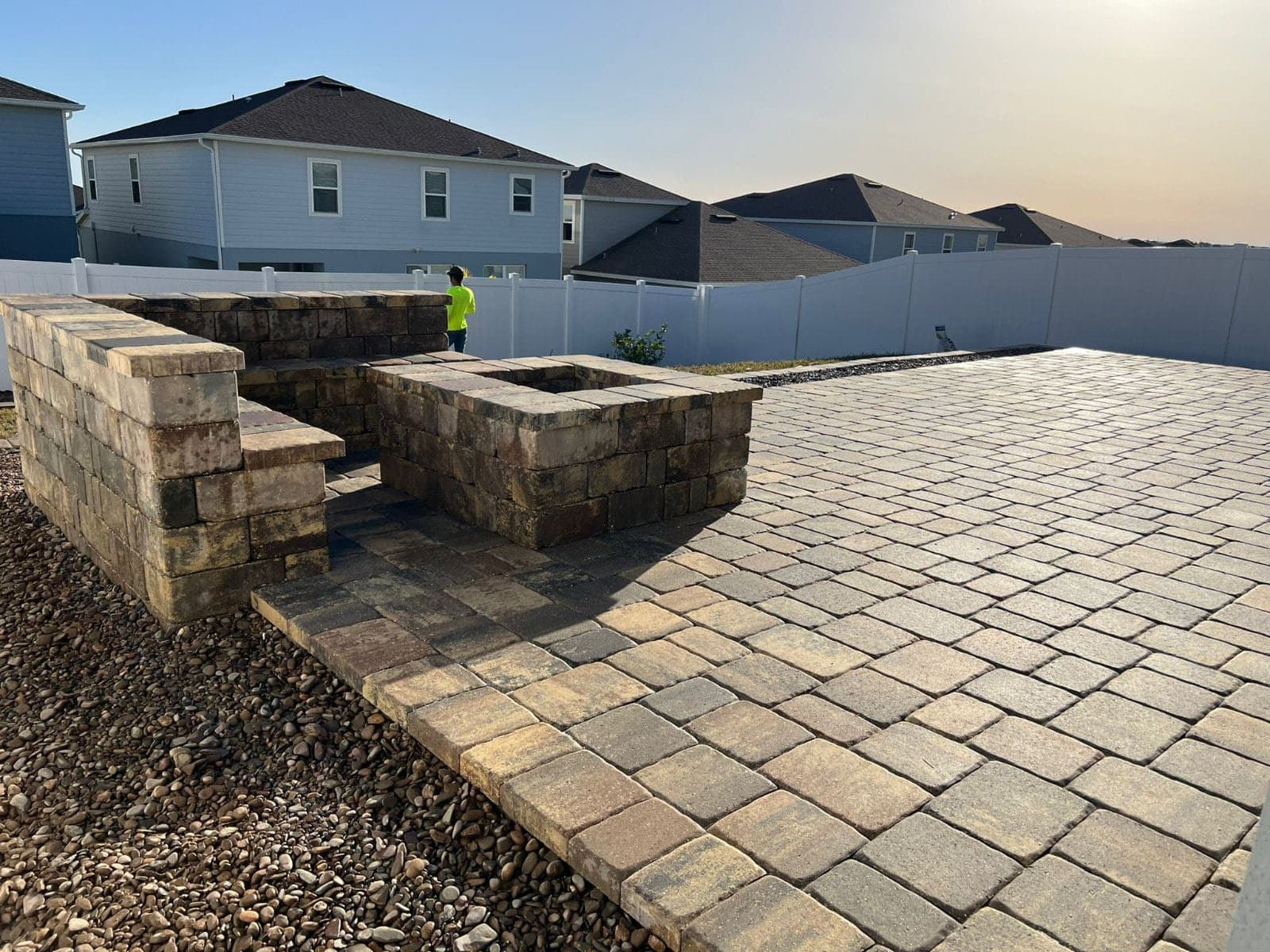
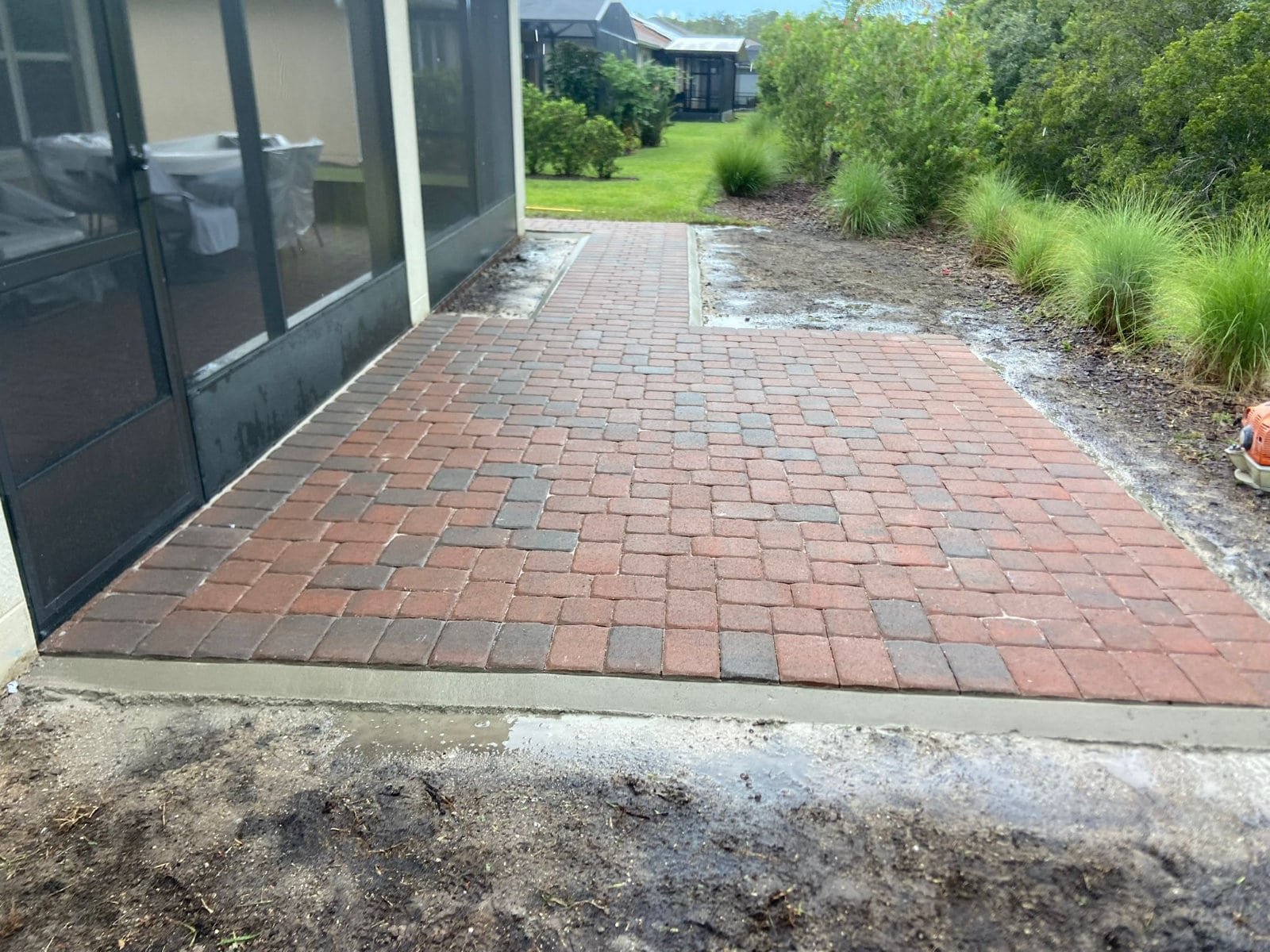
Patios. The most forgiving of the group. Loads are light, the layout is flexible, and the main decisions are pattern, color and how the space connects to the back door and to any existing screen enclosure. Slope and joint detail still matter, because a patio that sheds water toward the house creates a problem that has nothing to do with pavers.
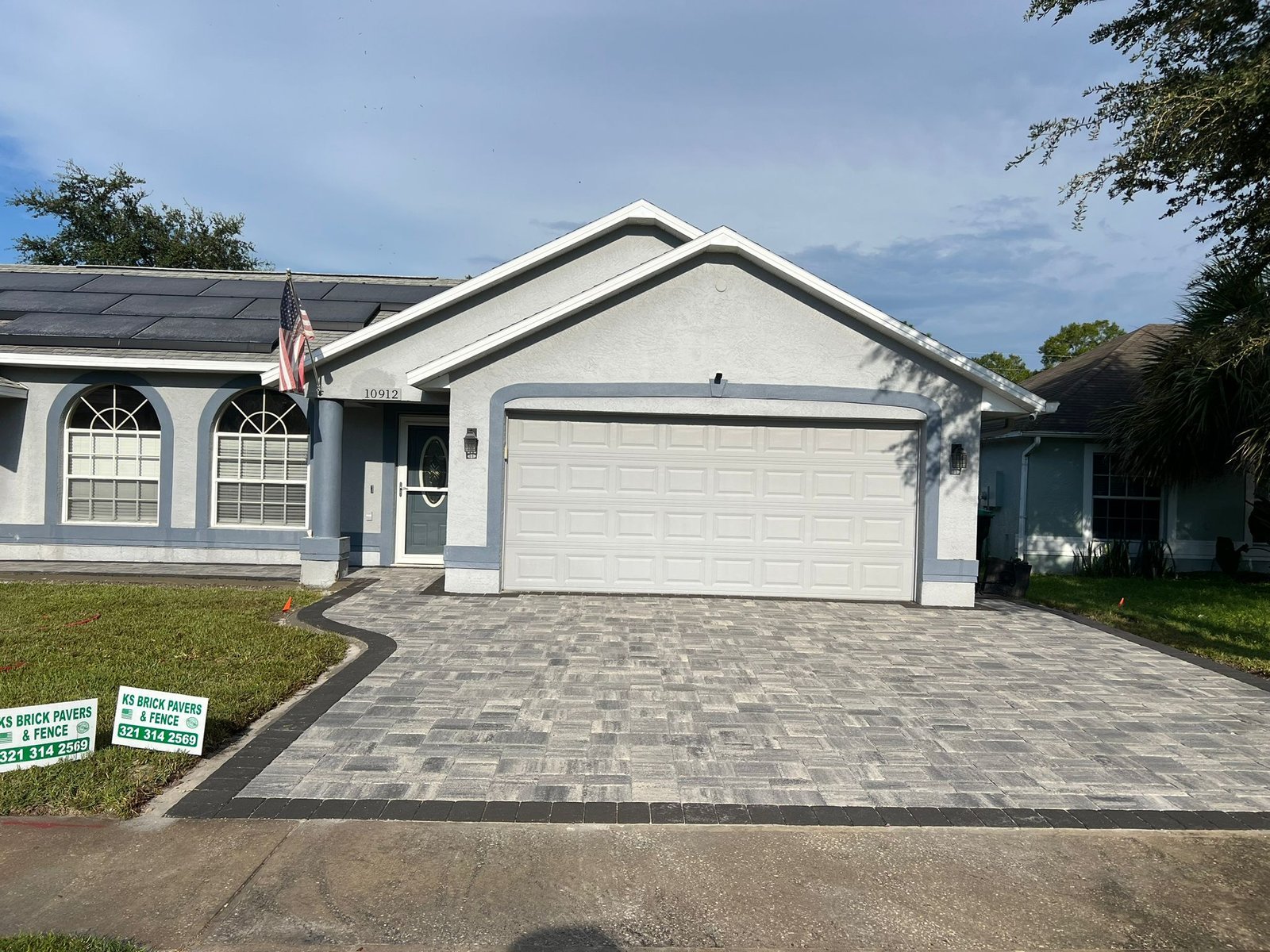
Driveways. The most demanding. Vehicle weight, turning forces and the apron transition to the street all raise the stakes on base depth, compaction and pattern selection. On many Four Corners lots the driveway is also the most visible hardscape on the property, so the finish has to satisfy the eye and the load at the same time.
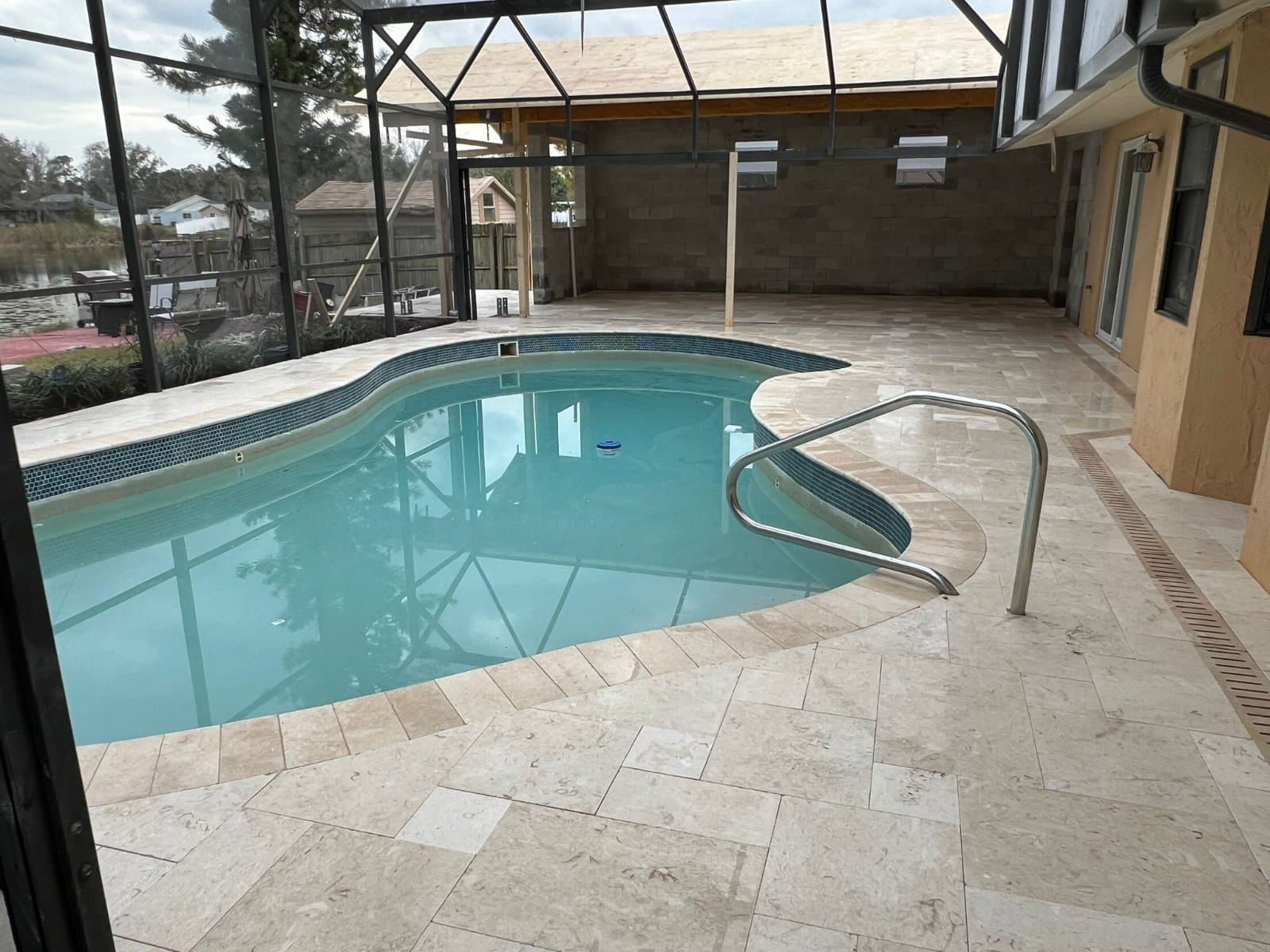
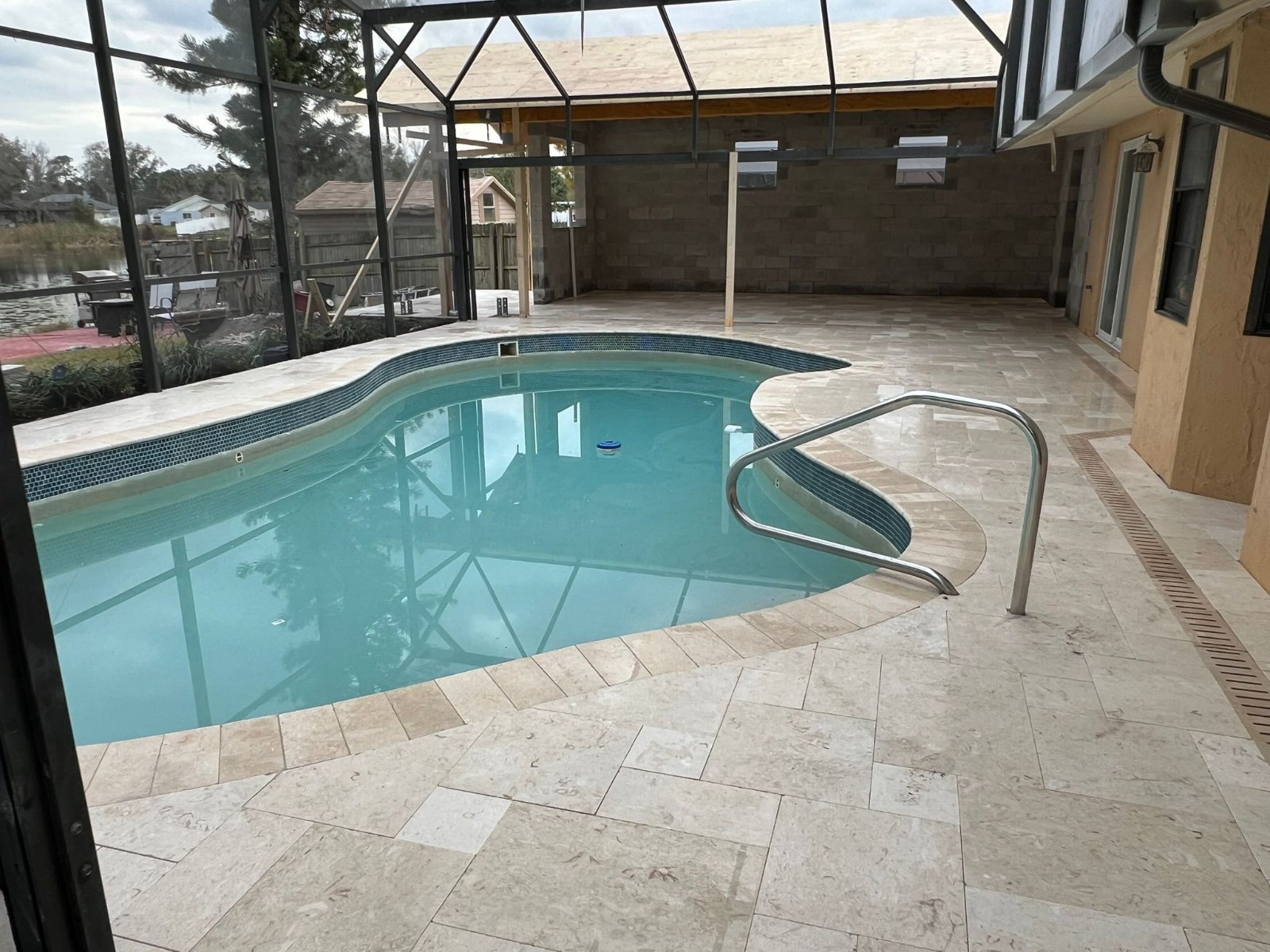
Pool decks. Surface texture and heat behavior matter more here than anywhere else, because people walk it barefoot and walk it wet. Coping details, deck drains and the transition to the existing pool shell need to be planned rather than improvised. Resurfacing an existing concrete deck with pavers is a different job from building a new deck on grade, and the two should never be quoted as if they were the same.
Outdoor kitchens and firepit areas. These bring in other trades. Anything involving gas, electrical or plumbing changes the permit picture entirely, even in counties where the paver work alone would be straightforward. That is worth flagging early rather than discovering it during review.
Retaining walls and elevated decks. Grade changes introduce drainage behind the wall, block selection and backfill detail. On a flat Florida lot these are usually modest, but the moment a wall retains real soil, it stops being decorative.
What actually moves the number on a quote is rarely the paver itself. It is square footage, access for equipment, whether existing concrete has to be demolished and hauled off, how much grade has to change, pattern complexity and cut waste, and which county's permit path applies. Two identical patios on opposite sides of a Four Corners county line can carry different soft costs for that last reason alone.
Paver Permits on the Orange County Side, and the New $7,500 Exemption
On the slice of Four Corners that falls within Orange County, a residential paver permit requires a dimensioned site plan showing structures, setbacks and easements. The permit fee is $38, plus $38 for engineering review. Orange County also limits residential private open space to 40 percent of the lot, which is a real constraint on large hardscape projects and one that should be checked at design time rather than at submittal time.
That site plan requirement is not a formality. A hand sketch without dimensions, setbacks and easements will not get you through review. Easements in particular catch people out, because a rear or side easement can sit under exactly the strip of lawn where the homeowner wanted the patio to end. Finding that during design costs a conversation. Finding it during review costs a redesign.
There is also a statewide change worth knowing about. As of July 1, 2026, Florida law HB 803 requires cities and counties to waive the building permit for work up to $7,500 on single family properties, provided the work does not involve electrical, plumbing, mechanical, gas or structural systems. The catch is that the exemption is not automatic. The property owner or the contractor still has to file a formal exemption request with the local building department.
For homeowners here, that mostly affects the smaller end of the work: a fence repair, a modest patio section, a small area of resetting. It does not remove HOA or architectural review, and it does not apply once a trade system is involved, which is exactly why an outdoor kitchen sits outside it. Two more things to keep straight. The exemption is a permit waiver, not a code waiver, so the work still has to be built right. And it does not change the county specific zoning limits described in the next section.
For the Polk, Osceola and Lake portions of Four Corners, the paver permit path is confirmed with that county's building division before the job is scoped. We do not carry an assumption across a county line, and neither should any contractor bidding your project.
(321) 353-7445Get Immediate Service
Fence Rules Change at the County Line in Four Corners
Fencing is where the four county situation produces the sharpest differences, and it is the clearest example of why the county question comes first.
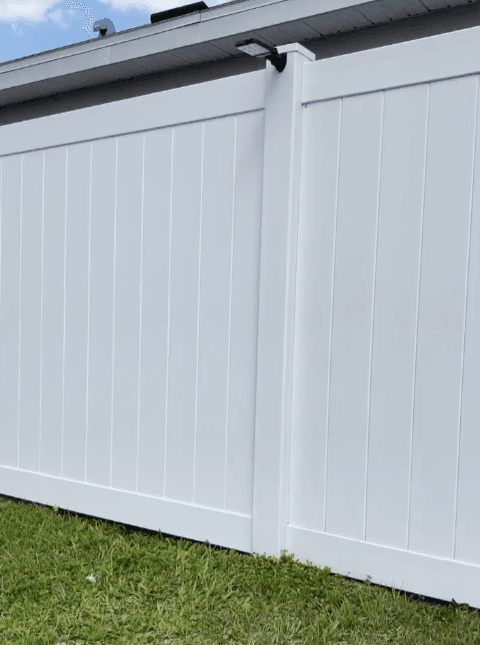
On the Polk County side, which covers communities such as Solterra, Watersong, Providence and Windsor Island, chain link or stockade fences up to 8 feet tall do not require a permit. Masonry walls, fences with masonry pillars, and opaque fences taller than 8 feet do require a Level 1 building permit from the Polk County Building Division. That is a relatively permissive starting point for a standard privacy fence.
On the Osceola County side, which covers communities such as Reunion, Storey Lake, Windsor Hills and Encore, the rules are tighter. A fence cannot exceed 36 inches in height if it sits forward of the building setback line, and it cannot exceed 72 inches, or 6 feet, anywhere on the lot. A permit is required, with a $60 fee that includes zoning review.
Read those two side by side and the practical consequence is obvious. The same 6 foot privacy fence design is permit free on one side of Four Corners and a permitted, zoning reviewed, $60 job on the other. A front yard fence that would be unremarkable on the Polk side is capped at waist height on the Osceola side if it sits ahead of the setback line. Anyone quoting your fence without asking which county you are in is quoting a guess.
Material choice sits on top of the height question. Aluminum and vinyl handle Florida humidity and sun without the maintenance load of wood, and aluminum is the usual answer where a pool enclosure or a view line is involved. Wood gives a different look and a different upkeep commitment. Gate hardware, post setting depth and hinge selection deserve more attention than they normally get, because gates are the part of a fence that moves and therefore the part that fails first.
Our team handles the entire fence process, including submitting plans, paying permit fees and scheduling inspections. Details are on the fence installation page.
Artificial Turf, HOAs and Florida Statute 720.3045
The most common objection we hear about artificial turf in Four Corners is not about cost or appearance. It is a flat statement that the HOA will not allow it. In a lot of cases, that belief is out of date.
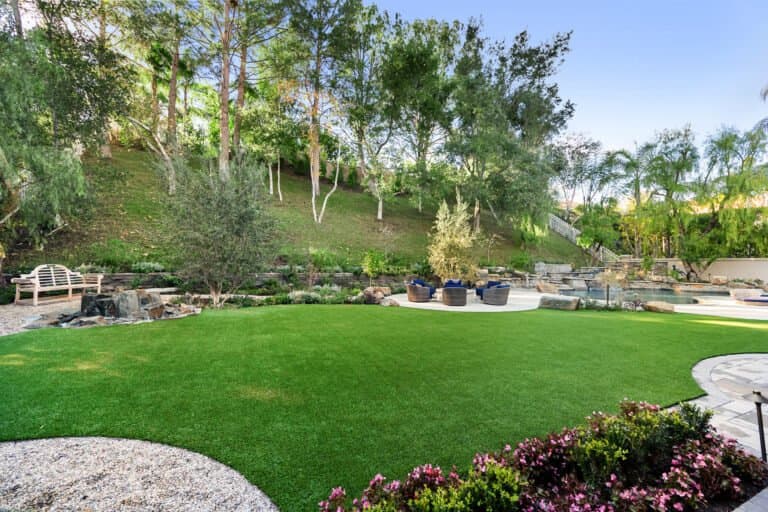
Florida Statute 720.3045, which came out of HB 437, prohibits homeowners associations from banning the installation of synthetic turf in portions of a lot that are not visible from the street or from a neighboring lot. The association can still regulate appearance. It cannot prohibit the installation outright in those areas.
The practical reading matters. A back yard already screened by a privacy fence is very often the kind of space the statute protects. A front lawn in full view from the street is not covered by that protection, and the association's rules there still govern. We do not interpret any individual community's architectural guidelines for you, and no contractor should. What we do is submit properly and let the reviewing body respond in writing.
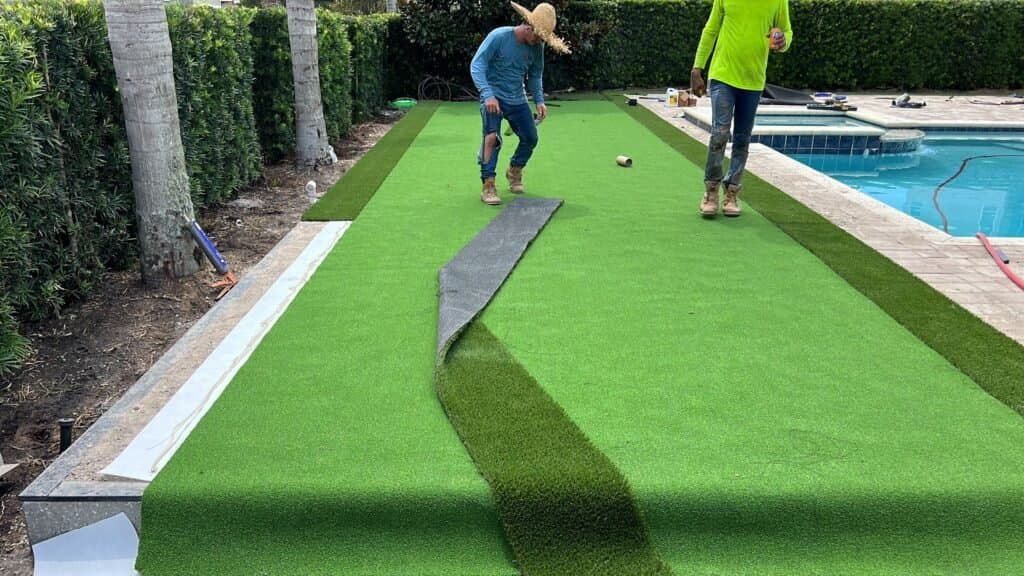
The install itself has more in common with paver work than most people expect. The base is excavated and compacted the same way, because turf laid over soft or uneven ground telegraphs every dip within a season. Drainage is designed in, which matters enormously here given how much rain arrives in a short window. Seams are placed where they will not sit in the main sight line. Edges are secured so the perimeter does not lift. Infill is selected for the actual use of the space, and a yard that hosts dogs gets a different specification than one that hosts a patio set.
The appeal in this area is straightforward. Turf stays green through a dry spring, it survives shaded strips along a north facing wall where grass never fills in, and it does not need mowing on a property that may sit empty for stretches. See the artificial turf installation page for the full scope.
Rain, Lightning and Hurricane Season: How the Calendar Shapes the Job
Outdoor construction in this part of Florida is scheduled around weather, not in spite of it. Three pieces of the calendar drive most of it.
The rainy season. Florida's rainy season runs from late May into October and accounts for roughly 68 percent of the state's annual rainfall. Osceola County averages more than 7 inches of rain per month from June through September. That concentration matters for base work specifically, because saturated subgrade cannot be properly compacted and a base that is compacted wet does not perform the way a base compacted at the right moisture content does. Excavation and base days are the weather sensitive part of a paver or turf project. Setting the units is comparatively forgiving.
Lightning. Four Corners recorded more than 1,200 lightning strikes per square mile in 2022 according to Vaisala's annual lightning report, one of the highest densities recorded anywhere in the United States. That is not a statistic for a brochure. It is why crews come off open ground when storms build in the afternoon. If a contractor treats a lightning hold as optional, that tells you something about how they treat the parts of the job you cannot see either.
Hurricane season. The Atlantic hurricane season officially runs from June 1 through November 30. Its main effect on hardscape is design thinking rather than drama. Fence posts and gate hardware carry wind load, and how a fence is set and how a panel is fastened determines how it behaves in high wind. An interlocked paver field distributes movement across many small units rather than concentrating it in one large slab, which is one reason the system suits this climate.
Put together, the drier months are the easier window for base intensive work, and the wet months mean building the schedule with realistic weather holds rather than pretending they will not happen. We would rather set that expectation up front than explain it mid project.
Matching Pavers and Fence to Block, Stucco and Barrel Tile, and Keeping It That Way
The major planned and resort communities around Four Corners, including ChampionsGate, Reunion, Solterra and Storey Lake, are built predominantly in block and stucco with barrel tile roofs, in a Mediterranean Revival style, and many of them have exterior color palettes defined by the association. That architectural consistency is worth designing with rather than against.
In practice it points toward a few reliable choices. Paver colors in warm sand, tan and terracotta ranges echo barrel tile far better than cool grey does on these homes. Tumbled or textured finishes read as appropriate to the style, where a very smooth modern paver often reads as borrowed from a different house. A darker border course frames a patio or driveway and defines the shape without adding another color to the palette. For fencing, powder coated aluminum in black or bronze recedes visually against stucco, while a white vinyl run can dominate a facade depending on the wall color behind it.
Because many of these communities set the exterior palette at the association level, the sensible sequence is to select finishes and submit for review before ordering, not after. On paver projects we handle every permit and HOA submittal as part of the quote, which keeps that sequence in one set of hands.
Finished work still needs upkeep, and Florida is hard on outdoor surfaces. Joint sand migrates and needs replenishing, or weeds and ants find the gaps. Paver surfaces collect organic staining in shaded and irrigated areas. Sealing is a decision with real tradeoffs on appearance and slip behavior, not an automatic yes. Fence gates drift out of alignment and hardware corrodes in humid air. Turf needs periodic rinsing, cross brushing in high traffic lanes, and attention at the seams and edges. Our outdoor maintenance plans exist so this is scheduled rather than remembered, which matters a great deal on properties that sit vacant part of the year.
How to Choose a Paver Contractor in Four Corners
Bids for the same project can land far apart, and the gap is almost never in the paver. It is in the base, the edge restraint, the drainage plan and who is carrying the permit. A short list of questions will separate the bids faster than comparing totals.
- Which county is my parcel in, and what does that county require? If the answer is vague in a place where four counties meet, that is a serious signal.
- Who pulls the permit and files the HOA submittal? Get it in writing. On our paver work, permit and HOA submittal are part of the quote. On fencing, we submit plans, pay permit fees and schedule inspections.
- How deep is the base and how is it compacted? Ask specifically whether it is compacted in lifts. The answer tells you how the work will age.
- What edge restraint is being used? If the bid does not mention one, the perimeter will spread.
- Where does the water go? A good answer describes slope direction and a discharge point. A weak answer is that sand drains well.
- Is existing concrete demolition and haul off included? This is a frequent source of change orders on pool deck and driveway jobs.
- How are weather holds handled? In a place with this much rain and lightning, a contractor without a clear answer has not worked here long.
KS Solutions installs brick pavers, fences and artificial turf across Central Florida, and we work all sides of Four Corners: the Polk communities, the Osceola communities, the Orange County slice and the Lake County portion. Because the county line drives the permit, the fee and in the case of fencing the allowable height, the first thing we establish on any Four Corners project is which side you are on. Everything else follows from that.
Call (321) 353-7445 to talk through your project and get an estimate for your address.