Paver work in Loughman starts below the surface
Most paver projects that fail in Central Florida do not fail at the top. The stone looks right on day one. The problem shows up a year later as a dip near the garage apron, a rocking paver by the pool step, or a joint that keeps opening no matter how much sand goes into it. In almost every case the cause is what happened under the pavers before a single unit was laid.
Loughman sits in Polk County, and Polk is part of the band of west central Florida that the insurance and geology trades refer to as Sinkhole Alley, along with Pasco, Hernando, Hillsborough, Marion and Alachua counties. That label gets thrown around loosely, and it does not mean your back yard is unstable. What it does mean is that the region sits on karst geology, porous limestone, and ground that moves water in ways a paver base has to respect. A paver surface is flexible by design, which is an advantage in this kind of ground, because it can absorb small movement without cracking the way a poured slab does. But that advantage only exists if the base under it was built to carry the load it will actually see.
The second thing that shapes paver work here is the housing itself. In Loughman the median home was built around 2005, and roughly 46 percent of the housing stock went up between 2000 and 2009. That is a young neighborhood by Florida standards. It means most yards here still have the original builder grade: a slab patio the size of a card table, a two car driveway poured to the minimum, sod that was rolled out over compacted construction fill, and a screen enclosure that was never designed as an outdoor living space. It also means the drainage plan for the lot was engineered when the subdivision was platted, and a paver project has to work with that plan rather than against it. Water that used to sheet off a lawn and into a swale still needs somewhere to go once part of that lawn becomes hardscape.
How a brick paver installation is actually built
Homeowners usually compare paver bids on material and square footage. Those are the two things that are easy to read on a page. The parts that decide whether the project is still flat in five years are mostly invisible by the time the crew leaves.
Excavation and subgrade
The first step is removing enough material to make room for the full system: base, bedding layer and the paver itself. Cutting the excavation short is the single most common shortcut in this trade, because it saves labor, saves haul off and saves stone all at once. The soil that is left behind gets proof rolled and compacted, and any soft pocket that shows up during that step gets dug out and replaced rather than covered over. Soft spots do not heal under load. They telegraph.
Base and compaction
Base stone goes in and gets compacted in lifts rather than all at once, because a compactor only densifies a limited depth of material per pass. A single thick lift looks compacted at the surface and stays loose underneath. On lots where the subgrade is questionable or where the hardscape meets a lawn that stays wet, a woven geotextile between subgrade and base keeps the two layers from mixing over time, which is what causes slow, uneven settlement.
Bedding, laying and edge restraint
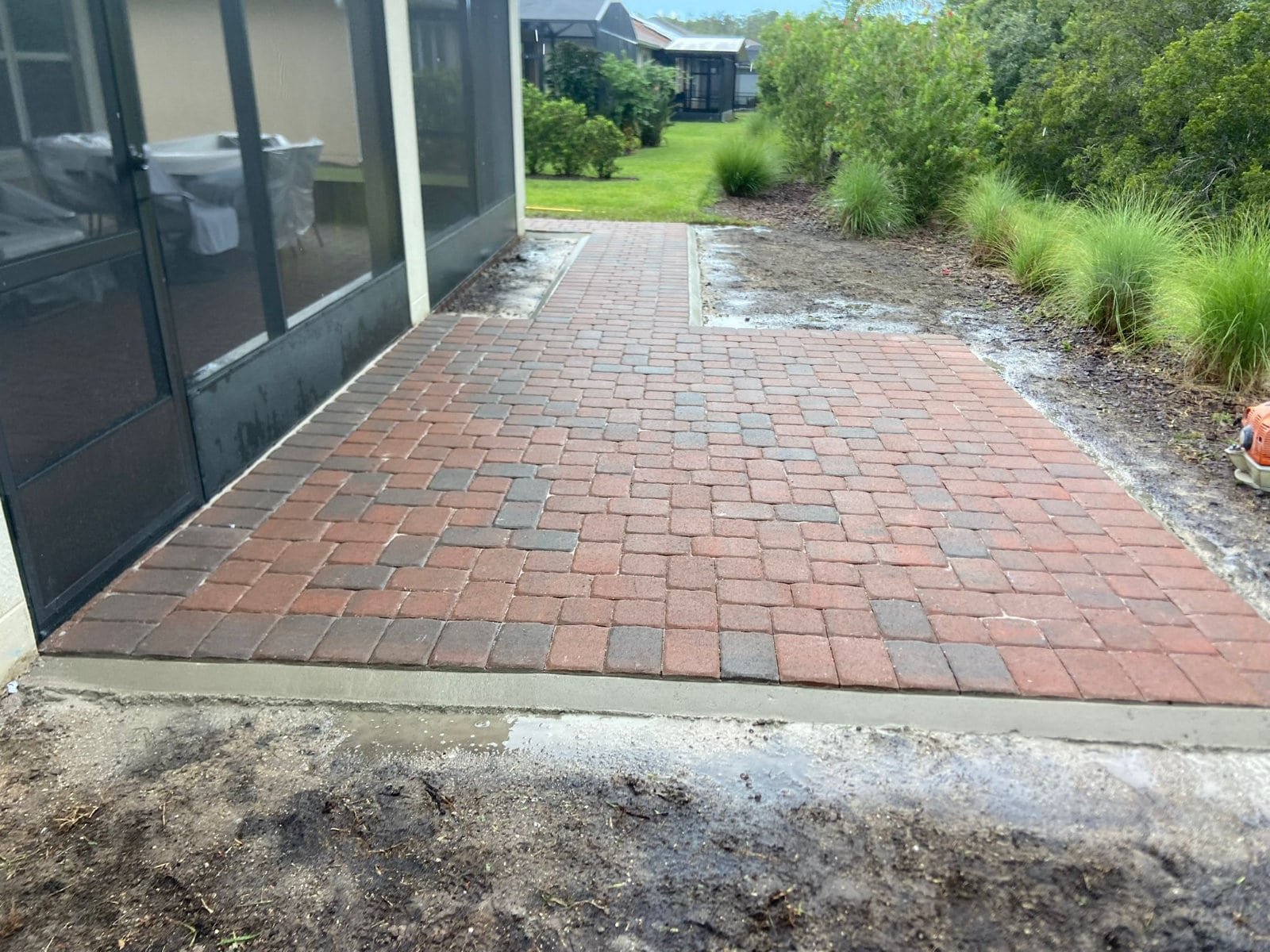
A thin, screeded bedding layer sets the final elevation. The pavers are laid in the chosen pattern, with the pattern running consistently across the field so that cuts fall at the perimeter instead of in the middle of the view. Edges are then locked with a proper restraint, spiked into the compacted base and not into loose soil. Edge restraint is the part people skip. Without it, the outer courses walk outward over time under vehicle loads and foot traffic, and every joint behind them opens in sequence.
Joints and finishing
Joint sand is swept and vibrated into place so the pavers interlock and share load with their neighbors. That interlock is the whole structural idea behind a paver surface. Polymeric jointing material resists washout better in a climate with heavy afternoon rain, and it slows weed growth in the joints, which is the number one maintenance complaint homeowners have about hardscape in Florida.
Permits, HOA approval and who signs off in Loughman
This is where Loughman is different from Kissimmee, Haines City or Lakeland, and where a lot of out of area contractors get it wrong.
Loughman is a census designated place. It is unincorporated, so there is no city hall and no local building department. Every permit for a paver, fence or exterior improvement here goes through the Polk County Building Division, which can be reached at (863) 534-6080. If a contractor tells you they will pull a City of Loughman permit, that is a sign they have not worked in this community.
For paver work specifically, installations that fall inside required setbacks or that sit against a structure have to meet the Florida Building Code and the Polk County Land Development Code, including the drainage requirements. In practice that means the county cares less about the fact that you are adding stone and more about where the water goes after you add it. A patio extension that pushes runoff toward a neighbor's lot, or that traps water against the foundation, is a review problem before it is a workmanship problem. Getting the slope, the discharge point and any drainage detail right at the design stage is far cheaper than redoing it after an inspection.
On top of the county, most of Loughman's residential neighborhoods are planned communities with an active homeowners association. Providence, the golf course community near ChampionsGate, is the best known example. In communities like these, exterior changes typically need architectural approval before work starts, and the association usually wants to see the material, the color, the layout and the extent of the work. KS Solutions handles every permit and HOA submittal as part of the quote, so the paperwork and the build are managed by the same people rather than landing back on you.
What actually changes the price of a paver project
Every reputable paver contractor prices the same handful of variables. Knowing them lets you read two bids side by side and understand why they differ, instead of assuming the cheaper one is the same job for less money.
- Total area and shape. Larger, simpler areas cost less per square foot than small ones with curves, because mobilization, screeding and compaction are efficient over open runs and slow over tight geometry.
- Cuts. A design with many radius cuts, borders, soldier courses or inlays takes far more saw time than a straight field with a simple perimeter. Cuts are labor, and labor is most of a paver bill.
- Site access. Whether a machine can reach the work area matters enormously. If base stone and excavated material have to move by wheelbarrow through a side gate, the same square footage costs more. In newer Loughman subdivisions with narrow side yards and screen enclosures, this is a real factor.
- Demolition. Removing and hauling an existing concrete slab, driveway or paver surface is its own line item, and thickness and reinforcement change how hard it is.
- Base depth and subgrade condition. A driveway that carries vehicles needs a deeper, more heavily compacted base than a garden walkway. If the subgrade turns out soft during excavation, undercutting and replacing it is additional material and additional time.
- Drainage work. Channel drains, catch basins, piping to daylight, or regrading to keep water off a slab are separate scope from the pavers themselves.
- Material selection. Paver thickness, format, finish and manufacturer all move the number, and thickness is not cosmetic: vehicular applications call for a thicker unit than a patio.
- Elevation changes. Steps, seat walls, retaining elements and transitions to existing slabs each add structural work behind the visible surface.
If one bid is dramatically lower than the others, the difference is usually hidden in base depth, edge restraint or demolition scope. Ask for those three items in writing and the gap normally explains itself.
(321) 353-7445Get Immediate Service
Driveways, patios, pool decks and walkways are not the same job
Paver driveways
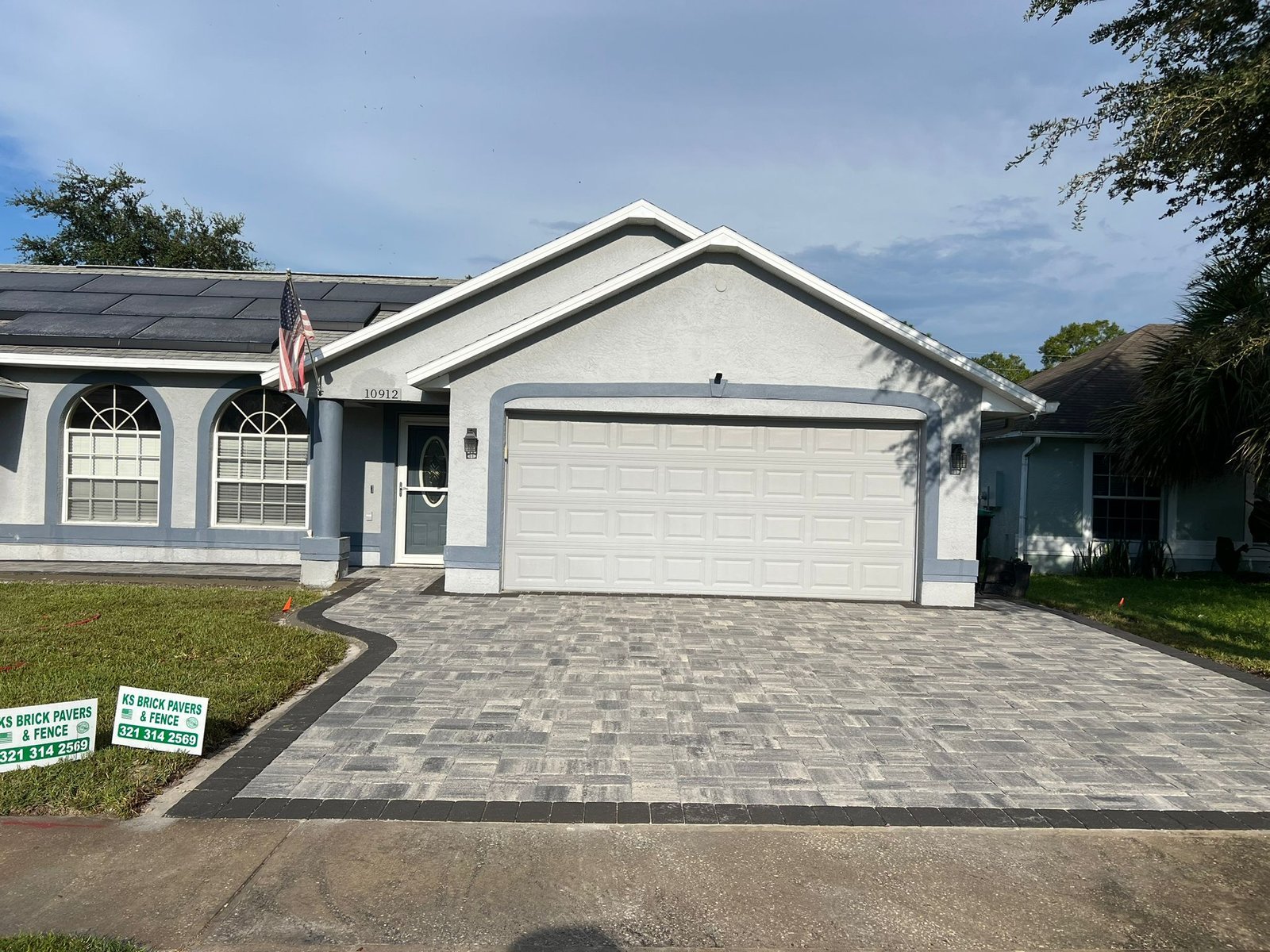
A driveway carries concentrated wheel loads, turning forces and the weight of delivery trucks. It needs the deepest base of anything on a residential lot, a thicker paver unit, and edge restraint that will not migrate under repeated turning at the apron. The transition where the driveway meets the county road and the transition at the garage threshold are the two spots where poor work shows first. Both need to be set to the right elevation so water drains away from the garage rather than pooling at the door.
Paver patios and outdoor living areas
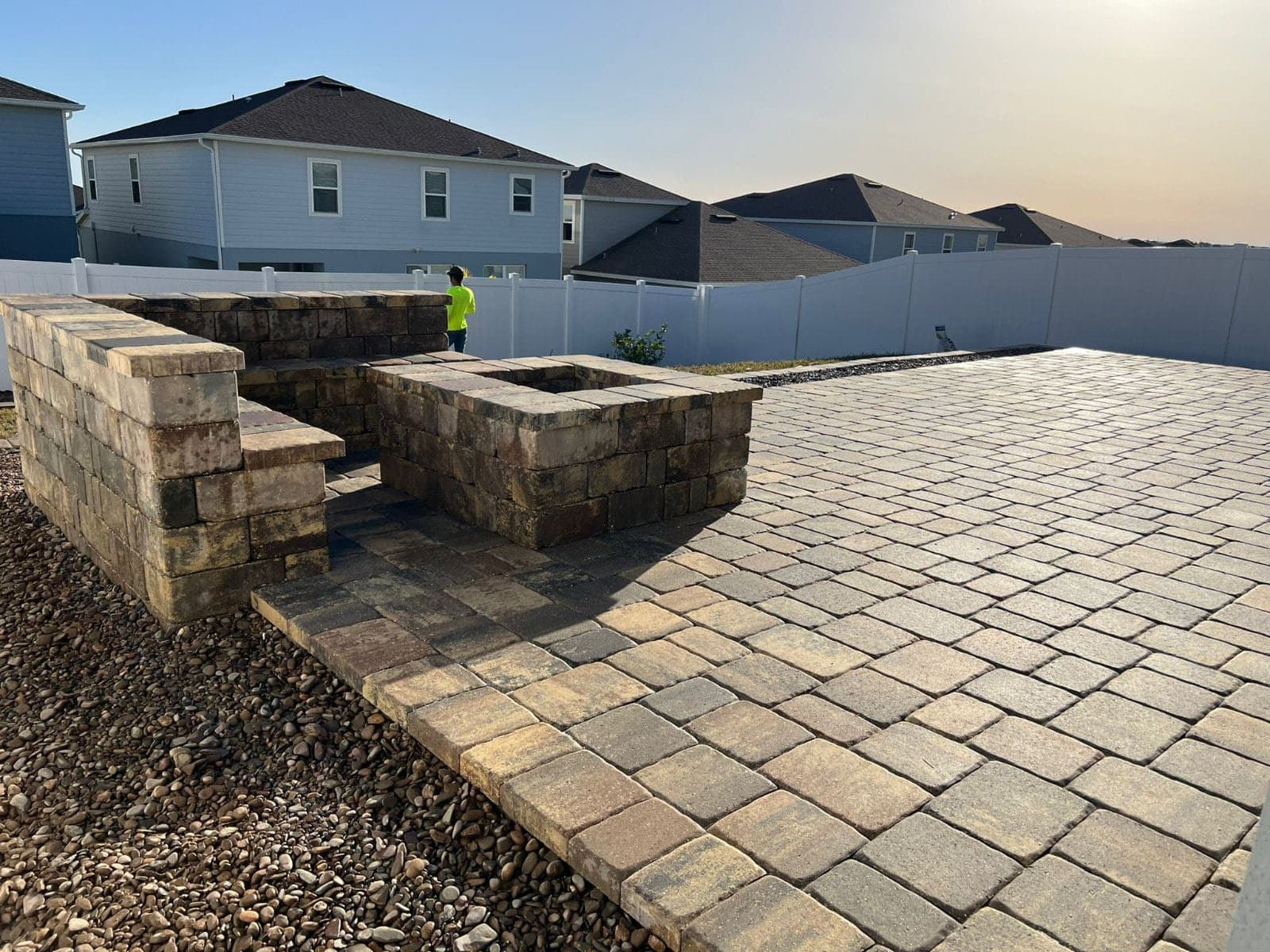
Patios are where Loughman's newer homes gain the most, because the builder version is almost always undersized. The design questions here are practical: how far the roof or screen enclosure shades the space in the afternoon, where the grill and seating actually go, how the surface transitions to the existing slab so there is no trip edge, and where runoff from the roof lands once the lawn that used to absorb it is gone.
Pool decks
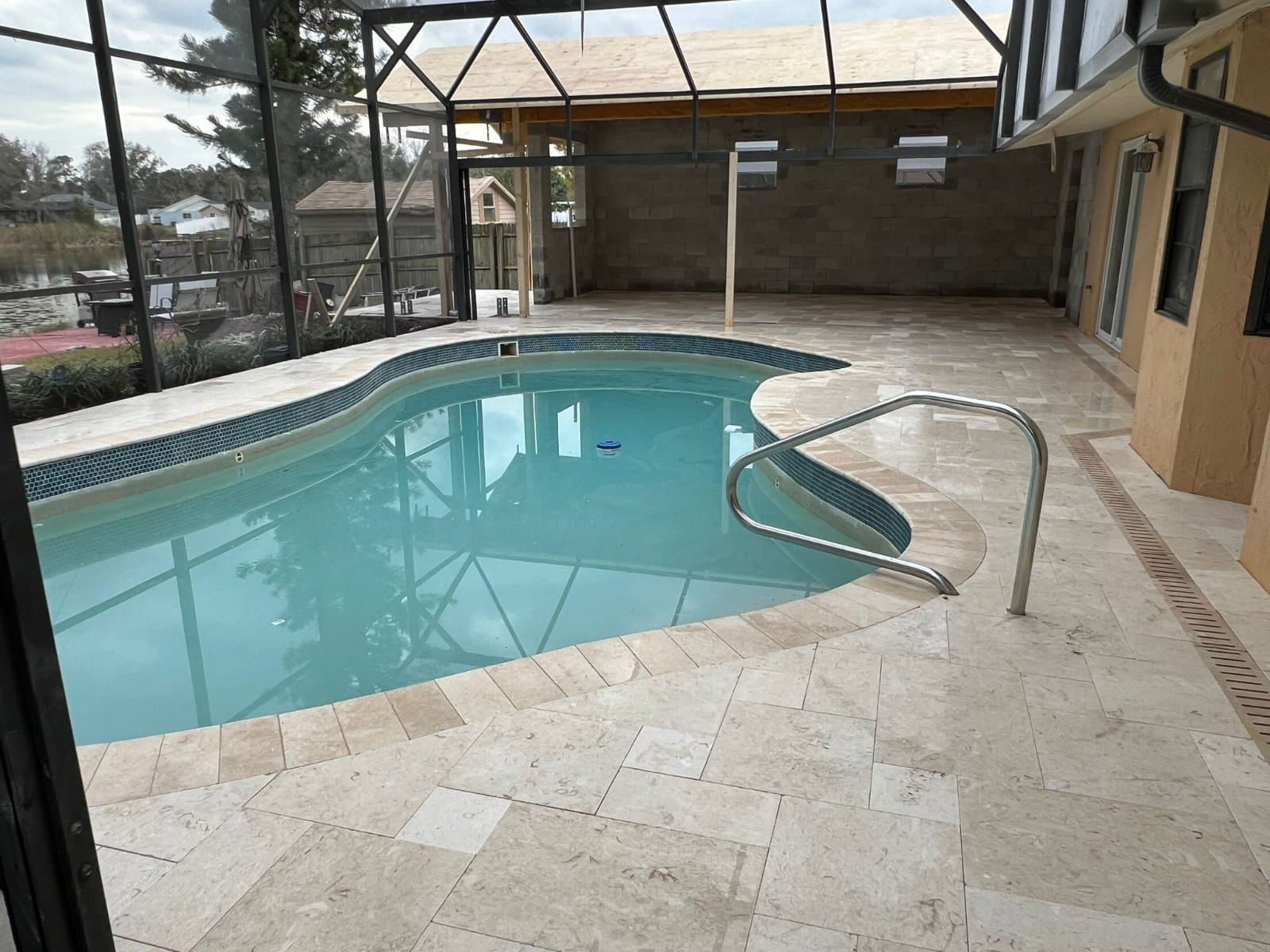
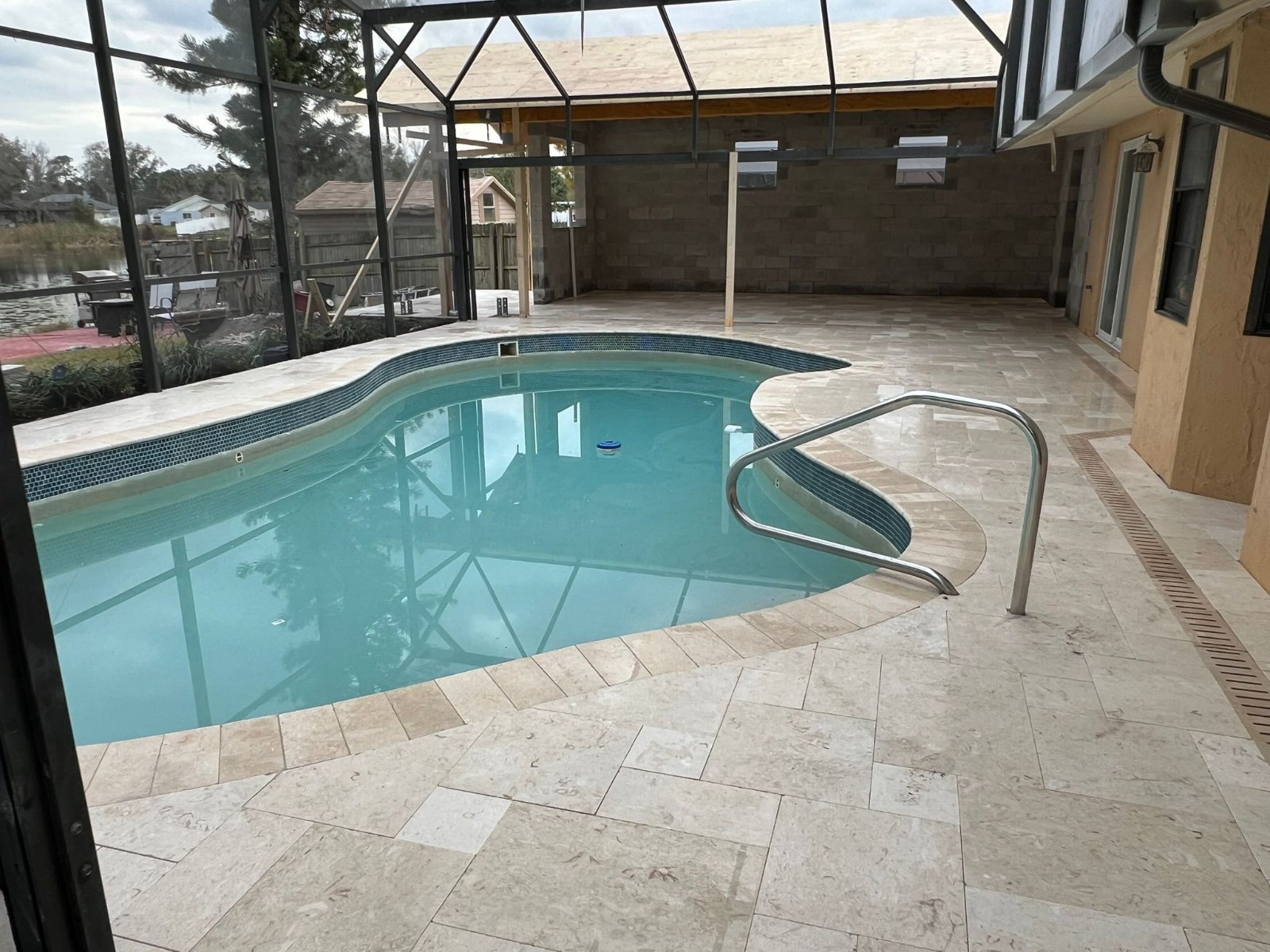
Pool decks combine three constraints at once. The surface has to stay walkable when wet, so texture and finish matter more than they do anywhere else on the property. The perimeter has to be set correctly against the pool coping. And the slope has to carry water away from the pool and away from the house without creating a low spot that holds a puddle after every storm. Existing pool decks can often be resurfaced with pavers over sound concrete, but that decision has to be made on site, because overlaying raises the finished elevation and that has to be checked against door thresholds, screen enclosure tracks and the pool coping itself.
Walkways and entries
Front entries and side walkways are small in area and large in impact, since they are the part of the hardscape every visitor actually touches. They are also where cut quality is most visible, because the eye follows the border line straight to the front door.
Scheduling paver work around Central Florida weather
Weather is not a footnote on an exterior project here. It is a scheduling input.
Central Florida has one of the highest frequencies of thunderstorms and lightning anywhere in the world, concentrated in summer afternoons. That is a genuine safety issue for a crew running saws and plate compactors in an open yard, which is why exterior installations are generally scheduled to start early and why afternoon work in July looks different from afternoon work in February. It also affects the build itself. Base compaction depends on moisture content, and a base that gets saturated mid installation has to be reworked rather than covered.
The Atlantic hurricane season defined by NOAA runs from June 1 through November 30, with peak activity from the middle of August through the middle of October. For a homeowner planning a larger paver project, that window is worth knowing when you set expectations about start dates, because storm activity moves crews and material deliveries around across the whole region. Planning a project so the base work and the install do not land in the middle of the peak weeks is the simplest way to avoid a job that sits half finished behind a fence.
One structural note: a properly built paver system handles heavy rain better than most homeowners expect, because the joints and the open graded base let water move rather than trapping it. The failure mode in a wet climate is almost never the paver. It is a base that was never compacted properly and an edge that was never restrained.
Fences, artificial turf and maintenance on the same Loughman property
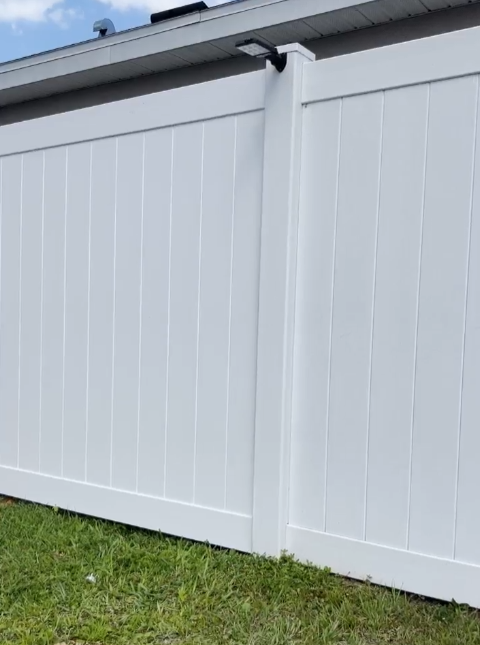
Most Loughman projects do not stop at the patio, so it helps to know how the other three services work here before you plan the yard.
Fence installation
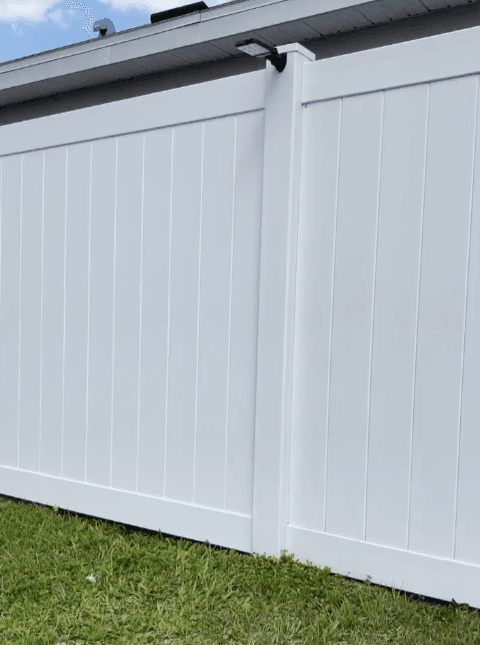
Polk County's rules are more permissive than many homeowners assume. Chain link fences and stockade style fences up to eight feet in height do not require a permit. Masonry walls, fences with masonry columns, and opaque or solid fences taller than eight feet do require a permit from the Polk County Building Division. The county ordinance does not set a minimum setback from the property line for standard residential fences, but the fence cannot encroach into an easement or a right of way, which is a real constraint in platted subdivisions where utility easements run along rear and side lot lines.
If you have a pool, Chapter 515 of the Florida Statutes governs the barrier. A residential pool barrier must be at least four feet tall, must not have gaps or features a child can use to climb it, and gates must open outward, be self closing, and be self latching with the release on the pool side. That is state law, not a preference. On fence work, our team handles the entire process, including submitting plans, paying permit fees and scheduling inspections. Full detail is on the fence installation page.
Artificial turf
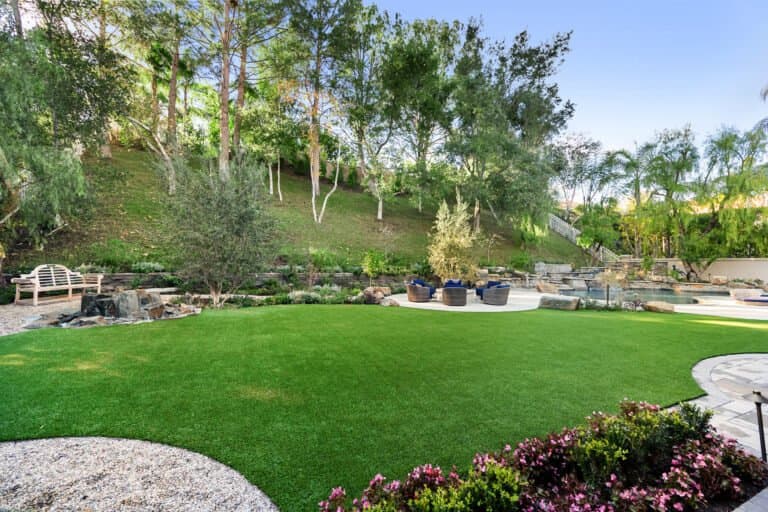
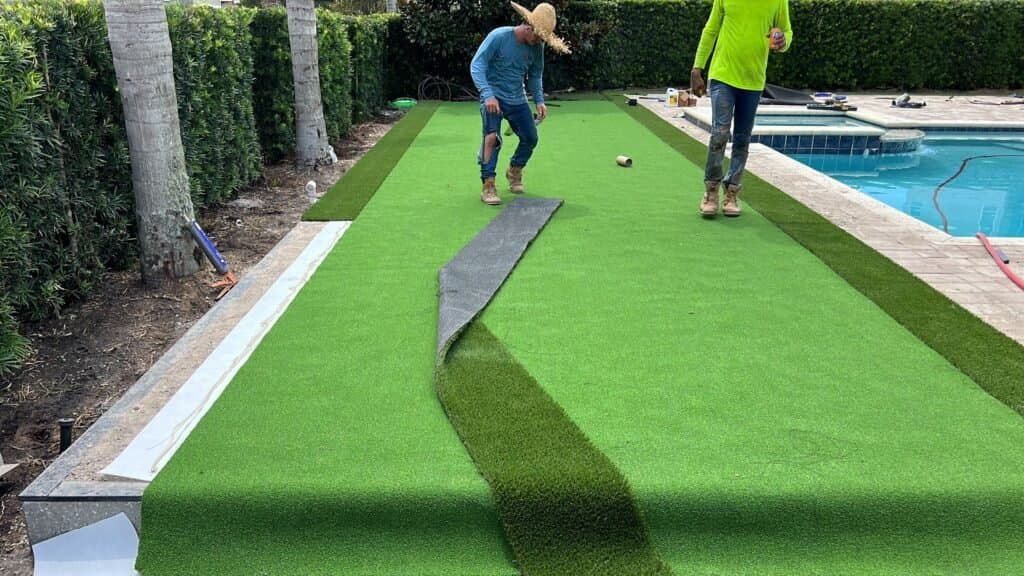
Turf has a strong case in Loughman right now for two separate reasons. Legally, Florida Statute 720.3045 prevents a homeowners association from prohibiting artificial turf on parts of a lot that are not visible from the street or from a neighboring lot, and HB 683 of 2025, consolidated into Florida Statute 125.572, removed the power of counties and municipalities to ban artificial turf that meets Florida DEP criteria on lots smaller than one acre. Practically, Polk County has been under the Southwest Florida Water Management District's Phase II severe water shortage order since February 8, 2026, with lawn irrigation limited to one day per week based on the last digit of the address and fines for violations. Associations cannot require watering beyond what the order allows. A turf area does not care about the watering schedule. See artificial turf installation for how the base and drainage layers are built.
Maintenance
Hardscape in this climate needs periodic attention: joint sand replenishment, cleaning, weed control in the joints and sealing where appropriate. Our maintenance plans cover paver, fence and turf upkeep so the surface you paid for keeps looking the way it did on install day.
What goes wrong with paver jobs, and how to vet a contractor
Five failures account for most of the paver complaints in Central Florida, and all five are preventable at the estimate stage.
- Settlement in a defined area. Usually an uncompacted soft spot in the subgrade that was covered rather than removed.
- Spreading edges. Missing or improperly anchored edge restraint. Once the perimeter moves, the whole field loses interlock.
- Standing water. Slope was set by eye instead of by instrument, or the new hardscape changed where runoff goes and nobody accounted for it.
- Weeds and washed out joints. Joint material that was never vibrated in, or the wrong material for a climate with intense rain events.
- Bad transitions. Trip edges where new pavers meet an existing slab, or a finished elevation that fouls a door threshold or a screen enclosure track.
When you are comparing contractors in Loughman, the useful questions are specific. Ask who is pulling the permit and from which authority, and listen for whether they name Polk County or invent a city. Ask what base depth they are quoting for your application and whether it changes between the walkway and the driveway. Ask how the edges will be restrained. Ask what happens if the subgrade turns out soft after excavation, and get the answer in writing before that day arrives. Ask whether they handle the HOA architectural submittal or expect you to do it. Ask to see how they intend to handle drainage where the new surface meets the lawn.
A contractor who answers those six questions in concrete terms is telling you they have built this before. A contractor who answers with material samples and a total price is telling you something else.
Serving Loughman and the surrounding Polk and Osceola communities
KS Solutions installs brick pavers, fences and artificial turf across Central Florida, and Loughman sits in the middle of a service corridor we cover daily. If you are comparing options across the area, we have detail pages for nearby cities including Haines City, Kissimmee, Celebration, Lakeland and Winter Haven.
If you are planning a paver patio, a driveway, a pool deck or a full outdoor living build in Loughman, start with the brick paver installation page for material and design detail, then call (321) 353-7445 to walk the property. We will look at the grade, the access, the drainage and the HOA situation before quoting anything, because those four things decide what the project actually costs.