What a Brick Paver Job in Dundee Actually Involves
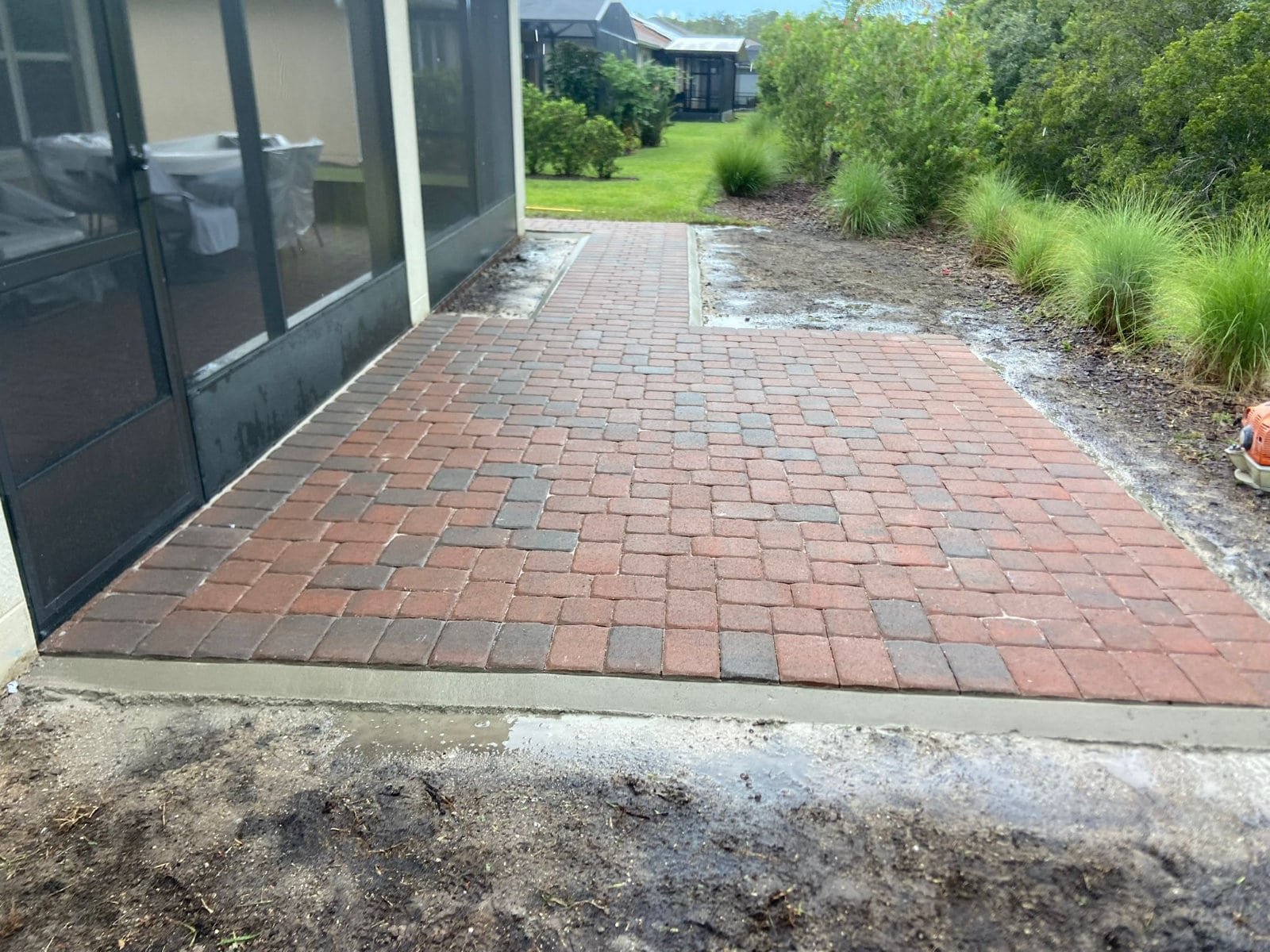
A paver driveway or patio is two things: the surface you can see and the base you cannot. The base decides whether the job still looks right in year five. Everything else is finish work.
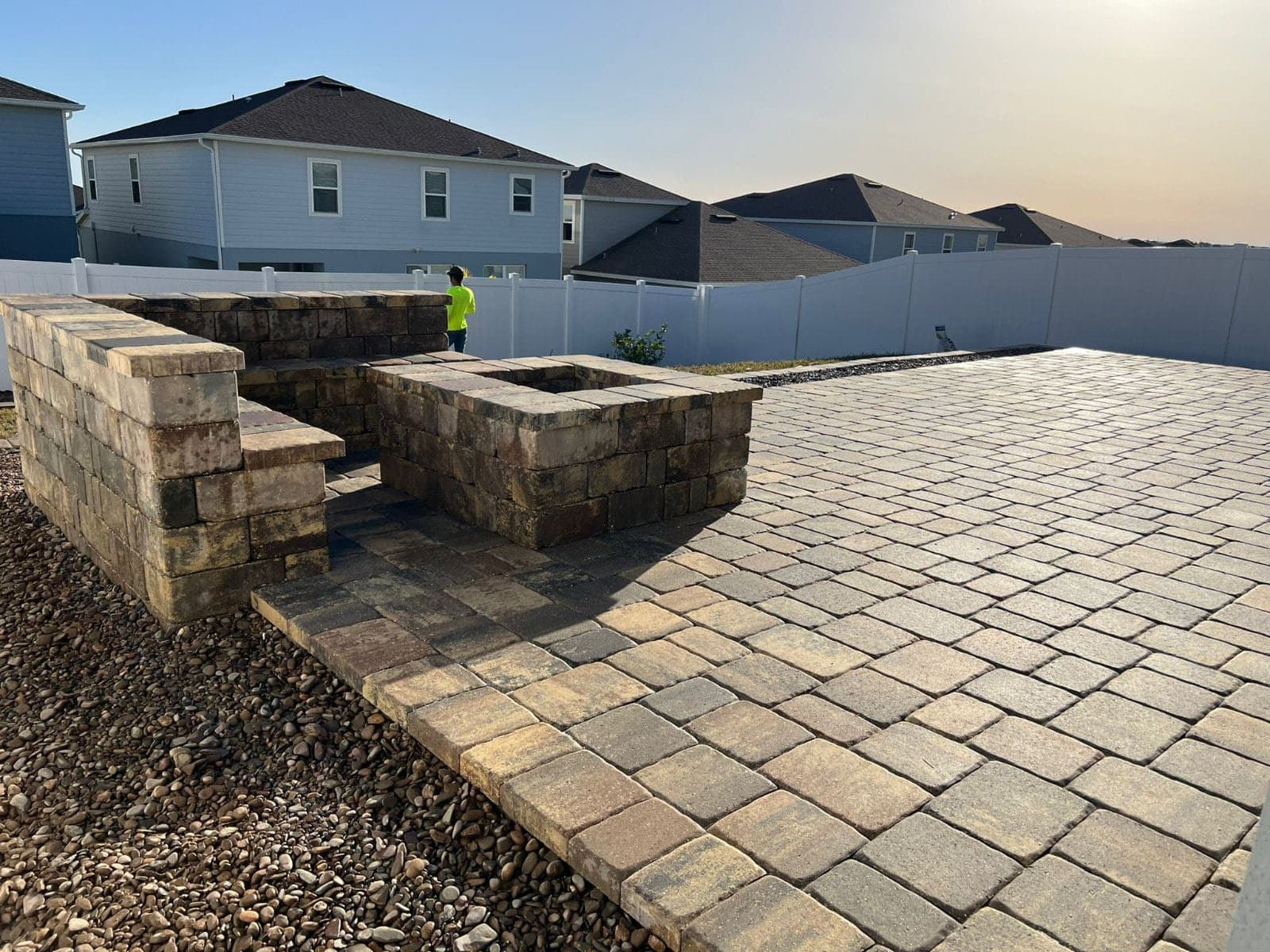
We build paver surfaces in layers. First the existing sod and organic soil come out. Organic material keeps breaking down after you cover it, and what it leaves behind is a void, which is what a low spot in a patio really is. Then compacted aggregate goes in, placed in lifts rather than one deep dump, because a plate compactor can only reach so far down. Then bedding sand, then the pavers, then edge restraint around the perimeter, then joint sand swept in and vibrated into the joints.
Two of those steps get skipped by the cheapest bids, and both show up later. Without edge restraint, the outside row starts to spread and the whole field loosens behind it. Without full compaction, you get the shallow dips that appear after the first heavy summer of rain.
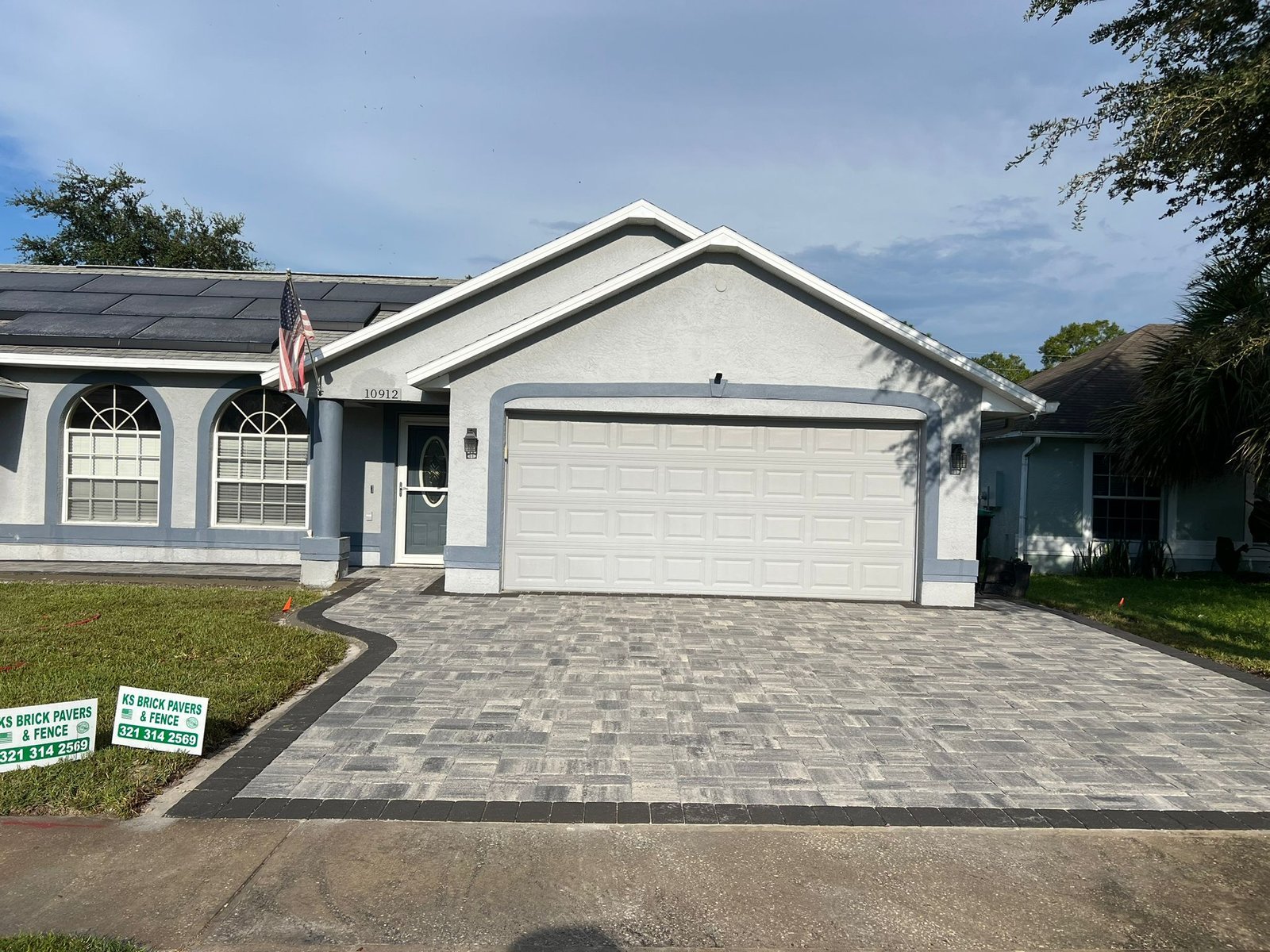
Driveways get built heavier than patios because they carry vehicle weight and turning loads, not just foot traffic. A walkway can be built lighter than either. The layout matters too: a herringbone pattern locks better under vehicle traffic than a running bond, which is why it shows up on driveways far more often than on patios.
The other reason base work matters here specifically is drainage. Central Florida sand moves water fast, which is an advantage, but only if the surface is pitched to send water somewhere useful and the base is built to hold its shape while saturated. A patio that drains toward the slab instead of away from it is a construction problem, not a landscaping problem, and it is far cheaper to solve before the pavers go down. Full details on the build are on our brick paver installation page.
Driveways, Patios, Pool Decks, and Walkways: Picking the Right Surface
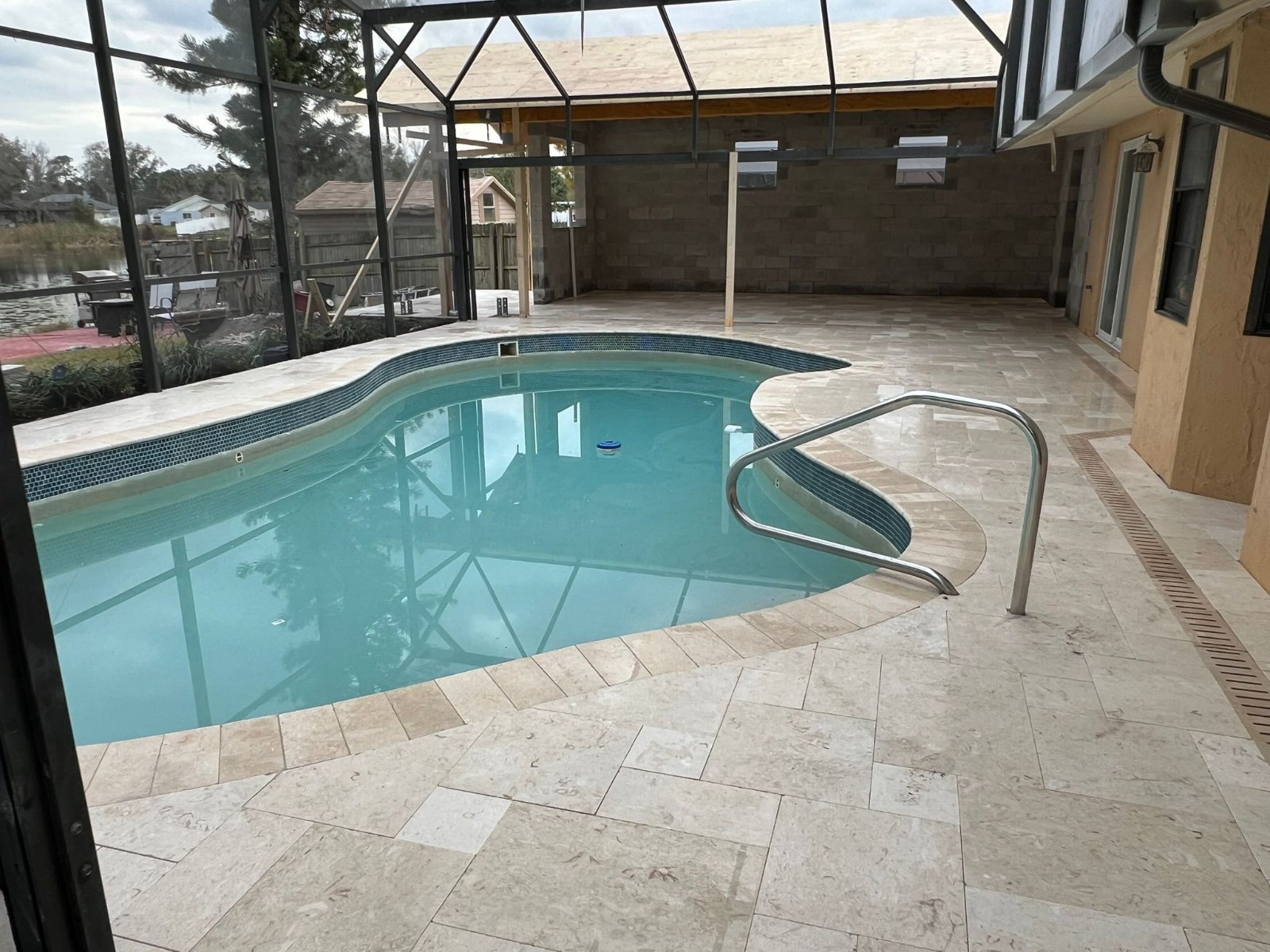
Most Dundee projects start with one of four surfaces, and each one has a different failure mode worth knowing about before you choose materials.
- Driveways. The heaviest build on the property. Apron transitions at the street and at the garage slab are where most driveways start to fail, because that is where loads concentrate and where two materials meet. Thicker pavers rated for vehicular use are the standard here, not the thinner ones sold for patios.
- Patios. More freedom on pattern and color, less structural demand, but drainage is unforgiving. A patio that sits against the back of the house has to move water away from the foundation line every time.
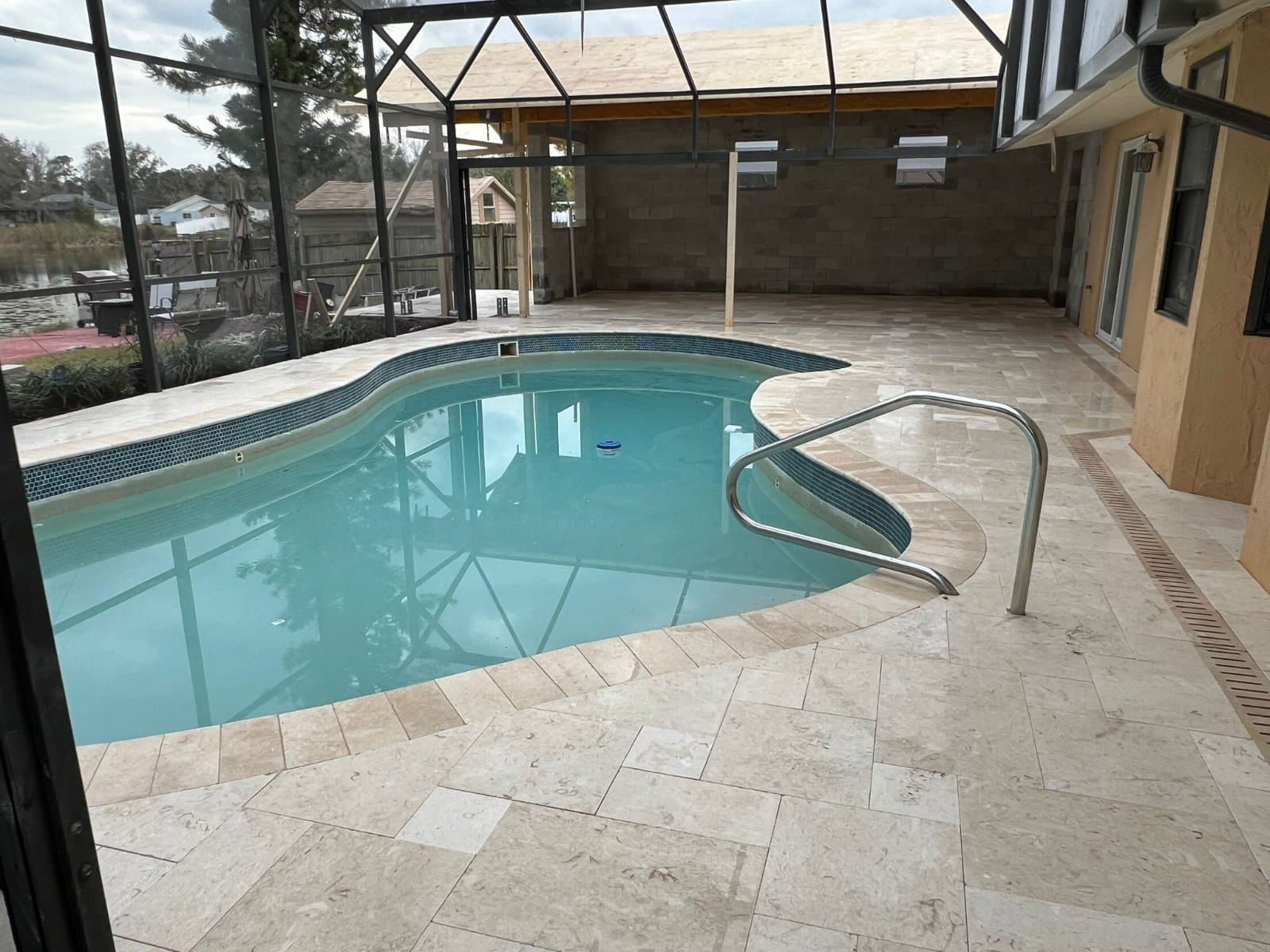
- Pool decks. Surface temperature and slip resistance matter more than pattern. Lighter colors stay cooler underfoot. Pool decks also get the most saturation cycles of any surface on the property, so joint sand quality and edge detail carry more weight.
- Walkways and entries. Small square footage, high visibility. This is the surface people judge the house by, and it is often the least expensive way to change how the front of a home reads from the street.
There is also the resurface question. If you have an existing concrete slab that is structurally sound and simply looks tired, pavers can often be installed over it rather than tearing it out. If the slab is cracked, heaved, or settling, covering it just hides the problem for a season. We look at the slab before quoting it either way, because a slab that needs to come out changes both the scope and the schedule.
Color and paver style are worth thinking about in daylight, outdoors, next to your actual house. Samples read completely differently under a showroom light than they do under a Polk County sun at two in the afternoon.
Permits and HOA Approval in the Town of Dundee
Dundee is an incorporated town, which matters more than most homeowners expect. The rules that apply to your property come from the Town of Dundee, not from the unincorporated Polk County rules you may have read about online.
The Town of Dundee Development Services Department requires a permit for fences and pools as accessory structures. The department is at 124 Dundee Road, Dundee FL 33838, reachable at (863) 438-8330 or permits@townofdundee.com. That is the office that reviews the work, and it is the office we deal with on your behalf.
Here is the contrast worth understanding. In unincorporated Polk County, outside town limits, chain link or stockade fencing up to eight feet does not require a permit, while masonry walls and fences with masonry columns do. Those are county rules. If your address is inside Dundee town limits, they are not your rules, and assuming otherwise is how a fence ends up installed without an approval on file.
On paver patios specifically, the Town's Development Services page names fences and pools explicitly. It does not spell out ground level paver patios one way or the other. Rather than guess, we confirm scope directly with the department before starting. There is also a state law worth knowing about: HB 803 requires municipalities to exempt residential work valued under $7,500 from building permits starting July 1, 2026. Whether Dundee applies that threshold, or has its own local rule, is not something the Town's published page confirms, so we verify it per project instead of assuming.
On our end, permit handling is part of the job, not an add-on. For paver work, we handle every permit and HOA submittal as part of the quote. For fencing, our team handles the entire process, including submitting plans, paying permit fees, and scheduling inspections. If your neighborhood has an architectural review committee, its approval is separate from the Town's, and both have to clear before we set a start date.
Timing a Project Around Polk County Weather
Weather is the single biggest variable on an outdoor build schedule here, and it is predictable enough to plan around.
From June through September, 55 to 70 percent of the annual rainfall in west central Florida arrives, according to the National Weather Service office in Tampa Bay. That is the summer rainy season, and it is the hardest stretch of the year to guarantee a clean base install. Excavation and compaction both want a base that is not saturated. Work still happens in summer, but it happens in windows between storms, and a two day job can stretch across a week of afternoon showers.
Atlantic hurricane season runs June 1 through November 30, with the peak between mid August and late October, per the National Hurricane Center. That window covers Central Florida including Polk County. For fencing, that peak stretch is worth thinking about backwards: a fence you want standing before the peak is a fence you should be scheduling well ahead of it, not during it.
Severe storms here are not only a hurricane season story. In May 2026 the National Weather Service issued severe thunderstorm warnings for Polk County with pea sized hail and winds above 40 miles per hour. That is one documented event, not a yearly statistic, but it is a fair reminder that spring storms move through with real wind behind them.
Heat is the other scheduling factor. Bartow, the closest climate station to Dundee in Polk County, averages highs of 89 to 90 degrees in June and July, with summers described as long, hot, and humid. That affects crew hours, it affects how quickly joint sand and adhesives behave, and it is a direct argument for choosing lighter paver colors on pool decks and for choosing an infill on artificial turf that reduces heat retention.
The practical takeaway: the drier months give you the most predictable schedule for base work, and the months before peak storm season are the right window for fencing. If you are planning for next spring, the planning conversation happens now.
(321) 353-7445Get Immediate Service
What Actually Changes the Price of a Paver Project
Every quote is site specific, so instead of a number, here is what moves the number. Knowing these ahead of time makes it much easier to compare two bids honestly.
- Square footage, and the shape of it. Larger areas usually price better per square foot because mobilization is a fixed cost spread across more surface. A complex shape with curves, steps, and multiple corners costs more per foot than a simple rectangle of the same area, because cutting and edge work go up.
- Demolition and haul off. Removing an existing concrete driveway is a different job from installing on bare ground. Slab thickness, reinforcement, and disposal all factor in.
- Access. A backyard reachable by machine costs less to build than one where every yard of base material moves by wheelbarrow through a gate. Corner lots and narrow side yards are the usual culprits.
- Paver selection. Style, thickness, and finish vary widely. A vehicular rated paver costs more than a patio paver for good reason.
- Grading and drainage work. If water currently runs the wrong direction, fixing it is real work with real cost, and it is the line item worth paying for.
- Steps, walls, and edges. Elevation changes, seat walls, and retaining elements are their own scope, priced separately from the flat surface.
- Permit and approval scope. Whether a permit is required, and whether an HOA architectural review is in play, affects the timeline more than the price, but it affects both.
One more thing worth flagging when you compare bids: ask each contractor what the base build is and whether edge restraint is included. Two quotes can look 20 percent apart and be describing completely different structures underneath the same paver.
Older Dundee Homes and Brand New Yards Are Different Jobs
Dundee's housing stock splits into two situations that call for very different conversations.
The median year a home in Dundee was built is 1996, and 69.2 percent of the housing stock is detached single family, with another 22.5 percent mobile homes. A house built in the mid nineties has a driveway, a walkway, and probably a fence line that have all been in the ground for roughly three decades. That is well past the point where settling, root intrusion, and joint erosion show up. On these properties the work is usually replacement or reconstruction, not a first install, and the first question is always whether the existing base can be reused or has to be rebuilt. Often the honest answer is rebuild, because a base that has been quietly failing for years will keep failing under a brand new surface.
At the other end, Dundee has newly built and still building planned communities, including Sol Vista, Crystal Lake Preserve, which is known for larger lots with a low HOA and no CDD, and Seasons at Scenic Terrace by Richmond American Homes. Those homes get delivered with a yard and not much else. Builder landscaping tends to stop at sod and a concrete driveway, which means the patio, the fence, the back yard surface, and the privacy are all still on the homeowner's list.
If you are in a newer community, check your association's rules before you fall in love with a design. Fence height, materials, colors, and setbacks are commonly governed at the community level, and those documents are not published publicly, so we cannot tell you what your specific community allows. Your association can, and getting that answer early prevents a redesign later.
Mobile and manufactured home properties have their own considerations around setbacks and attachment, and are worth a site visit rather than a phone estimate.
Fence Installation in Dundee: Wind, Pool Codes, and Town Permits
Fencing in Dundee runs into three separate rule sets, and it is worth keeping them straight.
First, the Town. As covered above, the Town of Dundee requires a permit for fences as accessory structures. Our team handles the entire process, including submitting plans, paying permit fees, and scheduling inspections.
Second, wind. Polk County is not inside Florida's High Velocity Hurricane Zone, which covers only Miami-Dade and Broward counties. That does not mean wind is a non issue. Central Florida, including Polk County, typically falls in the 130 to 140 mile per hour design wind speed range on the ASCE 7-22 map used by the Florida Building Code. Wind load matters most on taller fences and on solid panel styles, because a solid panel is a sail. Post depth, post spacing, and material choice all follow from that, and it is the main reason a six foot privacy fence is engineered differently from a four foot picket.
Third, pools. Under the Florida Residential Swimming Pool Safety Act, Chapter 515.29 of the Florida Statutes, every residential pool built after October 1, 2000 requires a safety barrier at least four feet tall, with no gaps that let a child climb over or pass underneath. That is a state requirement, and it drives specific design decisions: gate hardware, picket spacing, ground clearance, and where the barrier sits relative to the water. The Town of Dundee also permits pools as accessory structures, so a pool project and its barrier are usually a coordinated conversation with the same department.
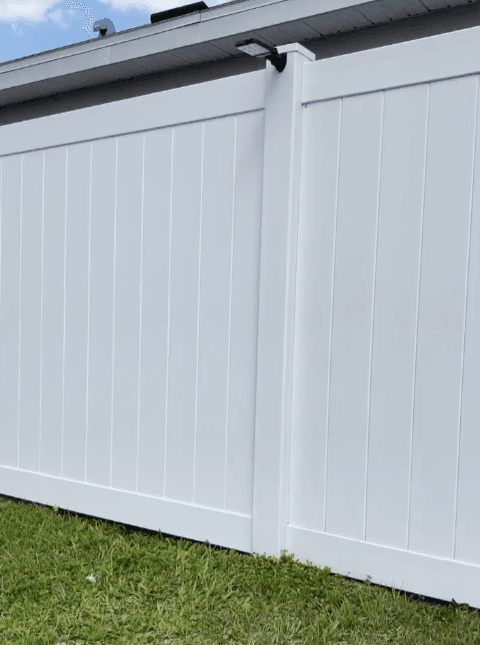
Style choices we install are covered on the fence installation page. The short version for Dundee: vinyl and aluminum both handle Florida humidity without the maintenance cycle wood demands, wood gives you the warmest look and the most upkeep, and chain link remains the most economical way to enclose a large area or a pet run.
Artificial Turf in Dundee and Florida's 2025 Turf Law
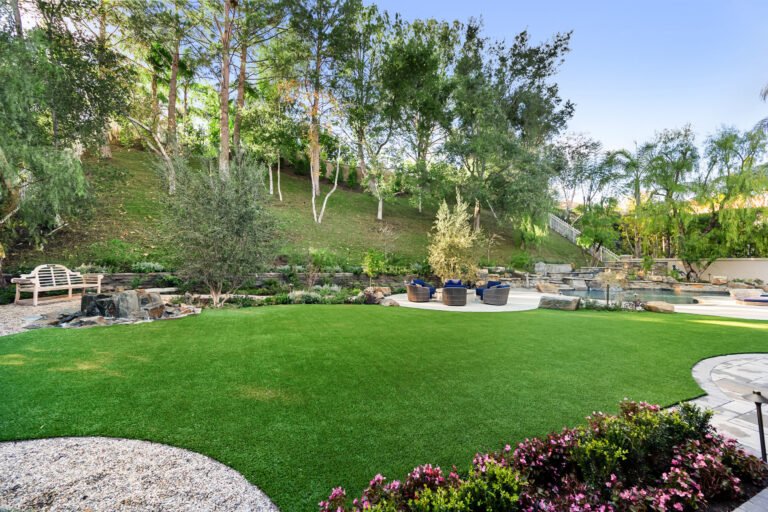
Artificial turf changed legally in Florida recently, and it is worth knowing if an association ever told you no.
Florida HB 683, passed in 2025, codified as Statute 125.572 and signed in June 2025, removes the authority of local governments and HOAs to prohibit artificial turf on single family residential lots of up to one acre, once the Florida Department of Environmental Protection finalizes the minimum installation standards. That is a meaningful shift. A community that previously banned synthetic grass outright cannot keep banning a compliant installation under that framework. Associations can still have rules about appearance and installation quality, so confirm with yours, but the blanket no is on its way out.
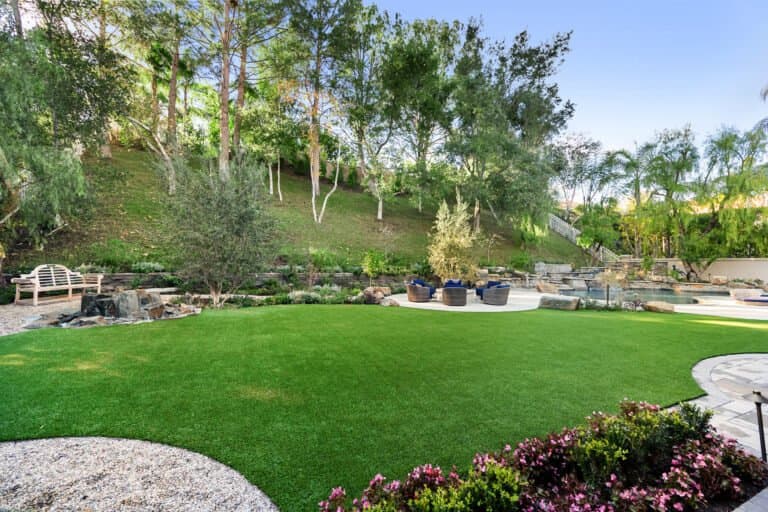
The practical case for turf in Dundee comes down to heat and water. With Bartow averaging highs near 90 degrees in June and July, and summers that run long, hot, and humid, natural grass in a Polk County yard is either irrigated heavily or brown in patches. Turf removes that cycle. What it does not remove is the heat question on the surface itself, which is exactly why infill selection matters here more than it does in a cooler climate. Infills that reduce heat retention are the right call in this market, especially on a surface next to a pool or in full afternoon sun.
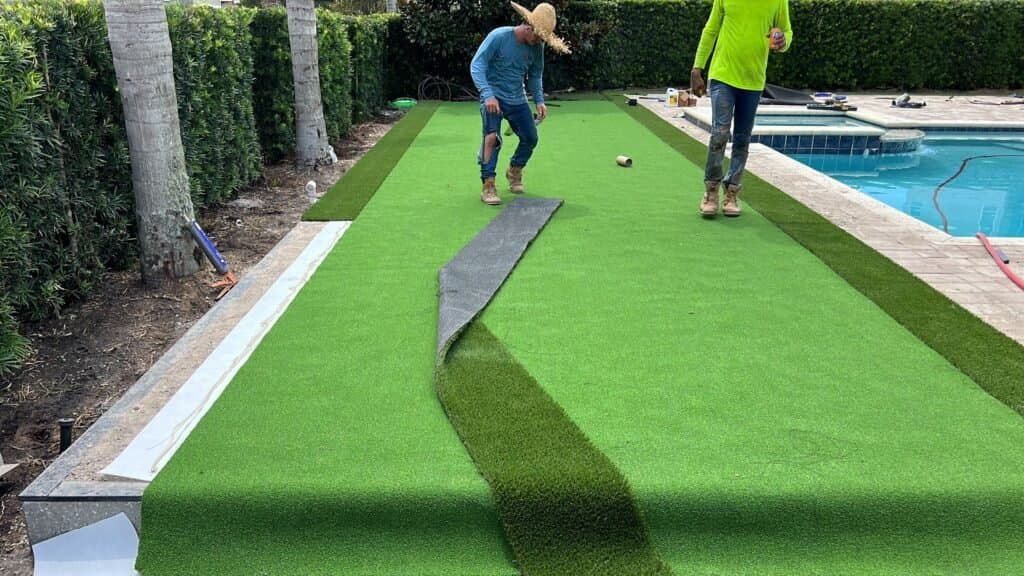
Installation quality is where turf projects succeed or fail. The base under turf is engineered work, the same as under pavers: excavation, compacted aggregate, drainage that actually moves water in a region where 55 to 70 percent of annual rain arrives in a four month stretch, and seams that are cut and joined properly. Turf laid over unprepared ground develops low spots that hold water, and that is a problem you smell before you see. Full scope is on our artificial turf installation page.
Keeping It Looking New, and Where Else We Work
A paver surface in Polk County is low maintenance, not no maintenance, and the things that shorten its life are all preventable.
Joint sand is the first one. Sand migrates out of joints over time, faster on surfaces that get heavy rain runoff, and once joints are empty the pavers lose the interlock that makes the whole field act as one surface. Refilling joints is routine work that prevents shifting.
Biological growth is the second. Long humid summers put algae and mildew on shaded pavers, especially on north facing patios and under tree canopy. That is a cleaning issue rather than a structural one, but left alone it becomes slippery, which matters most on pool decks and entry walks.
Sealing is the third, and it is genuinely optional. Sealer helps with stain resistance and color depth, and it needs to be redone on a cycle. Skipping it is a legitimate choice, and it is worth discussing rather than assuming.
Fences want their own attention: hardware on gates works loose, wood needs a maintenance cycle that vinyl and aluminum do not, and after any severe storm the whole line is worth walking, particularly after the kind of high wind event Polk County sees during storm season. Turf wants periodic brushing to keep fibers upright and debris cleared out of high traffic paths. If you would rather not track any of it, our outdoor maintenance plans exist to keep it on a schedule instead of on your list.
KS Solutions works throughout Polk County and the rest of Central Florida. If you are near Dundee, you may also want our pages for Haines City, Lake Wales, Winter Haven, and Lakeland. To get a project on the calendar in Dundee, call (321) 353-7445 and we will walk the site with you.