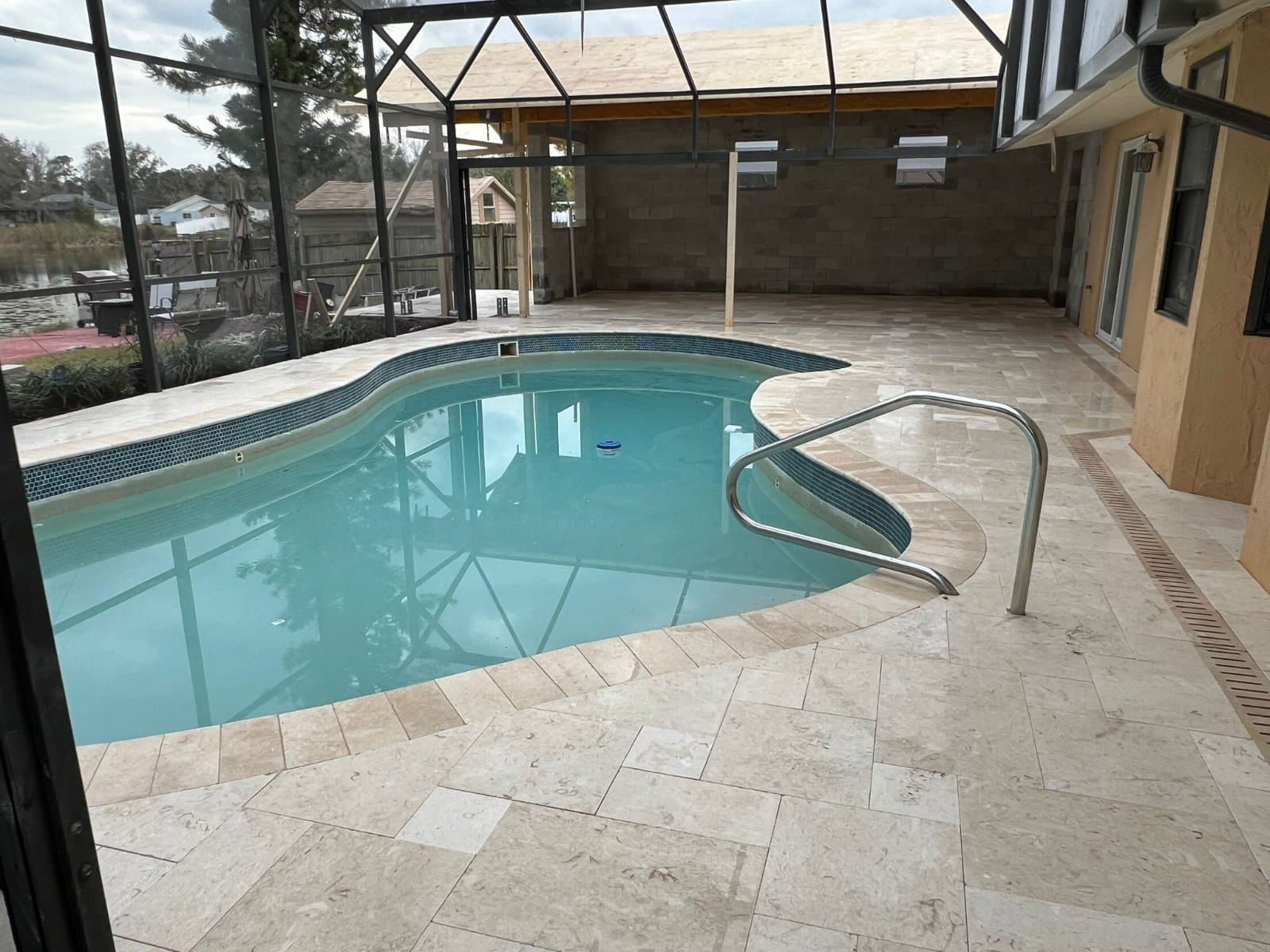
What a Paver Project in Lake Alfred Usually Covers
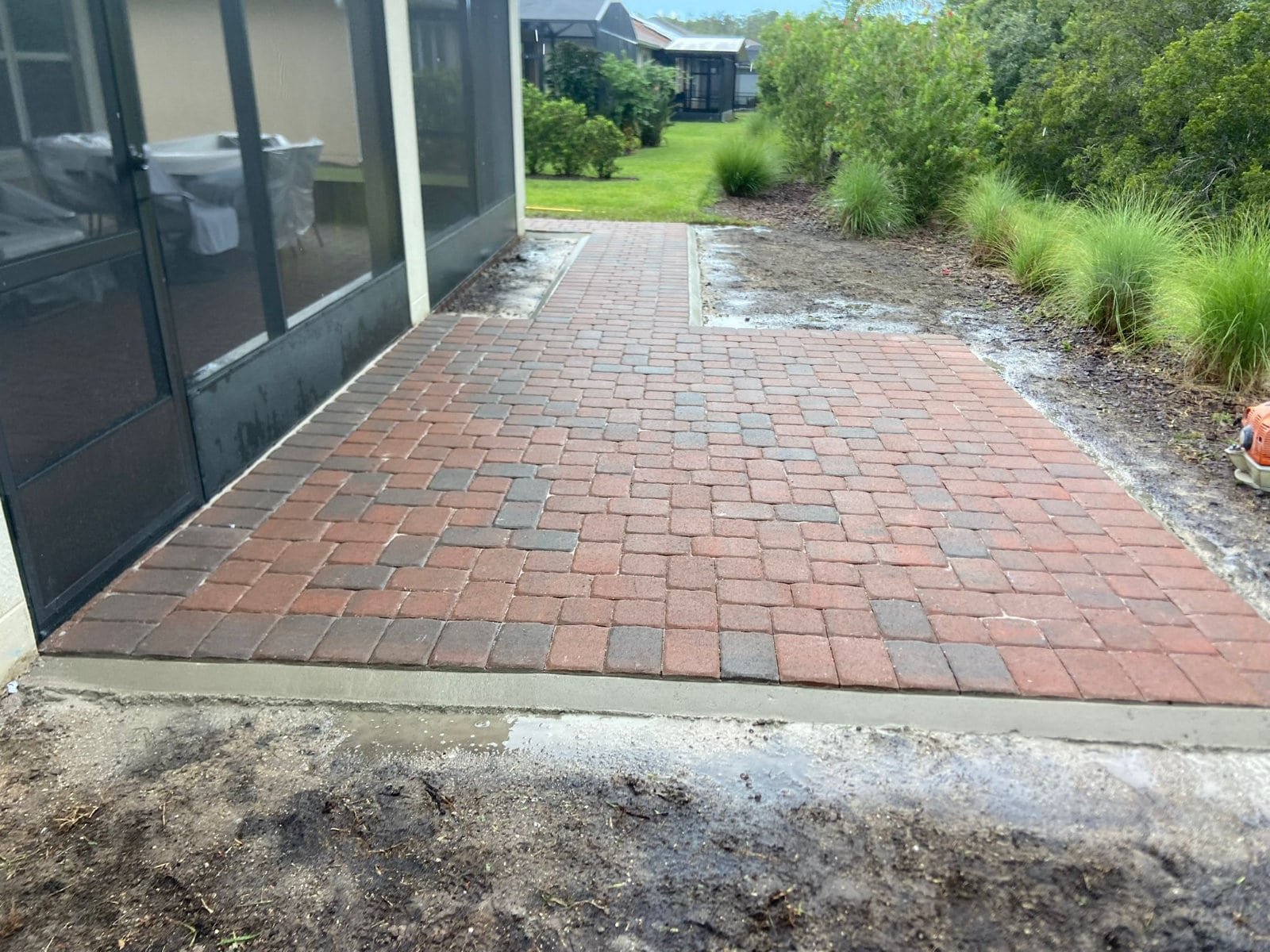
Most people searching for a paver company in Lake Alfred have one of four projects in mind. A back patio that turns unused lawn into a room. A driveway or an apron at the street. A pool deck that is currently hot, stained concrete. Or a front walkway and entry that sets the tone for the whole house.
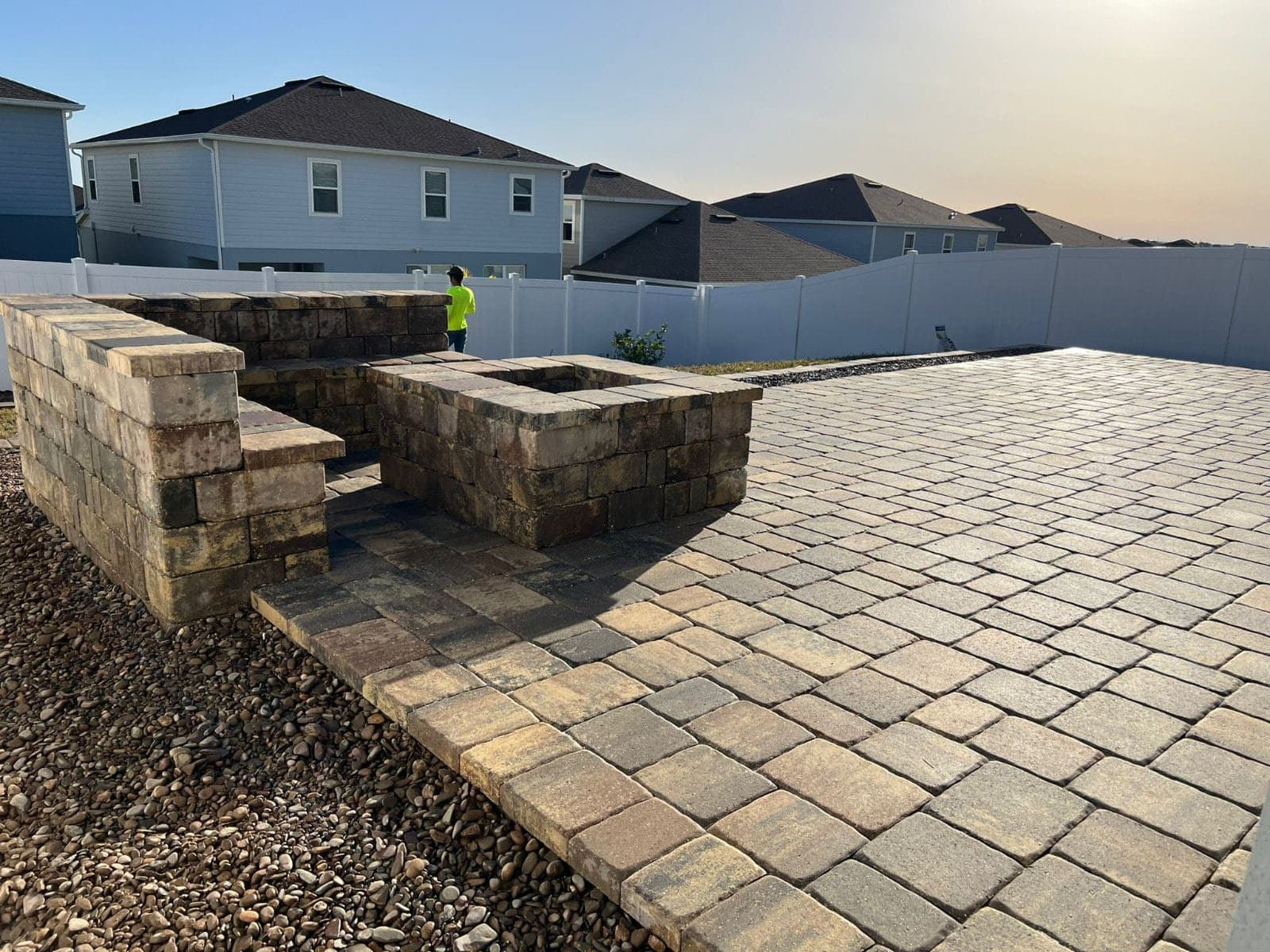
KS Solutions builds all of those under one service, brick paver installation. That service also covers retaining walls, seat walls, fire pit surrounds, elevated paver decks, and the pads and bases that outdoor kitchens and grills sit on. It is worth knowing that up front, because the answer to "can you also wrap the AC pad and run a path to the shed" is usually yes, and doing it in the same mobilization is cheaper than doing it next spring.
A first conversation about a paver project in Lake Alfred normally sorts three things:
- Scope and shape. Square footage, where the edges land, and how the new surface meets doors, thresholds, and existing concrete.
- What happens to the slab you already have. Some concrete can carry an overlay of thinner pavers. Some has to come out because it is cracked, heaved, or sitting too high to overlay without burying a door threshold. Ask which one applies to yours, and ask why, before you sign anything.
- Where the water goes. Every new hard surface sends rain somewhere. In a flat Polk County backyard, "somewhere" can easily mean your own slab or your neighbor's fence line if nobody planned for it.
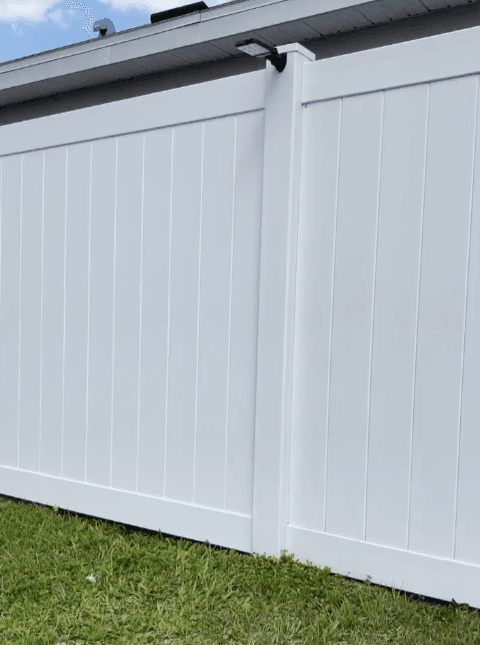
The other three services in the KS Solutions lineup are fence installation, artificial turf installation, and outdoor maintenance plans. Plenty of Lake Alfred yards end up using more than one. A paver patio, a fence line that closes off the yard behind it, and turf in the strip that never took grass is one of the most common combinations in Central Florida, and it is one permit conversation instead of three.
Permits in Lake Alfred: Who Issues What, and When You Need One
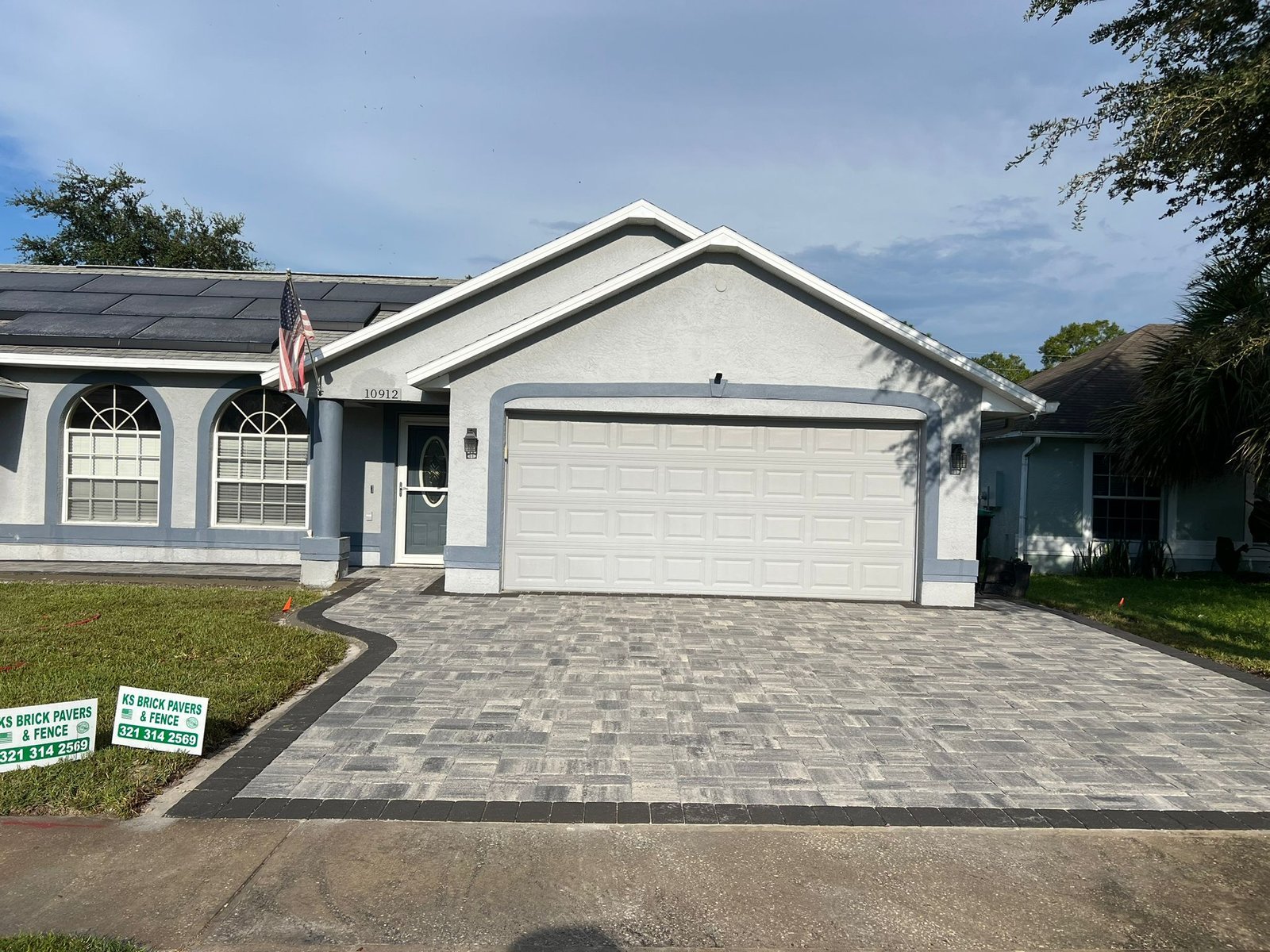
This is where a lot of Polk County advice on the internet is wrong for you, because it is written for unincorporated county property.
Lake Alfred is an incorporated city with its own building department, located at 120 East Pomelo Street, reachable at 863-291-5748. If your property is inside city limits, the permit is issued by the city, not directly at the county counter. The city also requires the contractor to be registered with the city on top of holding a state or county license. That is a real filter. A crew that works mostly in unincorporated Polk can show up licensed and still not be registered to pull a permit in Lake Alfred, which means either a delay or a permit pulled in your name as owner-builder. Neither is what you wanted.
Two state rules also apply to residential work here.
The $7,500 exemption, effective July 1, 2026. Florida HB 803 exempts work on single-family homes valued under $7,500 from needing a permit. The exceptions matter more than the rule: electrical, plumbing, structural, mechanical, and gas work are still permitted, as is any work in a FEMA flood hazard area. A small walkway or a short run of fence may fall under the exemption. A larger patio, anything with a retaining wall, or anything structural probably does not. The law also expressly prohibits chopping one larger project into smaller pieces to slide under the threshold, so do not let anyone offer that as a clever workaround.
Notice of Commencement over $5,000. Under Chapter 713.13 of the Florida Statutes, work valued above $5,000 requires a Notice of Commencement recorded with the Polk County Clerk of Courts before the job starts. Most full paver patios and most full fence replacements clear that number. It is a document, not a fee-heavy hurdle, but skipping it creates lien headaches later.
KS Solutions states it plainly on its own paver page: we handle every permit and HOA submittal as part of the quote. On the fence side, the team handles the entire process, including submitting plans, paying permit fees, and scheduling inspections.
The Base Under the Pavers Is the Entire Job
Homeowners judge a paver installation by the pattern and the color. Installers judge it by what is under it, because that is what decides whether it still looks like this in year eight.
A paver surface is a flexible pavement system. Nothing is glued down. The stability comes from a compacted aggregate base, a screeded bedding layer, tight joints filled with the right sand, and a restraint at every open edge that stops the field from creeping outward. Take away any one of those and the failure is predictable rather than mysterious.
Here is what a serious spec looks like, and what you should expect to see written into a quote rather than promised out loud:
- Excavation depth tied to use. A walkway that carries people and a driveway that carries a loaded truck do not get the same base. Vehicle surfaces need meaningfully more depth. If a bid quotes one number for both, that is a bid built to win on price.
- Compaction in lifts. Base material has to go in and get compacted in layers, not dumped to full depth and rolled once at the top. Uncompacted base does not fail immediately. It fails after the first hard rainy season, in dips you can feel with your foot.
- Edge restraint on every free edge. Where the pavers meet grass, a planting bed, or turf, something has to hold that line. Loose perimeter pavers are almost always a restraint problem, not a paver problem.
- Joint sand appropriate to the surface. Joint material locks the field together and resists washout.
- Slope, deliberately. The surface should shed water away from the house at a consistent fall. Flat looks fine and drains nowhere.
Drainage deserves its own sentence in Central Florida. Our rain does not arrive politely spread across a week. It arrives in an afternoon. A patio that ponds is not a cosmetic complaint, it is standing water against your slab and a mosquito nursery in the shoulder season. If a design pushes runoff toward a neighbor or into a low corner of your own yard, say so during layout, when moving the plan costs nothing.
What Actually Changes the Price of a Paver Job
Nobody can price a Lake Alfred paver project from a phone call, and any company that gives you a firm number before seeing the site is either padding heavily or planning to revise later. What you can understand in advance is which variables move the number, so the quote stops feeling like a black box.
- Square footage, but with a curve. Cost per square foot generally improves as area grows, because mobilization, equipment, and setup get spread across more surface. Two small separate areas cost more than one combined area of the same total size.
- Demolition and haul-off. Removing an existing slab or old surface adds labor, dumpster or truck cycles, and disposal. This is often the single biggest surprise line for homeowners expecting a simple swap.
- Access. Base aggregate and pavers are heavy. If machines can reach the work area, the job is faster. If everything moves through a narrow side gate by wheelbarrow, labor climbs. A fence panel that can be temporarily removed sometimes saves real money.
- Elevation change. Steps, raised patios, and grade transitions bring in retaining or seat walls, which are structural elements with their own material, engineering, and permitting weight.
- Pattern and cuts. Running bond on a rectangle is efficient. Herringbone at forty five degrees against a curved edge produces many cut pieces, more waste, and more hours.
- Product selection. Paver thickness, format, and finish vary widely in price, and driveway rated units are not the same as pedestrian units.
- Add-ons decided late. Lighting sleeves, conduit for a future outdoor kitchen, or an irrigation line crossing under the field cost very little while the base is open and a lot after it is closed.
The useful move as a buyer is to compare quotes on base depth, compaction method, restraint type, and drainage plan. Compare those and the price differences start explaining themselves.
(321) 353-7445Get Immediate Service
Timing Your Install Around Polk County Weather
Hardscape work is dirt work, and dirt work has a season here.
The National Weather Service office in Tampa Bay, which covers Polk County, defines the West Central Florida rainy season as May 25 through October 10. Severe weather risk, including hail, damaging wind, and waterspouts, concentrates in late May and June. Rainfall itself peaks from July into early September. During that stretch, afternoon storms are the default, not the exception.
Layered on top of that, Atlantic hurricane season runs June 1 through November 30, with peak activity from mid August to mid October. September 10 is the statistical peak of the season.
What that means practically:
- October through May is the friendlier window for pavers, fence posts, and turf. Drier soil compacts more predictably, open excavations do not flood overnight, and schedules hold better.
- Rain does not just delay work, it changes it. Saturated subgrade cannot be properly compacted. A crew that keeps building on soaked base to stay on schedule is building your future settlement.
- If you want a fence up before storm season, plan the conversation in winter, not in May. Post setting and cure time are not things to compress.
- Summer projects are still doable, they just need a schedule with slack in it. Anyone promising you a fixed summer completion date in Central Florida is promising something the sky controls.
If your project is tied to an event, a graduation party, a pool opening, a family visit, work backward from the date and give the calendar room. The single most common regret we hear about outdoor projects is not the material choice. It is starting six weeks later than would have been comfortable.
Fences in Lake Alfred: City Code First, County Rules Second
Fence questions in Lake Alfred come with a wrinkle worth stating honestly.
In unincorporated Polk County, the Land Development Code allows chain link or stockade fencing up to 8 feet without a permit. Masonry walls, fences with masonry columns, and opaque fences taller than 8 feet do require one. That is a useful reference point, and it is the rule most search results will hand you.
It is not automatically your rule. Lake Alfred is incorporated and maintains its own land development code, and we have not confirmed that the county height threshold applies identically inside city limits. So the right sequence for a fence here is: confirm the current city standard with the Lake Alfred building department before ordering material, not after. Height, setback, corner visibility at intersections, and which side of the fence faces out are all things local codes commonly regulate, and getting them wrong means moving posts you already paid for.
Then there is the HOA layer, which is separate from and additional to the city. Water Ridge is the clearest local example: a gated planned community of 638 lots that straddles Lake Alfred and Auburndale, with an Architectural Review Committee process that requires approval of property modifications before you make them. We do not publish the specific material or height standards in that ARC's guidelines, because we have not been able to read the guideline document itself, and we are not going to guess at rules that govern your money. What we can tell you is that the approval step is real and should be budgeted as time, not skipped.
Fence installation from KS Solutions covers privacy fencing, decorative styles, security fencing, and gate integration, and the team handles the entire process, including submitting plans, paying permit fees, and scheduling inspections. If your yard is getting both a fence and a patio, sequence them together. Setting posts after the pavers are down means cutting into a finished surface.
Artificial Turf and the Florida Law That Changed the HOA Answer
For years, the standard reply to "can I put in artificial turf" in a Central Florida deed restricted neighborhood was a shrug and a copy of the covenants. That changed.
Florida Statute 125.572, enacted in 2025, prohibits local governments, and in practice homeowners association rules, from preventing the installation of artificial turf that meets Florida Department of Environmental Protection standards on single family residential property of up to one acre. If you have been told flatly that turf is not allowed on your lot, that instruction is worth re-checking against the current statute.
Two honest caveats. First, the protection is tied to product that meets the DEP standard, which makes the specification you install a legal detail and not just a quality preference. Ask for the product documentation and keep it. Second, a rule against prohibition is not a rule against process. Communities with an architectural review step, Water Ridge among them, can still require you to submit the modification for approval before installing. Submitting is cheap. Ripping out an unapproved installation is not.
Where turf earns its keep in Lake Alfred yards:
- The strip that never grows. Deep shade under an oak, or the baked side yard, where sod has been replaced twice and failed twice.
- Dog runs. Pet zones take punishment that living grass loses to, and drainage design matters more here than anywhere else on the lot.
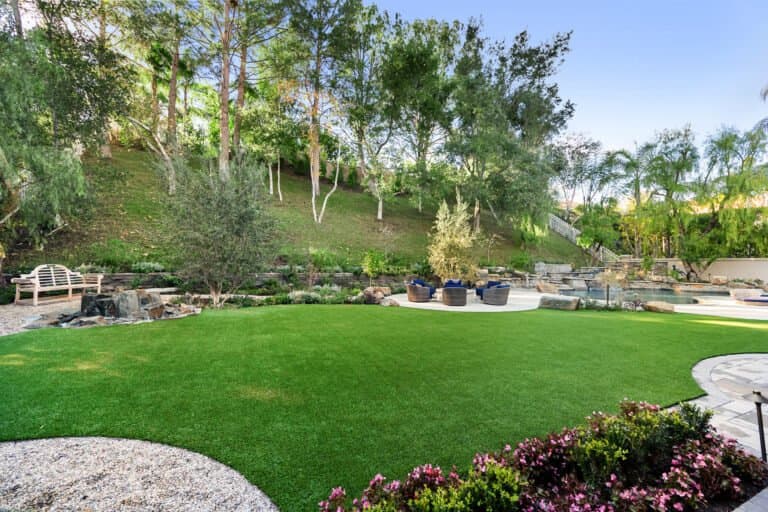
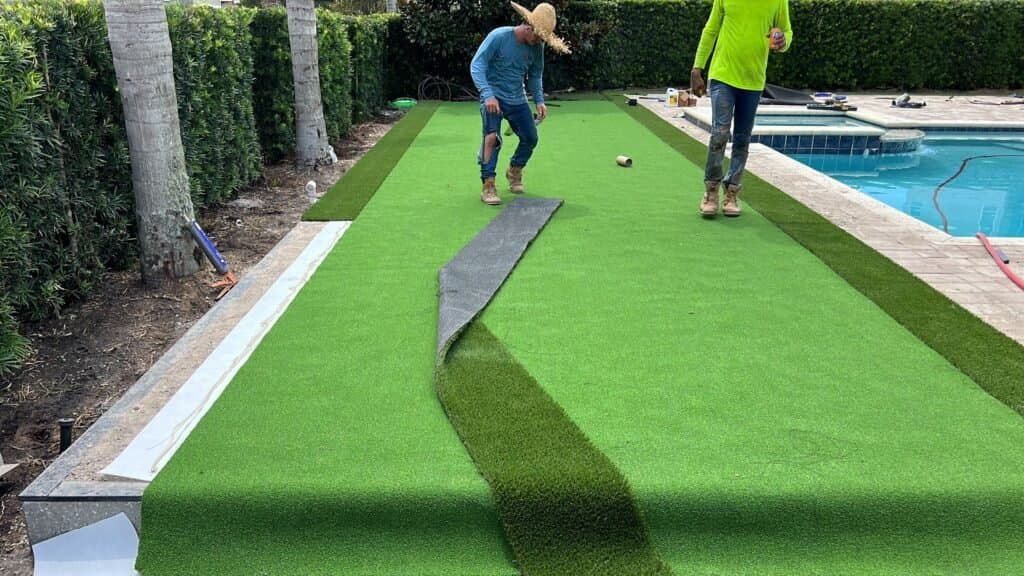
- Around a paver patio or pool deck. Turf holds a crisp edge against hardscape in a way mown grass does not, and it does not throw clippings into the pool.
- Water and mowing. No irrigation cycle, no weekly cut, no seasonal patchiness through the dry months.
Artificial turf installation from KS Solutions covers residential, commercial, pet friendly, playground, and sports field applications. The base under turf follows the same logic as the base under pavers: compaction and drainage first, surface second.
Keeping It Right After the Crew Leaves
Hardscape does not need much. It does need something. The gap between a paver patio that looks new at year seven and one that looks tired at year three is mostly small maintenance done on time.
What actually matters over a Lake Alfred yard's life:
- Joint sand. Joints lose material to pressure washing, heavy rain, and time. Refilling joints keeps the field interlocked. Blasting joints empty with a pressure washer at close range is the most common way homeowners damage their own patio.
- Organic growth. Central Florida humidity favors algae and mildew on shaded pavers. Routine cleaning handles it. Left alone, shaded areas get slick, which is a safety problem on pool decks.
- Settlement repair. The advantage of a flexible pavement is that a settled area can be lifted, re-based, and reset without replacing the surface. Do it when it is one dip, not when it is a pattern.
- Fence hardware. Gates carry all the moving load. Hinges, latches, and post hardware are what fail first, long before panels do.
- Turf grooming. Fibers in high traffic lanes need brushing back up, and infill gets redistributed by use and by rain.
KS Solutions offers outdoor maintenance plans covering paver, fence, and turf upkeep on a scheduled basis, which is the simplest way to make sure the small stuff happens before it becomes the expensive stuff. If you prefer to handle it yourself, that is fine too. Just put it on a calendar, because outdoor maintenance is the category everyone intends to get to.
How to Choose a Paver Contractor in Lake Alfred
Lake Alfred has roughly 2,514 households, and about 90 percent of occupied homes here are owner occupied, with a median household income around $68,854 as of 2023. That matters for one reason: this is a town of owners, not short term holders. The work you put in the ground is work you are going to live with, and it is work that stays with the property.
So screen accordingly. Before you sign a paver contract in Lake Alfred, get answers to these:
- Are you registered with the City of Lake Alfred, not just state or county licensed? Inside city limits, city registration is what lets a contractor pull your permit.
- Who pulls the permit, and is it in the quote? If the answer is "you can pull it as owner", understand that you are accepting responsibility for the work and the inspections.
- Is the Notice of Commencement handled? For work over $5,000, it needs to be recorded with the Polk County Clerk of Courts before the job starts.
- What is the base spec, in writing? Depth, material, compaction in lifts, bedding layer, restraint type, joint sand.
- Where does the water go? Ask them to describe the fall of the surface and the discharge point out loud.
- Proof of insurance and a license number you can verify. Ask every bidder, including the cheapest one. Especially the cheapest one.
- If you are in an HOA community, who submits to the ARC? KS Solutions handles permit and HOA submittals as part of the quote on paver work.
KS Solutions works across Polk County and the rest of Central Florida, including neighboring Auburndale, Winter Haven, Haines City, and Lakeland. To talk through a paver patio, driveway, pool deck, fence, or turf project in Lake Alfred, call (321) 353-7445 and we will walk the site with you.