What the Ground Under Polk City Does to a Paver Project
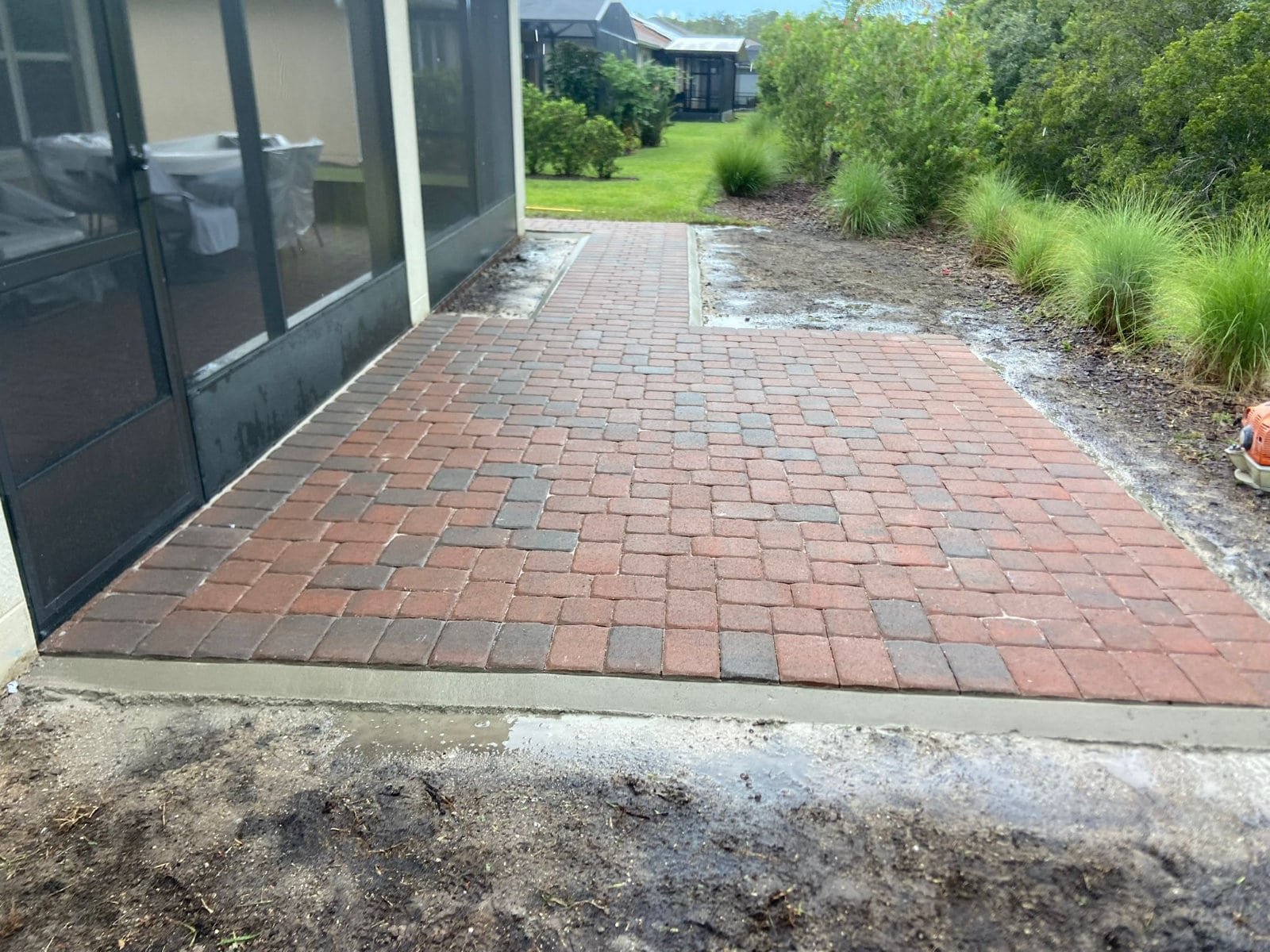
A paver patio does not fail at the surface. It fails underneath, months later, when the base moves. That is why the first real conversation about a paver project in Polk City is about dirt, not about brick color.
Polk County has a long, documented history of sinkhole activity in central Florida. Geologists interviewed by local news outlets have pointed out that many of the county's lakes are themselves old sinkholes that filled with water over time. That does not mean your back yard is about to open up. It does mean the ground here is limestone under sand, water moves through it, and a base that was not compacted properly has somewhere to go.
Then add rainfall. Polk City averages somewhere between 49 and 54 inches of rain a year, and most of that falls in a concentrated summer wet season rather than spreading evenly across twelve months. A patio built on a few inches of loose fill will look perfect in April and show ruts by September.
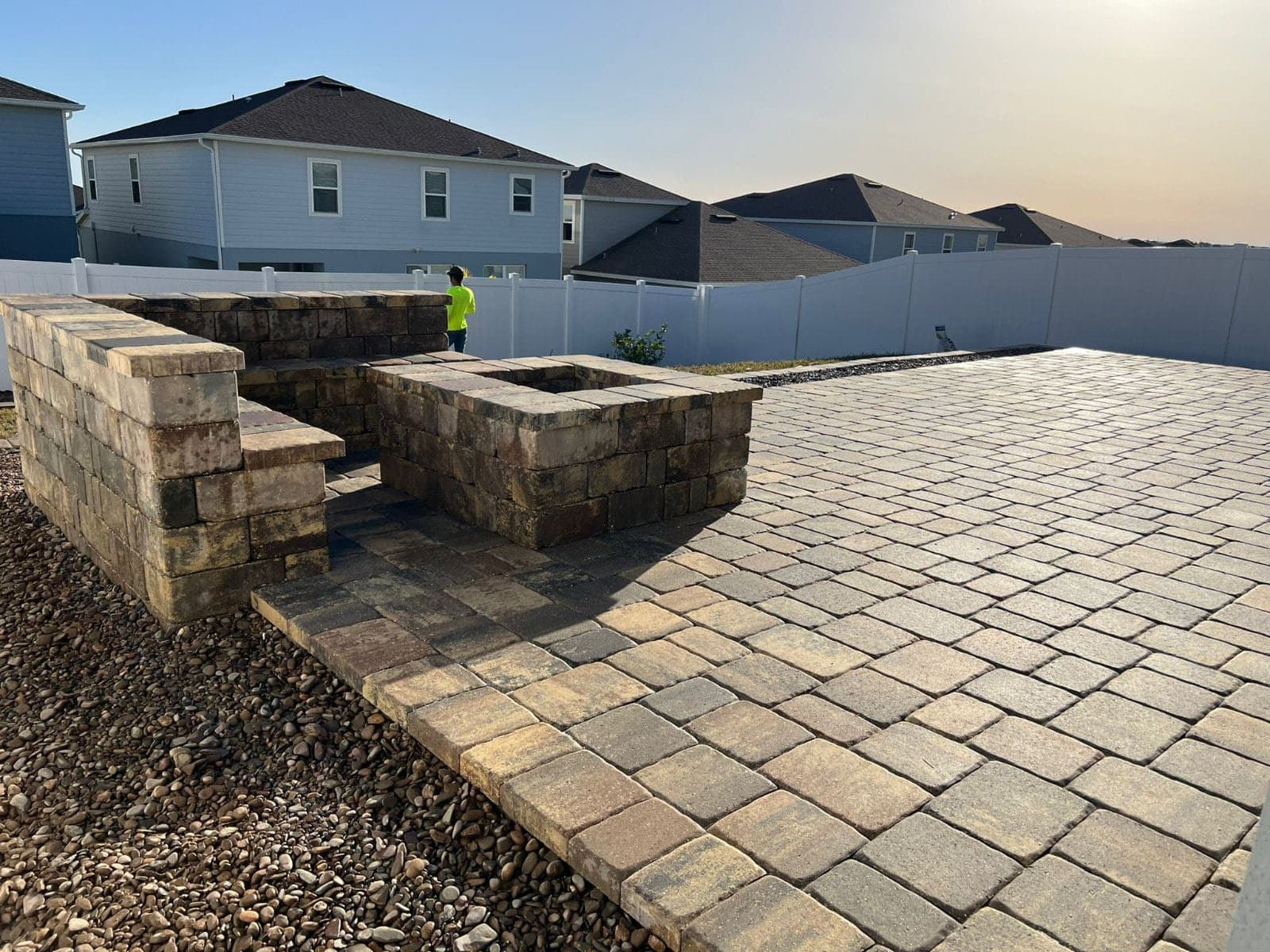
So the base work is the job. On a residential paver installation that means excavating well past the paver thickness, placing compacted crushed base in lifts rather than one deep dump, running a plate compactor over each lift, screeding a controlled bedding layer, and setting a slope that carries water away from the house instead of toward it. Edge restraint holds the field together so the perimeter courses do not creep outward under load.
Driveways get more base than patios because they carry vehicle weight. Pool decks get more attention to slope and joint material because they stay wet. Walkways along the side of a house often sit exactly where roof runoff lands, which is a drainage problem wearing a hardscape costume.
When someone quotes a paver job in Polk City without ever asking where the water goes, you have your answer about how much of this they have done here.
Paver Patios, Driveways, Pool Decks, and Outdoor Living Space
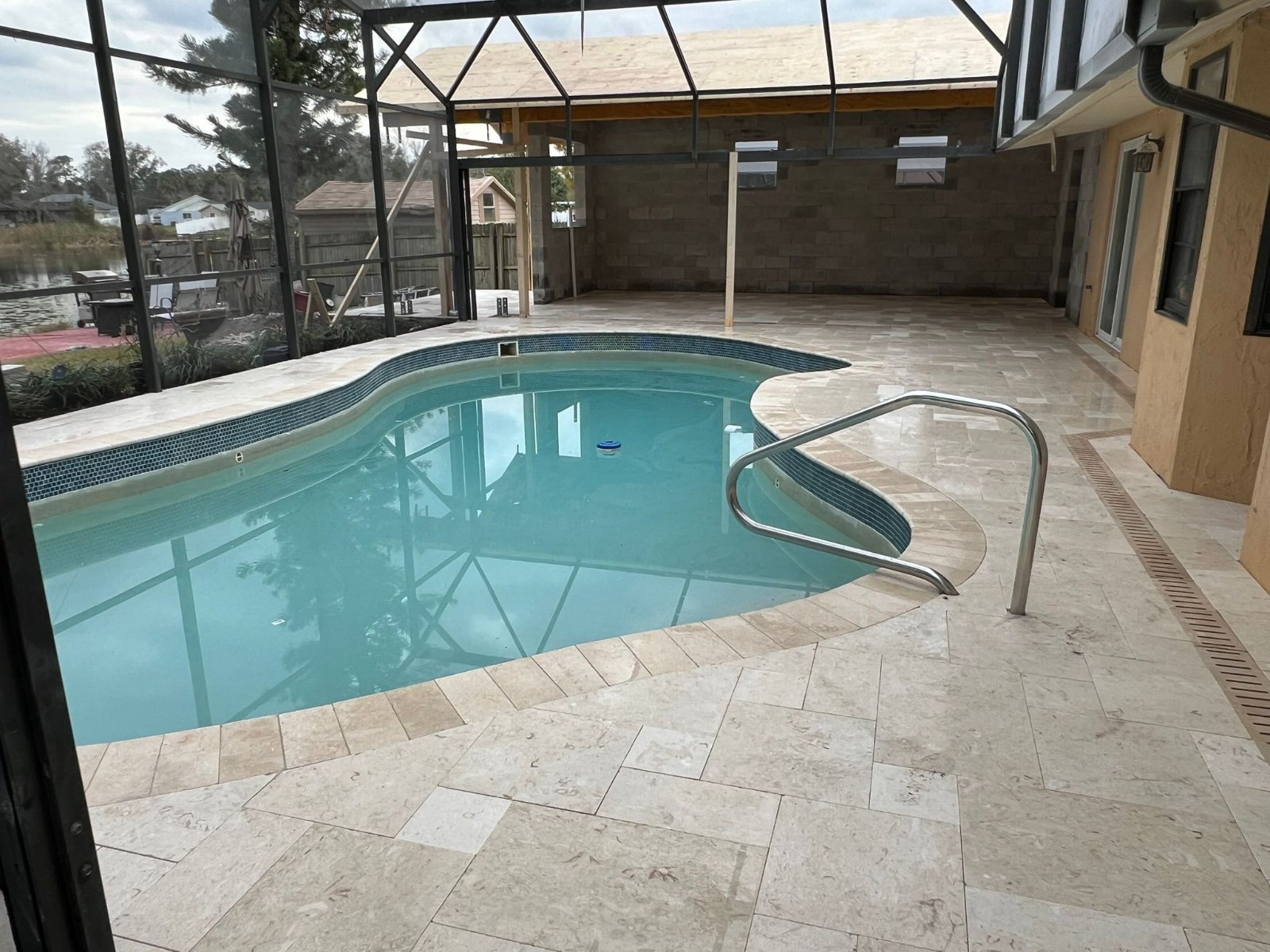
KS Solutions installs brick pavers throughout Polk City and the surrounding Polk County communities. The work falls into a handful of recognizable projects, and most homeowners start with one and add to it a season or two later.
- Paver patios. The most common first project. Usually built off the back slider or the pool cage, and sized around a table and a seating group rather than around a round number of square feet.
- Paver driveways. Higher base spec, tighter compaction, and an extra layer of county paperwork that is covered further down this page.
- Pool decks. Either new construction or resurfacing over an existing concrete deck. Pavers change surface temperature and traction underfoot compared to broom-finished concrete.
- Walkways and entries. Front entries, side-yard paths, and the stretch between a driveway and a front door that never got finished properly.
- Outdoor kitchens and grill surrounds. Built on the same base discipline, with counter placement and utility runs planned before the field is laid, not after.
- Retaining walls and elevated paver decks. Useful where a lot has grade change, or where a patio needs to meet a raised threshold cleanly.
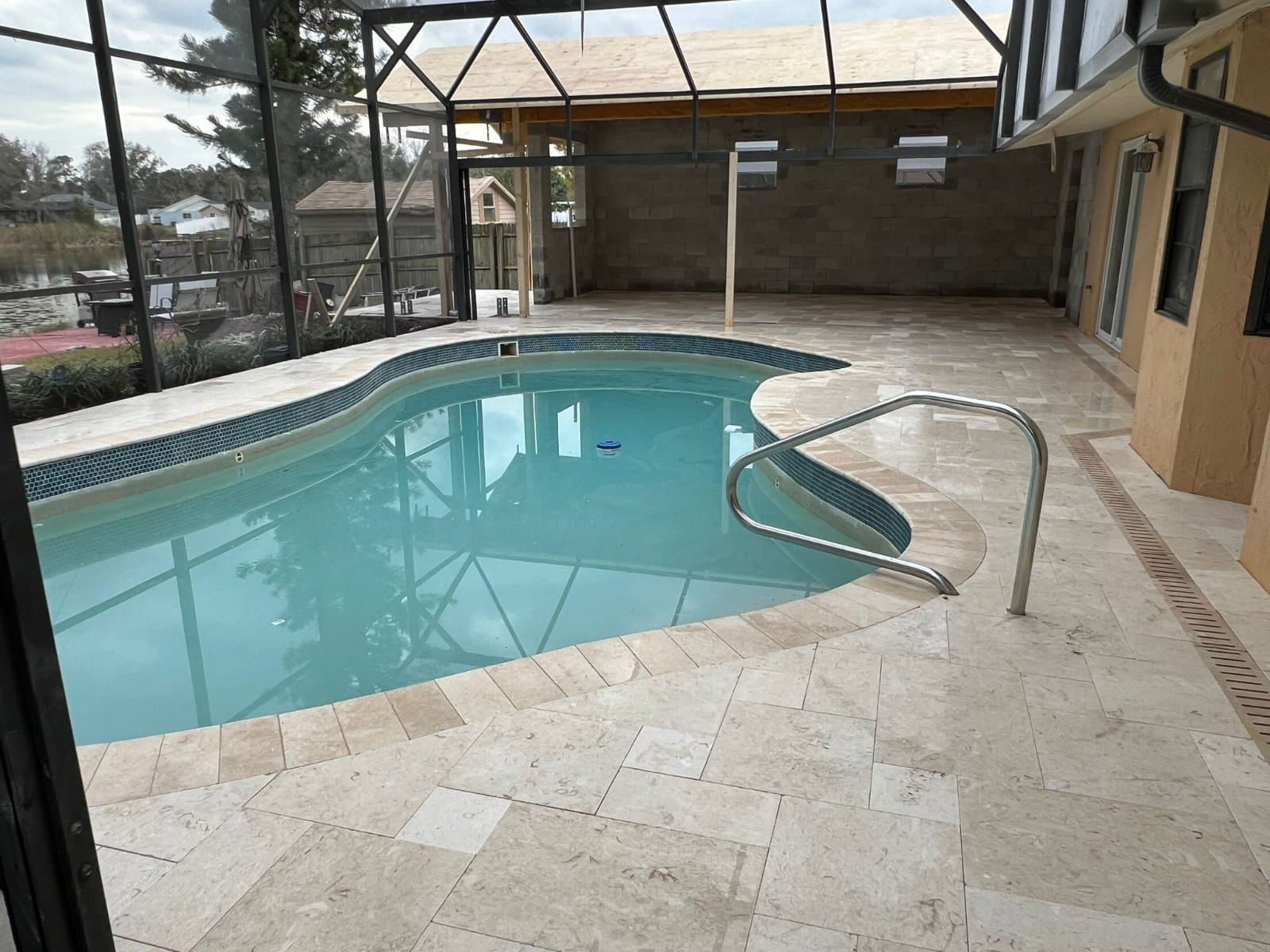
Pattern, color, and paver format change the finished look far more than most people expect. A herringbone layout in a single charcoal tone reads nothing like a three-piece modular pattern in a tan blend, and both take the same labor if the field is the same shape. Cuts are where the labor actually lives. A rectangular patio with square corners goes fast. A patio wrapped around a curved pool shell with a bullnose coping edge does not.
Materials, patterns, and the full installation sequence are laid out on the brick paver installation page.
Permits for Paver and Hardscape Work in Polk City
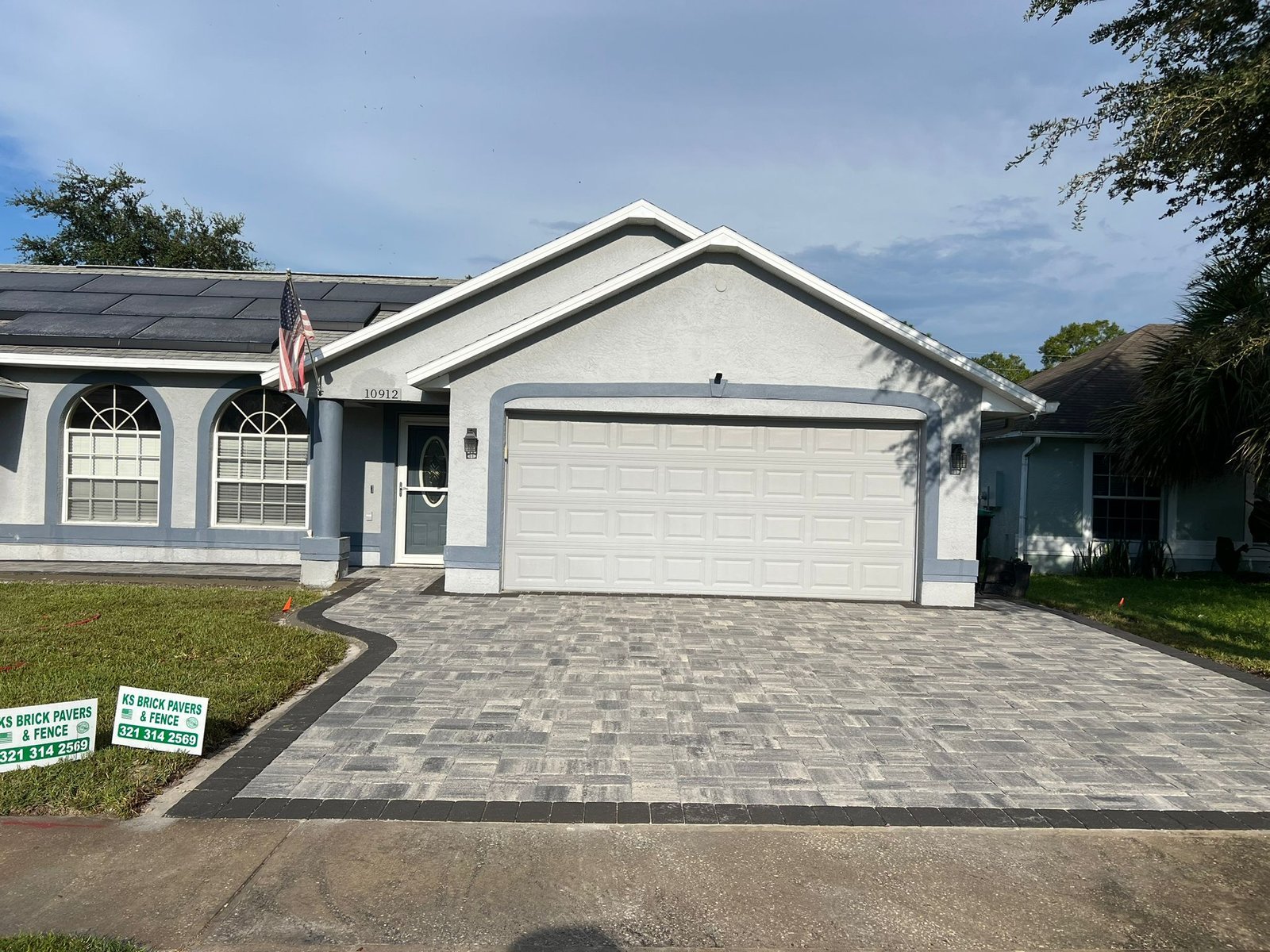
First thing to know: Polk City does not run its own building department. Building permits for property inside the city are processed by the Polk County Building Division through the county's Accela system. If a contractor tells you they are pulling a City of Polk City permit, ask a follow-up question.
For pavers, the code side comes from two directions. Work that sits inside a required setback, or up against a structure, has to satisfy both the Polk County Building Code and the Land Development Code. And there is one driveway requirement that catches people off guard: a paver driveway installed over a concrete base requires a notarized Concrete Driveway Paver Release Form, recorded with the county, before the driveway approval goes through. That is a document step rather than a construction step, and it needs to happen on schedule instead of at the end.
There is also a recent change worth knowing about. Under state law HB 803, effective July 1, 2026, Florida municipalities must exempt owners of single-family homes and their contractors from building permit requirements for work valued at less than $7,500. The exemption does not cover electrical, plumbing, structural, mechanical, or gas work, and it does not cover work in a flood hazard area. Because permitting for Polk City runs through the county, the practical answer for one specific parcel is worth confirming with the Polk County Building Division rather than assuming a small job is automatically exempt.
KS Solutions handles every permit and HOA submittal as part of the quote on paver work. That matters less for the fee and more for the sequence. The submittal, the inspection scheduling, and the recorded release form on a driveway all have to line up with the install date, and a homeowner chasing that alone is the most common reason a project sits idle for two weeks with a pile of base material in the yard.
What Actually Changes the Price of a Paver Job Here
Nobody can price a Polk City paver project honestly over the phone. But the variables are predictable enough that you can walk a yard and tell which direction the number is heading. Worth noting as context: Polk County is one of Central Florida's more affordable housing markets, with a county-wide median home price reported around $315,000 to $335,000, while local listings put median new-home prices in Polk City closer to $429,000 and newer subdivisions in the $275,000 to $400,000 and up range. Scope tends to track the house.
Base depth and soil condition
Soft or sandy subgrade means more excavation and more imported base. If the area was previously fill, or if it sits in the low spot where water collects, the base spec goes up. This is the largest hidden cost on a Polk County job and the first thing a low bid quietly removes.
Square footage and shape
Larger fields price better per square foot, because mobilization, base delivery, and compaction equipment show up once regardless of size. Complexity pushes the other way. Curves, radiused steps, and cuts around a pool shell or a screen enclosure footer add hours of saw work that a rectangle never needs.
Access to the work area
A gate wide enough for a skid steer changes the labor math for an entire project. Where equipment cannot reach the back yard, base material moves by wheelbarrow, and that shows up in the price.
Material selection
Standard concrete pavers, premium tumbled or textured lines, and large-format or porcelain products sit at different price points, and so do coping, bullnose, and step treads.
Drainage work
Channel drains, catch basins, or regrading to move water away from a foundation are separate scope, not part of a paver square-foot number. In a place that takes 49 to 54 inches of rain a year, they are frequently the difference between a patio that lasts and one that gets rebuilt.
Removing what is already there
Breaking out and hauling old concrete costs more than building on bare ground. Resurfacing over sound existing concrete, where the structure allows it, usually costs less than full replacement.
(321) 353-7445Get Immediate Service
The Central Florida Weather Calendar and Your Install Date
Timing an outdoor project in Polk City is not superstition. It is scheduling around two well-documented patterns.
The first is storms. The National Weather Service identifies the corridor between Tampa and Orlando, which is exactly where Polk City sits, as the highest lightning incidence area in the United States, with afternoon thunderstorms firing nearly every day from June through September. Crews on open ground with metal tools and powered compactors do not stay out in that. The practical response is early starts, with the heavy outdoor phases scheduled into the morning during summer and the afternoon left for work that can pause safely.
The second is hurricane season, which runs June 1 through November 30 in the Atlantic, with peak activity from the middle of August through the end of October. Material supply tightens, inspectors get busy, and a named storm anywhere in the state can move a schedule by a week even when Polk City sees nothing worse than rain from it.
None of this makes summer a bad time to build. Plenty of paver, fence, and turf work happens in July. It changes how you should read a proposed schedule. Anyone promising an exact completion date in late August is either padding heavily or has not worked through a wet season here.
The dry stretch from late fall into spring is the easier window. Base material stays workable, compaction is more consistent, joint sand sets without being washed out by an afternoon downpour, and inspections move faster. If your project is not urgent and you are planning a full driveway or a whole back yard, that is the season to aim for.
Fences in Polk City: What Needs a Permit and What Does Not
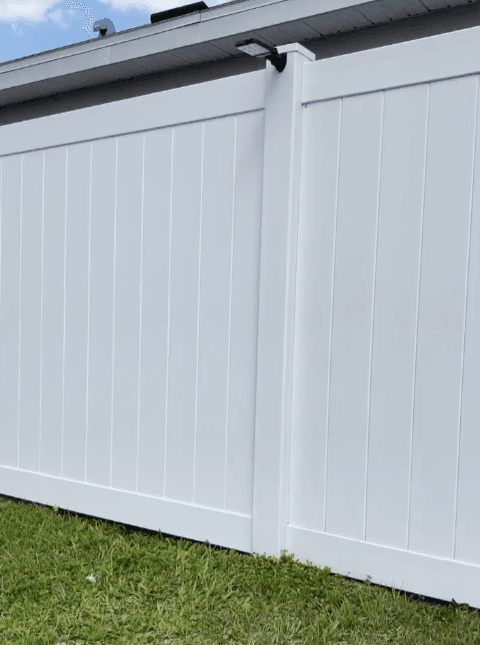
Polk County draws a clearer line on fence permits than most homeowners expect. Chain-link and stockade fences up to 8 feet in height do not require a building permit in Polk County. What does require one: masonry walls, fences built with masonry columns or piers, and any solid fence taller than 8 feet.
That distinction is worth reading twice, because it turns on construction type and not only on height. A six-foot vinyl privacy fence on standard posts and the same fence with block columns every twenty feet are two different permitting situations.
Licensing is a separate question, and it changed at the state level. Since July 1, 2021, state law HB 735 has preempted local fence contractor licensing in Florida, Polk County included. Cities and counties can no longer require their own specialty license for fence contractors, and that requirement now sits with the state. If somebody tells you they hold a special Polk City fence license, that is not a thing that exists.
Lot size drives fence budgets more than material choice does, and Polk City has real variation in it. Local real estate sources describe the Green Swamp area beside downtown as the larger-lot, more rural side of town, while newer subdivisions sit to the west on more conventional lots. Polk City itself is small, roughly 2,974 residents across about 1,110 housing units in the 2019 to 2023 American Community Survey, with projections near 3,374 residents for 2026, so the housing stock is a mix of established property and newer subdivision build-out. A half-acre lot in a new subdivision and a multi-acre parcel toward the Green Swamp are very different linear-footage conversations, and they usually point toward different materials: vinyl privacy or aluminum where an association is involved, longer ranch-style runs where the property is open.
On fence work, KS Solutions handles the entire process, including submitting plans, paying permit fees, and scheduling inspections. Material options, heights, and gate configurations are covered on the fence installation page.
Artificial Turf and the Florida Law That Changed the HOA Conversation
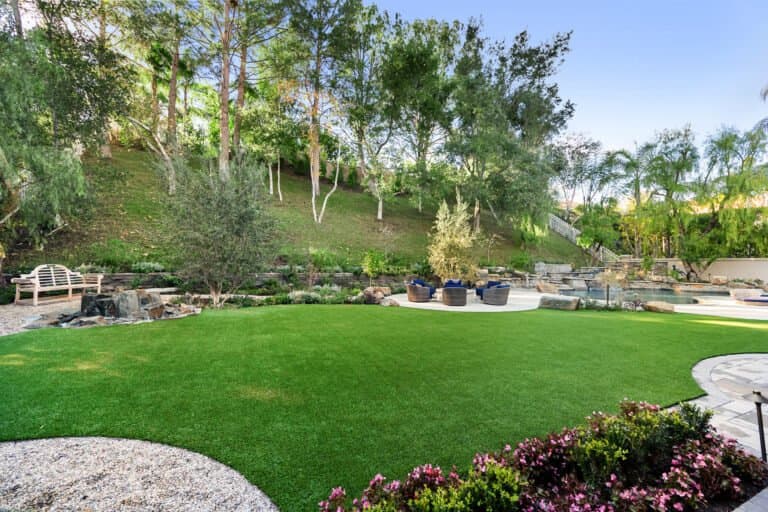
Artificial turf used to be the project Central Florida homeowners quietly abandoned after reading their HOA covenants. That changed. Under Florida Statute 125.572, signed in June 2025, cities, counties, and homeowners associations cannot prohibit artificial turf on single-family residential property of up to one acre, provided the installation meets the minimum standards being developed by the Florida Department of Environmental Protection. Those standards address material composition, permeability, water quality protection, proximity to trees, and a prohibition on lead-containing materials. Local governments do keep authority over duplex and multifamily property.
Two honest caveats. The FDEP standards were still being finalized as of the reporting on the law, so the specific technical requirements are worth confirming as they are published. And a statute that stops an association from banning turf outright does not stop it from having opinions about placement and appearance, so the architectural submittal still matters.
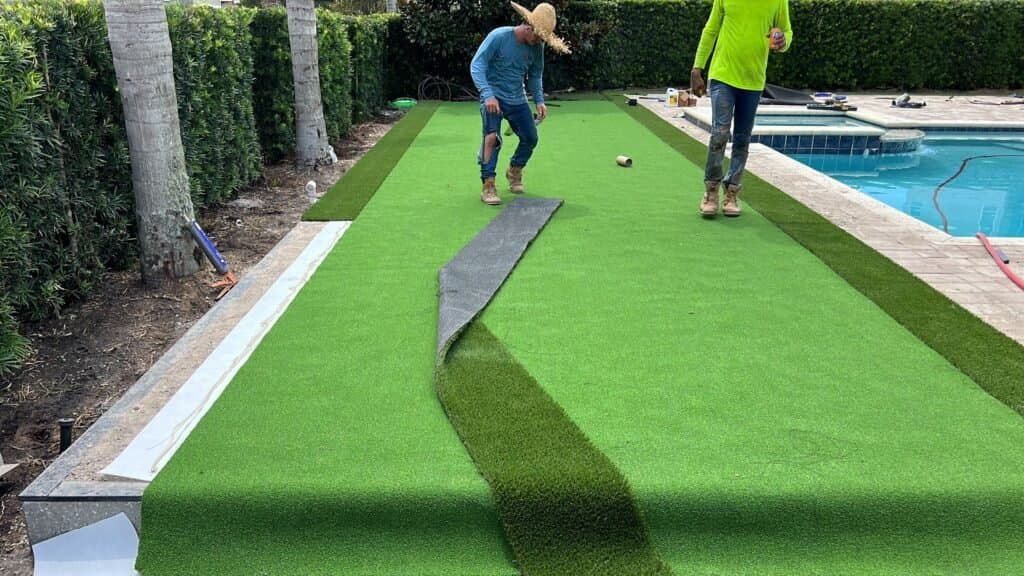
The installation has more in common with paver work than with landscaping. Turf over Florida sand needs an excavated and compacted aggregate base, a real drainage plan, and a secured perimeter edge, or it develops low spots and holds water. In a climate that delivers 49 to 54 inches of rain a year in a compressed season, permeability is not a spec-sheet footnote. It is the reason the yard drains or does not.
Common uses around Polk City: full front yards where irrigation cost and brown patches are the driver, dog runs and pet areas, small back yards that never grew grass under a screen enclosure, and putting surfaces. Infill, pile height, and pet-specific systems are covered on the artificial turf installation page.
Keeping Hardscape Looking New in a Wet Climate
Everything installed outdoors in Polk City lives under the same conditions: heat, ultraviolet exposure, and a summer that delivers most of the year's rain in a few months. That is a maintenance profile, not a defect.
On pavers, joint sand is the wear item. Heavy rain and aggressive pressure washing both pull it out, and once the joints run low the pavers lose interlock and begin shifting under load. Topping the joints back up with polymeric sand and resealing on a sensible cycle keeps the field tight, slows weed growth in the joints, and holds color against sun fade. Sealing also makes organic staining easier to lift, which matters most on pool decks and under oaks.
On fences, the failure points are hardware and posts, not panels. Gate hinges sag, latches corrode, and posts set in saturated soil work loose after a storm season. Catching a leaning post before it drags an entire run out of line is a small job. Catching it afterward is not.
On artificial turf, maintenance means grooming and infill. Fibers lie flat in high-traffic lanes and need brushing back up, infill migrates and needs topping off, and pet areas need rinsing and treatment to stay fresh.
KS Solutions offers scheduled outdoor maintenance rather than leaving it to whoever remembers. If you want the work you paid for to still look right in five years, the maintenance plans page covers what is included and how visits are timed against the Central Florida seasons.
How to Choose a Paver Contractor in Polk City
Bids on the same back yard can vary widely, and the difference is almost never the pavers themselves. It is what happens under them, and what happens on paper. A short list of questions separates the two.
- What is the base spec, in writing? Ask for excavation depth, base material, and lift thickness. A quote that lists only the paver name is not a quote.
- How is compaction done? Compacting in lifts with a plate compactor is standard practice. Dumping base to full depth and rolling over it once is not.
- Where does the water go? The contractor should be able to point at the slope direction and tell you what happens to roof runoff. In a 49 to 54 inch rainfall climate, this is the question.
- Who pulls the permit? For Polk City, the correct answer is the Polk County Building Division through Accela, handled by the contractor rather than left to you.
- On a driveway, who handles the release form? The notarized and recorded Concrete Driveway Paver Release Form is a real Polk County requirement for paver driveways over a concrete base. A contractor who has never heard of it has not done driveways in this county.
- What is the HOA submittal process? If your subdivision has an association, somebody has to prepare and submit the package. On KS Solutions paver projects, permit and HOA submittal are part of the quote.
- What triggers a change order? Soft subgrade, buried concrete, and forgotten irrigation lines are the usual surprises. Better to agree on the rule before the excavator finds one.
Serving Polk City and the rest of Polk County
KS Solutions works throughout Polk County and Central Florida. Nearby city pages include Lakeland, Auburndale, Winter Haven, Haines City, Bartow, and Lake Wales. To start a paver, fence, or turf project in Polk City, call (321) 353-7445 and we will set up a walkthrough of the property.