Poinciana Sits in Two Counties, and That Changes Your Paver Project
Poinciana is not a city. It is a census designated place, one of the largest unincorporated planned communities in the United States, spread across roughly 47,000 acres that were laid out starting in the 1960s. The community is organized into ten villages. Four of them sit on the Osceola County side. Six sit on the Polk County side, including Solivita, the 55 and over community.
That county line runs through the middle of the neighborhood, and it matters more than most homeowners expect. The office that issues your permit, the code your work is measured against, and in some cases whether a permit is required at all, all depend on which side of the line your lot falls on. Two houses a few streets apart can face two different answers for the exact same fence.
On top of the county rules sits the Association of Poinciana Villages, the umbrella HOA that covers the whole community. So most Poinciana projects answer to two authorities at once: the county for permitting and code, and the APV for design approval. Both are covered further down this page.
This is the first thing we confirm on a Poinciana estimate. Before anyone picks a paver color or a fence style, we establish:
- Which county your parcel actually falls in, Osceola or Polk
- Which village you are in, and whether Solivita rules apply
- Whether the work you want triggers a county permit at all
- What has to go to the APV Design Control Board before anything gets built
Getting that sequence wrong is not a paperwork inconvenience. It is the difference between a project that passes and a project that gets stopped after the base is already in the ground.
Brick Paver Installation in Poinciana: What the Job Actually Involves
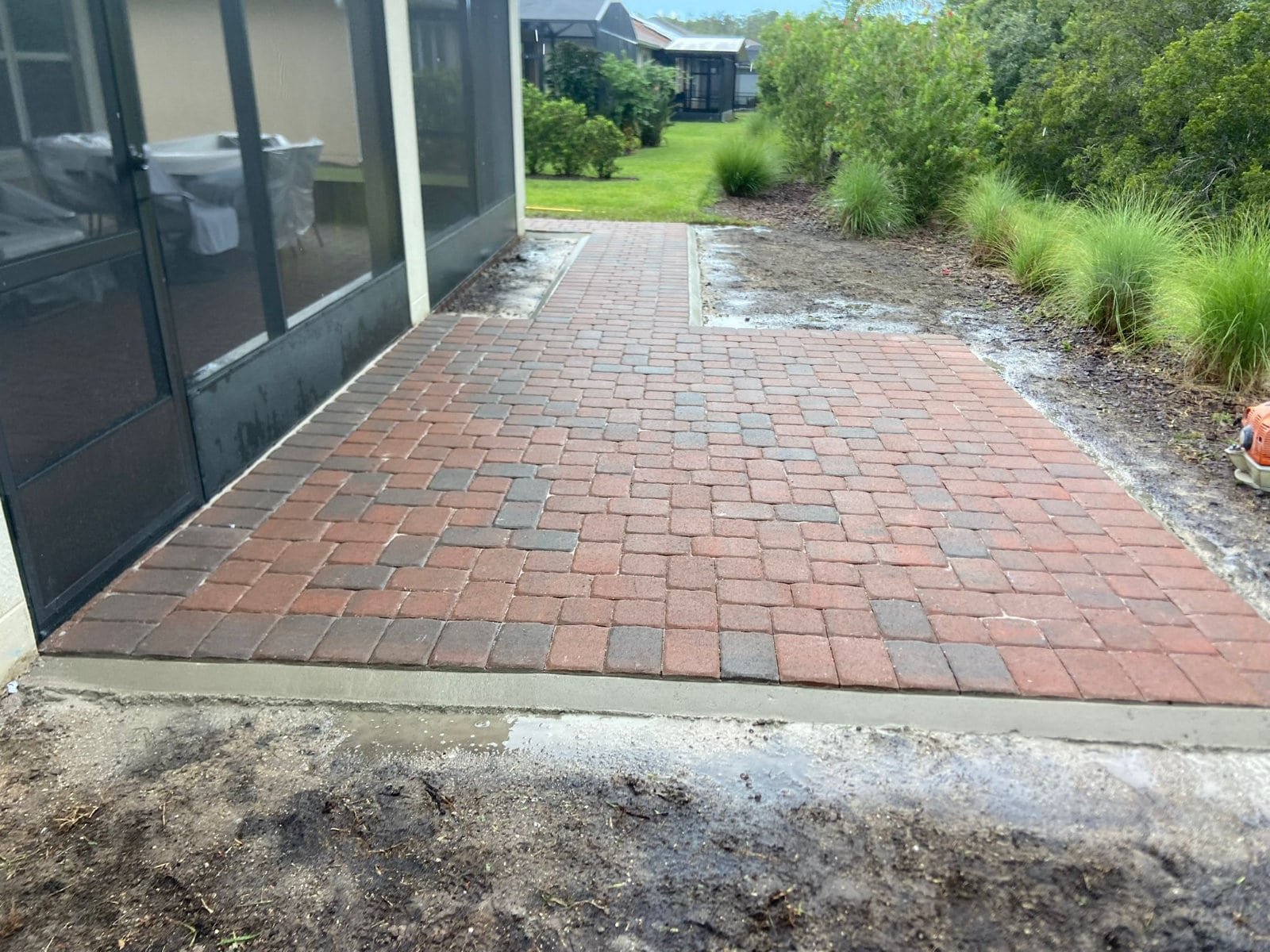
Most of a paver job is invisible when it is finished. The part you look at is the top inch and a half. The part that decides whether it still looks right in ten years is everything underneath it.
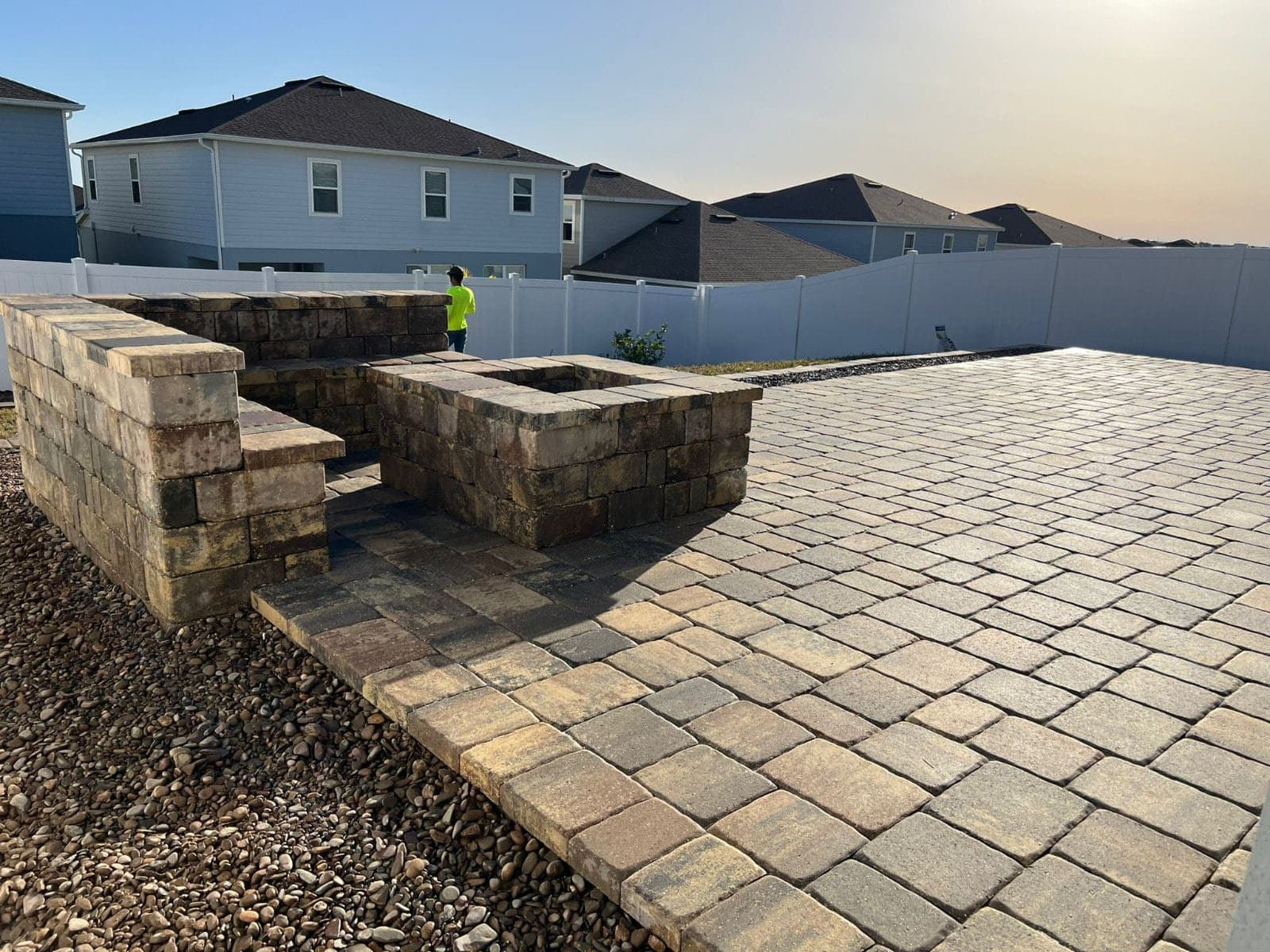
A proper installation starts with excavation to a depth that suits the use, not to whatever depth is quick. Then comes compacted base material, installed and compacted in lifts rather than dumped in one thick layer. Then a screeded bedding layer, the pavers themselves, an edge restraint locking the perimeter, and joint sand vibrated in so the units interlock instead of floating independently.
Central Florida soils are sandy, and sand moves when water moves through it. That is why grading and water routing get planned before the first paver is cut. Where does roof runoff land. Where does the pad drain when a summer storm dumps two inches in forty minutes. Where does the slope carry water once the new surface is in place. A patio that solves a look and creates a puddle is not a finished job.
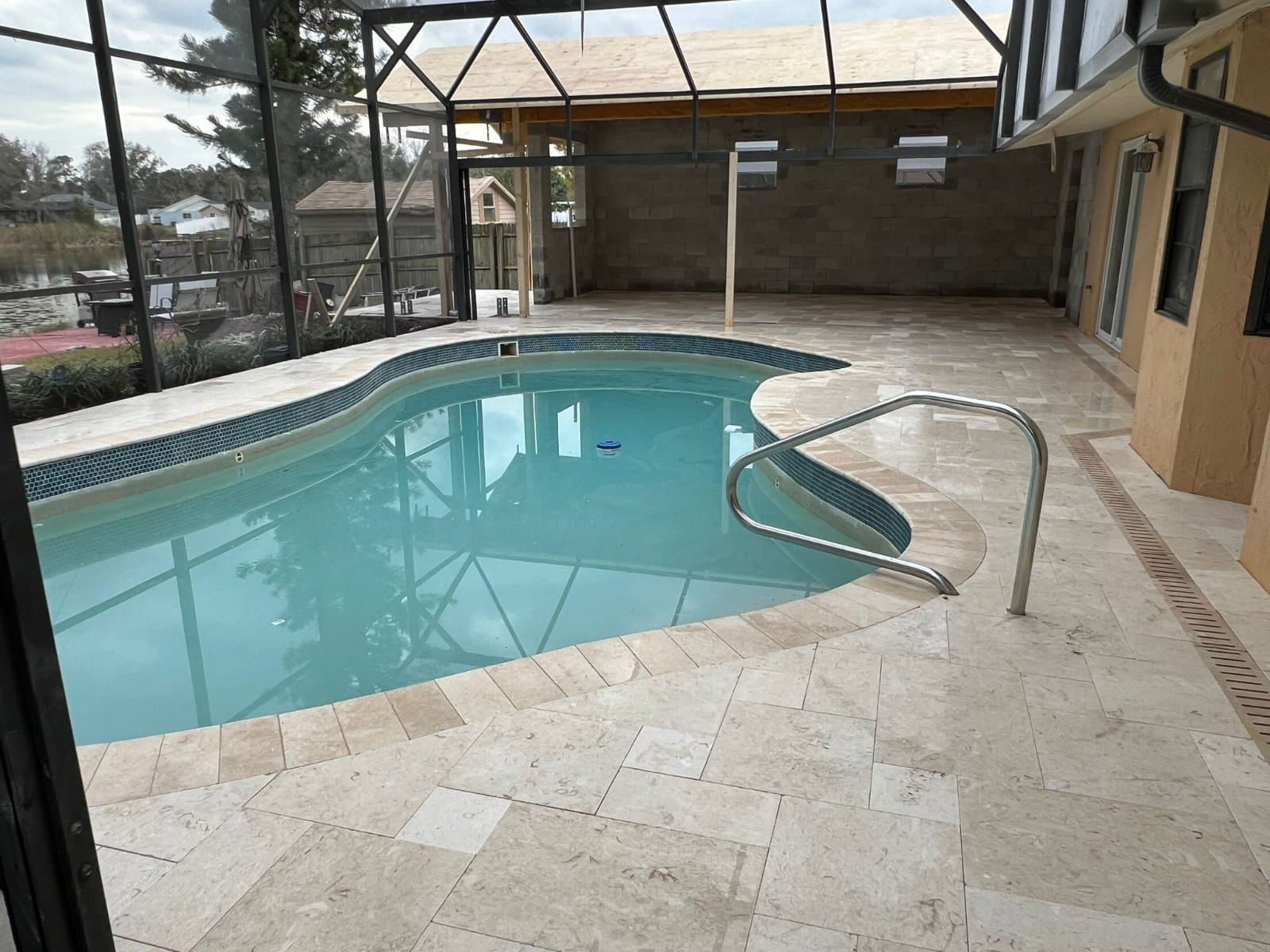
Patios, Pool Decks and Outdoor Living Areas
Patios and pool decks take lighter loads than a driveway, so the conversation shifts toward layout, transitions, and surface behavior. Pool surrounds have their own considerations around slip, edge detail, and how the deck meets the coping. Where there is existing concrete in sound condition, a paver overlay is often a reasonable path, and where the concrete is cracked or heaving it usually is not.
Driveways and Approaches
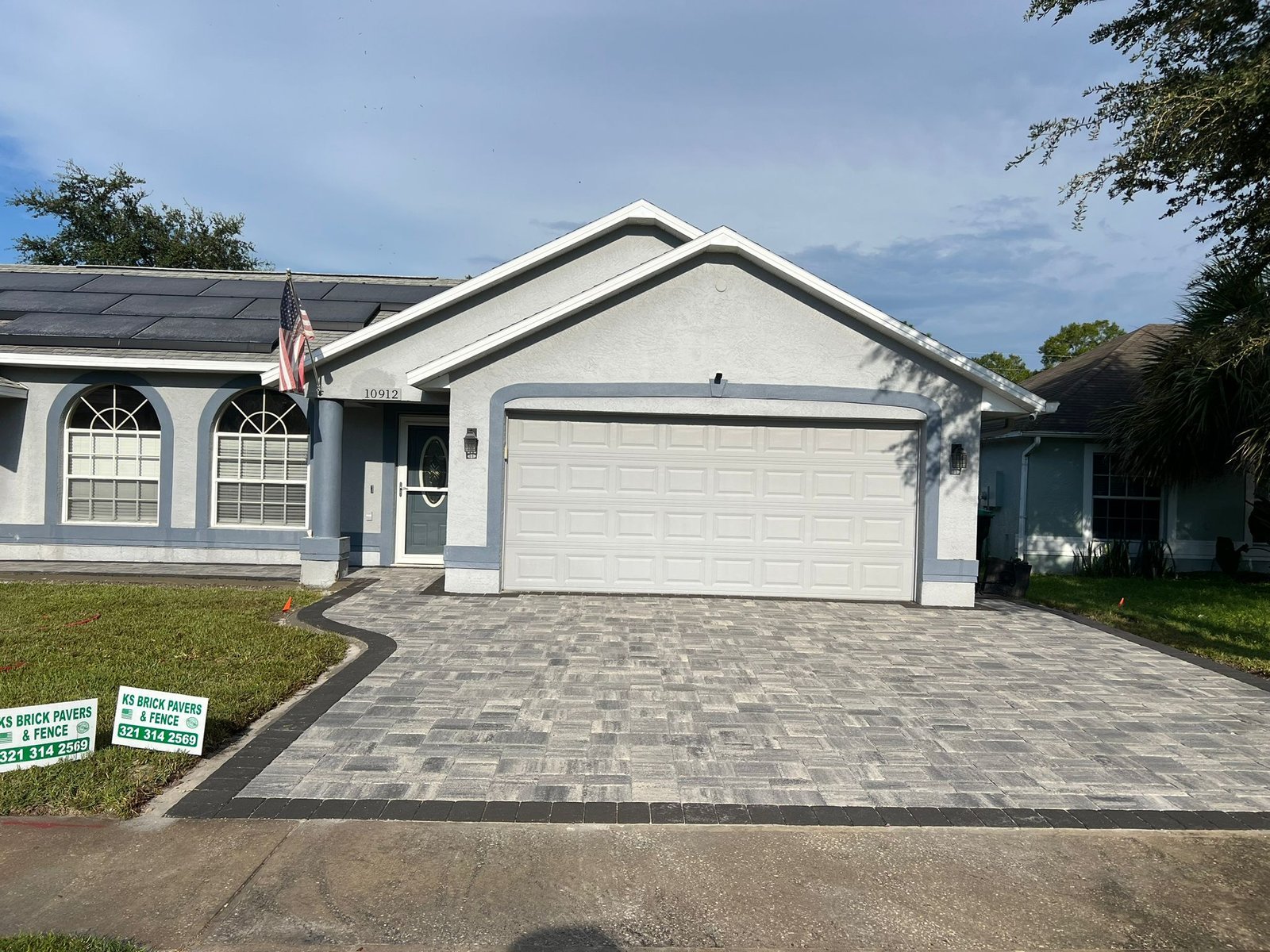
Driveways carry vehicle weight, repeatedly, in the same wheel paths. That changes base depth, compaction expectations, and pattern choice. It also raises the question of what happens where the driveway meets the public right of way, which is one more reason the jurisdiction question comes first.
The full scope is on our brick paver installation page, including patios, pool decks, driveways, outdoor kitchens, retaining walls and elevated paver decks.
What Makes One Paver Quote Different From Another
Homeowners in Poinciana often collect three quotes and find a wide spread between them. The spread is rarely random. It usually comes from a short list of variables, and once you know them you can read the quotes properly.
- Square footage and shape. A simple rectangle cuts fast. Curves, radiuses and tight borders mean more saw work and more waste, and both show up in the number.
- Demolition and haul off. Removing an existing concrete slab or an old paver field is real labor and real disposal weight. A quote that assumes bare dirt when there is a slab in the way is not comparable to one that includes the removal.
- Base depth. This is the biggest hidden variable. Two quotes can describe the same finished surface and specify very different amounts of compacted base beneath it.
- Site access. If a machine can reach the work area, material moves fast. If everything goes through a narrow side gate by wheelbarrow, the same tonnage costs far more hours.
- Grade change. A sloped yard may need a step, a low wall, or a retaining element to make a usable flat area. That is a structural addition, not a finish upgrade.
- Paver selection and pattern. Unit type, thickness and pattern all move the number. Herringbone interlocks well and generates more cuts at the perimeter than a running bond.
- Drainage work. Adding a drain line, a channel drain, or regrading a low corner is separate scope that some quotes include and others quietly leave out.
- Permits and association submittals. Somebody has to prepare, file and follow these. If a quote is silent about it, that usually means the homeowner is the one doing it.
When you compare bids, compare the written scope, not the headline price. Ask each contractor to put base depth, edge restraint, joint sand and drainage in writing. The quotes that look cheapest often look that way because something on that list is missing.
The APV Approval Step, and Who Handles It
Every property in Poinciana falls under the Association of Poinciana Villages. Under APV rules, any exterior alteration to the lot, other than general landscaping, needs approval from the Design Control Board and Architectural Review Committee before work begins. The association allows itself up to 30 days to respond to a submittal.
That timeline is the single most common reason a Poinciana outdoor project takes longer than the homeowner expected. The build itself may be short. The approval sitting in front of it is not something a contractor can compress by working faster.
There is a practical consequence: the earlier the submittal goes in, the earlier the clock starts. Deciding on materials, layout and dimensions up front is not just about taste. It is what lets the package go out complete instead of coming back for more information.
On our brick paver work, we handle every permit and HOA submittal as part of the quote. On fencing, our team handles the entire process, including submitting plans, paying permit fees, and scheduling inspections. That is deliberate. In a community governed by a single umbrella association covering ten villages, the paperwork is a specialty of its own, and it is not reasonable to hand it back to the customer.
One note for Solivita residents on the Polk side. Solivita is a 55 and over community within Poinciana and may carry its own layer of association or landscaping expectations on top of the APV framework. If you are in Solivita, confirm your specific community requirements with your association before finalizing a design, and we will build the submittal around whatever they tell you.
(321) 353-7445Get Immediate Service
Fences in Poinciana: Osceola Rules, Polk Rules, APV Rules
Fencing is where the split jurisdiction gets most obvious, and where a wrong assumption costs the most to undo.
What the APV Requires Everywhere in Poinciana
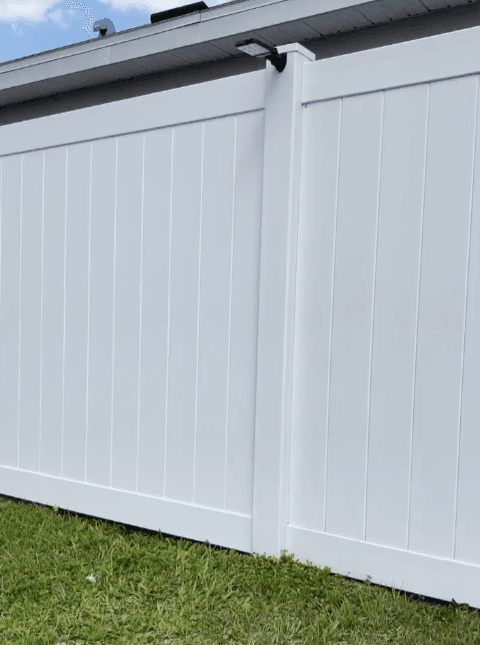
The APV architectural rules apply community wide, on both sides of the county line. Two specifics matter for almost every fence conversation here. First, no fence or wall may be erected inside the front setback line of the lot. Second, lattice is permitted only as a decorative element on top of a solid privacy fence that is manufactured and framed. It is not allowed as a standalone fence panel.
Those two rules alone rule out a number of designs homeowners arrive with. Knowing them before the design is drawn saves a rejected submittal and another wait.
If Your Lot Is in Unincorporated Osceola County
On the Osceola side, a residential fence requires a permit. The fee is $60, which includes $30 for zoning review, and there is no plan review step. Height is regulated by position on the lot: a fence built in front of the building setback line may not exceed 36 inches, and no fence anywhere on the lot may exceed 72 inches.
There are also placement rules with teeth. The fence may not obstruct the flow of stormwater, and it may not encroach on lot lines, public rights of way, or easements. That last one is worth taking seriously. A fence set on the wrong side of an easement is a fence that may have to come out later at the owner's expense.
If Your Lot Is in Polk County
Polk County treats fencing differently. Chain link fences and stockade type fences up to 8 feet in height do not require a permit. Masonry walls with pilasters, and solid fences taller than 8 feet, do require one. Separately, as of July 1, 2026, owners of single family homes, and the contractors working for them, are exempt from permitting on work valued under $7,500.
None of that removes the APV requirement. A permit exemption from the county is not approval from the association. In Poinciana those are two separate gates, and the association gate applies regardless of what the county says about permits.
Materials, styles and gate integration are covered on our fence installation page.
Artificial Turf in Poinciana: State Law Is on Your Side
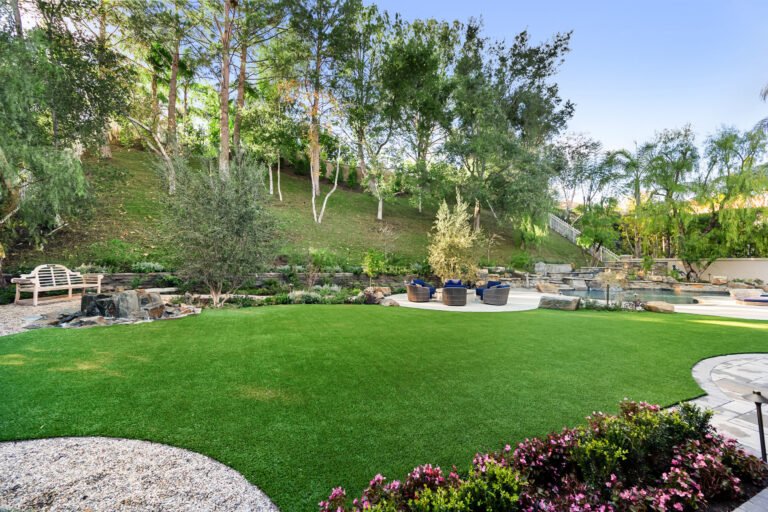
The objection we hear most often about artificial turf in an HOA community is some version of "my association will never allow it." In Florida, that is no longer the whole story.
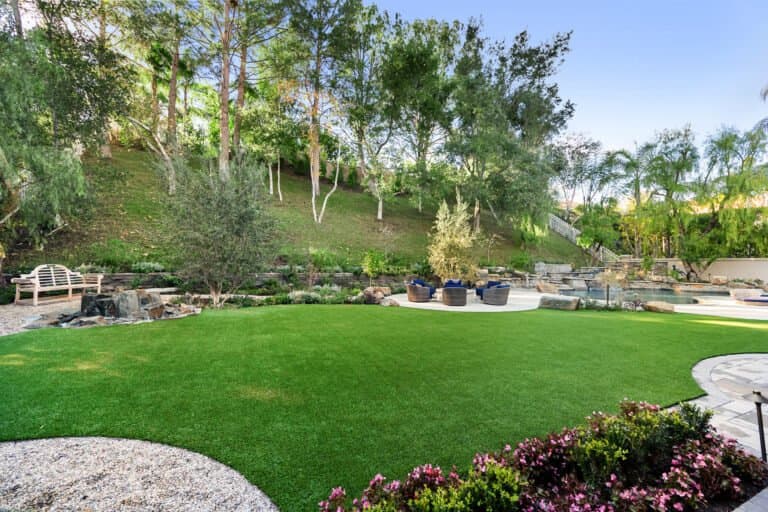
Florida Statute 125.572, enacted in 2025, protects a homeowner's right to install synthetic turf on single family residential property of up to one acre. No local government and no homeowners association may prohibit synthetic turf that meets the standards set by the Florida Department of Environmental Protection. The statute is specific about the material as well: it must be free of lead, it must not use rubber infill, and it must be disposable in an ordinary Florida landfill.
For a community like Poinciana, governed end to end by a single umbrella association, that changes the conversation. The question stops being whether turf is allowed and becomes whether the product and the installation meet the state standard.
One honest caveat. The detailed technical minimums under that statute, covering material, permeability, stormwater drainage and proximity to trees, are FDEP's responsibility, and the public rulemaking record shows those standards were still being defined and heard. So we do not tell customers that any installation is automatically approved. We tell them to confirm the FDEP standard in effect at the time the work is scheduled, and we build to it.
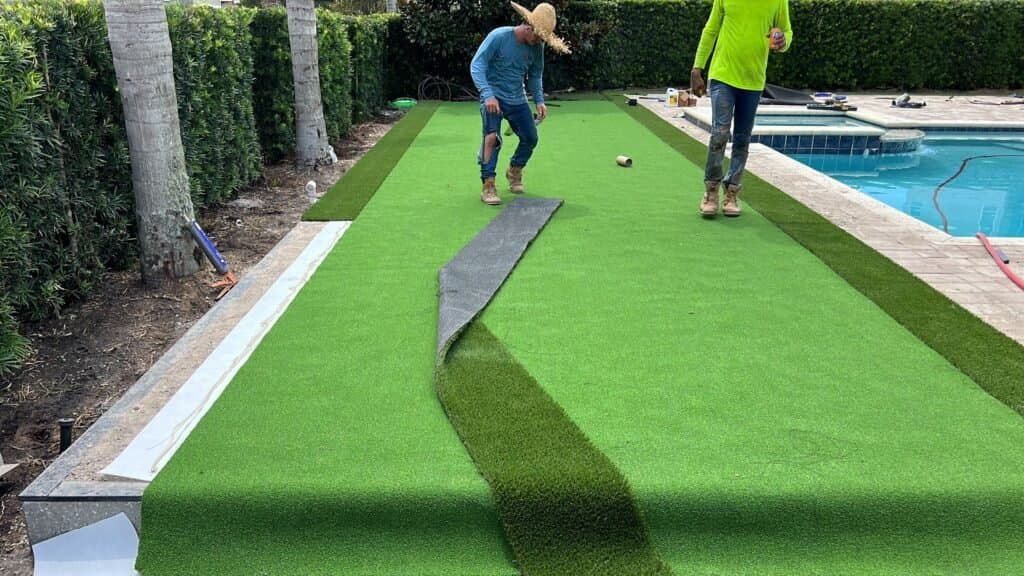
Beyond the legal side, drainage is the part that decides whether turf performs here. Central Florida rain arrives fast and heavy. Turf over a base that will not move water is turf that holds water. The base build matters as much on a turf job as it does on a paver job. Details are on our artificial turf installation page.
Poinciana Homes Are Reaching the Age Where Original Work Needs Attention
The median year of construction in Poinciana is 2005. Just over half of the housing stock, 50.4 percent, was built between 2000 and 2009, and another 16.7 percent went up between 2010 and 2019. In practical terms, most of the neighborhood is roughly 15 to 25 years old.
That is a specific stage in the life of outdoor work. Whatever was installed with the house, or shortly after it, is now old enough to show it. We see the same short list of symptoms across Poinciana:
- Joint sand washed out, so units shift underfoot and weeds come up through the gaps
- Localized settling where a downspout has been dumping water in the same spot for years
- A soft or sunken edge where the original edge restraint has failed and the perimeter has spread
- Wood fence posts loose at the base, with pickets cupping and gates dragging on the ground
- Faded or blotchy surfaces where an old sealer has broken down unevenly
- Tired original landscape areas that never really recovered from years of sun and traffic
The useful thing about pavers at this age is that the failure is usually repairable. Because the surface is made of individual units set on a base, a settled section can be lifted, the base corrected, and the same pavers relaid. That is a very different proposition from a cracked concrete slab, where the only real fixes are cosmetic or total.
The same logic applies to fencing. Sometimes the framing is sound and the problem is hardware and a handful of boards. Sometimes the posts are gone and the run needs replacing. An honest assessment tells you which of the two you have before you spend money on the wrong one.
If you would rather stay ahead of this cycle than react to it, our outdoor maintenance plans cover ongoing care for paver, fence and turf surfaces.
Planning Outdoor Work Around Central Florida's Storm Season
The Atlantic hurricane season runs from June 1 through November 30, with the peak stretch falling between mid August and late October. Poinciana is inland Central Florida, not coastal, but the season still shapes how outdoor work should be scheduled and what should be prioritized.
Wind is the obvious factor for fencing. A solid privacy fence is a large continuous surface, and the connection between post and ground is what carries the load. Post depth, footing quality and hardware condition are what separate a fence that rides out a storm season from one that leans afterward. If your fence is original to a home built in the mid 2000s, that hardware has been in the weather a long time.
Water is the factor for hardscape and turf. Heavy rain finds every low spot and every blocked path. On pavers, that shows up as joint sand loss and localized settling. On turf, it shows up as standing water where the base cannot drain. It is also worth remembering that Osceola County's fence rules specifically prohibit obstructing stormwater flow, which means drainage is not only a performance issue on that side of Poinciana. It is a code issue.
The practical takeaway is about sequence. Work that reinforces a fence, corrects drainage, or rebuilds a settled area is worth doing before the peak of the season rather than after it. Approval timelines are part of that math too. With the APV allowing itself up to 30 days to respond, a project you want completed before peak season needs to be started well ahead of the date you have in mind.
How to Choose a Paver Contractor in Poinciana, and How to Get Started
Poinciana has enough specific requirements that general competence is not enough. A contractor who does good work but does not know the community will still put you through a rejected submittal or a fence in the wrong place. Here is what we would tell anyone to ask, including us.
- Which county is my lot in, and how do you know? If a contractor has not checked the parcel, they are guessing at your permit path.
- Who prepares and files the APV submittal? Get the answer in writing. "You can handle that" and "we handle that" are very different jobs.
- What base depth are you installing, and how is it compacted? Vague answers here are the strongest predictor of settling later.
- What edge restraint are you using? The perimeter is where paver fields start to fail.
- How are you handling water? Ask specifically where runoff goes once the new surface exists.
- Can I see your license and insurance? Ask every bidder, every time, and actually look at the documents.
- What is the written scope? Materials, dimensions, base, drainage, cleanup and disposal should all appear on paper before anyone starts.
KS Solutions works across Poinciana on both the Osceola and Polk sides, and across Central Florida more broadly. We install brick pavers, fencing, and artificial turf, and we offer maintenance plans for keeping all three in shape once they are in.
On paver projects, permits and HOA submittals are handled as part of the quote. On fencing, our team handles the entire process, including submitting plans, paying permit fees, and scheduling inspections. In a two county community with an umbrella association, that is not an add on. It is most of what makes the project go smoothly.
To get started, call (321) 353-7445 with your address. We will confirm which county and village you are in, tell you what approvals your project will need, and go from there.