Why Infill Is the Decision That Decides How Your Turf Lives
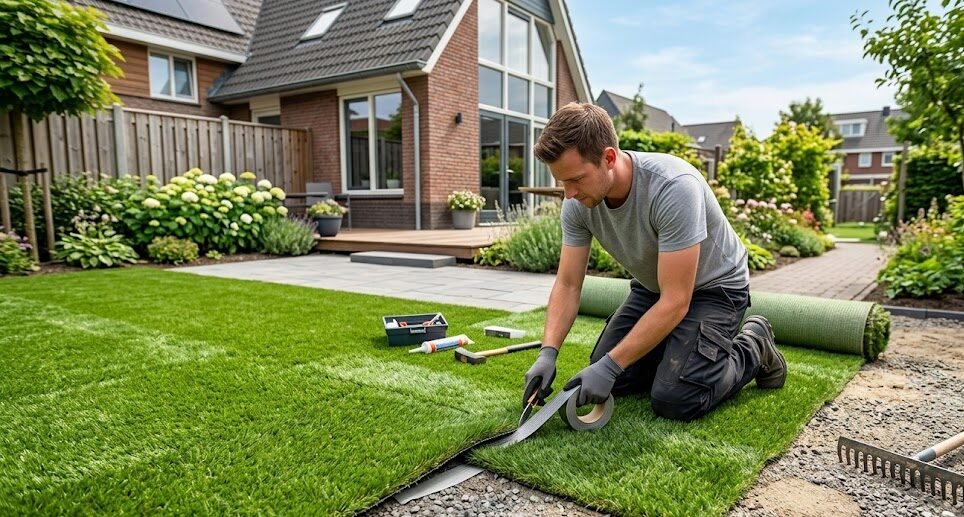
Most people shopping for artificial turf compare blade shape, color and pile height. Those matter for how the lawn looks on day one. What decides how it feels, smells and holds up in year five is the layer you cannot see: the infill brushed down between the fibers.
Infill does four jobs at once. It ballasts the turf so it stays flat and does not wrinkle or shift in heat. It holds the fibers upright so the lawn does not mat down in traffic lanes. It protects the backing from UV exposure. And depending on what you choose, it can manage pet odor, reduce surface temperature and add cushion. No single infill does all four perfectly, which is why the right answer depends on how you use the yard.
This guide is a buying guide. It compares the infills sold for Florida lawns, explains how much goes down and what it costs, and matches each one to a real use: family lawn, dog run, putting green, shaded side yard, pool surround. If your main question is surface temperature, our deep dive on whether artificial turf gets hot in Florida covers the heat side in detail, so we keep that part short here.
How Much Infill Goes Down, and Why Underfilling Is the Common Mistake
Vendor guidance for landscape turf generally falls around 2 to 3 pounds of infill per square foot. One retailer puts the typical figure at 2 to 3 pounds per square foot, with a 50 pound bag covering roughly 15 to 25 square feet depending on infill type and pile height. NexGen Lawns recommends 2.5 pounds of rounded silica sand per square foot for general lawns. Motz, the maker of Envirofill, suggests 2 to 2.5 pounds per square foot for putting greens and notes that for installations shared with dogs you may want to go toward 3 pounds.
For a 1,000 square foot backyard, that means somewhere between one and one and a half tons of material, or about 40 to 60 bags. That is why infill is a real line item on a quote, not an afterthought, and why some low bids skimp on it.
Underfilled turf is easy to spot after a summer. The fibers lie flat in the paths you walk, seams show, the backing is exposed to sun and the lawn can ripple on hot afternoons. When you compare bids, ask for the infill type and the pounds per square foot in writing. If a quote does not say, it is not specific enough.
The Main Infill Types Sold for Florida Lawns
Here are the options you will see, what each is made of and where each fits.
- Rounded silica sand: the workhorse and the default for most landscape installs. Rounded grains drain well, settle evenly and are inexpensive. Sand infill runs roughly $0.75 per square foot in material. Its weaknesses are that it does nothing for odor, it can compact over time, and it adds no cushion.
- Acrylic-coated sand: silica sand coated in a colored acrylic layer, sold under names like Envirofill and Durafill. The coating rounds the grain, reduces dust and abrasion on the fibers and, in many products, carries an antimicrobial treatment. Envirofill is sold in 50 pound bags in small and large granule sizes. It costs more than raw sand and is the most common upgrade for families and pets.
- Zeolite: a natural volcanic mineral with a porous structure that captures ammonia molecules instead of letting them off-gas, which is why it is the go-to for dog areas. Zeolite softens as it absorbs liquid, so suppliers do not recommend it as a 100 percent infill. It works best as a layer on top of, or mixed with, a coated sand that does the ballast work.
- Evaporative cooling infill: engineered granules, sold under names like HydroChill and TCool, that hold water and cool the surface as it evaporates. They help most right after rain or irrigation. Our heat guide covers how much they actually move the temperature in Florida sun.
- Crumb rubber (SBR): ground recycled tires. It adds cushion and is still common on sports fields, but in a residential Florida yard it absorbs a lot of heat, can carry a rubber smell in summer and tracks into the house. We rarely recommend it for a home lawn.
- TPE and EPDM rubber: manufactured rubber granules that are cleaner and more consistent than recycled crumb rubber, used mostly where cushion matters, like playground and sports surfaces. More expensive, and they still hold heat.
- Organic infill: cork, coconut fiber, walnut shell or olive pit blends. Lighter on the surface and cooler than rubber, but in Florida humidity and heavy rain organic infill can float, migrate, compact and break down, so it needs more top-offs.
Best Infill for Families and Everyday Lawns
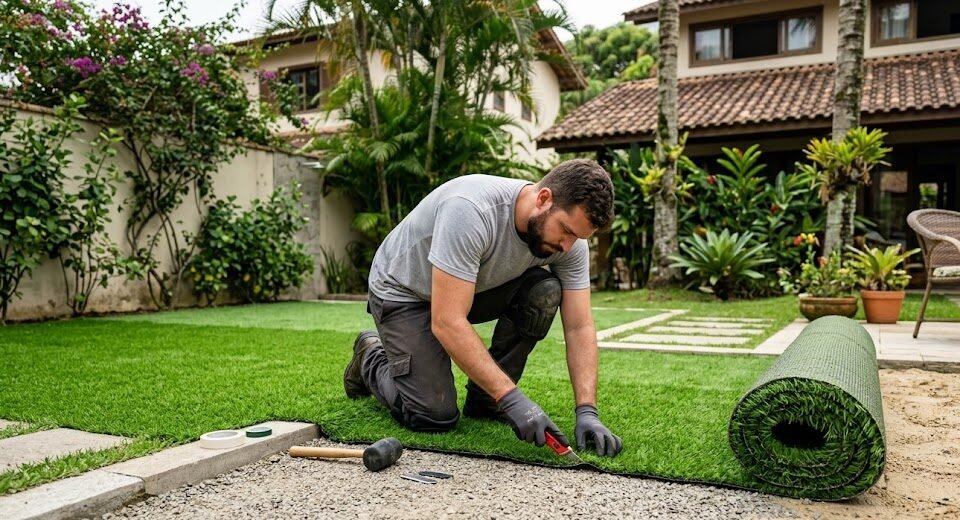
For a backyard where kids play, people walk barefoot and the dog visits now and then, the best value in Central Florida is usually a base of rounded silica sand topped with an acrylic-coated, antimicrobial sand. The sand gives you cheap, heavy ballast. The coated layer on top is what your feet and pets touch, so it is where the extra money does the most work.
If the lawn sits in full afternoon sun and the family uses it in summer, adding a cooling or zeolite component to the top layer is worth discussing. It does not make turf feel like grass at 3 p.m. in July, but it helps after watering and rain, which in Florida summer is often daily.
(321) 353-7445Get Immediate Service
Best Infill for Dogs: Odor Control Comes First
In a dog area, infill selection is the most consequential product choice in the whole install. Odor comes from bacteria breaking urea down into ammonia inside the infill and base. The fix is a combination: a flow-through or highly permeable backing, a base that drains fast in Florida sand, and an infill that controls ammonia.
Zeolite is the standard answer because it captures ammonia molecules instead of letting them off-gas. Because it softens as it absorbs liquid, it is usually paired with an antimicrobial coated sand as the primary ballast, often at the heavier end of the fill rate. Rinsing the potty zone regularly and topping off zeolite when odor starts to return keeps it working. Crumb rubber and organic infills are poor choices for dog runs. Our guide to pet friendly artificial turf in Florida covers drainage and the weekly routine.
Best Infill for Putting Greens, Shade and Pool Areas
- Putting greens: short, dense turf needs a fine, consistent sand that controls ball roll. Motz suggests 2 to 2.5 pounds per square foot of a 30/50 blend depending on pile height. Organic and rubber infills are wrong here.
- Shaded side yards: moisture and leaf litter are the problem, not heat. An antimicrobial coated sand helps keep algae and odor down, and a fast-draining base matters more than the infill.
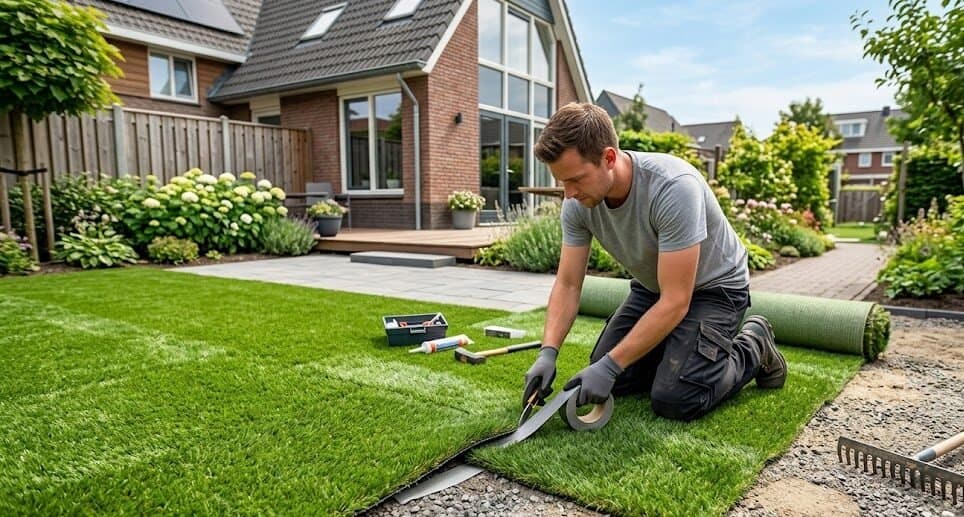
- Pool surrounds: avoid crumb rubber and organic infill, which can float into the pool or skimmer. Coated sand is the safer choice, and in very hot exposures we often recommend pavers for the deck itself and turf only where shade or traffic allows.
- Slopes and high-traffic paths: heavier ballast and a slightly higher fill rate keep fibers upright and stop infill from migrating downhill in summer storms.
What Infill Costs on a Typical Florida Project
Infill is a smaller share of the total than people expect, but the type changes the number. Across Central Florida, residential artificial turf commonly runs about $10 to $16 per square foot installed, with a broader statewide range of about $8 to $18 depending on product weight, infill choice, base depth and access. On commercial jobs, a full turf system runs roughly $3 to $4 per square foot above plain turf, and that increment buys infill, extra labor and engineered components.
- Silica sand only: the lowest cost, roughly $0.75 per square foot in material.
- Sand base with coated antimicrobial top layer: a moderate premium, usually the best value for families and occasional pet use.
- Coated sand plus zeolite: a step higher, and the right spend for dedicated dog areas.
- Cooling infill systems: the highest material cost per square foot among the options most homeowners consider.
On a 1,000 square foot lawn, the difference between bare sand and a well-chosen premium blend is typically a few thousand dollars at most, against a lawn expected to last many years. Skimping on infill to win a bid is false economy.
Crumb Rubber and the Direction the Industry Is Moving
Crumb rubber is still sold, and it is still common on sports fields in the United States. But the direction of travel is clear. In 2023 the European Union adopted a restriction on intentionally added microplastics under its REACH chemicals regulation that stops the sale of granular infill for synthetic sports surfaces from October 17, 2031, after an eight-year transition. The European Chemicals Agency identified infill on synthetic turf sports surfaces as the largest source of microplastics in products.
That rule does not apply in Florida, and no comparable ban exists here. For a homeowner, the practical takeaway is simpler: sand, coated sand and mineral infills avoid the heat, smell and tracking issues of rubber and are where the residential market has already moved.
Infill Maintenance: Top-Offs, Brushing and Rinsing
Infill is not install-and-forget. It compacts and migrates out of traffic lanes over time, and that is when fibers start to mat.
- Brush against the grain: a power broom or stiff brush lifts fibers and redistributes infill, especially in paths and play zones.
- Top off every few years: or sooner in dog areas and heavy-traffic zones. Adding a few bags where the backing starts to show restores ballast and fiber support.
- Clear debris before it decomposes: pollen, leaves and grass clippings that settle into infill break down and feed weeds and odor. Blow or rake them off regularly.
- Rinse pet areas: a regular rinse plus an enzyme cleaner keeps zeolite and antimicrobial infills working.
Our guide to how long artificial turf lasts in Florida shows how infill upkeep fits into the overall lifespan. If you would rather not do it yourself, our maintenance plans include brushing, top-offs and pet area treatment.
Our Infill Recommendations for Central Florida Yards
- Family lawn in sun: rounded silica sand base with an antimicrobial coated sand top layer, about 2.5 pounds per square foot total.
- Dog run or potty area: antimicrobial coated sand as ballast with zeolite, at the heavier end of the fill rate, over a fast-draining base.
- Putting green: fine 30/50 sand blend at the rate the turf manufacturer specifies.
- Pool surround: coated sand, never rubber or organic.
- Budget front lawn with little foot traffic: rounded silica sand alone, installed at the full rate.
Choosing Infill With KS Solutions
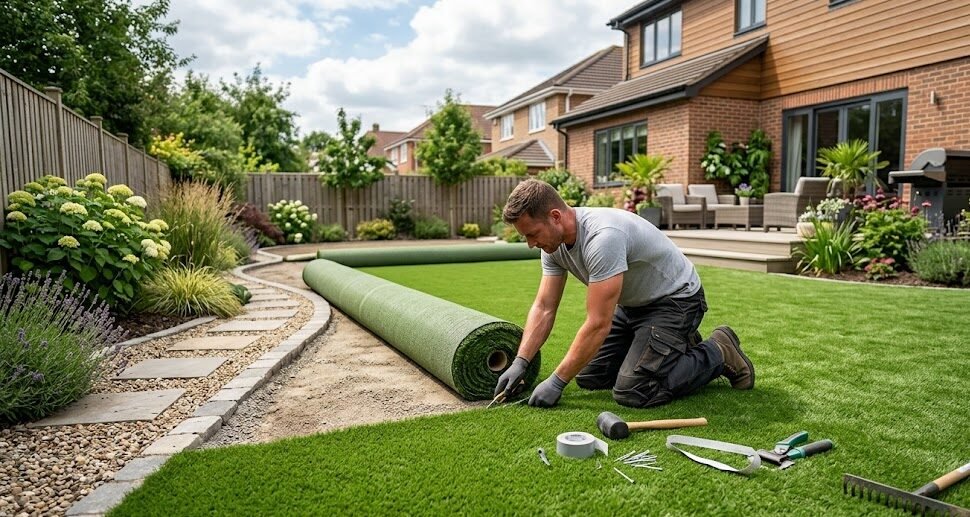
KS Solutions specifies infill by the way you use the yard, not by what is on the truck. Every artificial turf installation quote lists the infill type and the pounds per square foot, so you can compare bids line by line. We install across Central Florida, including artificial turf in Orlando, artificial turf in Lakeland and artificial turf in Kissimmee. Tell us about your kids, your dogs and your sun, and we will recommend the infill that fits.