What Brick Pavers Actually Cost in Florida in 2026
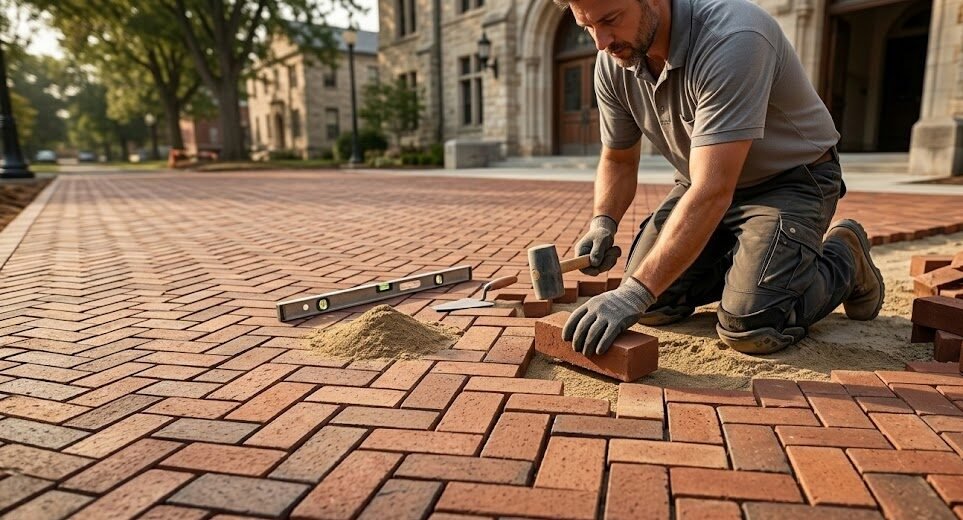
Start with the honest range. Nationally, basic paver installation runs about $17 to $21 per square foot in 2026. In Florida, professional installation typically lands between $10 and $25 per square foot depending on the project, with simple, large concrete-paver jobs at the low end and small, intricate clay-brick or natural-stone jobs at the high end. Material alone is a fraction of that: concrete pavers cost roughly $3 to $4 per square foot for the units, while clay brick and natural stone can reach $15 per square foot in material before a single paver is laid.
The gap between material cost and installed cost is labor, base preparation, and everything below the surface. A paver patio is only as good as the base under it, and in Florida's sandy soil that base is where the real money and the real quality live. Here is how the installed price breaks down by project type before we get into the five factors.
| Project | Typical 2026 Florida range (installed) |
|---|---|
| Patio (concrete paver) | $10 to $18 per sq ft |
| Driveway (concrete paver) | $12 to $20 per sq ft |
| Pool deck (with slip-safe surface) | $14 to $24 per sq ft |
| Clay brick or natural stone | $18 to $30+ per sq ft |
Those are ballpark figures for planning, not a quote. Your real number depends on the five factors below, which is why two contractors can look at the same backyard and price it $6 per square foot apart.
Factor 1: The Material You Choose
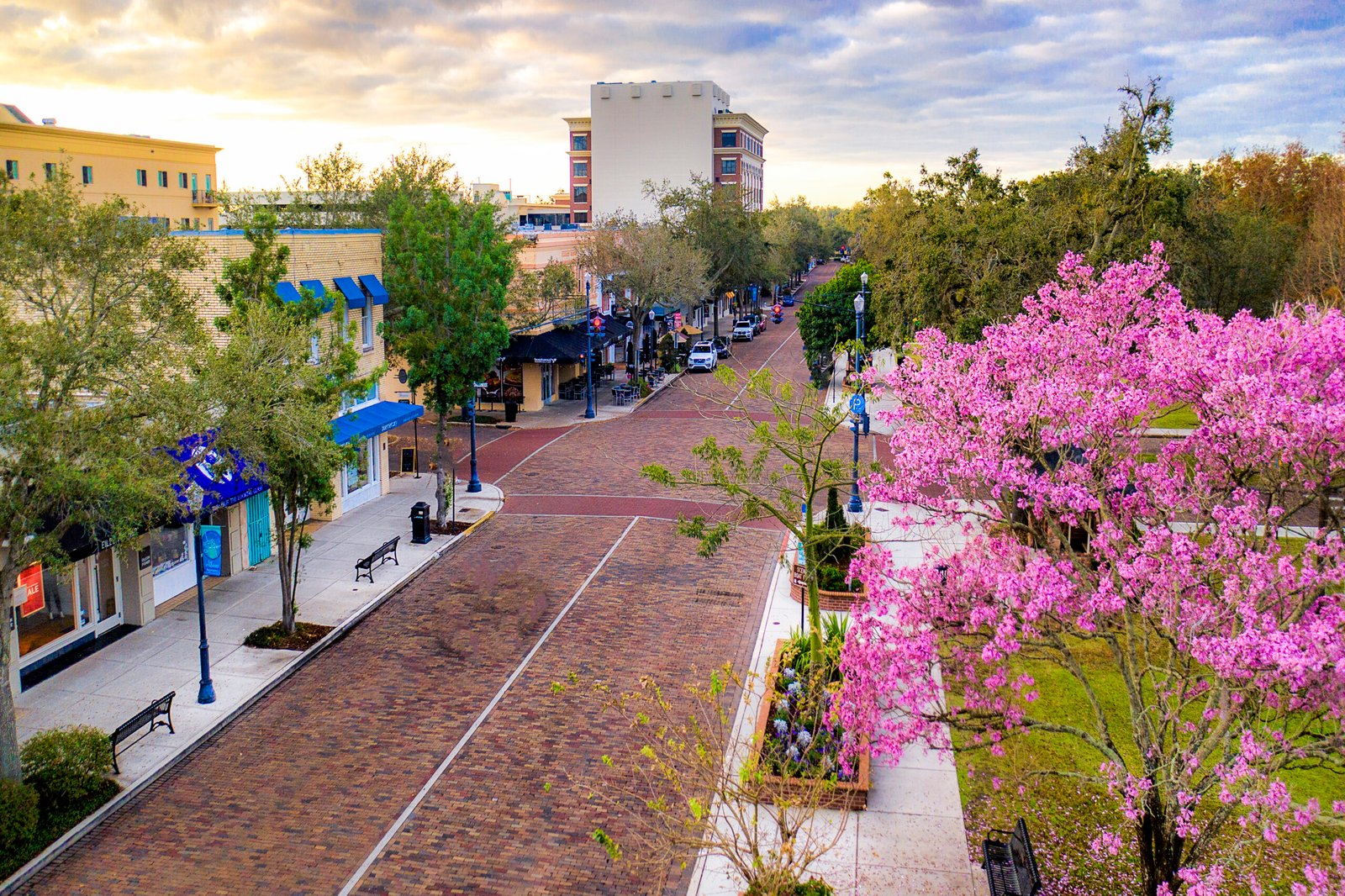
Material is the most visible price lever, and it is where most homeowners start. The four common choices in Florida each carry a different cost and a different personality.
- Concrete pavers: the workhorse of Florida hardscape. Affordable at roughly $3 to $4 per square foot in material, available in dozens of shapes and colors, and easy to source and repair. Best value for driveways and large patios.
- Clay brick: the classic look that holds its color for decades because the color runs through the whole unit. Costs more in material and is harder to cut, which pushes labor up, but it ages beautifully.
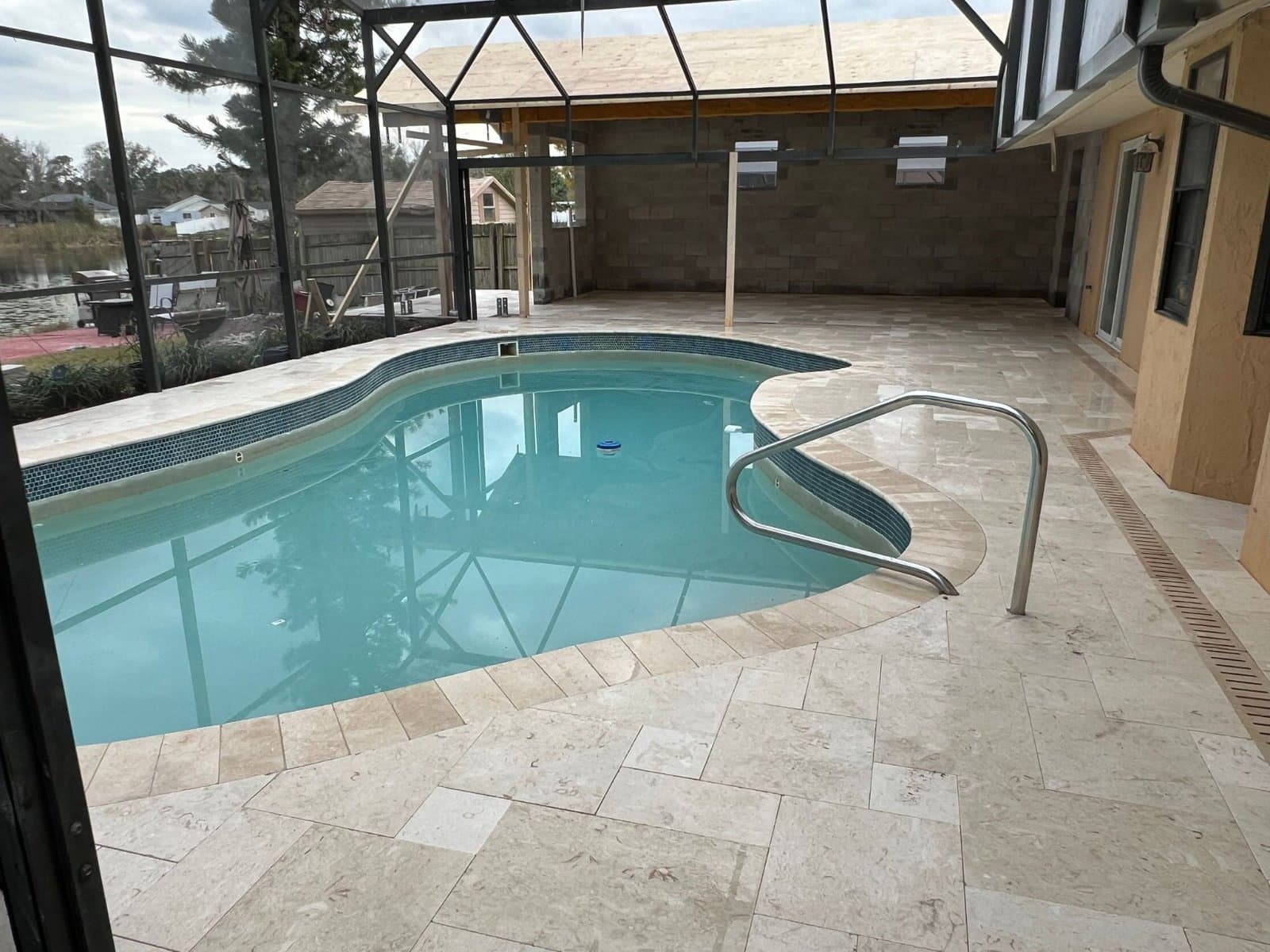
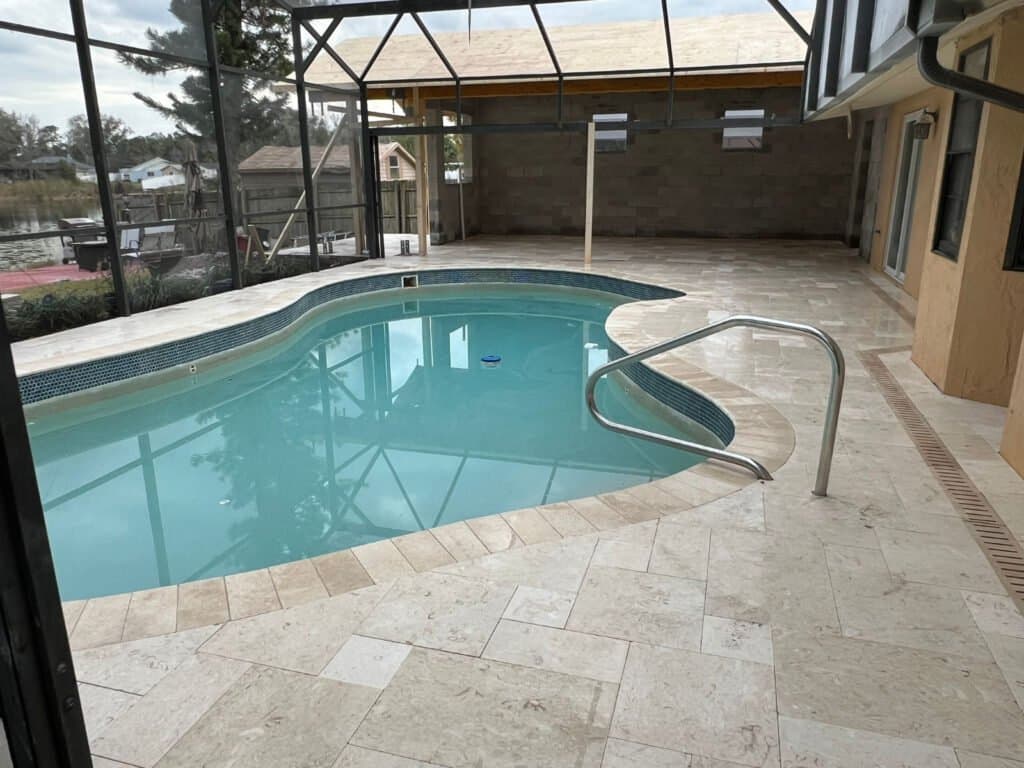
- Travertine and natural stone: premium material that stays cooler underfoot, which matters on a pool deck under the Florida sun. Higher material cost and more careful installation, so it sits at the top of the range.
- Porcelain pavers: the newest option, extremely stain and fade resistant, but the material and the precise installation both cost more.
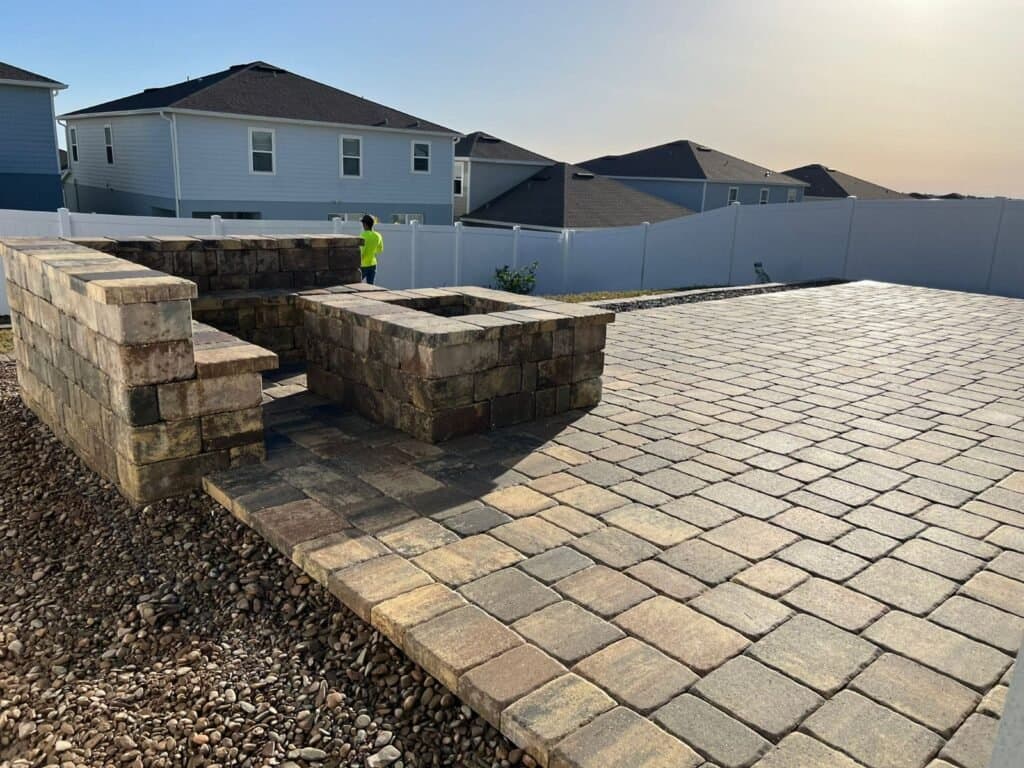
Material choice also interacts with heat. On a pool deck, a lighter-colored concrete, travertine, or porcelain paver stays noticeably cooler than a dark clay brick, which is a real comfort factor in July. If you are weighing surfaces for a specific area, our brick paver installation page breaks down which materials we recommend for driveways, patios, and pool decks in Central Florida.
Factor 2: The Size and Shape of the Area
Bigger projects usually cost less per square foot, not more. That surprises homeowners, but it is simple economics: the crew mobilizes once, the base equipment shows up once, and the fixed costs spread across more square footage. A 1,000 square foot driveway will almost always price lower per square foot than a 150 square foot entry walkway.
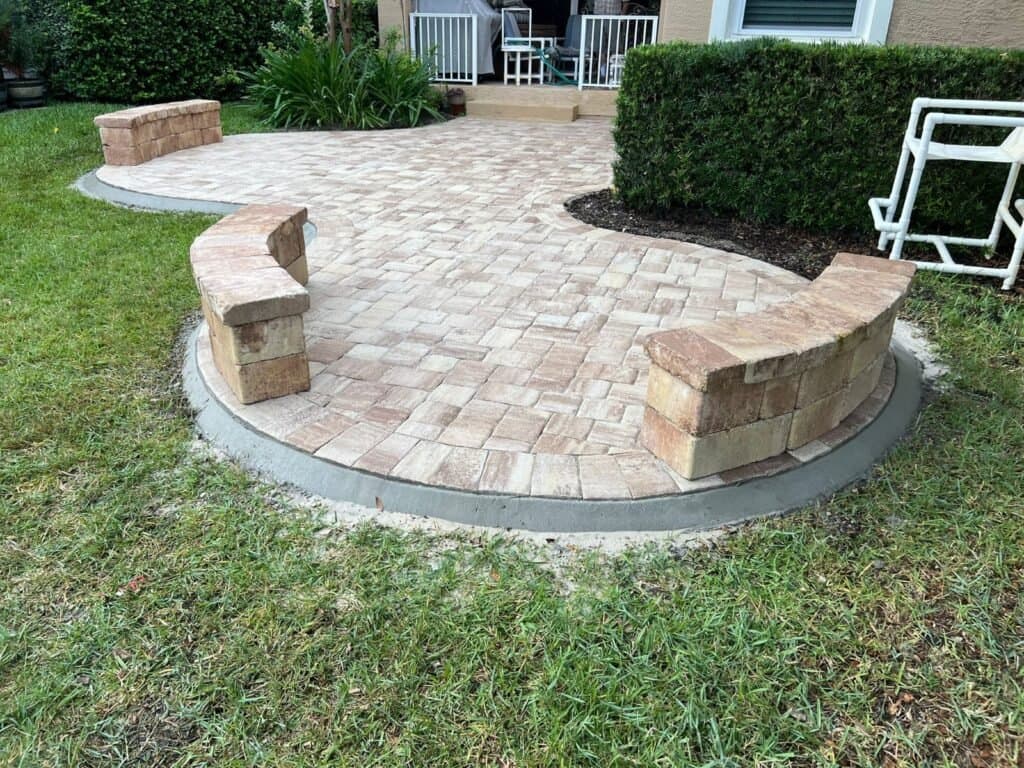
Shape matters as much as size. A clean rectangle is fast to lay and produces little waste. A curved patio, a walkway that wraps a corner, or an area with lots of edges forces more cuts, more waste, and more labor hours per square foot. Every curve means the installer is trimming pavers to fit, and every cut is time plus a partial paver that gets thrown away.
- Large and simple: lowest cost per square foot. Driveways and big open patios.
- Small and simple: higher per square foot because fixed costs do not spread. Walkways and entries.
- Any size but complex: curves, tight corners, and multiple levels all add labor and waste.
This is why asking a contractor to "just add a little more" to an existing job is often cheaper per square foot than starting a small separate project later. If you are planning a full backyard, pricing it as one project usually beats phasing it in pieces.
Factor 3: Base Prep and Site Conditions
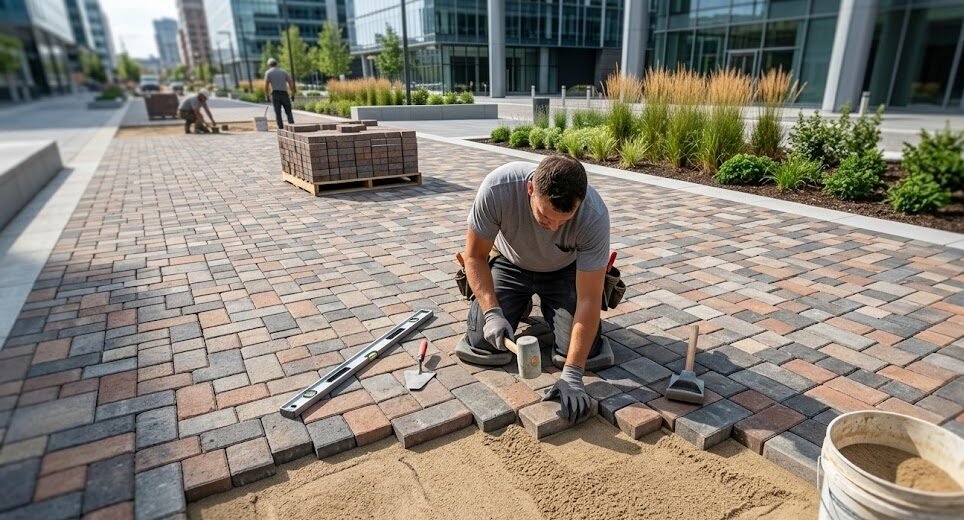
This is the factor that separates a paver job that lasts 25 years from one that sinks and shifts in three. In Florida's sandy, high-water-table soil, proper base preparation is the single most important part of the installation, and it is invisible once the pavers go down. That is exactly why some cut-rate quotes are cheap: they skimp on the base you will never see until it fails.
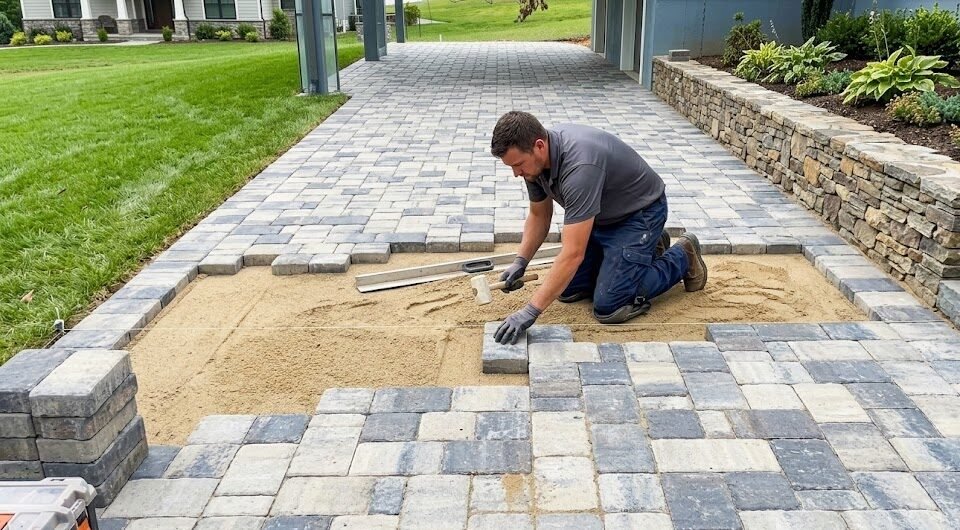
A correct install excavates several inches of soil, lays and compacts a crushed-stone base in lifts, adds a leveling layer of bedding sand, and only then sets the pavers. Skip the excavation depth or the compaction, and the pavers ride on soft ground that moves with every heavy rain. Site conditions push this cost up or down:
- Soft or organic soil: needs deeper excavation and more base material.
- Poor drainage: may require grading, a French drain, or permeable base to move Florida's rain away from the house.
- Slope: a graded or terraced area takes more labor to build level and stable.
- High water table: common near the coast and lakes, and it dictates how the base is built.
When you compare two quotes and one is far cheaper, the base is usually where the difference hides. Ask each contractor exactly how deep they excavate and what base material they compact. A vague answer is a red flag.
(321) 353-7445Get Immediate Service
Factor 4: Pattern and Design Complexity
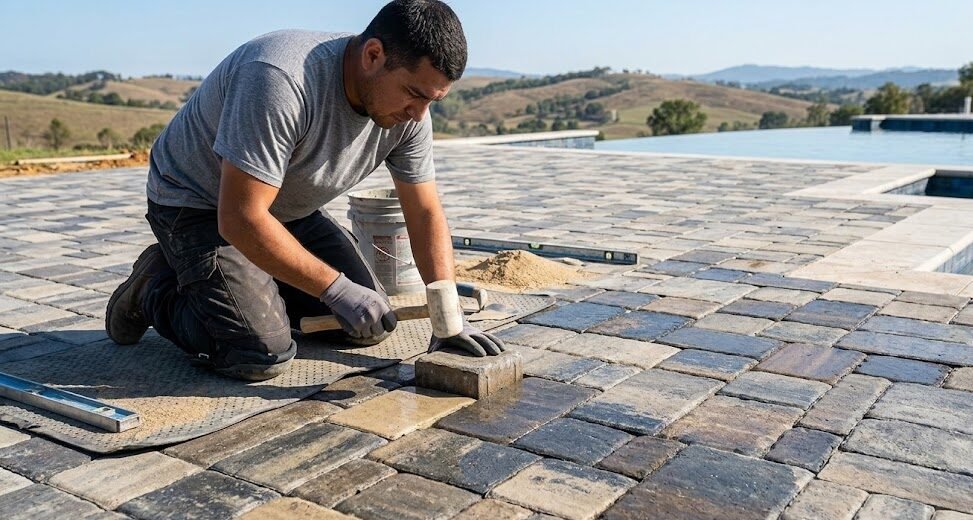
The pattern you pick changes both the look and the labor. A simple running-bond or stack pattern lays fast with minimal cutting. A herringbone, especially a 45-degree herringbone, is stronger for driveways because it locks under vehicle weight, but it requires cutting every paver along the edges, which adds labor and waste.
- Running bond or stack: fastest, least waste, lowest labor.
- Herringbone: excellent load strength for driveways, more edge cutting.
- Borders and banding: a contrasting border frames the space beautifully but adds a second material and more cuts.
- Multi-color blends and inlays: gorgeous, but sorting and placing multiple colors takes time.
Design complexity is where you get the most personality for your money, but it is also where a quote quietly climbs. Decide early how much detail you want, because adding a border or an inlay after the base is set is harder than planning it from the start. For color and layout ideas that hide dirt and stay cool, plan the pattern alongside the material rather than as an afterthought.
Factor 5: Access, Demolition, and Labor
The last factor is everything around the actual laying. Labor in Florida runs roughly $70 to $150 per hour for skilled hardscape crews, or about $4 to $11 per square foot of the installed price, and access decides how many of those hours your job takes.
- Tear-out of old concrete or pavers: removing and hauling an existing slab adds cost before new work begins. Demolition and disposal are a line item, not a freebie.
- Access distance: if the crew has to wheelbarrow base and pavers 150 feet around a house because a truck cannot reach the backyard, that is added labor hours.
- Obstacles: tight gates, screen enclosures, landscaping to protect, and utilities to work around all slow the job.
- Site prep and haul-off: basic site prep typically runs $1,000 to $3,000 before installation on many projects.
None of this shows up in a per-square-foot rule of thumb, which is why an honest contractor walks the site before quoting. A price given over the phone without seeing your access is a guess, and guesses get corrected mid-project with change orders.
Driveway vs Patio vs Pool Deck: How Cost Shifts by Project
The same five factors land differently depending on what you are building. A driveway carries vehicle weight, so it needs a stronger base and often a herringbone pattern, which nudges it above a patio of the same size. A patio is the most flexible and usually the best value per square foot. A pool deck adds the requirement of a slip-resistant, cooler surface and careful drainage away from the pool, which is why it sits at the top of the range.
If your project spans more than one of these, pricing them together almost always beats doing them separately, because the base crew and equipment mobilize once. A homeowner redoing a driveway, walkway, and patio in one project pays less per square foot than three separate visits. Our team handles all three across Central Florida, from Orlando to Lakeland and Winter Haven.
Ongoing Costs: Sealing, Sand, and Repairs
The installed price is not the whole story. Pavers are low maintenance, but in Florida they are not zero maintenance, and budgeting for upkeep protects your investment.
- Joint sand: polymeric sand locks the joints and resists weeds and washout. Florida's humidity can haze cheap polymeric sand, so material choice matters here too.
- Sealing: Florida's intense UV fades and wears sealer faster than northern climates, so plan to reseal roughly every 18 months to two years to keep color and joint stability.
- Repairs: the beauty of pavers is that a single damaged unit can be lifted and replaced without redoing the whole surface, which is far cheaper than patching stamped concrete.
That repairability is a hidden savings versus poured concrete. A concrete slab that cracks means a patch or a full pour. A paver that cracks means pulling one unit and dropping in a new one. Over 20 years, that difference adds up in favor of pavers.
How to Read a Paver Quote Without Getting Burned
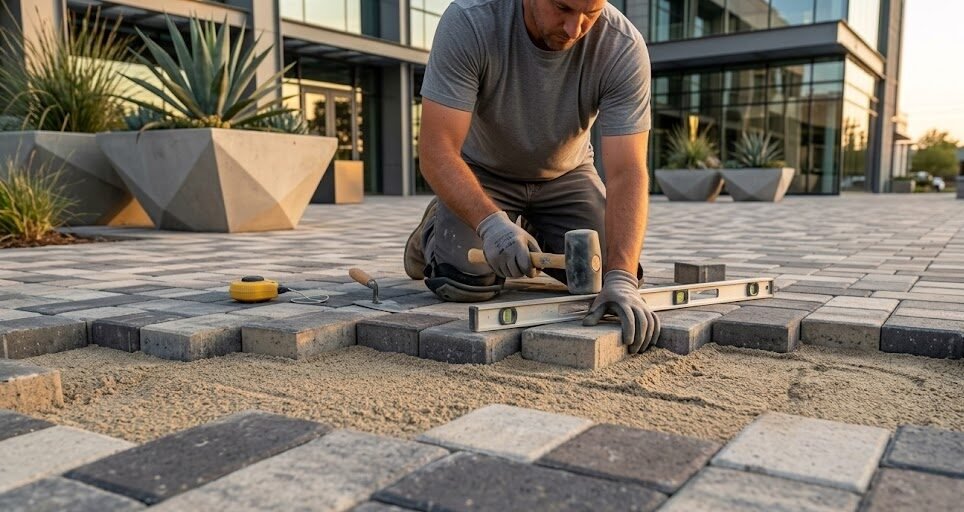
A real quote is a document, not a number scribbled after a five-minute look. Before you sign, make sure the quote spells out the parts that decide quality and price.
- Base specification: excavation depth and the type and depth of compacted base material. This is the number one thing cheap quotes leave vague.
- Material and pattern: the exact paver, color, and laying pattern, so you are comparing apples to apples.
- Square footage and edge treatment: total area plus how the edges are restrained, since edge restraint is what keeps pavers from spreading over time.
- Demolition and haul-off: whether removing the old surface is included or extra.
- Jointing and sealing: what sand goes in the joints and whether sealing is included or a later add-on.
If one quote is dramatically lower than the others, it is almost never because that contractor found a magic discount. It is because something above got trimmed, usually the base. The cheapest paver job is the one you only pay for once, which means getting the base and edge restraint right the first time.
Get an Accurate Paver Estimate in Central Florida
Every range in this guide is accurate for the 2026 Central Florida market, but none of them is your exact number. Your price depends on your material, your square footage, your soil and drainage, your pattern, and your site access. The only way to get a real figure is to have a contractor walk the site, measure it, and write a detailed scope.
KS Solutions installs brick pavers, fences, and artificial turf across Central Florida, with in-house crews and proper base preparation on every job. If you are weighing a paver patio against a low-maintenance yard, our artificial turf installation team can price both so you compare real numbers. Reach out for a free, detailed estimate and we will measure your space, walk you through material and pattern options, and give you a written quote that shows exactly where every dollar goes.