Call KS Solutions at (321) 353-7445 for expert paver, fence, and turf services in Lakeland, FL.
What Is Driving Outdoor Investment Across Lakeland Right Now
Lakeland's growth over the past decade has been staggering. The population jumped from about 113,000 in the 2020 census to over 130,000 today, a growth rate north of two percent annually that outpaces most Florida cities outside the major metros. With that growth comes serious demand for brick paver and fence services in Lakeland, FL, and KS Solutions has been meeting that demand with professional installations built for this market. New residents are pouring in from Tampa, Orlando, and out of state, drawn by housing prices that still look reasonable compared to Hillsborough and Orange counties. The Lakeland-Winter Haven metro area has become one of those places people discover and then wonder why they did not move sooner.
That influx creates competition in the housing market. When you are selling a home in Lakeland, you are competing against an ever-growing pool of listings, and the properties that stand out are the ones with finished outdoor spaces. A paver driveway catches the eye from the street. A well-designed patio shows up beautifully in listing photos. A clean, straight fence signals that the property has been cared for from front to back. These features move the needle on sale price and days on market in ways that interior upgrades alone do not always accomplish.
But resale is only half the story. Most homeowners who invest in outdoor improvements are doing it because they want to enjoy their property more right now. Lakeland's climate allows for outdoor living twelve months a year. Even in January, afternoon temperatures frequently reach the mid-70s, and the morning chill burns off by ten. Summer is hot, no question, but shaded patios, light-colored pavers that reflect heat, and strategically placed fences that channel breezes make outdoor time comfortable even in July and August. When you design your outdoor space with the climate in mind, you get a second living room that is usable 365 days a year.
The I-4 corridor location is another accelerant. Tampa is 35 minutes west, Orlando is about an hour east, and Lakeland sits right in the middle with access to both job markets without the cost of living that comes with residing inside either metro. Remote workers who relocated during the pandemic discovered Lakeland and stayed because the housing stock, the outdoor lifestyle, and the growing restaurant and retail scene checked every box on their list. These buyers tend to invest heavily in their properties because they are building long-term lives here, not flipping houses for a quick profit.
The economic factors line up too. Median household income in Lakeland climbed to roughly $61,000, and homeowners are allocating more of their improvement budgets to outdoor projects. Industry data consistently shows that hardscaping and fencing deliver some of the strongest returns on investment of any home improvement category, often recovering 60 to 80 percent of the cost at resale. And unlike a kitchen remodel that you might not touch for ten years, outdoor features get used daily and provide immediate, tangible quality-of-life improvements.
Lakeland's real estate market reinforces the investment case. The city is not a static market where prices plateau. It is a growth market where demand continues to outstrip supply in desirable neighborhoods, and where the gap between improved and unimproved properties shows up clearly in sale prices. Agents who work the Lakeland market consistently report that homes with finished outdoor hardscaping sell faster and closer to asking price than comparable homes without those features. In a competitive market, the outdoor spaces are often what tilt a buyer's decision after two or three similar homes blur together in their memory.
Brick Paver Services for Every Lakeland Neighborhood
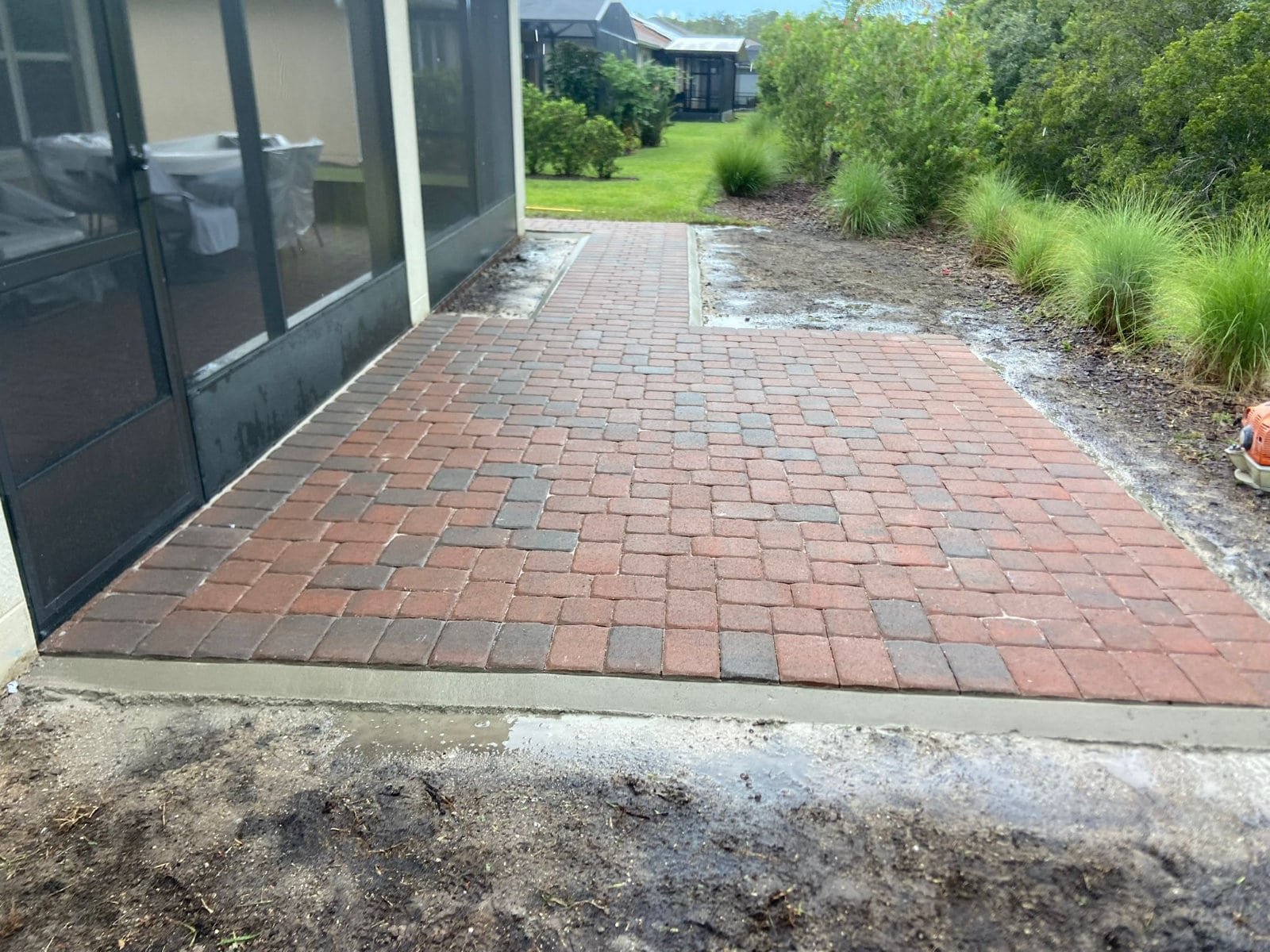
Lakeland's neighborhoods are architecturally and geographically diverse, and paver installations need to reflect that diversity. A herringbone paver driveway in a warm sandstone tone might be perfect for a Mediterranean-style home in the South Lake Morton Historic District, but the same material could look out of place on a modern-build property in Grasslands. We approach each project by studying the home's architecture, the surrounding streetscape, and the homeowner's personal style before recommending materials and patterns.
Driveway installations are our most requested paver service in Lakeland. The standard builder-grade concrete driveway that comes with most new construction is functional but forgettable, and after a few years of Florida sun, rain, and the occasional tree root pushing up from below, it starts to crack and stain. Replacing that slab with interlocking pavers transforms the front of the property. We install in herringbone, running bond, basket weave, and custom patterns using concrete pavers, clay brick, and natural travertine. The herringbone pattern remains the gold standard for driveways because its interlocking geometry distributes vehicle weight and resists the lateral shifting that braking and turning forces create.
Every driveway project starts below the surface. We excavate the existing material, grade the subsoil, install geotextile fabric to separate base layers from the sandy native soil, and build up a compacted aggregate base in controlled lifts. Lakeland sits on what soil scientists officially classify as the Lakeland soil series, an excessively drained sand that is great for drainage but terrible for load-bearing stability without proper preparation. That sandy substrate is literally named after this city, and we have learned exactly how to build on it through hundreds of local installations.
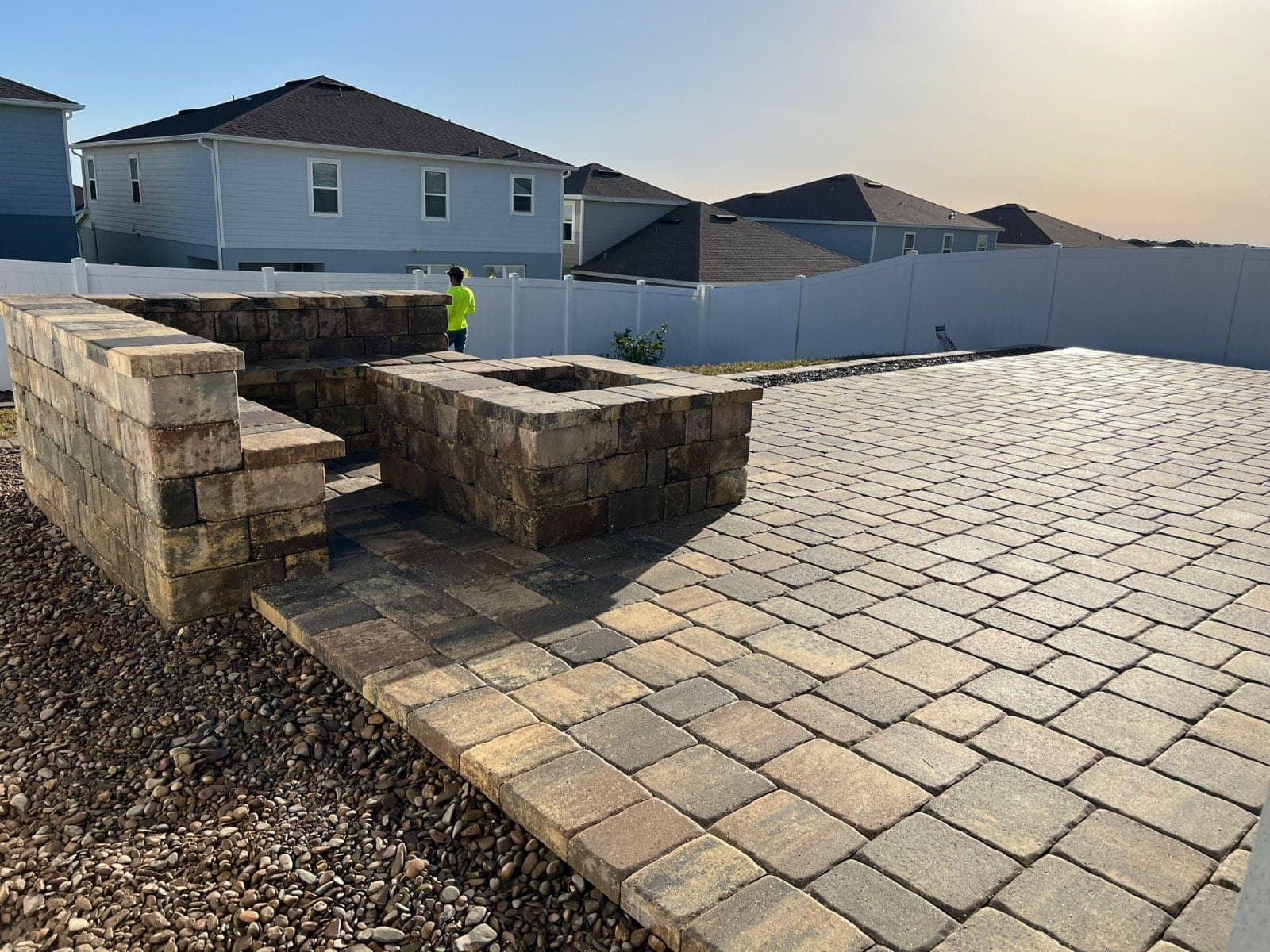
Patios are where outdoor living really comes together. Lakeland homeowners are building outdoor kitchens, fire pit seating areas, dining zones, and lounge spaces that rival what is inside the house. We design patios in shapes and sizes that match the yard and the homeowner's intended use, from compact bistro-style spaces on smaller lots to expansive multi-zone layouts that flow across larger properties. Material coordination between the patio, walkways, pool deck, and driveway creates visual continuity that makes the entire property feel designed rather than assembled piecemeal.
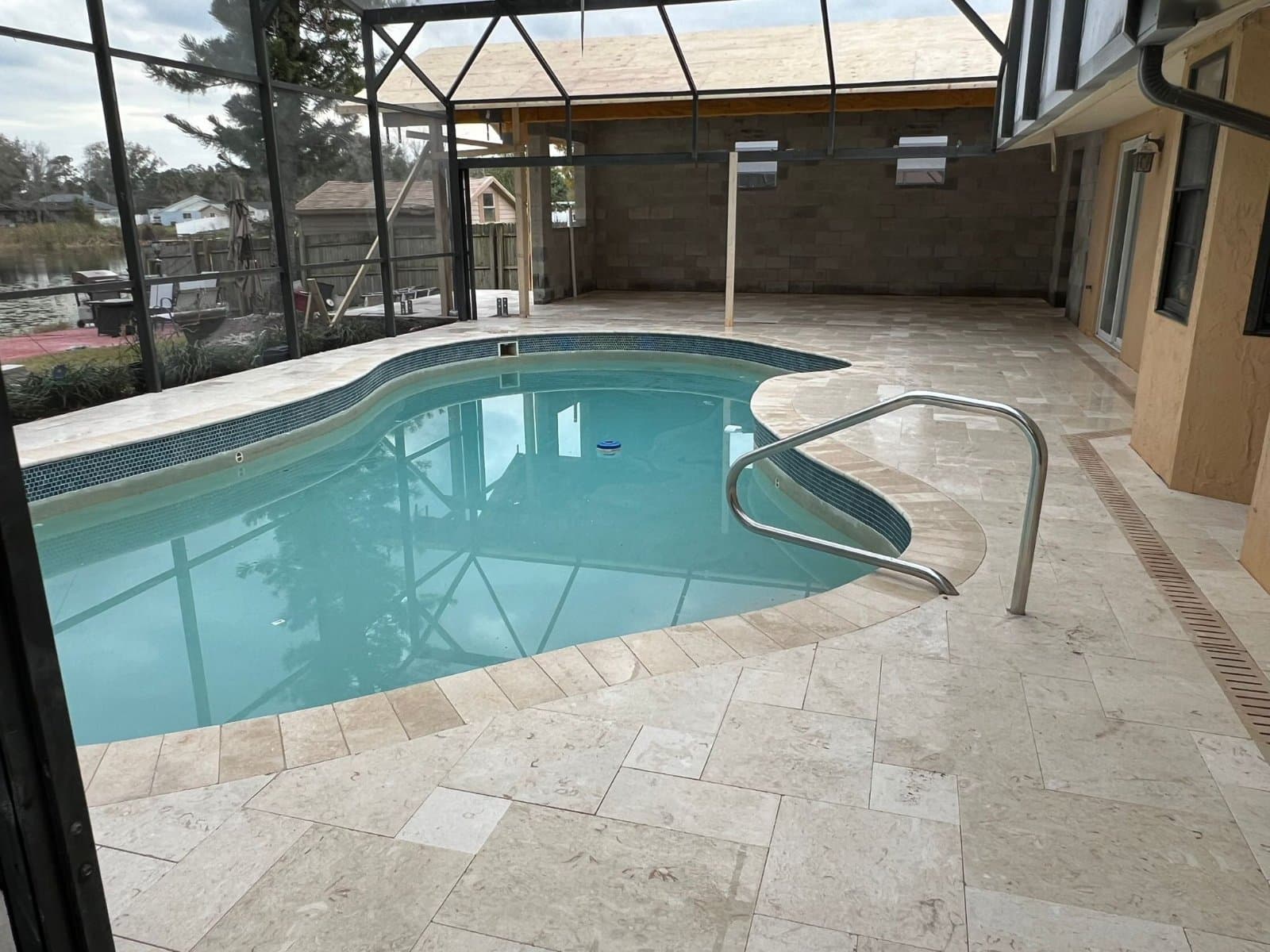
Pool deck installations are critical in a city where pools are nearly as common as garages. We build pool surrounds with materials selected for heat reflection, slip resistance, and durability against pool chemicals and constant water exposure. Travertine and light-colored concrete pavers are our top recommendations for pool decks. Both stay noticeably cooler under bare feet compared to darker materials or standard concrete, and their textured surfaces provide traction even when wet. Proper grading and drainage around the pool prevent water from pooling on the deck surface and redirect runoff away from the home's foundation.
Walkways, stepping stone paths, and garden borders round out our paver services. Sometimes the highest-impact project is the simplest one. Replacing a cracked concrete path from the sidewalk to the front door with a clean paver walkway takes a day or two and completely resets the curb appeal of the home. We match walkway pavers to existing or planned driveway materials so the front of the property presents a unified look that is noticeable from the street.
Retaining walls and raised planter borders are additional paver-related services we offer throughout Lakeland. Properties with grade changes, whether natural or created during construction, benefit from retaining walls that hold soil in place and prevent erosion during heavy rain events. We build these using segmental retaining wall blocks that interlock and stack without mortar, creating a strong, flexible structure that moves with the ground rather than cracking against it. Raised planter borders along driveways and patios add landscaping depth and create clean separation between hardscaped and planted areas. These features work together with the primary paver surfaces to create a fully finished outdoor environment.
Fence Installations Across Lakeland's Diverse Property Types
Lakeland's range of property types means fencing needs vary wildly from one project to the next. A quarter-acre lot in Cleveland Heights has completely different fencing requirements than a multi-acre property near the Kathleen Road corridor or a waterfront home on Lake Hollingsworth. KS Solutions installs vinyl, aluminum, wood, and chain link fencing and helps each homeowner select the right material, height, and style for their specific situation.
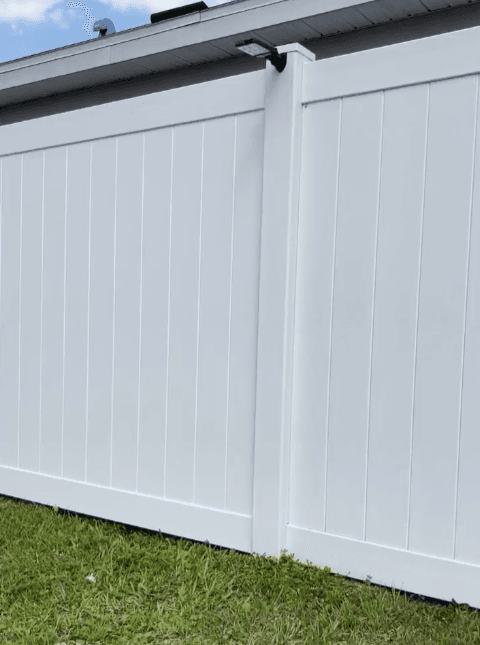
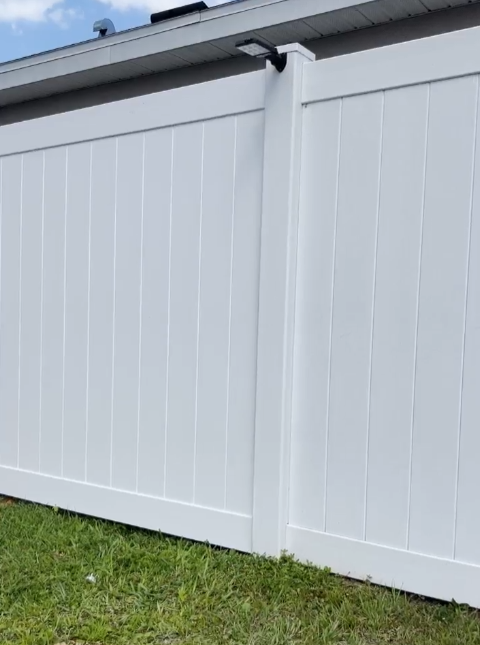
Vinyl privacy fencing accounts for the majority of our Lakeland installations. It checks every practical box for Florida homeowners: zero painting or staining, complete resistance to humidity and insect damage, solid color throughout the material so scratches disappear, and configurations that range from full privacy to semi-privacy with lattice tops. We install vinyl on posts set in concrete footings with spacing calculated for wind loads in Polk County, and we reinforce corners and gate openings with heavier posts that handle the additional stress these points receive.
Aluminum fencing is our recommendation for decorative boundaries, front yard accents, and pool barriers. The powder-coated finish resists corrosion, the open picket design maintains visibility, and the material never needs painting or treating. We install aluminum in black, bronze, and white, with ornamental options including scrolled picket tops, ring accents, and finial caps. Every aluminum pool fence we build complies with Florida's barrier code for height, picket spacing, and self-closing, self-latching gate requirements. If your property has a pool, compliance is not optional, and we handle it automatically.
Wood fencing appeals to Lakeland homeowners who value natural aesthetics above all else. We build with pressure-treated pine for budget-conscious projects and recommend cedar or cypress for properties where natural rot and insect resistance justifies the higher material cost. Horizontal board designs have surged in popularity across Lakeland because they deliver a contemporary, clean look that suits both new construction and renovated older homes. Shadow box configurations, where boards alternate on opposite sides of the rails, provide privacy while allowing airflow and creating an attractive appearance from both sides of the fence.
Chain link remains the practical workhorse for large lot enclosures, agricultural properties, and utility applications. We install vinyl-coated chain link in black, green, and brown to reduce the industrial look, and we add privacy slats or windscreen for homeowners who want visual screening. For properties with acreage near the rural edges of Lakeland, chain link delivers the most footage per dollar while standing up to Florida weather year after year.
Gate installations deserve their own mention. We build single swing, double swing, and sliding gates sized for every application from pedestrian access to equipment passage. Hardware selection is matched to the gate size and frequency of use, and we install self-closing mechanisms where required by code. Keyed locks, coded keypads, and remote-operated systems are all available, and we size every gate opening to accommodate the equipment and vehicles that Lakeland homeowners commonly need to move through their properties, from riding mowers to utility trailers to boats on trailers.
Lakeland, Florida: A City Built Around Its Lakes and Its History
Lakeland was not named carelessly. The city sits among 38 named lakes within its municipal boundaries, and that concentration of fresh water shaped everything about how this place developed. Abraham Munn, a Louisville, Kentucky businessman, purchased 80 acres of land in what is now downtown Lakeland in 1882. The railroad arrived in 1884, Munn platted his town, and Lakeland incorporated on January 1, 1885. By the mid-1890s, the train depot was handling about 25 stops per day, and the town was thriving with hotels, banks, churches, and new residential construction radiating outward from Munn Park.
Citrus made Lakeland prosperous. The railroad made transporting oranges and grapefruit to northern markets efficient, and by the early twentieth century, Lakeland had earned the title of the world's citrus center. Through the 1980s, the Lakeland area produced roughly 25 percent of the nation's citrus crop. That agricultural wealth funded the construction of the historic homes, commercial buildings, and civic structures that still anchor the city's seven historic districts and more than 1,600 documented historic buildings.
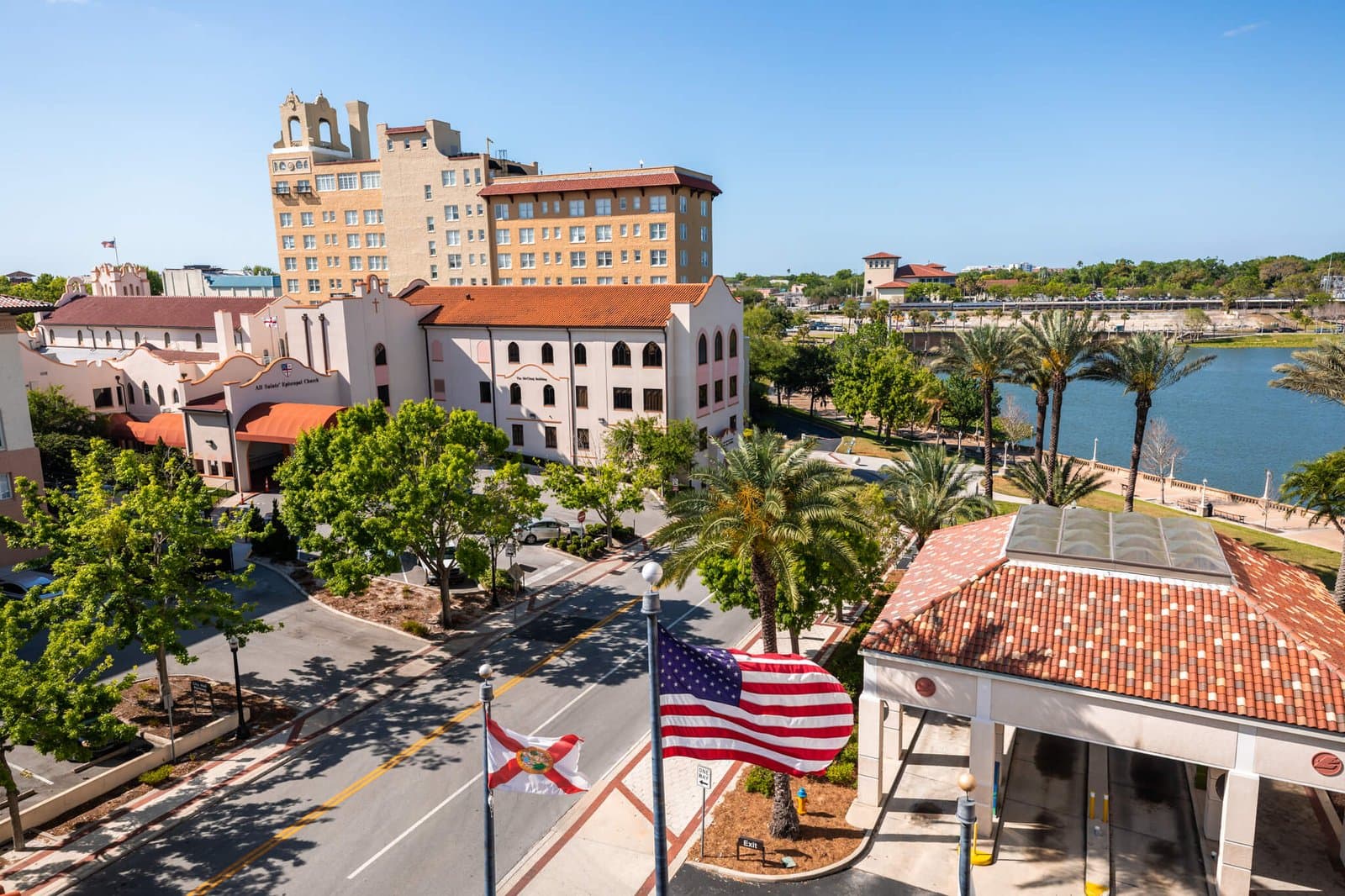
The 1920s Florida land boom pushed Lakeland's growth into high gear. Neighborhoods like Dixieland, established in 1907, filled in with bungalows, Tudor revivals, and Spanish-style homes. The Biltmore-Cumberland district took shape in 1925. South and East Lake Morton developed into a showcase of architectural styles that earned a spot on the National Register of Historic Places. Lake Hollingsworth attracted estate-level waterfront homes with Victorian, Mediterranean, and Craftsman details that command premiums in today's market. Each of these districts has its own identity, its own streetscape, and its own set of considerations when it comes to outdoor construction.
Florida Southern College added Lakeland's most internationally recognized feature when it commissioned Frank Lloyd Wright to design an entire campus in 1938. Over the next twenty years, Wright designed eighteen structures, twelve of which were completed during his lifetime. The campus is now designated a National Historic Landmark as the world's largest single-site collection of Frank Lloyd Wright architecture, featuring the iconic Annie Pfeiffer Chapel, the Water Dome fountain, and the Usonian Faculty House.
Modern Lakeland has evolved well beyond citrus, though agriculture remains part of the regional economy. Healthcare, retail, logistics, and education are now the dominant employment sectors, with the largest industries being retail trade, health care and social assistance, and accommodation and food services. The city's position along the Interstate 4 corridor between Tampa and Orlando gives it strategic economic and commuting advantages, and the Lakeland Linder International Airport provides commercial and cargo air service that supports business growth.
The climate plays its role in shaping the city's character too. Lakeland sits in USDA Hardiness Zone 9b, with average annual lows around 25 to 30 degrees and summer highs that frequently top 90. Annual rainfall totals about 50 inches, most of it arriving in dramatic afternoon thunderstorms between June and September. Winters are mild enough for year-round outdoor activity, with January afternoons regularly reaching the mid-70s. This subtropical climate is exactly why outdoor living is not a seasonal luxury here but rather a daily reality that justifies investing in quality hardscaping and fencing.
Recreation defines daily life here as much as work does. Lake Parker Park, Circle B Bar Reserve, the trails around Lake Hollingsworth, and the swan-filled paths at Lake Morton offer outdoor experiences steps from residential neighborhoods. The Detroit Tigers hold spring training at Joker Marchant Stadium, and the Lakeland Flying Tigers provide minor league baseball through the summer. The Polk Theatre, open since 1928 and one of the first air-conditioned venues in the area, hosts live performances and film screenings in a restored Art Deco setting. Downtown Lakeland's Munn Park district is home to restaurants, shops, and community events that draw residents from every corner of the city.
(321) 353-7445Get Immediate Service
The KS Solutions Process for Lakeland Homeowners
Working with us is simple because we built the process around what homeowners actually care about: getting straight answers, seeing clear pricing, and ending up with a finished product that looks and performs the way it was described. There is no bait-and-switch, no pressure-filled sales presentation, and no mysterious fees that show up on the final invoice. What you see in the proposal is what you pay, and what we describe in the design is what we build.
Everything starts with a free on-site consultation at your Lakeland property. We come to you, walk the areas you want to improve, and ask questions about how you use the space, what you want it to look like, and what problems you are trying to solve. We take measurements, evaluate soil and drainage conditions, and note any trees, utility lines, or existing structures that affect the project plan. If you have inspiration photos or a rough sketch, bring them along. If you have no idea where to start, that is fine too. We will guide you through the options based on what your property needs and what fits your budget.
The proposal comes with material recommendations, pattern options, a project timeline, and an itemized cost breakdown. We explain why we are recommending specific materials for your property's conditions, because a recommendation without context is just a guess. If travertine makes sense for your pool deck but concrete pavers are a better fit for your driveway, we explain the reasoning so you understand the value behind each choice.
Once you approve the plan, we schedule installation and handle permitting as needed. Lakeland has regulations governing fence height, setbacks, and construction standards, and Polk County adds its own layer of code requirements. We manage the paperwork, pull the permits, and schedule inspections so you do not have to deal with the bureaucratic process yourself. Permits add a few days to the front end of the timeline, but they protect you from violations and ensure the work is documented for your property records.
Our installation crews follow the plan precisely. Base preparation, material handling, pattern execution, drainage grading, and finish work all happen according to the specifications we discussed. We communicate with you throughout the process, especially if site conditions reveal something unexpected that requires an adjustment. No changes are made without your approval and without a clear explanation of the cost and timeline impact.
Final walk-through is the last step. We go over every surface, every joint, every fence panel, and every gate with you. We make sure everything meets your expectations and address any concerns on the spot. You receive maintenance guidelines tailored to your specific materials and Lakeland's climate, plus our contact information for any questions that come up after the project wraps. We do not close the book on a project until you are completely satisfied, and we stay available long after the installation is finished.
Long-Term Maintenance for Lakeland's Climate
Polk County's weather is the single biggest factor in outdoor surface longevity. About 50 inches of annual rainfall, with the bulk falling in afternoon thunderstorms between June and September, saturates the ground and tests every drainage system. Summer highs above 90 degrees and relentless UV exposure fade colors and break down inferior materials. Humidity fuels mold, mildew, and algae growth on any surface that stays damp. And the sandy Lakeland-series soil shifts and compacts unpredictably under seasonal moisture changes. Your maintenance routine needs to account for all of it.
Paver maintenance begins with the joints. Polymeric sand in the joints is what keeps the pavers locked together, prevents weed growth, and stops ant colonies from building in the gaps. After every summer storm season, walk your paver surfaces and look for areas where the sand has washed out or dropped below the surface. Refilling those joints is a quick task that prevents much larger problems. Left unaddressed, empty joints allow pavers to shift under foot traffic, weed roots to penetrate and lift individual units, and water to erode the bedding sand beneath.
Sealing is the second non-negotiable. A quality sealer protects against UV fading, blocks moisture penetration, resists biological growth, and enhances the natural color of the paver material. Most sealers perform well for two to three years in Lakeland's conditions before needing reapplication. The visual indicator is simple: when water stops beading on the surface and soaks in instead, the sealer has worn through and the pavers are exposed. Schedule a reseal before staining and discoloration set in.
Weekly debris removal prevents organic staining. Leaves, flower petals, grass clippings, and fruit that fall on paver surfaces decompose quickly in Florida's heat, and the tannins and acids they release leave marks on light-colored pavers that are difficult to remove once they set. A leaf blower pass once a week takes five minutes and saves you from a pressure-washing session later.
Fence care depends on material. Vinyl needs a wash two to three times a year. Warm water, a soft brush, and household detergent clean off dirt, pollen, and the algae film that builds during humid months. Aluminum requires even less: a periodic rinse and a hardware check. Wood is the high-maintenance option but rewards the effort with a look that synthetics do not replicate. Stain or seal every one to two years, check for rot at ground level, replace damaged boards before they weaken adjacent panels, and tighten any loose fasteners as they work themselves free from seasonal expansion and contraction.
Post monitoring rounds out the fence maintenance checklist. Monitor fence posts for leaning, especially after extended periods of heavy rain. Saturated sandy soil loses its ability to brace concrete footings, and even a slight lean puts stress on every rail and panel connected to the post. Early correction is inexpensive. Waiting until the lean pulls adjacent posts and panels out of alignment turns a minor fix into a major rebuild.
Ready to talk about your Lakeland property? Call KS Solutions at (321) 353-7445 to schedule your free consultation. We serve every neighborhood in the city and bring the same attention to detail whether the project is a front walkway or a full property transformation.