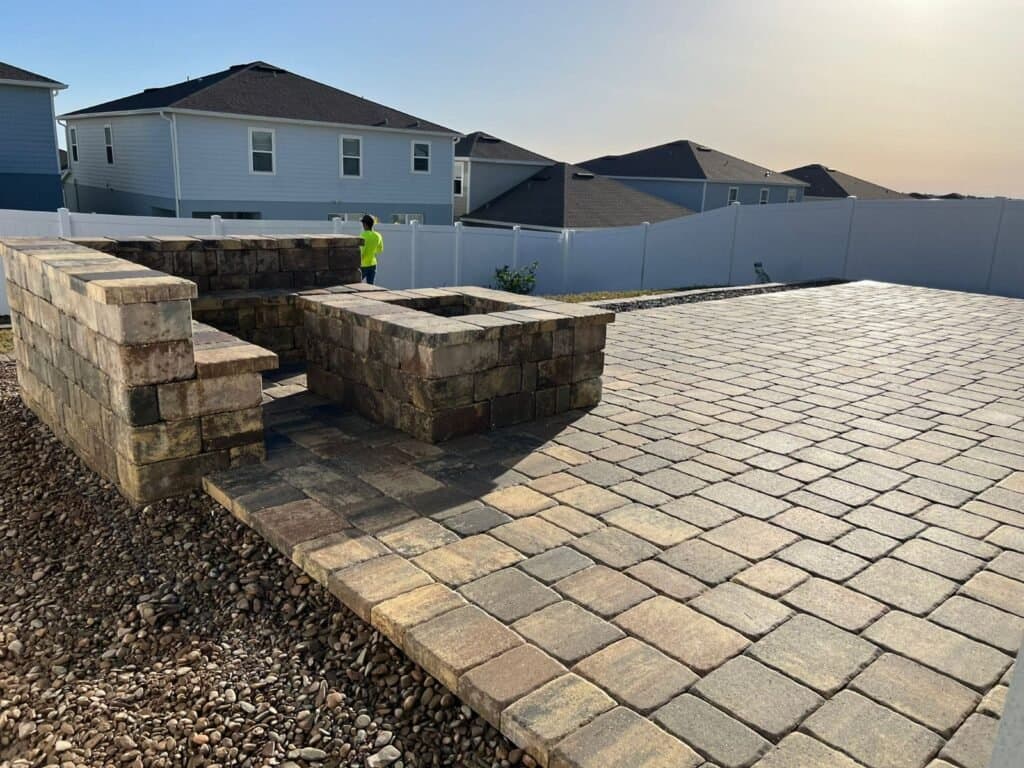
What Florida Code Actually Requires Within 4 Feet of the Water
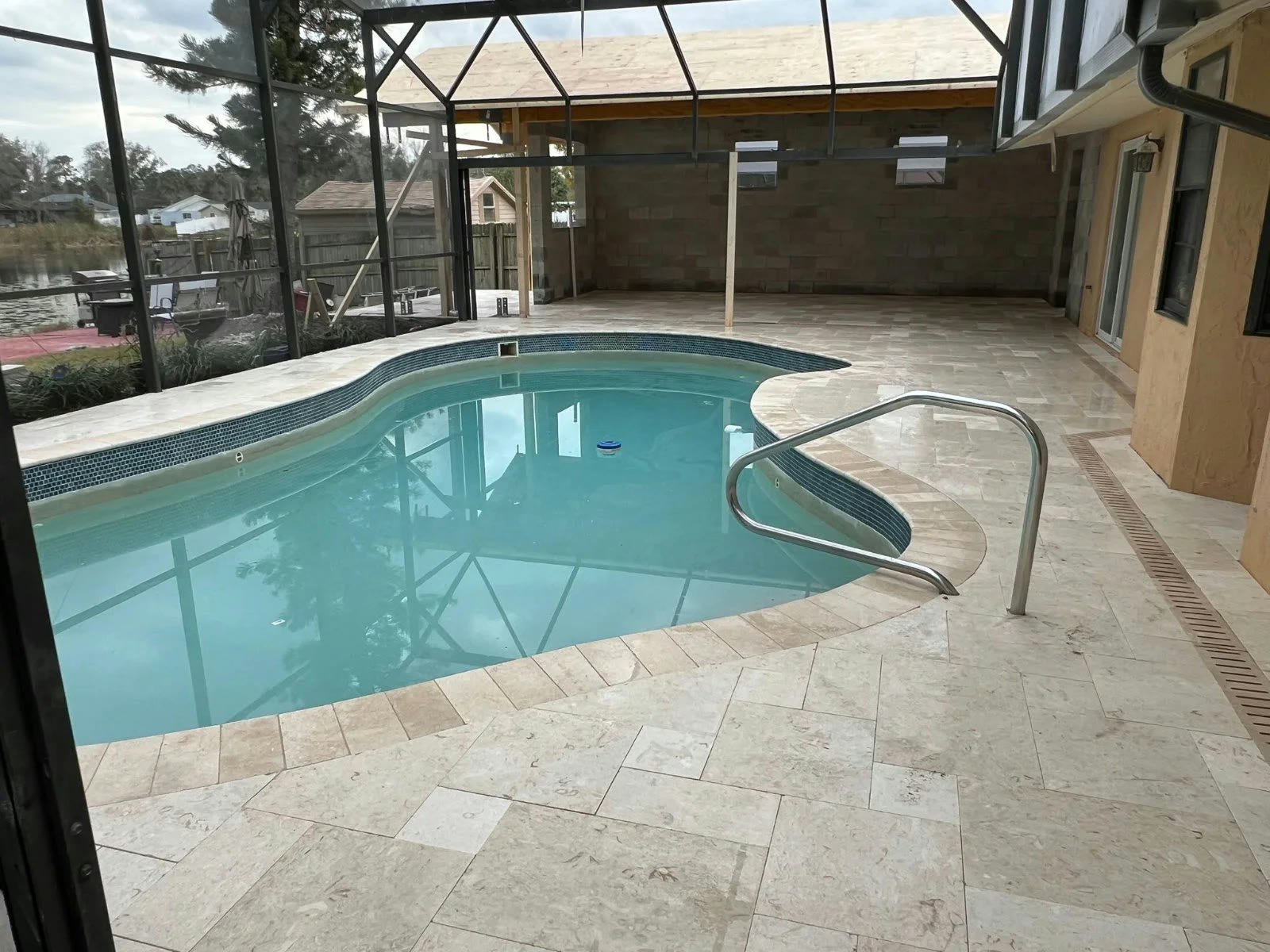
Start with the rule, because it is more specific than most homeowners realize. Walking surfaces of decks within 4 feet of a pool or spa are required to be slip resistant. That is a code requirement, not a preference, and it applies to the band of deck where people actually walk with wet feet.
For public and commercial pools, the Florida Building Code goes further and requires wet decks to be built of concrete or other nonabsorbent material with a slip-resistant finish. Residential decks are not held to the public pool standard, but the underlying physics are identical, and any competent installer treats the 4-foot band around the water as the critical zone.
Separately, Florida Statute 515.29 governs the residential pool barrier: at least 4 feet high measured on the outside, with no gaps, openings, indentations or protrusions that would let a young child crawl under, squeeze through or climb over. That statute is about the fence rather than the surface, but it shapes the deck project because the barrier and the deck have to be designed together. Where the barrier posts land, how the gate swings, and where the deck edge stops are all one drawing, not three.
The practical takeaway is simple. Slip resistance around the water is not an upgrade you can add later with a coating. It is a material selection you make before anything is ordered.
DCOF: The Number to Ask a Supplier For
Slip resistant is a word. DCOF is a number. Dynamic coefficient of friction, measured under the ANSI A326.3 standard from the Tile Council of North America, is how the industry quantifies how much grip a hard surface offers when it is wet. Higher is grippier.
A326.3 sorts products into use categories, each with its own minimum:
- Interior Wet: minimum wet DCOF of 0.42. This is the baseline for interior floors expected to be walked on wet, and it is the number most tile spec sheets publish.
- Interior Wet Plus: minimum 0.50. Public showers and interior pool decks fall here.
- Exterior Wet: minimum 0.55. This is the category an outdoor Florida pool deck belongs in.
- Oils and Greases: minimum 0.55, relevant to commercial kitchens rather than backyards.
So the question to ask a supplier is not whether a product is slip resistant. It is what the published wet DCOF is and which A326.3 category the manufacturer assigns it to. A product published at 0.42 is fine in a bathroom and marginal at the edge of a pool. A product at 0.60 or above with a textured face is what you want under wet feet in the sun.
Two caveats keep this honest. First, DCOF is a laboratory measurement on a clean sample, and a real deck accumulates algae, sunscreen and pollen, all of which reduce grip. Second, a heavy film-forming sealer applied over a textured surface can drop the effective friction well below what the bare product tested at. Both of those are maintenance decisions that can undo a good material choice.
The Three Categories That Pass Both Tests
A Florida pool deck has to clear slip resistance and surface heat at the same time. That combination narrows the field fast.
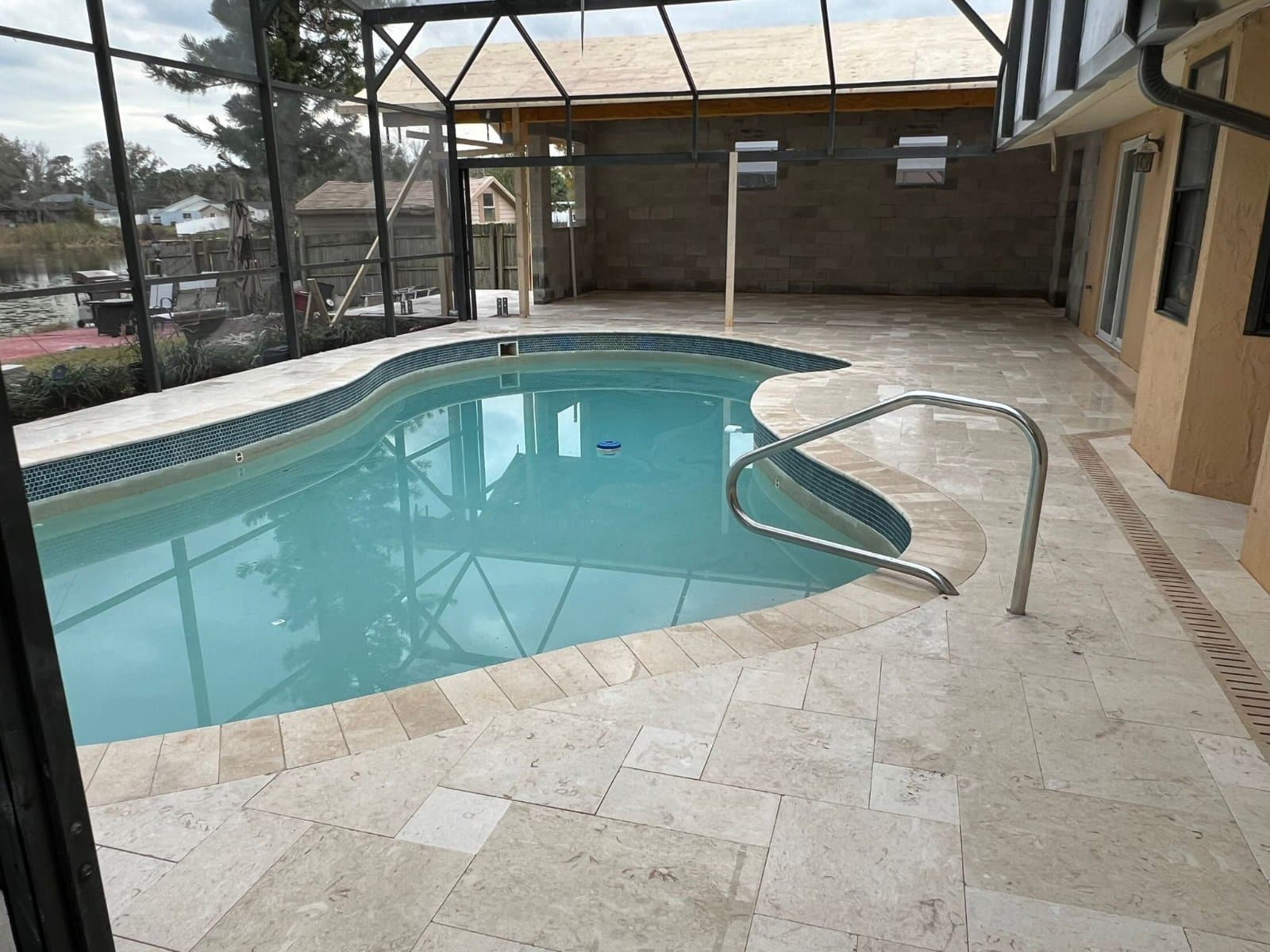
- Travertine: Naturally porous stone with a tumbled or brushed face. It is the traditional Florida pool deck material for two reasons: the open pore structure gives real grip when wet, and the light color keeps surface temperature meaningfully lower than dark alternatives. It wants a proper base and it does not tolerate being sealed with a glossy film.
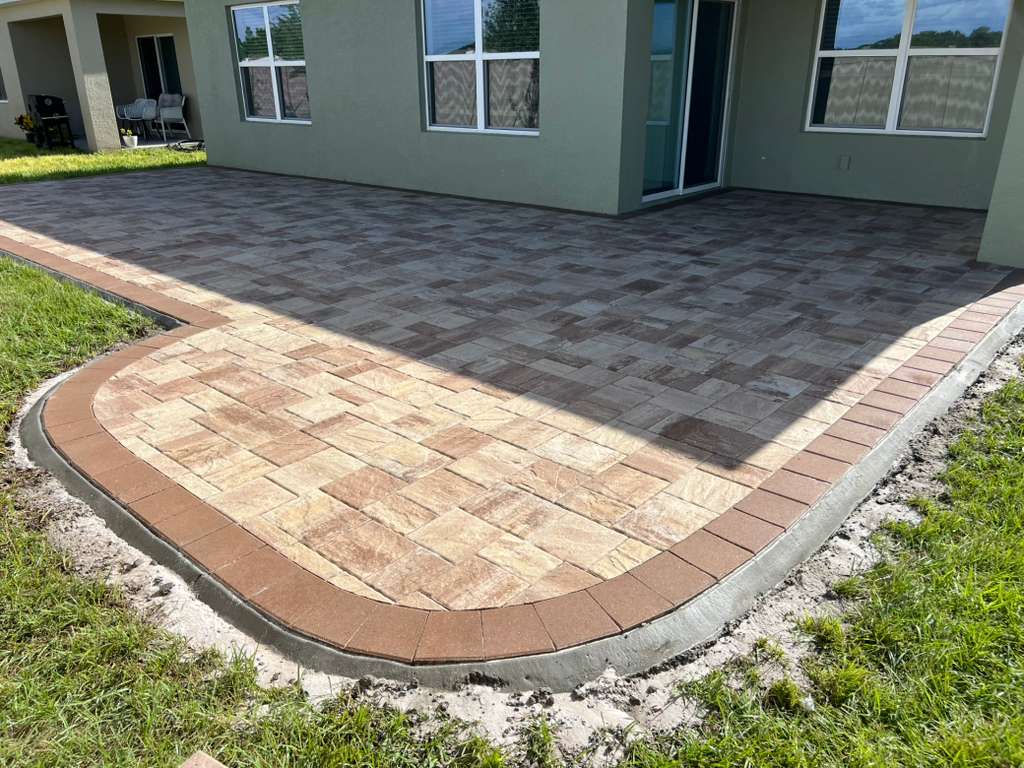
- Textured concrete pavers: Manufactured units in tumbled, shot-blasted or embossed finishes. The advantage is control, since the manufacturer publishes specifications, the units are dimensionally consistent, and lighter color blends are available specifically for pool decks. Cost is usually the lowest of the three.
- Textured porcelain pavers: Through-body porcelain in 2 cm thickness with a structured face, usually carrying an R11 or higher slip rating in the European system alongside a published DCOF. The face is dense and essentially non-absorbent, which resists staining, and the surface texture is engineered rather than incidental.
Between the three, the decision usually comes down to budget, look and how much maintenance you want. Travertine reads as natural stone and stays cool. Concrete pavers give the widest color and pattern range at the lowest cost. Porcelain resists stains and fading best and costs the most per square foot installed. We compared their heat performance side by side in travertine vs brick vs porcelain pavers in Florida heat.
What Quietly Fails on a Pool Deck
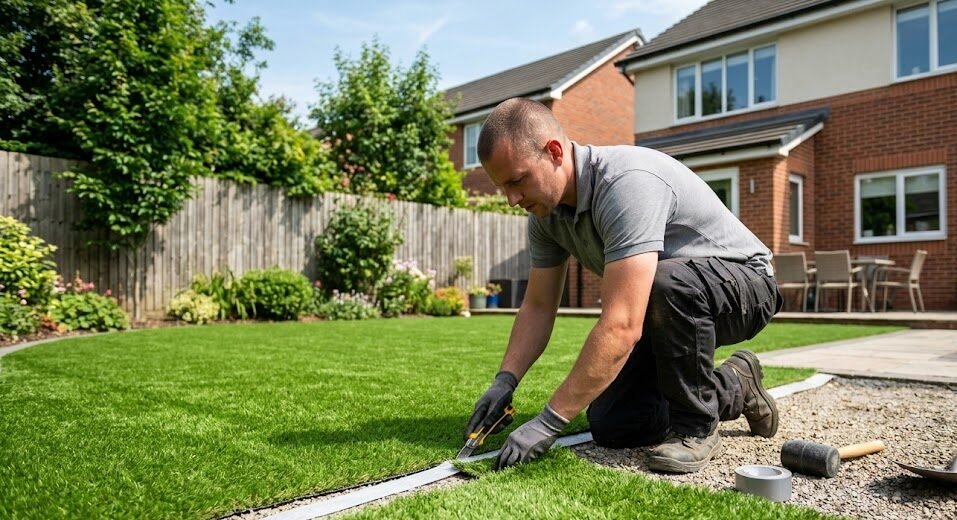
Some surfaces look right in a showroom and are the wrong call within 4 feet of water.
- Polished or glazed porcelain: Beautiful indoors, dangerous wet. If a tile has a glossy face, it does not belong at a pool edge regardless of what the color does for the design.
- Honed or polished marble: Same problem. Marble can work on a pool deck only in a tumbled or brushed finish.
- Smooth-face concrete pavers: The flat, sharp-edged architectural units that look excellent on a driveway have far less texture than their tumbled equivalents.
- Painted or heavily sealed concrete: A film-forming coating over a smooth slab is the most common slip complaint in Florida backyards, and it is usually the result of a resealing job rather than the original build.
- Dark colors anywhere in full sun: Charcoal and deep brown surfaces absorb far more solar energy than light gray, cream or tan. That is a comfort failure rather than a code failure, and it is permanent once installed.
There is a fourth failure mode that has nothing to do with the paver itself: a smooth, dense sealer applied by a pressure-washing crew that does not spec for pool decks. If a deck was fine for five years and suddenly feels slick, look at the last product applied to it before blaming the stone.
(321) 353-7445Get Immediate Service
Texture Vocabulary, Translated
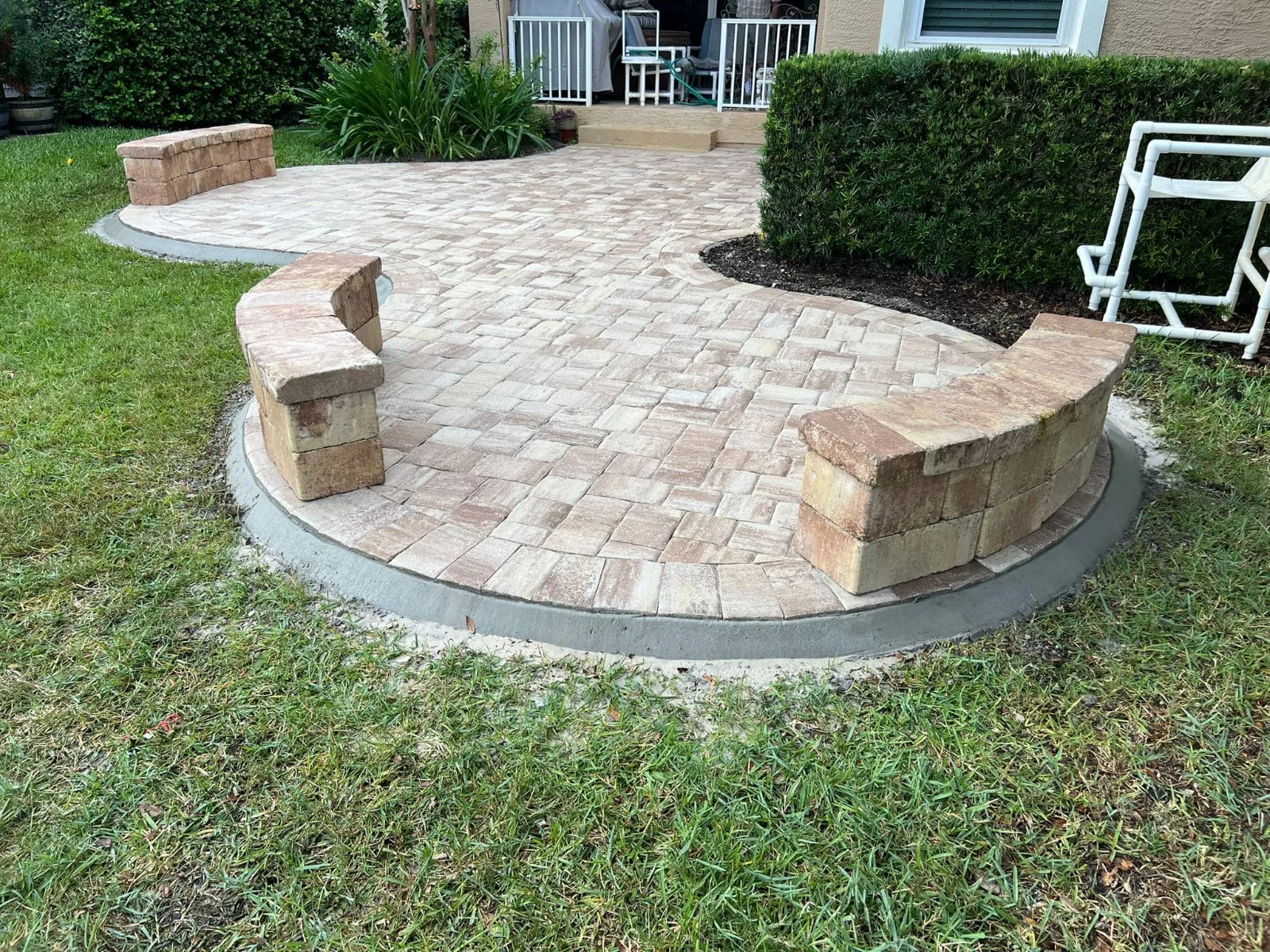
Suppliers use finish names that all sound similar and mean different things for grip.
- Tumbled: Units rotated in a drum to round the edges and roughen the face. Standard for travertine and a common pool deck option for concrete pavers.
- Brushed: Wire-brushed to open the surface without rounding the edges as heavily. Slightly more refined look, still textured.
- Shot blasted: Surface abraded with steel media, exposing aggregate and creating uniform micro-texture. Very consistent from unit to unit.
- Structured or grip face: Porcelain manufactured with an engineered relief pattern. This is the finish that carries the high slip ratings on porcelain pavers.
- Chiseled edge: An edge treatment, not a face treatment. It affects appearance and comfort at the coping, not slip resistance across the field.
When comparing quotes, confirm the finish name in writing. Tumbled travertine and honed travertine are the same stone at very different levels of grip, and a quote that says only travertine has told you nothing about how the deck will behave wet.
Base and Drainage: Where Florida Pool Decks Actually Fail
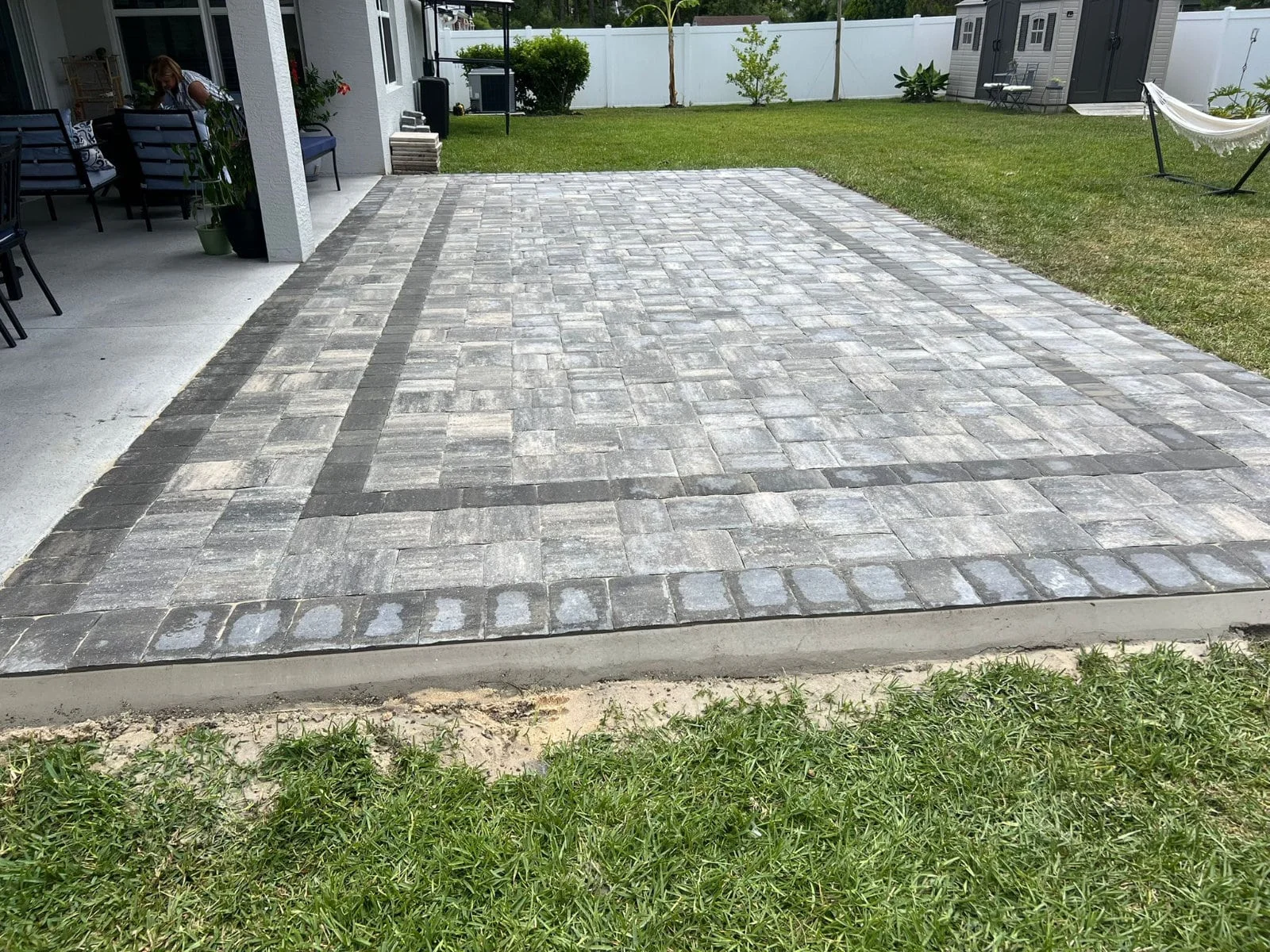
Most pool deck complaints in Central Florida are not material complaints. They are base complaints. Sandy soil moves, irrigation and rainfall move it faster, and a deck built on an inadequate base settles unevenly no matter how good the surface is.
A pool deck adds two problems a patio does not have. The first is constant water, splash-out during use plus roughly 7 to 8 inches of rain per month across the June to September wet season. The second is the pool structure itself, since the deck ties into the bond beam and any differential settlement shows immediately as a lip at the coping.
- Compacted base: Properly graded and compacted aggregate base, placed in lifts, is what keeps the deck flat. This is the layer nobody sees and the one that decides the outcome.
- Slope away from the pool: The deck should shed water away from the water, not toward it. A deck that drains into the pool pushes dirt, fertilizer and debris into the water with every storm.
- Deck drains where the grade cannot do it alone: Screen enclosures, elevated patios and tight side yards often need a drain line rather than surface slope alone.
- Joint stabilization: Sand-set pavers need jointing material appropriate to constant wetting. Polymeric sand behaves differently in Florida humidity than in dry climates, which is worth specifying deliberately.
- Edge restraint: Without proper restraint at the free edges, the field spreads over time and joints open. On a pool deck the coping holds one side, but the outside perimeter still needs restraint.
This is why the base specification belongs in the quote. A written scope that names base depth, compaction and jointing material is a different product from a per-square-foot number with no build-up described. The same principle drives cost on every hardscape project, which we broke down in what actually drives brick paver cost in Florida.
Salt Systems, Chlorine and Sealers
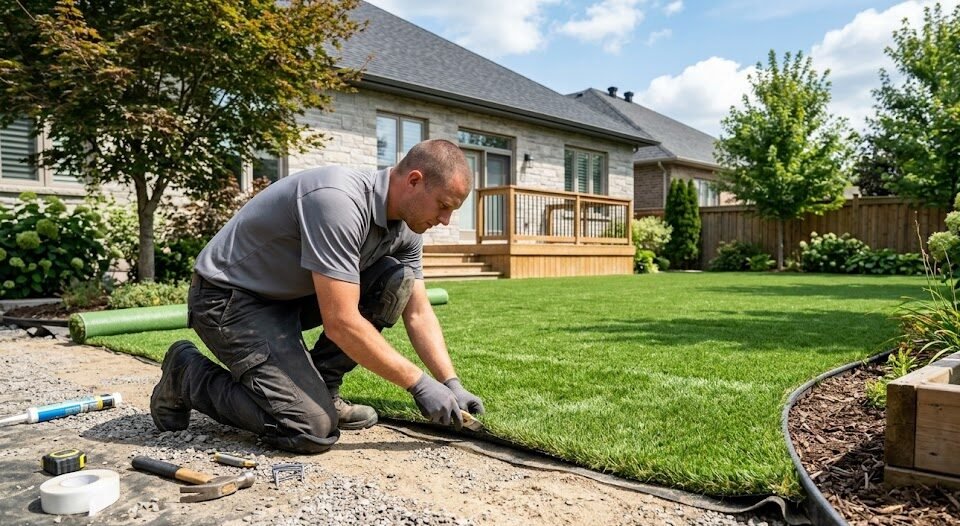
Saltwater chlorine generators are common on Florida pools, and salt exposure is a genuine material consideration on the deck around them. Salt crystallizes as splash-out evaporates, and repeated crystallization stresses porous surfaces and jointing material more than fresh water does.
The practical response is not to avoid a salt system. It is to rinse the deck periodically with fresh water, particularly in the splash zone, and to choose jointing and sealing products rated for that exposure. Dense surfaces such as porcelain are least affected. Travertine and concrete pavers handle it well when the joints are maintained.
On sealing, the rule for pool decks runs opposite to driveways. On a driveway, a wet-look film-forming sealer is a legitimate aesthetic choice. On a pool deck it is a slip hazard. If you seal a pool deck at all, it should be a penetrating sealer that soaks in rather than a topical one that builds a film, and the product should be specified as suitable for pool decks by the manufacturer.
Travertine in particular is often better left unsealed or treated only with a breathable penetrating product. Sealing porous stone with the wrong chemistry traps moisture, which produces exactly the cloudy, blotchy appearance homeowners were trying to prevent.
Coping and the Transition Edge
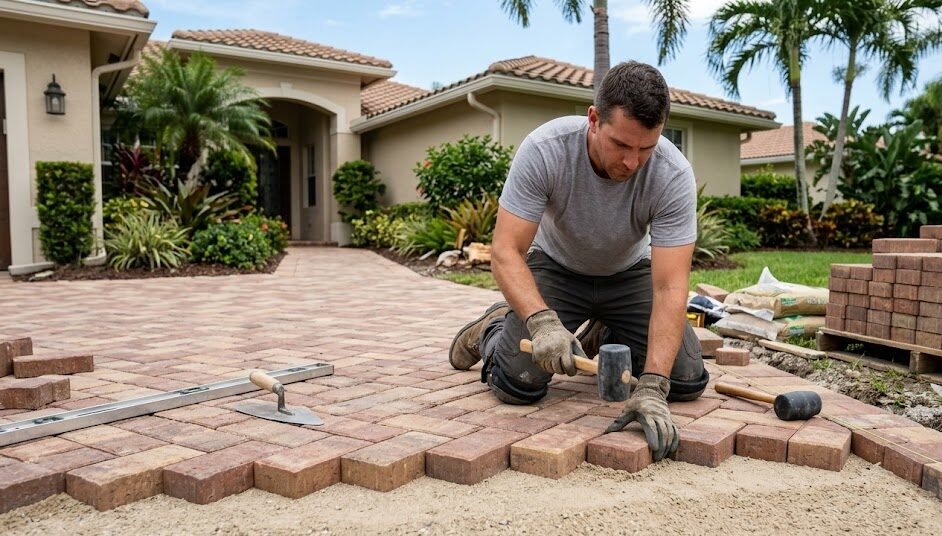
The coping is the capped edge between the water and the deck, and it does three jobs at once: it finishes the pool shell, it provides a hand grip at the waterline, and it sets the transition where wet feet leave the water. It is also the most trafficked wet surface on the entire project.
Bullnose coping, with a rounded front edge, is standard because it is comfortable to grab and to sit on. What matters for safety is the top face texture, which should be at least as slip resistant as the field paver and preferably more.
Material matching matters here as well. Travertine coping with travertine deck, or a manufactured coping designed by the same maker as the field paver, keeps the profile and thickness consistent. Mixed systems create height differences at the most sensitive point on the deck, which is both a trip hazard and the first place a deck looks poorly built.
Overlay Versus Tear-Out on an Existing Concrete Deck
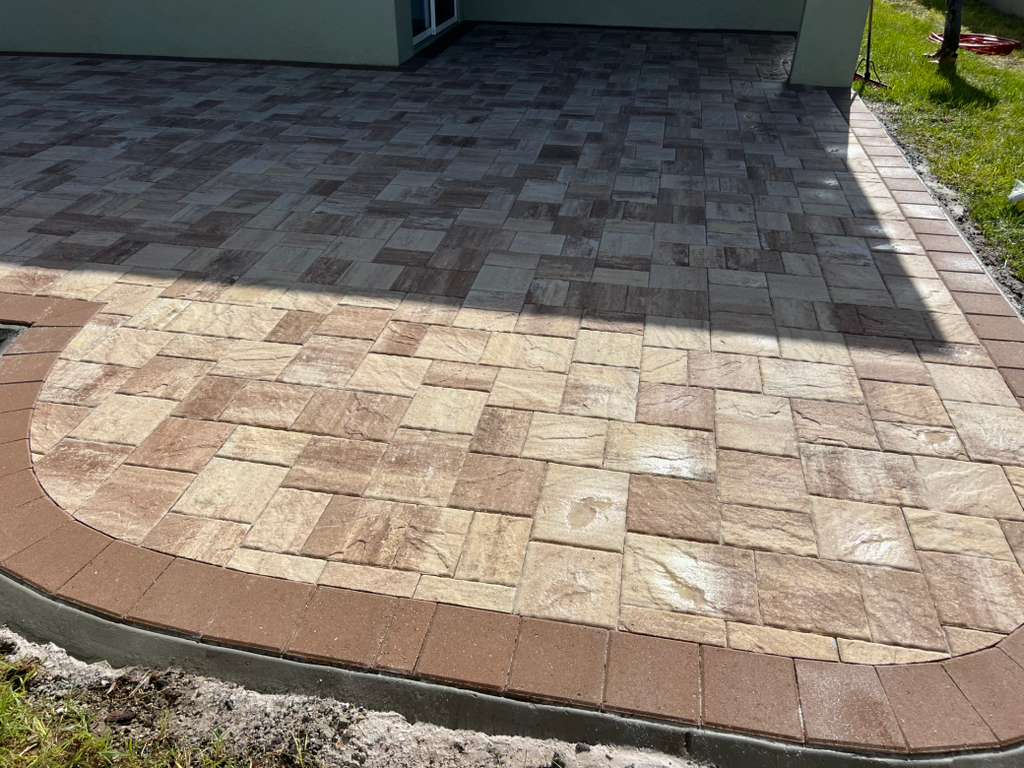
Many Florida homes already have a concrete pool deck that is structurally sound and cosmetically finished. Two paths exist from there.
- Overlay: Pavers set over the existing slab with a bonded or sand-set method. Cheaper, faster, and less disruptive. It only works when the slab is sound, drains correctly, and the resulting height increase does not create problems at door thresholds, screen enclosure tracks or the coping line.
- Tear-out and rebuild: Remove the slab and build a properly based paver deck. More expensive, more disruptive, and the right answer when the slab is cracked, settled, or draining toward the pool.
The height check decides this more often than the cost does. Adding pavers over a slab raises the deck by the paver thickness plus setting bed, and if that lands above a sliding door threshold or fouls a screen enclosure track, the overlay is not viable regardless of budget.
Permits, Enclosures and Sequence
Hardscape permitting varies by jurisdiction, and pool deck work interacts with other regulated systems. If the project touches the barrier, modifies the enclosure, changes drainage, or alters impervious surface coverage, there is likely a review to clear. Confirm it locally before scheduling, because a stop-work order in the middle of a deck is expensive in both time and material staging.
Sequence matters too. If a screen enclosure is coming, the deck usually goes first so the enclosure track sets on the finished surface. If the barrier is being replaced, coordinate the post locations with the paver layout so cuts land cleanly instead of at random points across the field.
We install pool decks throughout Central Florida, including Orlando, Lakeland and Winter Haven, and the local review requirements are one of the first things we check on any project.
Maintenance That Keeps the Deck Passing
A pool deck that was slip resistant on day one stays that way with a modest routine. The enemy is biological growth, not wear.
- Rinse the splash zone regularly. Fresh water removes salt and chlorine residue before it crystallizes in the joints.
- Treat algae early. Shaded sections on the north side of a house grow a thin biofilm that is nearly invisible and dramatically slick. A mild cleaner and a stiff brush handle it. Do not wait for it to darken.
- Pressure wash carefully. Excessive pressure blows out joint sand and erodes softer stone faces. Wide fan tip, moderate pressure, and rejoint afterward.
- Rejoint when you see sand loss. Open joints let the field shift, and shifting is what produces the trip lips that show up years later.
- Reseal only with a pool-deck-appropriate product. If a contractor proposes a wet-look finish on a pool deck, ask for the DCOF of the sealed assembly before agreeing.
Done consistently, that routine costs an hour a month and preserves both the appearance and the grip. Skipped for two years, it produces exactly the slick, stained, settled deck that gets blamed on the paver.
Planning a Pool Deck the Right Way Around
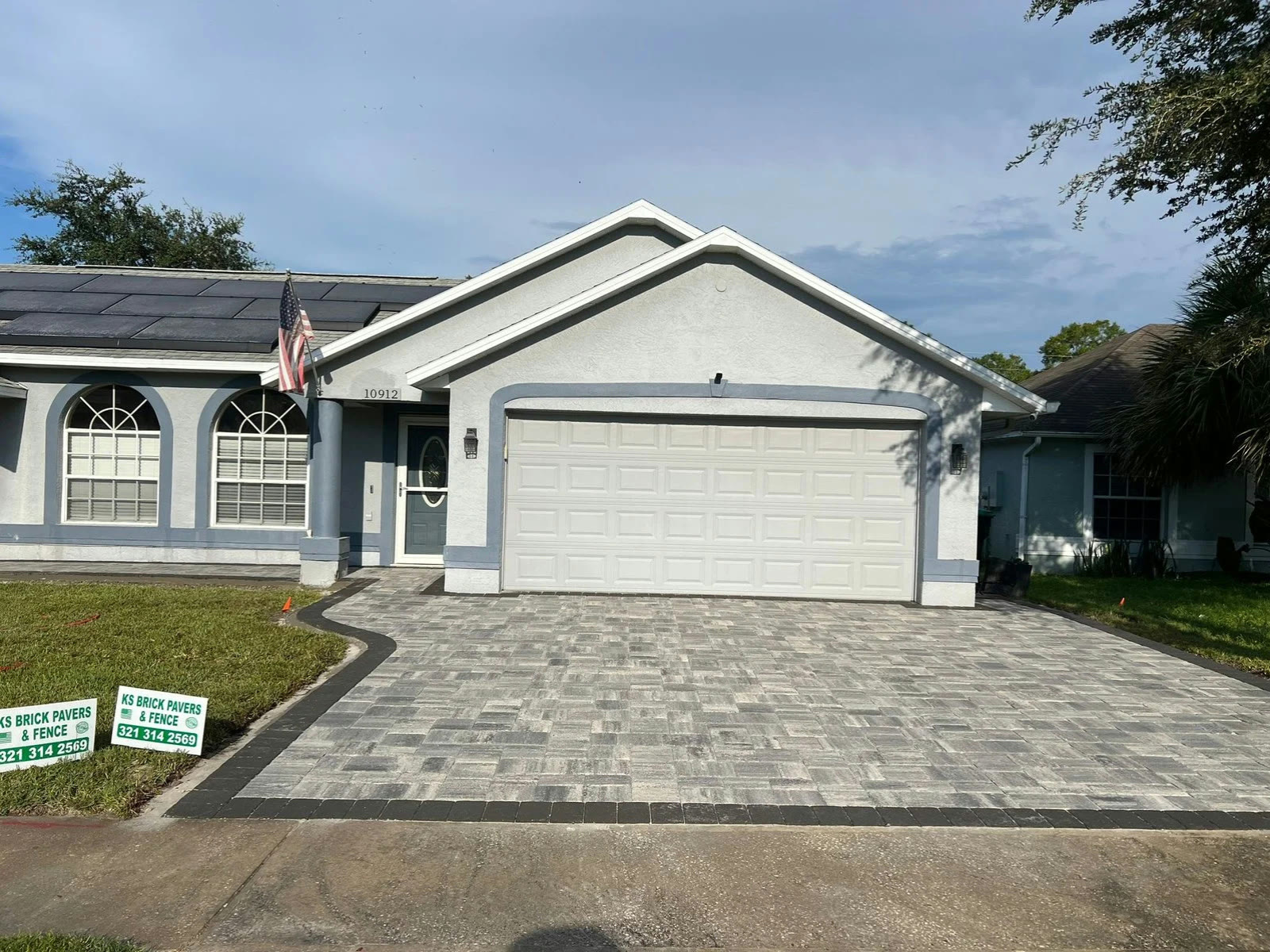
The order that produces a good Florida pool deck is unglamorous: confirm the code requirement in the 4-foot band, pick a material with a published DCOF appropriate to exterior wet use, choose a light color and a real texture, specify the base and the drainage in writing, and set the maintenance expectation before installation rather than after.
KS Solutions installs pool deck pavers, driveways, patios, fencing and turf across Central Florida, and every pool deck we quote starts with the slope and the base rather than with the color. See our pool deck paver installation and brick paver installation services for how we scope the work, and reach out for a free on-site assessment of your deck.