Wet Look and Matte Are Not Two Shades of the Same Product
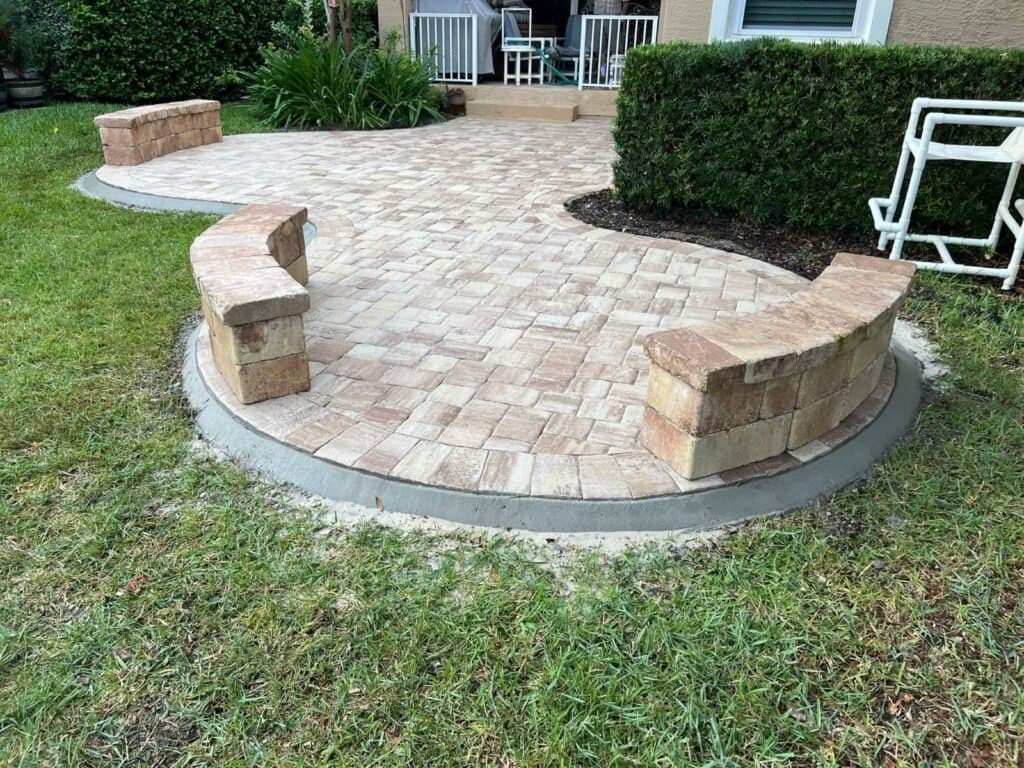
Homeowners shop this decision like a paint sheen. Flat or gloss, pick the one you like, same can underneath. That is not what is happening. A wet-look finish and a true matte finish are usually two different chemistries doing two different jobs, and the choice locks in your maintenance schedule, your slip behavior around the pool, your color for the life of the deck, and how much it will cost to change your mind.
The short version: a wet look requires a film sitting on top of the paver. Matte can be a film with the shine taken out of it, or it can be a penetrating sealer that goes into the pore and leaves the surface looking untouched. Those two matte options behave nothing alike, which is why so much online advice about matte contradicts itself.
This guide is about which finish to choose and why, surface by surface. If your question is when to seal a new deck and how often to reseal it, that is a different question with a different answer, and it is covered in sealing pavers in Florida.
The Chemistry That Actually Drives the Decision
There are two families of paver sealer, and the finish you see is a byproduct of which family you are in.
Film-forming acrylics, the wet-look family
An acrylic sealer leaves a visible protective film on the surface. That film is what produces the wet look, the deepened color, and the gloss. It is also what locks the joint sand in place at the top of the joint, which is a real functional benefit people forget to credit. Acrylics come water-based or solvent-based, with solvent-based delivering the strongest color pop on tumbled pavers.
Penetrating silane and siloxane, the natural-look family
A penetrating sealer works entirely below the surface and leaves the surface exposed. It repels water from inside the pore. It will not enhance color and it will not add sheen. A deck sealed this way looks almost exactly like an unsealed deck, which is the entire point for some homeowners and a disappointment for others who expected their pavers to look new.
The durability difference between the two families is the number most homeowners have never been told, and it is large:
| Film-forming acrylic | Penetrating silane or siloxane | |
|---|---|---|
| Where it sits | On top of the paver as a visible film. | Inside the pore, below the surface. |
| Look it produces | Wet look, gloss or satin. Deepens color noticeably. | Natural. No color change, no sheen. |
| Typical reseal interval | Every 6 months to 3 years depending on the product and exposure. | Every 5 to 7 years. |
| Joint sand | Locks the top of the joint. Helps hold sand against rain and blowers. | Does nothing for joint sand. The sand is on its own. |
| Failure mode | Whitening, blushing, peeling, roller marks, sticky spots. | Quietly stops working. No visual drama, just water absorbing again. |
| Reversibility | Requires chemical stripping to remove or change. | Nothing to strip. You can switch to anything later. |
| Slip behavior wet | Can get slick, and gets slicker with each added coat. | Leaves the native surface texture untouched. |
Read that reseal row again, because it reframes the whole choice. Picking a wet look is not picking a look. It is signing up for a recoat cycle measured in single-digit years, permanently. Picking a penetrating matte is choosing a longer interval and giving up the color enhancement entirely.
Matte Is Two Different Products, and the Label Will Not Tell You Which
This is where people get burned, so it is worth being precise. When a contractor quotes a matte or natural finish, you may be getting either of the following:
- A matte acrylic. Still a film. Still locks joint sand. Still enhances color somewhat, just without the shine. Still needs recoating on the acrylic schedule. Still has to be stripped to change.
- A penetrating silane or siloxane. No film, no color change, longest interval, nothing to strip later.
Those are very different purchases hiding behind the same word on a proposal. Before signing, ask one question: is the product film-forming or penetrating? A contractor who cannot answer immediately is not the one to seal your deck. Ask for the product name and look at the technical data sheet, which states it plainly.
Our general guidance: if you want a natural look, buy a genuine penetrating sealer rather than a matte acrylic. You get the long interval that justifies the natural look. A matte acrylic sits in an awkward middle, carrying the acrylic maintenance schedule without the visual payoff that makes people accept that schedule.
The Color Question, and the Test That Settles It in Two Minutes
The most common regret we hear about is color, not gloss. A wet-look sealer darkens pavers significantly, often by what looks like two or three shades, and it saturates the color variation in a tumbled or blended paver so the darker units get noticeably darker. On a blended paver with charcoal in the mix, this can shift the whole deck from warm to moody.
There is a free test that predicts this almost exactly. Take a bucket of water and soak a two foot square patch of the deck in a spot you can live with, in full daylight. What you see while that patch is wet is very close to what a wet-look sealer will give you permanently. Photograph it next to the dry area and sit with it for an afternoon.
Do the test at the time of day when you actually use the space. A pool deck that looks rich and dramatic at 6pm can look almost black under noon sun, and a driveway that looks luxurious in the shade can look wet and dirty from the street. If you are still choosing paver color and pattern, the finish decision interacts with that choice and it is worth reading brick paver colors and patterns in Florida first.
(321) 353-7445Get Immediate Service
The Pool Deck Is Where This Decision Stops Being Cosmetic
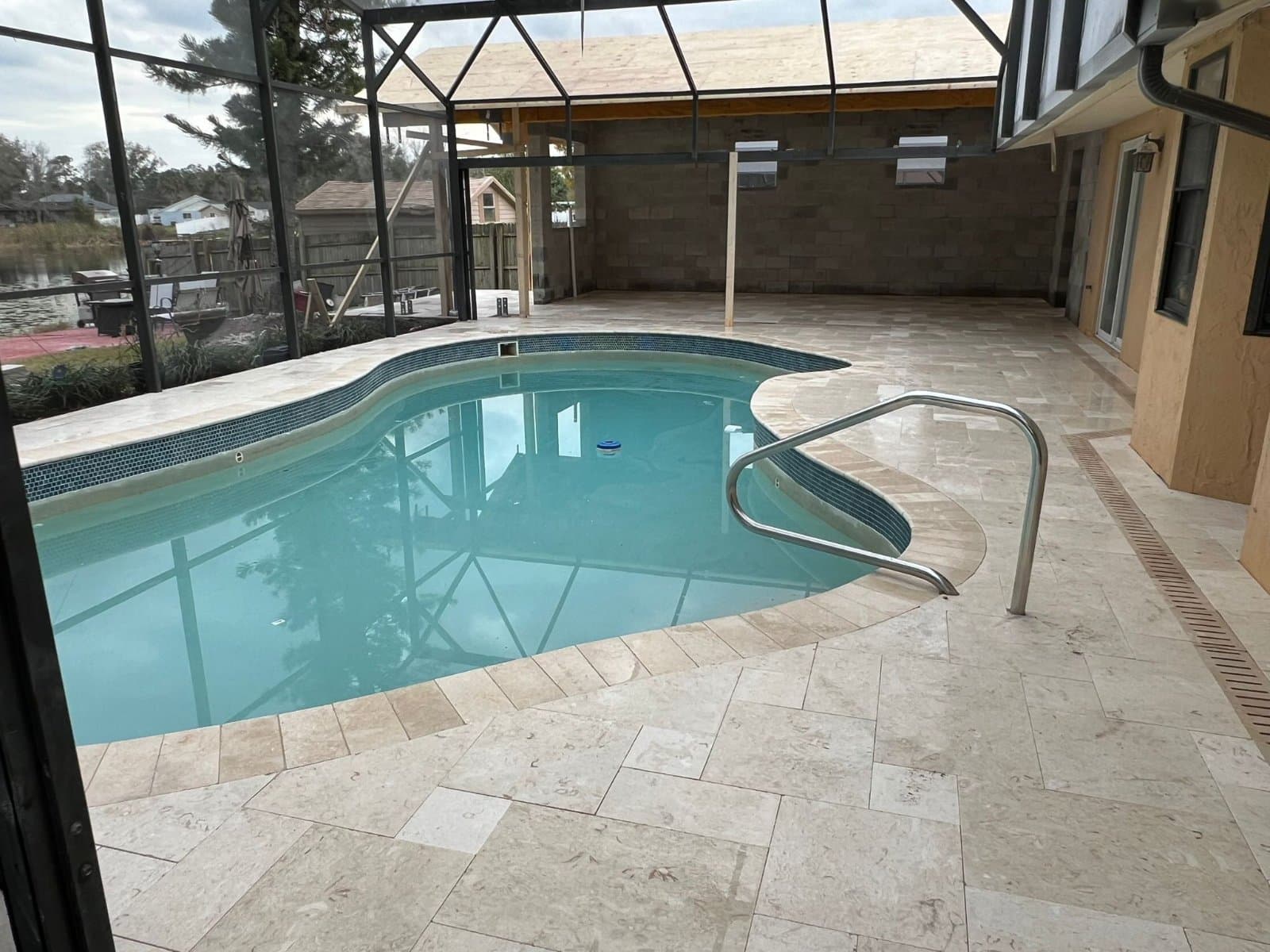
If the surface is around a pool, slip resistance outranks every other consideration on this page, and film-forming gloss works against you in a specific, physical way.
A film smooths the microtexture of the paver surface. The more sealer that goes down, the smoother and slicker the result gets, and each additional coat compounds it. Add a wet bare foot and you have engineered a hazard into a surface that was fine before it was sealed. For reference on how serious the gap can be, stamped concrete with a release agent and a standard sealer has been measured as low as 0.25 to 0.35 DCOF wet, well under the threshold generally treated as safe for pool decks, and the fix in that industry is an anti-slip additive that brings it back above 0.60.
If you want gloss around a pool anyway, the additive is not optional:
- Aluminum oxide grit broadcast into the sealer coat is the most effective option, because broadcasting gives the heaviest and most even coverage.
- Micronized polymer grit mixed into the sealer is the more common contractor approach and is easier to apply evenly, with slightly less bite.
- Fine silica is the budget version and is the one most likely to settle in the bucket if the applicator stops stirring.
- How it works: the particles stand slightly proud of the film and break the water film under your foot, restoring grip that the sealer removed.
- What to specify: additive in the final coat, applied to the whole deck, not just the perimeter. Ask for it in writing on the proposal, because it is the first line quietly dropped to hit a price.
The alternative is simply the better default for most pool decks: a penetrating sealer that leaves the native texture alone. You give up the color pop and keep the surface you chose the paver for. More on the surface itself in pool deck pavers in Florida.
Driveways: Hot Tires, and Why Water-Based Is Not Automatically Safer
A driveway is the one surface where the wet look usually wins on merit. The color enhancement is dramatic on a tumbled paver, the film holds joint sand against tire scrub and blowers, and a driveway is where a deck most obviously looks either maintained or neglected from the street.
The variable that matters here is hot tire pickup. A tire that has been on Florida asphalt in August comes home hot, sits on the sealer, and can soften the film enough to lift it when the car pulls out. The result is a pale patch exactly where each tire parks. Solvent-based acrylics remain the standard answer for driveways for this reason, along with their stronger color pop on tumbled pavers.
What to ask your contractor, in order: is the acrylic rated for vehicular traffic and hot tire exposure, how many coats, and what is the cure time before a car goes back on it. Rushing the cure is the most common cause of tire marks in the first season, and it is entirely an installer decision, not a product defect. The wider driveway economics are in paver versus concrete driveway in Florida.
How Each Finish Fails, and What the Repair Costs
Both families fail. They just fail differently, and the difference is visible from the street in one case and invisible in the other.
Film failures, the ones you can see
- Whitening or blushing. The most common Florida sealer complaint. Moisture gets trapped under or inside the film, and when it tries to evaporate the coating turns whitish. The two usual causes are sealing over a deck that was not fully dry and sealing over efflorescence that was never removed.
- Peeling and flaking. Film applied too thick, or applied over a previous incompatible coating, or over a surface that still held cleaner residue.
- Roller marks and streaks. Application technique, usually a film that started setting before the wet edge was maintained. Visible forever in raking afternoon light.
- Tire lift. Covered above. Pale rectangles where the cars park.
- Sticky surface. Too much product, not enough evaporation, usually applied in humidity that was too high.
Penetrating failures, the ones you have to test for
A penetrating sealer does not peel or whiten. It simply stops repelling water. The test is trivial: pour a cup of water on the surface and watch. Beading means it is working. Darkening and soaking in within a few seconds means it is spent. Because there is no visual cue, this is the finish where homeowners let coverage lapse for years without noticing.
What fixing it costs
Stripping a failed film is its own line item. Expect roughly $0.75 to $1.50 per square foot to strip, on top of the cost of the new seal job. For context, paver sealing in Florida generally runs about $1.25 to $3.50 per square foot in 2026, which means a failed wet-look job can nearly double the cost of getting back to where you started. A penetrating sealer has nothing to strip. That asymmetry belongs in your decision.
If the whitening is on a newer deck, check whether it is actually sealer failure or efflorescence surfacing through, because they look similar and are treated very differently. That distinction is walked through in paver efflorescence in Florida.
Which Finish for Which Surface
Here is how we specify it when a client asks us to just make the call.
| Surface | Our default | Why |
|---|---|---|
| Driveway, tumbled or blended paver | Wet-look solvent-based acrylic | Color payoff is highest, joint sand needs the help, and it is the surface judged from the street. |
| Pool deck | Penetrating, or matte acrylic with a grit additive | Wet feet plus a smooth film is the wrong combination. Texture beats shine here. |
| Covered lanai | Matte or penetrating | No UV to protect against and no rain to repel, so the film buys little, and gloss shows every footprint under low light. |
| Walkways and entries | Satin or matte acrylic | Middle ground. Some color, less glare, moderate traffic. |
| Travertine | Penetrating | Travertine is chosen for a pale matte stone look and cool surface. A wet-look film argues with both. |
| Porcelain pavers | Nothing at all | Porcelain is effectively non porous. There is nothing for a sealer to penetrate and a film will sit on top and eventually fail. |
| Shaded patio | Penetrating | Lowest UV load, longest interval, least reason to take on the acrylic maintenance cycle. |
Material matters as much as location in that table. If you are still deciding between paver types, the durability and heat differences are compared in travertine versus brick versus porcelain pavers.
The Ten-Year Cost of Each Choice
Neither finish is expensive on any single day. The difference shows up when you count the decade. Using the 2026 Florida range of roughly $1.25 to $3.50 per square foot per application, on a 1,000 square foot deck:
- Wet-look acrylic, resealed every 2 years: about five applications in ten years, not counting the original.
- Matte acrylic, resealed every 2 to 3 years: three to five applications.
- Penetrating, resealed every 5 to 7 years: one to two applications.
- Add a stripping cycle at $0.75 to $1.50 per square foot if any film job fails or you decide to change finishes.
That is not an argument against the wet look. It is an argument for knowing what you are buying. A driveway that looks rich for a decade is worth real money in curb appeal, and plenty of homeowners happily pay the recoat cycle for it. What causes resentment is finding out about the cycle in year two, from a deck that has started to blush.
What Central Florida Adds to the Equation
This state is the hardest sealer environment in the continental United States, and the reasons stack. Ultraviolet intensity is high year round, afternoon rain arrives daily for months, and ambient humidity stays high enough to complicate curing on most summer days. Every one of those attacks a surface film and none of them bother a sealer that lives in the pore.
Two local scheduling realities follow from that. First, summer afternoon application is a gamble, because a film needs its cure window and the rain does not negotiate. Second, sprinkler systems in irrigated yards around Orlando and Winter Park put water on a curing deck at 5am, which is often the real cause of a blush that gets blamed on the product. Shutting the zone off for the cure period is part of the job.
Around Lakeland and Kissimmee, where a lot of decks sit in full unshaded sun, we lean harder toward penetrating sealers on anything that is not a driveway, simply because the UV load shortens the acrylic interval toward the bottom of its range.
What to Ask Before You Let Anyone Seal Your Deck
Six questions. The answers separate a durable job from one you will be stripping.
- Is the product film-forming or penetrating, and what is its name? The technical data sheet answers everything else on this list.
- What does the surface look like after, and can you show me the wet test? A two minute water test on your own deck beats any photo of someone else's.
- What is the reseal interval for this exact product in Florida sun? The can number is a national number. Ask what they actually see here.
- If it is going near the pool, what anti-slip additive is included and in which coat? It should be in the final coat, across the whole deck, in writing.
- How will the deck be dried and how will efflorescence be handled before sealing? These are the two causes of whitening, and both are prep decisions.
- What is the cure window, and what do I need to keep off the deck, including irrigation? The answer should include a specific number of hours and a note about sprinkler zones.
KS Solutions installs and maintains paver surfaces across Central Florida, and we would rather talk you out of a finish than strip it for you in two years. If you want the finish decision made on your actual deck, in your actual light, book a walkthrough through our contact page. New installs get this decision made before the first paver is set, which is covered under brick paver installation, and if you would rather the reseal cycle simply be handled on schedule, that is what maintenance plans exist for.