Small Florida Backyards Have Their Own Rules

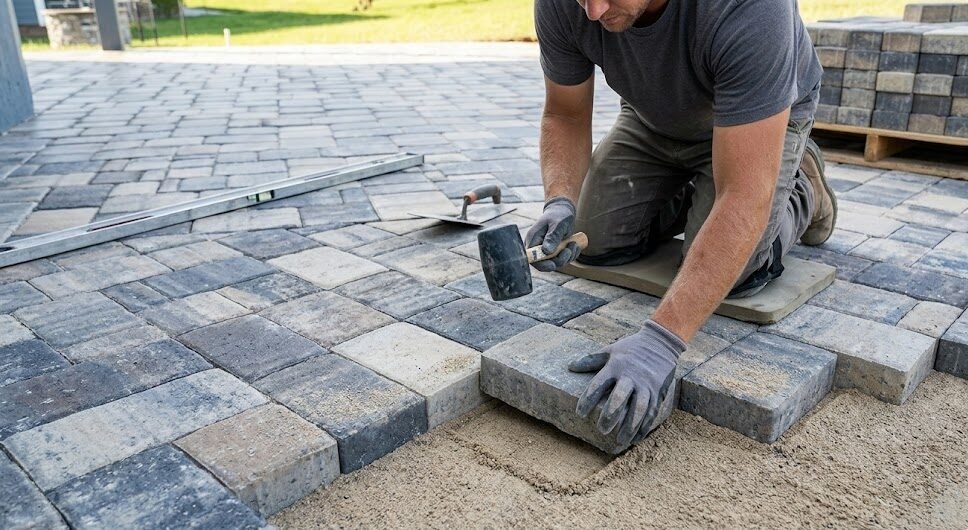
Newer Central Florida neighborhoods have made the small backyard normal. Homes sit close together, the back fence is often a short walk from the slider and a screened lanai or a pool can take up most of what is left. Many of these yards also deal with shade from the house next door, a mature oak or a two-story wall that blocks the afternoon sun. Grass struggles, puddles form after summer storms and the space feels smaller than it is.
A small yard is not a problem to solve with more stuff. It is a space to plan more carefully, because every square foot has to do a job. This guide covers small backyard design ideas built for Florida conditions: heat, heavy summer rain, sandy soil and shade. The goal is a yard that feels bigger than its measurements, needs little upkeep and survives its first rainy season looking the way it did on day one. For bigger yards and full renovations, our backyard makeover ideas for Florida homes cover the wider range of projects.
Start With a Map of Sun, Shade and Water

The University of Florida IFAS Extension, which runs the Florida-Friendly Landscaping program, starts every yard plan with a site inventory: map the areas of full sun, part shade and shade, note utilities and easements and watch where water goes when it rains. In a small yard, that map decides almost everything.
- Sun and shade: check the yard at morning, noon and late afternoon. The strip along the house that gets two hours of sun is a very different space from the corner that bakes all afternoon.
- Water flow: after a summer storm, see where water pools and where downspouts dump. Small yards often drain toward the house or toward one low corner.
- Fixed elements: the AC unit, pool equipment, utility boxes, the irrigation backflow and any easement along the back line. These limit what can go where.
- HOA rules: many Central Florida communities regulate fence height, turf, paver colors and what can be seen from the street. Check before you design.
With that map in hand, the design becomes a matter of putting each use in the place that suits it: seating where the shade is, play or turf where it drains, plants where there is enough light.
Idea 1: One Well-Sized Paver Patio Instead of Scattered Pieces
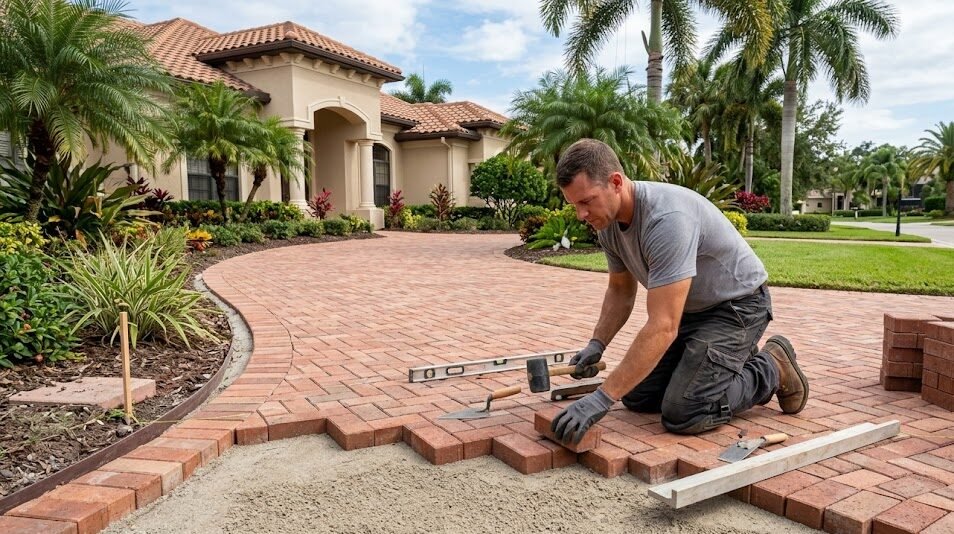
The most common mistake in a small yard is too many small pieces: a narrow slab by the door, a few stepping stones, a separate pad for the grill and a strip of gravel by the fence. It makes the yard feel cluttered and smaller. One properly sized patio does the opposite. It creates a single, clear outdoor room and leaves the rest of the yard open.
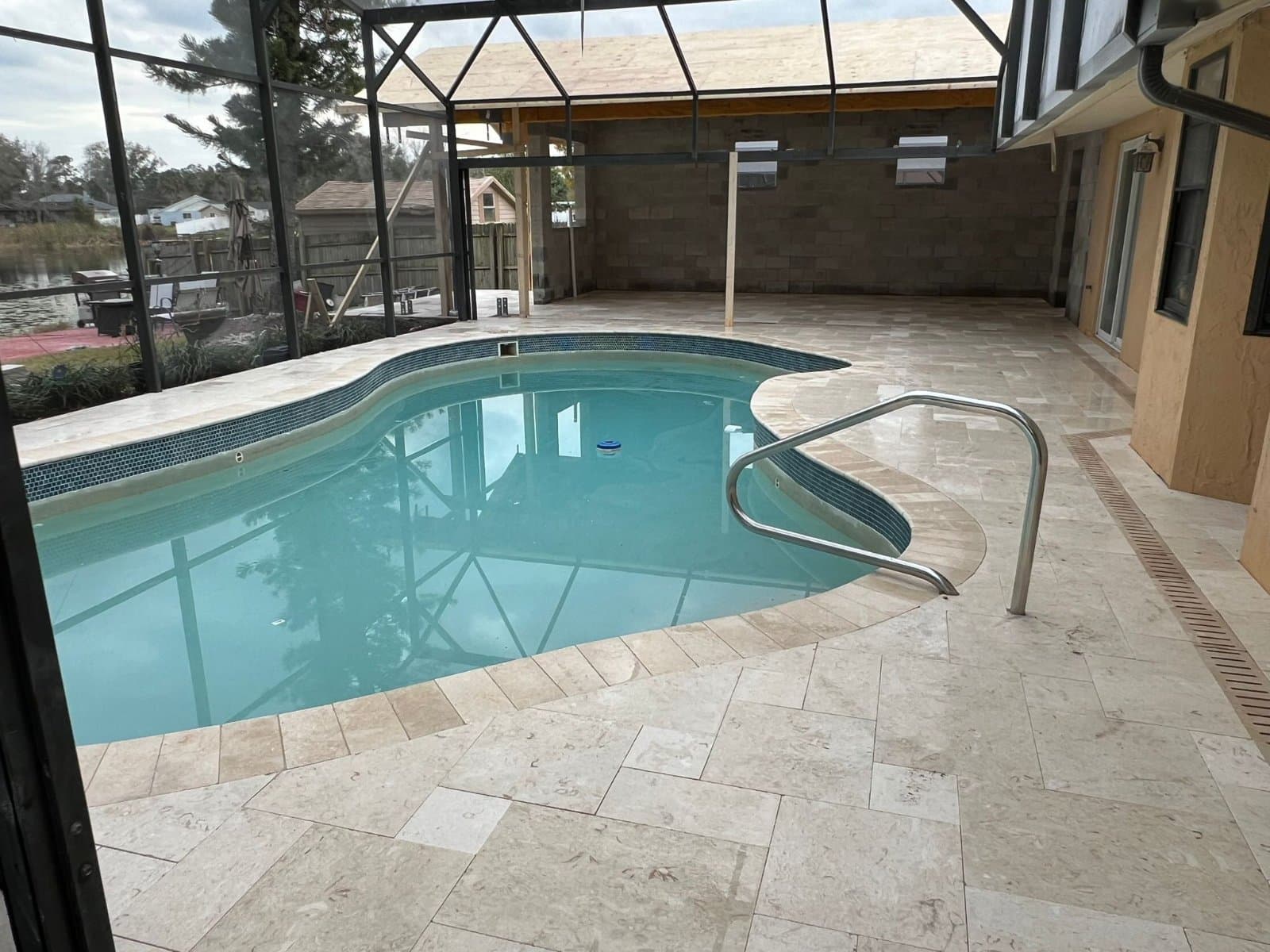
Size the patio around what you will actually do. A small bistro table and two chairs need roughly 8 by 8 feet. A dining table for four with room to pull chairs out needs closer to 12 by 12 feet. A pair of lounge chairs and a side table fit in about 10 by 10 feet. In many small yards, extending the existing lanai slab with pavers is the most natural way to gain that room without making the yard look chopped up.
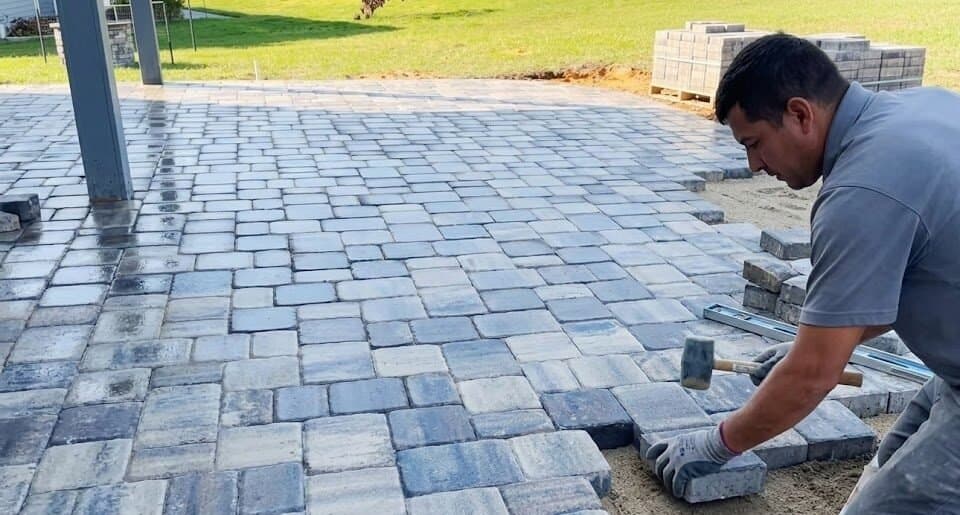
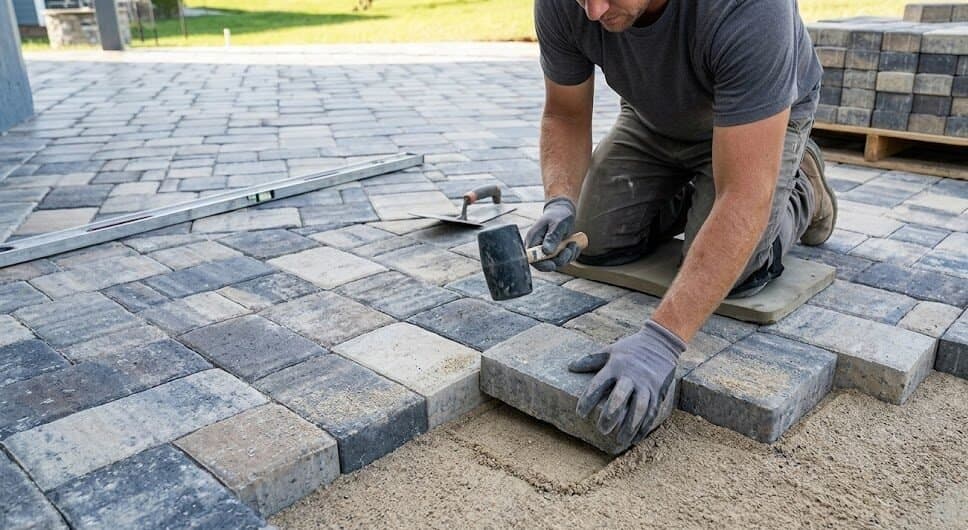
Pavers suit small Florida yards for practical reasons. They handle the sandy soil and slight settling better than a plain concrete slab, individual pavers can be lifted and reset for repairs, and they come in shapes and colors that let a small space look finished. Our brick paver installation service designs the patio around the drainage and the furniture you plan to use, and our brick paver cost guide for Florida shows how size and pattern affect the price.
Idea 2: Use Paver Size and Pattern to Make the Yard Look Bigger
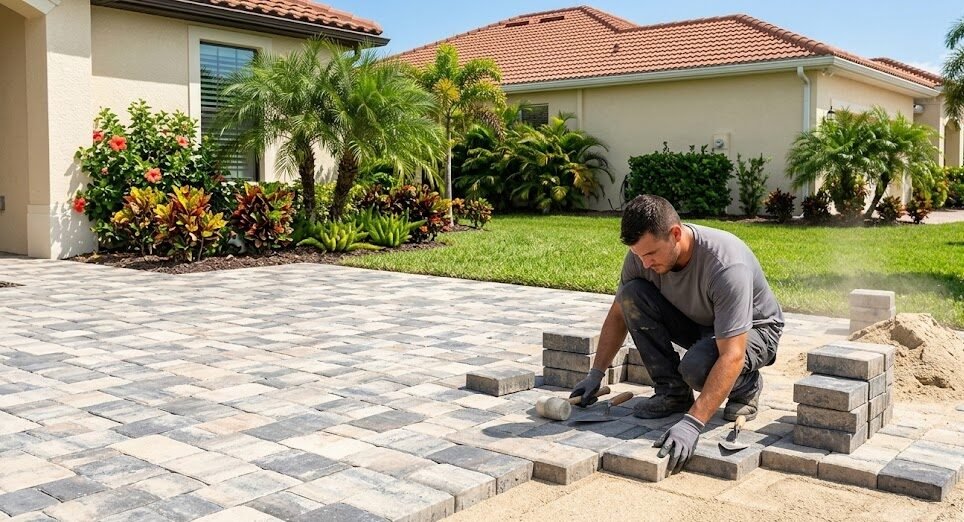
Hardscape can change how big a yard feels, not just how it works. A few design moves make a real difference in tight spaces:
- Larger-format pavers: bigger units mean fewer joints, and fewer joint lines make a surface read as more open. Very small pavers in a busy pattern can make a small patio look crowded.
- Diagonal or long-axis patterns: laying pavers on a diagonal, or running a rectangular paver along the longest view of the yard, pulls the eye toward the far corner and makes the space feel deeper.
- Light, cool colors: lighter pavers reflect more light into a shaded yard and stay cooler underfoot in the sun. Our guide to brick paver colors and patterns in Florida shows which tones work in heat and shade.
- One border, one field: a simple soldier course border with a single field color gives the patio a clean edge without visual noise.
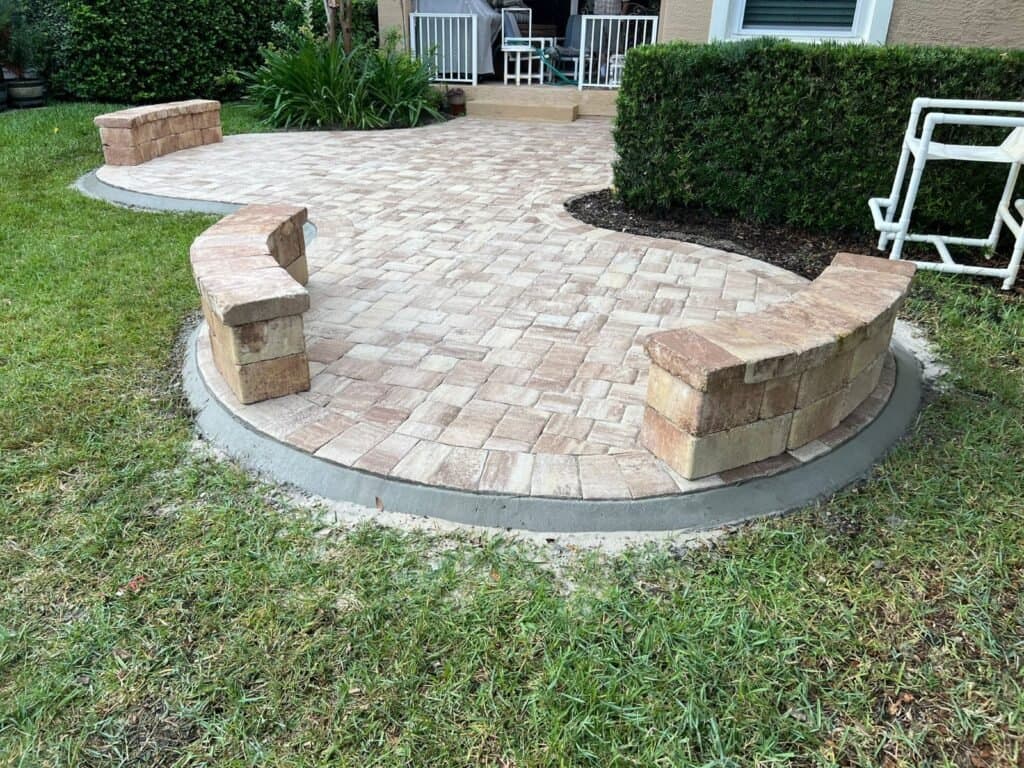
- Curves where they help: a gentle curve on the edge of the patio softens a rectangular lot and makes the transition to plants or turf feel natural.
(321) 353-7445Get Immediate Service
Idea 3: Artificial Turf for the Shady Strip Where Grass Gives Up
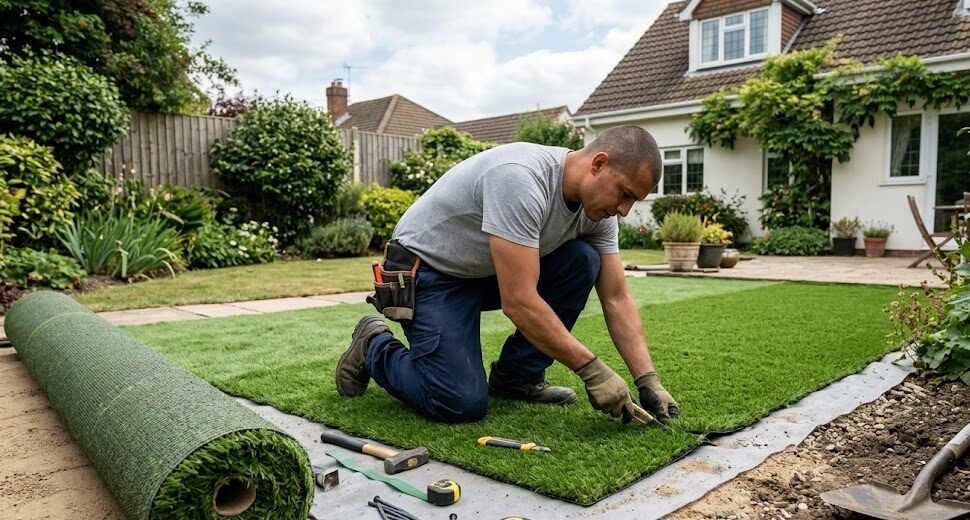
St. Augustine and other warm-season grasses need sun. In the shaded strip between two houses, under a large oak or in the corner behind the pool cage, real grass thins out, turns to sand and then to mud during the rainy season. In a small yard, that bare patch takes up a big share of the view.
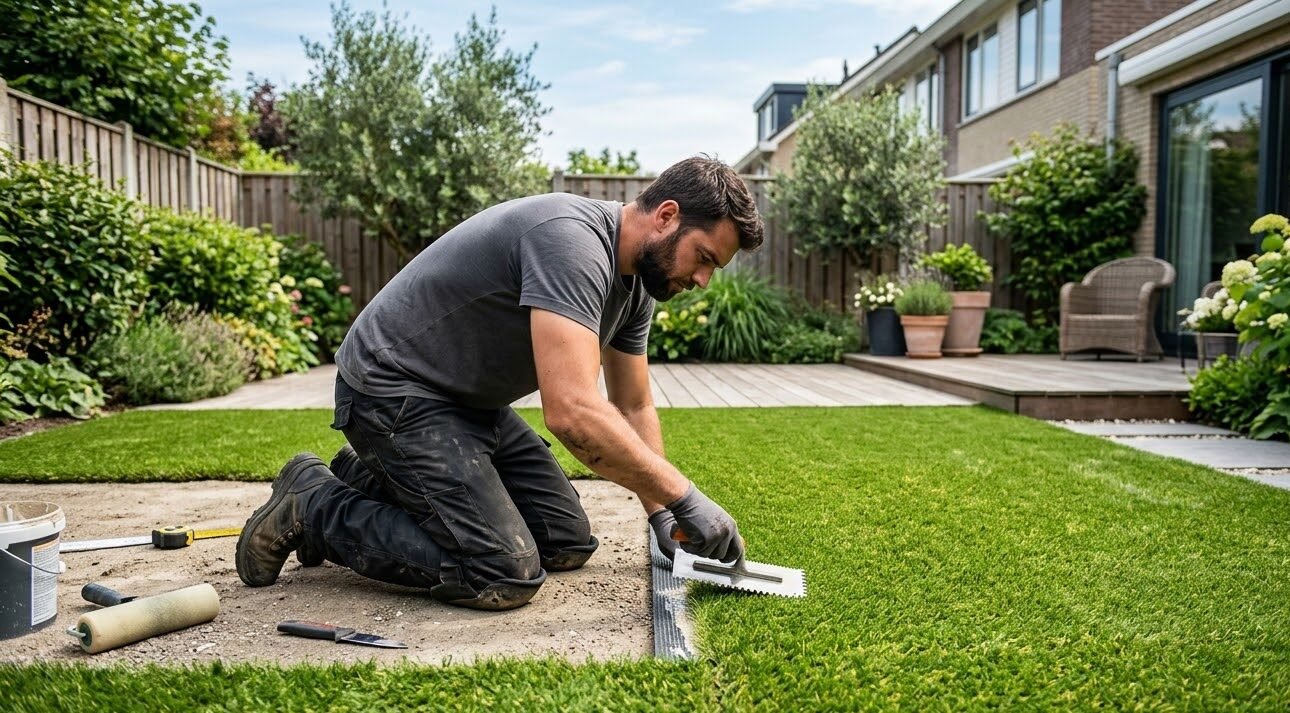
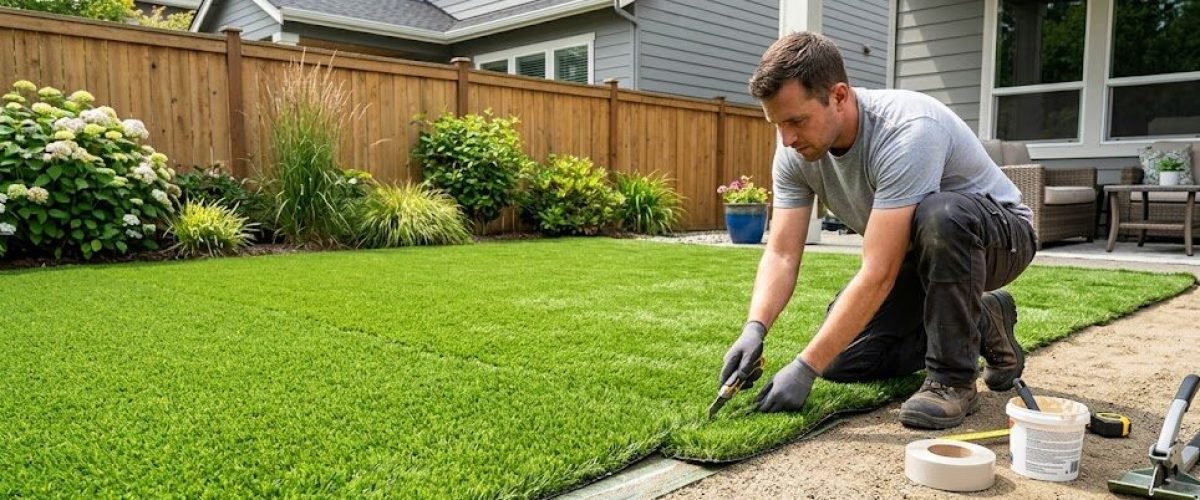
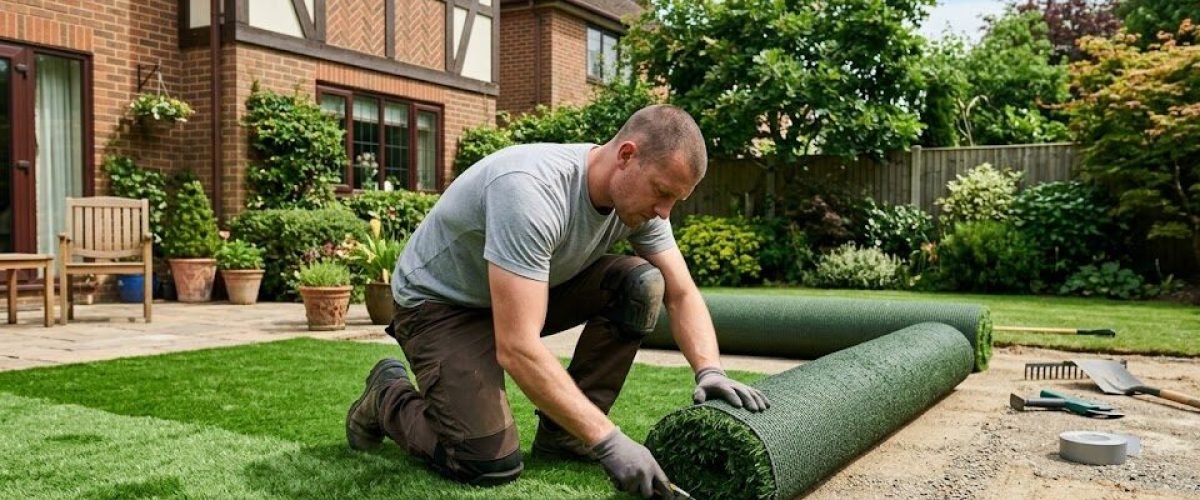
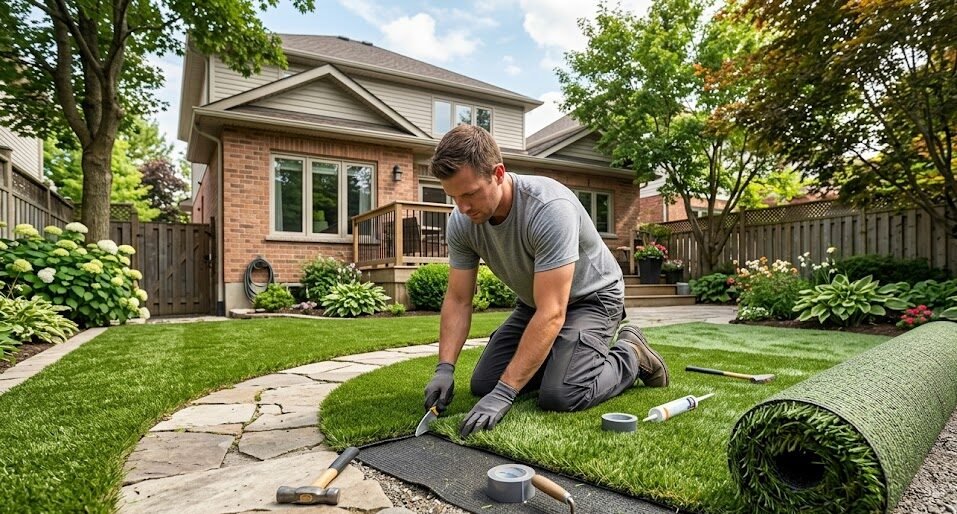
Artificial turf is a good fit for those spots. It stays green in shade, drains through its backing into a properly prepared base and needs no mowing or fertilizer. In a small yard, a defined turf panel also gives kids and dogs a soft surface without the upkeep of a lawn. Two cautions: turf in full afternoon sun can get hot, which we cover in our guide to whether artificial turf gets hot in Florida, and many HOAs set rules for turf type and visibility. Our artificial turf installation service builds the compacted base and drainage that keep turf flat and dry after summer storms.
Idea 4: Build Up, Not Out
When the ground is limited, the vertical surfaces become the design. Fences, walls and the back of the house can carry plants, lighting and storage without taking any floor space.
- A privacy fence as a backdrop: a clean, uniform fence hides the neighbor's yard and gives the eye a calm edge to stop at, which makes a small yard feel like a deliberate outdoor room rather than a leftover strip. Vinyl and aluminum hold up well to Florida humidity. Our guide to backyard privacy ideas for Florida compares fences, living screens and built structures.
- Vertical planting: trellises, wall planters and climbing vines on the fence add green without eating floor space.
- Lighting on the fence and walls: wall-mounted and string lighting pushes the visual edge of the yard outward at night.
- Built-in seating: a bench along the fence or a seat wall at the edge of the patio replaces loose chairs and keeps the middle of the yard open.
Our fence installation service handles the height, permit and HOA questions that come with fencing a small lot.
Idea 5: Design Drainage Into the Layout
Small Florida yards often have the worst drainage, because there is less ground to absorb the water from the roof, the patio and the neighbor's yard. A heavy afternoon storm can leave standing water for a day. Fixing that is part of the design, not a separate project.
- Slope the patio away from the house: a properly built paver patio is graded so water runs off toward the yard, not back to the slab.
- Point downspouts into planted areas: UF/IFAS recommends directing downspouts into the garden rather than onto sidewalks or driveways, so the water soaks in instead of running off.
- Consider permeable pavers: in a yard with little open soil, permeable pavers let rain pass through the joints into a stone base. Our guide to permeable pavers in Florida explains when they are worth the higher base cost.
- Use a gravel or river rock swale: a narrow stone channel along the side yard can carry water away and doubles as a clean, low-maintenance edge.
Idea 6: Plant Less, Plant Right

A small yard does not need a lot of plants. It needs the right ones in the right spots. The Florida-Friendly Landscaping approach from UF/IFAS boils down to right plant, right place: pick plants suited to the light, soil and water of each spot, so they thrive without constant watering and spraying.
- Shade: for lightly shaded beds, UF/IFAS lists ferns, crossandra and gingers among shade-tolerant options. In deep shade, where even shade plants struggle, UF/IFAS suggests mulch, a seating area, pathways or garden art instead of fighting for plants.
- Mulch: UF/IFAS recommends a 2 to 3 inch layer of mulch on plant beds and advises against cypress mulch.
- Small trees: if you want a tree, choose a small one. Smaller trees drop less debris on a paver patio and do not overwhelm the space or the house foundation.
- Containers: large pots on the patio add color that can move with the sun and the seasons.
Florida law supports this approach. Section 373.185 of the Florida Statutes recognizes Florida-friendly landscaping and limits how far HOA deed restrictions can prohibit it, which gives homeowners room to replace struggling lawn with low-water planting beds.
Idea 7: Zone the Yard So It Feels Like More Than One Space
A trick landscape designers use in small spaces is to divide the yard into two or three zones instead of leaving it as one open rectangle. It sounds backward, but a yard with a clear dining spot, a turf or play strip and a planted corner feels larger than a single undefined area, because the eye reads each zone as its own room.
- Change the surface: pavers for dining, turf for play, mulch or gravel for plants. The transitions define the zones without walls.
- Change the level slightly: a one-step raised patio or a low seat wall separates areas and adds seating.
- Use a path: a short paver or stepping-stone path that curves to a back corner creates a destination and makes the yard feel deeper.
Idea 8: Plan for Upkeep From Day One
Small yards are supposed to be easy. The design choices that keep them easy are the ones made at the start: a paver patio with polymeric sand in the joints to resist weeds and ants, a turf panel with proper base and edging, mulched beds with drip irrigation instead of spray heads and a fence material that does not need painting every few years. Our guide to sealing pavers in Florida explains how sealing helps a small patio stay clean through the rainy season.
What a Small Backyard Project Typically Costs
Because small yards have less area, they are often more affordable than people expect, even with quality materials. Using the installed price ranges from our own Florida cost guides as a reference:
- Paver patio: roughly $10 to $18 per square foot installed, depending on paver, pattern, base work and access. A 12 by 12 foot patio is about 144 square feet.
- Artificial turf: roughly $10 to $16 per square foot installed for residential turf with a proper base.
- Privacy fence: priced by linear foot and material. Our fence cost guide by material breaks down vinyl, wood and aluminum.
Access is the factor that surprises owners of small lots. When equipment and pallets of pavers have to go through a narrow side gate or around a pool cage, labor goes up. A site visit is the only way to price that accurately.
Small Backyard Projects Across Central Florida
KS Solutions designs and installs paver patios, artificial turf and fencing for small and shaded lots across Central Florida. We work regularly in Orlando, Winter Park and Kissimmee, where tight lots and HOA rules are part of almost every project. Tell us how you want to use the space, and we will plan a small backyard that works as hard as a big one.