Start With the Sightline, Not the Solution
Before pricing anything, go stand in the exact spot where you feel exposed. The pool deck chair. The kitchen window. The spot on the patio where you actually sit. Then look at what you can see, and note how high it is and how far away.
That two number pair, height and distance, decides everything. A screen blocks a sightline only if it is tall enough to interrupt the straight line between your eye and the thing you want gone. The closer the screen sits to you, the shorter it can be. The closer it sits to the neighbor, the taller it has to be to do the same work.
This is why so many privacy fences disappoint. A fence on the property line is at the far end of the sightline, which is the least efficient place to block anything above ground level. If the problem is a two story house or an elevated deck, a property line fence at typical residential height simply will not reach the geometry. Meanwhile a screen panel eight feet from your chair, at the same height, erases the same view completely.
Three quick diagnostics worth running before you spend anything:
- Is the exposure at ground level or above it? Ground level exposure, meaning people walking past or a neighbor at grade, is fence territory. Elevated exposure from upper windows or a raised deck needs height, distance, or an overhead element.
- Is it one direction or all of them? Most yards have one genuinely uncomfortable angle and three that are fine. Screening only the angle that matters can cut a project cost by half or more.
- Is it visual, or is it noise? These need different solutions. A solid fence helps some with noise. An open hedge helps almost none, though it helps psychologically. If road noise is the real complaint, mass and solidity matter more than height.
Option One: The Privacy Fence
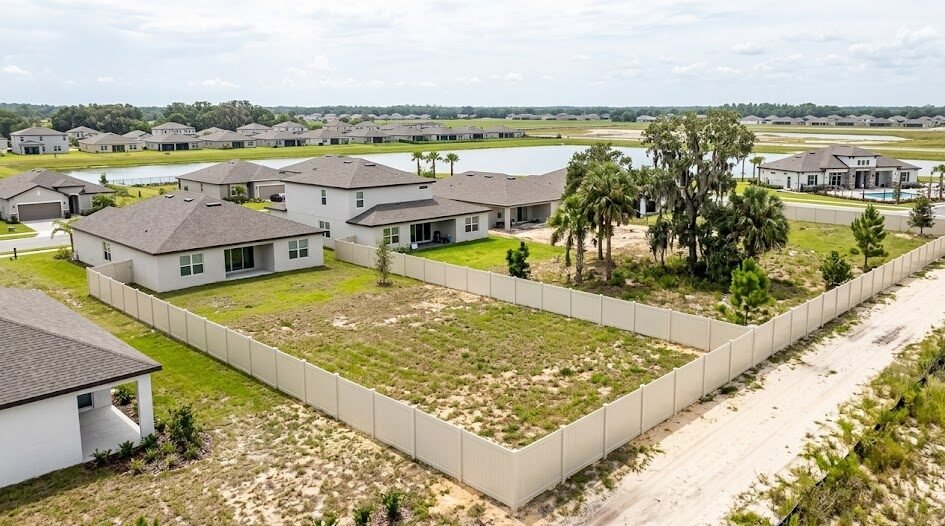
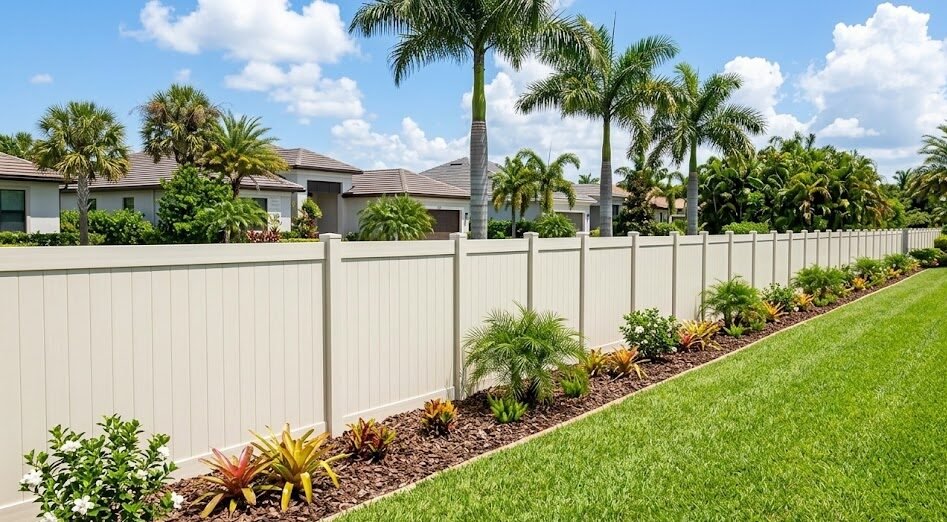
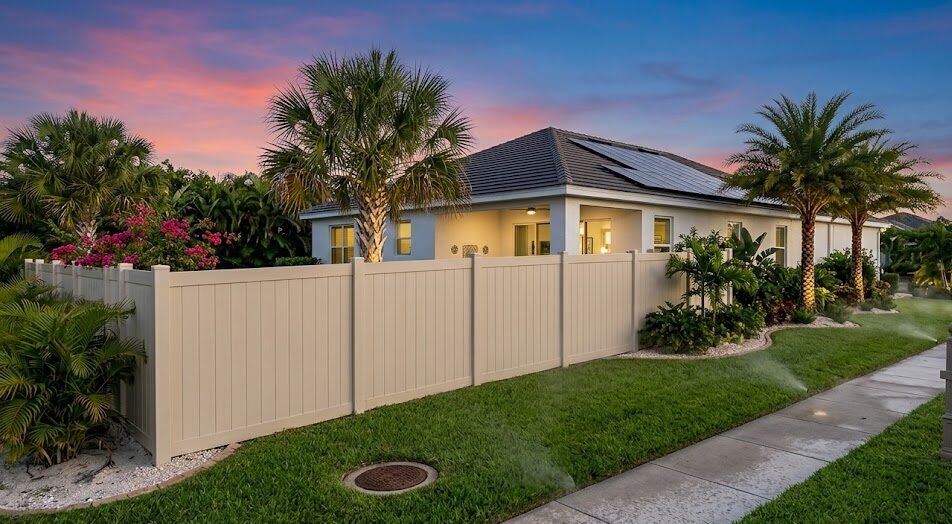
A fence is the fastest and most predictable answer, and for ground level exposure along a property line it is usually the correct one. It works on day one, it requires no growing season, and it defines the boundary in a way nothing else does.
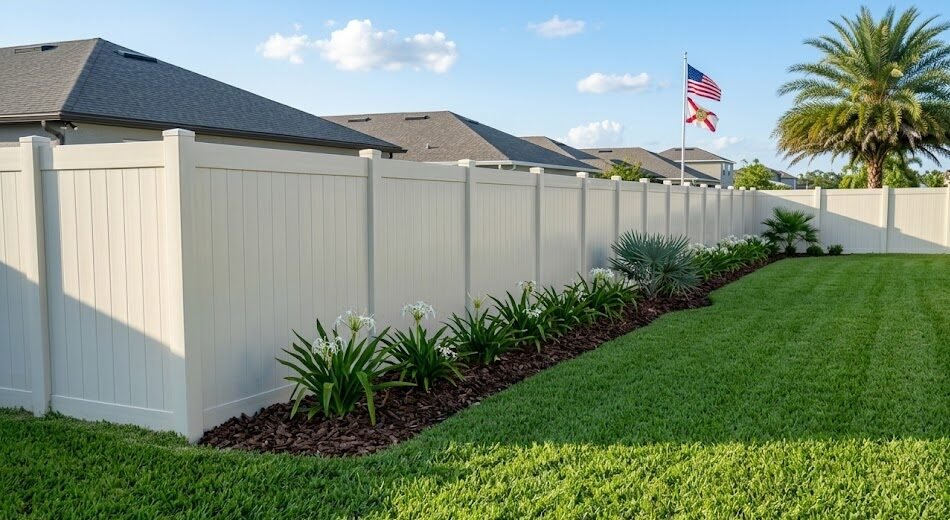
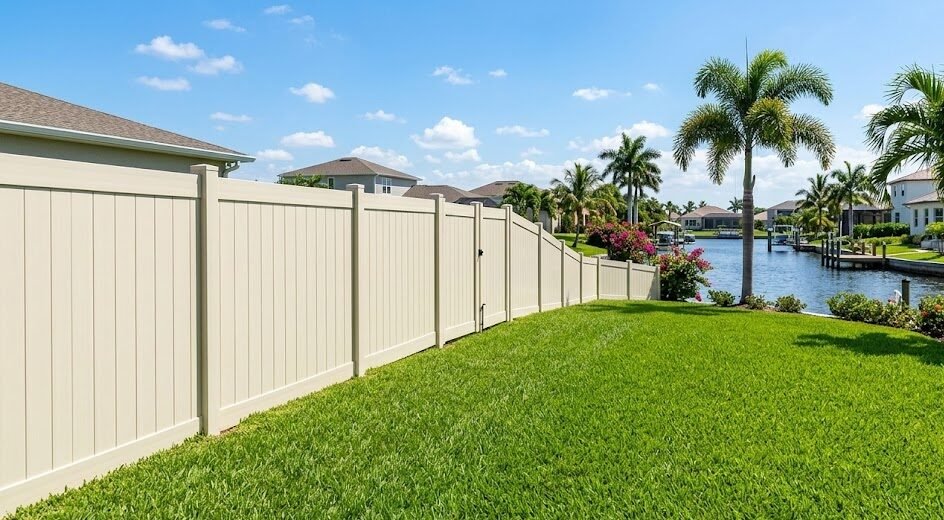
- Vinyl: The default privacy choice across Central Florida. Solid panels give complete visual blocking, it does not rot or need staining, and it handles humidity without complaint. Quality varies enormously between thin and heavy wall extrusions, and thin vinyl is what warps and yellows in Florida sun.
- Wood: Lower entry cost and a warmer look, with a shorter service life in this climate. Florida moisture and insect pressure work against wood continuously, and a stained wood fence is a recurring maintenance commitment rather than a one time purchase.
- Aluminum: Excellent for pool enclosures, security, and longevity, and effectively useless for privacy on its own because it is a picket system. Aluminum plus a hedge behind it is a common and genuinely good combination.
- Composite: The premium option, with the solidity of wood and the maintenance profile closer to vinyl, at a price that reflects both.
The constraint people underestimate is height. Local ordinances typically limit rear and side yard fence height, and front yard limits are lower still. Your HOA layers its own standards on top of that. A privacy fence tall enough to block a second story window is usually taller than either will allow, which is precisely why elevated exposure needs a different tool. Material, color, height, and setback all sit inside what an association may review, and how that review has to be conducted changed meaningfully under recent Florida law. We covered that in detail in our guide to HOA fence rules in Florida.
When a fence is the right call, the install quality is what determines whether it is still straight in eight years. Post depth, concrete, and spacing carry the whole system through storm season. That is the core of our fence installation work, and homeowners can see local examples for fence installation in Orlando or fence installation in Lakeland.
Option Two: The Living Screen
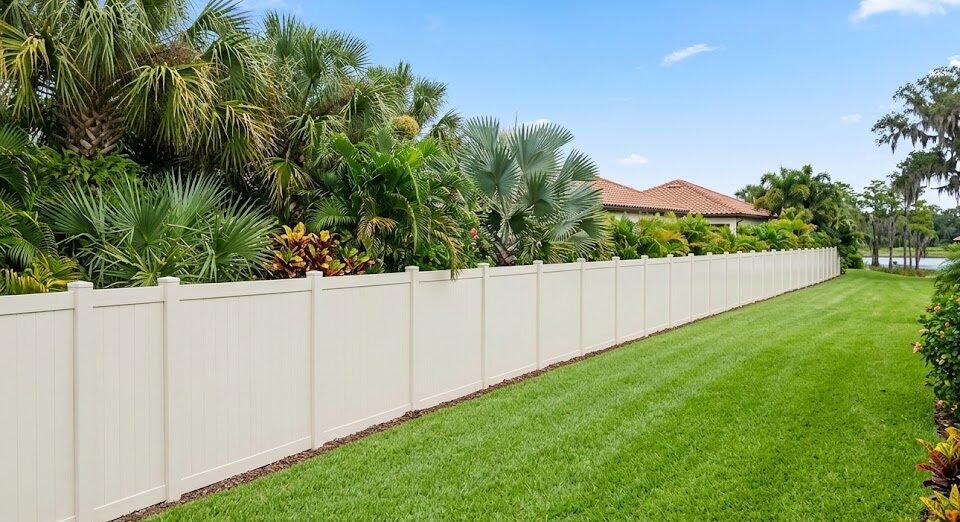
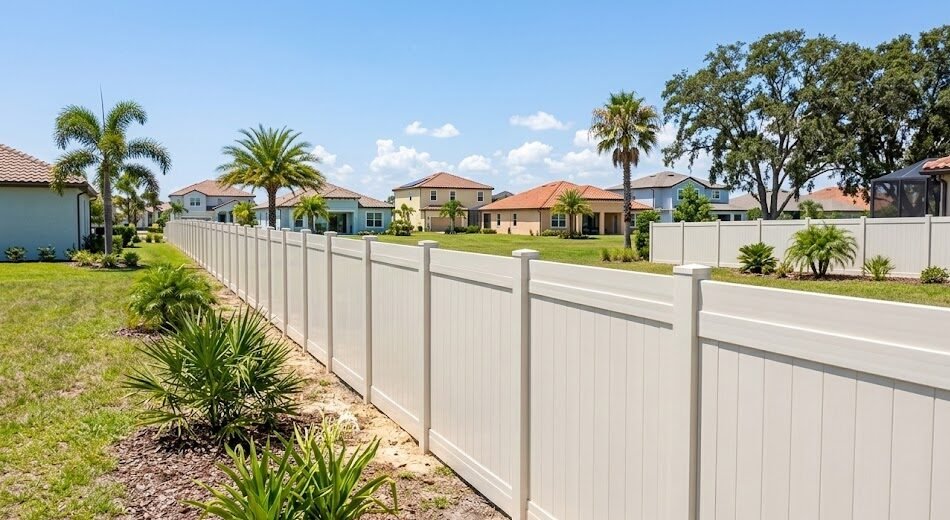
A hedge is the only privacy solution that gets better every year instead of worse, and it is the only one that can legitimately exceed fence height limits. It is also the one that requires patience and honest expectations about growth rate.
The three species that do the work in Florida, with what they actually deliver:
- Clusia: Moderate to fast, commonly cited at up to two feet per year, with slower figures around twelve to eighteen inches per year depending on conditions. Maintained as a hedge it holds roughly eight to twelve feet tall with a four to eight foot spread. Dense, thick leaved, and notably salt tolerant, which matters on coastal properties.
- Podocarpus: The formal option, with a fine texture that takes a crisp shear. It is also the slowest of the three, putting on roughly six inches to a foot of vertical growth per year in healthy conditions. As a hedge it sits around eight to twelve feet with a four to six foot spread, though the species itself can reach thirty to forty feet if left alone.
- Viburnum: The fastest establishing of the three and the usual recommendation when a homeowner wants screening quickly. Hedge height lands in the same eight to twelve foot band with a four to eight foot spread, and several varieties flower fragrantly.
Read those growth rates against your patience. Podocarpus at eight inches a year means a five year wait to gain four feet of screening, which is a legitimate choice if you plan to stay and want the formal look, and a poor one if you want the neighbor's window gone next summer. Buying larger stock shortens the wait and raises the price, which is the real tradeoff in every hedge quote.
There is also a legal advantage worth knowing. Florida Statute 373.185 provides that a deed restriction or covenant may not prohibit, or be enforced so as to prohibit, a property owner from implementing Florida friendly landscaping, meaning quality landscapes that conserve water, protect the environment, adapt to local conditions, and tolerate drought. An association clause attempting to restrict it is treated as void against the public policy of the state.
Read the limits on that carefully, because it is regularly oversold online. If your governing documents require architectural review board approval before installing a specific landscape practice, you still have to apply. And if the board denies the application or moves to enforce against you afterward, the statute is a defense you would have to assert, which in practice means court. It is real protection, not a permission slip to skip the process.
Option Three: The Built Structure
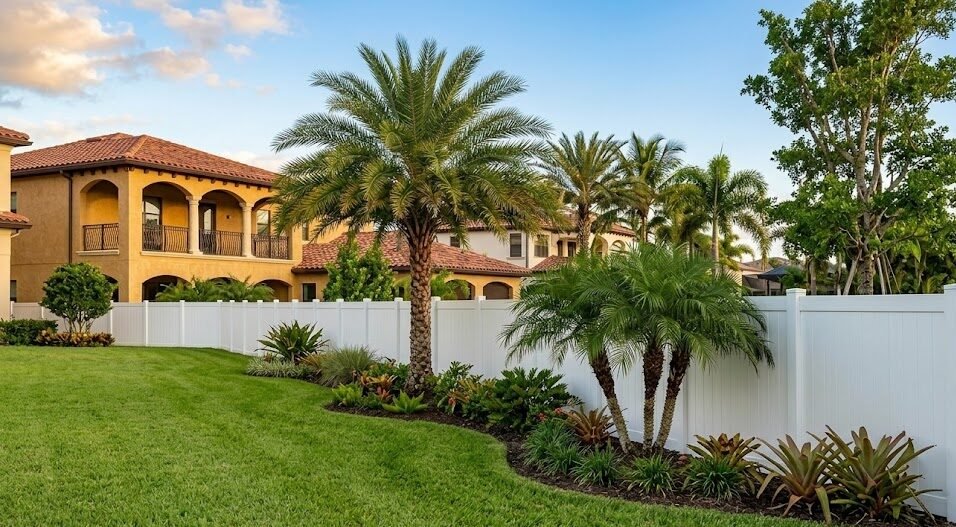
This is the category most homeowners never price, and it is frequently the best answer to elevated exposure, because it puts the screen near you rather than at the property line.
- Pergola with a solid or louvered roof: The only option that addresses a downward sightline from a second story window or an elevated deck. Nothing at fence height solves that geometry, and an overhead element solves it completely.
- Freestanding privacy screen or slat wall: A single panel placed eight to ten feet from your seating area, blocking one specific angle. Often the cheapest effective fix in the entire guide, because it is a fraction of the linear footage of a fence.
- Outdoor kitchen or built structure as a screen: A masonry element you were already considering can be sited to double as the block on the exposed angle. Free privacy, if you plan the placement before you build.
- Retractable or shade elements: Useful when the exposure is seasonal or occasional and you do not want a permanent visual wall in a small yard.
The screen panel deserves special emphasis. Homeowners routinely quote 120 feet of privacy fence to fix a problem that lives in one twelve foot arc. Measuring the arc first, then screening only that, is the single largest cost saver in backyard privacy work.
(321) 353-7445Get Immediate Service
Option Four: Use the Grade
Elevation is free height. If your yard slopes, or if you are already planning hardscape, raising the planting plane raises everything on it.
A retaining wall or a raised planter that lifts a hedge two feet off grade gives that hedge a two foot head start permanently, and it does so without touching fence height rules, because the wall is a landscape element rather than a fence. On a sloping lot this is often the difference between a hedge that eventually screens and one that never quite does. The structural and drainage side of that is covered in our guide to retaining walls in Florida.
A berm accomplishes something similar with earth instead of block, and reads more naturally in a large yard, though it consumes considerably more horizontal space to gain the same height.
The Combination That Usually Wins
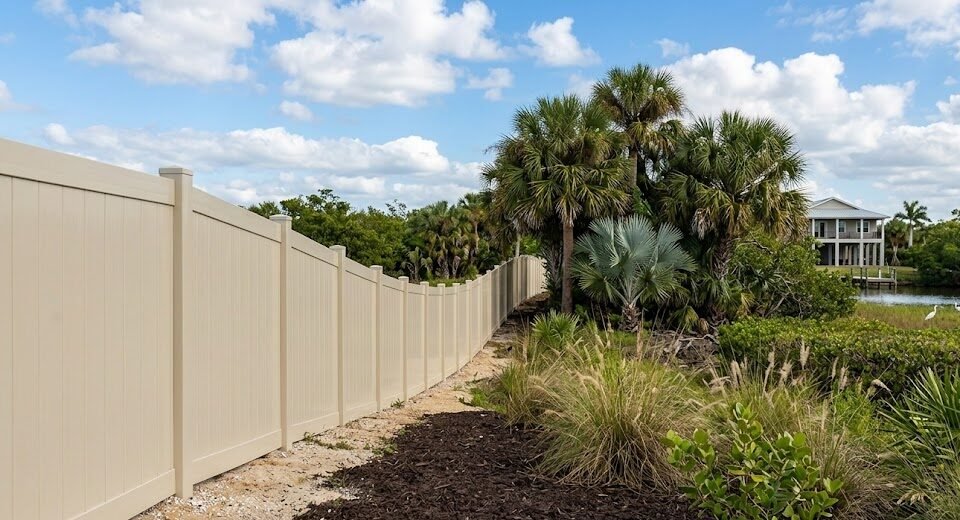
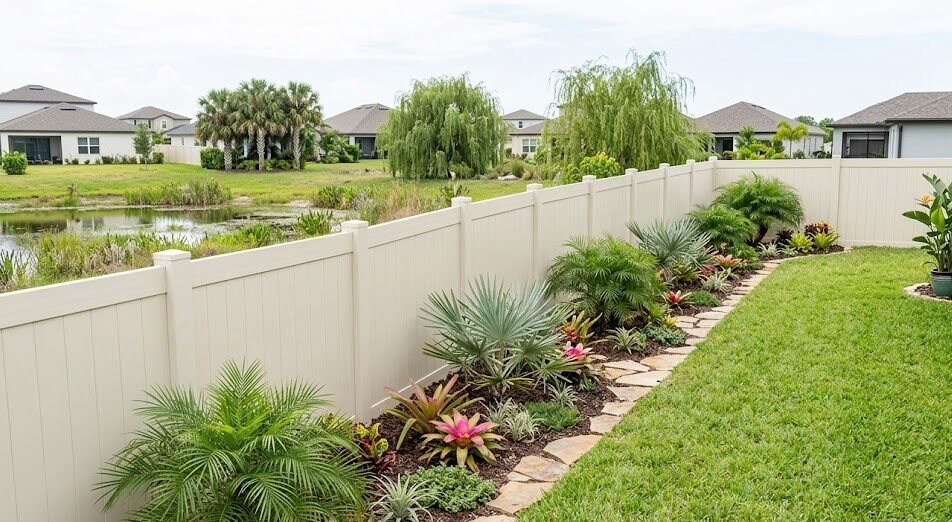
The most satisfying Central Florida backyards rarely use one solution. The pattern that works looks like this:
- Fence the property line for boundary definition, ground level privacy, pets, and children. This is your baseline and it works immediately.
- Plant the hedge inside the fence on the one or two sides that need height. The fence covers you now, the hedge covers you in three to five years and eventually exceeds what the fence could ever legally do.
- Add a screen panel or pergola at the specific seating area that faces the elevated exposure. This is the piece that fixes the problem the fence cannot.
Layering also solves the biggest weakness of each option individually. The fence gives you immediate coverage while the hedge is slow. The hedge gives you height the fence cannot reach. The structure handles the angle neither can. And if the hedge fails or a plant dies, the fence is still there, which is not true in reverse.
Florida Specific Failures Worth Avoiding
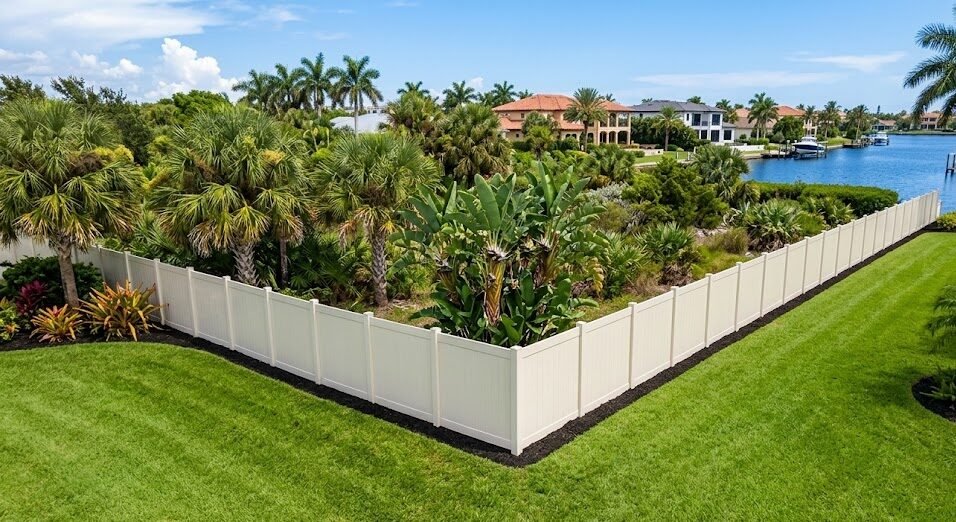
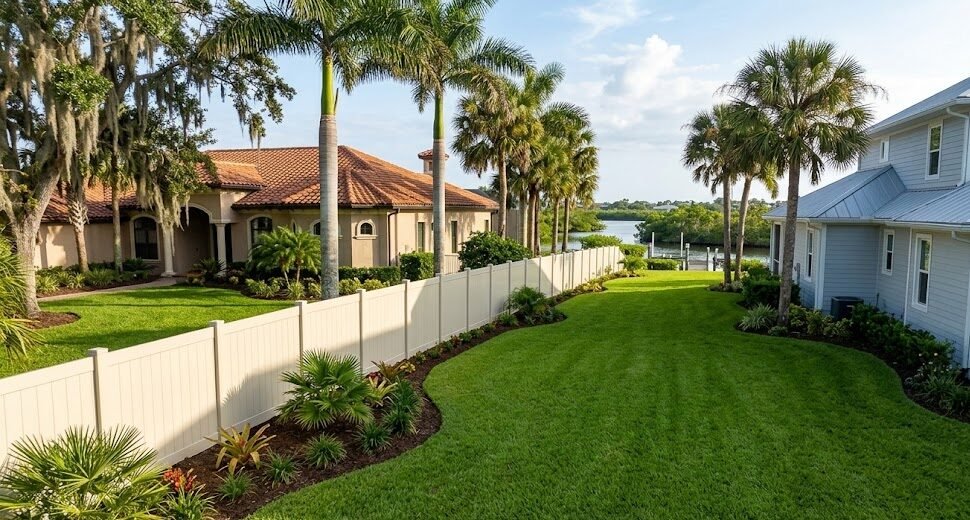
- Planting the hedge tight against the fence. It needs air circulation and room for the mature spread. Species that hold a four to eight foot spread planted eighteen inches off a fence will push the fence, trap moisture against it, and thin out on the shaded side.
- Ignoring irrigation for the first two years. A new hedge is an irrigation project before it is a privacy project. This is the most common reason a screen never fills in, and it is entirely preventable.
- Solid fence panels in an unbroken wind run. A long solid fence is a sail. Post depth, spacing, and hardware have to be specified for the exposure, not for a catalog average.
- Choosing by mature height instead of growth rate. Every species on the list reaches roughly the same maintained hedge height. What separates them is how many years you wait, which is the number that should drive the decision.
- Forgetting the gate. Privacy fencing with an afterthought gate is where the system fails first, both visually and mechanically. Gate hardware and access planning are covered in our guide to smart gates and fencing.
- Screening a pool area without checking barrier requirements. Pool enclosure rules are a separate safety matter from privacy, and a privacy solution that compromises a required barrier is not an option regardless of how it looks.
Approvals, in the Right Order
Sequence saves rework here, and the order is not the intuitive one.
- Read the governing documents before you shop. Not the summary, the actual recorded restrictions. Height, material, and color limits will eliminate options before you get attached to them.
- Confirm the local height ordinance separately. County or city limits and HOA standards are two different constraints, and you have to satisfy both. Whichever is stricter governs.
- Get a current survey or locate the property line properly. Fences built on assumption are the origin of most neighbor disputes, and moving one later costs more than the original install.
- Submit for architectural review with the specifics filled in. Material, color, height, and a site plan. Vague applications get delayed, and boards now have to review against written standards on a real timeline, which works in your favor only if your submission is specific enough to review.
- Call in locates before anyone digs. Non negotiable, and free.
Matching the Solution to the Problem
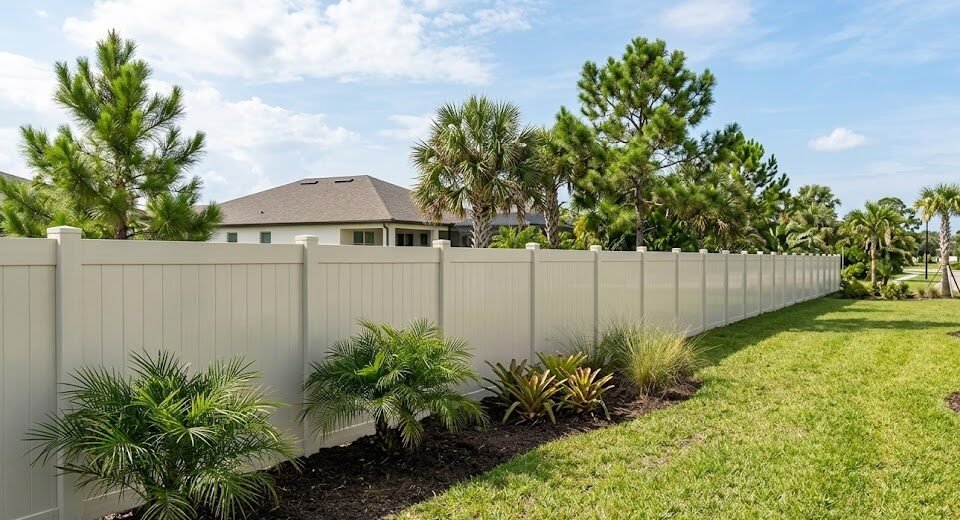
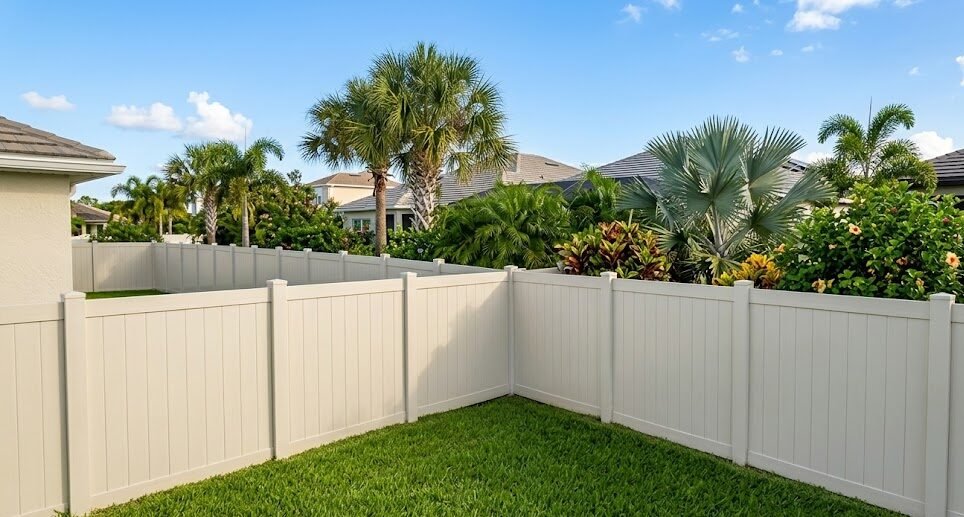
- Neighbors at ground level, standard lot: Privacy fence. Fastest, most predictable, done in days.
- Second story window or elevated deck overlooking you: Pergola or overhead structure at your seating area. A taller fence will not solve this and usually is not permitted anyway.
- One specific uncomfortable angle: A single screen panel positioned close to where you sit. Cheapest real fix available.
- You plan to stay long term and want maximum height: Fence now, hedge behind it, and let the hedge take over past year four.
- Sloping lot: Retaining wall or raised planter to gain elevation, then plant on top of it.
- Road noise as much as sightline: Solid mass and distance. A hedge alone will disappoint you on noise even when it looks perfect.
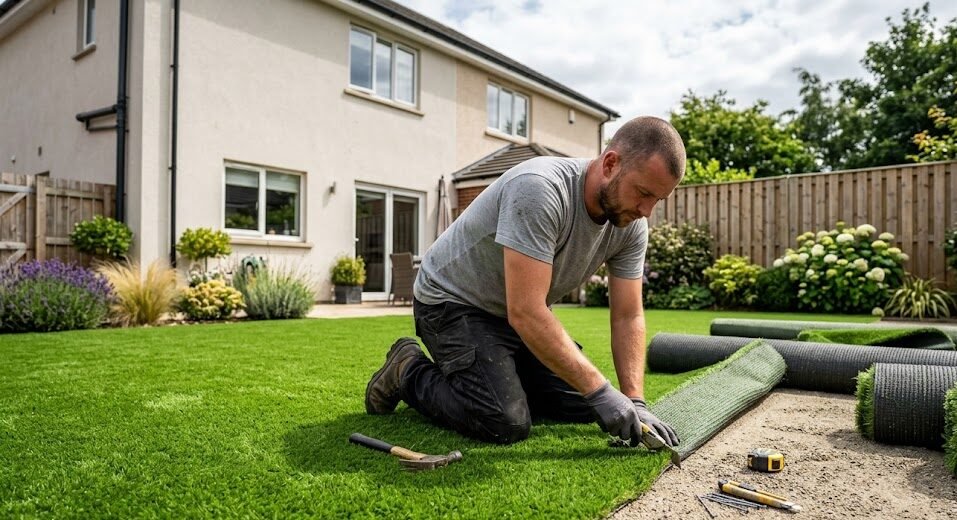
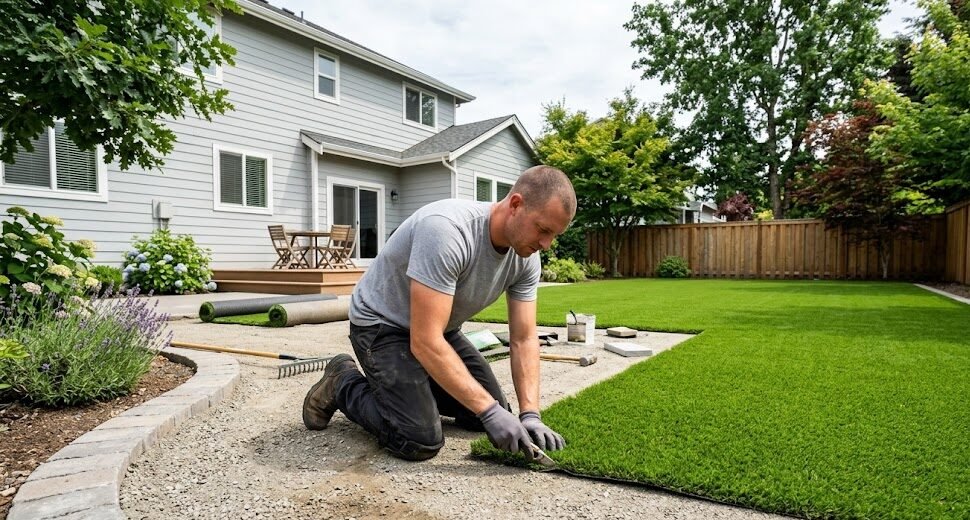
- Small yard where a fence would feel like a box: Partial screening plus planting, and consider how artificial turf keeps a tight enclosed yard usable when a solid enclosure cuts light and airflow to natural grass.
The consistent thread across all of these is that the measurement comes first. Homeowners who stand in the spot, note the height and the distance, and identify the one angle that actually bothers them almost always spend less and end up happier than the ones who started by pricing fence per linear foot.
KS Solutions installs fence, pavers, and turf across Central Florida, including throughout Orlando and the surrounding communities, and we would rather walk your sightlines with you before quoting than sell you more fence than the problem requires.