What Gate and Fence Integration Actually Means
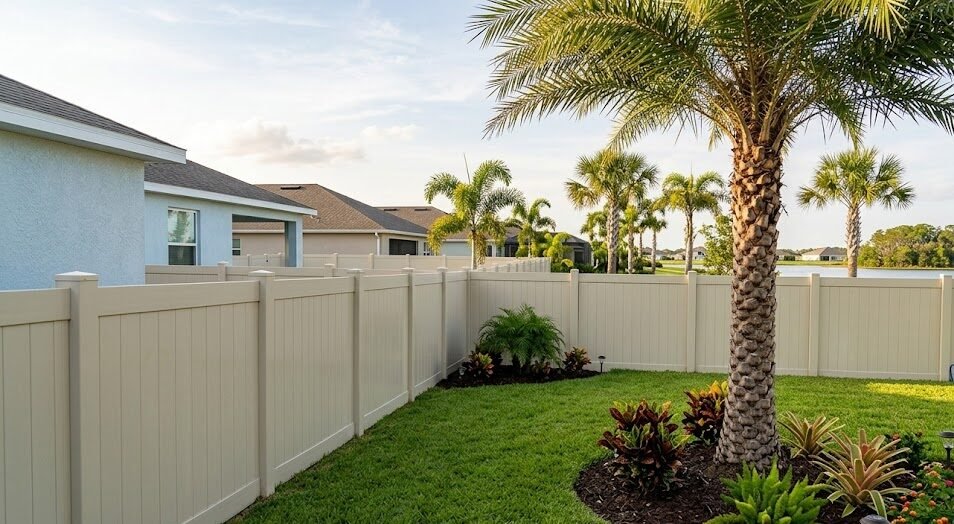
The phrase covers three different levels of work, and mixing them up is where most budget surprises come from. It helps to name them separately before pricing anything.
- Smart lock on a manual gate: The gate still swings by hand. The lock is battery powered, opens by code, phone or fob, and logs who came through. This is the least invasive option, needs no trenching and no electrical permit, and it is where most residential projects should start.
- Powered operator on a vehicle gate: A motor swings or slides the gate. This requires power at the gate, a control board, safety devices, and it brings two national safety standards into play. It is a different project with a different budget.
- Integrated access control: Keypad or intercom at the drive, camera, remote unlatching for deliveries, event logging, and sometimes tie-in to a broader home system. This is the layer that makes the other two useful day to day.
The mistake we see most often is a homeowner asking for the third while budgeting for the first. The second decision, whether the gate is powered, is the one that moves the number, because power at the gate usually means a trench, a conduit run and an electrician.
Salt Air Is the First Thing That Kills Gate Hardware
Half of the Central Florida market we serve sits inland and the other half does not. Between Daytona Beach, Ormond Beach and Port Orange, coastal exposure is a real specification input rather than a marketing line, and it decides the hardware before anything else does.
The material question comes down to two grades of stainless steel. Type 304 is the general purpose grade used in most consumer hardware. Type 316 adds roughly 2 to 3 percent molybdenum, and that addition is the entire difference in a salt environment. The molybdenum stabilizes the protective oxide layer so it keeps repairing itself in the presence of chlorides, which is exactly what 304 cannot do.
The failure timeline is well documented and faster than most people expect. In marine and coastal exposure, 304 stainless can begin pitting within a matter of months, and 304 fasteners near saltwater commonly show rust pitting within 36 months. That matters more for gates than for almost anything else on a property, because a gate is nothing but hinges, fasteners and a latch, and the fasteners are the smallest cross section in the assembly. When a hinge screw corrodes, the gate sags, and when the gate sags the smart lock stops aligning with the strike. The app then reports a failure that is not electronic at all.
The rule we apply on coastal work is simple. Within a few miles of the Atlantic, every fastener, hinge, latch and lock housing on a gate should be 316 marine grade, not 304, and not zinc alloy with a decorative finish over it. Inland in Orlando, Lakeland or Winter Haven, 304 is generally fine and the money is better spent elsewhere. Paying for 316 on an inland lot is waste. Skipping it on a coastal lot is a rebuild.
IP Ratings: What They Promise and Where They Stop
Every outdoor smart lock advertises an IP rating, and almost nobody reads the second digit correctly. The two digits are separate claims: the first is solid ingress, meaning dust, and the second is water.
- IP65: Dust tight, protected against low pressure water jets from any direction. This is the most common rating on outdoor smart locks and it handles ordinary rain and hose spray without complaint.
- IP66: Dust tight, protected against powerful water jets. The practical difference shows up in driving wind-blown rain, poolside spray and coastal exposure, which is precisely the Florida condition set.
- IP67: Adds temporary immersion. Useful for low mounted hardware in flood prone locations, generally overspecified for a gate latch at waist height.
The honest guidance for this market: IP65 is adequate for an inland gate under partial cover. For a gate in full year-round exposure, near a pool, or anywhere the wind carries salt, IP66 with a marine grade housing is the specification that survives, and it is a genuinely different product from an IP65 zinc alloy lock with a finish coat.
One caution about ratings in general. An IP rating is tested on a sealed unit in a lab, not on a unit that has been drilled, mounted crooked, or fitted to a gate that flexes every time it closes. Installation quality decides whether the rating means anything in year three.
Hurricane Outages: The Number That Should Set Your Backup Spec
This is the part of gate automation that Florida homeowners underestimate, and the data from the recent seasons is unambiguous.
In 2024, hurricanes produced the most hours without electricity the United States had seen in a decade, with major events including Beryl, Helene and Milton accounting for roughly 80 percent of all outage hours that year. Hurricane Helene became the largest single event tracked, affecting about 4.79 million customers at peak across Florida, Georgia and the Carolinas. Hurricane Milton affected roughly 3.4 million Florida customers.
Restoration was faster than the raw numbers suggest, and that is the useful part. Florida Power and Light reported more than 2 million customers impacted by Milton and essentially restored within five days. Duke Energy Florida reported 95 percent of outages restored within 96 hours after Milton and within 72 hours after Helene, outside the hardest hit areas.
So the planning question is not whether the gate will lose power. It is whether the gate stays usable for three to five days without it. That translates into three concrete specifications.
- Battery backup sized in days, not hours: A backup that runs the operator for a handful of cycles is not a hurricane spec. Ask how many full open and close cycles the backup delivers, not how many hours it holds a charge with the gate idle.
- Solar charging on rural or long driveways: On a gate far from the house, solar is often cheaper than trenching power in the first place, and it keeps the backup topped up through a multi-day outage rather than draining once.
- A manual release you have actually practiced: Every powered gate has one. The number of homeowners who have never located theirs is remarkable, and a storm night with a vehicle on the wrong side of the gate is a bad time to learn.
(321) 353-7445Get Immediate Service
Florida Fire Code Says the Gate Has to Open When the Power Does Not
This requirement catches people by surprise, usually at inspection, and it is worth knowing before the gate is ordered rather than after.
Under the Florida Fire Prevention Code, which adopts NFPA 1, new automatic gated entryways serving residential communities, multi-family complexes and commercial properties are required to provide emergency responder access. In practice that commonly means a Knox gate and key switch so fire and rescue can get through a gate that is not manned around the clock. Some jurisdictions layer additional requirements on top: Martin County, for example, requires both a Click2Enter remote access system and a Knox gate key switch on gated residential developments where emergency services respond through unmanned gates.
The power failure provision is the one that shapes hardware selection. Where it applies, the requirement is that on loss of power, including failure of the battery backup, the gate opens automatically by spring tension or another non-electrical method, or it can be pushed open without any additional steps being performed. Read that last clause carefully. Pushed open without additional steps is a higher bar than a manual release you have to unlock a cover to reach.
Two practical notes. First, these provisions bite hardest on community and commercial entrances, and requirements for a single family residential driveway gate vary by jurisdiction, so the local fire marshal is the authority rather than the gate brochure. Second, this is exactly the kind of item that should be resolved before purchase, because retrofitting emergency access onto an installed operator is more expensive than specifying it once.
UL 325: The Operator Standard Behind Every Powered Gate
Any powered gate in the United States falls under UL 325, the safety standard for automated gate operators. The 7th Edition, effective August 1, 2018, is the governing version, with a 2024 standards update notice adding bifold gate provisions and revised injury warning language effective March 2025. Every operator manufactured since that date has to meet it.
Three requirements matter to a homeowner evaluating a quote.
- Two entrapment protection devices per zone, per direction: Each potential entrapment area needs protection in each direction of travel, and the standard requires at least two devices for it.
- They have to be different types: Two photo eyes do not satisfy the requirement. It has to be a photo eye plus a contact edge sensor, or another genuinely different device type, because the failure modes of two identical sensors are also identical.
- Monitored, not just installed: The 7th Edition requires the operator to actively verify every connected entrapment sensor at least once per cycle. Present is not sufficient. Functioning is the standard.
If a quote for a powered gate does not itemize the entrapment devices, that quote is either incomplete or non-compliant, and both are your problem after installation rather than the installer's.
ASTM F2200: The Gate Itself Has to Be Built for the Operator
UL 325 governs the motor and controls. ASTM F2200 governs the physical gate, and this is where fencing and automation actually meet. A gate that was built as a manual gate and later automated frequently does not comply, which is the single most common finding on retrofit projects.
- Openings are restricted: Slide gates and the adjacent fence must not allow a 2 1/4 inch sphere to pass through, measured up to 48 inches from the ground. That rules out a lot of standard picket spacing on the run of fence beside a slide gate.
- Entrapment zones on swing gates: Gaps greater than 4 inches and less than 16 inches in a potential entrapment zone have to be protected.
- Exposed rollers must be covered: Every one of them.
- Guard posts and screen mesh: Required on the configurations the standard specifies, and they are part of the gate rather than accessories to it.
The practical consequence for anyone planning a fence now and automation later is that the automation decision belongs in the fence design conversation. Building the run of fence beside a future slide gate to the sphere rule costs almost nothing at installation and is expensive to correct once the posts are set. This is one of the specification questions we walk through during fence installation rather than after it.
Connectivity: WiFi at the House Is Not WiFi at the Gate
The most common non-hardware failure in gate automation is a signal problem, and it is entirely predictable from a floor plan and a lot survey.
A gate at the end of a 200 foot driveway is far outside typical residential WiFi range, and every intervening wall, tree and metal fence panel makes it worse. A smart lock that pairs perfectly during installation, while the installer is standing next to it with a phone, can be unreachable from inside the house on the same afternoon.
- Bluetooth only devices: Work at the gate, from your phone, in person. No remote access, no notifications, no letting a delivery in from work. Perfectly fine if that is the intent, disappointing if it was not explained.
- WiFi devices: Need real coverage at the gate. That usually means an outdoor rated access point or a mesh node partway down the drive, which is an additional line item and often an additional power run.
- Cellular or LTE devices: Independent of the house network entirely, which is genuinely useful on long rural drives, at the cost of a monthly subscription.
- Long range low power protocols: Better distance than WiFi, but they still need a hub within range, and a metal gate is a poor antenna environment regardless of protocol.
Ask one question before buying anything: from where, exactly, do you need to be able to operate this gate? The honest answer eliminates most of the catalog immediately.
The Fence Around the Gate Decides Half the Outcome
A gate is only as good as what it hangs on, and in Florida the ground is the variable. Central Florida sits on deep sandy soils that drain beautifully and also shift under load, and a gate post is the most heavily loaded post in any fence line. It carries the gate weight, the operator weight if powered, and every open and close cycle as a lever load.
Three things separate a gate post that holds alignment from one that does not: depth and footing volume sized for the gate rather than for the fence, a post material and gauge appropriate to the leaf weight, and diagonal bracing on wide leaves. Undersized gate posts are the root cause of most sagging gates, and a sagging gate misaligns the latch, which is what most homeowners eventually blame on the smart lock.
There is also a rules layer. Height limits, setbacks, material restrictions and gate placement are governed by both local code and, in most planned communities, the association, and automation and access hardware frequently have their own approval requirements. We covered that landscape in the guide to HOA fence rules in Florida, and it is worth reading before ordering anything visible from the street.
Where the Money Should Go
If the budget is finite, and it always is, this is the priority order we recommend, from highest return to lowest.
- Gate posts and footings first: The one element that cannot be upgraded later without dismantling the gate. Everything else is replaceable in an afternoon.
- Corrosion grade of the hardware second: On coastal lots this is not optional. Hinges, fasteners, latch and lock housing in 316 marine grade.
- Backup power third, if the gate is powered: Sized for a multi-day outage, because Florida has now demonstrated repeatedly what that looks like.
- Safety devices fourth: Not actually optional under UL 325, but worth naming because it is the line item people try to cut.
- The smart features last: Cameras, intercoms, app integrations and logging. These are the most visible part of the project and the easiest to add, upgrade or replace later.
That order is deliberately the reverse of how these projects are usually sold. The features that show up in the brochure are the ones that can be changed cheaply. The parts nobody photographs are the ones that decide whether the gate still works in year eight. Ongoing hardware inspection and adjustment is what keeps that timeline honest, and it is part of what our maintenance plans are built around.
What to Ask Before You Sign
Eight questions separate a real gate proposal from a product list. Ask all eight in writing.
- What grade is every fastener, hinge and latch? The answer should be a number, 304 or 316, not a finish name.
- What is the IP rating of the lock or keypad, and is the housing metal or coated alloy?
- If powered, how many full cycles does the battery backup deliver? Cycles, not hours idle.
- What happens to this gate in a total power failure? And does the local fire marshal have a requirement for this property?
- Which two different entrapment protection devices are included, per zone and per direction?
- Does the gate and the adjacent fence run meet ASTM F2200 clearances? Specifically the 2 1/4 inch sphere rule on slide gates.
- What is the gate post depth, diameter and footing volume? Compared with the standard line post on the same job.
- From where will the gate be operable? At the gate, from the house, or from anywhere.
KS Solutions installs fencing, gates and hardscape across Central Florida, and we specify coastal work differently from inland work as a matter of routine because the failure modes are genuinely different. We serve Daytona Beach, Ormond Beach and Orlando among others, and if the gate sits at the end of a driveway that also needs work, we handle the brick paver installation in the same scope so the approach and the gate get designed together rather than twice.