The Best Dog Fence Is Built for the Way Your Dog Escapes
Every dog owner who has chased a loose dog down the street knows the moment. The fence looked fine. The gate was closed. And somehow the dog was out. When we walk Central Florida backyards after an escape, the cause is almost never that the fence was too cheap. It is that the fence was built for a different dog. A six foot privacy fence does nothing for a beagle that digs under it in an afternoon of soft Florida sand. A four foot aluminum fence that looks perfect around a pool is a ladder for a husky and a doorway for a dachshund.
So the best fence for dogs is not one material or one height. It is the fence that matches how your dog gets out: digging, jumping, climbing, squeezing through gaps, or slipping through a gate someone left open. This guide walks through each escape style, the height and gap numbers that actually matter, how the common fence materials perform with dogs in Florida heat and humidity, the 2026 cost per foot, and the add-ons that stop diggers and jumpers for good.
First, Figure Out What Kind of Escape Artist You Have
Dogs escape in five main ways, and most dogs favor one of them. Watch your dog for a week, or look at where the escapes have happened, and the fence design almost writes itself.
- The digger: Terriers, beagles, huskies and bored dogs of any breed. In Central Florida sand, a determined digger can tunnel under a fence line faster than in clay soils up north. The fix is below ground, not height.
- The jumper: Athletic medium and large dogs such as shepherds, labs, pointers and herding breeds. They clear the top from a standstill or a running start. The fix is height and removing launch points.
- The climber: Dogs that use horizontal rails, chain link diamonds or a nearby bench as a ladder. The fix is a smooth face on the dog side and nothing to stand on.
- The squeezer: Small breeds, puppies and slim dogs that fit through picket gaps or gaps under the fence and gate. The fix is tighter spacing and a closed bottom.
- The opportunist: The dog that only leaves when the gate is open: after the lawn crew, the pool service or the kids. The fix is gate hardware, not the fence.
Many dogs are a combination. A large, bored dog may dig in the shaded corner where the soil stays cool and also jump where the fence is lowest. Plan for the primary escape, then cover the secondary one.
How Tall Should a Dog Fence Be?
Height recommendations from fence and pet sources line up reasonably well:
- Small dogs: A 4 foot fence is usually enough for small breeds that are not climbers. Gap size matters more than height for these dogs.
- Medium dogs: Plan on 5 to 6 feet, especially for athletic breeds.
- Large and athletic dogs: Six feet is the common recommendation for large dogs and jumpers. Some sources suggest taller barriers for exceptional jumpers.
In practice, most Central Florida backyards top out at 6 feet. Local codes and most HOAs cap residential rear and side yard fences around that height, and many limit front yard fences to something lower. Before you plan anything taller, check your county rules and your HOA, which we cover in our guide to HOA fence rules in Florida. When a dog can clear 6 feet, the answer is usually an angled top extension or a roller bar rather than a taller fence that will not pass approval.
Height also has to be continuous. A 6 foot fence with a 4 foot section along the pool, a low gate or a grade change where the ground rises against the fence is only as tall as its lowest point. Dogs find that point quickly.
Gaps: The Numbers That Matter for Small Dogs
For small dogs, the gaps decide everything. Three places to check:
- Between pickets: Standard residential aluminum pickets are commonly spaced near 4 inches apart, which stops most medium dogs but not small breeds and puppies. Puppy panels, with extra pickets along the bottom section, or a closer picket spacing solve this.
- Under the fence: Keep the gap between the bottom rail and the ground small and consistent. A gap of a couple of inches is common for drainage and mowing, and that is enough room for a small dog to start digging.
- Under and beside gates: Gates are hung with clearance to swing, and that clearance is often the biggest gap on the whole fence line. A gate that sags over time opens it further.
For mesh and hog wire panels, keep openings small enough that a dog cannot push its head through and get stuck. Pet fencing sources commonly suggest openings of 4 by 4 inches or smaller.
(321) 353-7445Get Immediate Service
Fence Materials Compared for Dogs in Florida
Every common fence material can work for some dogs. Here is how they compare on the things that matter with pets, with 2026 installed price ranges from our Florida fence cost guide by material.
| Material | Installed cost per foot | Good for | Weak spot with dogs |
|---|---|---|---|
| Vinyl privacy | $20 to $50 | Jumpers, climbers, barkers | Diggers, unless the bottom is reinforced |
| Wood privacy | $15 to $35 (pine) | Jumpers, barkers, budget | Chewing, rot at the ground line, rails can become a ladder |
| Aluminum picket | $25 to $60 | Calm dogs, pool areas, views | Small dogs through gaps, climbers on rails |
| Chain link | $11 to $25 | Large yards on a budget | Climbers, visual barking triggers |
Vinyl privacy
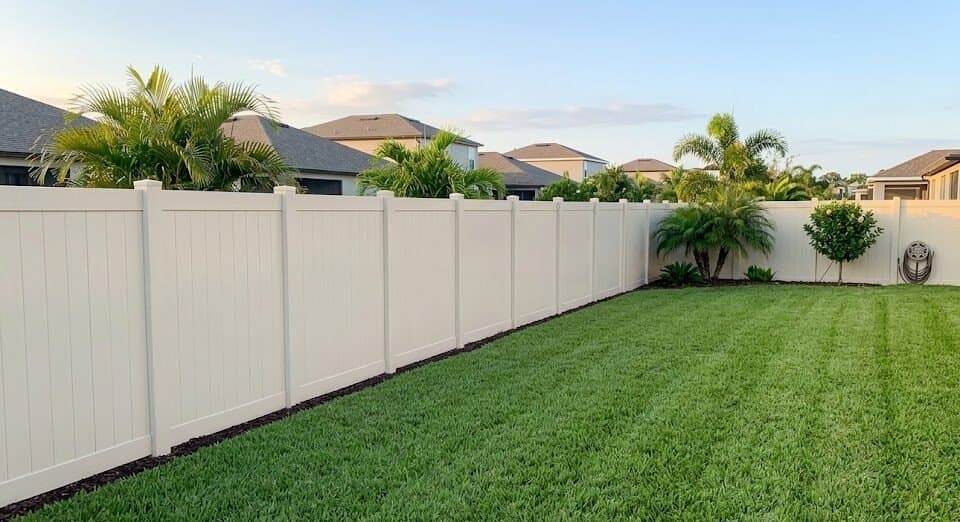
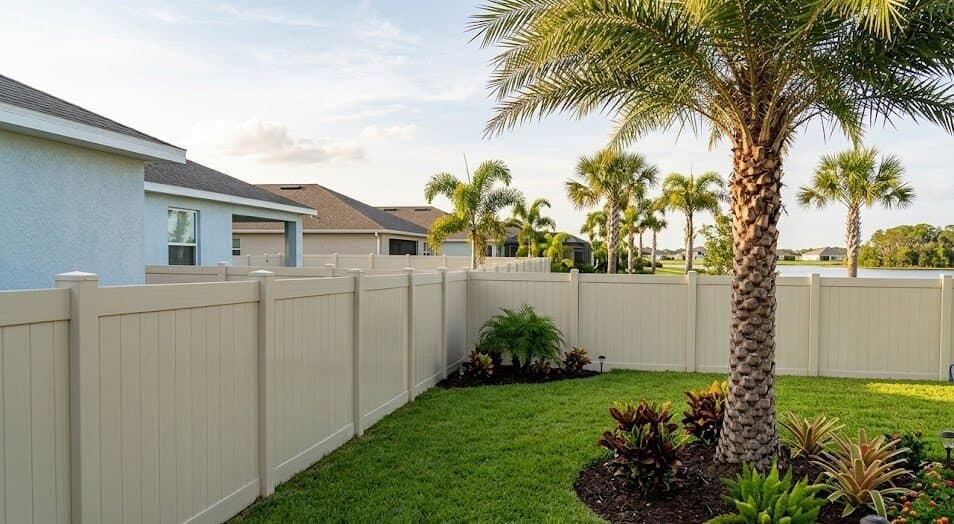
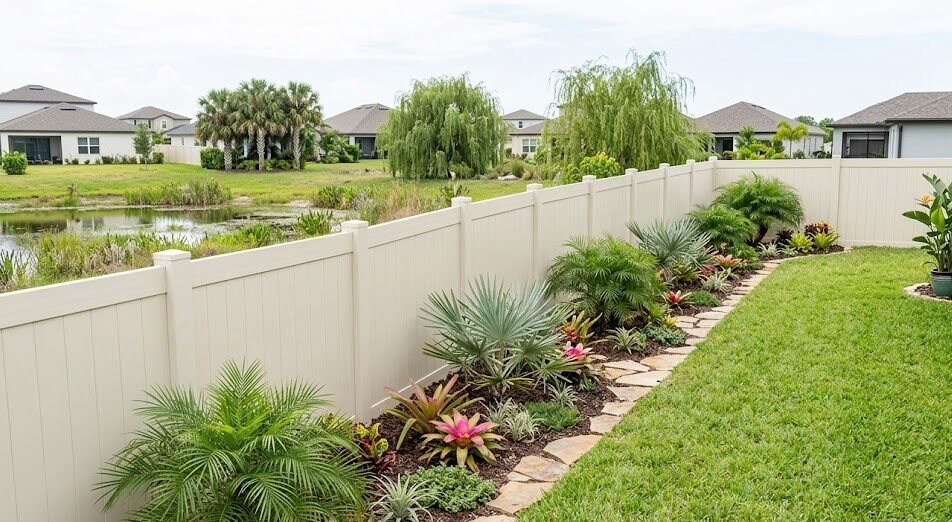
For most dog owners in Central Florida, vinyl privacy is the strongest all-round choice. The smooth face gives climbers nothing to grip, the solid panels block the view of passing dogs, joggers and delivery drivers that triggers fence-line barking and running, and vinyl does not rot or need paint in Florida humidity. The weak points are the bottom edge, where a digger will test the soil, and cheap thin-wall panels that a large dog can crack by hitting them at speed. Ask for reinforced bottom rails and check the panel wall thickness, because that is where the price difference between vinyl fences lives.
Wood privacy
Wood privacy blocks the view like vinyl and costs less upfront. With dogs it has three problems. Chewers work on the boards. The bottom of the boards stays wet in our summer rains and rots, which softens exactly the spot a digger attacks. And the horizontal rails, if they face the yard, give climbing dogs a ladder. If you choose wood, put the smooth side toward the dog where your HOA allows it, keep the boards off the soil, and plan on maintenance.
Aluminum picket
Powder-coated aluminum is the material of choice around Florida pools and looks clean in any yard. It suits calm dogs that do not jump or climb. For small dogs, add puppy panels. For climbers, remember that the horizontal rails sit on the inside on many styles. And because the dog can see everything through the pickets, fence-reactive dogs tend to run and bark the line.
Chain link
Chain link is the most affordable way to enclose a large yard and is very hard for a dog to break. It is also the easiest fence to climb, because the diamond mesh is a ready-made ladder for a determined dog. Privacy slats reduce barking triggers, and a tension wire or bottom rail keeps the mesh from being pushed up by a digger.
Stopping Diggers: What Goes Below the Fence
Height does nothing for a digger. The fence has to continue below the ground, or the ground along the fence has to be something a dog cannot dig. These are the proven options:
- L-footer of wire mesh: A strip of galvanized wire mesh attached to the bottom of the fence, buried and bent outward toward the yard. Pet fencing guidance commonly calls for about 12 inches deep and 12 inches out. The dog digs, hits wire and gives up.
- Concrete mow strip: A narrow concrete footing poured along the fence line. It stops digging, keeps the trimmer off the fence and cleans up the edge.
- Pavers along the fence line: A border of brick pavers along the inside of the fence stops digging and gives the dog a clean path to patrol. Our brick paver installation crews build these borders and pet paths so they drain and stay level.
- Gravel or rock border: Larger rock along the base discourages some diggers. It is less reliable than mesh or concrete with a determined dog.
Digging also has a cause. Dogs dig to get cool in the shade, to chase lizards and moles, and out of boredom. In a Florida summer, a shaded area with a cool surface, water and something to do reduces digging at the fence line more than any barrier alone. That is part of why many dog owners pair the fence with turf designed for pets, covered in our pet-friendly artificial turf guide, so the fence line does not turn into a muddy trench.
Stopping Jumpers and Climbers
- Remove launch points: AC units, pool equipment, benches, planters, woodpiles and trash cans near the fence turn a 6 foot fence into a 3 foot jump. Keep a clear zone of several feet along the fence line.
- Smooth face toward the dog: Rails and posts on the outside, smooth panels on the inside. Vinyl and properly faced wood do this best.
- Angled extensions: Brackets that angle the top inward toward the yard make the top of the fence much harder to clear and usually stay within height limits more easily than a taller fence.
- Roller bars: A rolling bar along the top that spins when a dog hooks its paws on it, so there is nothing to pull up on.
- Visual blocking: Many jumpers jump at something: a neighbor dog, a cat, a squirrel. A solid fence reduces the reason to jump.
Gates Are Where Most Dogs Actually Get Out
A large share of escapes happen through an open gate rather than over or under the fence. Lawn crews, pool techs, meter readers and visiting kids all open gates, and not all of them close them. Build the gate for that reality:
- Self-closing hinges: The gate closes on its own every time someone walks through.
- Self-latching hardware: A latch that catches on its own when the gate swings shut, mounted where a dog cannot nose it open.
- Lockable latches: A lock or a clip keeps service visitors from leaving the gate open when you are not home. Give the code or key only to people who need it.
- Sag-proof frames: A gate that sags drags, stops short of the latch and leaves a gap at the bottom. Proper bracing and posts set in concrete keep it square.
- Smart gate options: Sensors that alert your phone when the gate opens are increasingly common. We cover them in our smart gate guide.
What About Invisible and Electric Fences?
Invisible fences use a buried wire or a wireless signal and a correction collar. They are cheap and do not block the view, and some HOAs that restrict fences allow them. Veterinary sources point out the problems. VCA Animal Hospitals notes that a dog chasing something or frightened by thunder may run through the boundary and ignore the correction, that the dog may then get no signal to come back in, that power failures, cut wires and dead collar batteries allow escapes, and that an invisible fence does nothing to keep stray dogs and wildlife out of your yard. In Florida, with frequent thunderstorms and plenty of wildlife, we see invisible fences work best as a supplement to a physical fence, not as a replacement.
Florida Law and the Dangerous Dog Enclosure
For most families, the fence is a matter of keeping a pet safe. If a dog has been formally classified as dangerous under Florida law, the requirements are stricter. Section 767.11 of the Florida Statutes defines a proper enclosure as one where the dog is securely confined indoors or in a securely enclosed and locked pen or structure that keeps young children out and is designed to prevent the dog from escaping. For an outdoor pen, the statute calls for secure sides and a secure top so the dog cannot escape over, under or through it, plus protection from the weather. A standard backyard fence does not meet that definition by itself, so owners in that situation need a dedicated kennel or run inside the yard.
Our Picks by Dog Type
| Dog type | Recommended setup |
|---|---|
| Small dog or puppy | 4 to 5 foot aluminum with puppy panels, or vinyl privacy; tight bottom gap; self-latching gate |
| Digger | Vinyl or wood privacy with an L-footer or concrete or paver border along the line |
| Jumper or climber | 6 foot vinyl privacy, smooth face inside, clear zone, angled top if needed |
| Fence-line barker | Solid vinyl or wood privacy to block the view |
| Large yard, tight budget | Chain link with privacy slats and a bottom tension wire, upgraded at the gates |
Get a Dog Fence Built for Your Dog
KS Solutions installs vinyl, wood, aluminum and chain link fences across Central Florida, with paver borders and gate hardware built for dogs. Our fence installation service starts with how your dog actually gets out, then we set the height, bottom detail and gates to match. Homeowners in Orlando, Lakeland and Kissimmee can get a free estimate with the dig-proof and gate options priced side by side.