The Answer Changed on July 1, 2026, and Then Only Halfway
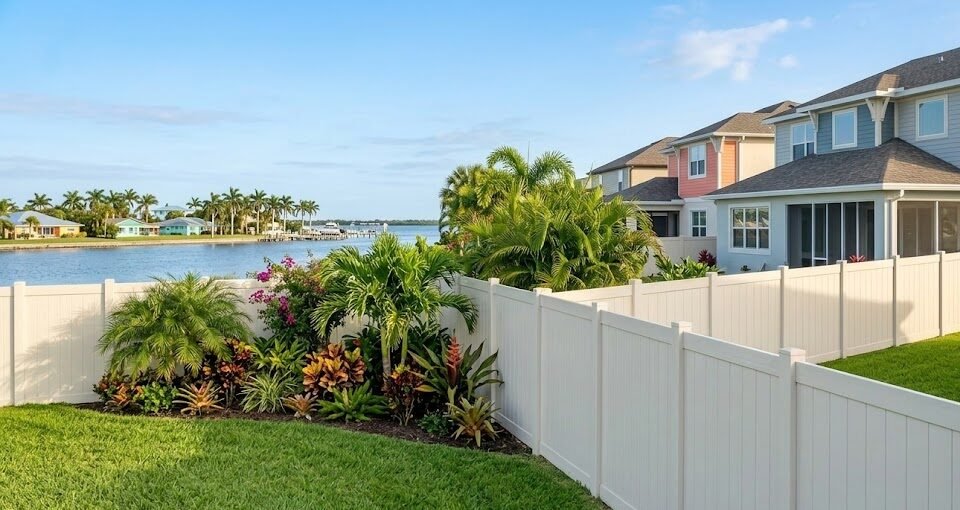
For years the answer to this question was simply yes, pull a permit. Then Florida passed HB 803, chapter 2026-63, effective July 1, 2026, which requires local governments to exempt the owner of a single-family dwelling, and their contractor, from having to obtain a building permit for work valued at less than $7,500. A typical residential fence lands under that number, so a lot of homeowners heard the headline and concluded fences no longer need anything.
That conclusion is wrong in a specific and expensive way. HB 803 removed a piece of paperwork. It did not remove a single rule about where your fence may sit, how tall it may be, what it may block at a corner, or what has to happen if there is a pool behind it. Zoning review still applies. Setbacks still apply. Easements still apply. The pool barrier statute still applies, and it is the one that carries real liability. And the exemption itself excludes two whole categories that matter here.
This guide covers what the exemption actually says, what still requires approval in the counties we build in, the height and setback numbers that decide your fence line, the pool barrier rules that no exemption touches, and the sequence that keeps a fence from being torn out at your expense. For pricing by material, see our fence cost guide by material, and for the separate question of board approval, see HOA fence rules in Florida.
What HB 803 Actually Exempts, in Plain Terms
The exemption is real, and it is narrower than the headline. The pieces that matter for a fence project:
- The threshold is under $7,500, and cities are determining it from a proposal or estimate from a licensed contractor rather than from the homeowner's guess.
- It covers the owner of a single-family dwelling and their contractor. Condos, apartments, multifamily and commercial property do not qualify.
- Five trades are carved out entirely: electrical, plumbing, structural, mechanical and gas work. A wood or vinyl privacy fence is not usually any of those, but a masonry wall on a footing, or a fence with an electric gate operator, starts touching them.
- Property in a flood hazard area does not qualify. This is the exclusion most people miss, and in Osceola, Polk and Volusia County it disqualifies a lot of lots. If any part of your property sits in a FEMA special flood hazard area, the exemption is off the table for you.
- It is a request, not a silence. Cities implementing this are requiring a written residential permit exemption request submitted and approved in writing before work starts. Fort Lauderdale, for example, publishes a specific HB 803 exemption form and tells owners to receive written approval first.
- It does not waive the code, zoning, setbacks or HOA approval. The work still has to comply with the Florida Building Code and every local land development rule. The paperwork changed. The requirements did not.
So the honest 2026 answer to whether you need a permit for a fence in Florida is this: you may not need a building permit, you almost certainly still need zoning approval, and you need to ask your specific jurisdiction which of the two it is calling the fence application. In most of Central Florida a fence permit was always mostly a zoning review anyway, which is exactly why the exemption changes less than it sounds like.
Orange County: Permit Required, and the Survey Is the Real Requirement
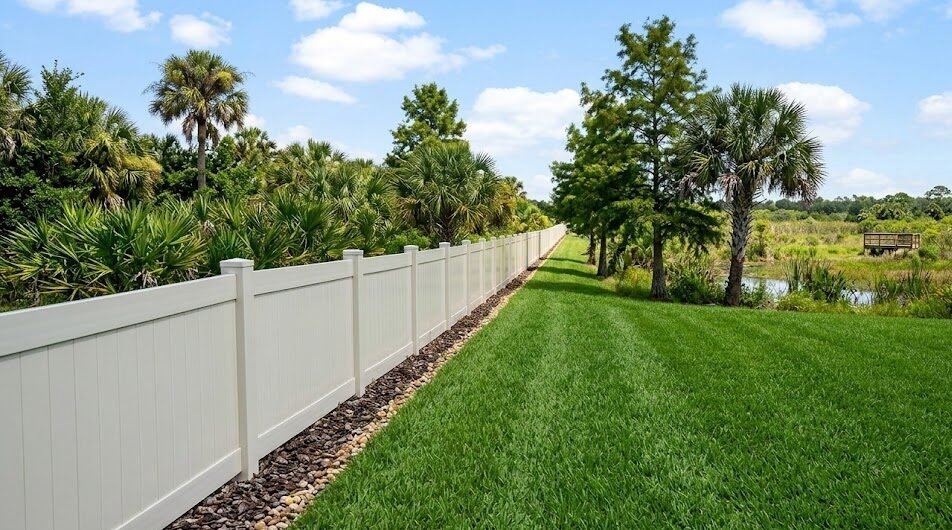
Orange County requires a residential fence permit for single-family lots, and the application is document-driven rather than complicated. You submit either a completed legible dimensioned site plan or a dimensioned survey to scale, with the proposed fence location noted. If any part of the fence sits inside an easement, you also submit a signed Easement Acknowledgement Form. The county is specific about file naming, asking for A100-Siteplan-Fence and A200-Easement Form-Fence in PDF.
The numbers worth knowing:
- Base fee of $38 plus additional charges per the county fee schedule, with an extra $40 if the permit exists because of a code enforcement violation. That last fee is the cheapest part of getting caught, which we will come back to.
- Review in about 4 business days through Orange County Fast Track, after which you get an approval or a deficiency list by email.
- Permit expires 180 days from approval or submittal, so do not pull it in January for a fence you plan in August.
- Height under the county code: up to 8 feet in side and rear yards and a maximum of 4 feet in the required front yard, with a 4-foot limit inside the lake setback area, which is 50 feet from the normal high-water elevation line and has to be shown on the survey.
That lake setback rule catches people in Orlando and the chain-of-lakes neighborhoods constantly. A 6-foot privacy fence that would be routine two streets inland becomes a 4-foot fence when the back of the lot is within 50 feet of the water line.
Osceola County: The 72-Inch Ceiling and the Front Setback Line
Osceola County runs fence rules through its Land Development Code, its Code of Ordinances and a Fence Affidavit the applicant signs. The two dimensional rules that decide most projects:
- Nothing over 72 inches. Six feet is the ceiling, full stop, which is why the 8-foot fence a neighbor in Orange County has is not a precedent you can use.
- 36 inches maximum forward of the building setback line. Anything in front of that line is a 3-foot fence, not a privacy fence.
- No closer than 5 feet to the front corners of the principal structure, which is the rule that determines where your side fence actually ties into the house.
Reported fee and timeline for the county run roughly $50 to $100 depending on scope with approval in about 5 to 10 business days, but confirm the current number with the county rather than with a blog, including ours. Fee schedules move. We do this weekly in Kissimmee and St. Cloud, and the affidavit plus a clean survey is usually the whole job.
(321) 353-7445Get Immediate Service
Polk County: Two Departments, Two Different Questions
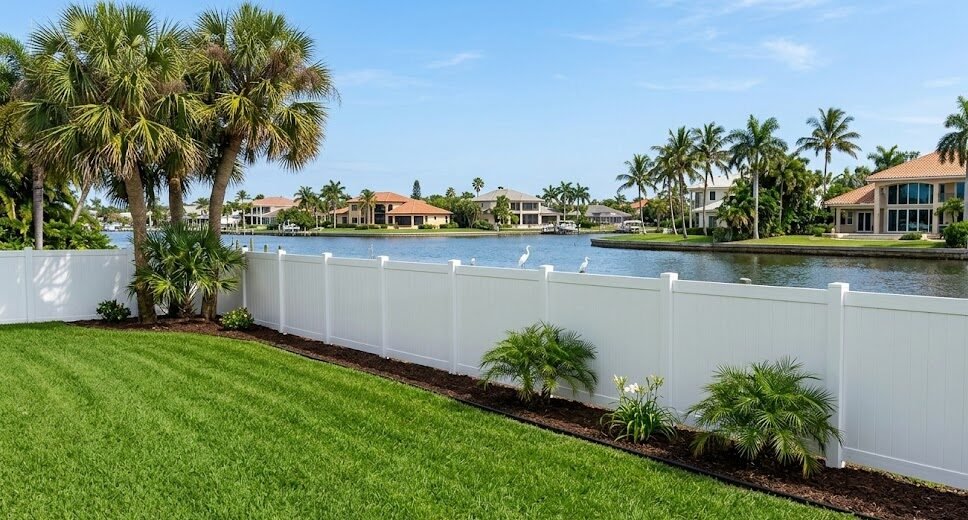
Polk County splits the work, and knowing which office to call saves a week. The Building Division administers construction permit requirements, the Land Development Division handles land development and zoning review, and Code Enforcement handles complaints after the fact. For construction permitting specifically, the county requires permits for all masonry walls, fences with masonry pilasters, and all solid fences over 8 feet high, which means a standard 6-foot wood or vinyl fence is generally not a building permit question in Polk. It is a zoning compliance question.
On height, Polk residential zoning is reported to limit front-yard fences to 3 feet, with a semi-opaque decorative topper allowed to bring the total to 5 feet, and side and rear fences to 6 feet. Verify against the current land development code for your zoning district before you set posts, especially on a corner lot or a double-frontage lot where two front yards exist.
Polk is also where the flood hazard exclusion in HB 803 bites hardest, because the county has extensive mapped flood areas around the lake chains. A homeowner in Winter Haven or Davenport who assumes the $7,500 exemption applies, then discovers the parcel is partly inside a special flood hazard area, has built without the approval they needed.
The Corner Lot Problem, and Why It Is Not Negotiable
Every jurisdiction in Central Florida restricts fence height near an intersection, using some form of a visibility or sight triangle. Cities commonly measure the triangle 15 to 20 feet back from the intersection along each frontage, and inside that triangle the fence has to stay low enough that a driver can see a child on the sidewalk.
This is the single most common cause of a fence being ordered modified after installation, for two reasons. First, the homeowner measures from the curb while the code measures from the property line or the right-of-way line, which can be 10 or more feet apart. Second, the corner of a lot often looks like it belongs to the homeowner while sitting inside public right-of-way. Nothing you build inside a right-of-way survives a complaint, and the county is not obligated to compensate you for removing it.
If your lot touches an intersection, get the sight triangle dimension in writing from the jurisdiction and have it drawn on the site plan before the crew arrives. It is a 10-minute question at plan stage and a full fence section at demo stage.
Easements: The Fence You Can Build and Still Lose
Utility, drainage and access easements are the quiet killer of fence projects. An easement is not a no-build zone in every case, which is why people build in them. It is a zone where someone else has the right to enter, dig, and not put your fence back. Orange County addresses this directly by requiring a signed Easement Acknowledgement Form when the fence sits within an easement, which is the county telling you in advance that you accept the risk.
Two practical rules from doing this for years. Where a drainage easement runs along a rear lot line, set the fence at the easement edge rather than inside it if the yard geometry allows, because the cost of losing 18 inches of yard is far lower than the cost of rebuilding 40 feet of fence after a utility crew works the line. And where the easement cannot be avoided, plan for removable panels at the access point instead of a continuous run. Gates and removable sections are the difference between a two-hour reinstall and a rebuild, and gate design is where fence budgets move anyway. If the gate is going to be automated, note that an operator brings electrical work into the project, which is one of the five trades HB 803 does not exempt. Our guide to smart gates and fences in Florida covers what survives outdoors here.
Pool Barriers: The One Set of Rules No Exemption Touches
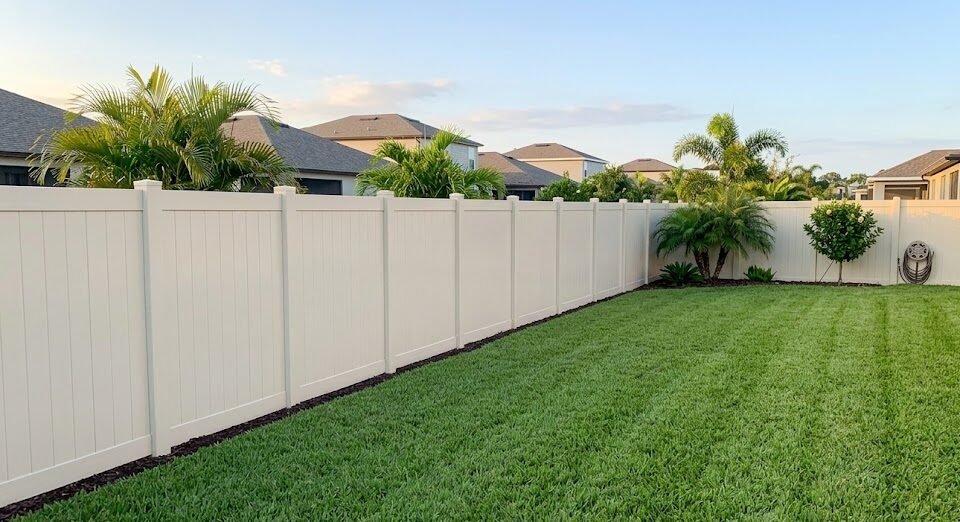
If there is a pool behind the fence, the Residential Swimming Pool Safety Act governs, and it is written in mandatory terms. Florida Statute 515.29 requires that the barrier be at least 4 feet high on the outside and that it have no gaps, openings, indentations, protrusions or structural components that would let a young child crawl under, squeeze through or climb over it.
Three details in that statute cause most of the failures we see on existing properties:
- The barrier goes around the pool, not just around the yard. The statute requires the barrier to be placed around the perimeter of the pool and to be separate from any fence, wall or other enclosure surrounding the yard, unless that fence or a portion of it sits on the perimeter of the pool, is being used as part of the barrier, and meets the requirements of the section on its own.
- Gates open outward, away from the pool, and must be self-closing with a self-latching locking device whose release mechanism is on the pool side of the gate.
- Nothing climbable next to it. A barrier may not be located so that a permanent structure, equipment or similar object can be used to climb it. That includes the AC condenser, the pool pump, a retaining wall and the decorative planter box.
A privacy fence at the property line is not automatically a compliant pool barrier, and treating it as one is how homeowners end up with both a code case and an insurance problem. When we build a fence on a property with a pool, we design the barrier line first and the privacy line second, because the barrier is the part with a statute behind it. The same logic applies to how the deck meets the barrier, which is covered in our pool deck paver guide.
What Happens If You Skip It
The honest version, because the downside is asymmetric. Building without the approval you needed rarely produces a fine on Monday. It produces a complaint months or years later, usually from a neighbor, a survey during a sale, or a permit application for something else. Then the file gets opened.
The costs stack in this order: the after-the-fact application, the penalty fee, which in Orange County is an extra $40 on top of the permit when the application exists because of code enforcement, the cost of modifying or removing the fence to comply, and the cost of doing it a second time correctly. Add title friction if the timing lands in the middle of a sale, because an open code case is a closing problem, not a paperwork problem.
The version of this that hurts most is the fence that is 6 inches over the property line. It is not a permit issue at all, it is a survey issue, and it is why we work off a current survey rather than off the neighbor's existing fence. An existing fence is evidence of where someone once thought the line was.
The Sequence That Keeps a Fence Permanent
- Start with the survey, not the quote. A current survey shows the property lines, easements, right-of-way and, where applicable, the water line the setback is measured from. Everything else is drawn on top of it.
- Call the jurisdiction and ask two separate questions: does this fence need a building permit, and does it need a zoning review or fence application. Since July 1, 2026, those can have different answers.
- Check whether your parcel is in a flood hazard area before you rely on the $7,500 exemption, because that exclusion is absolute.
- If you are using the exemption, file the written request and get written approval first. Verbal is not an approval, and the burden of proof is yours.
- Confirm height by yard and by zoning district, including the front setback line, the corner sight triangle and any lake setback.
- Design the pool barrier before the privacy fence if there is a pool, including gate swing, latch side and what sits within climbing distance.
- Get HOA approval in parallel, because it is a separate track with its own timeline, and approval from one does not substitute for the other.
KS Solutions pulls the fence permit or files the exemption request as part of the job across Orange, Osceola, Polk, Lake, Seminole and Volusia County, works from your survey, and draws the fence line before anyone digs a post hole. If you want the height, setback and barrier questions answered for your specific lot, start with fence installation and we will tell you what your jurisdiction requires before you commit to a design. For the rest of the backyard, the same crew handles brick paver installation and artificial turf installation, which is why the fence line and the hardscape get planned together instead of twice.