A Below-Normal Forecast Is Not a Low-Risk Season
NOAA updated its 2026 Atlantic hurricane outlook on August 7, 2026, and the numbers came down. The updated forecast calls for 7 to 13 named storms, 2 to 6 hurricanes and 0 to 2 major hurricanes, with a 75 percent chance of a below-normal season, 20 percent near-normal and only 5 percent above-normal. A developing El Nino is increasing wind shear across the Atlantic, which suppresses storm formation. Through early September the basin has produced two named storms, Arthur and Bertha, and no hurricanes.
That is genuinely good news, and it is also the most dangerous kind of good news, because of what it does to behavior. The statistical peak of the Atlantic season falls in the second week of September, and the busiest stretch runs August through October with the season not closing until November 30. Everything that matters most is still ahead.
The historical reminder that settles this argument is 1992. That season produced seven named storms, which is below normal by any definition and near the bottom of this year's forecast range. One of them was Andrew, which came ashore in South Florida as a Category 5 and remains one of the most destructive hurricanes in United States history. A quiet season and a safe season are different things, and NOAA said as much in the update: it only takes one storm.
The good news for a Central Florida backyard is that hardscape preparation is cheap, mostly free, and takes an afternoon. Unlike a roof or impact windows, almost nothing on this list requires a contractor or a permit. Here are the nine tasks, ordered by how much damage each one prevents per minute spent.
Tasks 1 to 3: The Projectile Problem
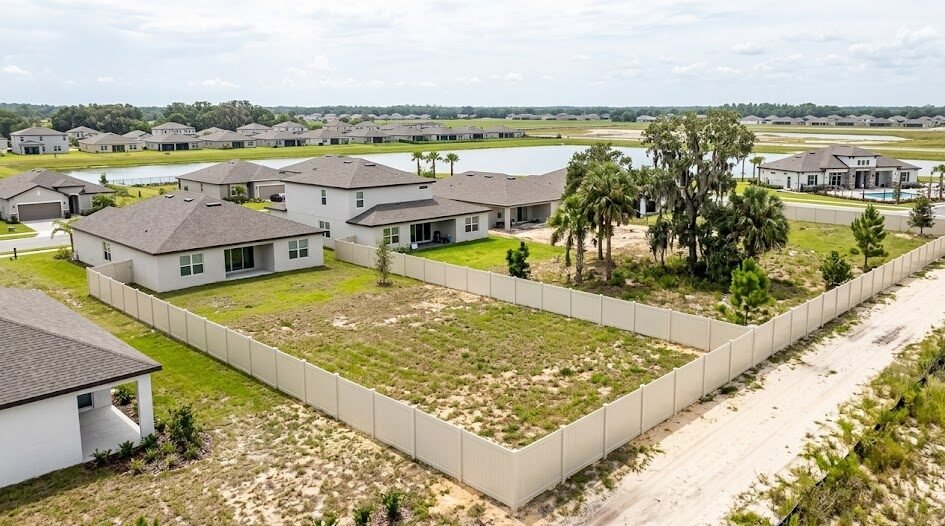
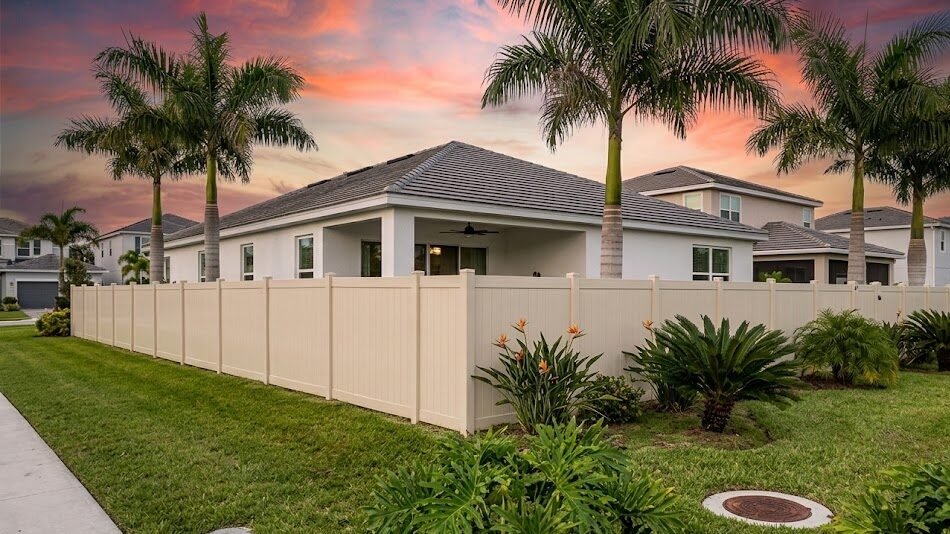
The single largest source of preventable hurricane damage in a residential backyard is not wind acting on your property. It is your property acting on itself. Loose objects become projectiles at sustained tropical storm force, and the things they hit are your fence, your screen enclosure, your pool deck and your windows.
- Task 1, clear every loose item from the hardscape. Patio furniture, umbrellas and their bases, grills, planters, solar path lights, garden decor, wind chimes, and the kids' toys. Umbrellas are the worst offender because the canopy catches wind like a sail even when folded and the base is heavy enough to break whatever it lands on. Everything goes in the garage or the shed. If it will not fit, it goes in the pool, which sounds absurd and is standard practice for exactly this reason.
- Task 2, deal with potted plants specifically. Large ceramic and concrete pots feel too heavy to move and that is the trap. They are heavy enough to shatter a paver, crack a pool deck or take out a fence panel, and not heavy enough to stay put in a Category 1. Move them inside or lay them on their sides in a sheltered corner against the house.
- Task 3, look up and look at the neighbor's yard. Overhanging limbs above pavers or fence line are the projectile you cannot move on the day of the storm. Trimming is a pre-season task, not a storm-week task, because tree debris put out at the curb during a storm watch frequently does not get collected in time and becomes debris in the street. If the branch overhangs your fence and originates next door, that is a conversation worth having in September rather than in October.
If you are triaging with limited time, these three tasks are worth more than the other six combined. Most storm-damaged fence and paver claims we see began with something that was sitting on the patio.
Tasks 4 and 5: Water Management Under the Pavers
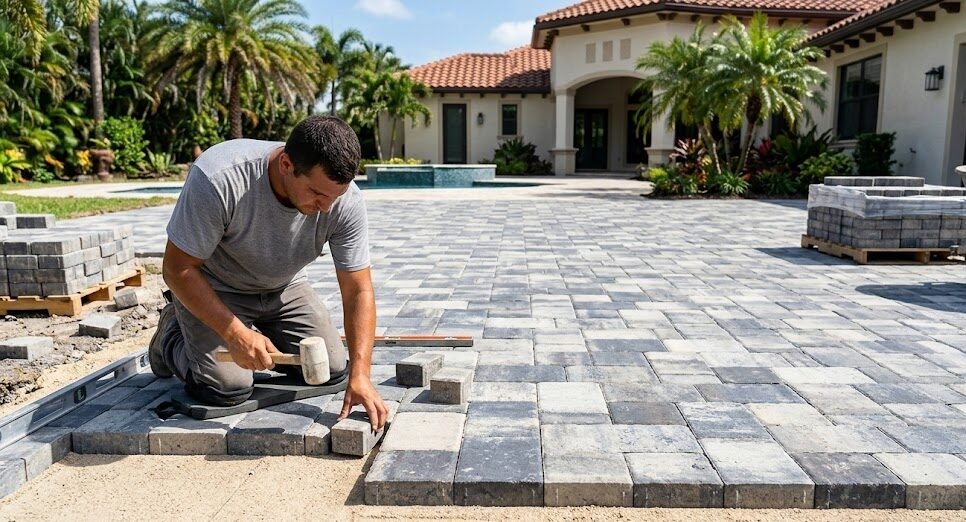
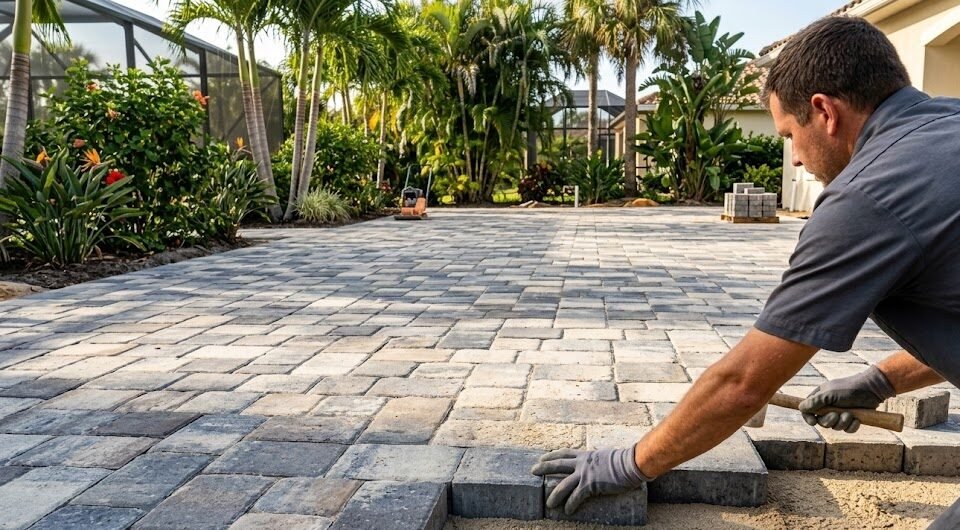
A properly installed paver system is not glued down. It is a flexible pavement: compacted base, bedding sand, pavers, then joint sand locking them together. That flexibility is why pavers outperform poured concrete in Florida, since concrete cracks where pavers move and settle back. But the system depends entirely on the base staying put, and the base is vulnerable to exactly one thing, which is uncontrolled water moving through it.
Hurricanes deliver rainfall in quantities that overwhelm normal drainage. That is where paver damage actually comes from in a storm, not from wind lifting pavers.
- Task 4, clear every drainage path before the storm. Walk the perimeter of the hardscape and find where water is supposed to exit. Clear the deck drains, the channel drains at the garage apron and the pool deck, and the downspout outlets. A single clogged deck drain turns a patio into a basin, and standing water sitting on a paver surface for hours works its way into the joints and starts moving bedding sand.
- Task 5, check the downspouts and where they discharge. This is the one homeowners skip. A downspout that dumps directly onto or beside a paver edge during a normal rain is an annoyance. During a hurricane delivering several inches per hour, it becomes a firehose aimed at the base of your hardscape, and it will wash out base material from under the edge course. Extend the discharge away from the hardscape, even temporarily with a flexible extender, and make sure it is not simply discharging against the fence line either.
If your joints are already sand-depleted going into a storm, the water has a much easier path into the bedding layer. That is a pre-season fix rather than a storm-week one, and it is covered in our guide to polymeric sand in Florida. Sealing serves a related purpose by stabilizing joints and shedding water, and the honest timing guidance is in our guide to sealing pavers in Florida. Neither is something to attempt with a storm inside the forecast cone, because both need dry cure time.
Tasks 6 and 7: The Fence, Which Fails Predictably
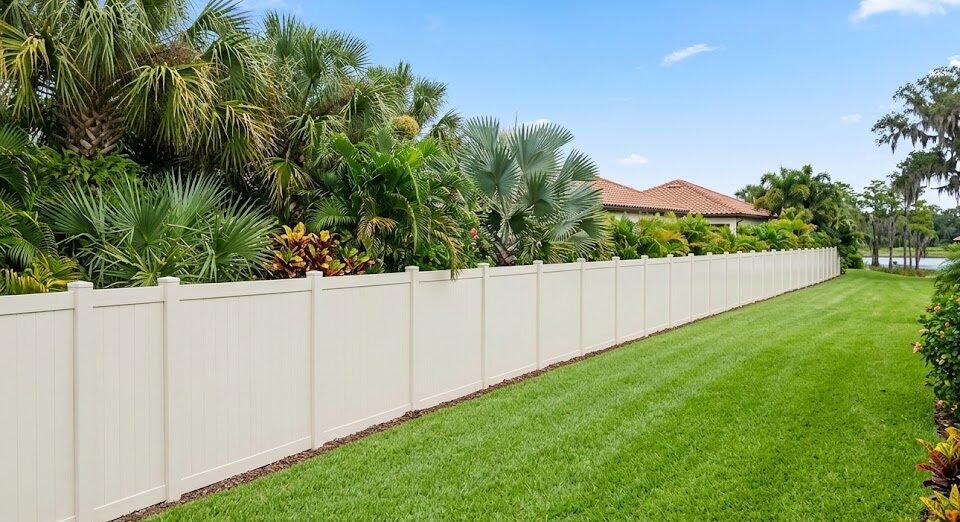
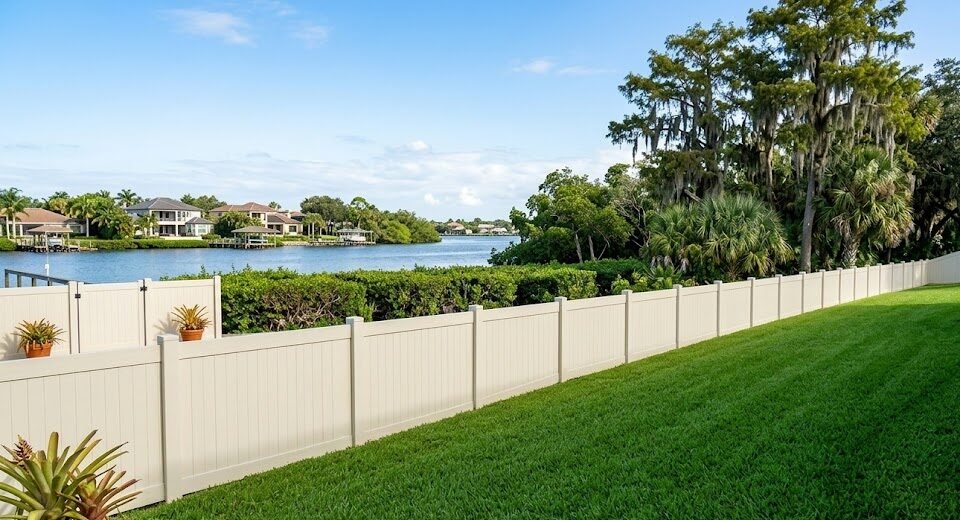
Fences fail in hurricanes in a specific order, and knowing the order tells you where to spend your effort.
Solid privacy fences catch the most wind because they present a continuous surface with nowhere for pressure to go. A six-foot solid vinyl or board-on-board fence is a sail. Picket, aluminum and chain link fences pass air through and survive winds that flatten privacy panels, which is the fundamental tradeoff of choosing privacy in a hurricane state.
- Task 6, open the gates and secure them open. This is the highest-value fence task and it costs nothing. A closed gate is a rigid panel that catches full wind load and transfers it into the gate posts, which are the weakest points in the fence because they carry hinge loads in normal service already. Swing the gates open, secure them back against the fence line with rope or a bungee so they cannot slam, and leave them that way through the storm. Gate hardware is also the most common single point of failure, so check the hinge screws while you are there.
- Task 7, inspect posts for movement at the base. Grab each post and push. A post that rocks in the ground has already lost its footing, and it will not survive winds a sound post handles easily. Post depth matters more than panel strength here. For reference, hurricane-zone installation standards call for post footings around 36 inches deep in wet-poured concrete for a six-foot fence, and any post that moves under hand pressure is not achieving that. A single failing post takes its neighboring panels with it.
Two things not to do. Do not remove fence panels preemptively unless the fence was engineered with removable panels, because reinstalling them incorrectly leaves the fence weaker than it was. And do not lean plywood or storm panels against a fence for storage, since you have just converted a wind-permeable fence into a solid one at the worst possible moment.
If your fence is aging and this inspection turns up multiple loose posts, that is a replacement conversation for after the season rather than an emergency. Our fence installation work in Central Florida uses depth and hardware specified for this climate, which is where hurricane performance is actually decided.
(321) 353-7445Get Immediate Service
Tasks 8 and 9: Turf, Documentation and the Thing Everyone Forgets
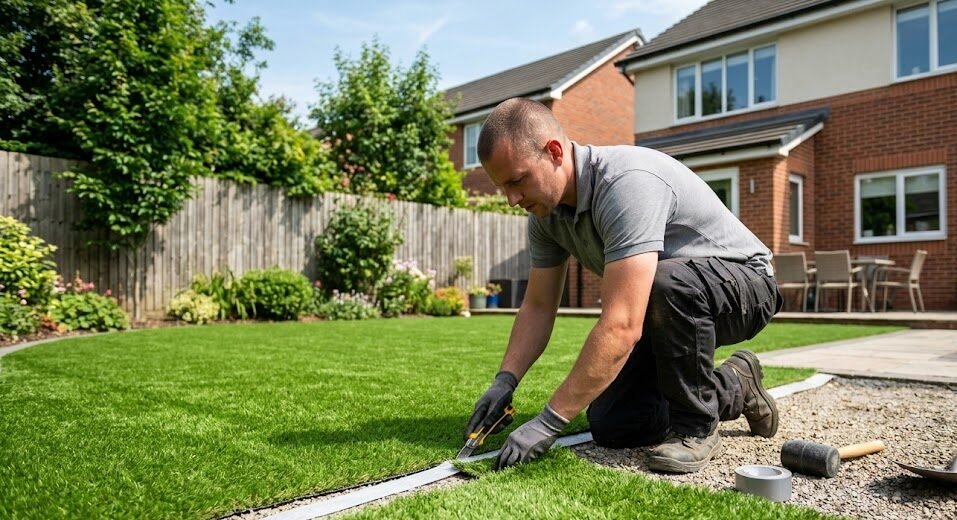
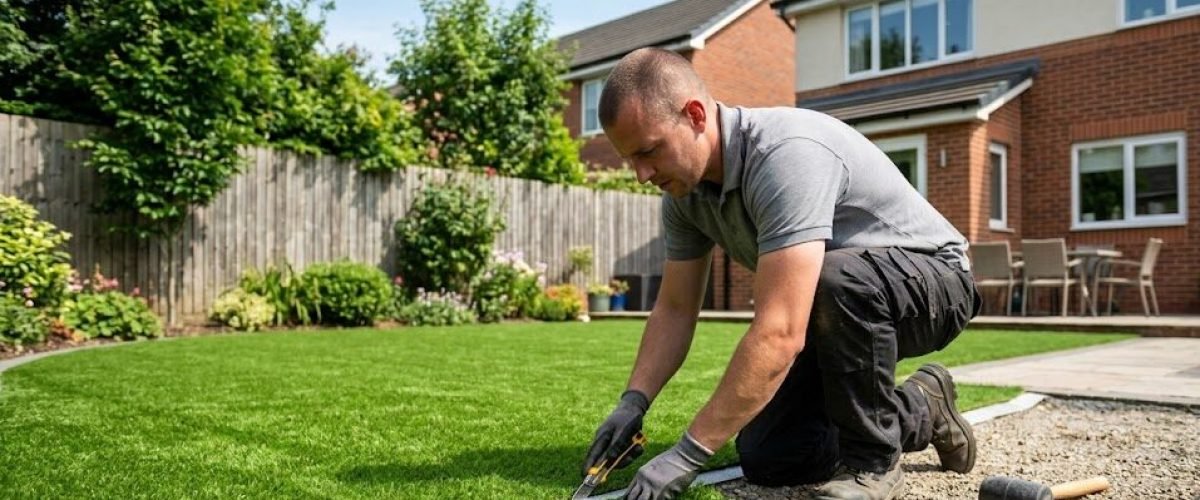
- Task 8, check artificial turf edges and infill. Quality artificial turf handles hurricanes well because it is permeable and anchored around the perimeter, and it drains better than sod in the rainfall that follows. The vulnerability is the edge. Turf lifts at a loose perimeter nail or an unglued seam, and once wind gets under an edge it will peel a section the way it peels a shingle. Walk the perimeter, press the edges, and re-secure anything loose. Also make sure nothing heavy is going to sit on the turf through the storm, since compressed infill under a displaced object leaves a flat spot that does not recover.
- Task 9, photograph everything while it is still intact. This is the five-minute task with the highest financial return of anything on this list. Walk the yard and photograph the pavers, the fence on both sides, the turf, the pool deck and any hardscape feature, from multiple angles and in good light. Date-stamped pre-storm photographs are the single most useful piece of evidence in any subsequent insurance claim, because the argument in a denied claim is almost never whether damage exists. It is whether the damage predates the storm.
Store those photos somewhere that survives a flooded house and a dead phone, meaning cloud storage or emailed to yourself. Add a photo of any recent hardscape invoice while you are at it, since proof of condition plus proof of value is a substantially stronger position than either alone.
If a storm does hit and you end up filing, the deductible math and what actually gets paid on fence and paver damage in Florida is covered in detail in our guide to storm damage claims for pavers and fence. The short version is that most of these claims are never denied, they are never filed, because the hurricane deductible is a percentage of dwelling coverage rather than a flat number and it frequently exceeds the loss.
After the Storm: What to Do in the First Week
Once conditions are safe, the hardscape assessment is quick and there are two things worth catching early.
First, look for settlement rather than obvious breakage. Broken pavers are visible and rarely urgent. Settlement, meaning an area that now sits lower than it did or a spot that holds water after rain, is the sign that base material moved. That is the failure that gets worse with every subsequent rain if left alone, and it is much cheaper to correct as a re-level than as a full rebuild once the void spreads. Our guide to paver repair and re-leveling covers what is a homeowner job and what is not.
Second, check the fence line for posts that are now leaning even slightly. A post that shifted during the storm but did not fall has lost footing integrity, and it will fail in the next event. Straightening and resetting one post is inexpensive. Replacing a run of fence is not.
Also worth knowing: in most Florida jurisdictions an open, ground-level paver patio does not require a building permit, while fences generally do, and fence permit requirements vary considerably between counties and cities in Central Florida. If storm damage means replacing rather than repairing a fence, confirm the requirement locally before work starts.
The Realistic Priority Order
If a storm enters the forecast cone and you have one afternoon, do them in this order: clear loose objects and secure the pots, open and secure the gates, clear the drains and redirect the downspouts, then photograph everything. Those four cover the overwhelming majority of preventable hardscape damage.
The remaining tasks are pre-season work, best done in May or June rather than during a watch: trimming overhanging limbs, refreshing depleted joint sand, sealing, checking post footings and re-securing turf edges. Attempting them under a storm warning is how people get hurt, and several of them simply do not work without dry weather.
A below-normal season is still a season with hurricanes in it. The forecast lowers the odds, it does not lower the stakes for the storm that does arrive, and the peak of the season is right now.
KS Solutions installs and maintains pavers, fencing and artificial turf across Central Florida, including Orlando, Lakeland and Winter Haven. If a pre-season walkthrough turns up settled brick pavers or fence posts that move, getting it addressed before October is far cheaper than after. Ongoing maintenance plans cover the joint sand and drainage checks that make the difference when the rain actually arrives.