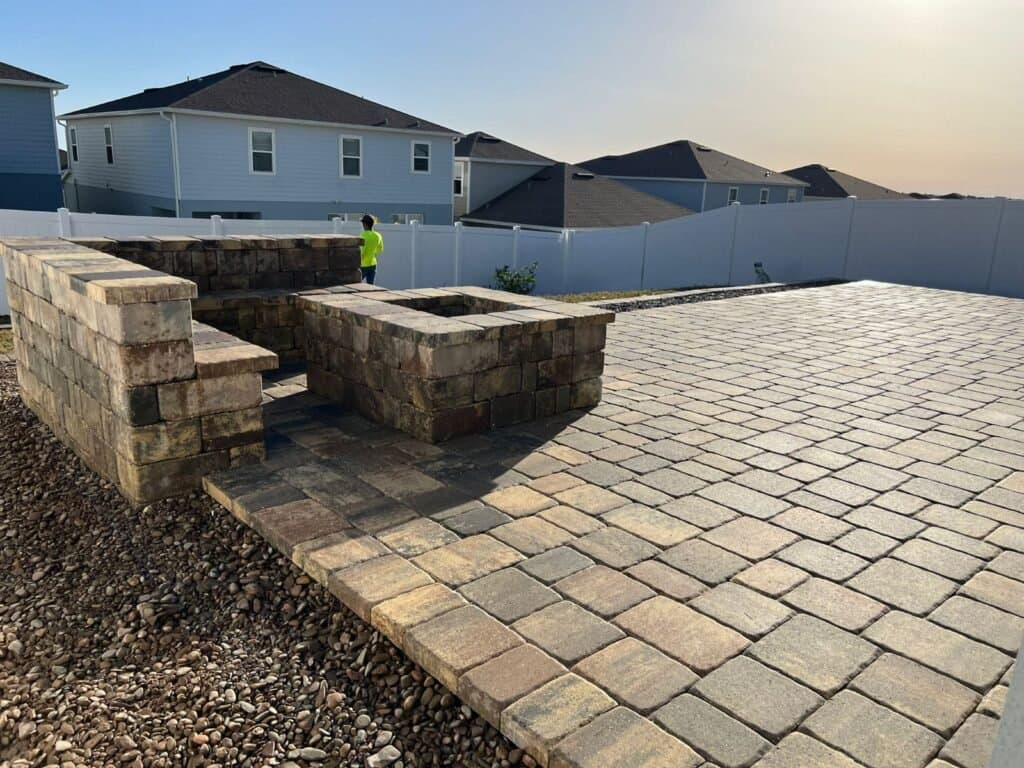
The Only Question That Matters: Is It the Pavers or the Base?
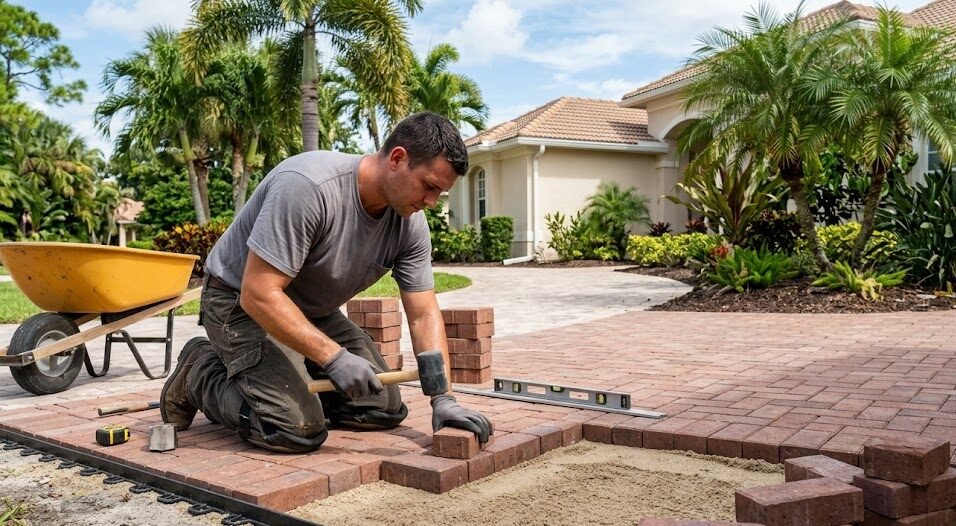
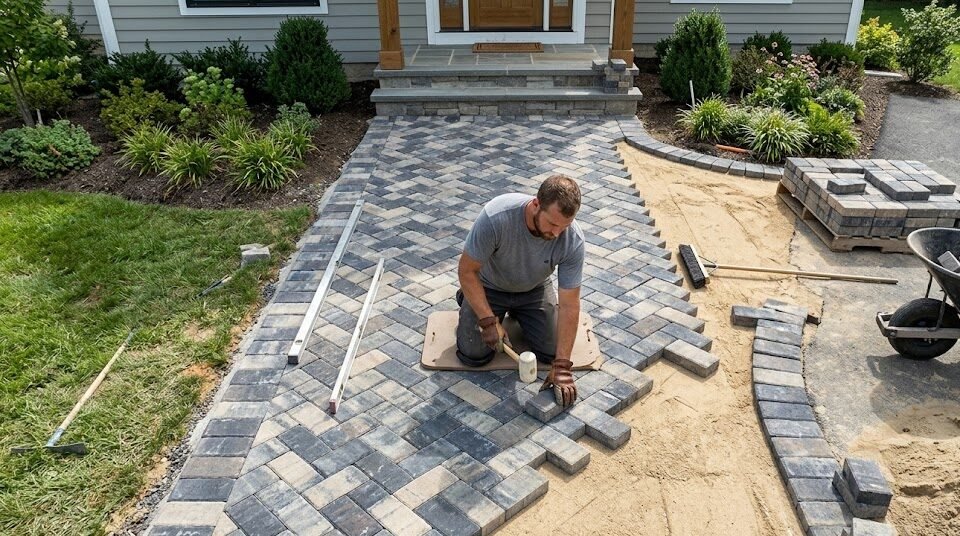
Almost every paver repair decision in Florida comes down to one diagnosis, and homeowners routinely get it backward. A sunken spot in a driveway looks like a paver problem. It is almost never a paver problem. Concrete pavers are rated to compressive strengths that outlast the house, and they do not sink on their own. What sinks is what is under them.
That distinction decides whether this is a Saturday with a rented compactor or a four-figure invoice. Lift one paver at the low point and look. If you find a clean, firm layer of gray crushed stone an inch or so below the paver, your base is intact and the bedding sand simply washed or consolidated. That is the cheap repair. If you find soft sand all the way down, wet muck, or a void you can push your hand into, the base is the problem and no amount of sand on top will hold.
The most frequent cause of sinking pavers in Florida is an improperly constructed sub-base. When pavers were laid over a thick layer of sand with no compacted aggregate, or over unwashed gravel, organic topsoil, or aggregate that was never compacted in lifts, the structure consolidates over time and the surface follows it down. Our sandy subgrade plus a rainy season that dumps water in sheets is close to a worst case for that mistake.
What ICPI Actually Specifies, and Why It Explains Your Dip
The Interlocking Concrete Pavement Institute publishes the specification most quality installers build to, and comparing it against what you find under your pavers is usually a five-minute diagnosis.
- Base depth: a properly built flexible base needs a minimum of 4 to 6 inches of compacted crushed stone for pedestrian areas such as patios and walkways, and up to 10 inches for vehicular loads such as driveways.
- Compaction method: aggregate is compacted in roughly 2-inch lifts with a mechanical plate compactor. A base dumped and compacted in one pass looks identical on day one and consolidates for years afterward.
- Bedding sand: about 1 to 1.5 inches uncompacted, screeded to a consistent depth, and it should conform to ASTM C33 concrete sand gradation. Bedding sand is a leveling course, not a base. Anyone who used three or four inches of sand instead of stone built a dip that had not happened yet.
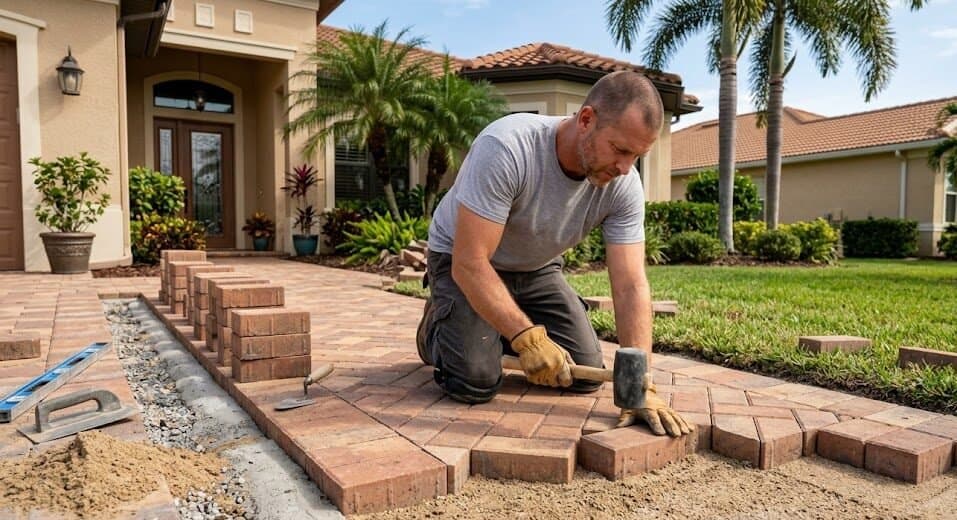
- Edge restraint: a physical restraint around the perimeter holding the field in position. Without it, pavers migrate outward, joints open and the field loses its interlock.
Two of those four failures are visible from a lawn chair. If your joints have opened up and the border row has crept outward, you have an edge restraint problem. If you have isolated dips in the field with tight joints elsewhere, you likely have a bedding or base problem in that spot only.
The Five Failures You Will Actually See in Florida
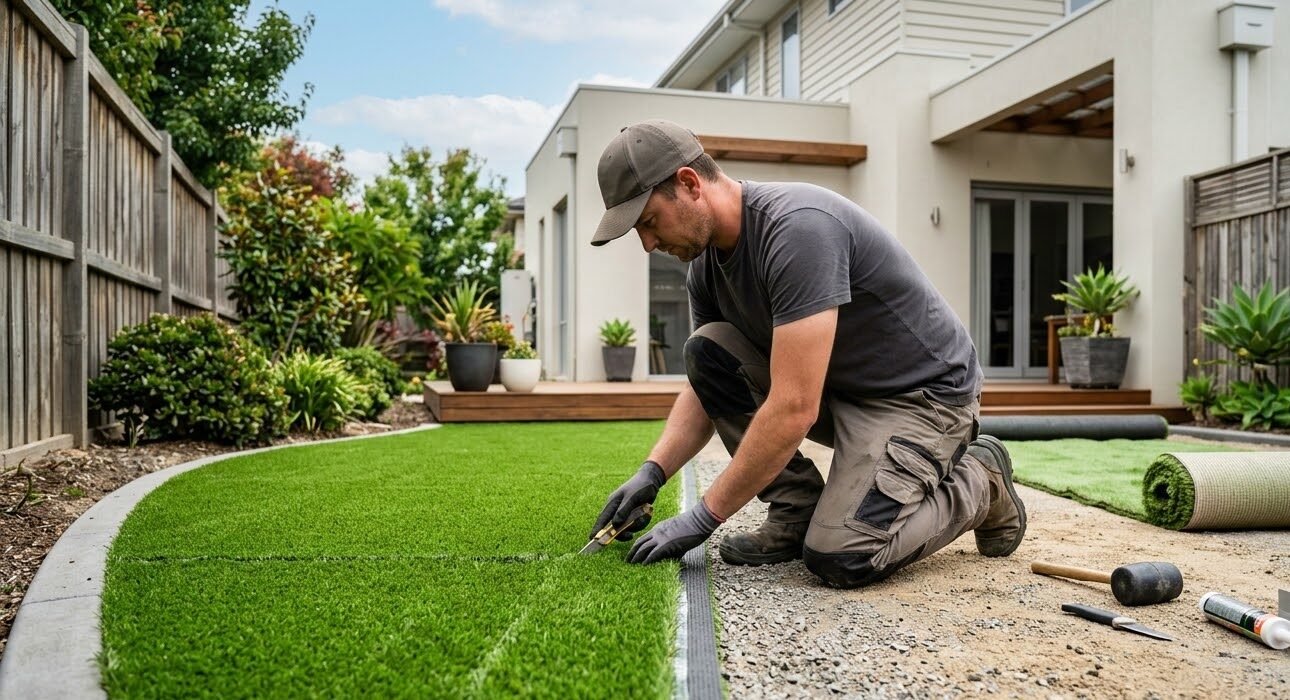
Sorted roughly by how often they show up on Central Florida properties.
- Sunken or settled areas: visible as dips, most commonly in driveways and most commonly caused by inadequate base preparation at original installation. In a driveway the dip usually appears in the wheel tracks or at the apron, where load is highest.
- Washout at downspouts and roof drip lines: Florida rain concentrated at a single discharge point moves bedding sand out from under pavers with impressive efficiency. The tell is a dip that is exactly where the water lands.
- Joint sand loss: open joints from storms, irrigation and pressure washing. It looks cosmetic and it is not, because joint sand is what transfers load between pavers. Once joints empty, individual pavers rock and edges chip.
- Edge restraint failure: the perimeter gives, the field spreads laterally, joints widen everywhere at once. Common on DIY installations and on jobs where the restraint was spiked into sand rather than into compacted base.
- Root heave: the opposite problem, a bulge rather than a dip, from tree roots growing under the pavement. Repair requires dealing with the root, and doing that without killing the tree is a real constraint on mature oaks.
Notice that three of the five are water management problems wearing a hardscape costume. Fixing the pavers without fixing where the water goes buys you a repeat performance next wet season.
The DIY Repair: What It Actually Costs and When It Works
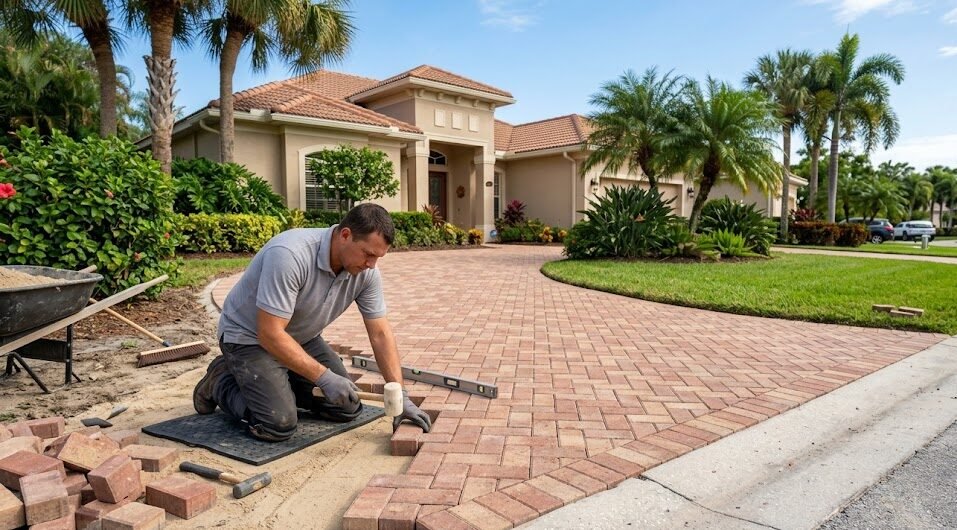
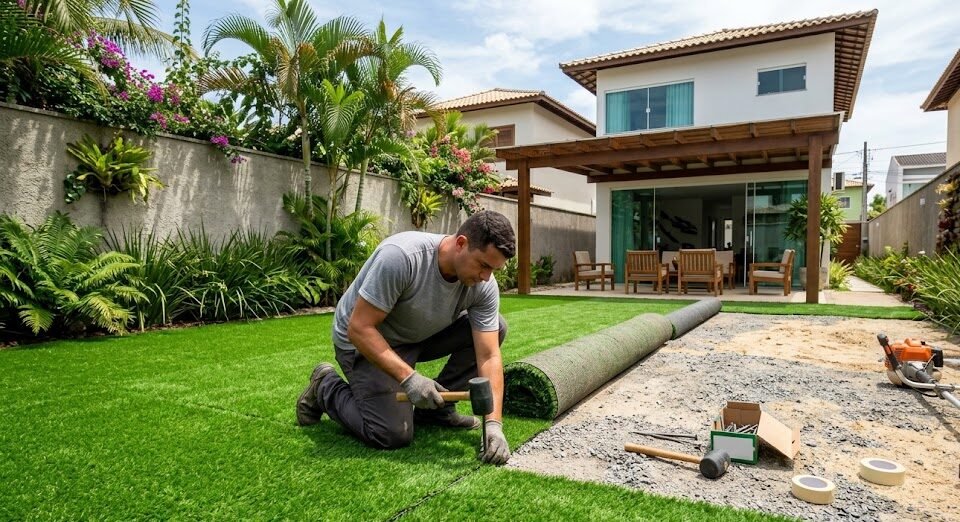
Re-leveling a small settled area is a genuine homeowner job when the base underneath is sound. Here is the honest cost, because it is not free and the ads that say so are skipping the compactor.
- Plate compactor rental: roughly $50 to $90 per day, or $150 to $250 per week for typical residential sizes. Larger units and longer terms run higher, and some rental yards bill transport separately.
- Bedding sand: bagged paver base and sand run a few dollars per half-cubic-foot bag, with bulk pricing lower per bag. A 40 square foot repair needs very little.
- Polymeric jointing sand: one 40 to 50 pound bag typically covers a repair of this size with room to spare.
- Tools you likely own: two paver extractors or a pair of flathead screwdrivers, a rubber mallet, a 4-foot level, a broom, and two lengths of pipe or screed rail.
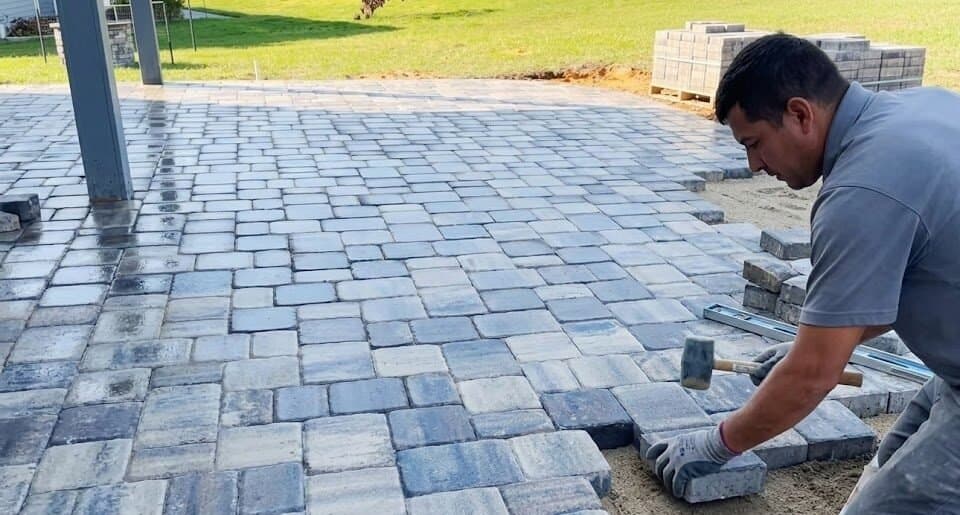
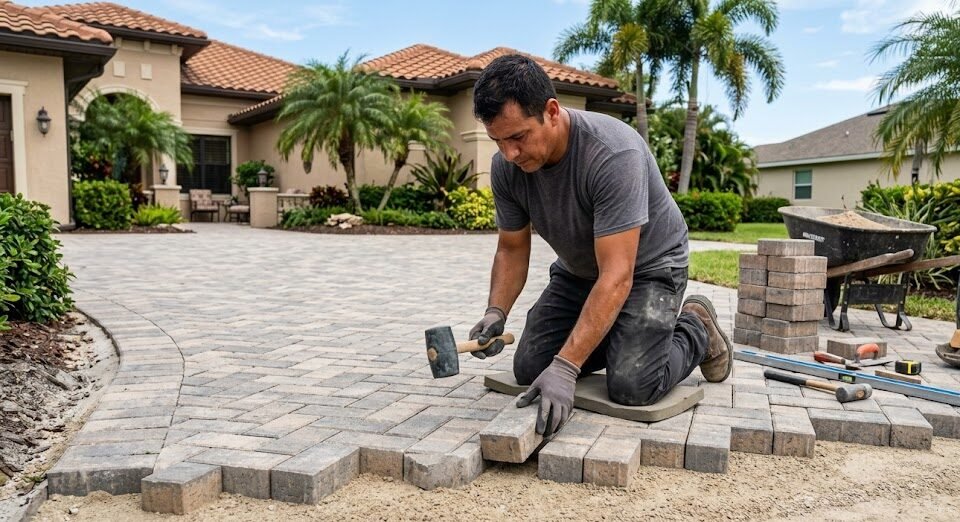
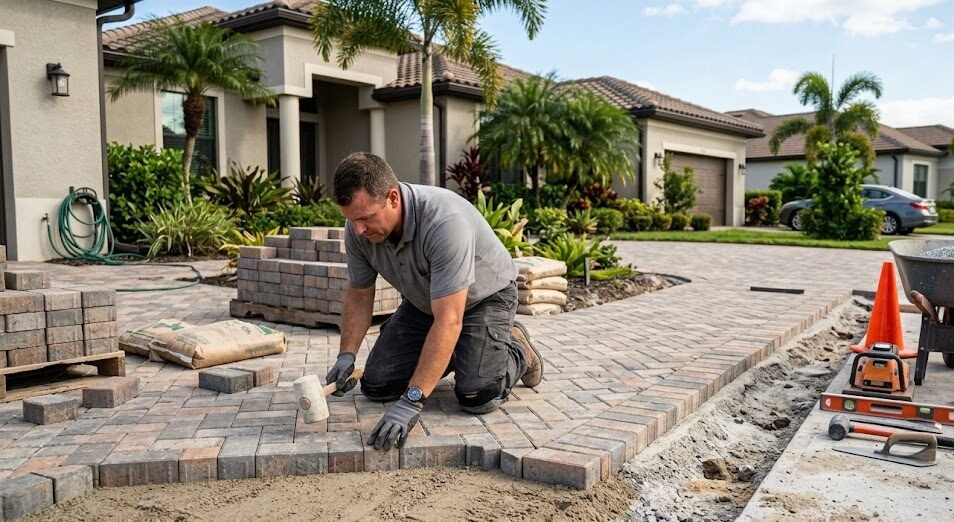
Realistically that is $60 to $150 out of pocket for a single-day repair on an area under about 50 square feet. The sequence is straightforward: pull the affected pavers plus one row past the dip, set them aside in order, check what is underneath, add and compact base material if needed in thin lifts, screed fresh bedding sand to a uniform 1 to 1.5 inches, reset the pavers to the original pattern, compact the surface with the plate compactor over a protective mat, then sweep in jointing sand and set it per the manufacturer instructions.
Two warnings that save real money. First, do not compact directly on the pavers without a protective pad, because a bare steel plate chips faces and you will look at those chips for twenty years. Second, do not use play sand or mason sand as bedding. Both hold water and neither drains or supports the way ASTM C33 concrete sand does. The jointing product matters just as much, and the difference between products that haze and products that hold is covered in our guide to polymeric sand in Florida.
(321) 353-7445Get Immediate Service
When It Stops Being a DIY Job
Call a contractor when any of these are true, because each one means the failure is structural rather than cosmetic.
- The dip is in a driveway. Vehicular loads need up to 10 inches of compacted base, and a driveway that has settled is telling you the original base was thin. Adding sand on top of a thin base is a repair with a known expiration date.
- You found soft material all the way down. No base, or a base that is saturated and muddy, means excavation and rebuild, not adjustment.
- The affected area exceeds roughly 100 square feet or several separate patches. Multiple failures point to a systemic base problem across the whole installation.
- The perimeter has spread. Edge restraint replacement means resetting border pavers and re-compacting the affected field, and the restraint has to be anchored into competent base to hold.
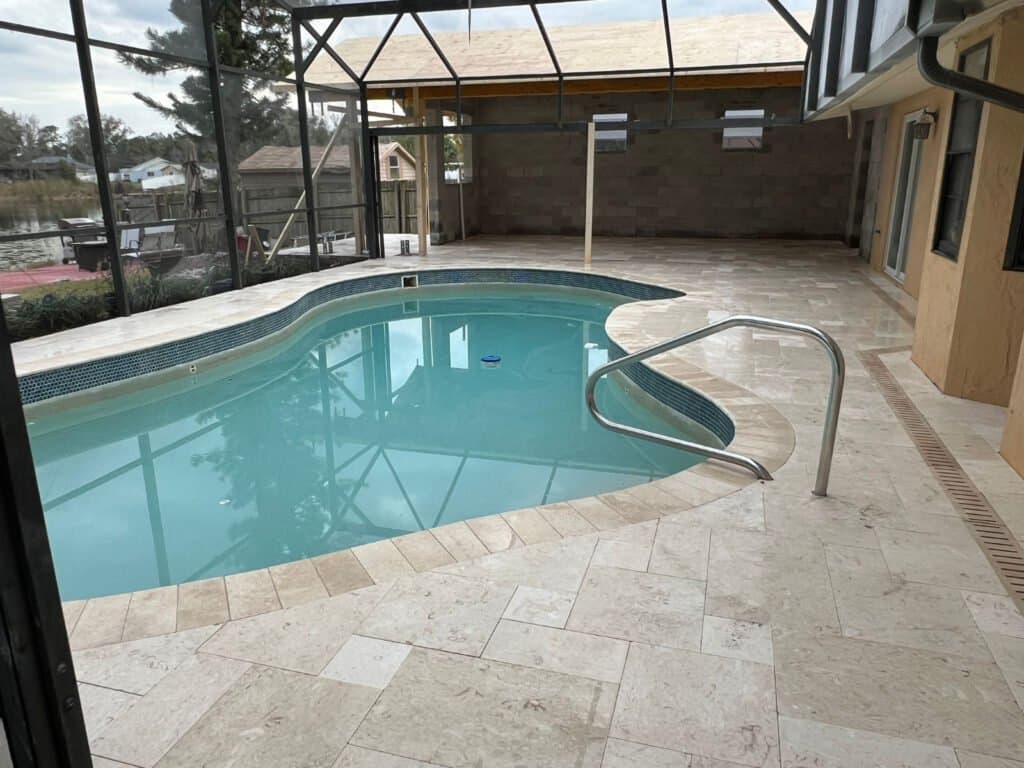
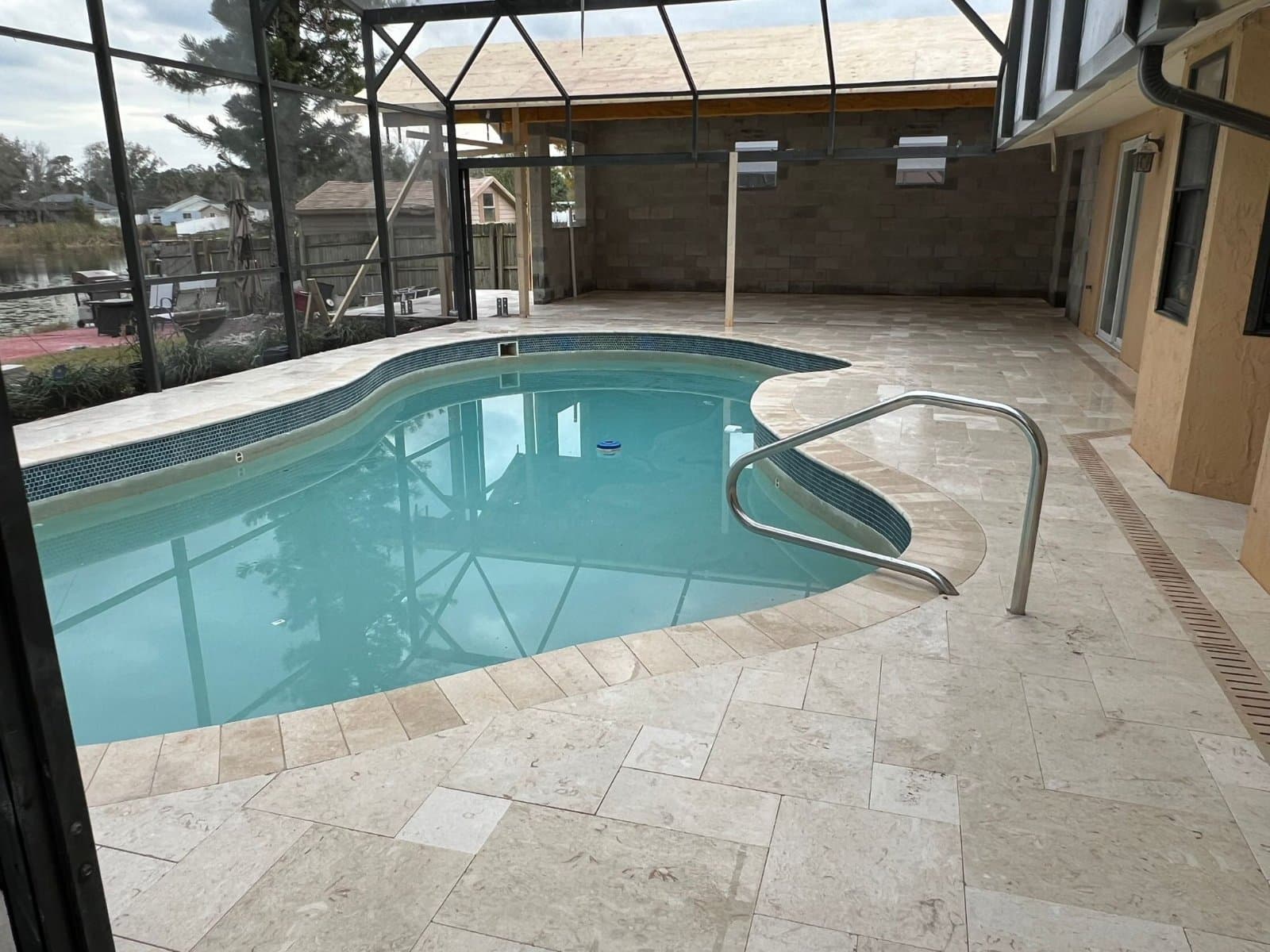
- It is next to a pool, a structure or a retaining wall. Settlement adjacent to a pool deck or foundation can indicate a drainage or subgrade issue with consequences well beyond the pavers.
- It came back. A repair that resettles within a season was the wrong diagnosis, not bad luck.
2026 Professional Repair Pricing in Florida
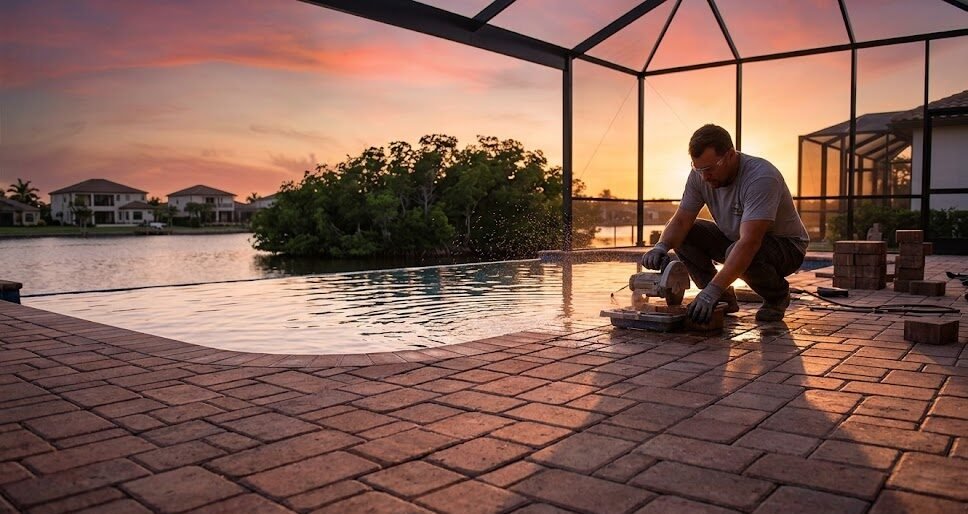
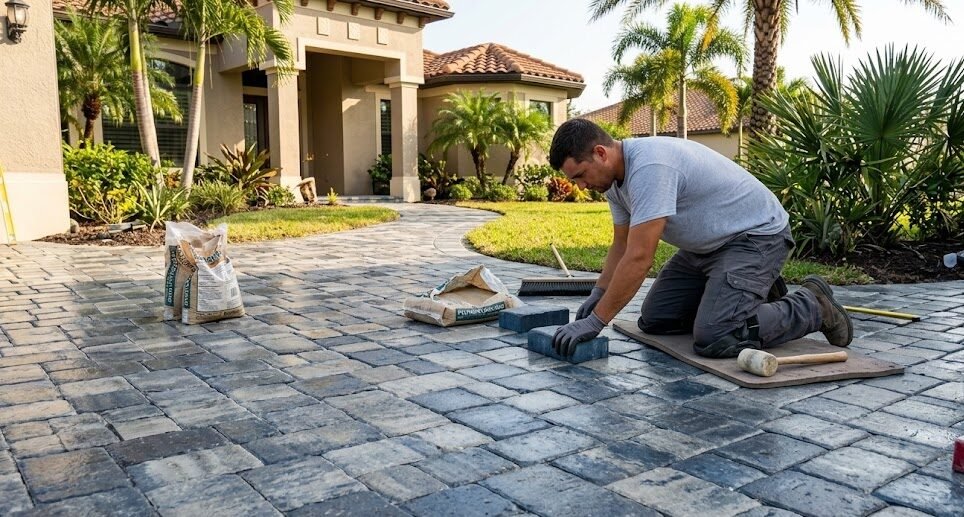
Professional paver repair in Florida generally lands between $7 and $30 per square foot depending on scope, with most homeowners spending somewhere between roughly $725 and $2,485 on an average repair. That range is wide because it spans two different jobs.
- Simple reset and re-level of an isolated area: the low end of the range. Pull, add and compact base material, screed sand, reset, re-sand.
- Full excavation and base rebuild: a basic repair of about 120 square feet with shallow excavation and re-leveling commonly runs $2,500 to $4,000, which works out to roughly $20 to $35 per square foot. The excavation and disposal drive that number, not the pavers.
- Edge restraint and border work: typically $2 to $5 per linear foot of perimeter, usually bundled with resetting the border row.
For scale on the other end: a full 1,000 square foot paver driveway replacement starts around $12,000 for concrete pavers and climbs toward $30,000 for porcelain or natural stone. Which means a $2,500 base rebuild on a section of that driveway is roughly a fifth of replacement and buys back the full service life. Repair economics on pavers are unusually good compared to poured concrete, which is one of the structural advantages we lay out in pavers versus concrete driveways. A poured slab that cracks and settles gets patched or replaced. A paver field gets taken apart and put back with the same material.
Matching Replacement Pavers After Years of Florida Sun
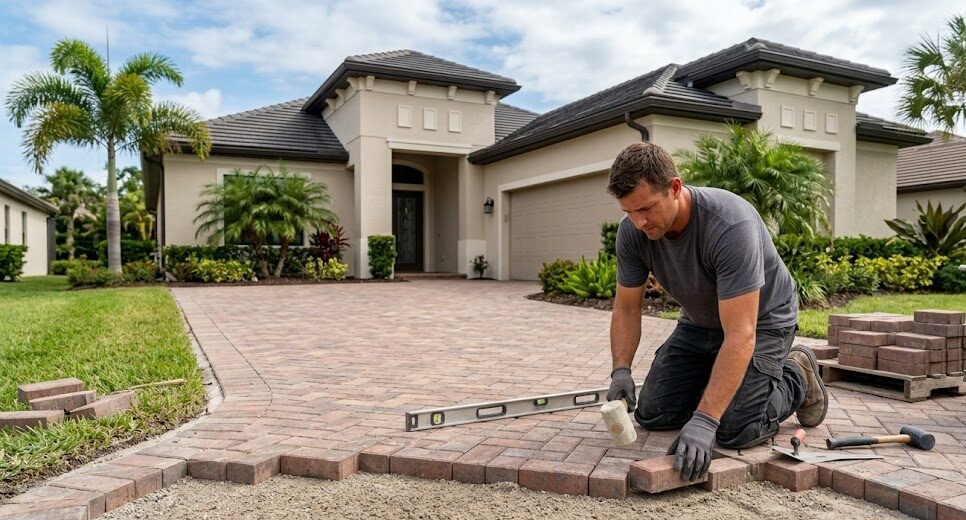
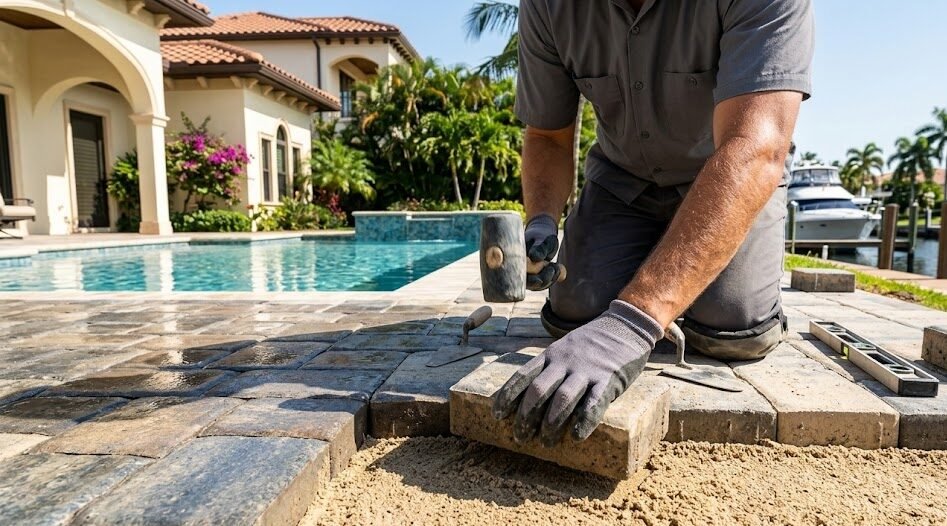
The repair problem nobody warns you about: even a perfect reset can end up looking like a patch, because if pavers were broken or are missing you have to source replacements that match a surface which has been weathering under Florida UV for a decade.
Manufacturers change color blends and discontinue lines. A brand-new paver of the same nominal color reads noticeably brighter than its ten-year-old neighbors, and cleaning the old field to match usually makes the mismatch worse rather than better.
Three tactics that work. First, if extra pavers from the original job are stacked behind the shed, this is the moment they justify their storage. Second, harvest from a low-visibility area such as behind a gate, under a grill, or along a side yard, and put the new pavers there instead of in the middle of the driveway. Third, if a sizable field has to be patched with new material, consider a deliberate border or accent band in a contrasting color so the transition reads as design rather than repair.
Sealing changes this calculation as well, since a sealed surface holds color differently than an unsealed one and a fresh paver dropped into a sealed field will not match until it is sealed too. Timing and product choice are covered in our guide to sealing pavers in Florida.
Fix the Water or Do the Repair Twice
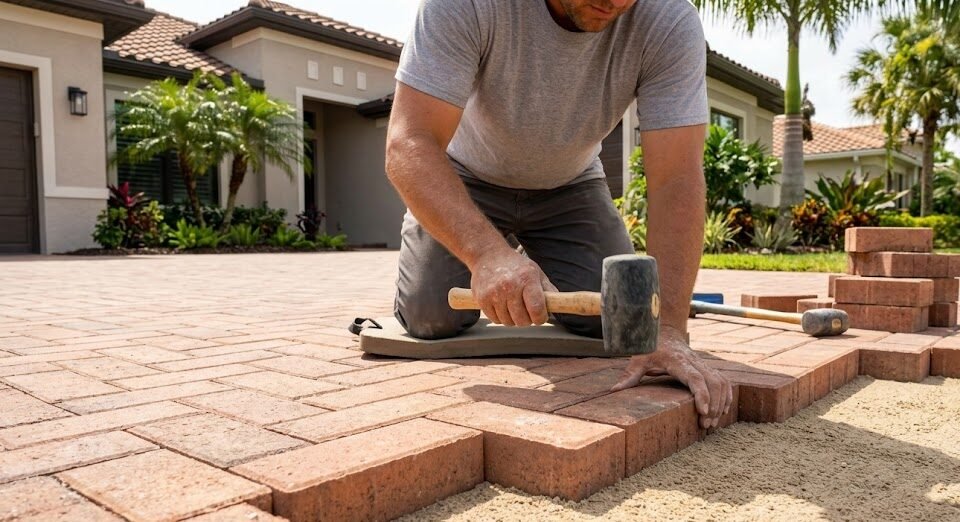
Since most Florida paver settlement is a water story, the repair is not finished when the pavers are level. Three checks are worth doing while the area is open.
- Downspout discharge: if a downspout dumps onto or beside the pavement, extend it. A buried extension carrying water past the paver field costs very little compared to re-leveling the same dip every second year.
- Surface slope: paver pavement should shed water away from structures at a consistent fall. A dead-flat patio in Florida holds a sheet of standing water after every summer downpour, and standing water is what mobilizes bedding sand in the first place.
- Irrigation heads: a spray head hitting the paver edge repeatedly, or a leaking line under the field, will keep the subgrade saturated indefinitely. Saturated subgrade will not hold compaction no matter how well the base was built.
Where a grade change is part of the water problem, the fix sometimes belongs upstream of the pavers entirely, in the way the yard steps down, which is the subject of our retaining wall cost guide.
The Maintenance That Prevents the Repair
Paver maintenance in Florida is a short list, and doing it keeps a field out of the $7 to $30 per square foot repair range indefinitely.
- Refill joint sand before it is gone. Check the joints once a year. Joint sand that is a quarter inch below the paver surface is due. Pavers with empty joints rock under load and chip their own edges.
- Pressure wash carefully. A narrow tip held close blasts joint sand out and etches the paver face. Wider fan, more distance, and plan to re-sand afterward.
- Watch the perimeter. The first sign of edge restraint failure is a border paver that has moved a fraction of an inch outward. That is cheap to fix and expensive to ignore.
- Address the first dip immediately. A small settled area collects water, water moves more sand, and the dip grows. The 20 square foot version is a Saturday. The 200 square foot version is a quote.
KS Solutions handles paver repair, base rebuilds and full installations across Central Florida, and we run scheduled upkeep for homeowners who would rather not track any of this themselves through maintenance plans. New installation and full driveway work sits under brick paver installation, with local project detail for paver work in Orlando and service coverage across Orlando and Lakeland. If you want a diagnosis before deciding whether it is a Saturday or a quote, request a free estimate and we will pull a paver and tell you what is under it.