The First Question Is Not Coverage. It Is Your Deductible.
Almost every article on this subject starts with whether fence damage is covered. That is the wrong starting point in Florida, because in most policies it is covered, and it still does not pay. The reason is the hurricane deductible.
Florida requires insurers to offer hurricane deductible options of $500, 2 percent, 5 percent, or 10 percent of the dwelling limit. The percentage options are the ones most homeowners carry, because they lower the premium. Run those against a real house:
- $400,000 dwelling limit, 2 percent hurricane deductible: $8,000 comes out of your pocket before the policy pays a dollar.
- Same house, 5 percent: $20,000.
- Same house, 10 percent: $40,000.
Now price the loss. Installed fence in Florida runs roughly $15 to $22 per linear foot for galvanized chain link, into the high twenties to high thirties for pressure treated pine and cedar, into the forties for vinyl, and $40 to $60 for powder coated aluminum in picket styles. A typical suburban back and side yard is 150 to 250 linear feet. Losing half a wood or vinyl fence is therefore a $2,500 to $6,000 event. Losing the whole thing might be $5,000 to $11,000.
Put those two columns side by side and the conclusion is uncomfortable but useful: a fence only loss on a house with a 2 percent hurricane deductible frequently does not clear the deductible, and on a 5 or 10 percent deductible it almost never does. The claim is covered and worth nothing.
This changes when the fence is not the only damage. Hurricane deductibles apply per storm to the whole policy, not per item. If the same storm took shingles off the roof, cracked the pool cage, and flattened the fence, everything is aggregated against one deductible, and the fence and pavers ride along on a claim that clears easily. That is the single most important structural fact in this entire subject, and it is why the correct first move after a storm is a full property assessment rather than a fence assessment.
Where Pavers and Fence Live in Your Policy
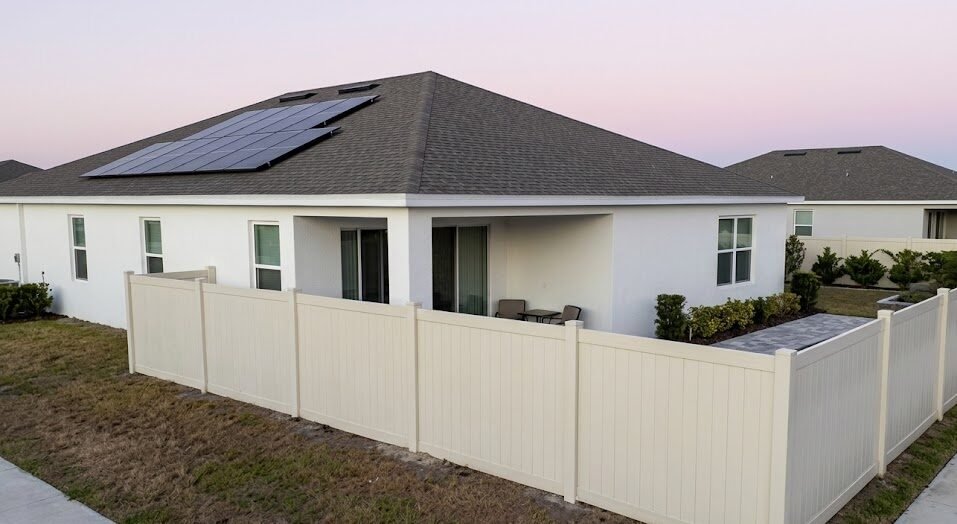
Fence, driveway, walkway, and freestanding hardscape are not part of Coverage A, the dwelling. They live under Coverage B, usually labeled Other Structures, which covers structures on your property that are not attached to the house.
- Default limit: Coverage B is typically set at 10 percent of your Coverage A limit. On a $400,000 dwelling, that is $40,000 for everything in the category combined.
- What shares that limit: fences, detached garage, shed, pool house, pool cage, driveways, walkways, and retaining walls. Not each. All of them, together.
- Same deductible: a Coverage B loss is subject to the same deductible as the rest of the policy, which means the hurricane deductible when the cause is a hurricane and the all other perils deductible otherwise.
- Where it runs short: a property with a screen enclosure, a detached garage, and 250 feet of aluminum fence can exceed a $40,000 Coverage B limit in a bad storm without touching the house. Increasing Coverage B is available as an endorsement and is usually inexpensive relative to what it protects.
Worth noting for anyone who has priced hardscape recently: a full paver driveway replacement in this market runs well into five figures, and a substantial patio or pool deck is not far behind. Those numbers are laid out in our breakdown of brick paver cost in Florida. If your Coverage B limit is the default 10 percent and you have invested heavily in hardscape, the limit is worth checking before hurricane season, not after.
The Peril Test: Wind Is Covered, Water Usually Is Not
This is where most denials actually come from, and it catches homeowners who assumed a storm is a storm.
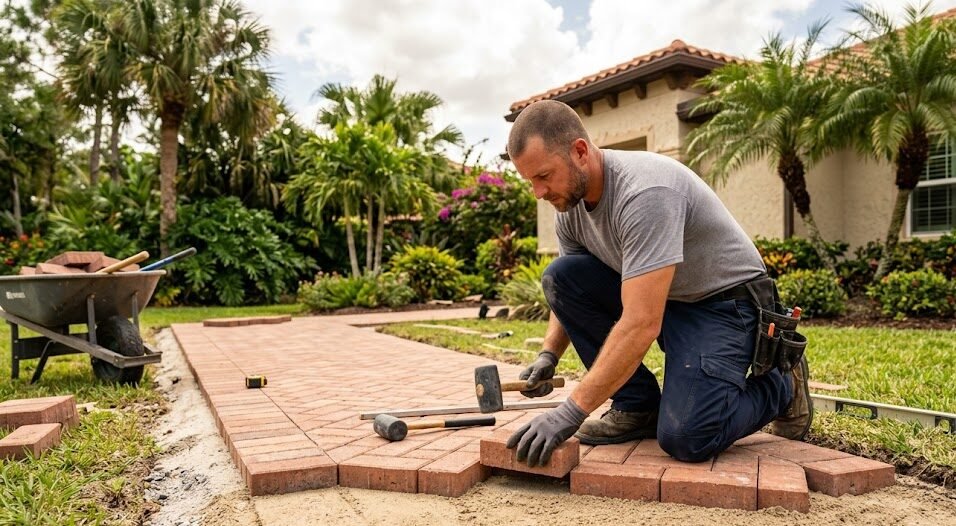
Wind is a covered peril on standard HO-3 and HO-5 policies. A fence blown over, a panel torn out, a tree limb dropped on a paver patio by wind, pavers displaced by wind driven debris: all of that is a windstorm loss and it is covered, subject to the hurricane deductible if the wind came from a named storm.
Flood is not covered by a homeowners policy at all, and this is where paver damage in particular gets complicated. Pavers set on a compacted base and bedding sand are vulnerable to exactly one thing above all others, which is water moving underneath them. Rising water and stormwater sheet flow wash out bedding sand and base material, and the surface settles, dips, and separates weeks after the storm. The homeowner reads that as storm damage. The policy reads it as flood, and flood is excluded.
The obvious next thought is the flood policy, and here is the part that surprises people. A National Flood Insurance Program policy does not cover property outside the insured building. The exclusion is explicit and it names the categories: walks, decks, patios, fences, seawalls, swimming pools, hot tubs, landscaping, wells, and septic systems. Not covered, regardless of your policy limits.
Put the two together and the practical result is stark. Paver damage caused by wind and impact is insurable. Paver damage caused by water washing out the base is generally not insurable under either policy a Florida homeowner is likely to carry. That is not a loophole, it is the design of both products, and it means the money spent on drainage and edge restraint at installation is doing work that no insurance policy will do afterward.
ACV or RCV, and Why a Twelve Year Old Fence Pays Like One
Even when the claim clears the deductible and the peril is covered, the payout depends on a valuation term buried in your declarations page.
- Replacement Cost Value: the policy pays what it costs to replace the damaged property with comparable new property, typically holding back depreciation until the work is actually completed and invoiced.
- Actual Cash Value: the policy pays replacement cost minus depreciation for age and condition. There is no recoverable holdback. What you get is what you get.
Whether a given policy applies RCV or ACV to a specific category is a policy by policy question, and in the current Florida market it is increasingly common to see ACV applied to older roofs and to Other Structures even when the dwelling itself is written on a replacement cost basis. A fifteen year old wood fence with a twenty year expected life, valued on ACV, will settle for a fraction of what replacing it costs, and the difference is not negotiable because it is the terms of the contract, not the adjuster's judgment.
The action item is not to argue after a loss. It is to read the declarations page now, find the valuation basis on Coverage B, and price the endorsement if it is ACV. A homeowner who does that in June is in a very different position in September than one who discovers the term while reading a settlement letter.
(321) 353-7445Get Immediate Service
The Real Clock: 7 Days, 30 Days, 60 Days, One Year
Florida law puts hard deadlines on both sides of a property claim, and the numbers get repeated wrong constantly. Here is what the statutes actually say.
Under Florida Statute 627.70131, as amended by the 2022 reforms effective March 1, 2023:
- 7 days to acknowledge. The insurer must acknowledge receipt of a claim communication within 7 calendar days. That applies to every communication about the claim, not only the first notice.
- 7 days to begin investigating. The insurer must begin its investigation within 7 days of receiving your proof of loss statement.
- 30 days to inspect. If the investigation requires a physical inspection, the licensed adjuster assigned must complete it within 30 days of the insurer receiving your proof of loss.
- 60 days to pay or deny. The insurer must pay or deny the claim within 60 days, with statutory interest owed on late payment, subject to limited exceptions for factors genuinely outside the carrier's control.
So the widely repeated idea that a Florida claim pays in 30 days is a misreading. The 30 day deadline is for the inspection. The payment deadline is 60 days. What the 30 day inspection window really means for you is that your evidence has to be complete and organized well before it, because the adjuster's visit is the single event that most determines the outcome, and everything you failed to document before the repair crews arrived is unavailable by then.
On your side of the clock, Florida Statute 627.70132 governs windstorm and hurricane claims:
- One year from the date of loss to report the initial claim.
- 18 months from the date of loss to file a supplemental or reopened claim.
- Date of loss means the day the storm hit, not the day you noticed the damage. That distinction matters enormously for pavers, where base washout surfaces as visible settlement months later.
The 48 Hour Documentation Set
Claims on hardscape and fencing are won or lost on evidence quality, because unlike a roof, the damaged property is usually cleared away quickly for safety and access. Do this before anything gets moved.
- Wide shots that establish location. Every damaged run photographed from far enough back that the house, the property line, and the surrounding context are visible in the same frame. An adjuster cannot pay for damage they cannot place on your property.
- Close shots that establish cause. Snapped posts, sheared fasteners, impact marks, the limb still lying on the patio. Cause is what separates a covered windstorm loss from an excluded maintenance or rot issue, and rotted posts are the most common reason a fence claim is denied.
- The failure point specifically. Photograph the base of failed fence posts. A post that snapped in clean wood reads as wind. A post that crumbled at grade reads as pre existing decay, and the carrier will treat it that way.
- Measurements written down. Linear feet of fence damaged by material and height. Square footage of paver area affected. Do this before demolition.
- Before photos, if you have them. Old phone photos of backyard barbecues are extraordinarily useful evidence of pre storm condition. Look through your camera roll.
- Dated proof of the storm. The named storm and date, plus any local wind reporting. This ties the loss to a specific event, which the one year filing clock runs from.
- Emergency mitigation receipts. Tarps, temporary fencing to contain a pool or a dog, debris removal. Reasonable emergency measures are generally reimbursable and are frequently left unclaimed.
Keep the damaged materials on site if you safely can until the inspection. Photographs of a broken vinyl rail are good. The broken rail sitting in the yard is better.
What Pavers Do That Fences Do Not
Fence claims are relatively binary. A section is standing or it is not. Paver claims are messier for three specific reasons, and each one has a defensive move.
- Damage appears on a delay. Base washout does not present as damage on day one. It presents as settlement, dips, and joint separation over the following weeks and months. By then the connection to the storm is harder to prove and the calendar is running. If you had standing water over hardscape during a storm, photograph it while it is standing, even if the surface looks fine.
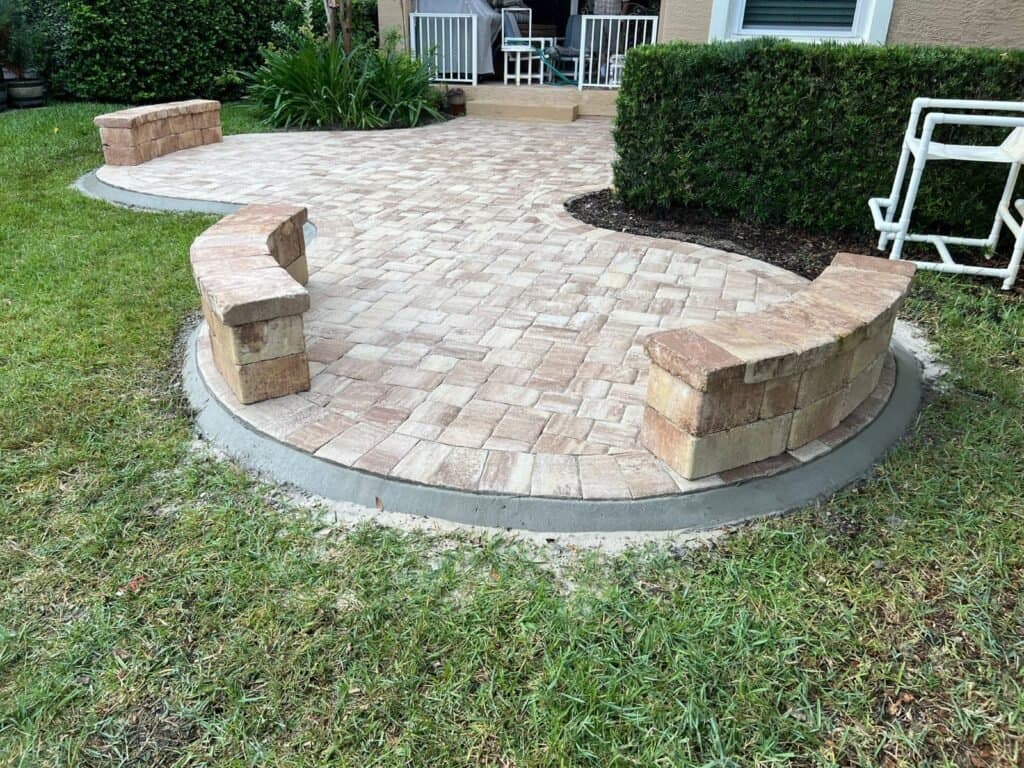
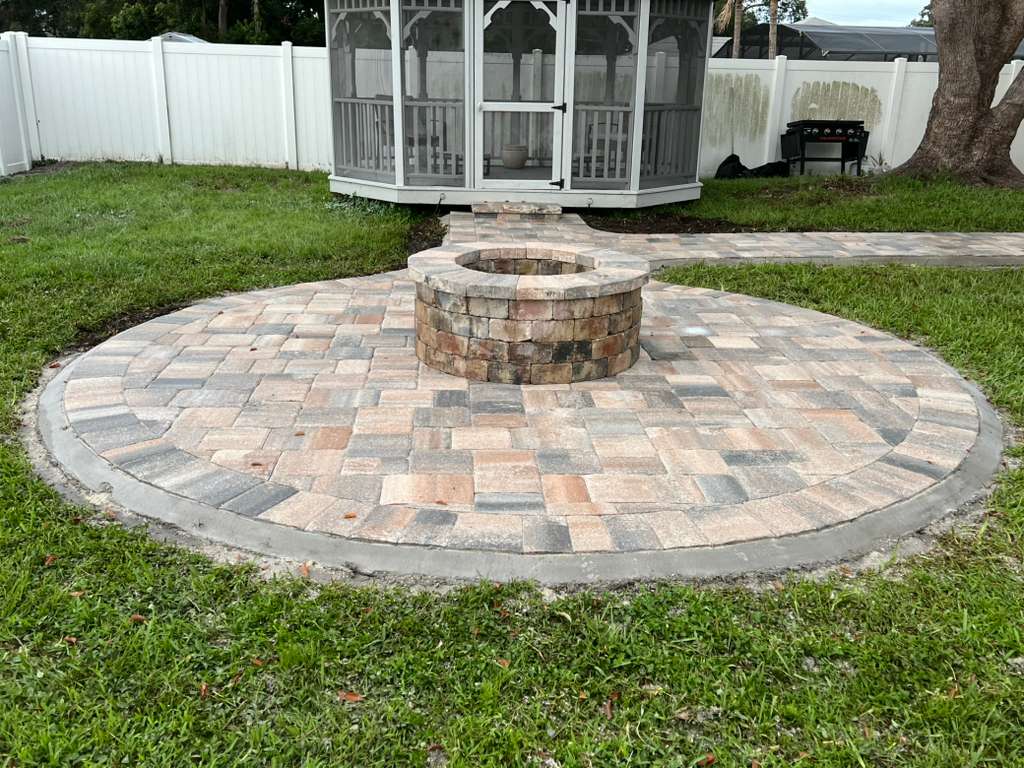
- Partial damage raises the matching problem. When 60 square feet of a 900 square foot driveway is destroyed, the carrier will pay to replace 60 square feet. But a paver produced twelve years ago has usually been discontinued, and the ones still available have weathered differently. You end up with a repaired area that is structurally correct and visually obvious. This is exactly the situation we cover in the guide to paver repair and re leveling, and the practical answer is usually to blend salvaged pavers from a low visibility area into the repair and put the new stock where nobody looks.
- Cause is genuinely ambiguous. Pavers settle for ordinary reasons: base compaction, root growth, edge restraint failure, sand washout from routine rain. A carrier looking at a settled area sees maintenance, and their position is not unreasonable. What defeats it is documented pre storm condition plus a contractor's written opinion tying the specific failure mode to the specific event.
When Not to File
This is the section most contractors will not write, and it is the one that saves homeowners the most money.
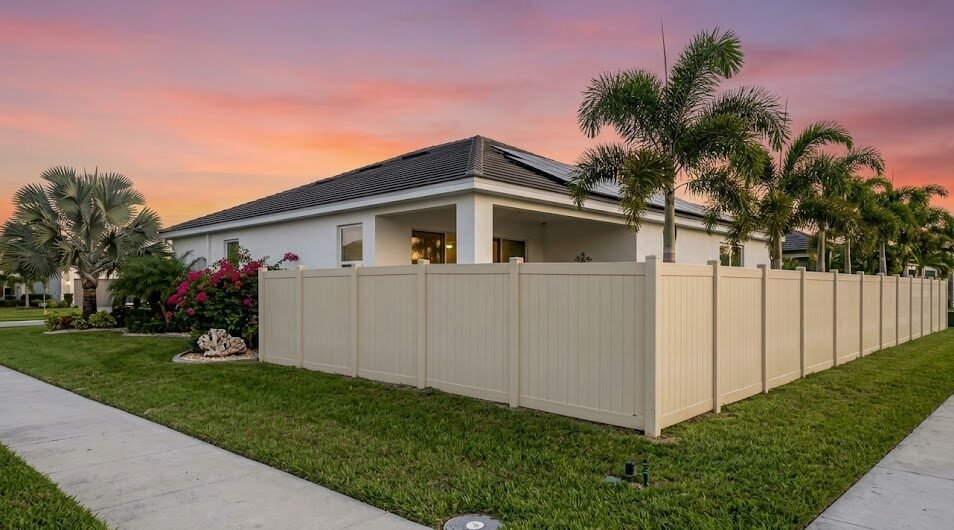
Do the deductible arithmetic before you call anyone. If your hurricane deductible is $8,000 and your total storm damage is a $4,500 fence, filing accomplishes nothing financially and creates a claim record. In the current Florida market, claim history influences renewal pricing and eligibility, and a paid claim of zero dollars is still a claim on file.
File when any of these are true:
- Total storm damage across the whole property plausibly exceeds the deductible. Roof, screen enclosure, siding, soffit, fence, and hardscape assessed together, not the fence alone.
- Coverage B damage alone is clearly large. A destroyed detached garage or a full aluminum fence perimeter on a property with a $500 or 2 percent deductible.
- You are unsure of the full extent. Structural damage you cannot see is a real risk, and the one year notice deadline is not something to gamble against. When in doubt, get a full assessment before deciding, not after the deadline.
Skip the claim when the fence or a small hardscape area is the only damage and the deductible clearly swallows it. Repairing it directly is faster, gives you full control over materials, and leaves your claim history alone. For a homeowner in that position the more useful conversation is about whether the replacement should be built to fail less next time, which is largely a question of post depth, post spacing, and material choice on fence installation.
What a Contractor Can and Cannot Do for You
Florida changed the rules on this in a way many homeowners have not caught up with. Under the 2022 reforms, a policyholder may not assign post loss insurance benefits under any residential property insurance policy issued on or after January 1, 2023. Assignment of benefits, the arrangement where you signed the claim over to a contractor who then dealt with the carrier directly, is void and unenforceable on those policies.
What that means in practice is that you are the claimant. Not your contractor. Any company that offers to handle your claim for you in exchange for the work, on a current policy, is describing an arrangement the statute no longer permits.
What a contractor legitimately provides is technical documentation, and it is genuinely valuable:
- A written scope and estimate in a line item format an adjuster can compare against their own software, with quantities, materials, and unit pricing broken out rather than a lump sum.
- A cause of damage opinion from someone who installs these systems and can explain why a specific failure pattern indicates wind or impact rather than age.
- Documentation of code and permit requirements that affect the repair, since repairs frequently cannot legally be executed to the original specification.
- Presence at the inspection to answer technical questions in real time, which is different from representing you.
Verify the license of anyone offering post storm work. Storm chasing crews follow named events into Central Florida every season, and the ones that matter most to avoid are the ones that ask for large deposits and disappear.
A Worked Example in Orlando
Numbers make the decision concrete. Take a house in Orlando with a $420,000 dwelling limit, a 2 percent hurricane deductible, and Coverage B at the default 10 percent.
- Hurricane deductible: $8,400. Coverage B limit: $42,000.
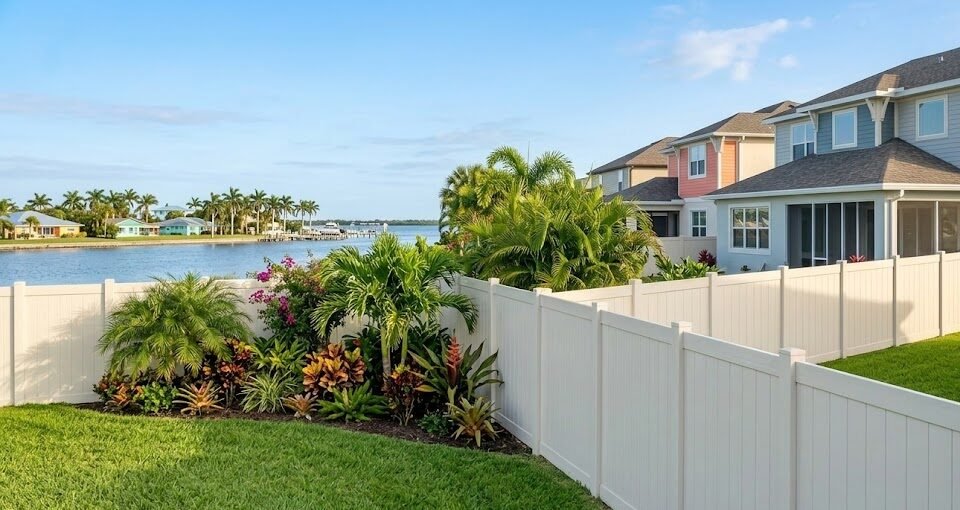
- Scenario A, fence only. A named storm flattens 140 feet of six foot vinyl. Replacement runs roughly $6,300. Covered peril, inside the Coverage B limit, and entirely below the deductible. Net payment: zero. Do not file. Repair it directly.
- Scenario B, fence plus roof plus screen. Same fence, plus 12 squares of roof and a damaged pool cage. Total assessed loss $34,000. One deductible applies to the whole storm, so $8,400 comes off the aggregate and the fence is fully inside a claim that pays roughly $25,600 before any depreciation holdback. File, and make sure the fence and hardscape are in the scope from day one rather than supplemented later.
- Scenario C, paver driveway settling in November after a September storm. Cause is likely stormwater washing out base material. Homeowners policy excludes flood. NFIP excludes driveways and walkways outright as property outside the building. Likely uninsurable either way, and the one year clock from the September date of loss is already running while you investigate.
Three storms, three completely different answers, and the variable that decided each one was not coverage language. It was deductible arithmetic and peril, in that order.
The Short Version
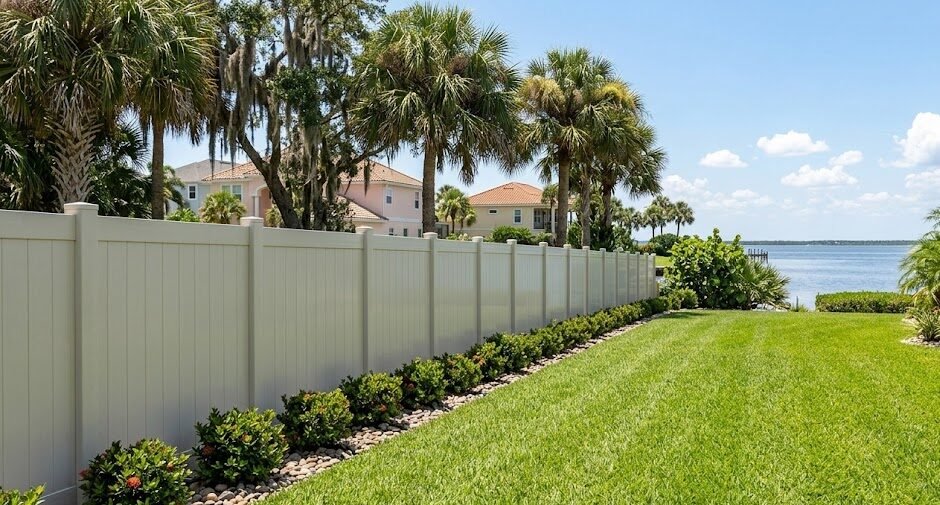
Fence and hardscape are covered under Coverage B, typically limited to 10 percent of your dwelling coverage, shared across every detached structure on the property. Wind damage is covered. Flood damage is not, and a flood policy will not help either, because the NFIP explicitly excludes fences, patios, walks, and driveways as property outside the building.
The hurricane deductible decides most of these claims before coverage is ever analyzed. On a typical Central Florida house, a fence only loss usually falls entirely below it. The deductible applies once per storm across the whole property, so the right assessment is always the whole property, never the fence alone.
If you do file, the insurer has 7 days to acknowledge, 7 days to begin investigating, 30 days to physically inspect, and 60 days to pay or deny. You have one year to give notice of a hurricane or windstorm claim and 18 months to supplement, measured from the date of the storm. And whatever you photograph in the first 48 hours is the entire evidentiary record, because the damaged material will be gone before anyone official looks at it.
KS Solutions installs and repairs fence, pavers, and turf across Central Florida, from Lakeland through the Orlando metro. We will document a storm loss properly, give you a line item scope your adjuster can actually work with, and tell you honestly when the number does not justify a claim. Ongoing base and joint condition is also the cheapest insurance available on hardscape, which is what our maintenance plans and paver installation standards are built around.