The White Film Is Not Dirt, and It Is Not a Defect
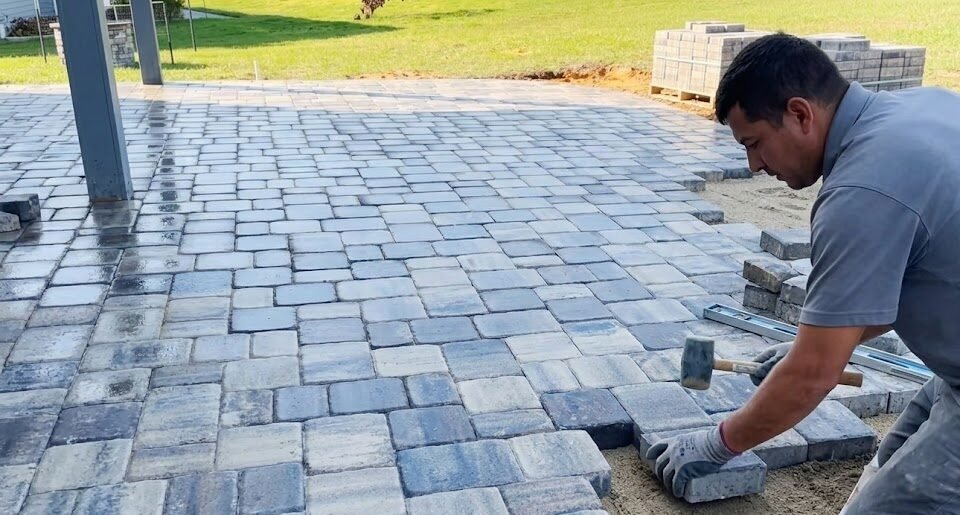
A patio gets installed in June. By the middle of July there is a chalky white veil across the darkest pavers, heaviest in the areas that stay damp longest. The homeowner takes a photo, sends it to the installer, and uses the word defect. The installer answers with one word, efflorescence, and the conversation gets tense because that answer sounds like an excuse.
It is not an excuse. Efflorescence is a chemical process that occurs with nearly all concrete and masonry products, and it is documented by every major paver manufacturer as a normal condition rather than a manufacturing or installation fault. Cement hydration leaves behind calcium hydroxide inside the paver. Moisture moving through the paver dissolves it and carries it to the surface. At the surface the water evaporates, the dissolved calcium reacts with carbon dioxide in the air, and what is left behind is calcium carbonate, a thin white mineral deposit sitting on top of your paver.
What makes this topic worth its own page is that the white film on Florida pavers is not always efflorescence. There are four different white problems that look similar in a phone photo and need four different responses, and choosing the wrong one is how a cosmetic issue becomes a permanent one.
Four White Films, and Only One of Them Is Efflorescence
Before you buy anything, identify which of these you have. This is the step that gets skipped and it is the step that matters.
- Efflorescence: a dry, powdery, chalky mineral veil that came up from inside the paver. It sits on top of the surface. It is usually patchy, worse where water lingers, and it often looks different after rain, temporarily disappearing when wet and returning as the surface dries.
- Sealer blush, also called whiting or milky sealer: the sealer film itself has gone opaque because water got trapped inside or underneath it. It looks milky or cloudy rather than powdery, and critically it is under the coating, not on it. Pouring water on it changes nothing, because the moisture causing the haze is below the film.
- Polymeric sand haze: a fine residue of the joint sand binder left across the paver faces because the surface was not swept clean enough before activation, or because the sand was watered in wrong. It tends to be uniform across a whole area rather than patchy, and it often follows the pattern of the joints outward.
- Lime or calcium run from adjacent concrete or mortar: a hard white streak or crust that originates from a specific source uphill of it, such as a mortared step, a pool deck bond beam, a retaining wall cap or a nearby concrete slab. It runs in a direction. Efflorescence does not run, it blooms.
Getting this right decides everything downstream. Efflorescence cleaner on sealer blush does nothing and costs you a weekend. Efflorescence cleaner under an existing sealer does nothing at all, because the deposit is trapped beneath a film your cleaner cannot reach.
Two Tests That Tell Them Apart in Five Minutes
The brush test comes first. On a fully dry surface, take a stiff bristle broom or a dry white cloth and work a small area hard. Efflorescence is a loose surface deposit, so some of it will come off as powder and you will see a difference. Sealer blush will not change at all, because you are scrubbing the top of a cured film and the haze is inside or below it.
The water test comes second. Pour a cup of water on the hazy area and watch. Efflorescence will usually darken and visually disappear while the surface is wet, then reappear as it dries, because you are temporarily re-wetting a soluble mineral film. Sealer blush does not change when you pour water on it, because the trapped moisture causing the cloudiness is already under the coating.
The third question is not a test, it is a memory: has this surface ever been sealed? If yes, you almost certainly are not looking at fresh efflorescence sitting on bare concrete, and no amount of efflorescence cleaner is going to reach it. That surface needs the coating addressed first, which is a different and more involved job.
Primary or Secondary: Which One You Have Changes the Fix
There are two distinct versions of this problem and they have different endings.
Primary efflorescence is the one everyone means. It happens during and shortly after curing, as the paver releases moisture and carries out the soluble calcium compounds left over from hydration. It shows up in the first weeks to the first year, it is finite because the paver contains a finite amount of that material, and it resolves. Many installations clear on their own with time, rain and traffic without anyone doing anything.
Secondary efflorescence is the one that keeps coming back. It happens when water keeps moving through the pavement system from outside: rainfall with nowhere to go, poor drainage, a high water table, or irrigation running against the surface. That water dissolves salts from the surrounding soil, the base, the bedding sand or the pavers themselves, then brings them up and deposits them again.
The practical difference is this. Primary efflorescence is a cleaning problem and it ends. Secondary efflorescence is a water problem wearing a cleaning problem costume, and cleaning it without fixing the water means you clean it forever. If your patio was installed four years ago and the white film keeps returning in the same spots, stop buying cleaner and start looking at where water goes.
(321) 353-7445Get Immediate Service
Why Florida Runs the Whole Process Faster
Central Florida does not cause efflorescence, but it does accelerate every stage of it and stretch the season in which it happens.
Humidity keeps surfaces damp longer, which extends the window during which dissolved minerals are migrating. Afternoon storms through the wet season deliver repeated soak and dry cycles, and each cycle is another opportunity for the process to run. Where a northern installation might show efflorescence over a winter, a Florida installation during the rainy season can show it in as little as two weeks.
The water table matters too. Across large parts of Orange, Osceola and Polk counties the water table sits high, and on low lots with heavy summer rain the base stays wetter for longer than the design assumed. A base that never fully dries is a base that keeps feeding moisture upward through the bedding sand into the pavers.
Finally, the wet and dry seasonal split creates the pattern homeowners find most confusing: the haze appears in summer, fades through the drier months, and returns the following June. That is not the same deposit reappearing. That is the process running again because the water came back.
Irrigation Is the Cause Nobody Connects to the Symptom
If there is one Florida-specific driver worth its own paragraph, it is sprinkler overspray.
Irrigation water is not rainwater. It comes from a well or a municipal source, and in much of Central Florida it carries a meaningful mineral load, including dissolved calcium from the limestone the aquifer runs through. Spray that water onto a paver surface four mornings a week, every week, and you are not just wetting the pavers. You are delivering dissolved minerals onto them and then evaporating the water off in the morning sun, leaving the minerals behind.
The tell is geometric. Efflorescence from cement hydration is patchy and follows moisture. Deposits from irrigation follow the spray arc. If the white pattern on your driveway is a fan shape that matches where the head throws, or a hard line at the edge of a rotor sweep, you have an irrigation problem and no cleaner on earth will keep up with it.
The fix is free and takes one afternoon: adjust the heads so they water plants instead of hardscape. Then clean once. Manufacturers give the same guidance for retaining walls, where overspray wetting the wall face is a known driver of recurring white deposits.
What the Base and Joint Sand Contribute
Efflorescence does not only come from the paver. Every part of the assembly that contains lime can feed it.
Cement produces lime, meaning water-soluble calcium compounds, and lime can also be present in bedding sand, in aggregate base material and in the surrounding soil. That is why the same paver from the same pallet can behave differently on two jobs a mile apart.
There is one specific material worth avoiding outright. Recycled concrete aggregate used as base or bedding material carries additional calcium hydroxide, and manufacturers warn that using it can dramatically increase the amount of efflorescence an installation produces. It is cheaper per ton, it looks like a savings on a bid, and it is one of the reliable ways to buy a patio that keeps turning white. If you are comparing installation quotes and one is noticeably cheaper, base material is one of the places to ask about.
Joint sand is a smaller contributor but worth noting because it is right at the surface. Polymeric sand installed correctly is part of the drainage and stability system, and installed incorrectly it produces both haze and premature joint failure. The full set of rules on that is in our guide to polymeric sand in Florida, including which failures are the sand and which are the water.
The Timing Rule: Cleaning at Week Two Is Wasted Money
Here is the single most important instruction on this page. Wait 60 to 90 days after installation before applying an efflorescence cleaner.
The reason is mechanical. The process needs to finish bringing the soluble material to the surface before you remove it. Clean the surface at week two and you have removed the first wave, not the supply. The second wave arrives at week ten, you clean again, and you conclude the product does not work. It worked fine. You were early.
There is a second reason to wait, and it is better than the first: a meaningful share of installations resolve on their own. Rain, traffic and time will carry a lot of it away without a single dollar spent. The homeowners who are happiest with their patios a year later are frequently the ones who did nothing for three months.
The exception is when you are on a schedule to seal. In that case the cleaning has to happen and it has to be complete, because sealing over efflorescence locks the problem underneath a film. More on that below.
How to Remove It Without Damaging the Paver
When the waiting period is over and the deposit is still there, this is the sequence.
- Start dry and mechanical. Sweep the surface hard with a stiff bristle broom on a dry day. On light deposits this is sometimes the whole job, and it costs nothing.
- Use a product sold as an efflorescence cleaner. These are mildly acidic and formulated for this specific deposit on this specific substrate. Common products are mixed as a dilution rather than used neat, with typical concentrate instructions landing around four parts water to one part product. Follow the label, not a forum post.
- Pre-wet the surface. A damp paver absorbs less cleaner into its pores, which keeps the chemistry working at the surface where the deposit is.
- Work a small test area first. Do it somewhere that is not the center of the patio, let it dry fully, and look at the color before committing to the whole surface.
- Rinse thoroughly and completely. Acidic residue left in the joints and pores continues to work after you have stopped paying attention.
- Re-sand the joints afterward. Any wash-down moves joint sand, and joints that sit low let more water into the base, which feeds the next round. This is the step almost everyone skips.
Keep pressure low if you use a machine. High pressure on concrete pavers erodes the face, exposes aggregate and permanently changes the texture, and an eroded paver face holds dirt and deposits more readily than the factory surface did. The detailed pressure and chemistry rules for every Florida stain type are in how to clean brick pavers in Florida.
The Acid Mistake That Cannot Be Undone
Muriatic acid is the most common catastrophic advice on this topic, and it circulates because it appears to work instantly.
What it actually does is dissolve calcium carbonate, which is the deposit, and also attack the cement matrix of the paver itself, which is the thing holding your paver together. The immediate visual result is a clean paver. The result over the following year is a paver face with the cement paste etched away, exposed aggregate, a lightened and blotchy color, and a rough surface that collects dirt faster than it did before. On a colored paver, acid burn can also strip pigment unevenly and leave a permanent mottled appearance.
There is no repair for an acid-burned paver face. You live with it or you replace the pavers. That is why every efflorescence cleaner on the market advertises that it does not contain hydrochloric acid, and why a contractor who proposes a muriatic wash on a residential patio is telling you something about their experience level.
Sealing: the Sequence That Either Solves It or Traps It Forever
Sealing and efflorescence interact in a way that catches a lot of homeowners, and the order of operations is the whole thing.
Seal a surface that still has active efflorescence and you trap the deposit under the film. It does not go away, it becomes permanently visible through the sealer and unreachable by any cleaner. Worse, if moisture is still pushing up from below, a surface sealer can trap that moisture inside the assembly. Salt-laden water forced to the surface then gets stuck behind the coating, and the result is white haze, bubbling, peeling or outright coating failure.
The correct sequence is wait, clean completely, let the surface dry fully, then seal, and seal only when the weather cooperates. Sealing before rain, late in the day when dew will form, or onto a surface that has not dried after cleaning is how you produce sealer blush, which is a much worse problem than the efflorescence you were trying to fix, because fixing blush means addressing the coating rather than the deposit.
A breathable sealer matters in Florida for the same reason a breathable facade coating matters in any humid climate: the assembly has to be able to release vapor upward. Our full timing and product guidance is in sealing pavers in Florida, and the short version is that the calendar matters as much as the product.
Why the Complaint Almost Always Comes From a Dark Paver
Efflorescence is visible in inverse proportion to how light your paver is. The deposit is the same white mineral on a charcoal paver and on a sand-colored one. On the charcoal it reads as a glaring haze. On the sand-colored one it is nearly invisible.
This is worth knowing before you choose, not after. Deep charcoal, espresso and rich red pavers are beautiful and they are the ones that generate essentially every efflorescence complaint we hear. If you love a dark paver, buy it with the understanding that the first year may include a white phase, and plan the 60 to 90 day wait into your expectations rather than into an argument.
If you are still choosing, the color and pattern tradeoffs, including how each behaves as it ages in Florida sun, are laid out in brick paver colors and patterns for Florida.
When It Keeps Coming Back
Recurring efflorescence after the first year is a drainage diagnosis, not a cleaning problem. Three things to look at, in order.
First, surface drainage. Water should leave the paver field, not pond on it. Low spots that hold water after a storm are exactly where the white film concentrates, and they usually indicate base settlement or a slope that was never right.
Second, edge and perimeter water. Downspouts discharging onto pavers, a roof valley dumping on one corner, or a planting bed that drains across the hardscape will each keep a specific area saturated indefinitely.
Third, the base itself. A base that stays saturated, whether from a high water table, an undersized or poorly compacted section, or fines that have migrated and reduced drainage, keeps feeding the process. That is a repair, not a wash, and the assessment is part of what we look at under brick paver installation and repair work, or on a recurring basis through our maintenance plans.
The Short Version
Identify which white film you actually have before you buy anything, using the brush test and the water test. If it is efflorescence on new pavers, wait 60 to 90 days and let it run, because a lot of it leaves on its own. Clean with a product made for efflorescence, diluted per the label, on a pre-wet surface, then rinse completely and re-sand the joints. Never use muriatic acid. Never seal over an active deposit or a damp surface. And if it keeps coming back year after year, fix the water rather than the stain.
KS Solutions installs and repairs pavers, fence and turf across Central Florida, including Orlando, Lakeland, Kissimmee and Winter Park. If you have a white film you cannot identify, send a photo taken on a dry day and a second one taken right after you pour water on the same spot. Those two images usually answer the question before anyone drives out, and you can send them from our contact page.