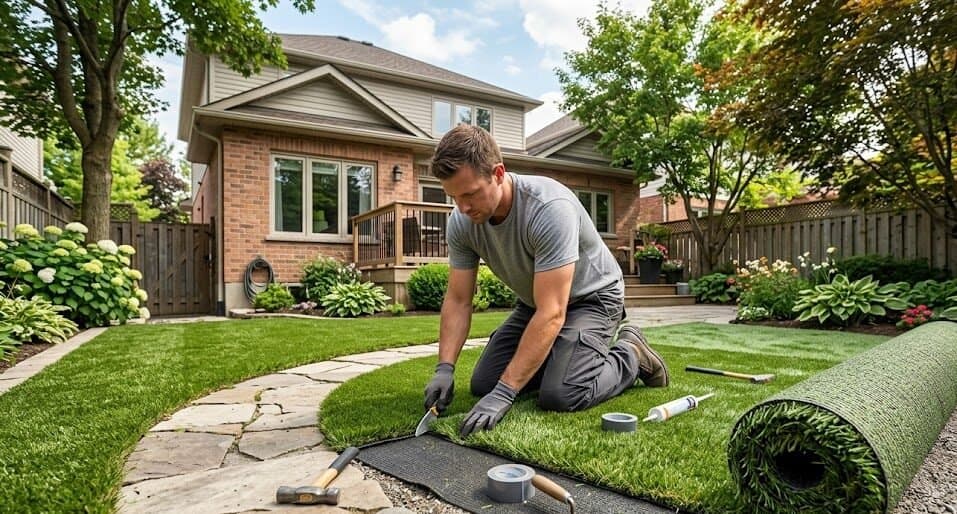
Why So Many Florida Homeowners Are Giving Up on Grass

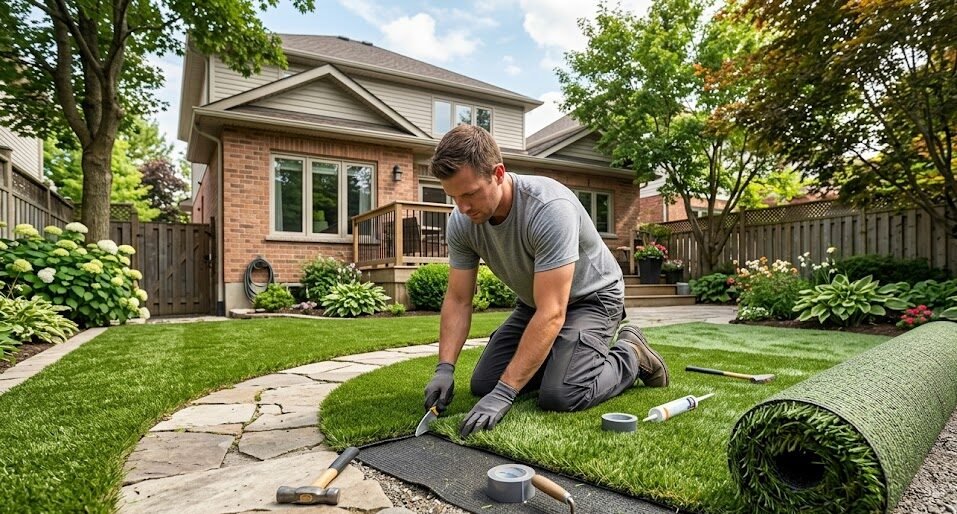
A Florida lawn asks for a lot. It wants mowing every week from spring into fall, irrigation through the dry months, fertilizer, weed control and a fight against chinch bugs, fungus and the shady corner where St. Augustine thins out no matter what you do. Then the summer storms arrive and the low spots turn to mud. For a growing number of homeowners across Orlando, Kissimmee and Lakeland, the question is no longer how to fix the lawn but whether they need one at all.
The good news is that a yard without grass does not have to look like a gravel parking lot. The best no-mow yards in Central Florida mix three or four materials, each in the spot where it works best: hardscape where people walk and sit, artificial turf where kids and dogs play, planting beds and groundcovers where the yard needs color and shade, and gravel or mulch where water needs to move. This guide walks through those options, what each one does well in Florida heat and rain, where each one fails and how to combine them into a yard you do not have to mow.
Your Right to Replace the Lawn in Florida
Before you plan, it helps to know where you stand. Section 373.185 of the Florida Statutes says a deed restriction, covenant or local ordinance may not prohibit a property owner from using Florida-friendly landscaping, the low-water approach promoted by the University of Florida IFAS Extension. That does not mean anything goes. An HOA can still have design standards, approval steps and rules about specific materials such as artificial turf or rock, and it can require you to submit plans. But a blanket ban on replacing turf with Florida-friendly planting is not enforceable.
If you live in a community with an architectural review board, submit your plan before you buy anything. Our guide to HOA artificial turf rules in Florida covers what boards usually ask for, from product samples to drainage details.
Start With a Map of Use, Sun and Water
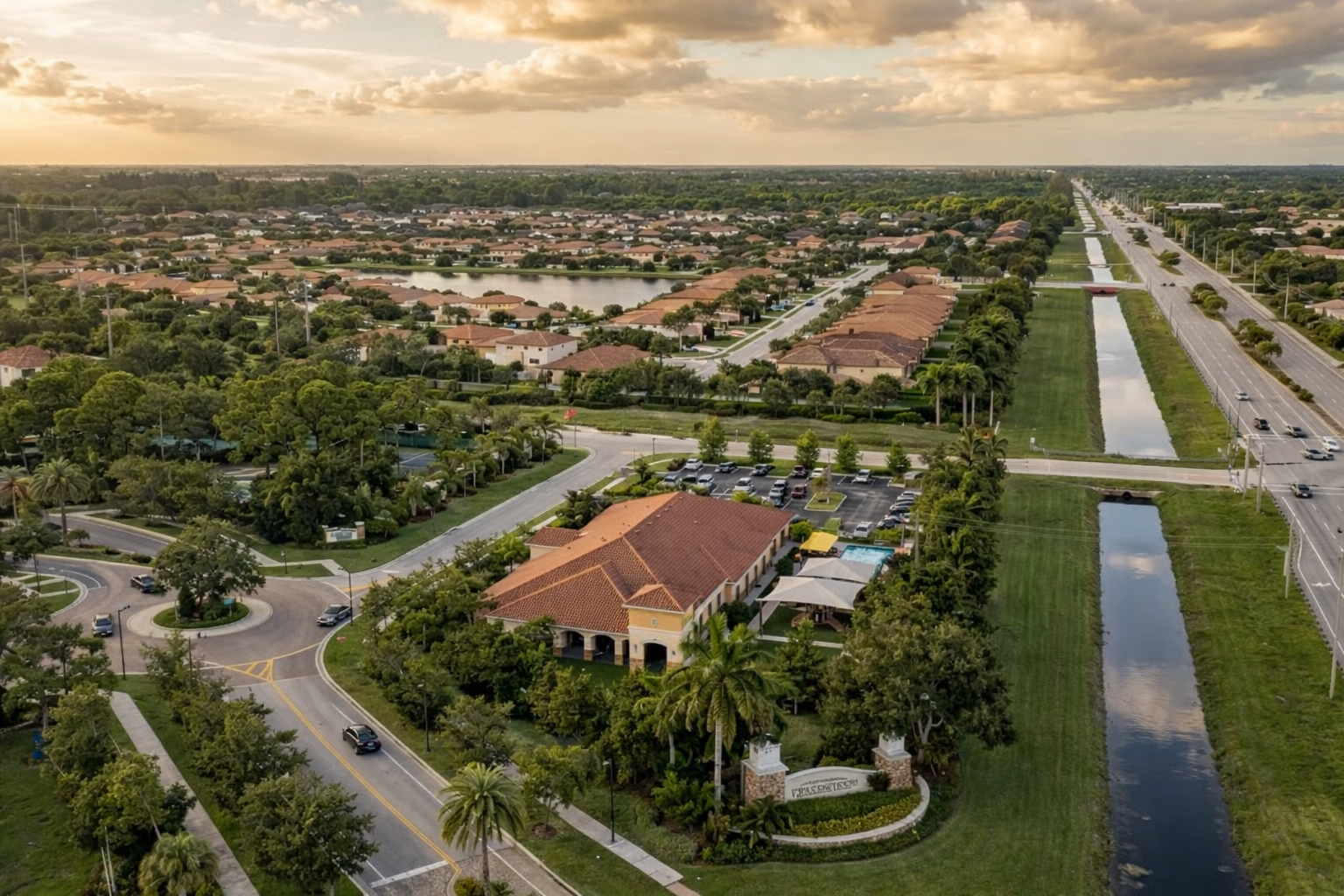
UF/IFAS Extension faculty push one principle above all others when homeowners look at lawn alternatives: right plant, right place. They advise starting with an honest look at how you use the yard and what the site gives you. That same idea applies to hardscape and turf. Before choosing materials, walk the yard and note:
- Traffic: where people actually walk, where the dog runs, where kids play and where you want to sit. Those areas need surfaces that handle feet, not plants.
- Sun and shade: which areas get full afternoon sun and which stay shaded by the house, a fence or trees. Shade is where grass usually fails first.
- Water: where water comes off the roof and downspouts, where puddles form after a storm and which way the yard drains toward the street or a swale.
- Views and privacy: what you see from the back windows and what the neighbors see of you.
With that map in hand, each area of the yard tends to pick its own material.
Option 1: Paver Patios and Walkways Where People Live
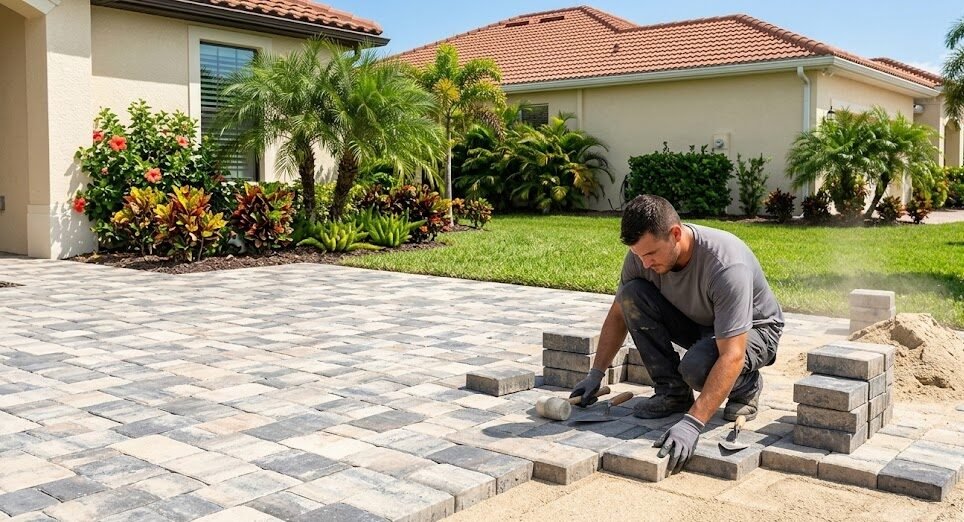
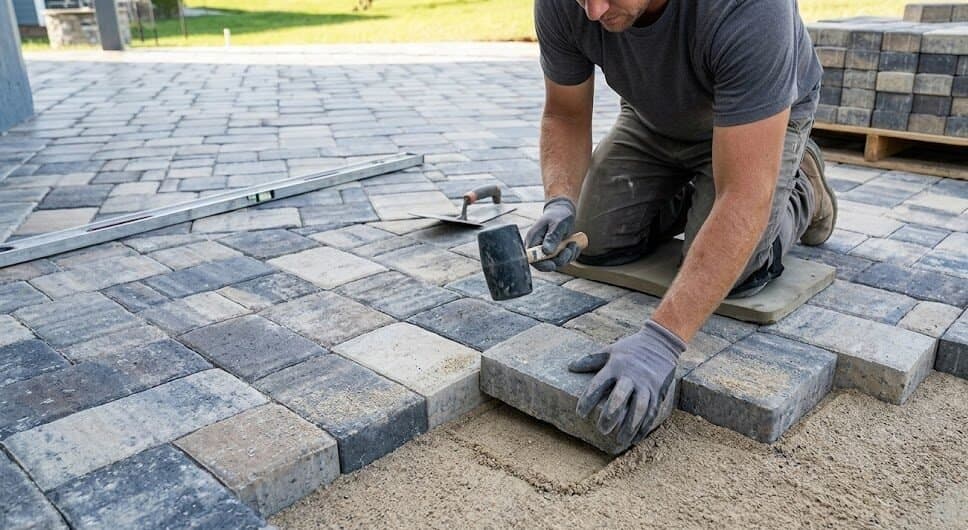
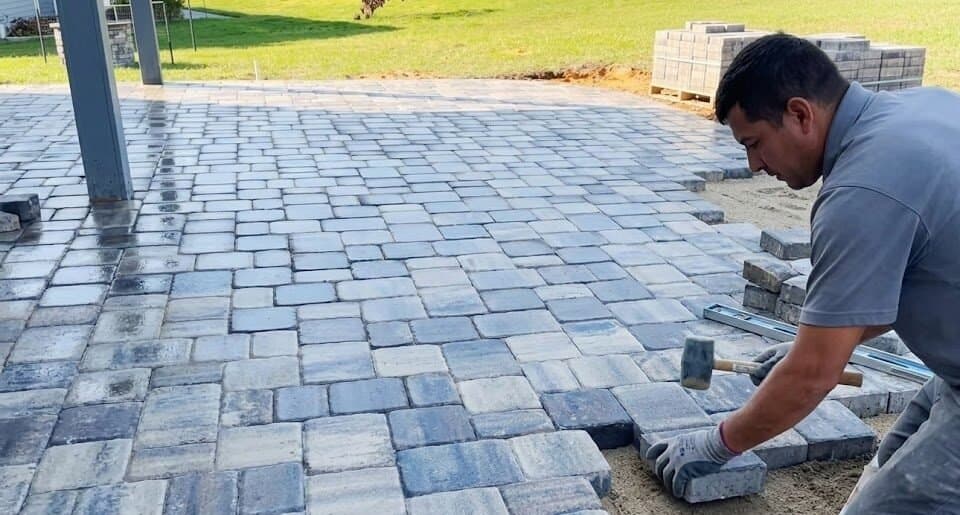
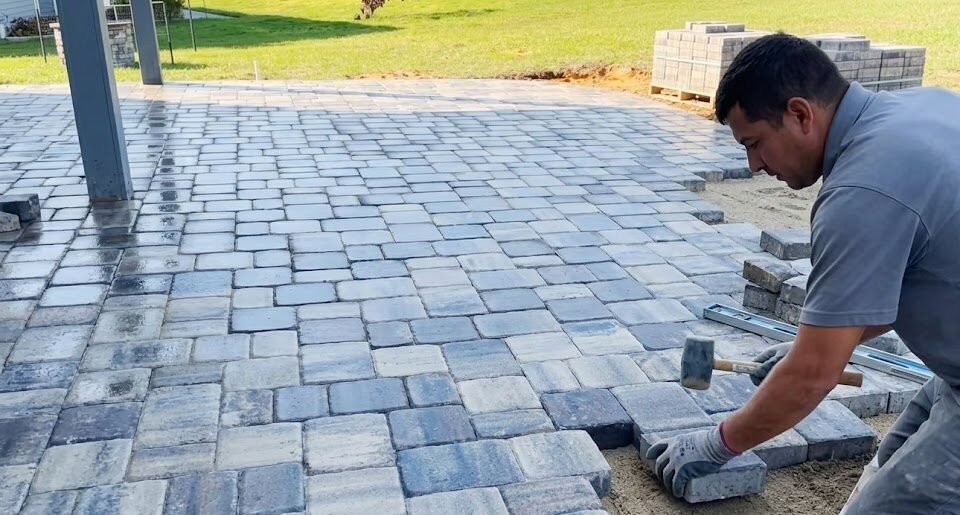
The part of a yard that gets used most should be hardscape. A paver patio outside the back door, a path to the side gate and a pad for the grill or fire pit replace the grass that was getting worn to dirt anyway. Pavers handle Florida conditions well: individual units flex with sandy soil instead of cracking like a solid slab, a damaged section can be lifted and relaid, and the joints let some water through.
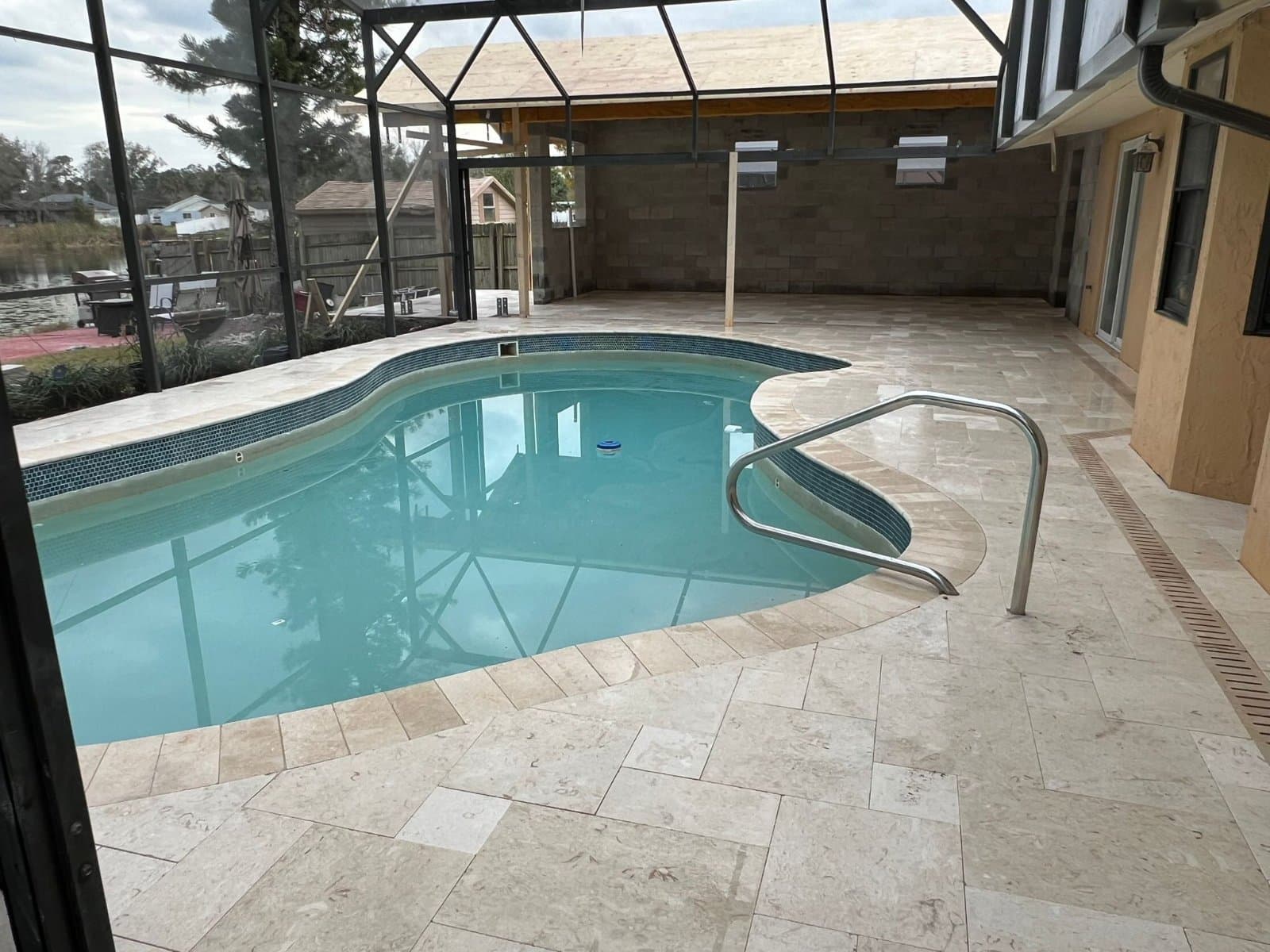
Using the ranges from our own Florida cost guides, a concrete paver patio runs roughly $10 to $18 per square foot installed, depending on the paver, pattern, base work and access. Size the patio for how you will use it, then let the other materials fill around it. If drainage is a concern, permeable pavers can let more water soak in, though they need a deeper base and are not right for every lot. Our brick paver installation service covers patios, walkways and pool decks.
(321) 353-7445Get Immediate Service
Option 2: Artificial Turf Where You Still Want Green
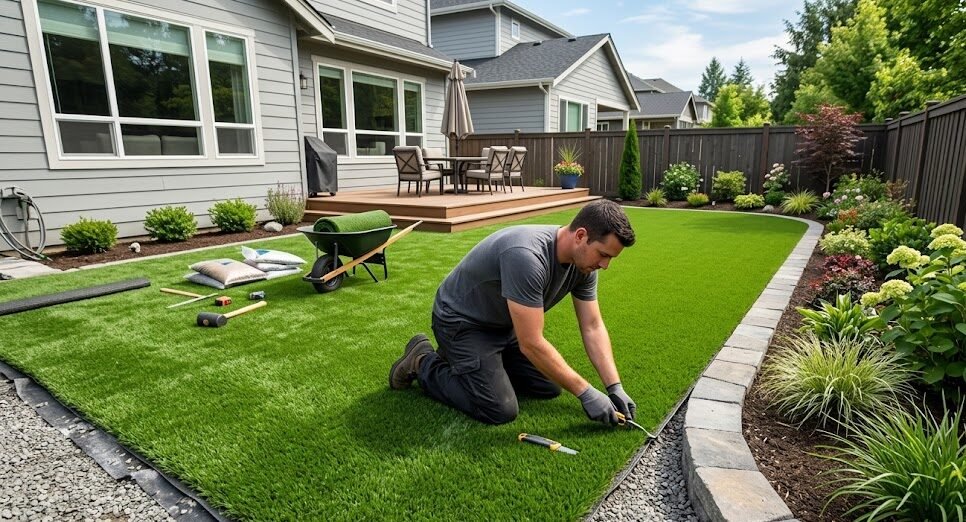
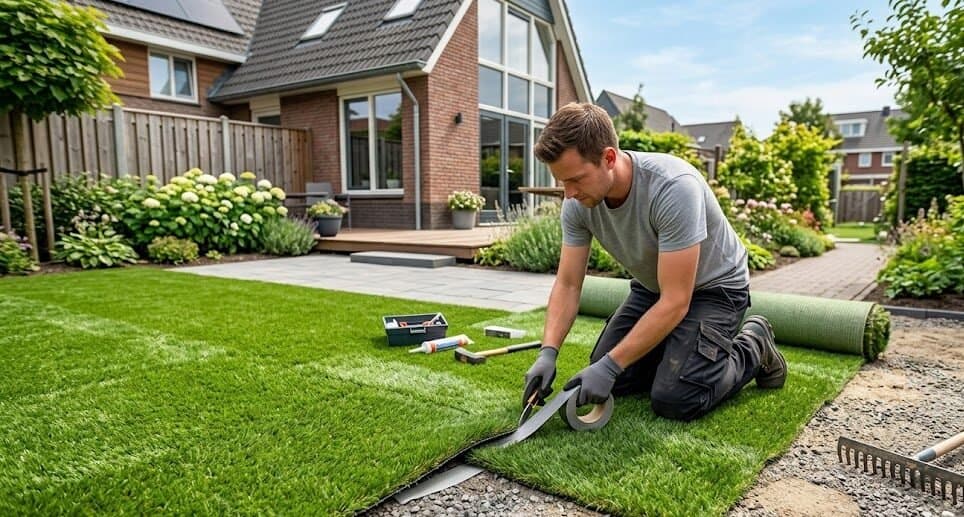
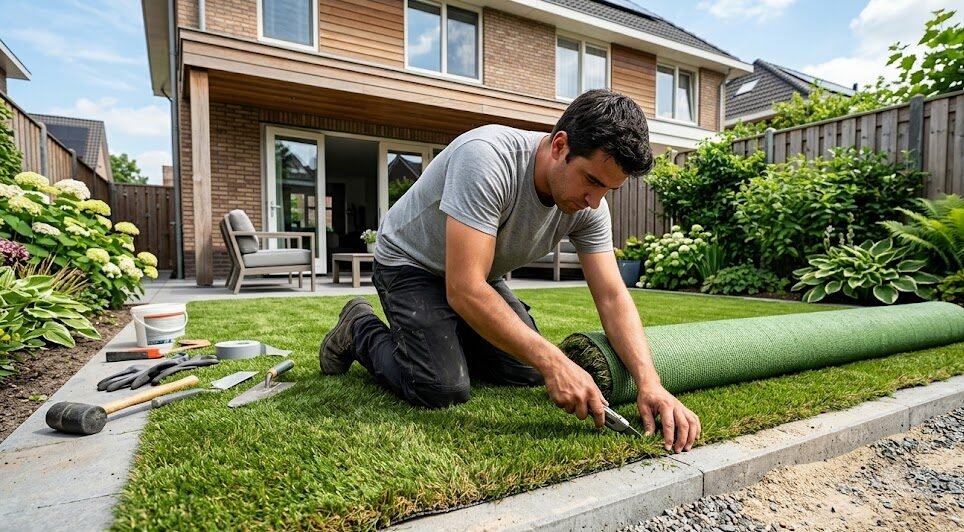
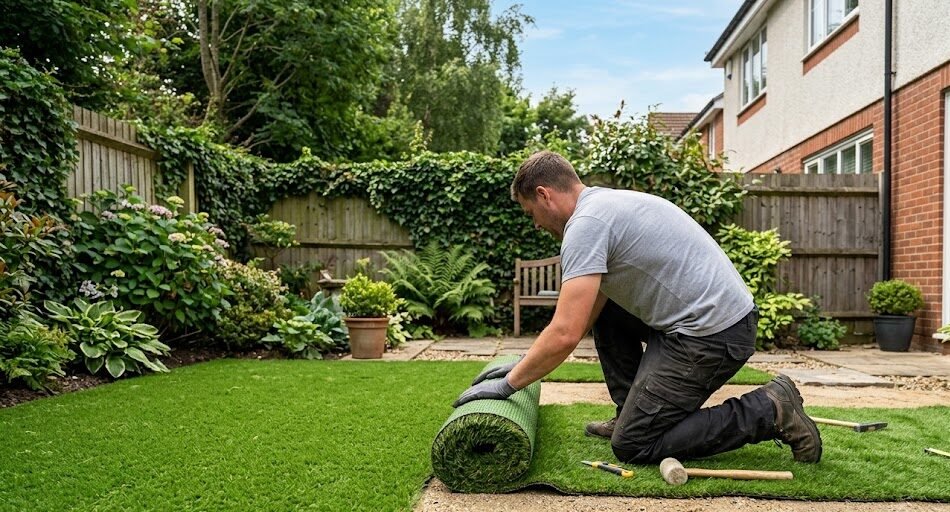
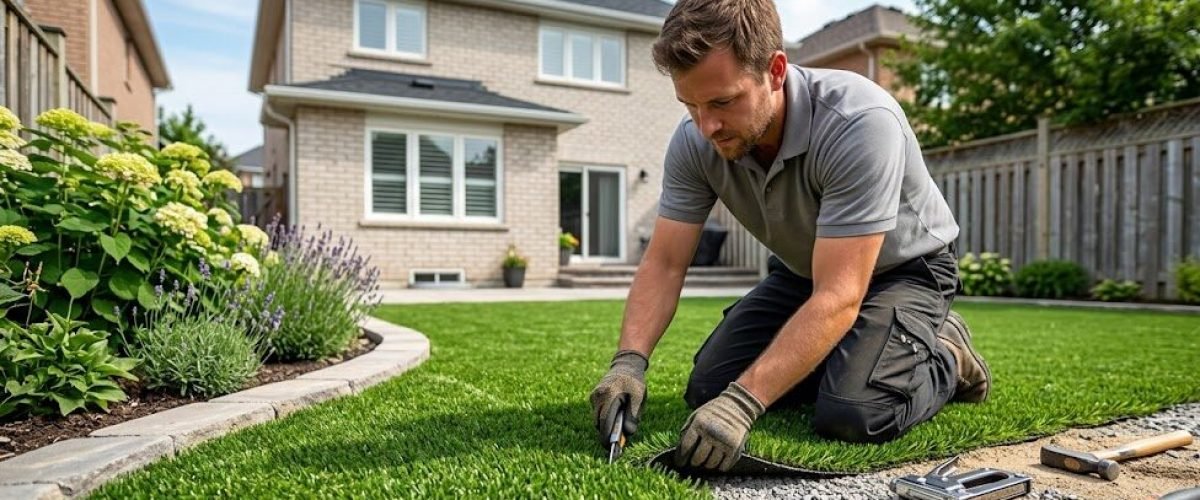
Most families still want some green space for kids, pets or simply the look of a lawn. Artificial turf delivers that without mowing, irrigation or fertilizer. It works especially well in the places where real grass struggles: the shady strip along the side of the house, a small backyard behind a screen enclosure and dog runs that get torn up.
Residential turf with a proper base typically runs about $10 to $16 per square foot installed in Florida. The water side can be significant: our artificial turf vs sod comparison works through the math on irrigation savings and long term cost. Two honest caveats for Florida. Turf gets hot in full afternoon sun, which our article on whether artificial turf gets hot in Florida measures, so it works best where there is shade at the hottest time of day. And it needs a well built, well drained base, because a turf area that holds water after a summer storm is not a lawn anyone wants. Our artificial turf installation starts with that base.
Option 3: Florida-Friendly Groundcovers That Rarely or Never Need Mowing

If you want living green without turf, groundcovers are the closest thing to a lawn. UF/IFAS Gardening Solutions lists several alternatives to turfgrass, each with its own trade offs:
- Sunshine mimosa: a Florida native for full sun with pink puffball flowers. It can be mowed, handles some light foot traffic and spreads readily, sometimes into the neighbor's yard.
- Perennial peanut: a full sun groundcover with yellow flowers. It does not need mowing, though mowing can increase blooms, and it tolerates foot traffic poorly, so UF/IFAS advises installing pathways through it.
- Asiatic jasmine: for partial shade to full sun. It is mowed or pruned about once a year and is easy to maintain once established, but it cannot take foot traffic, so plan walkways.
- Frogfruit: a native for full sun or short periods of shade that takes some light traffic and occasional mowing.
- Blue-eyed grass and twinflower: smaller natives for partial shade or sun that do not need mowing but do not tolerate traffic.
A few realities from the Extension material: groundcovers usually take longer to fill in than laying sod, none of them handle soccer games, and most need stepping stones or a path where people cross. They are best for areas that are looked at more than walked on, such as front yard beds, slopes and side yards. Your county UF/IFAS Extension office can help with plant choices for your soil and exposure.
Option 4: Mulched Planting Beds
Expanding planting beds is one of the simplest ways to shrink a lawn. Shrubs, ornamental grasses, palms and perennials grouped in larger beds need far less weekly work than turf. UF/IFAS Orange County notes that larger beds with shrubs and trees are a low maintenance alternative to turfgrass, while also observing that most people still like a small strip of grass or turf for looks.
Mulch does the heavy lifting in these beds. Spread 2 to 3 inches to hold moisture and suppress weeds, keep it pulled back from trunks and the house foundation and choose a product that is not cypress, which UF/IFAS discourages because of how it is harvested. Plan to refresh it once or twice a year. Mulch floats, so in areas where storm runoff moves fast it will wash out; that is where stone works better.
Option 5: Gravel, River Rock and Dry Creek Beds
Rock is the most misunderstood option. Used everywhere, it looks harsh, holds heat and can turn into a weed bed when soil and leaves collect between the stones. Used in the right places, it solves problems no other material can:
- Downspout outlets and drip lines: river rock where roof water lands prevents the bare, washed out strip that forms along so many Florida homes.
- Dry creek beds: a shallow, rock lined channel can carry storm water from a low spot toward the swale and doubles as a landscape feature in the dry season.
- Side yards and utility areas: the narrow strip beside the house with the AC unit, pool equipment and trash cans is a natural fit for gravel over landscape fabric.
- Borders: a band of stone between beds and turf or pavers keeps mulch and soil off hardscape.
For gravel to stay clean, it needs solid edging, a fabric layer underneath on a graded base and a plan for where water goes during a downpour. Light, smooth stone stays cooler and looks softer than dark crushed rock. Check your HOA rules before covering a front yard in rock; many communities limit how much of the visible yard can be stone.
Option 6: A Privacy Fence to Frame the Space
A yard without grass often feels more like an outdoor room, and a room needs walls. A privacy fence along the back and sides defines the space, blocks the view of the neighbor's yard and gives vines, lighting and planters a backdrop. Vinyl and aluminum hold up to Florida humidity with little upkeep, and our fence cost guide by material compares the options. Our fence installation service handles permits and HOA submissions.
Putting It Together: Three No-Mow Yard Layouts
- Family yard: paver patio at the back door, an artificial turf play area in the middle, mulched beds with shrubs along a privacy fence and river rock under the downspouts.
- Pet yard: turf designed for pets with a drained base where the dogs run, a paver path along the fence line where they patrol and gravel in the side yard. Our guide to pet-friendly artificial turf covers infill and odor control.
- Low-water front yard: larger Florida-friendly planting beds with mulch, a groundcover such as perennial peanut or sunshine mimosa in full sun, a paver walkway to the door and a stone border along the driveway.
In each case, the materials follow the map: hardscape where people walk, turf where they play, plants where they look and stone where water runs.
Maintenance: No-Mow Is Not No-Work
A yard without grass trades weekly mowing for a lighter, less frequent routine:
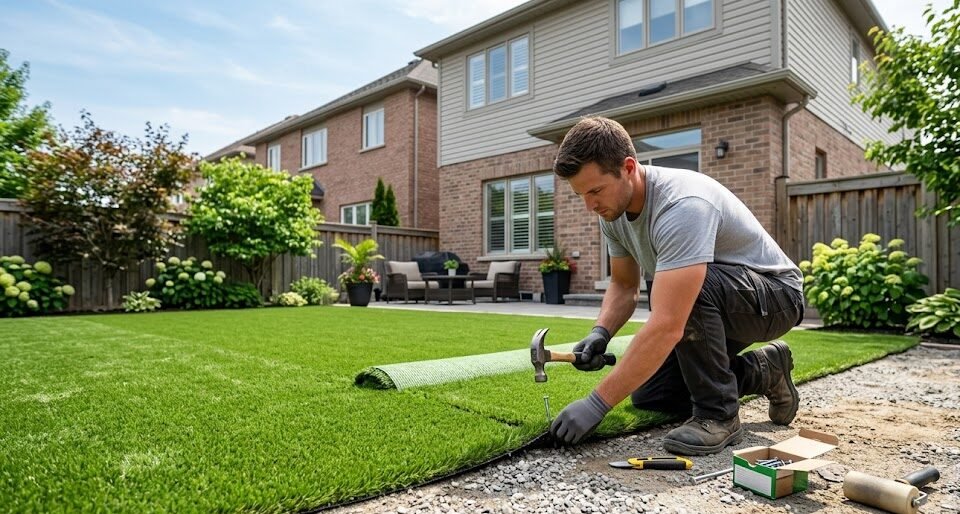
- Turf: blow or rake off leaves, rinse pet areas and brush the fibers upright a few times a year.
- Pavers: sweep, pull the occasional weed from a joint and reseal on a schedule if you chose a sealed finish.
- Beds and groundcovers: refresh mulch, prune once or twice a year and pull weeds while the plants fill in.
- Gravel: blow off leaves before they break down into soil and top up stone that migrates.
If you would rather not handle any of it, a maintenance plan keeps turf and pavers looking new.
No-Mow Yards Across Central Florida
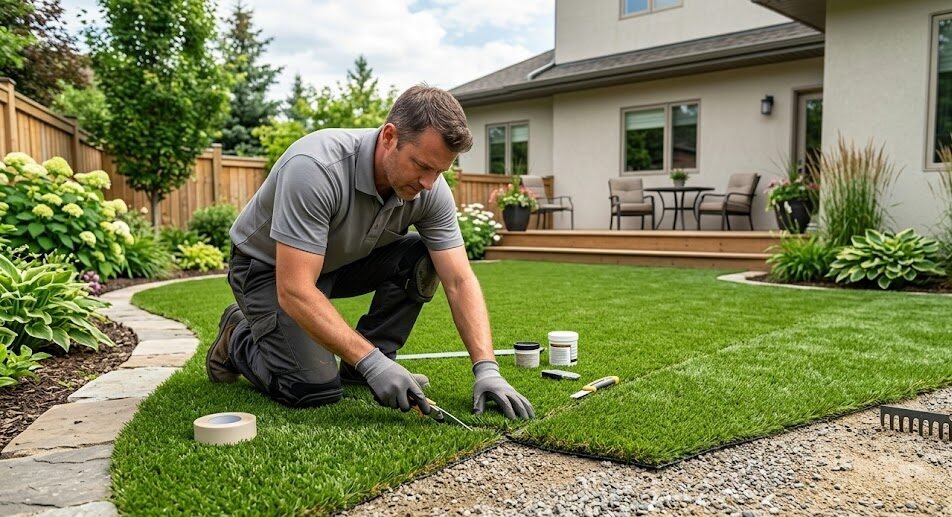
KS Solutions designs and installs paver patios, artificial turf and fencing that replace high maintenance lawns across Central Florida. We work regularly in Orlando, Kissimmee and Lakeland, where shade, sandy soil and HOA rules shape almost every project. Tell us how you use your yard, and we will plan a layout you never have to mow.