The Only Question That Matters in July
Every paver comparison starts with looks and price. In Florida, that is the wrong order. A pool deck you cannot cross barefoot at two in the afternoon is a pool deck you stop using in the exact months you bought it for, and no amount of curb appeal fixes that. So before color, before pattern, before budget, the first filter on a Central Florida pool deck is surface temperature.
The good news is that this is a solved problem. The differences between travertine, brick, marble, and porcelain under a 95 degree sun are large, measurable, and consistent enough to decide on. The bad news is that most of what gets repeated online is a manufacturer's talking point rather than a measurement. Here is what actually separates these four materials, where each one wins, and the two mistakes that make a good material behave like a bad one.
How Hot Each Material Actually Gets
Reported surface temperatures under peak sun vary by test conditions, so treat these as a range rather than a single number. What holds steady across every source is the ranking and the size of the gap.
| Material | Reported peak surface temp | Barefoot verdict |
|---|---|---|
| Travertine (light) | roughly 105 to 120°F | Walkable |
| Porcelain (light / ivory) | roughly 108°F and up | Walkable |
| Marble (white / light) | comparable to light travertine | Walkable |
| Brick and concrete pavers (light) | around 118°F | Uncomfortable |
| Brick and concrete pavers (dark) | 135 to 145°F | Not usable barefoot |
The headline finding is the spread. Light travertine, white marble, and ivory porcelain run roughly 25 to 35 degrees cooler than dark concrete in the same conditions, and typically stay under about 110 degrees even in peak afternoon sun. That is not a marketing difference. That is the difference between a deck people stand on and a deck people hop across.
The second finding matters just as much: color is not a tiebreaker, it is a primary factor. Dark brick and dark concrete pavers absorb a great deal of heat and become genuinely dangerous to touch, especially with a smooth finish under open sky. A dark porcelain gets hot too. Choosing a dark paver and then hoping the material saves you is the most common way homeowners end up disappointed.
Why Travertine Stays Cool When Others Do Not
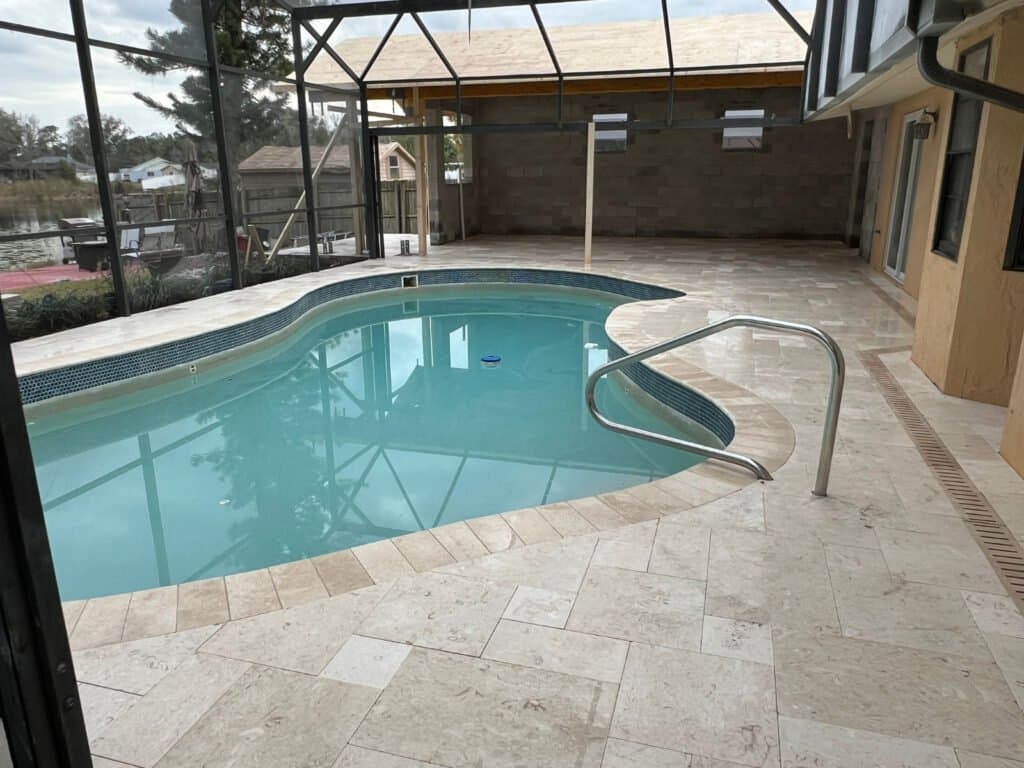
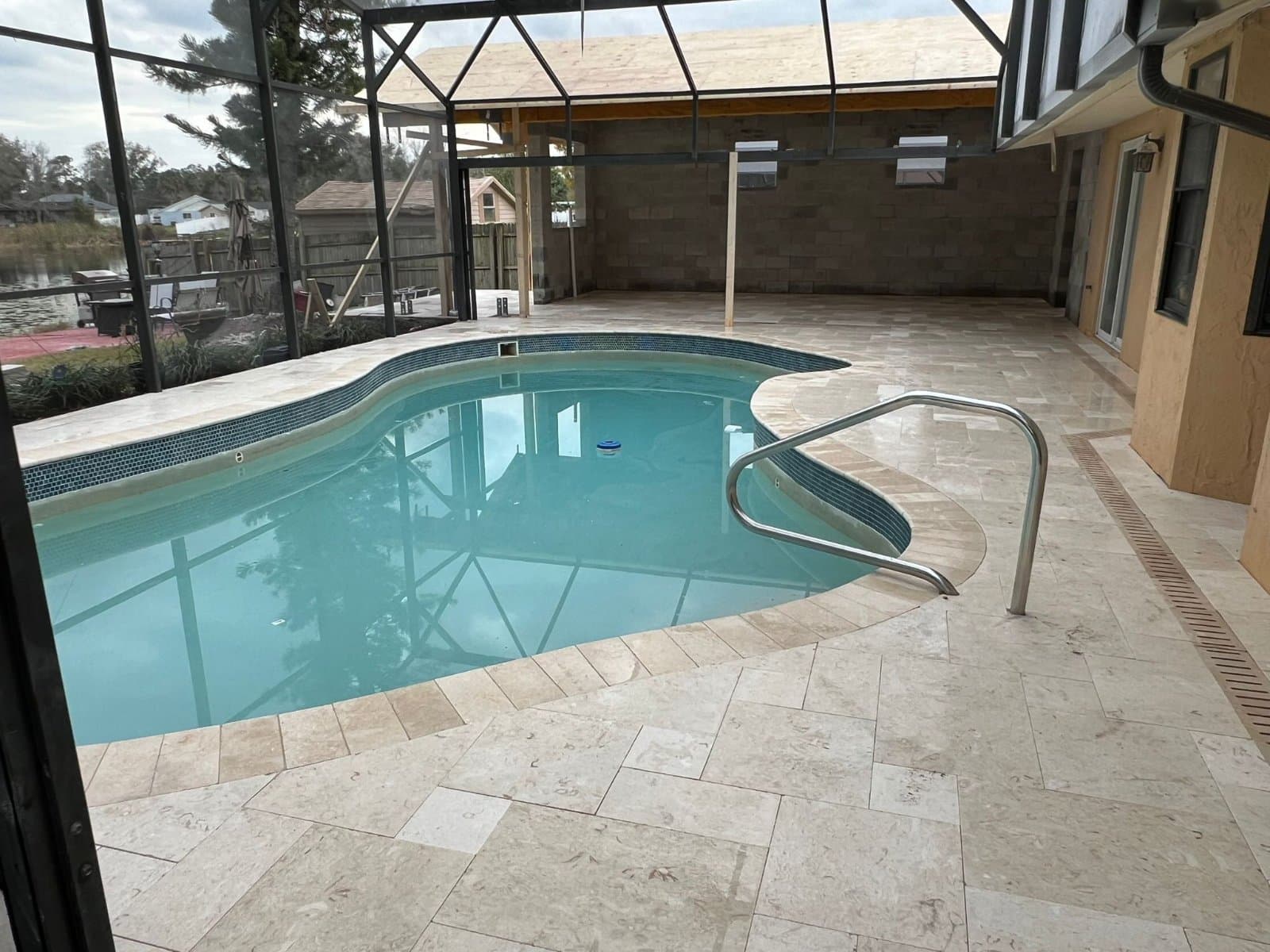
Travertine's advantage is physical, not cosmetic. It is a porous natural stone, and that porous structure dissipates heat rather than storing it. The important consequence is that travertine's cooling behavior is built into the material itself rather than borrowed from its color. It is the one material on this list where you are not relying entirely on picking a pale shade.
That same porosity pays a second dividend at the pool edge. An unsealed travertine surface lets water escape into the stone instead of sitting on top of it, which is exactly what keeps a wet deck from turning slick. Combine that with the small voids in the stone that add friction underfoot, and travertine's slip performance around a pool is genuinely strong rather than a claim.
The tradeoff arrives with pool chemistry. That porous surface will absorb what lands on it, so travertine needs sealing to resist chlorine and saltwater. This is not a burden if you plan for it. It is a real problem if nobody mentions it and the deck spends two years absorbing salt spray.
Where Porcelain Wins
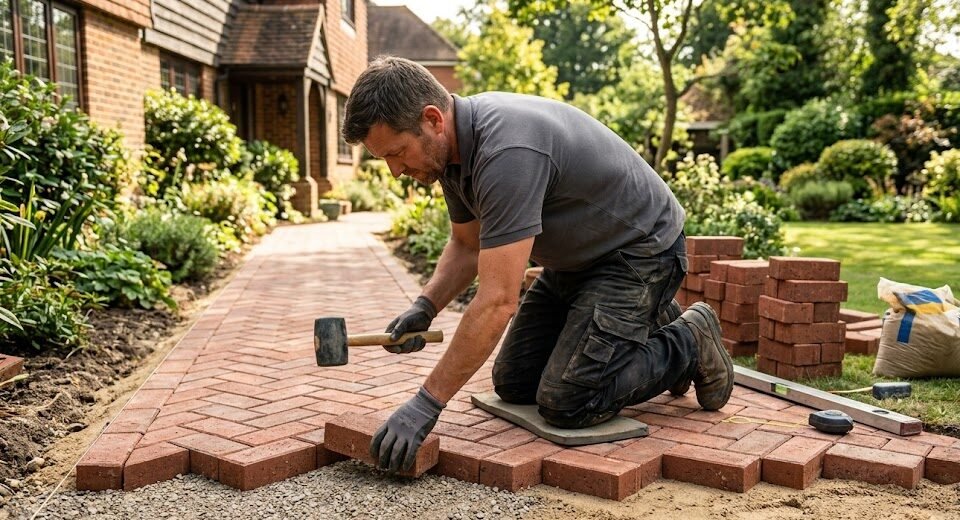
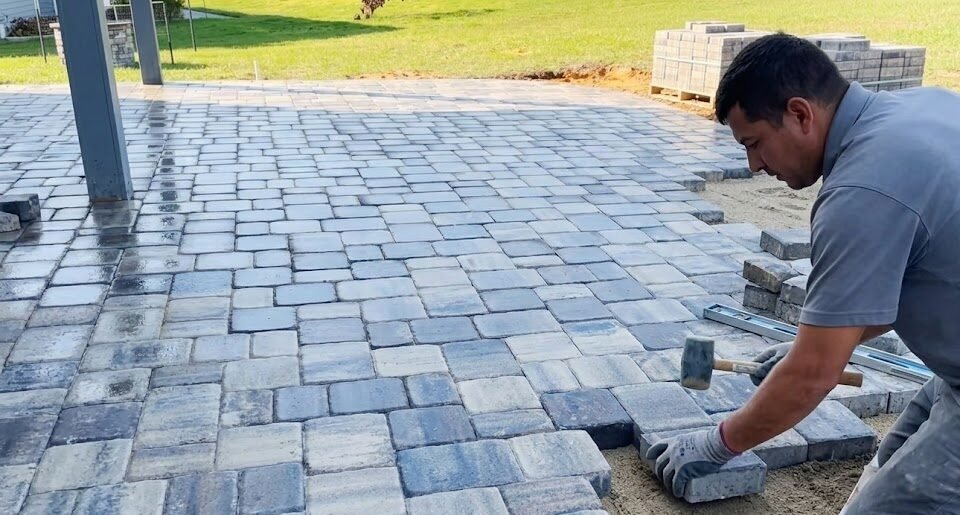
Porcelain is the opposite engineering answer to the same problem. Where travertine is porous, porcelain is dense. Its structure has a very low absorption rate, so it does not take heat on quickly and it stays meaningfully cooler than concrete or brick.
Low absorption drives the rest of porcelain's case. It resists staining, it resists fading, and it does not require sealing at all. For a homeowner who wants a deck that looks the same in year eight as it did in year one without a maintenance calendar, porcelain is the honest recommendation.
Two caveats. First, porcelain's coolness depends more on color than travertine's does, so a dark porcelain forfeits much of the advantage, and even lighter porcelains usually do not quite match travertine for barefoot comfort. Second, porcelain is unforgiving about installation. A dense, precisely dimensioned unit demands a flat, correctly built base, and it will telegraph every shortcut underneath it.
(321) 353-7445Get Immediate Service
Where Marble Fits
Marble is the premium end of this comparison and behaves largely like travertine's denser cousin. Lighter marbles handle heat well, and white marble sits alongside light travertine in the coolest tier. Darker marble tones give some of that back and can retain more heat than travertine.
Marble's density is its strength and its complication. The stone is remarkably strong and long-lasting, and when properly finished it delivers a smooth surface that is still appropriate around a pool. But that finishing step is the point: marble often needs surface treatment specifically to reduce slipperiness, and those steps are part of why marble costs more than travertine on materials.
Sealing is not optional either, despite what its density suggests. Because marble is tight-structured, it needs a stronger penetrating sealer than travertine does, and marble pool decks generally ask more of an owner over time than travertine does. Marble is a beautiful, correct choice for someone who wants it and knows what it asks. It is a poor default.
Where Brick Still Makes Sense
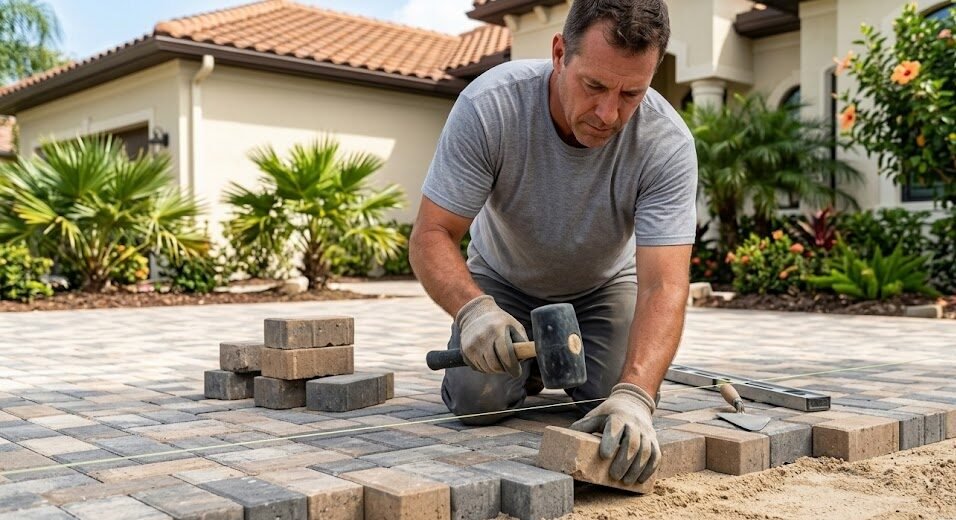
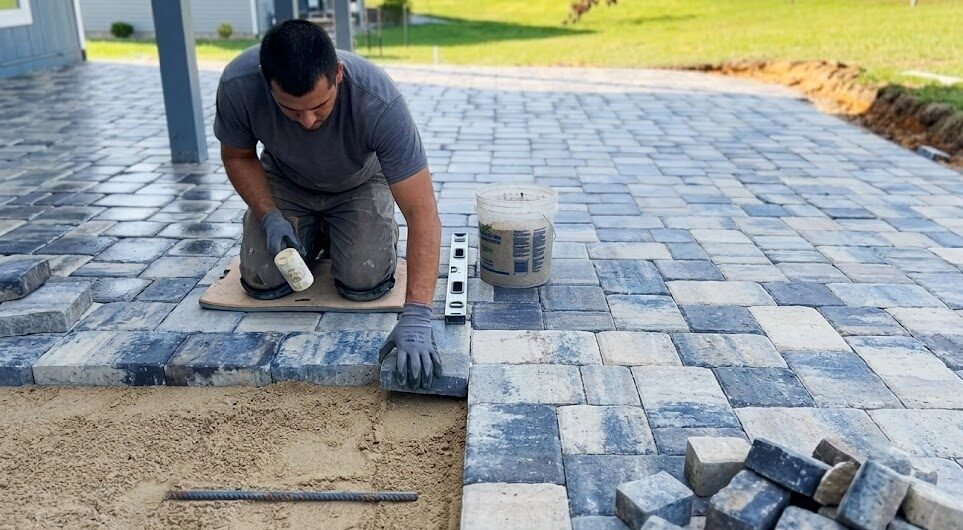
Brick loses this comparison on one axis and wins on several others, and it is worth being precise about which is which. Around an unshaded pool, brick and concrete pavers get hot: roughly 118 degrees in light colors and 135 to 145 degrees in dark ones. That rules them out for barefoot pool surrounds in Central Florida sun, and pretending otherwise does nobody any favors.
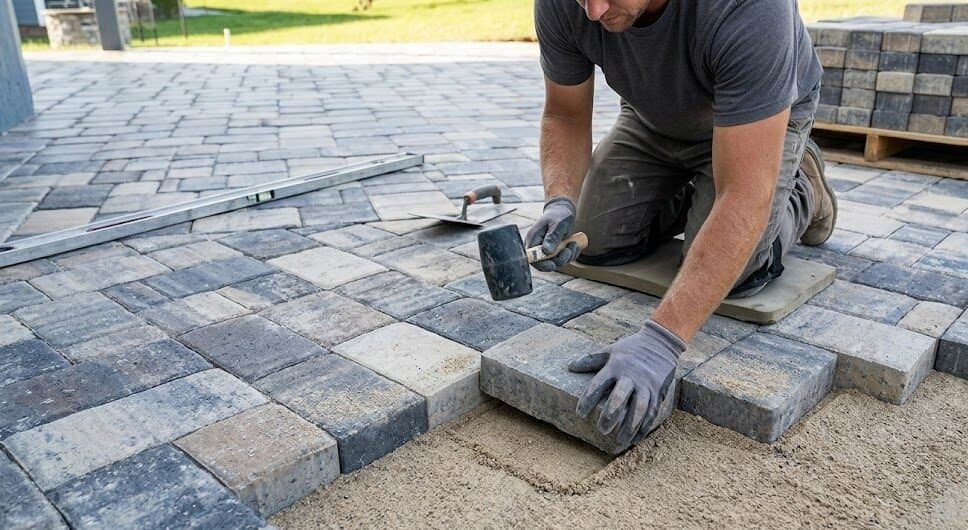
Everywhere else, brick is often the smartest money on the property. Driveways get driven on, not stood on barefoot. Walkways get crossed in shoes. Patios that carry shade structures or screen enclosures never reach open-sky temperatures. Brick pavers are durable, repairable one unit at a time, and dramatically less expensive than natural stone for the same square footage.
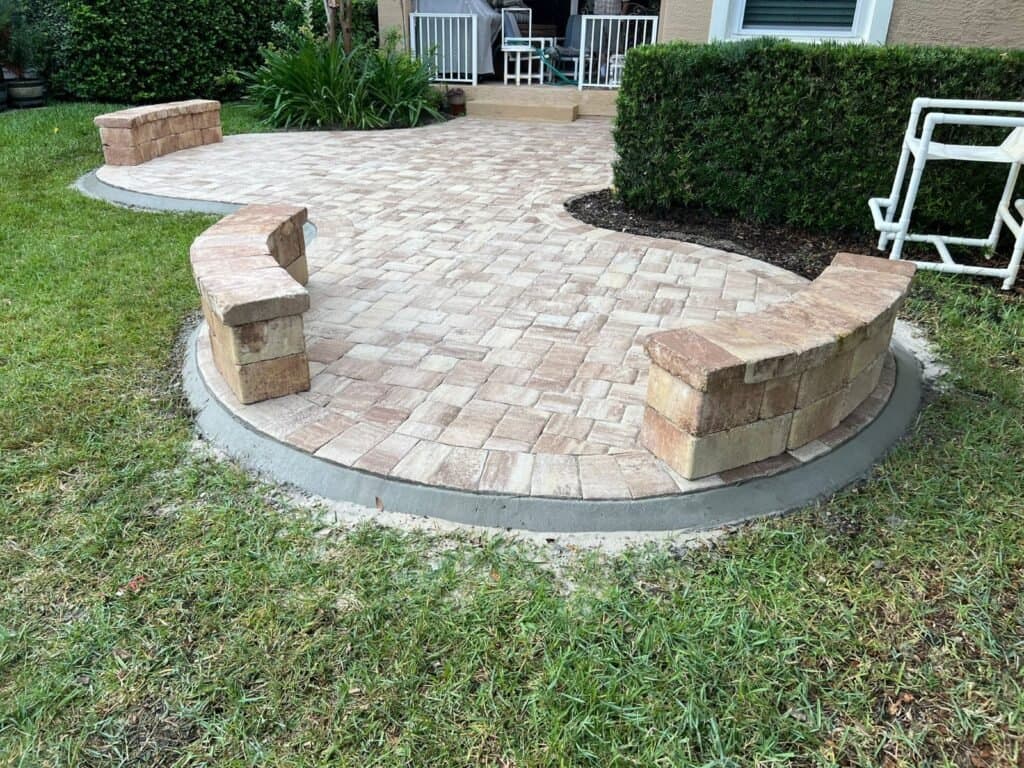
The most cost-effective Florida backyard we install is frequently a mixed one: a cooler surface immediately around the water, brick pavers for the driveway and the walkways, and the savings spent on a base that will outlive everyone. If a driveway is what you are pricing, our driveway paver installation page covers that scope directly, and the full range sits under brick paver installation.
Cost: What the Spread Actually Looks Like
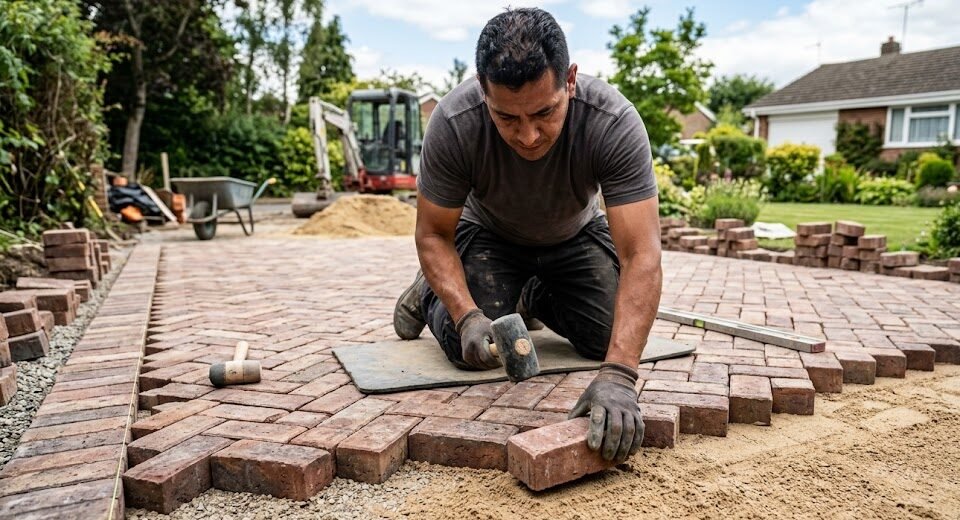
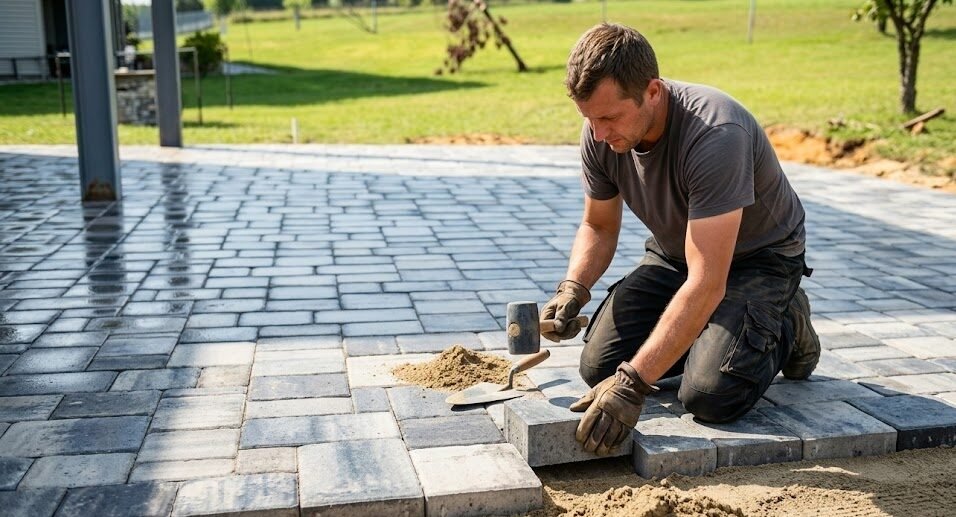
Price ranking is stable even when exact figures move with the market. Concrete and brick pavers sit at the bottom. Travertine costs roughly 30 to 40 percent more than concrete. Porcelain lands near travertine, and marble sits above both, partly because of the extra finishing needed to make the surface safe underfoot.
To put it on a single deck, installed costs for a roughly 700 square foot pool deck run from around $9,000 for a premium concrete paver installation up to $27,000 or more for tumbled marble, with most premium travertine and porcelain installations landing in the $14,000 to $19,000 range.
Notice how those numbers interact with area. On a small pool surround, the entire distance between brick and travertine can be a few thousand dollars, and that is a bargain for a deck that stays usable in July. On a large patio, the same choice per square foot compounds fast, which is exactly the case for using different materials in different zones instead of one material everywhere. For how the underlying price is built in the first place, see our breakdown of what brick pavers cost in Florida in 2026.
The Two Mistakes That Ruin a Good Material
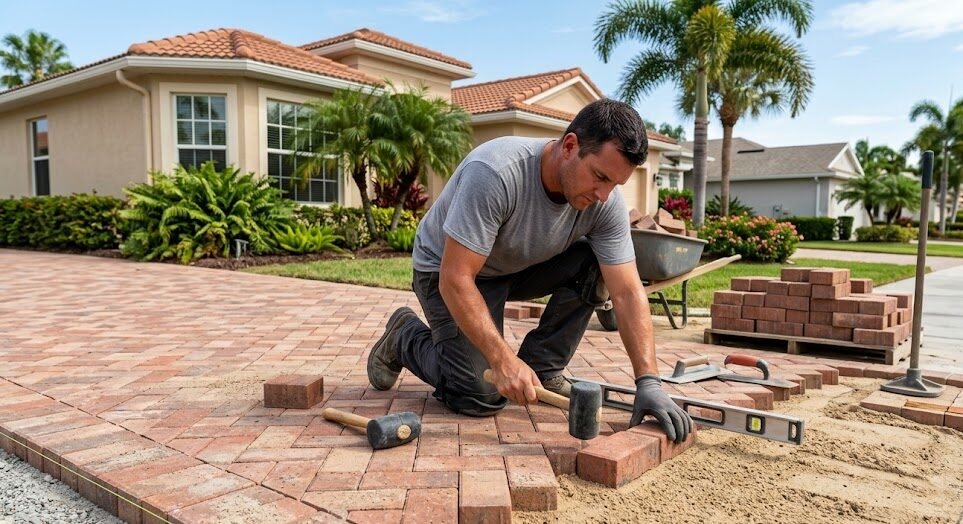
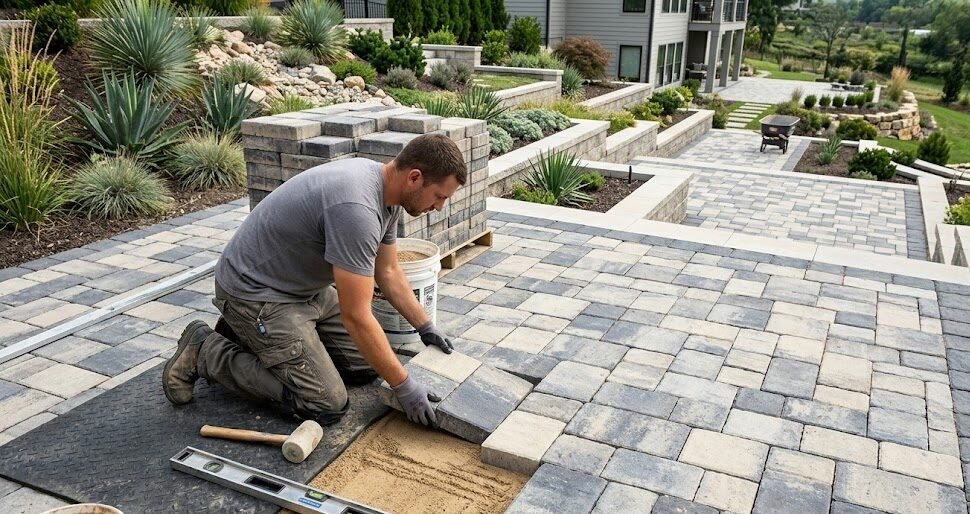
Material choice gets all the attention and causes a minority of the failures we get called out to fix. Two other decisions do more damage.
Mistake one: choosing dark. A dark paver undoes the material. Dark concrete hits 135 to 145 degrees, and dark porcelain gives away the advantage you paid for. In Florida sun, light color is not an aesthetic preference on a pool deck. It is part of the specification.
Mistake two: skimping on the base. Central Florida's sandy soil punishes shallow excavation and weak compaction, and the base is invisible the moment the job is done, which is precisely why cut-rate quotes attack it. Travertine over a bad base sinks and rocks exactly like concrete over a bad base. You will have paid natural stone prices for a deck that moves. The base is not where anyone should be saving money, and it is the single question that should shape how you read competing quotes.
Texture and Drainage Are Part of the Answer
Two specification details do most of the remaining work. Texture first: a textured or treated surface is what meets non-slip expectations around a pool, and a smooth finish under open sky is both hotter and slicker. Travertine gets this partly for free through its natural voids. Marble and porcelain get it through the finish you specify, which means the finish is a decision, not a detail.
Drainage second. Florida does not rain gently, it rains all at once, and a deck that ponds is a deck that grows algae and stains. Correct slope away from the pool and the house, plus a joint strategy that does not wash out in a downpour, is what keeps any of these four materials looking the way it did on install day.
How to Choose in One Pass
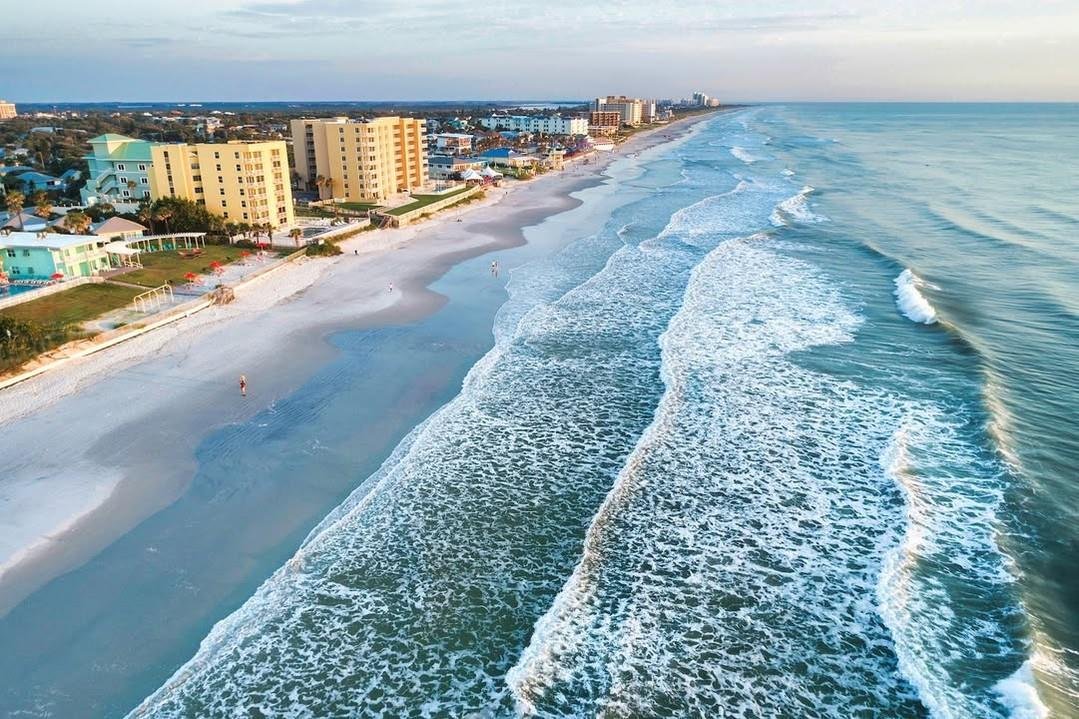
Match the material to the surface, and the decision gets easy.
- Unshaded pool deck, barefoot traffic, kids: light travertine. Coolest performance is built into the stone rather than the color, and the natural texture handles wet feet. Budget for sealing against chlorine or salt.
- Pool deck, want it to look new in year ten: light porcelain. Nearly as cool, resists stains and fading, no sealing. Insist on a properly built base, because porcelain shows everything.
- Pool deck, premium build, eyes open: white or light marble, with a slip-appropriate finish specified up front and a plan for a strong penetrating sealer.
- Driveway, walkways, shaded or screened patio: brick pavers. Durable, individually repairable, and far better value where nobody stands barefoot at 2pm.
- Whole backyard on a real budget: mix them. Cool surface at the water, brick everywhere else, and put the savings into the base.
KS Solutions installs brick pavers, pool decks, fences, and artificial turf across Central Florida with in-house crews and proper base preparation on every job. We will walk your yard, take a real read on sun exposure and drainage, and price the options side by side rather than steering you to one. See our pool deck paver installation work, or how we handle projects in Orlando, Lakeland, and Winter Haven. If a low-maintenance yard is the real goal, our artificial turf installation team can price that against a hardscape so you compare real numbers.