Two Very Different Answers to the Same Backyard Problem
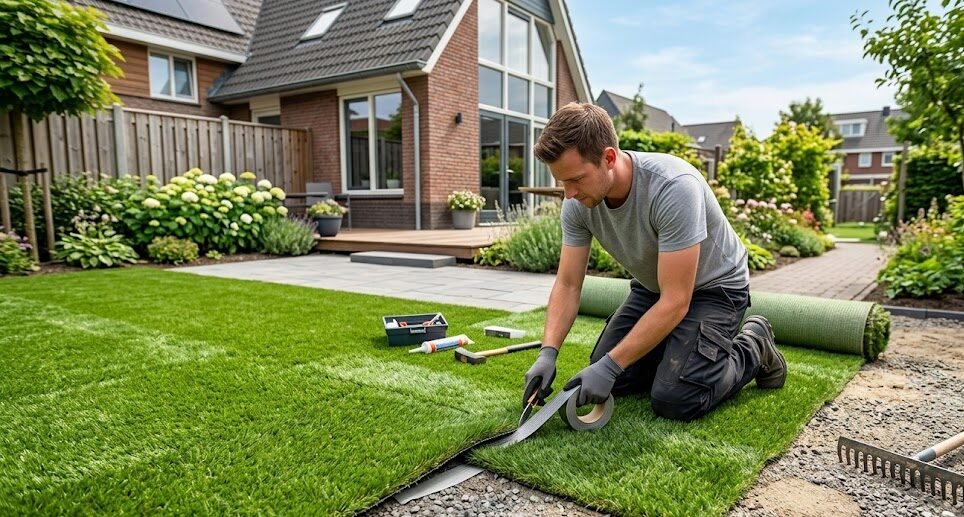
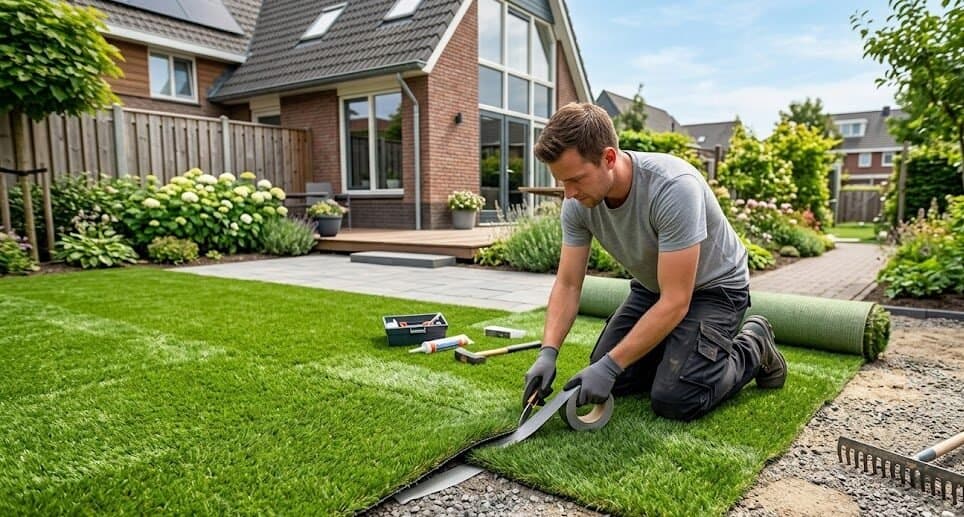
Most Central Florida homeowners who start comparing artificial turf and pavers are trying to solve the same problem: a backyard that is hard to keep looking good. The grass browns out in the dry spring, turns to mud in the summer rains, needs mowing every week from April to October and never quite recovers in the shady corners. Turf and pavers both make that problem go away. They just do it in very different ways.
Artificial turf keeps the yard green and soft. It reads as lawn, it is good for kids and dogs, and it drains through its backing. Pavers turn the yard into a hard outdoor room. They are built for furniture, grills, fire pits and foot traffic, and they last for decades with simple care. The right choice depends less on which material is better and more on how you actually use the space.
This guide compares the two on the things that matter in a Florida backyard: installed cost, surface heat, drainage in summer storms, maintenance, lifespan and resale. It ends with the layout most of our clients choose, which is usually not one or the other but both, each where it works best.
Turf vs Pavers at a Glance
| Factor | Artificial turf | Brick pavers |
|---|---|---|
| Installed cost (Florida, 2026) | Roughly $10 to $16 per sq ft for most residential lawns | Roughly $10 to $18 per sq ft for a concrete paver patio |
| Surface feel | Soft, cushioned, reads as lawn | Hard, flat, built for furniture |
| Midday surface heat | Hottest common backyard surface in full sun | Hot in full sun, cooler than turf in published comparisons, color matters |
| Drainage | Water passes through perforated or permeable backing into the base | Standard pavers shed water to edges; permeable pavers pass it through |
| Routine care | Rinse, brush, remove debris, refresh infill | Sweep, rinse, reseal every few years, re-sand joints |
| Typical lifespan | Often 10 to 20 years for quality residential turf | Decades; individual pavers can be replaced |
| Best for | Play areas, dog runs, lawn look without mowing | Patios, outdoor kitchens, fire pits, pool decks, walkways |
The cost ranges above are the same planning ranges we publish across our guides. They are ballpark figures, not a quote, and the real number depends on access, base preparation and the product you choose.
Cost: Close Per Square Foot, Different Over Time
Per square foot, turf and a standard paver patio overlap more than most people expect. Our published Florida ranges put artificial turf at roughly $10 to $16 per square foot installed for a typical residential lawn, with a broader statewide range of about $8 to $18 depending on product weight, infill and base depth. A concrete paver patio runs roughly $10 to $18 per square foot, while clay brick or natural stone climbs to $18 to $30 or more.
Where the two separate is the scope around them. A turf project often covers a large area, so the total is higher even at a similar unit price. A paver project usually covers a smaller footprint but adds edge restraints, steps, seat walls or a grill island. A 600 square foot turf play area at $12 per square foot is about $7,200. A 400 square foot paver patio at $14 is about $5,600, before any built-in features.
Over ten years, both are low-maintenance compared with a natural lawn. Turf saves the mowing, fertilizing and most of the irrigation, which our 10-year comparison of artificial turf vs sod puts in the range of $1,500 to $3,000 per year for a full-service lawn program. Pavers remove the lawn entirely from that area and need occasional sealing and joint sand. For the full breakdown of paver pricing, see our brick paver installation page.
Heat: The Biggest Difference in a Florida Summer
In full Florida sun, artificial turf gets hot. A preliminary study presented to the City of Lawrence, Kansas, measured an average daytime surface temperature of about 117 degrees Fahrenheit on a synthetic field, with a high of 157, against about 94 degrees on concrete and about 78 degrees on natural grass. Other research, including a UNLV and Desert Research Institute study, recorded synthetic turf as high as 169 degrees.
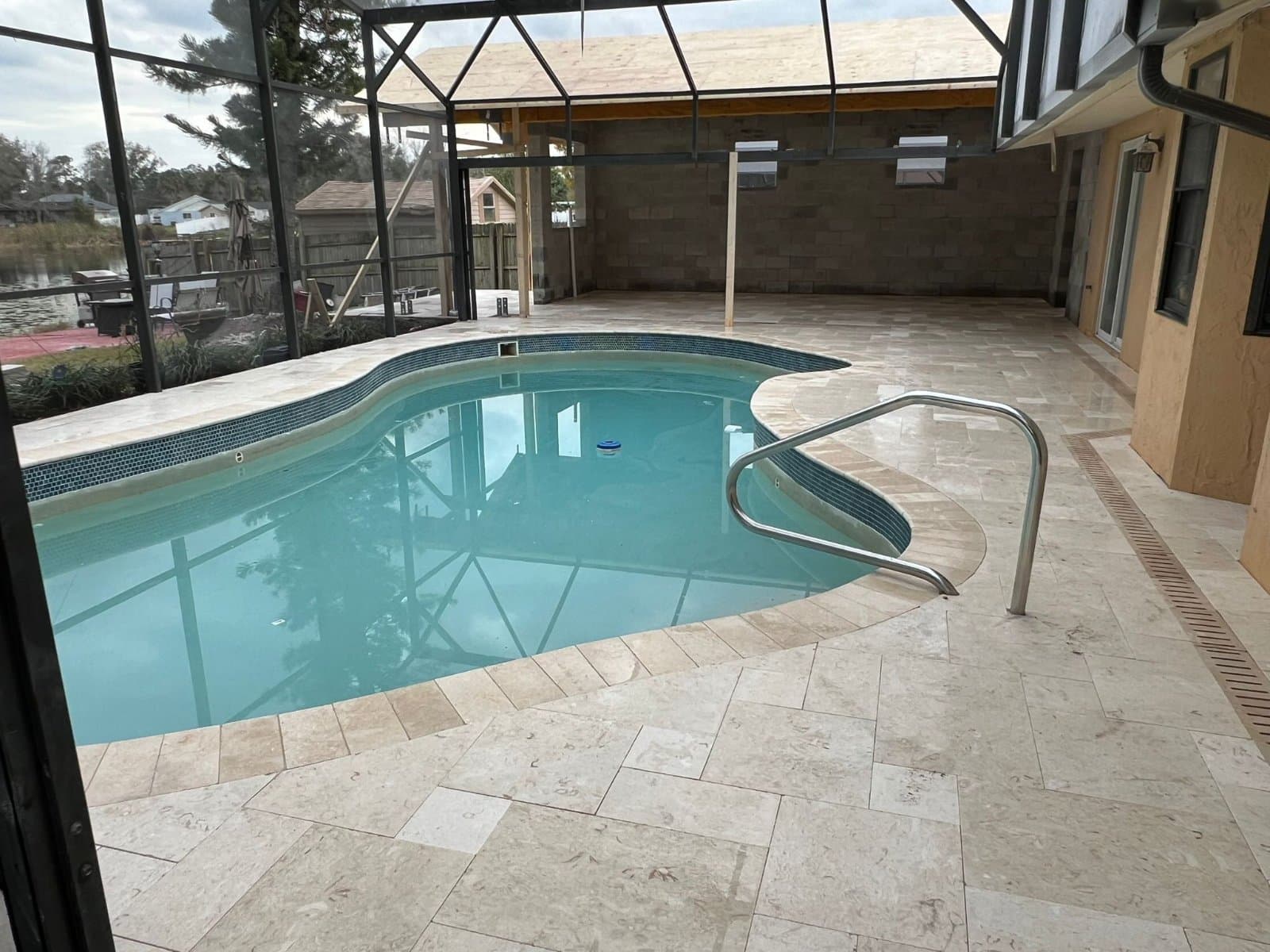
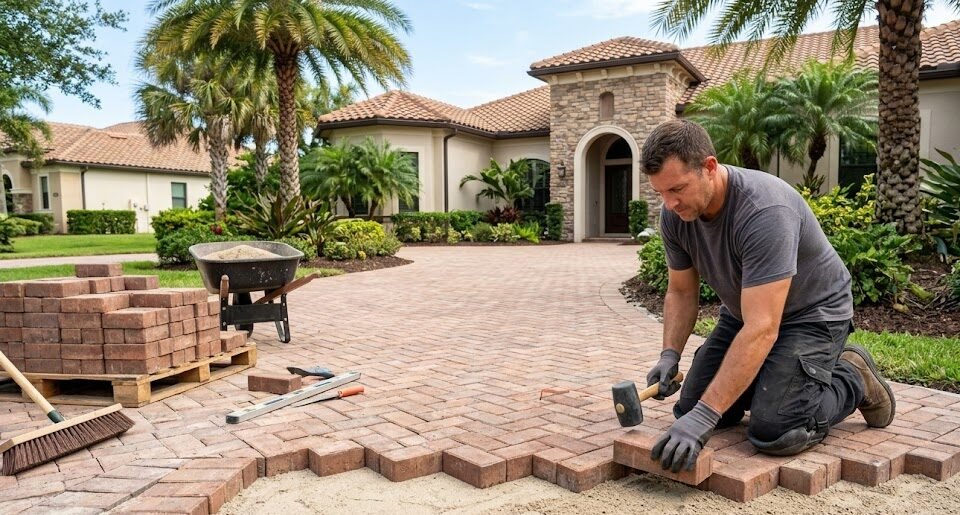
Pavers also heat up in direct sun, and color matters. Dark charcoal and deep red pavers absorb more heat than light tan, gray or travertine-colored units. Even so, published comparisons generally place concrete surfaces between natural grass and synthetic turf, and pavers do not have the plastic fibers that turf has. That is why pool decks in Florida are almost always pavers, travertine or another hard surface, not turf.
Shade changes everything. Turf under an oak canopy or on the east side of the house in afternoon shade stays far more comfortable than turf in open south or west sun. Our detailed guide on whether artificial turf gets hot in Florida covers cooling infill, shade and watering. If your yard is in full sun all afternoon and you want a place to sit, pavers with a shade structure are usually the more comfortable choice.
(321) 353-7445Get Immediate Service
Drainage: How Each Handles a Summer Downpour
Central Florida summer storms can drop a lot of water in a short time, and drainage is where both materials succeed or fail. The difference is that both depend on the base underneath, not the surface you see.
- Artificial turf: Quality turf has a perforated or fully permeable backing. Rain passes through the fibers and backing into a compacted crushed-stone base, then into the native soil. On sandy Central Florida soil this works well. On compacted clay pockets or low spots, the base needs to be graded or drained, or water will pond under the turf.
- Standard pavers: Pavers set on a compacted base with joint sand shed most water across the surface. A proper installation is pitched away from the house so water runs to lawn, beds or a drain. A poorly pitched patio holds puddles and sends water toward the slab.
- Permeable pavers: Permeable pavers use wider joints filled with small stone and a deeper open-graded base that stores and infiltrates rain. They cost more, roughly $3 to $5 per square foot over standard pavers, and some jurisdictions recognize them in stormwater rules. Our guide to permeable pavers in Florida covers when they pay off.
If your yard already floods, fix the grading before choosing either surface. Both turf and pavers fail when water has nowhere to go.
Maintenance and Lifespan
Neither material is maintenance-free, but both are far easier than a Florida lawn.
- Turf upkeep: Rinse pet areas, blow off leaves, brush the fibers upright in traffic lanes and top up infill as needed. Annual upkeep for a residential lawn commonly runs about $100 to $200 a year in our published estimates. Quality residential turf often lasts 10 to 20 years in Florida, depending on UV exposure and use.
- Paver upkeep: Sweep, rinse, treat weeds in the joints and reseal every few years to protect color and keep joint sand in place. Pavers themselves last for decades, and a cracked or stained paver can be lifted and replaced without tearing out the patio.
- Repairs after storms: Turf can be lifted and re-secured if it shifts. Pavers can settle where the base washes out, and those sections can be lifted, re-based and reset.
If you want help keeping either surface in shape, our maintenance plans cover cleaning, infill refresh and sealing on a schedule.
Kids, Dogs and How You Use the Yard
Use decides more than any spec sheet. Start by walking the yard and naming what each part is for.
- Kids playing: Turf wins for running, tumbling and soccer. It is soft and consistent, and it does not turn to mud. Pair it with shade and plan play times around the hottest part of the day.
- Dogs: Turf with a pet-friendly infill and good drainage keeps dogs off mud. Pavers are easy to hose off and stay cooler for paws in some conditions. Many dog owners use both: a turf potty and play zone and a paver patio near the door.
- Entertaining: Pavers win. Tables, chairs, grills and fire pits need a flat, stable surface that does not mind heat, spills or furniture legs.
- Pool areas: Pavers or travertine around the pool, turf further out if you want green. Turf right at the pool edge gets hot and can collect chlorinated water and debris.
- Side yards and shade: Turf often solves the shady strip where grass will not grow, while a paver walkway handles the path to the gate.
Resale and HOA Considerations
Buyers in Central Florida generally respond well to finished outdoor living space. A clean paver patio or outdoor kitchen reads as an extension of the house. Turf reads as low maintenance, which appeals to many buyers, including retirees and part-time residents, though some buyers still prefer natural grass. Neither is a guaranteed return on investment, so build for how you will use the yard now.
If you live in an HOA, check the architectural guidelines before choosing. Florida law has addressed HOA rules on certain landscaping choices, but boards still review color, location and product quality. Submit the plan with product samples and a drawing before work starts.
The Answer Most Florida Homeowners Choose: Both
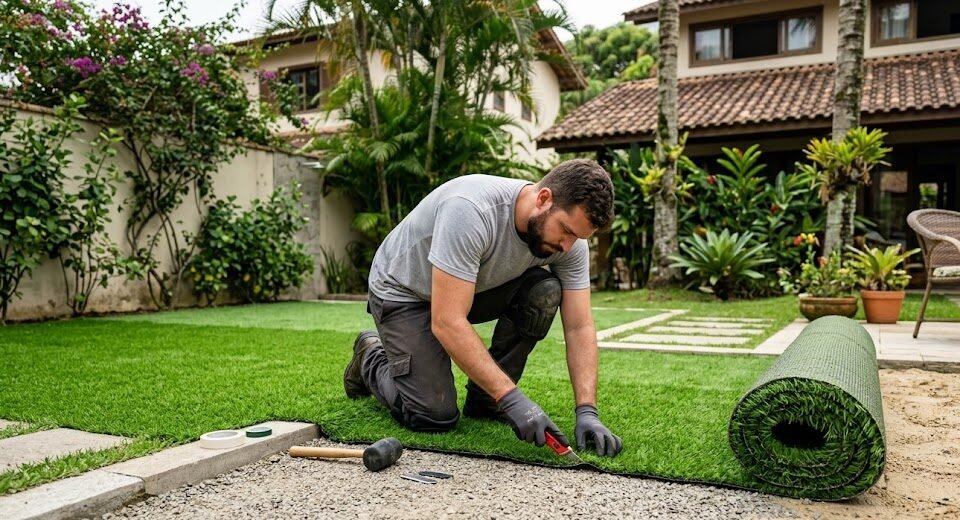
In practice, the most common backyard we build combines the two. A paver patio sits off the back door for dining, the grill and seating. A turf area beyond it handles play, pets and the green view from inside. A paver border or walkway ties them together and gives the turf a clean, stable edge.
This layout puts each material where it performs best. The patio takes the furniture, the heat and the foot traffic. The turf takes the play and keeps the yard green without mowing. And because the two are installed together, the grading and drainage are planned as one system.
Get Turf and Pavers Designed Together
KS Solutions installs artificial turf, brick pavers and fences across Central Florida, so we can design the whole backyard as one project instead of two separate jobs. Our artificial turf installation team handles the base, drainage, product and infill, and our paver crews build the patio, borders and walkways around it.
Homeowners can also see our local pages for brick paver installation in Orlando, brick paver installation in Lakeland and artificial turf installation in Kissimmee. Request a free estimate and we will measure the yard, look at sun, shade and drainage and price turf, pavers or a combination side by side.