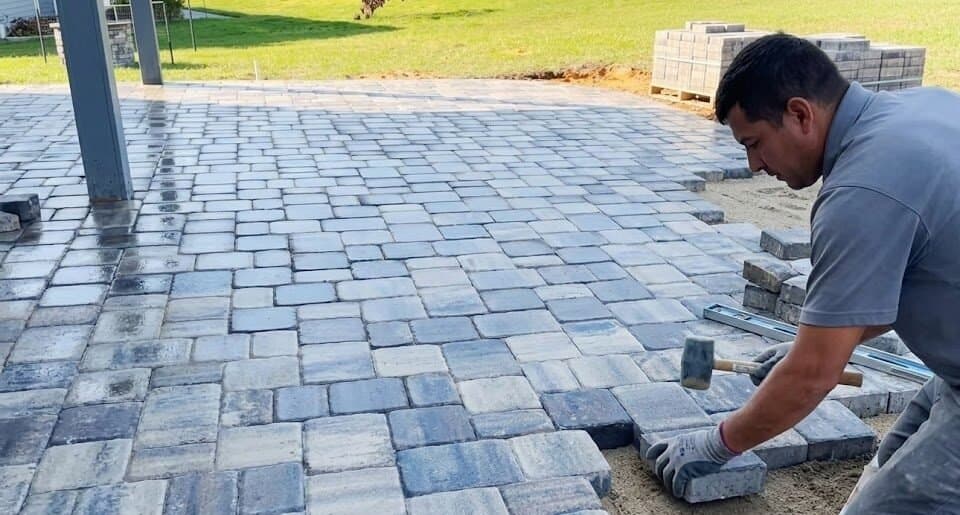
Do You Need a Permit for a Paver Patio in Florida? The Short Answer
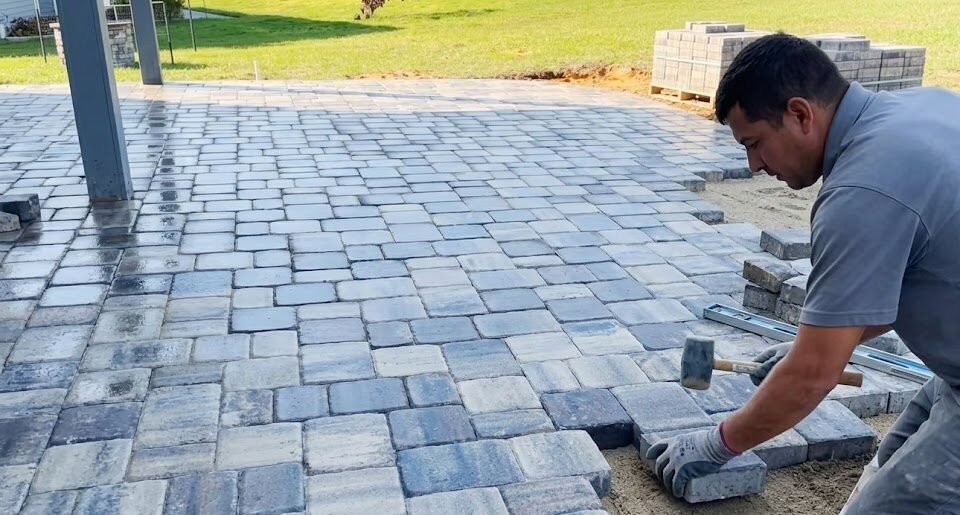
Most Florida homeowners ask this question the wrong way. They ask whether a paver patio needs a building permit, hear that it usually does not, and start digging. Then a zoning letter shows up, or the HOA sends a violation, or the buyer's inspector flags a driveway apron that was never approved. The building permit was never the real issue. Pavers sit on the ground, so the building code has relatively little to say about them. Everything else does: zoning, impervious surface limits, easements, drainage, the public right-of-way and the HOA.
So the honest answer is this. A paver patio at ground level in a backyard often does not need a building permit, but in many Central Florida jurisdictions it does need a paver or zoning approval. A paver driveway or a driveway widening almost always needs something, because it touches the street. And in any HOA community, nothing goes in without architectural approval, whatever the county says.
This guide walks through why, what the 2026 state permit exemption changed and did not change, what Orange, Seminole, Osceola and Polk counties ask for, and the order of steps that keeps a new patio or driveway from becoming a problem later. For pricing, see our brick paver cost guide. For the fence version of this question, see our Florida fence permit guide.
Building Permit vs Zoning Approval: Two Different Questions
The confusion comes from treating "permit" as one thing. For a paver project, there are usually up to four separate approvals, issued by different offices, asking different questions:
- Building permit: Is the work safe under the Florida Building Code? For a flat, on-grade patio this is usually a short conversation, because the code exempts many at-grade walking surfaces. It becomes a real question when the project includes steps, raised areas, retaining walls, a structure on top or electrical work.
- Zoning or paver approval: Does the patio respect setbacks, easements and the limit on how much of the lot can be covered by hard surfaces? This is the approval most patio owners actually need.
- Right-of-way or driveway permit: Does the work touch the county or city road, sidewalk or swale? This applies to driveways, aprons and widening, not to backyard patios.
- HOA architectural approval: Does the project match the community standards for color, pattern, size and location? This is a private contract, not a government permit, and it applies even when every public office says yes.
Keep those four separate and the rest of the guide is easy to follow.
What the Florida Building Code Says About Patios and Driveways
The Florida Building Code lists work that is exempt from a building permit. Among those items, sidewalks and driveways that are not more than 30 inches above the adjacent grade, are not over a basement or story below and are not part of an accessible route are typically exempt. Patios are not always named in the base code text, and local governments adopt their own amendments, so whether an at-grade patio is exempt in your city depends on that local list.
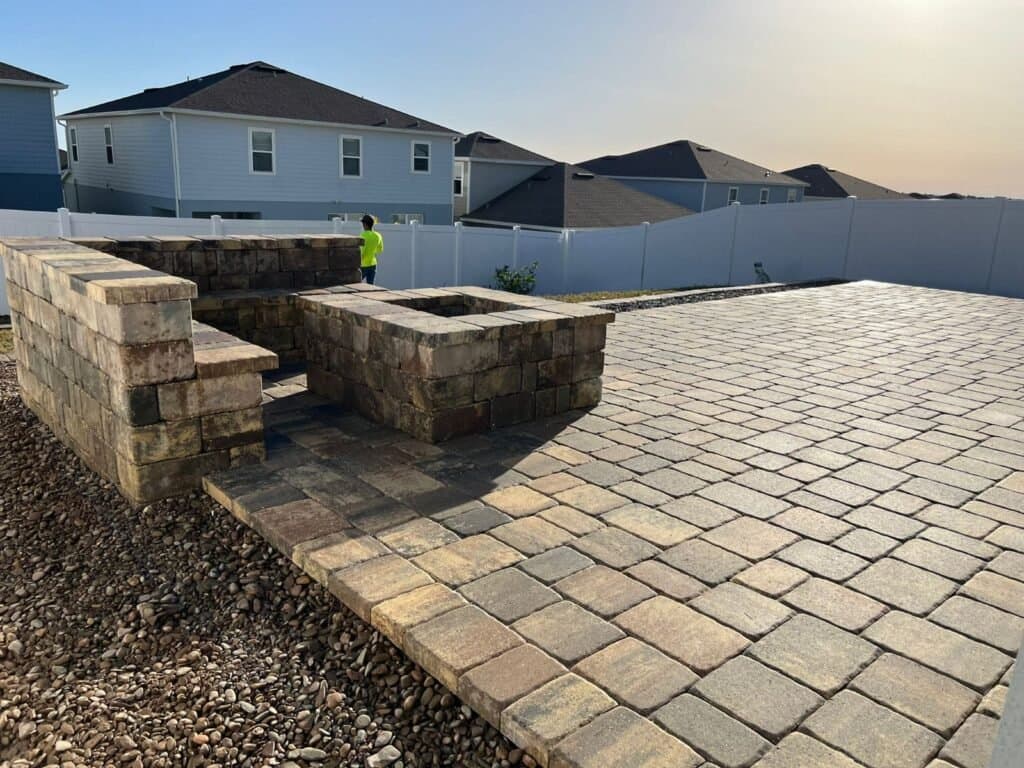
For a typical backyard paver patio, laid on a compacted base at ground level, that usually means no building permit. The exemption does not cover everything that tends to come with a patio. A seat wall or retaining wall holding back soil, a raised patio with steps, a pergola or covered roof, a fire feature with a gas line and landscape lighting with new circuits can each pull the project back into permit territory. If you are planning a retaining wall, our retaining wall cost guide covers when height and soil load change the rules.
The $7,500 Exemption (HB 803): What Changed on July 1, 2026
Florida HB 803 took effect on July 1, 2026. It requires local governments to exempt the owner of a single-family home, and the owner's contractor, from a building permit for work valued at less than $7,500. Many smaller paver patios fall under that number, so the law sounds like the end of the permit question. It is not, for four reasons:
- It is a building permit exemption only: The law does not waive zoning, setbacks, easements, impervious surface limits, right-of-way rules or the HOA. The work still has to comply with the code and local land development rules.
- Flood hazard areas are excluded: If any part of the property is in a flood hazard area, the exemption does not apply. Many Central Florida lots near lakes and wetlands fall into that category.
- Several trades are carved out: Structural, electrical, plumbing, mechanical and gas work still need permits regardless of cost, so a patio with a gas fire pit or new lighting circuits does not qualify for those parts.
- Many cities require a written request: Some local governments ask owners or contractors to submit an HB 803 exemption request and get written approval before starting. A project also cannot be split into smaller pieces to stay under the threshold.
In practice, HB 803 changes the least for paver patios, because most of them were never a building-permit question in the first place. The approvals that matter for pavers are zoning and the right-of-way, and the new law left both in place.
(321) 353-7445Get Immediate Service
Impervious Surface Limits: The Rule Most Patio Owners Miss
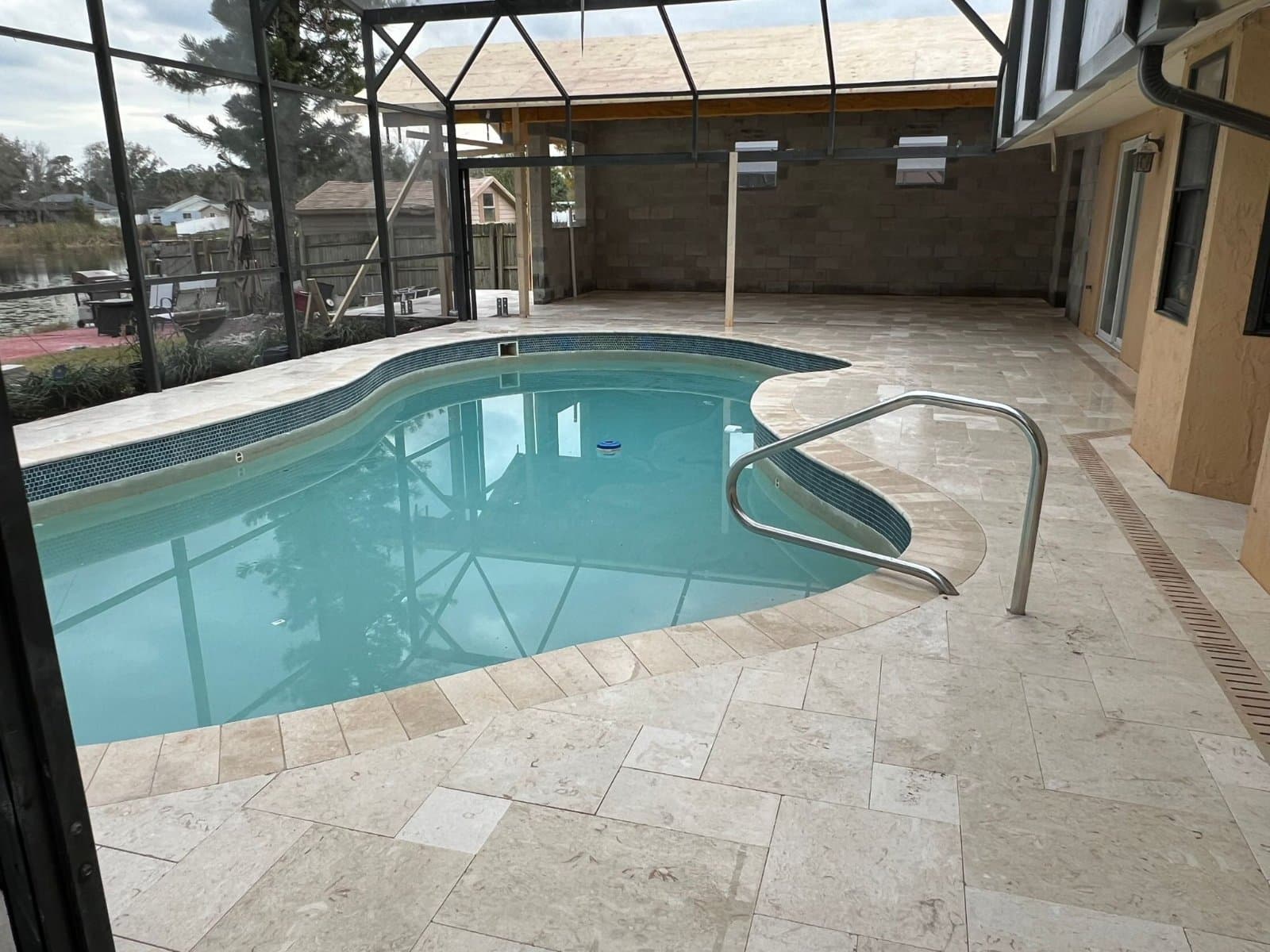
Almost every Central Florida zoning code limits how much of a residential lot can be covered by hard surfaces. The house, the driveway, the pool deck, sidewalks and a new patio all count against that number. The idea is stormwater: every square foot of hard surface sends rain into the street or the neighbor's yard instead of into the ground. On a lot that is already close to its limit, a large patio can push it over.
Standard pavers are generally treated as impervious. Some HOAs say so explicitly; Celebration's design guidelines, for example, classify brick pavers on residential lots as impervious. The City of Orlando goes further and treats artificial grass as impervious surface that needs an engineering permit. Permeable paver systems, with open joints and a stone reservoir base, may be counted differently in some jurisdictions, but that is a local decision you confirm before the design is final. Our permeable pavers guide explains how those systems are built.
The practical step is simple: before you pick a size, ask the zoning office what the lot coverage or open space limit is for your zoning district and how much the existing house and driveway already use. That answer sets the maximum patio size.
Orange County Paver Permits
Unincorporated Orange County has a specific residential paver permit, reviewed against county zoning rules. The application asks for a dimensioned site plan showing existing structures, the proposed paver area, property lines and any easements, plus an easement form if pavers go inside an easement. The county's form lists two separate fees of $38 each and notes that other departments may add their own fees, with a higher fee if the permit follows a code violation. The county takes paver permit requests by email to its zoning division.
Cities inside Orange County, such as Orlando, Winter Park, Winter Garden, Ocoee, Apopka and Maitland, run their own permitting, and their rules on pavers, impervious surface and driveways differ. If your address is inside a city limit, the city, not the county, is the office to call. We install across the county and coordinate this every week; see our pages for brick paver installation in Orlando and paver installation in Winter Garden.
Seminole, Osceola and Polk: Driveways Are the Trigger
In the other counties we serve, the clearest paver rule is about driveways, because a driveway meets public property where it connects to the road.
- Seminole County: A residential driveway permit is required for driveways that connect to a county-owned road in unincorporated Seminole County. The county lists a $45 fee and a typical processing time of about 3 business days. Its application also says that when right-of-way work involves pavers, a broken or non-ADA-compliant sidewalk crossing must be replaced with concrete as part of the job.
- Osceola County: The county code requires a driveway permit to build or widen a residential driveway and a right-of-way permit for any work in the right-of-way. It also caps residential driveway width at 24 feet in the unincorporated county unless a conditional use is approved, which matters when a homeowner wants to widen with pavers.
- Polk County: Polk uses a paver release form for driveways in the right-of-way. The owner acknowledges responsibility for maintaining and repairing the pavers, and the form must be notarized and recorded with the Clerk of Courts, with a certified copy submitted before the driveway is approved.
The reason behind the Seminole and Polk rules is the same. When a utility crew digs up a paver apron in the right-of-way, the county does not want to be responsible for relaying decorative pavers. The owner signs for it instead. If you are widening a driveway in Kissimmee or replacing an apron in Lakeland, build that step into the schedule.
Easements, Setbacks and Drainage Swales
A patio that is perfectly legal in size can still be in the wrong place. Three location rules catch homeowners most often:
- Utility and drainage easements: Many lots have an easement along the rear or side property line. Pavers inside an easement may be allowed, but often only with a signed acknowledgment that the utility can remove them without replacing them. That is why Orange County asks for an easement form.
- Setbacks: Some zoning codes require hard surfaces to stay a set distance from property lines. The number depends on the zoning district, so it comes from the zoning office, not from a general rule.
- Swales and lot grading: Many subdivisions are graded so that water runs along a swale between houses to a drain. A patio that blocks or raises that swale can flood your yard or the neighbor's, and it is the kind of problem that turns into a dispute. A professional install keeps the slope away from the house and the swale open.
HOA Approval: The Permit That Applies Even When the County Says No Permit
In most Central Florida communities, the HOA is the strictest reviewer of a paver project. The architectural committee usually wants a site plan, the paver brand, color and pattern, and sometimes a sample. Driveways and front walkways get the most scrutiny because they are visible from the street. Backyard patios that are not visible from the frontage or neighboring lots tend to get less.
Florida's 2024 HOA reform law requires associations to apply their rules uniformly and to give written reasons when they deny an application, citing the specific rule. Our guide on HOA rules for artificial turf walks through those procedures, and the same review process applies to pavers. The rule of thumb never changes: get the HOA approval in writing before the first paver goes down.
What Happens If You Skip the Paperwork
An unapproved patio rarely causes a problem on day one. It causes problems later: a code complaint from a neighbor, a zoning letter after an aerial review, an HOA violation with fines, a utility crew that removes pavers from an easement and leaves sand behind, or a buyer whose inspector or title review raises the question during a sale. The fix can range from an after-the-fact permit with a higher fee to removing the part of the patio that crosses a setback or easement. All of those cost more than the approval would have.
The Order of Steps for a Paver Patio or Driveway
- 1. Confirm who has jurisdiction: City or unincorporated county, and whether any part of the lot is in a flood hazard area.
- 2. Pull the survey: Mark property lines, easements, the swale and existing hard surfaces.
- 3. Ask zoning for the coverage limit: Size the patio inside it, or consider permeable pavers.
- 4. Submit to the HOA: Include the site plan, paver color and pattern.
- 5. File the county or city paver, driveway or right-of-way application if the project needs one, plus any building permit for walls, structures, gas or electrical.
- 6. Install to the approved plan: Base, slope, edge restraint and joint sand, and keep the approvals with your house documents.
KS Solutions handles this sequence on every job across Orange, Osceola, Seminole and Polk counties. We prepare the site plan, help with the HOA package and pull the approvals your address requires before we excavate. Learn more about our brick paver installation service and request a free estimate, and we will tell you exactly which approvals your patio or driveway needs.