Most Fence Disputes Start With a Line Nobody Checked

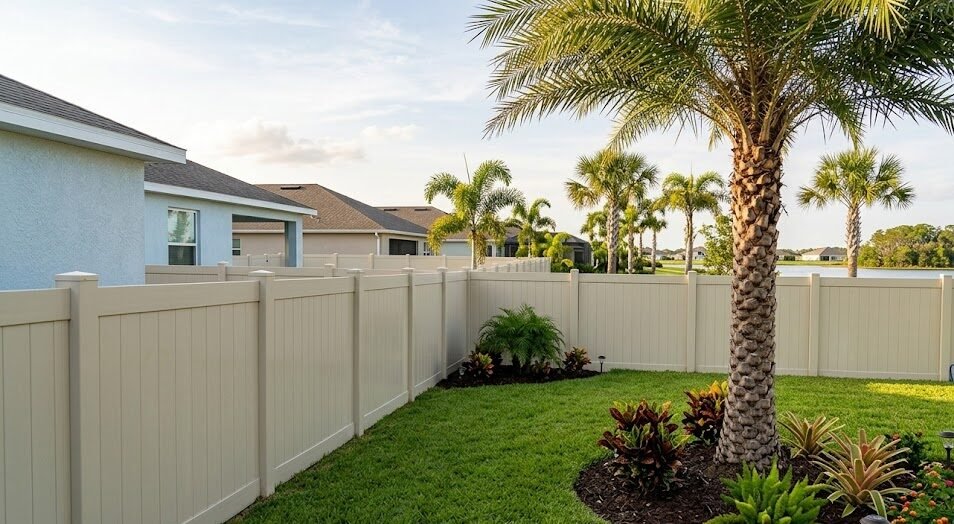
Most fights between Florida neighbors over a fence are not really about the fence. They are about where the property line is, who paid for what, and which side of the boards faces whose yard. Almost all of them could have been avoided before the first post hole was dug, with a survey, a short conversation and a fence placed a few inches inside the line instead of right on top of it.
Florida has no single statewide fence law for residential lots. Height limits, permits and setbacks come from your county or city code, and your HOA may add its own layer. Property line questions, though, follow a few rules that apply everywhere in the state: who owns the land, who has to pay, what happens when a fence sits on the wrong side, and how long it takes before a misplaced fence can become a legal problem. This guide walks through those rules for homeowners in Orange, Seminole, Osceola, Polk and the surrounding counties.
One note before we start: this is general information from a fence contractor, not legal advice. When a dispute has already started, or when significant land or money is involved, talk to a Florida real estate attorney.
Start With a Boundary Survey, Not the Old Fence
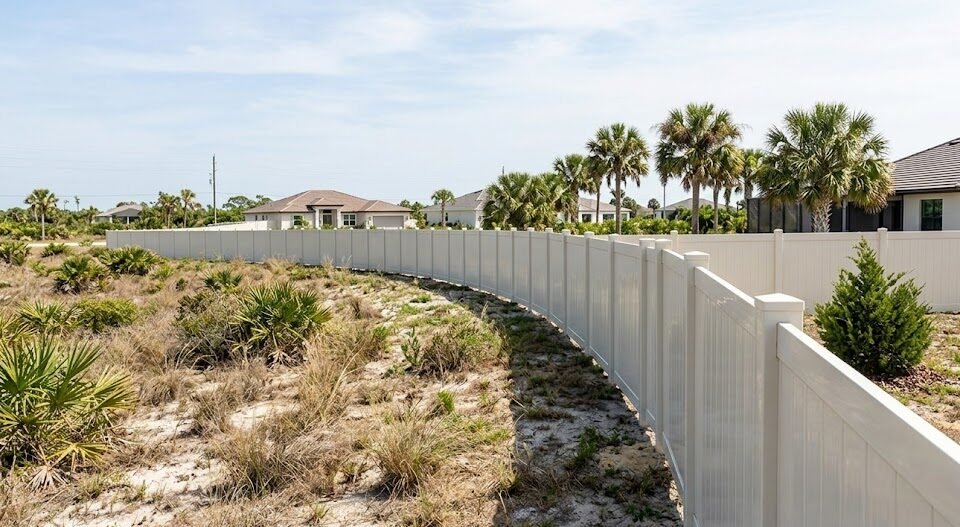
The single most common mistake we see is a homeowner measuring the new fence from the old one. The old fence may have been placed by a previous owner who guessed, by a builder who used the edge of the sod, or by a neighbor who put it a foot onto your lot twenty years ago. A fence line is not a property line.
The document that shows where your property actually ends is a boundary survey prepared by a Florida licensed Professional Surveyor and Mapper. Many homeowners already have one from closing, tucked into the purchase documents. A closing survey is a good starting point, but it may not show stakes in the ground, and if there is any doubt or the lot has changed, a surveyor can come back to locate and flag the corners.
- What the survey shows: the property lines with their dimensions, the corner monuments such as iron rods or pins, easements and their purpose, the house and other structures, and any encroachments the surveyor found.
- Why the fence crew needs it: the fence layout, the permit site plan and the setback measurements all start from the property line on the survey.
- Why the city needs it: the City of Orlando, for example, asks for a site plan that can be drawn on a copy of your survey, showing the property lines and any easements with their dimensions.
- When to order a new one: if the corners cannot be found, if the survey is old and the lot has been split or replatted, or if the neighbor disputes the line.
A survey costs far less than tearing out and reinstalling a fence. If there is any uncertainty about the line, it is the cheapest insurance you can buy for the project.
Should the Fence Go On the Line or Inside It?
Most Florida codes allow a fence on or inside your property line. The City of Orlando's fence guide says it directly: the fence must be on or inside your property line. What codes do not allow is a fence on your neighbor's land without their permission.
Being allowed to build right on the line does not mean it is a good idea. A fence centered on the line is partly on your neighbor's land, which raises questions of ownership, maintenance and removal that nobody wants to argue about later. Most contractors, including us, recommend setting the fence a few inches inside your own line. You give up a sliver of yard, and in exchange the fence is clearly yours: you choose the style, you maintain it, and nobody can ask you to move it.
- On your side of the line: you own the fence and decide how it looks and when it is replaced. You also need access to maintain the outside face, which usually requires your neighbor's cooperation.
- Centered on the line: only makes sense with a written agreement with your neighbor on cost, style, maintenance and what happens if either of you sells.
- On the neighbor's side: not allowed without their consent and a strong source of future disputes. If an existing fence sits on your neighbor's land, it may have to be moved when either property sells or changes hands.
Setbacks are a separate rule. Height limits and placement differ in front, side and rear yards, and corner lots have sight visibility triangles where fences are restricted or banned. Our guide on how tall a fence can be in Florida covers the height limits by county.
The Good-Side Rule: Which Way Should the Fence Face?
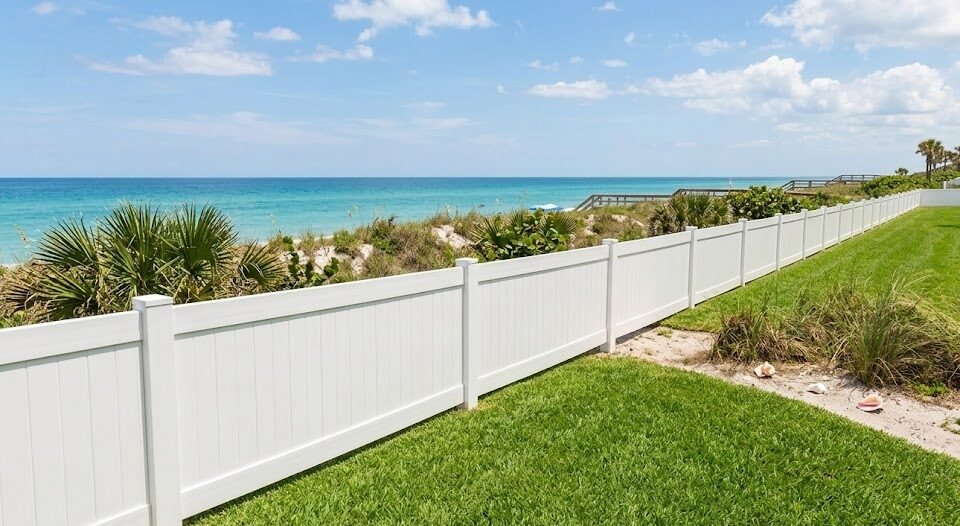
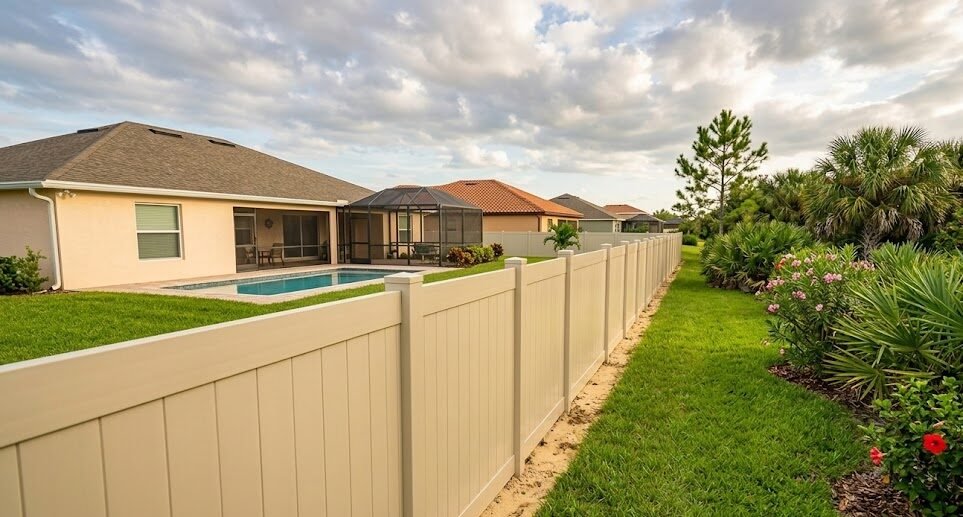
Every wood and many vinyl privacy fences have a finished side, the smooth face of the boards, and a structural side, where the posts and rails show. The "good-side rule" is the custom that the finished side faces out, toward the neighbor or the street, and the posts and rails face your own yard.
Florida does not have a statewide good-side law, but many cities write it into their codes or guides. The City of Orlando's fence guide states that the finished side of a wood fence should face outward, and cities such as Oakland Park have a similar rule. HOAs very often require it too, sometimes along with a specific color. If your city or HOA is silent, facing the finished side out is still the safer choice: it is what inspectors and neighbors expect, and it puts the rails, which are easier to climb, on your side of the fence.
If you want the finished look on both sides, choose a style that is the same front and back, such as a shadowbox or board-on-board wood fence, most vinyl privacy panels or an aluminum picket fence. Your HOA may have its own list, and our guide to HOA fence rules in Florida explains how those approvals work.
(321) 353-7445Get Immediate Service
Who Pays for a Boundary Fence in Florida?
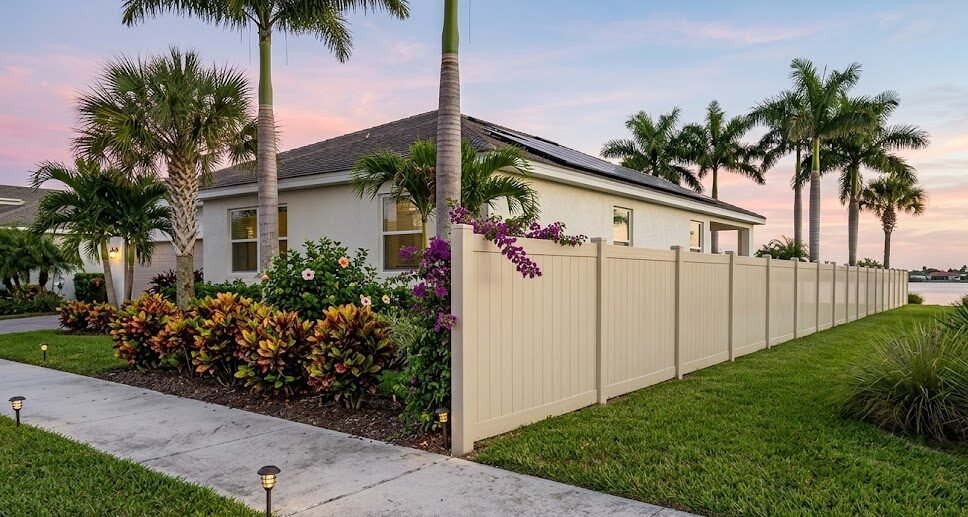
Unless the two neighbors agree otherwise, the one who builds the fence pays for it. Florida has no statute that requires an adjoining homeowner to share the cost of a residential boundary fence. The University of Florida IFAS extension makes the same point in its guidance on fence law: an owner who raises a fence does so at their own cost and is not entitled to contribution from the adjoining owner unless they have an agreement saying otherwise.
That leaves two clean options. You can build entirely on your own side, at your own cost, with full control. Or you can agree with your neighbor to share the cost, in which case you should put the agreement in writing before any work starts. A one-page agreement signed by both owners should cover:
- Location: exactly where the fence goes, referencing the survey, and whether it is on the line or inside one lot.
- Cost split: the total price, each owner's share and when each payment is due.
- Style and height: material, color, height and which side faces which yard.
- Maintenance and repairs: who repairs storm damage, who pays to replace a damaged section and how decisions are made.
- Sale of either home: whether the agreement passes to the next owner. If it should, ask an attorney whether it needs to be recorded.
Get the agreement first and the shared fence is a good investment for both yards. Skip it and the fence becomes a debt one of you thinks the other owes.
When a Fence Is on the Wrong Side of the Line
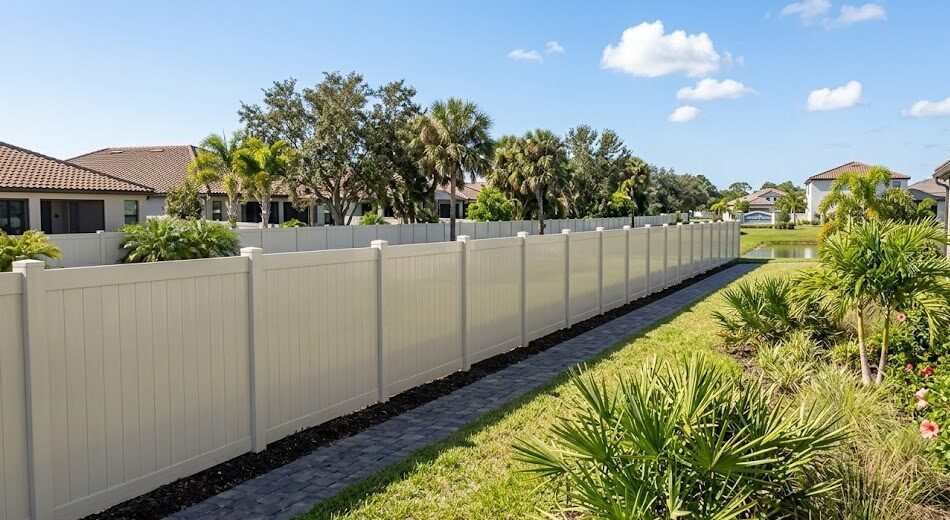
Sometimes the survey reveals that a fence, old or new, sits on the neighbor's land. That is an encroachment, and the way to fix it depends on whose fence it is and how long it has been there.
If it is your own new fence, the simplest fix is to move it. If it is an older fence that came with the house, talk to your neighbor before doing anything. Many encroachments are resolved with a short written agreement, a boundary line agreement prepared by an attorney, or simply by moving the fence the next time it is replaced.
Homeowners often worry that a neighbor can take land just because a fence has been on it for years. In Florida, that is much harder than many people think. Under section 95.18 of the Florida Statutes, a person claiming land without a written title, called adverse possession without color of title, must possess it continuously for 7 years. The law says land is possessed if it is protected by substantial enclosure or cultivated, maintained or improved in a usual manner. That is the part that involves fences. But the claimant must also pay all outstanding property taxes and special assessments on the land within 1 year of taking possession, keep paying them every year, and file a return with the county property appraiser within 30 days of that first payment. A fence alone, without the taxes and the filing, does not do it.
So a fence a foot over the line will not quietly transfer land to your neighbor. It can, however, cloud a title, delay a sale or start a dispute, which is why it is worth fixing while relations are friendly.
Easements, Utilities and Digging Along the Line
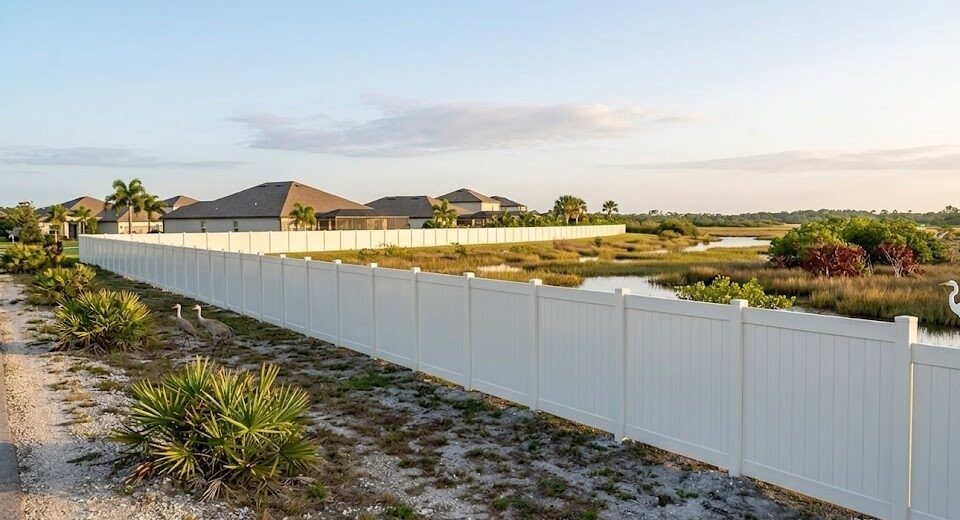
Property lines are often lined with easements: strips of your land that a utility, a drainage district or the city has the right to use. Rear and side lot lines in many Central Florida subdivisions carry utility or drainage easements. You still own that land, but a fence there may need a permit, may have to allow access with a gate, and may be removed at your expense if the easement holder needs to work there.
- Check the survey: easements and their width are shown on most boundary surveys and on the subdivision plat.
- Check the permit rules: the City of Orlando requires a permit when a fence is on or near a public easement shown on the survey.
- Call 811 before digging: Florida law requires anyone digging, including homeowners and fence contractors, to contact Sunshine 811 before excavating so buried utility lines can be marked. Post holes are excavation.
- Drainage swales: a fence that blocks a drainage swale along the lot line can push water onto your yard or your neighbor's, and can lead to code enforcement.
Our fence permit guide for Florida explains which projects need a permit and what the application usually includes.
How to Talk to Your Neighbor Before You Build
Most property line problems are solved in a five minute conversation before construction. Tell your neighbor what you are planning, show them the survey and the fence style, and let them know when the crew will be there. You are not asking permission to build on your own land, but a heads up prevents most surprises.
- Share the survey: showing where the line is takes the guesswork, and the argument, out of the conversation.
- Explain the placement: tell them the fence will be a few inches inside your line, so it is clearly yours.
- Mention the finished side: neighbors appreciate knowing the good side will face their yard.
- Plan for access: if you need to reach the outside face for staining or repairs, ask how they would like you to coordinate.
- Remove the old fence together: if an existing fence is shared or of unclear ownership, agree in writing who removes it and who pays.
If the conversation goes badly, step back. Do not remove a fence that may belong to your neighbor, and do not build until the line is confirmed by a surveyor. If needed, a mediation service or a real estate attorney can help both sides settle on a solution.
Building a Fence on the Right Line With KS Solutions
KS Solutions installs vinyl, wood, aluminum and chain link fences across Central Florida. Before we quote, we review your survey, mark the layout a few inches inside your line, check easements and setbacks, and handle the permit where one is required. Our fence installation service includes that layout check on every job.
We build fences throughout the region, including fence installation in Orlando, fence installation in Kissimmee, fence installation in Sanford and fence installation in Lakeland. Tell us where your property line is, and we will help you build a fence that stays exactly where it belongs.