There Is No Single Florida Fence Height Limit
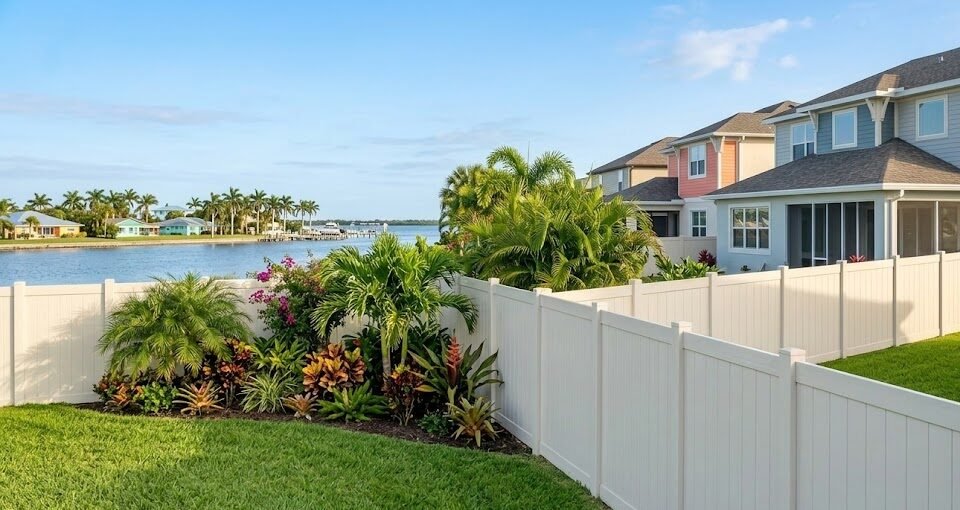
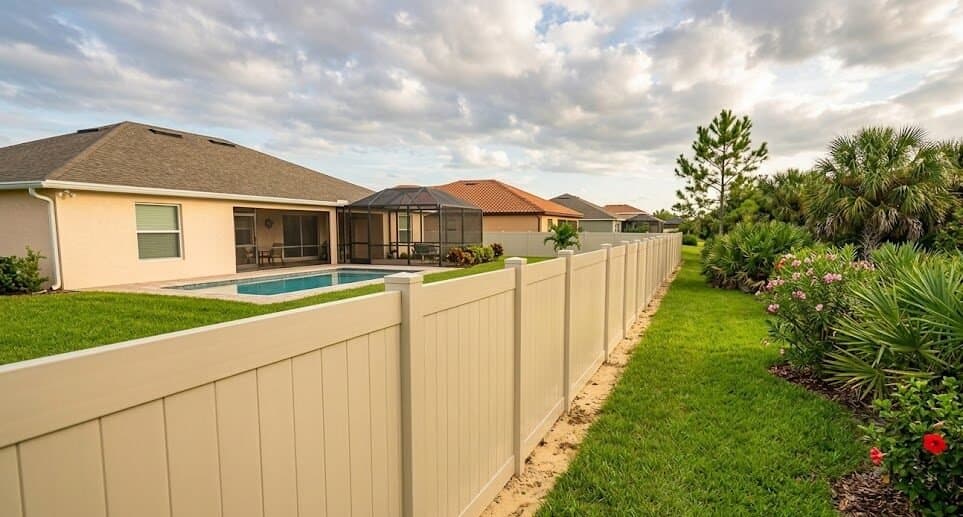
Ask ten neighbors how tall a fence can be in Florida and you will hear "six feet" from nine of them. That number is close to right in a lot of places, but it is not a state law. Florida does not set a statewide height limit for residential fences. The limit comes from whoever controls zoning on your lot: the county if you live in an unincorporated area, the city if you live inside city limits, and on top of both, your HOA if you have one. Two houses a mile apart can have different answers, and so can the front and back of the same house.
This guide focuses only on height. It walks through how height limits are structured, what the main Central Florida jurisdictions allow in front, side and rear yards, how the measurement is actually taken, and the cases where you can legally go taller. If your question is whether you need a permit at all after the 2026 law change, we cover that separately in our guide to fence permits in Florida.
How Fence Height Limits Are Structured
Almost every Central Florida code splits a residential lot into zones and gives each zone its own maximum. Once you understand the zones, any local code becomes easy to read.
- Front yard: the area between the street and the front of the house, or the required front setback. This is where limits are lowest, usually 3 or 4 feet, because codes protect the look of the street and the view for drivers.
- Side and rear yards: the areas beside and behind the house. This is where privacy fences live, and limits are usually 6 feet, sometimes 6.5 or 8.
- Street-side yard on a corner lot: the side of a corner lot that faces the second street. Many codes treat it partly or fully like a front yard, which is why corner lots so often end up with shorter fences.
- Sight triangles: the triangles at driveways and street corners where nothing above a low height is allowed, so drivers can see cars, bikes and kids.
- Special areas: lake setbacks, easements and pool barriers, each with its own rules on top of the zone limit.
Fence Height Limits by County and City in Central Florida
The table below summarizes the residential limits we work with most. These are the general rules for single-family lots. Planned developments, overlay districts and HOAs can be stricter, and codes change, so confirm the current rule for your address before you build.
| Jurisdiction | Front yard | Side and rear yard | Notes |
|---|---|---|---|
| Unincorporated Orange County | 4 ft in the required front yard | Up to 8 ft | 4 ft limit inside the lake setback area, 50 ft from the normal high-water line |
| City of Orlando | 4 ft | 6 ft | Up to 8 ft where the yard abuts commercial or industrial property; 4 ft in a street-side yard that abuts a neighbor's front yard |
| Unincorporated Seminole County | 4 ft, also in side-street setbacks | 6 ft 6 in | Each street side of a corner lot counts as a front yard |
| Casselberry (Seminole County) | 3 ft | Up to 8 ft | A city rule inside Seminole County that differs from the county |
| Unincorporated Osceola County | 3 ft in front of the front setback line | 6 ft (72 in) | Six feet is the ceiling for side and rear |
| Unincorporated Polk County | 3 ft, up to 5 ft with a semi-open decorative top | 6 ft | Solid fences over 8 ft and masonry walls need a building permit |
Three things jump out. First, the side and rear limit ranges from 6 feet in Osceola, Polk and the City of Orlando to 8 feet in unincorporated Orange County and Casselberry. Second, the front yard limit is never more than 4 feet in any of these places. Third, city and county rules differ even inside the same county, as the Seminole County and Casselberry rows show.
Orange County and the City of Orlando
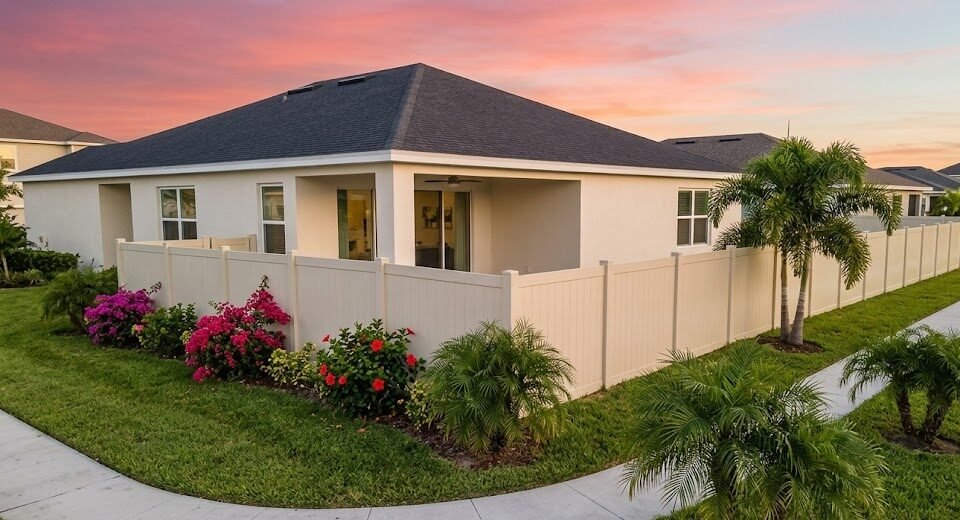
Orange County is the most generous of the counties we serve for backyard height. In unincorporated areas, fences can reach 8 feet in side and rear yards, with a 4 foot maximum in the required front yard. The catch is water. If the back of your lot is within 50 feet of a lake's normal high-water line, the fence inside that setback is limited to 4 feet, which turns a planned privacy fence into a short one along the shoreline.
Inside the City of Orlando, the city's own fence guide sets a lower ceiling: 4 feet in front yards and 6 feet in side, street-side and rear yards. A street-side yard that faces a neighbor's front yard drops to 4 feet. Where your side or rear yard abuts commercial or industrial property, the city allows up to 8 feet, which helps homes that back onto a shopping center or a warehouse. The city also requires gates across a driveway to sit at least 20 feet back from the property line, so a car can pull fully off the street while the gate opens. If you are planning a project inside city limits, our Orlando fence installation team works with these limits every week.
Winter Park, Maitland, Apopka, Ocoee and Winter Garden are separate cities with their own codes. The county numbers do not carry over just because the address is in Orange County.
(321) 353-7445Get Immediate Service
Seminole County
Unincorporated Seminole County limits residential fences and walls to 4 feet in front yards and side-street setbacks, and 6 feet 6 inches in side and rear yard setbacks, under section 30.14.19 of its Land Development Code. That extra 6 inches matters if you want a standard 6 foot privacy panel set slightly off the ground for drainage and trimming. On corner lots, each side facing a street is treated as a front yard, so both street sides are held to 4 feet.
The county code also deals with sloped lots: where neighboring lots sit at different elevations, height is measured from the finished ground floor elevation of the property with the higher ground floor. That prevents a fence on the low side from towering over the neighbor above it.
Cities inside the county write their own rules. Casselberry, for example, limits front yard fences to 3 feet and allows side and rear fences or walls up to 8 feet above finished grade. Homeowners in Sanford, Oviedo, Lake Mary and Altamonte Springs should check their own city code. Our fence installation in Sanford and nearby cities starts with that check.
Osceola and Polk Counties
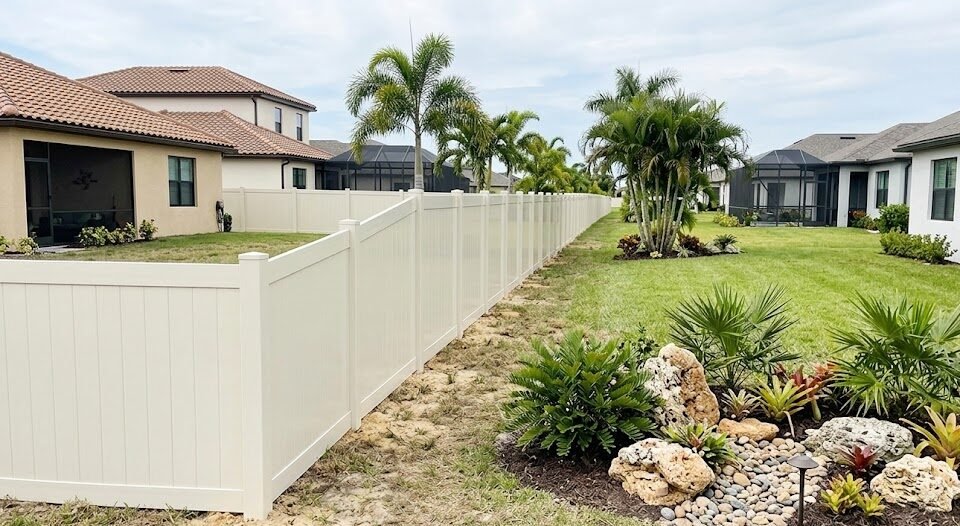
In unincorporated Osceola County, 72 inches, or 6 feet, is the maximum for side and rear yard fences. In front of the front setback line, the limit is 3 feet. That means an 8 foot fence you may have seen across the county line in Orange County is not an option here, no matter what is behind your yard. Homeowners in Kissimmee and St. Cloud live inside city limits and should confirm with their city, but expect a 6 foot backyard ceiling to be the norm. See our fence installation in Kissimmee for local options.
Polk County residential zoning is reported to limit front yard fences to 3 feet, with a semi-open decorative topper that can bring the total to 5 feet, and side and rear fences to 6 feet. For building permits, the county focuses on masonry walls, fences with masonry pilasters and solid fences over 8 feet, so a standard 6 foot wood or vinyl fence is usually a zoning question rather than a building permit question. Cities like Lakeland, Winter Haven and Haines City have their own codes. In Lakeland, a 2019 variance case cited a code section limiting how much of the view a fence can block above 4 feet, and the city considered changes in 2024 that would allow some rear yard privacy fences up to 8 feet with neighbor consent. If you are in Lakeland, ask for the current version of section 4.4 before you finalize a height. Our Lakeland fence installation crew can pull it for you.
How Fence Height Is Measured
Most height disputes are not about the number. They are about where the tape measure starts and stops.
- From grade: height is usually measured from the established or finished grade at the fence line. In Orlando, the city measures from the established normal building site grade. Building up a berm or a retaining wall and then putting a full height fence on top usually counts toward the total.
- Posts and caps: some codes allow decorative post caps or finials to extend a few inches above the limit, and some do not. Do not assume a cap is free.
- Gaps at the bottom: a 2 inch gap under the panels for drainage and trimming adds to the overall height in most codes. A 6 foot panel on a 2 inch gap is a 6 foot 2 inch fence.
- Slopes: on a sloped yard, fences are usually stepped. Each section should meet the limit measured at its own location, not averaged across the run.
- Between neighbors at different elevations: as in Seminole County, some codes measure from the higher side so the fence does not tower over the neighbor uphill.
Corner Lots, Driveways and Sight Triangles
Corner lots are where most fence plans have to change. Because the second street side is treated as a front yard or a street-side yard in many codes, the tall privacy fence often has to step back from that street or drop to 4 feet. In Seminole County, both street sides are front yards. In the City of Orlando, the street-side yard can be 6 feet unless it abuts a neighbor's front yard, in which case it is 4 feet.
Every code also protects sight triangles at intersections and driveways, where fences above a low height are not allowed at all. These triangles are measured from the property line or right-of-way line, not from the curb, and the property line can sit 10 or more feet inside the curb. A fence that looks well back from the street can still be inside the triangle.
When You Can Build a Taller Fence
If the standard limit does not give you the privacy or security you need, there are a few legal paths.
- Abutting commercial or industrial property: some codes, like the City of Orlando, allow up to 8 feet where a residential yard backs onto non-residential uses.
- Variance: counties and cities can grant variances when a lot has an unusual condition, such as a sharp grade change, a busy road behind the yard or a noise source. Variances take time and are not guaranteed.
- Landscaping instead of fence height: hedges and trees are generally not limited the way fences are, outside of sight triangles. A 6 foot fence with a hedge behind it can give more screening than an 8 foot fence would.
- Lattice or open top sections: where codes limit solid height, a semi-open topper can sometimes add height. Polk County allows a semi-open decorative top in the front yard up to 5 feet total.
What you should not do is build over the limit and hope nobody notices. A neighbor complaint can trigger a code enforcement case, and the usual remedy is cutting the fence down or replacing it, at your cost.
Pool Fences Have a Minimum, Not Just a Maximum
Pool barriers flip the question. Florida Statute 515.29 requires a residential pool barrier to be at least 4 feet high on the outside, with no gaps or footholds that would let a young child crawl under, squeeze through or climb over it. If your fence doubles as the pool barrier, it has to meet that minimum and still respect the local maximum for its zone. A 4 to 5 foot aluminum fence is the most common way to satisfy both in a front or side yard.
HOA Rules Can Be Lower Than the Code
In many Central Florida communities, the HOA is the real limit. Deed restrictions commonly cap fences at 5 or 6 feet, require a specific material and color, and limit fences to the rear yard behind the front corners of the house. Approval from the HOA does not replace the county or city rule, and a county permit does not override the HOA. You need both.
Plan the Right Height With KS Solutions
KS Solutions installs vinyl, wood, aluminum and chain link fences across Central Florida and checks the height rules for your exact address before we quote. Our fence installation service covers layout, permits where required, setbacks, corner lots and pool barrier requirements, so the fence you approve is the fence that stays standing.