Outdoor Living Trends in Florida: What the Data Says Going Into 2027
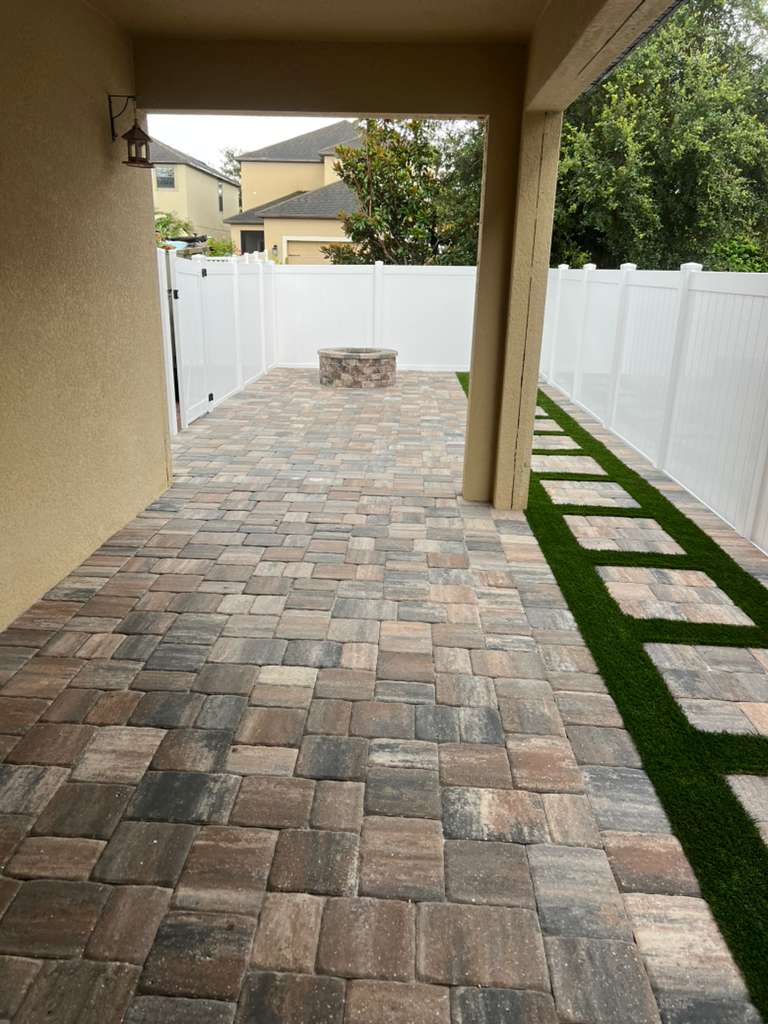
Trend articles are easy to write and hard to trust. Most of them show a magazine photo of a backyard in a climate nothing like ours and call it the look of the year. This one takes a different route. We started from two national surveys with real sample sizes, the 2026 U.S. Houzz Outdoor Trends Study and the National Association of Home Builders buyer preference survey, and then asked a Florida question about each finding: does this hold up in our heat, our rain, our sandy soil and our hurricane season?
The short version is that Florida homeowners are moving the same direction as the rest of the country, toward yards that are used like rooms instead of lawns that are mowed and ignored. But the materials that make that work here are different. Below are the trends we expect to keep growing in 2027, the numbers behind each one, and the paver, turf and fence choices that turn them into a backyard that still looks good after a few summers.
Why Outdoor Living Keeps Growing, in Numbers
Two figures explain most of what is happening. In the 2024 edition of NAHB's What Home Buyers Really Want, a survey of more than 3,000 recent and prospective buyers, a patio was rated essential or desirable by 86% of buyers, tied for the most wanted feature in the entire study. Exterior lighting followed at 82%, a front porch at 81% and landscaping at 80%. Outdoor space is not a luxury line item for buyers anymore. It is near the top of the list.
The second figure is about motivation. Houzz surveyed 1,191 homeowners between April 25 and May 6, 2026 about recent or planned outdoor projects. The share renovating to make the space more accommodating rose to 25%, up from 22% in 2024, while the share renovating mainly for resale fell to 15%, from 18%. People are building outdoor space to use it, not to stage it. That matters for how you design: a yard you live in needs shade, seating and surfaces that stay comfortable, not just a photo angle.
If you want to know which of these upgrades an appraiser actually rewards, our article on whether hardscaping adds home value in Florida goes through that side of the question in detail. This article is about what people are building and why.
Trend 1: The Backyard Divided Into Zones
The clearest pattern in the 2026 Houzz data is that renovated yards are split into purposeful areas. Among homeowners who renovated, 83% included a lounge or seating area, 55% a dining area, 53% a quiet retreat or reading area, 49% a gardening area and 48% an outdoor cooking area. The National Association of Landscape Professionals described the same shift in its 2026 design trends: smaller, more defined outdoor rooms instead of one large showcase yard.
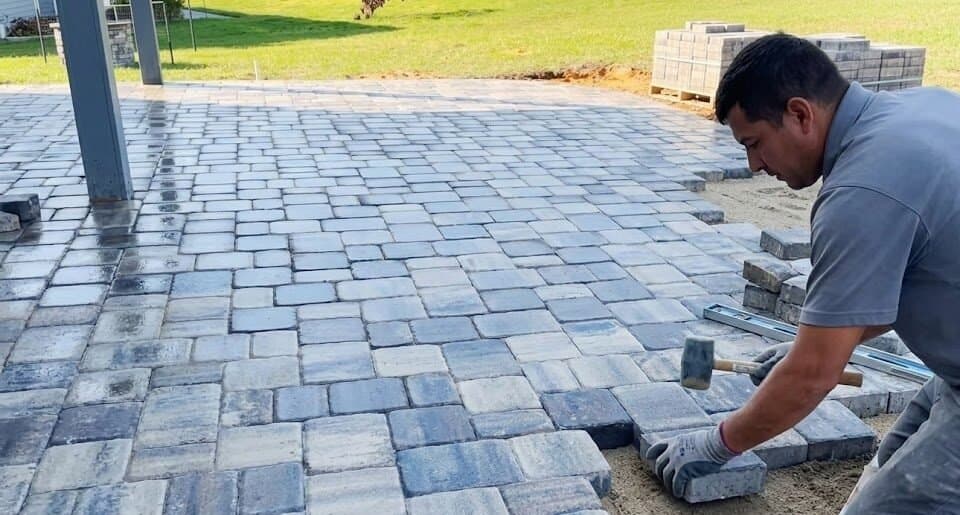
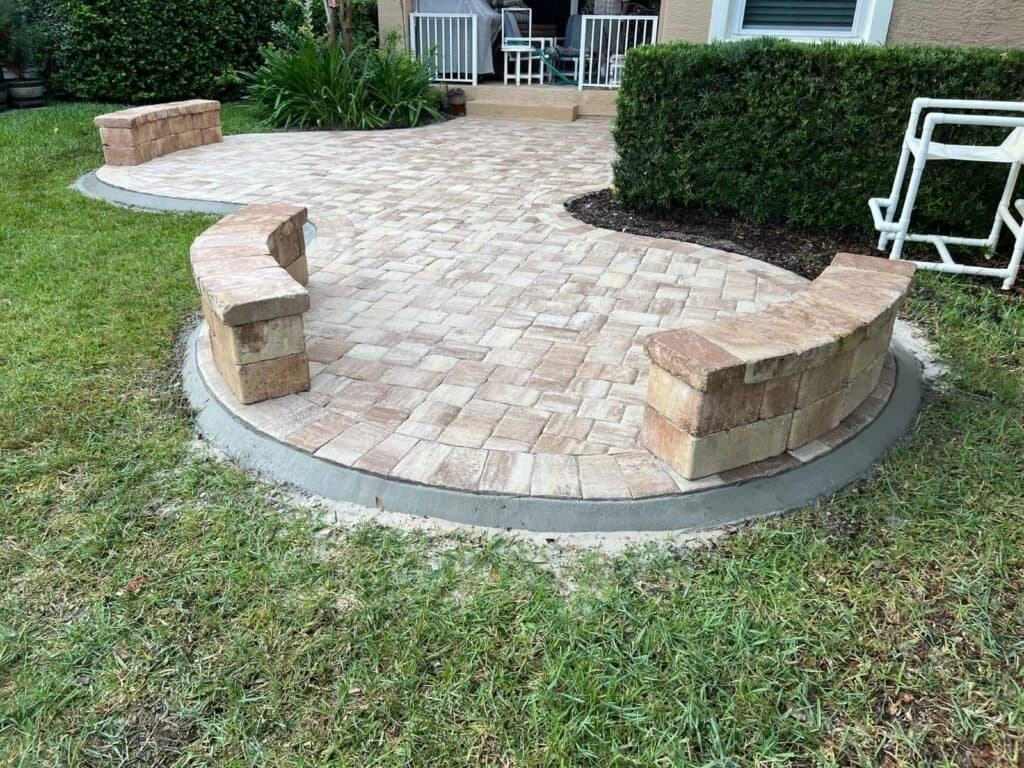
What it looks like in Florida: pavers are the tool that makes zones read clearly. A border course in a contrasting color, a change from a running bond to a herringbone pattern, or a slight step between the dining pad and the fire pit circle tells you where one room ends and the next begins, without walls. Our brick paver installation projects increasingly start with a zone plan instead of a single rectangle, and that plan usually costs nothing extra to draw but changes how the yard gets used.
- Lounge zone: the biggest paved area, sized for real furniture plus walking room around it.
- Dining zone: close to the back door so plates do not travel across the yard.
- Fire zone: a round or square pad far enough from the house and fence for safe clearance.
- Quiet zone: a small nook with one or two chairs, often against a privacy fence.
Trend 2: The Outdoor Living Room, Built for Evenings
Of the Houzz homeowners who built a lounge area, 71% included sofas or lounge chairs, 55% coffee or side tables, 48% a fireplace or fire pit and 66% outdoor lighting. Lighting was also the top technology investment in the study at 63%, and security cameras, at 39%, were the only technology category that grew.
What it looks like in Florida: our outdoor living season is upside down compared with the North. Midday in July is not when anyone sits outside. Evenings from October through May are. That is why lighting and fire features punch above their weight here. Low-voltage lights set into paver steps or seat walls and a fire pit that gets used on the handful of cool nights we do get make the yard work after sunset. Plan the conduit for lighting before the base is compacted, because cutting pavers later to run wire is how clean patios get patched.
(321) 353-7445Get Immediate Service
Trend 3: Less Natural Lawn, More Hardscape, Turf and Beds
This is the trend with the biggest Florida angle. In the 2026 Houzz study, the share of homeowners replacing their original lawn with natural grass dropped to 63%, down 9 points since 2024. Hardscape, mulch and synthetic turf are taking the space. Plant choices point the same way: 73% picked low-maintenance plants, 56% pollinator-friendly plants, 55% native species and 49% drought-resistant plants.
What it looks like in Florida: there is a legal tailwind here. Florida Statute 720.3075 says HOA documents may not prohibit, or be enforced to prohibit, an owner from implementing Florida-friendly landscaping as defined in state law. That protection covers water-wise plants and mulch. It does not automatically cover artificial turf, which UF/IFAS does not consider a Florida-friendly landscaping product, so turf still runs through your HOA's architectural review. Our guide to HOA artificial turf rules in Florida explains how that approval usually goes, and landscaping ideas without grass shows complete no-mow layouts.
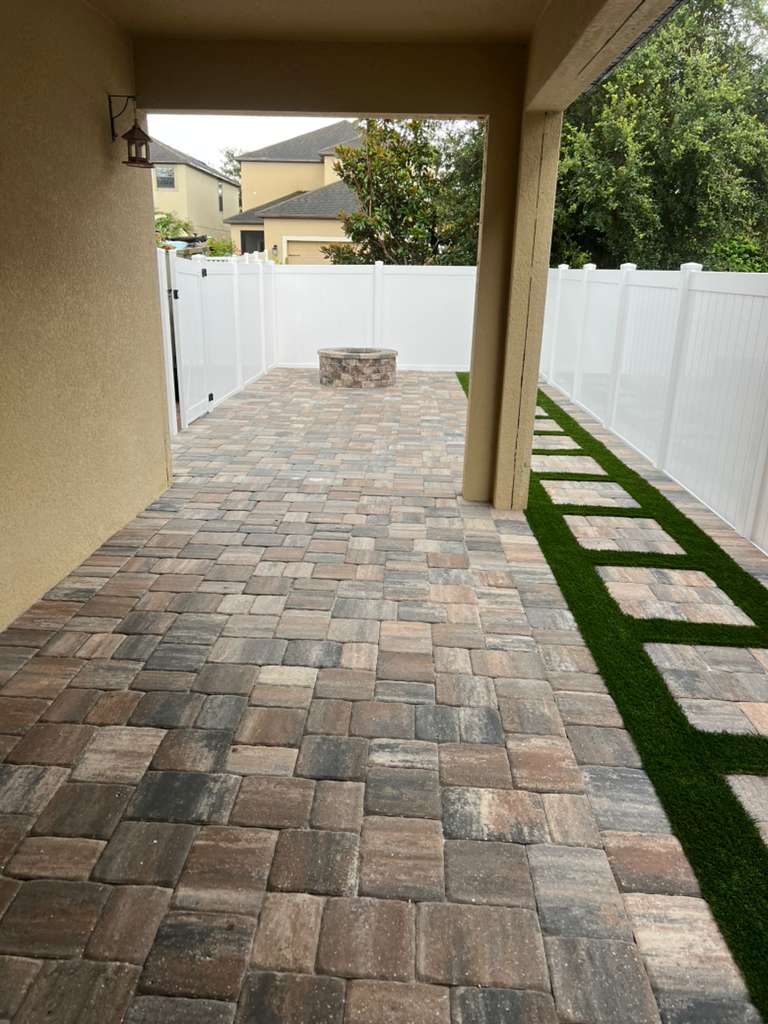
The pattern we see working best is not wall-to-wall plastic. It is a mix: pavers where people walk and sit, beds of native and drought-tolerant plants along the edges, and artificial turf installation only where you still want a soft green surface, like a dog run, a play area or a strip between pavers.
Trend 4: Turf as an Accent, Not a Carpet
Synthetic turf is the most debated trend in the industry right now. In the NALP's 2026 roundup, several designers reported growing homeowner interest because of low maintenance and year-round color, while others said high-end clients were pulling back over heat and seam complaints. One designer described using turf mainly in 6-inch joints between patio pavers.
What it looks like in Florida: both sides of that debate are right, and the answer is placement. Turf in full afternoon sun gets hot, which we cover honestly in does artificial turf get hot in Florida. Turf in partial shade, in narrow strips between large pavers, or in a checkerboard pattern with pavers is cooler underfoot, easier to keep clean and looks deliberate instead of fake. These paver and turf combinations are among the most requested looks we install across Central Florida, from artificial turf in Kissimmee to Lakeland.
Trend 5: Outdoor Kitchens That Are Built In, Not Rolled Out
Fewer homeowners build outdoor kitchens than the photos suggest. In the Houzz study, 12% of those upgrading an outdoor structure added or renovated one. But the ones being built are more serious: 95% were built from scratch, 68% included plumbing, electrical or gas work, and 37% added built-in cabinetry or storage, up 15 points from 2024, the biggest jump in the whole study. Grills led the equipment list at 85%, followed by beverage refrigerators at 62% and sinks at 59%.
What it looks like in Florida: the structure under the kitchen matters as much as the appliances. A built-in grill island is heavy, it holds utility lines, and it sits in a yard that floods for a few hours after every summer storm. That means a properly compacted base, a pad that sheds water away from the cabinets and pavers rated for grease and heat near the grill. Our outdoor kitchen pavers guide covers the surface choices and how to keep them clean.
Trend 6: Cooler, Lighter and More Natural Surfaces
Designers in the NALP report pointed to authentic natural materials, stone, gravel and limestone, as a continuing trend, along with a preference for fewer but better materials. In Florida, the material conversation always comes back to one thing: surface temperature.
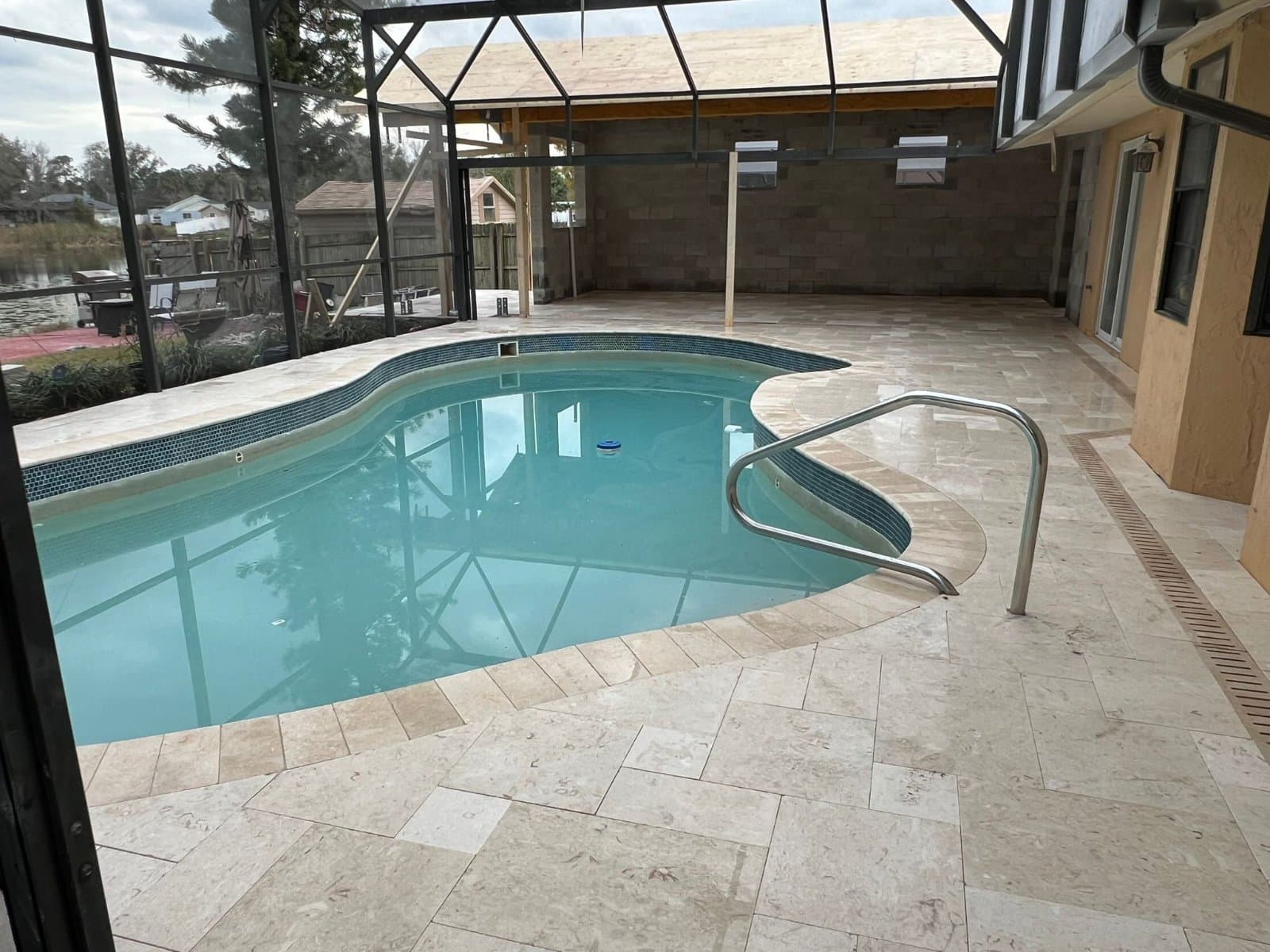
What it looks like in Florida: lighter colors and natural stone such as travertine stay noticeably cooler under bare feet than dark concrete pavers, which is why travertine dominates pool decks here. Two-tone patios with a light field and a darker border keep the look modern without turning the whole surface into a heat sink. If you are choosing between materials, our comparison of travertine vs brick vs porcelain pavers lays out cost, heat and slip resistance side by side.
Water is the other half of the surface question. Heavy summer rain on a large patio has to go somewhere, and many cities now look at impervious area on permits. Permeable pavers are one answer where the soil drains well, and proper slope is the answer everywhere else.
Trend 7: Privacy Fences That Act as Walls of the Outdoor Room
A quiet retreat only works if it feels private. Houzz found 53% of renovated yards included a quiet or reading area, and you cannot read in peace while your neighbor's kitchen window looks straight at your chair. In newer Florida subdivisions, where lots are narrow and two-story homes look down into one-story yards, a fence is often the first piece of the outdoor room, not the last.
What it looks like in Florida: a 6-foot privacy fence along the side where you sit, vinyl or aluminum where salt air and humidity are a concern, and wind performance taken seriously because of hurricane season. Our fence installation crews set posts for Florida wind loads and check height rules before quoting, and our backyard privacy ideas article covers screens, plantings and fence styles for spots where a full fence is not allowed.
Trend 8: Hiring a Pro Is Back in Style
The do-it-yourself wave has cooled for larger outdoor projects. In the 2026 Houzz study, 71% of homeowners hired at least one professional, up from 65% in 2024 and a new high. Landscape contractors were hired by 26%, stone, paver and concrete specialists by 20%, and deck, patio or enclosure specialists by 12%.
That makes sense once you see where outdoor projects fail. A patio that settles, a fence that leans after the first tropical storm or turf that ripples over a poor base costs more to fix than it cost to build right. When you get quotes, compare the base depth, the edge restraint, the post depth and the warranty, not only the price per square foot.
Trends to Skip or Adapt in Florida
Not every national trend travels well. A few that we recommend thinking twice about here:
- Dark, matte surfaces everywhere: they look sharp in a photo and are uncomfortable to walk on in July.
- Large lawns of turf in full sun: keep turf to shaded zones, play areas and accents.
- Wood structures without a maintenance plan: humidity and termites are hard on wood. Steel, aluminum and composite hold up better, which NALP designers also noted as steel replaces wood in some structures.
- Gravel near pools and doors: it migrates into the house and the pool filter. Use it in beds and dry creek channels, not on walking paths.
How to Plan an Outdoor Living Project for 2027
- Start with how you will use the yard: list the zones, then size each one for real furniture.
- Plan water and wiring first: drainage slope, lighting conduit and any gas or plumbing go in before the base.
- Pick surfaces for heat: lighter pavers or travertine where people walk barefoot, turf in shade.
- Frame it with privacy: place the fence where you sit, not just on the property line.
- Check the rules: HOA approval for turf and fences, and a permit check for larger patios.
KS Solutions builds paver patios, artificial turf areas and fences across Central Florida, including brick paver installation in Orlando, fence installation in Lakeland and homes throughout Lakeland and Orlando. If you are planning a backyard for 2027, we will help you lay out the zones, choose surfaces that stay comfortable in our heat and give you one clear estimate for the whole project.