Yes, But Not the Way the Brochure Says
Search this question and you will get a wall of confident percentages. Hardscaping returns 150 percent. Landscaping adds 20 percent to your home. A paver patio pays for itself twice. Those numbers come from marketing, and the people repeating them are usually selling the thing being measured.
The real answer is more useful and less exciting. Some outdoor projects reliably return most or all of their cost. A few return more than they cost. Several of the most popular ones return roughly half, and the projects with the highest satisfaction scores are frequently the worst financial performers on the list. Which group your project falls into is knowable before you spend a dollar.
What follows is the data, where it comes from, how an appraiser actually treats the patio you just built, and the part almost no article covers: the four ways a well-built hardscape loses value it should have kept. If you want the numbers for one specific comparison rather than the whole landscape, our breakdown of pavers versus a concrete driveway in Florida runs that math on its own.
How an Appraiser Actually Treats Your Patio
Start here, because this is the mechanism everything else hangs on, and almost nobody explains it to homeowners before they spend.
An appraisal has a square footage figure at its center, called Gross Living Area. Since March 2022, Fannie Mae and Freddie Mac have required appraisers to measure it using the ANSI Z765-2021 standard, which counts finished, above-grade space that is heated and cooled and accessible from inside the home. A patio is none of those things. Neither is a driveway, a fence, a turf lawn, a retaining wall, a fire pit or a pool deck.
That does not mean they are worth nothing. It means they are handled as site improvements with contributory value, which is a separate and much softer line in the report. Contributory value is not what the improvement cost you. It is what the market pays for it in your neighborhood, established by comparing sales of similar homes with and without the feature. If no comparable sale in your area has a paver patio, the appraiser has thin evidence to support a large adjustment, no matter what your invoice says.
- Cost is not value. Spending $40,000 does not create $40,000 of appraised value. The appraiser is looking for evidence that buyers in your market paid more for homes with the feature.
- Comparable sales are the evidence. A feature common in your neighborhood has a well-supported adjustment. A feature unique to your house has an adjustment the appraiser has to defend with weaker data, which usually means a conservative one.
- Condition is weighted heavily. A five-year-old patio with settled pavers, weeds in the joints and a failed sealer reads as deferred maintenance, not as an amenity. The adjustment can go to zero or negative.
- Permitted work is documentable, unpermitted work is a liability. A structure that does not appear on the property record is not an asset an appraiser can lean on, and it is a problem for the buyer's lender rather than a bonus.
The practical consequence: the outdoor work that appraises well is the work that is normal for your market, in good condition, and on the record. That is a much more boring rule than the brochures use, and it is the one that actually holds.
The Cost Recovery Table That Is Worth Trusting
The most useful dataset on this question is the Remodeling Impact Report on Outdoor Features, published by the National Association of Realtors together with the National Association of Landscape Professionals. It pairs project costs estimated by landscape professionals with value estimates from Realtors, plus a Joy Score measuring how much homeowners enjoy the result. The rankings are blunt.
| Outdoor project | Cost recovered | Joy Score |
|---|---|---|
| Standard lawn care service | 217% | 9.4 |
| Landscape maintenance | 104% | Not listed |
| Overall landscape upgrade | 100% | Not listed |
| Outdoor kitchen | 100% | 9.0 |
| New patio | 95% | 9.9 |
| New wood deck | 89% | Not listed |
| Tree care | 87% | 9.3 |
| Landscape lighting | 59% | 10 |
| Fire feature | 56% | Not listed |
| In-ground pool | 56% | 10 |
Read the two columns together and the pattern jumps out. The three features with perfect or near-perfect Joy Scores, the pool, the lighting and the fire feature, are the three worst financial performers on the list, all in the 56 to 59 percent range. The best financial performer is a $415 lawn care service that nobody puts in a listing photo caption.
That is not a contradiction to be resolved. It is the actual shape of the decision. Some outdoor spending is compensation, and some is enjoyment. Both are legitimate. Confusing the second for the first is what produces the homeowner who is genuinely shocked at closing.
Why Two Credible Sources Disagree About Patios
Here is the part where honesty matters more than a clean answer. The Realtor-sourced report above puts a new patio at 95 percent cost recovered. Resale-focused analyses that track what projects actually return when a home sells put patio additions closer to 40 to 50 percent, with high-end patios lower still, around 35 percent.
Both numbers are real, and they measure different things. The 95 percent figure is an estimate of value added to the home as judged by agents who sell in those markets, across the whole ownership period. The 40 to 50 percent figures come from cost versus value frameworks that ask a narrower question: if you build this and sell within about a year, how much of the cost comes back in the sale price. Almost nothing performs well under that second test, because you are paying retail for construction and selling into a market that has not had time to normalize the feature.
The honest synthesis, and the way we talk to customers about it: a well-built patio in a market where patios are expected is close to value-neutral over a normal ownership period, and you get years of use out of it for free. It is not an investment that outperforms leaving the money alone. It is a purchase that mostly holds its money while you enjoy it, which is a genuinely good outcome for a home improvement and a terrible one for a brochure.
(321) 353-7445Get Immediate Service
What Florida Changes About the List
National averages assume a national climate, and several of them move here.
- Outdoor living is a longer season, so buyers price it in more. A usable outdoor room is in play roughly eight to nine months a year in Central Florida instead of four or five. Features that are seasonal amenities up north are closer to expected equipment here, which pushes adjustments toward the supportable end.
- Pools are common enough to be normal, which cuts both ways. A pool in a neighborhood where most homes have one has stronger comparable support than a pool in a neighborhood where none do, but it also stops being a differentiator. It becomes a thing your home needs to not be at a disadvantage, which is a defensive expense, not an upside one.
- Drainage is a value item here, not a detail. Summer storms drop volume fast. Hardscape that redirects water toward the slab is a defect any decent inspector flags, and it turns an amenity into a negotiating point during due diligence.
- Sun destroys the things buyers look at. Faded, spalled or algae-stained surfaces read as neglect regardless of how good the base underneath is. The maintenance line in the table above is doing more work in Florida than it does in Ohio.
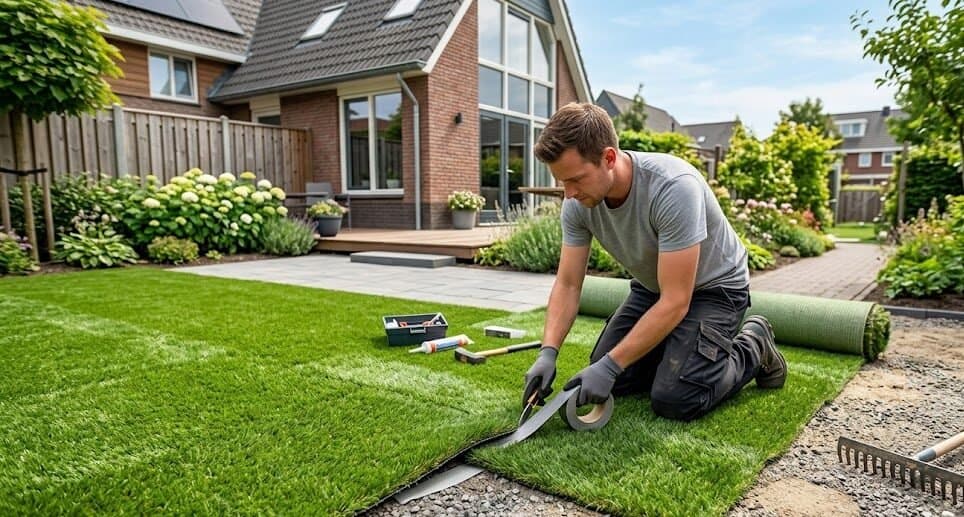
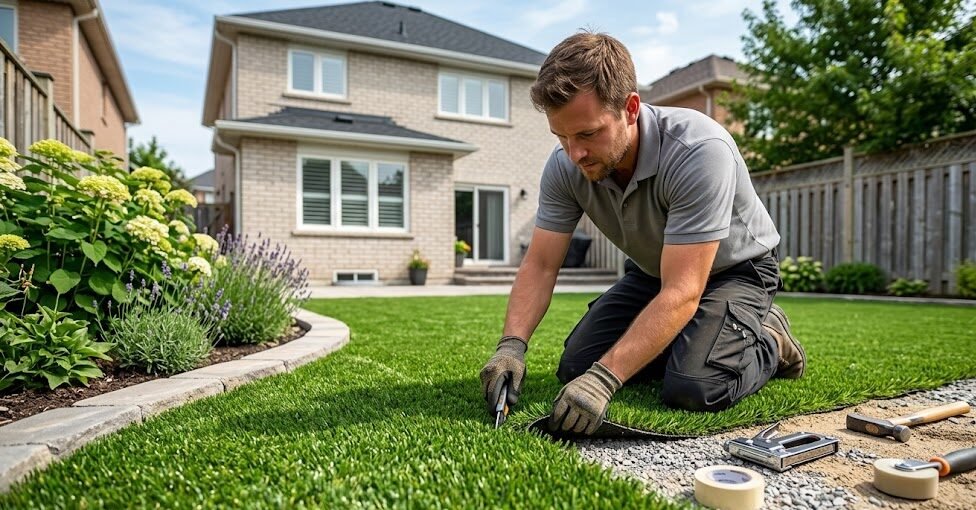
- Lawn expectations are different. A struggling St. Augustine lawn in August is normal and reads as normal, but it still costs curb appeal in photos. This is a real part of why turf performs well for many Central Florida sellers, and we ran the ten-year math in artificial turf versus sod in Florida.
- HOA conformity matters more in this market than most. A large share of Central Florida housing sits under an association, and a feature that violates the covenants is a liability at closing rather than an amenity, no matter how well it was built.
The Projects That Reliably Hold Their Money
Sorting the list by what we actually see come back in Orlando, Lakeland, Kissimmee and Winter Haven, four categories do the heavy lifting.
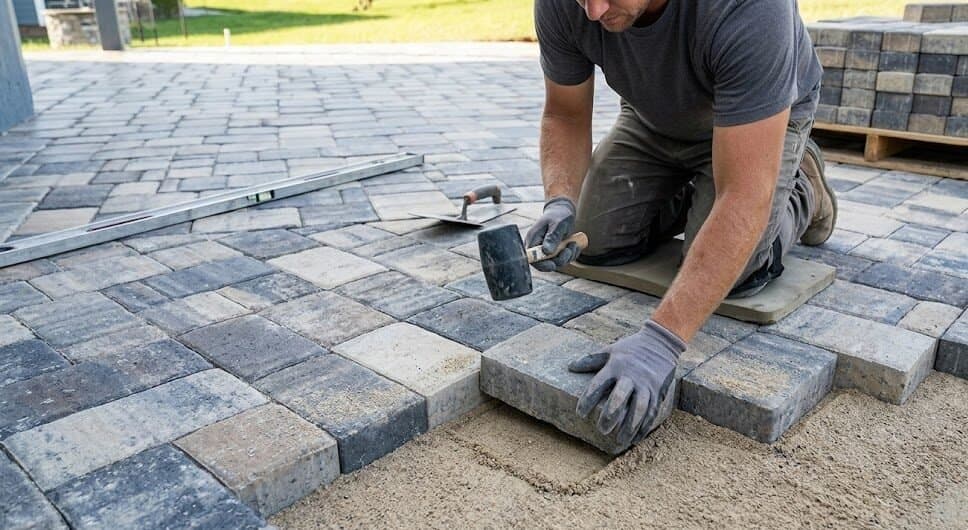
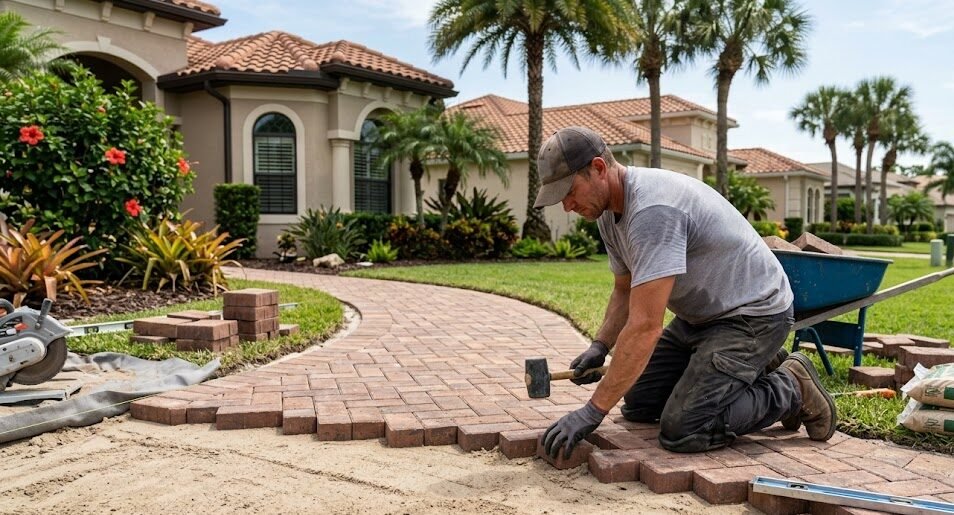
- The driveway and front walk. This is the first and last thing every buyer sees, it appears in the primary listing photo, and it is replaceable-cost obvious to anyone who looks at it. Upgrading from cracked or stained concrete to pavers is the single most visible dollar in the whole exterior, and it also happens to be the one buyers can price in their heads. Our brick paver installation work runs heaviest here for exactly that reason.
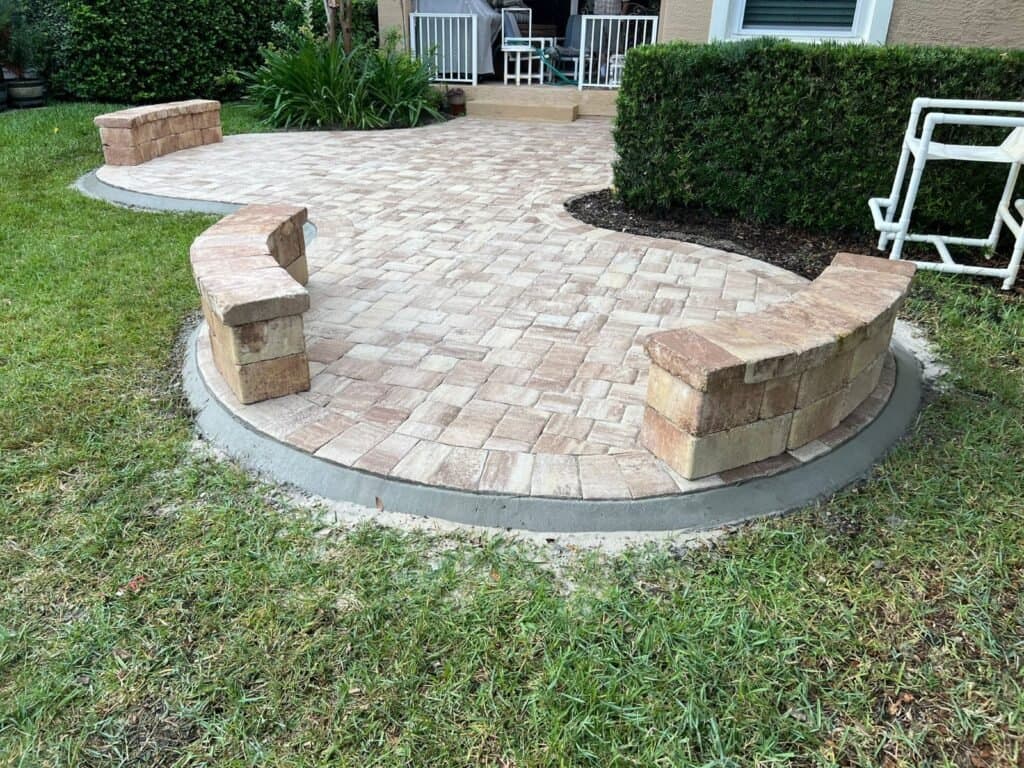
- A patio sized like a room, not like a slab. The value is in usability. A 10 by 10 pad off the back door is a landing. A space that fits a table with chairs pulled out, plus a seating group, reads as square footage even though no appraiser counts it that way. Undersizing is the most common regret we hear.
- An overall landscape upgrade, which recovers 100 percent. Not one feature, but the whole front and back reading as intentional: beds with defined edges, appropriately scaled plants, healthy turf or well-installed artificial turf, and a clean transition between hard and soft surfaces.
- Fencing that solves a real problem. A fence that gives a corner lot privacy from two roads, contains a dog, or encloses a pool to code is functional equipment buyers assign value to. A decorative fence that solves nothing is decor. The material decision drives most of the cost, which we broke out by material in the fence cost guide, and the work itself runs through fence installation.
The Projects You Build for Yourself
These are not mistakes. They are the highest Joy Score items on the entire list, and people love them. They just need to be bought with the right expectations.
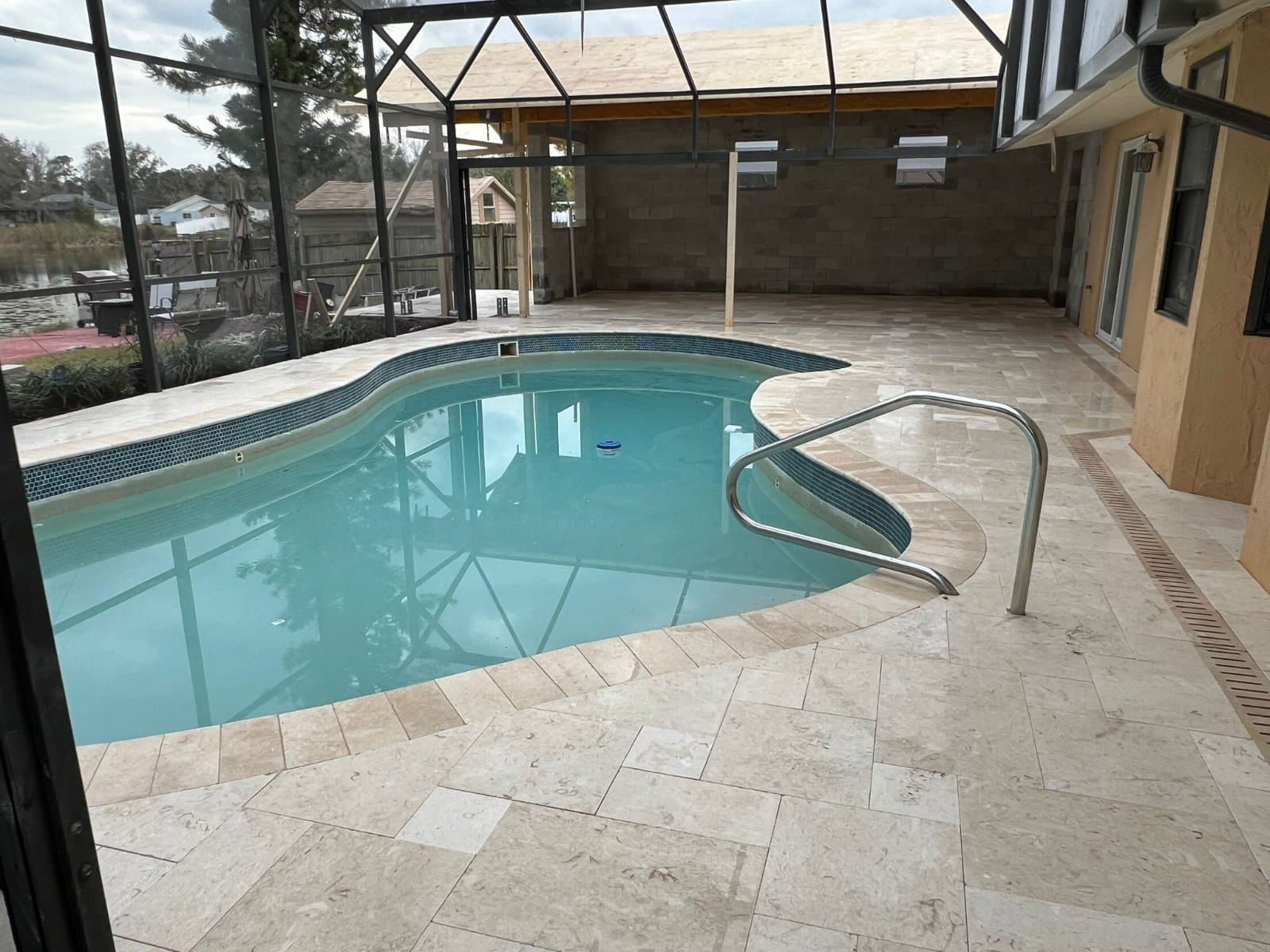
- In-ground pool, 56 percent recovered, Joy Score 10. The most enjoyed outdoor feature in the survey and one of the two worst performers financially. In a Florida neighborhood where pools are standard, it is closer to defensive parity than a premium.
- Fire feature, 56 percent recovered. Universally loved, rarely a line item any buyer pays a real premium for, and in Central Florida it is used a handful of evenings a year.
- Landscape lighting, 59 percent recovered, Joy Score 10. Dramatically improves how the house presents at dusk and in twilight listing photos, which is a marketing benefit rather than an appraisal one. That distinction is worth understanding before spending.
- Highly personalized features. A putting green, a sport court, a custom water feature. If it matches what the buyer wanted, it is a differentiator. If it does not, it reads as something to remove. We priced the green honestly in backyard putting green cost in Florida, including the part where it is a lifestyle purchase.
None of that is an argument against building them. It is an argument against financing them on the theory that the house will hand the money back.
The Highest-Return Item on the List Costs $415
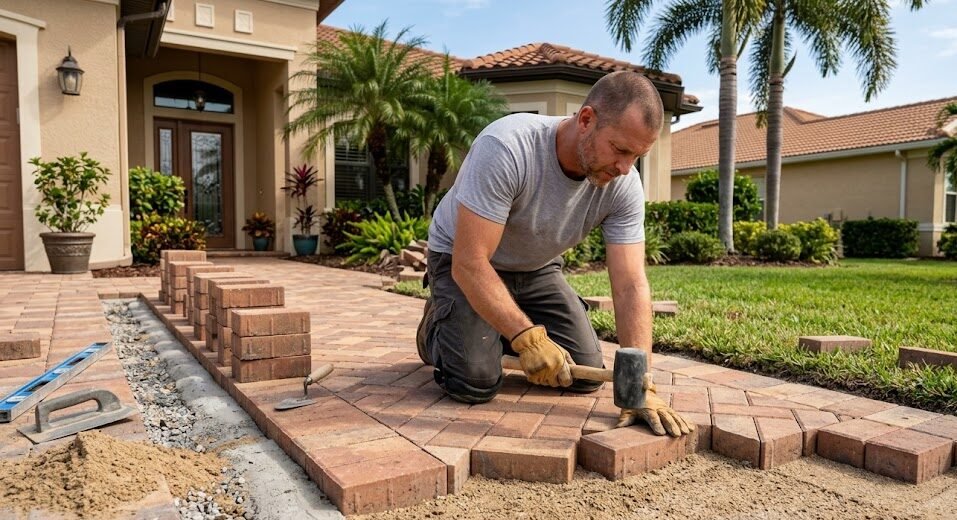
Standard lawn care service returned 217 percent in the NAR and NALP data, more than double anything else measured. Landscape maintenance returned 104 percent and tree care 87 percent. Three of the top seven performers are maintenance, not construction.
There is nothing mysterious about why. Maintenance costs very little relative to the visual difference it makes, and its absence is immediately legible to every person who walks up the driveway. A buyer cannot evaluate your paver base depth or your compaction, but they can see weeds in the joints, a settled section by the downspout, black algae streaks on the north side and a fence with two leaning posts. Those four things tell a story about the whole house, and the story is not about the patio.
This is also where hardscape value is most commonly thrown away. A paver patio installed correctly on a compacted base with proper edge restraint is a thirty year asset. Left unmaintained for five years it presents as a tired surface a buyer plans to replace, and the adjustment collapses accordingly. Joint sand replacement, resealing on the right interval, and fixing a settled area before it spreads cost a fraction of the installation and protect all of it, which is what ongoing maintenance plans exist to handle.
Four Ways a Good Hardscape Loses Value It Should Have Kept
- It was never permitted. Fences, pool barriers, retaining walls above a threshold height, and structures near easements or setbacks are permitted work. Unpermitted work surfaces during due diligence, and it moves from asset to open item on a repair addendum. The permit rules by jurisdiction are in our fence permit guide, and they are cheaper to follow than to unwind.
- It moves water the wrong direction. Hardscape is impervious. Adding several hundred square feet of it without planning where the runoff goes sends water at the foundation, at the neighbor, or into a low spot that stays wet. In a Florida summer that is not theoretical. Inspectors flag it, buyers price it, and fixing it after the fact means taking the surface apart.
- It over-improves relative to the neighborhood. A $70,000 outdoor build on a street where homes sell for $340,000 has no comparable sale to support it. The appraiser cannot manufacture evidence that does not exist. The ceiling on outdoor spending is set by your street, not by your taste.
- It is too specific to one person's use. The narrower the use case, the smaller the pool of buyers who assign it value, and the larger the group who price in removal. General-purpose outdoor space outperforms specialized outdoor space on resale almost without exception.
How to Sequence the Spend at Three Budgets
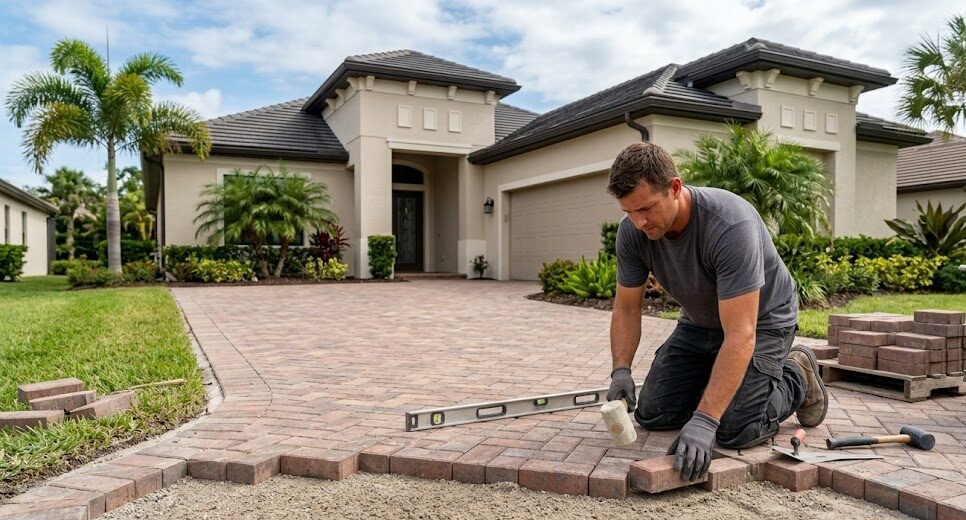
If the question is not whether hardscaping adds value but how to spend a fixed amount so that it does, the order is fairly stable.
- Around $15,000: fix what reads as neglect first. Driveway and walkway cleaning, paver repair on any settled areas, joint sand and sealer, bed edging and refreshed plantings, and a real maintenance cadence. This is the range where the maintenance multiples in the NAR data live, and it is the best dollar-for-dollar spending on this page.
- Around $30,000: add one significant, general-purpose element on top of a maintained baseline. Usually that is a properly sized paver patio or a driveway upgrade, whichever is in worse shape. One well-executed element beats three partial ones, both visually and on an appraisal.
- Around $60,000 and up: a cohesive plan rather than a feature list, sequenced so nothing gets torn out later. Drainage and grading first, then hard surfaces, then fencing, then softscape and lighting last. Building in that order is most of the reason projects come in without rework.
- At any budget, before selling: spend on condition, not on additions. Nothing new installed in the ninety days before a listing returns what a thorough cleanup, repair and maintenance pass does, and the data above is unambiguous on that point.
KS Solutions installs pavers, fencing and artificial turf across Central Florida, including Orlando, Lakeland and Kissimmee. If you are weighing a project partly as an investment, bring the question. We would rather tell you that a driveway will do more for you than a fire feature than sell you the fire feature and let you find out at closing. Turf options and the drainage detail behind them are covered under artificial turf installation.