What a Backyard Putting Green Costs in Florida in 2026
Professionally installed synthetic putting greens in Florida run $15 to $30 per square foot, with the broader national range stretching to $40 for elaborate multi-tier work. Most residential greens in Central Florida land between $15 and $25 per square foot.
Translated into greens people actually build:
- Small practice green, roughly 300 square feet, two cups: $4,500 to $9,000. Enough for genuine putting practice, not enough for meaningful chip shots.
- Standard backyard green, roughly 500 square feet, three to four cups: $7,500 to $15,000. This is the size most Central Florida yards support and the one most quotes are written for.
- Large green with fringe and chipping approach, 1,000 square feet or more: $15,000 to $30,000, and up from there with contouring, tiers or a sand feature.
Notice that the per-square-foot rate climbs as the green gets smaller, which is the opposite of how most people expect construction to price. A 300 square foot green still needs the same excavation, the same base delivery, the same laser grading pass, the same cup cutting and the same cleanup as a 600 square foot green. The fixed work does not shrink with the surface, so it lands harder per foot on a small install.
For scale against the rest of the yard, a standard artificial lawn in Florida runs roughly $10 to $16 per square foot installed, with $12 a common midpoint. A putting green costs meaningfully more per foot than lawn turf, and the reason is entirely underneath it.
Where the Money Goes: The Base Is Half the Bill
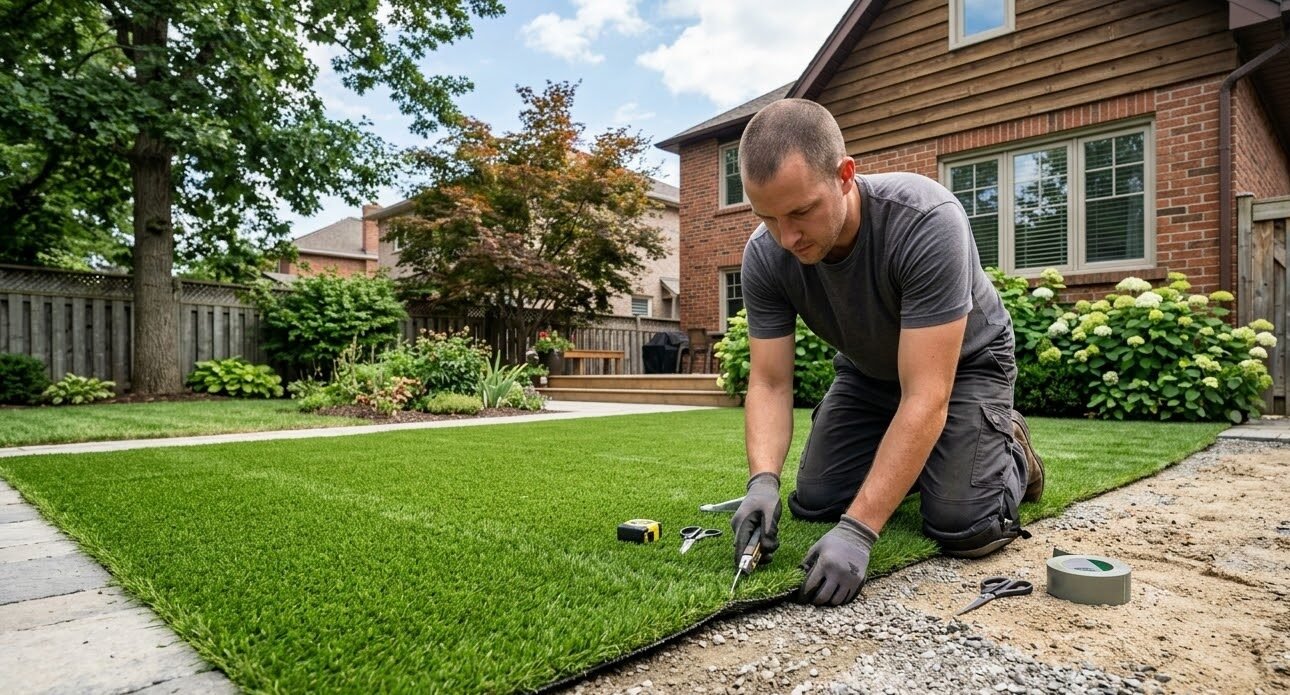
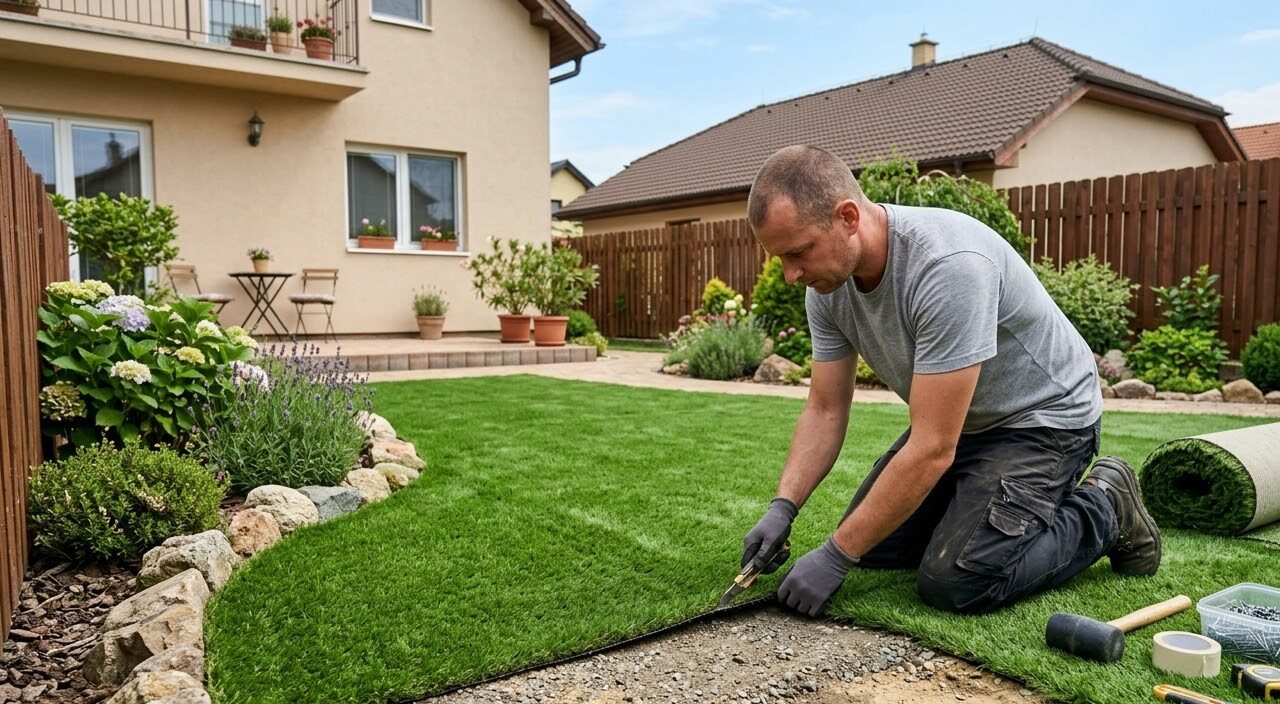
The cost breakdown of a putting green install is consistent and it surprises people every time. Base construction is 40 to 55 percent of the total. Turf material is 30 to 40 percent. Labor for layout, cutting, seaming, cups and finishing makes up the rest.
Read that again, because it reframes every quote you will receive. When a company is several dollars per square foot below the market, they have almost never found a cheaper turf supplier. They have taken depth out of the base, skipped a compaction pass, or graded by eye instead of by laser. That is also the one layer you cannot correct later without pulling up everything above it.
The base is what produces a true roll. Synthetic putting turf is a thin, dense fabric with almost no cushioning, which means it telegraphs whatever is under it. A quarter-inch dip in the base is a quarter-inch dip in your putting surface, and on a green that is the difference between a ball tracking to the cup and a ball breaking two inches left for no visible reason.
The Nylon Mistake: The Best Putting Turf Is the Wrong Turf Here
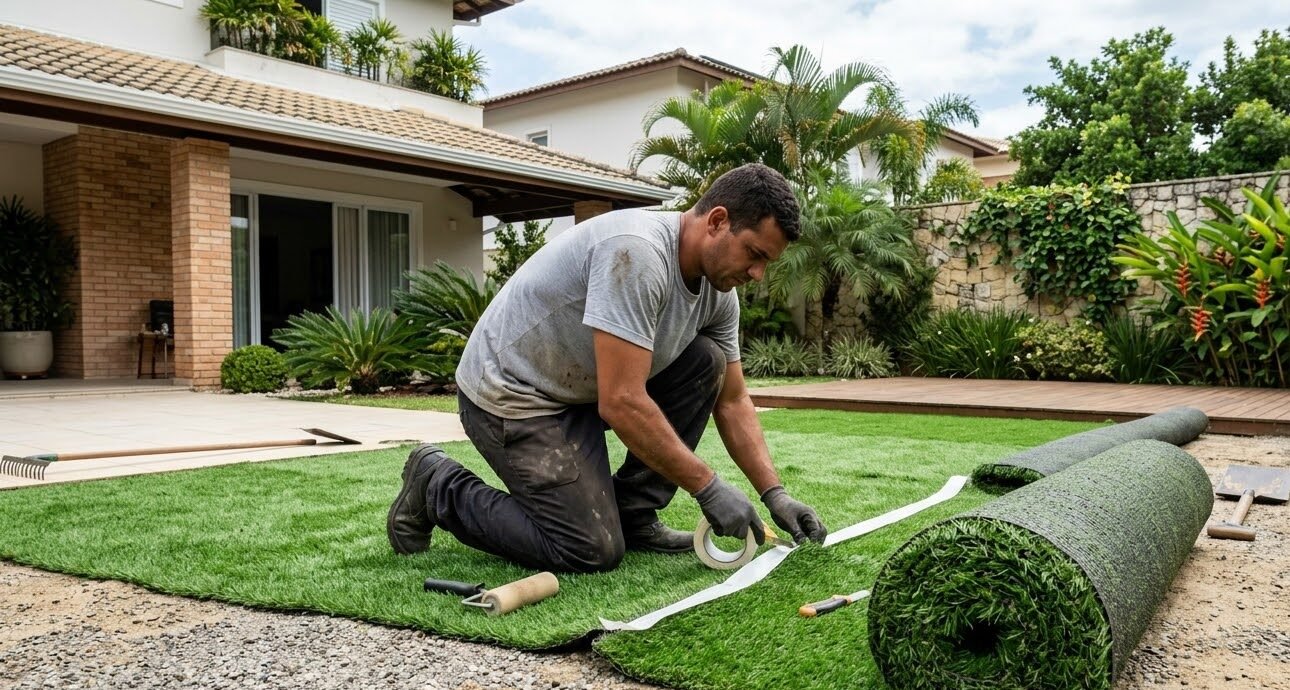
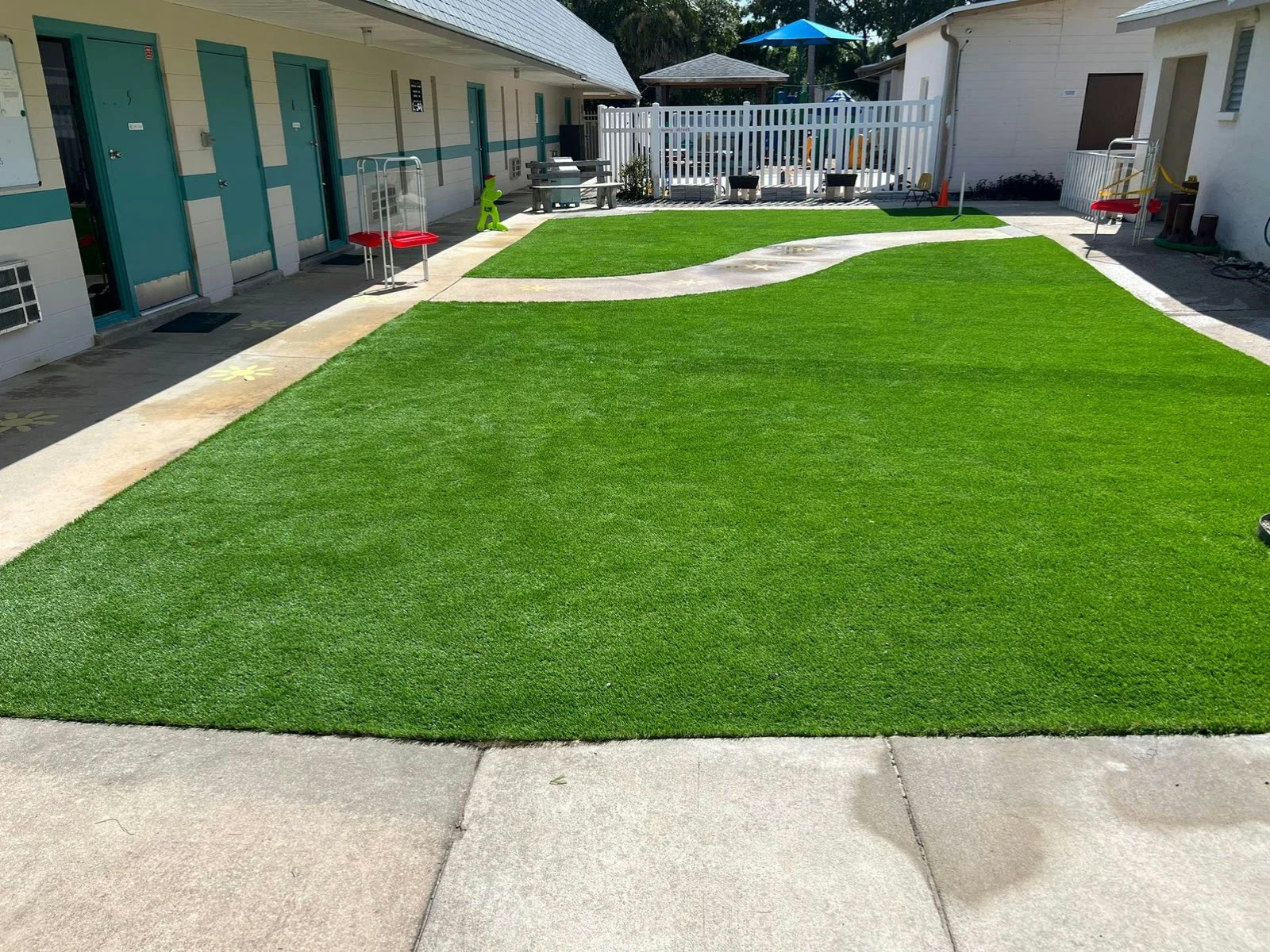
Every putting green buying guide says the same thing: nylon is the premium fiber. Nylon is stiffer, more resilient under heavy foot traffic, holds its blade orientation longer and produces the fastest, most tour-like roll. All of that is true.
It is also true that nylon fades and discolors under sustained sun exposure and is not recommended for outdoor installation. In Central Florida, with the ultraviolet load this latitude carries for most of the year, that is not a theoretical caveat. It is the deciding factor.
Polypropylene and polyethylene putting turfs do not fade in the sun. They are marginally softer underfoot and, all else equal, produce a slightly slower roll than nylon at the same pile height. In exchange, they hold their color and their fiber integrity outdoors for the life of the installation. In a Florida backyard that is the correct trade, and any installer recommending nylon for a full-sun outdoor green is either quoting from a national catalog or has not thought about where the product is going.
Where nylon still makes sense here is fully covered: a screened lanai with a solid roof, an indoor simulator bay, a garage practice area. Shade cloth and afternoon tree cover do not count. Partial shade slows the fading, it does not stop it.
Spec Sheet: Pile Height, Face Weight and What They Do to the Ball
Three numbers on a product sheet determine how the green plays. Get them in writing before you sign anything.
- Pile height: the length of the fiber. Putting surfaces want half an inch to three quarters of an inch. Shorter than that and the surface feels hard and the ball skids off the putter face. Longer and the roll goes slow and unpredictable as the fibers lay in different directions.
- Face weight: the ounces of yarn per square yard, and the best single proxy for density and durability. Putting greens perform best at 40 to 60 ounces. A green quoted at 30 ounces will putt acceptably on day one and will show traffic lanes and matted spots within two seasons.
- Fiber shape and gauge: putting turf uses a texturized fiber that stands up under a ball rather than the flat blade used in landscape turf. Landscape turf installed as a putting green is a known cost-cutting substitution and it never rolls true.
The specification that matters most for longevity in Florida is face weight, because it is the one you cannot see in a photograph and the one that quietly separates a $17 per square foot quote from a $23 one.
(321) 353-7445Get Immediate Service
Stimp Speed Is an Infill Setting, Not a Product
Homeowners often ask for a specific green speed as though it were a model number. It is not. Green speed on a synthetic surface is controlled primarily by how much infill is installed, and it is adjustable after the fact.
More silica sand infill pushes the fibers upright and packs the surface, producing a faster roll. Less infill leaves the fibers freer and slows the ball. Well-designed systems tune to a stimp reading between 7 and 13.
What you actually want at home is 8 to 10. Real golf course greens run 10 to 13, and homeowners who ask for that number consistently regret it. A tour-speed green in a backyard means every putt that misses runs six feet past, every practice session becomes a retrieval exercise, and anyone in the household who does not play golf stops using it entirely. Eight to ten is fast enough to be honest practice and slow enough to be fun.
The practical upside is that this is the one design decision you can revise. If the green plays too slow after a year of settling, adding infill speeds it up. That is a maintenance visit, not a rebuild.
Base Construction in Central Florida Sand
Florida sand drains beautifully and holds a grade badly. That combination defines putting green base work here.
A correctly built base for a Central Florida green is a compacted aggregate layer, laser graded to positive fall, deep enough to bridge the native soil and dense enough that it refuses to move. Excavation goes deeper than a lawn install because the surface tolerance is far tighter. On a lawn, a half-inch undulation reads as natural. On a green it reads as a defect.
Three site conditions cause most Central Florida base failures, and all three are common under yards in this region:
- Buried construction debris: slab remnants, brick, and fill dropped during the original build. These settle at a different rate than compacted aggregate and produce a dip years later.
- Compacted clay pockets: they hold water where everything around them drains, softening the base from below.
- Old irrigation and utility trenches: backfilled loosely, they settle into a visible line across the green that follows the trench exactly.
None of these are visible at quoting time, which is why a competent installer excavates and inspects before finalizing the base scope rather than pricing a uniform depth across every yard. If a quote gives a flat base price without anyone having dug a test hole, the number is a guess.
Drainage: The Green Has to Shed Water, Not Absorb It
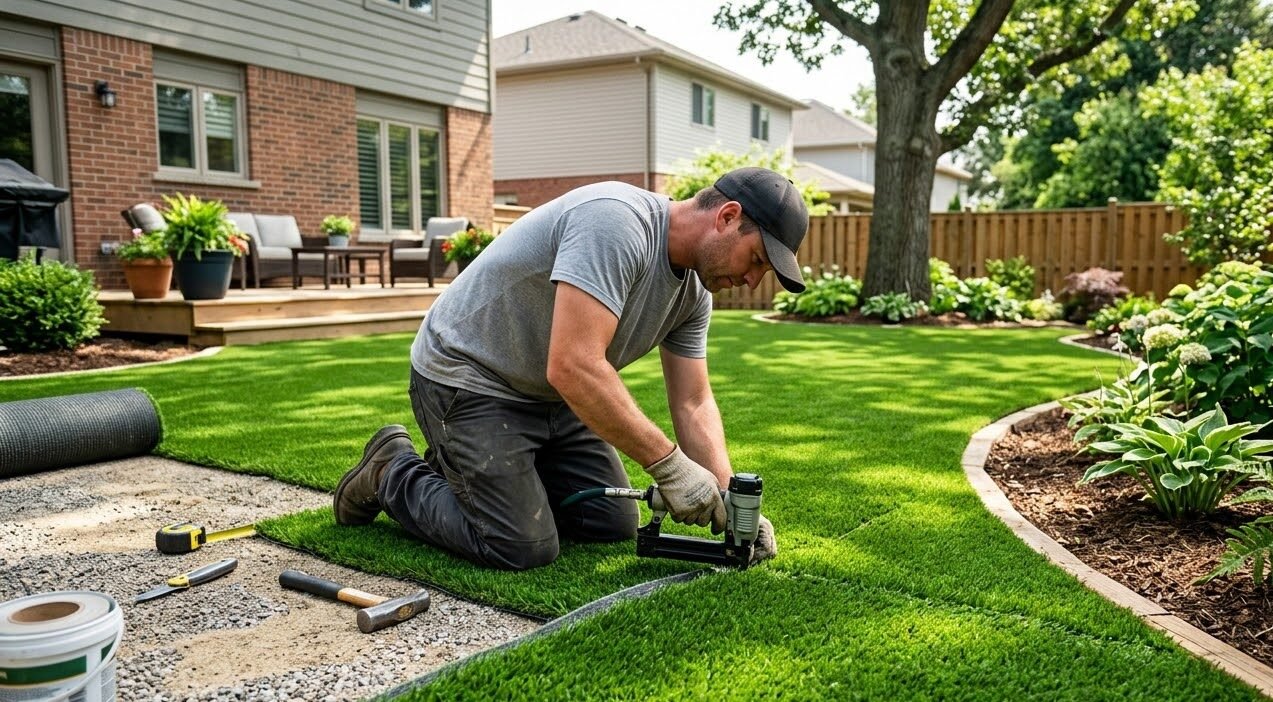
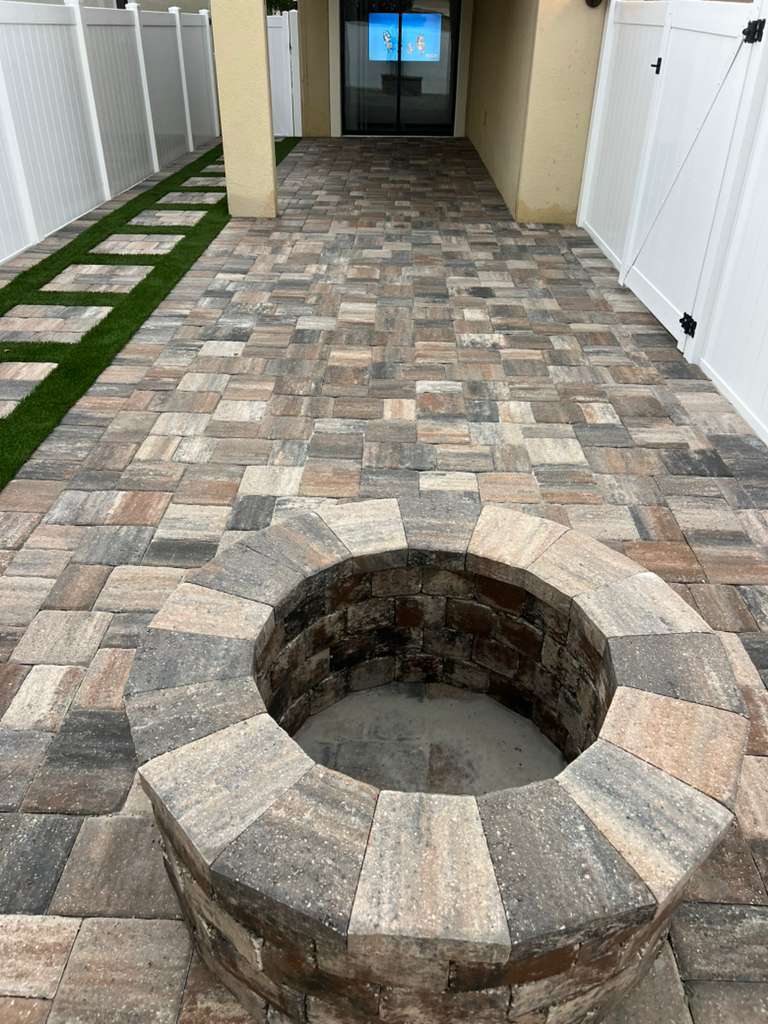
Central Florida gets its rain in short, heavy bursts. A green that ponds after a summer afternoon storm is a green that grows algae in the low spot, holds debris in the fibers and softens the base underneath.
Drainage on a synthetic green is designed at three levels. The turf backing is perforated so water passes through the surface rather than sheeting across it. The aggregate base is graded to positive fall so water that reaches it moves somewhere deliberate. And the perimeter has to have a defined outlet, which on a Florida lot usually means daylighting to a swale or tying into an existing yard drain.
That third one is where installs go wrong. A green built with perfect internal drainage that discharges into a low corner of the yard has not solved the problem, it has relocated it. Ask specifically where the water goes when it leaves the green, and get the answer in the scope rather than as reassurance on site.
The same principle governs every hardscape surface in a Florida backyard, which is why greens are usually designed alongside the patio and walkway rather than after them. If the approach to the green needs work too, having the same crew handle the brick paver installation in the same scope keeps the grading a single plan instead of two plans meeting in the middle.
The Natural Green Fantasy: What Real Grass Would Actually Require
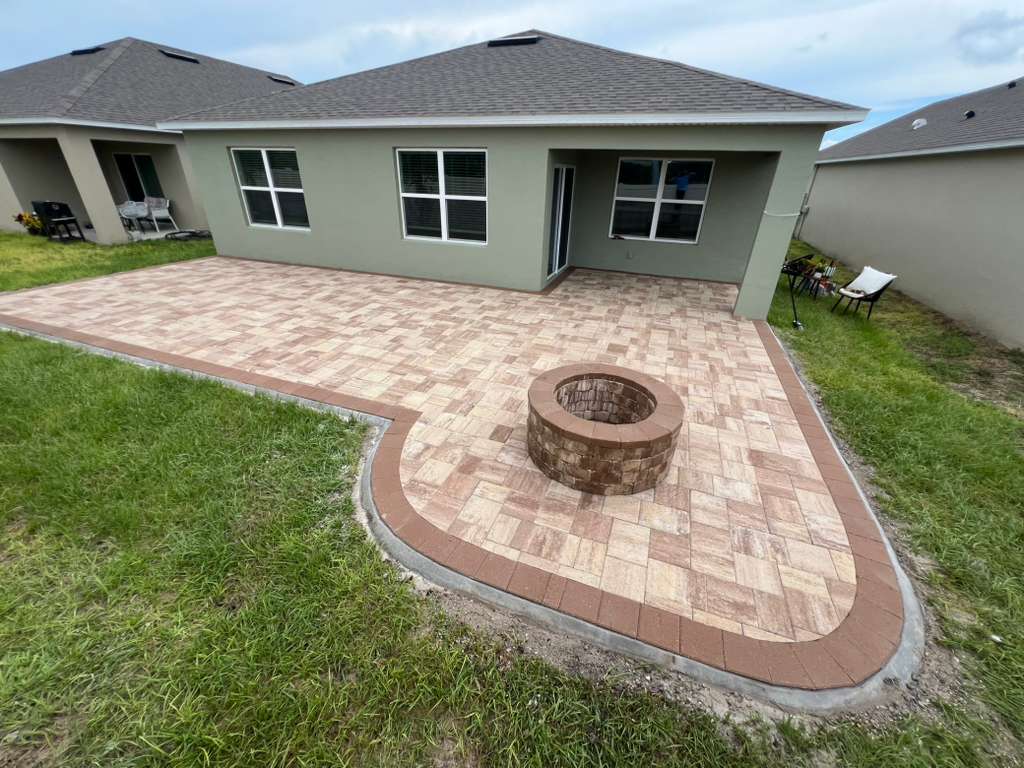
Roughly one homeowner in five asks whether a real grass green is possible instead. It is worth answering properly, because the answer is not simply no. It is that the commitment is a category apart from lawn care.
A putting green in Florida cannot be bentgrass. The heat and humidity kill it. Florida greens are ultradwarf bermudagrass, the family that includes TifEagle, MiniVerde and Champion, bred specifically to be mowed at putting height in a subtropical climate.
Here is what that grass requires to actually putt like a green:
- Mowing below 0.100 inch through the growing season, with 0.125 inch cited as the height at which TifEagle produces a quality putting surface. That is a dedicated walk-behind greens mower, not a rotary mower on its lowest setting. A standard residential mower does not go anywhere near this height.
- Mowing frequency measured in days, not weeks. Ultradwarf greens grow fast in Florida summer and lose surface quality quickly when mowing is skipped.
- Regular light topdressing with sand, plus brushing and grooming, to manage thatch. The USGA notes that frequent brushing, grooming and light topdressing reduce the need to verticut, which is the more disruptive alternative.
- Verticutting when the surface management program falls behind.
- An active disease and heat stress program. Ultradwarf bermudagrass under Florida summer heat carries real disease pressure, which is a documented management challenge on maintained golf courses with full-time superintendents.
For reference, a full-service lawn care program on a medium Florida yard commonly runs $1,500 to $3,000 a year covering mowing, fertilization, pest treatment and seasonal repairs. A putting surface is a substantially more intensive program than that on a fraction of the area, and it needs equipment a homeowner does not own. That is why nearly every backyard green built in Central Florida is synthetic, and why the ones that were not usually become synthetic within a few years.
Size, Shape and How Many Cups Actually Fit
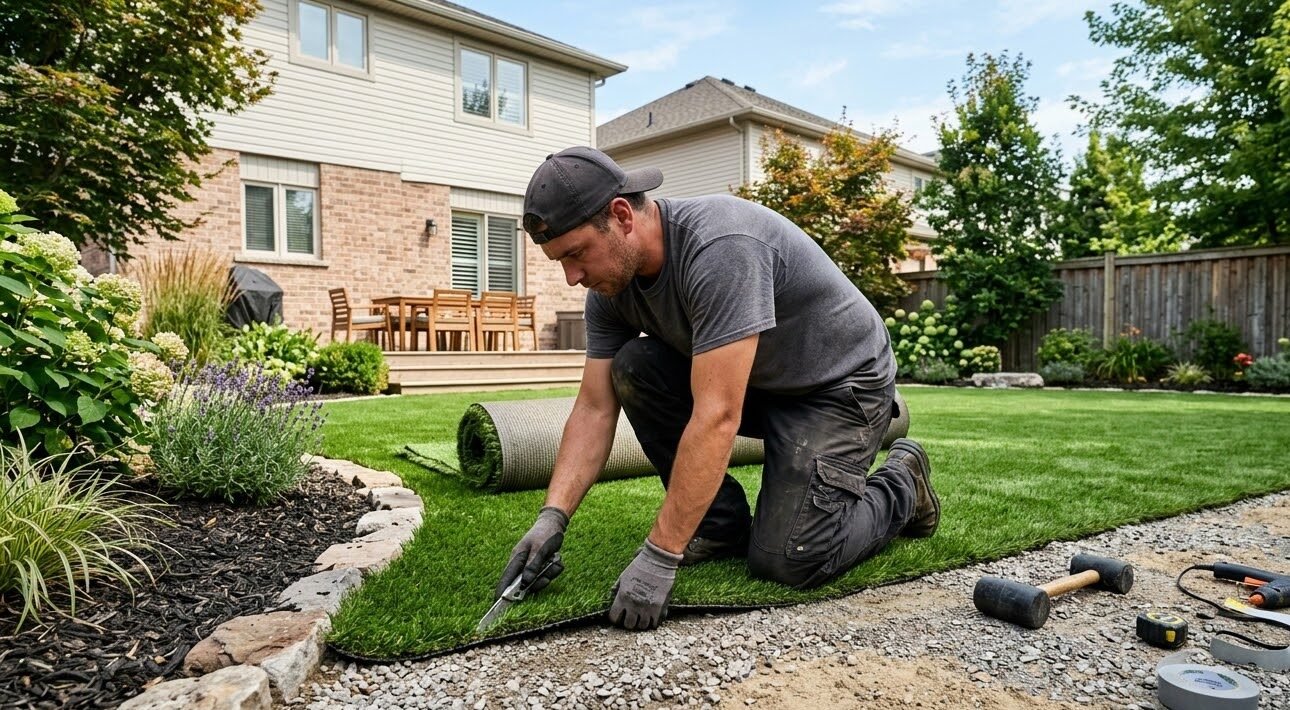
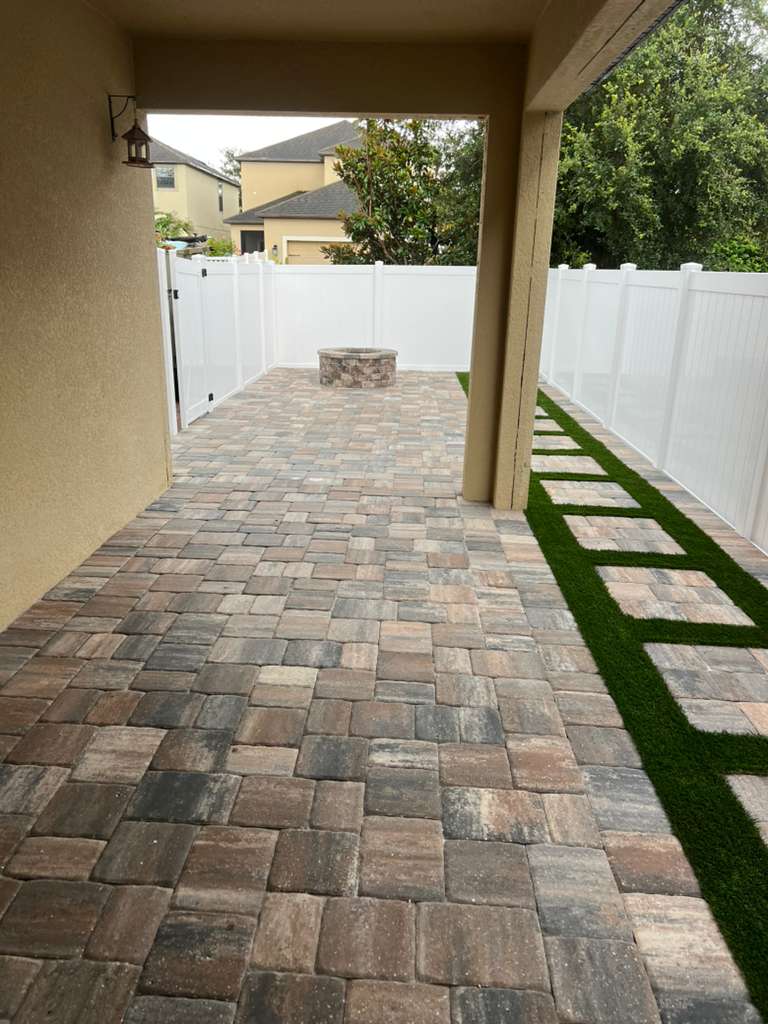
The most common design regret is not the turf and not the speed. It is building a green too small to hold a variety of putts, or too large for the yard to support around it.
Rules of thumb that hold up in Central Florida yards:
- Under 250 square feet: one or two cups, short putts only. Real practice value for the stroke, limited variety.
- 400 to 600 square feet: three to four cups with genuinely different putt lengths and break directions. This is the value sweet spot for most yards.
- 800 square feet and up: five or more cups, room for contour and tiers, and enough approach space that chipping becomes realistic.
Shape matters more than raw area. A long, narrow green gives you the same putt over and over. An irregular shape with genuine width produces varied lines from a similar footprint. And every green needs a fringe, a border of shorter, denser turf that stops balls from rolling into the landscape bed and visually finishes the installation. Budget the fringe as part of the green, not as leftover lawn.
One Florida-specific placement note: think about afternoon shade before you think about sightlines. A green in full western exposure gets hot enough that summer use drops off after two o'clock, the same way any synthetic surface does. The physics of that, and what infill choice does to surface temperature, is covered in our guide to pet-friendly artificial turf in Florida, and the heat behavior is identical for a green.
What It Costs to Keep, Year After Year
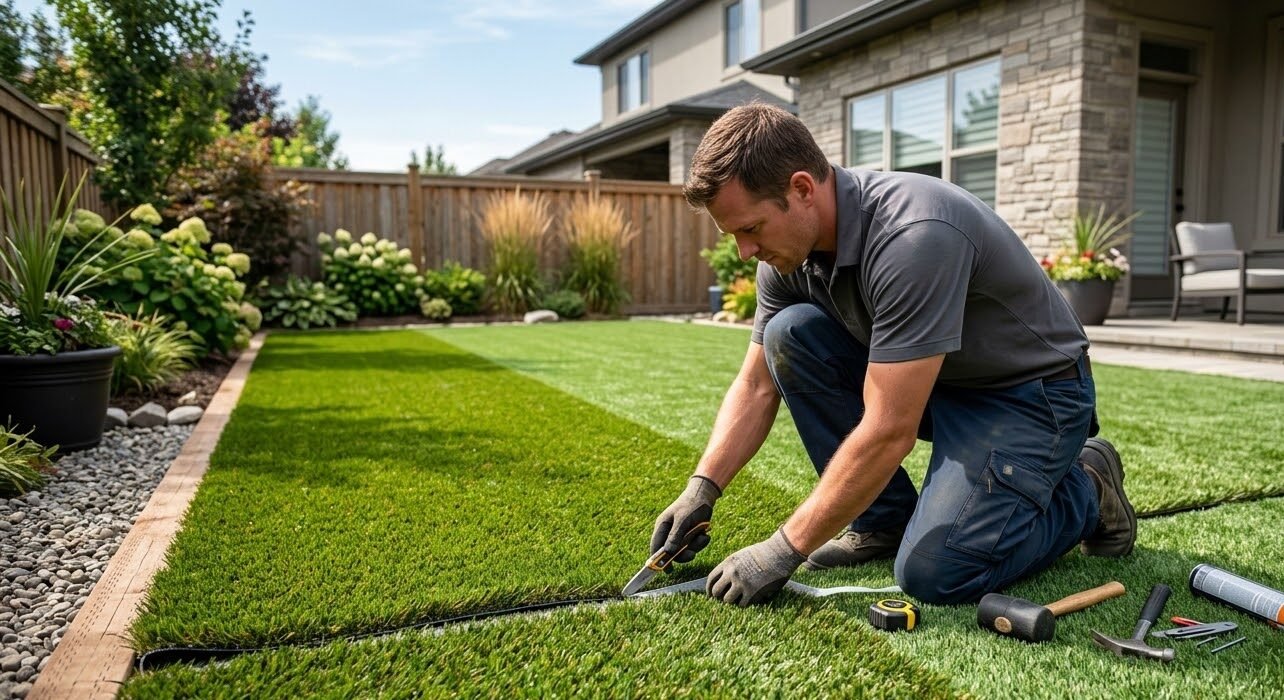
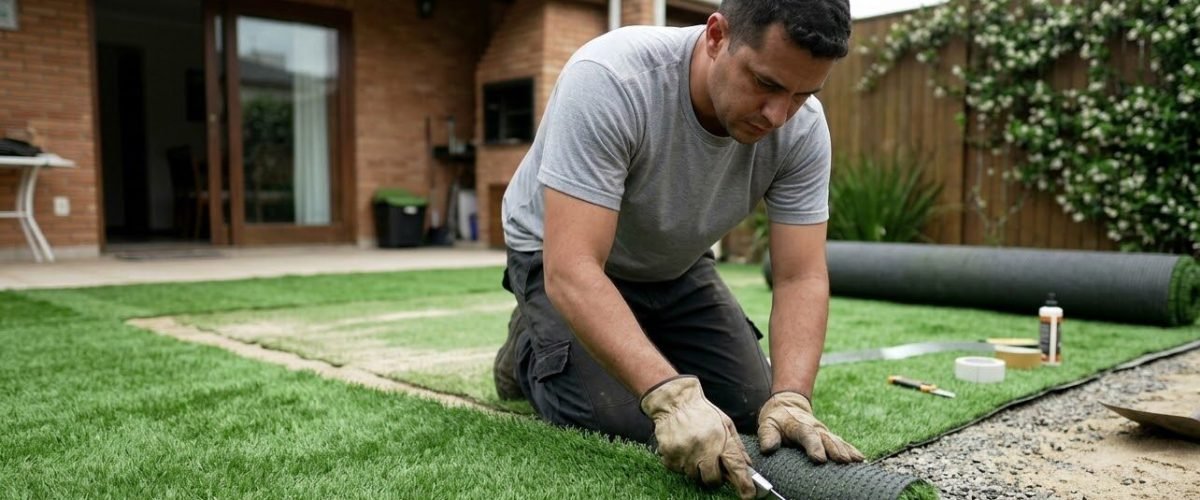
Synthetic green upkeep is real but small. Expect a similar order of magnitude to artificial lawn maintenance, which commonly runs $100 to $200 a year, with a few green-specific additions:
- Rinsing: a hose down every few weeks in the dry season and after heavy pollen or debris events.
- Brushing: putting surfaces need brushing more often than lawns because foot traffic concentrates on the same lines to the cups. Brushing against the grain lifts the fibers back upright.
- Infill top-off: silica sand migrates over time, particularly on slopes and around cups. Topping it up every few years restores both the roll speed and the fiber support.
- Debris removal: leaves and organic matter left sitting on the surface break down into the infill and eventually support weed germination and algae in shaded corners.
- Cup and flag hardware: the cheapest consumable on the green, and the one most often neglected until a cup rim sits proud of the surface and starts deflecting putts.
Expect a well-built synthetic green in Florida to give 10 to 15 years of good service, consistent with quality artificial turf lifespan in this climate, with the base outliving the surface. When the turf is eventually replaced, a properly built base is reused, which makes the second installation substantially cheaper than the first. That is another argument for not economizing on the base, and one that most quotes never mention. Ongoing brushing and infill work can be folded into a maintenance plan so the green does not quietly degrade in the years you are not paying attention to it.
How to Compare Two Putting Green Quotes Fairly
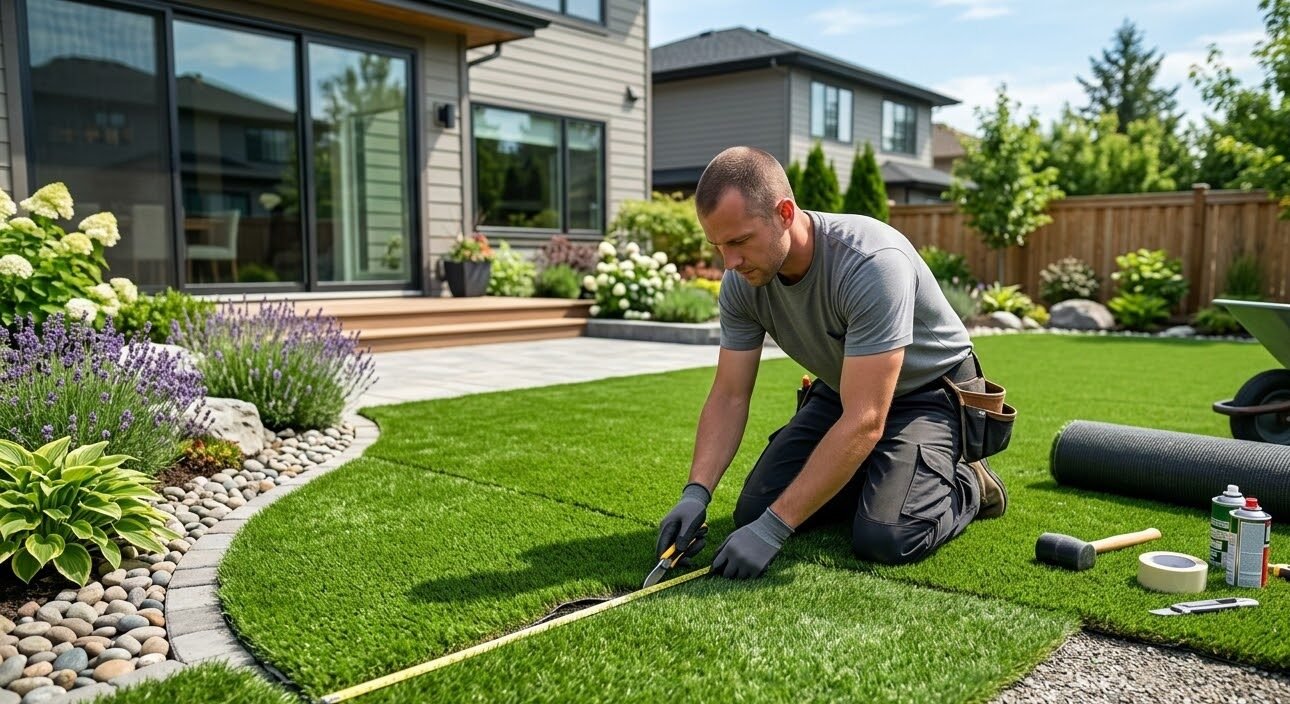
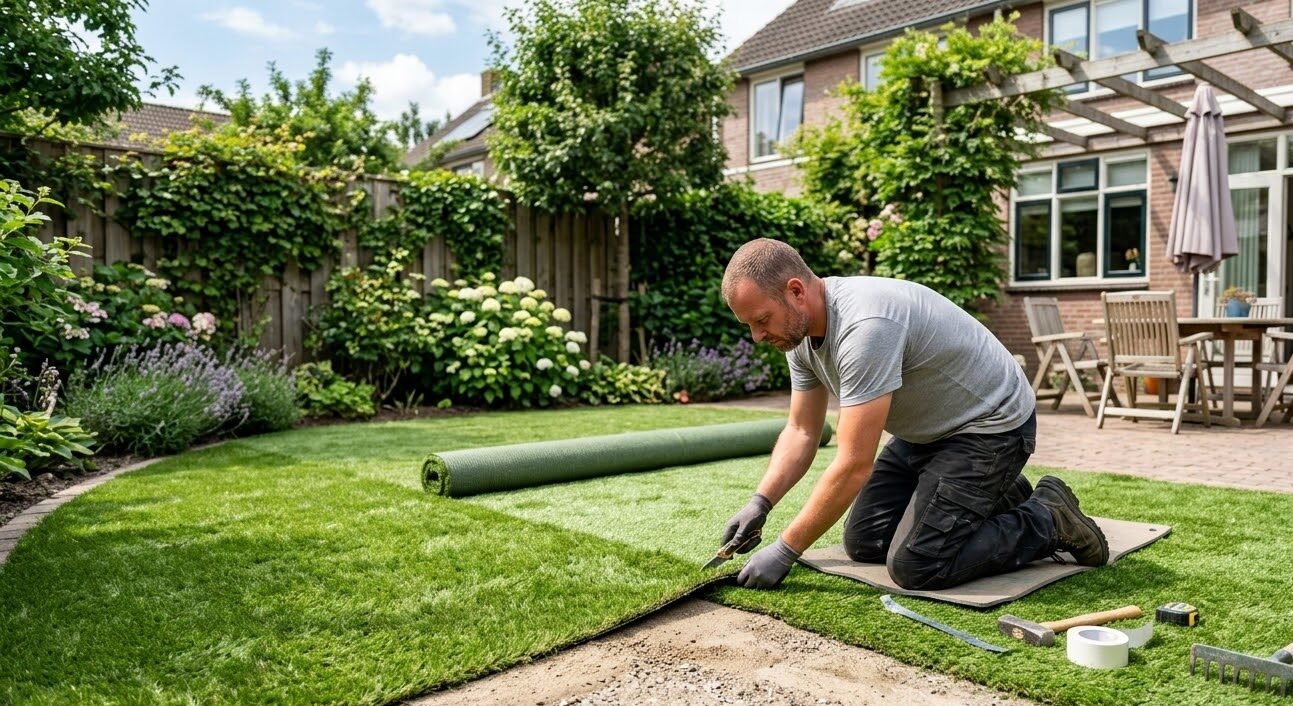
Two quotes on the same green can differ by 40 percent and both be honest. Line these seven items up side by side and the gap usually explains itself:
- Base depth and material, stated as a number and a material, not as the phrase properly prepared base.
- Compaction method, and whether the finished grade is laser checked or eyeballed.
- Turf fiber type, named specifically, and whether it is rated for outdoor ultraviolet exposure.
- Face weight and pile height, as ounces and inches from the product sheet.
- Infill type and quantity per square foot, which sets the green speed and is the number most often left vague.
- Drainage outlet, meaning where the water physically goes once it leaves the green.
- Cup count, cup hardware and fringe, and whether the fringe square footage is inside or outside the quoted area.
A quote that names all seven is from someone who has built greens. A quote that names two of them is a price on a picture.
KS Solutions builds synthetic putting greens and full backyard turf installations across Central Florida, including Winter Park, Lakeland and Celebration, and we quote the base and the drainage outlet as line items because those are the two things that decide whether the green still rolls true in year ten. If the green is part of a wider yard conversion, the full economics of replacing grass with turf are laid out in our comparison of artificial turf versus sod in Florida, and the surrounding lawn work runs through the same artificial turf installation scope so the green and the lawn are graded as one plan.