KS Solutions provides brick paver installation in DeLand. Call (321) 353-7445 for your free estimate.
Brick Paver Installation in DeLand: Period-Sensitive Hardscaping for the Volusia County Seat's Century-Old Neighborhoods and Modern Subdivisions
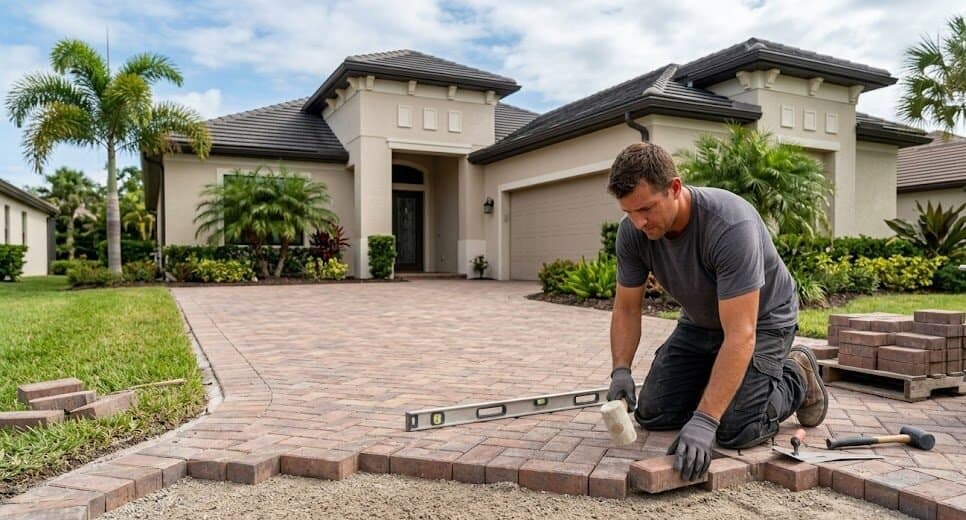
Brick paver installation in DeLand, FL navigates an architectural landscape that spans from 1920s Craftsman bungalows in the Historic Garden District to contemporary production homes on the city's western expansion frontier. This Volusia County seat of approximately 41,000 residents carries its history visibly: the brick-lined storefronts along Woodland Boulevard, the tree-canopied streets surrounding Stetson University, and the Victorian and Mediterranean Revival homes that define the inner-ring neighborhoods all establish a design context that paver installations must acknowledge rather than ignore. A paver driveway that works on a contemporary ranch home in west DeLand may clash with a 1925 bungalow near downtown because the architectural vocabularies are a century apart.
DeLand's soil profile includes sandy substrate across most of the city's footprint with clay pockets appearing in the western sections where the terrain shifts toward the rolling ground between DeLand and DeBary. This soil variability means two DeLand properties a mile apart may need different base engineering: one on clean sand with standard aggregate depth and one on clay-influenced ground where drainage-layer construction prevents the moisture trapping that clay produces beneath hardscape surfaces.
KS Solutions installs brick pavers throughout DeLand for homeowners whose properties span the city's full architectural and geographic range. DeLand operates its own municipal government with city building permits. The Historic Garden District and other designated areas may have overlay zoning that affects exterior modifications. Newer subdivisions on the west side may have HOA requirements. We verify all applicable regulations and handle submissions for every project.
Historic District Paver Design: Complementing Craftsman, Victorian, and Mediterranean Revival Architecture
DeLand's Historic Garden District and the surrounding inner-ring neighborhoods contain homes that predate modern subdivision construction by 80 to 100 years. These properties carry architectural details, exposed rafter tails, tapered columns, ornamental brackets, decorative tile work, and period-appropriate paint colors, that establish a design standard the outdoor hardscaping should reference. A paver driveway on a 1926 Mediterranean Revival home needs to feel like it could have been installed when the house was built, not like a 2026 addition dropped onto a century-old property.
Tumbled concrete pavers in warm brick tones, terracotta, clay, and aged-amber blends reproduce the look of the hand-laid brick and cobblestone surfaces that DeLand's historic streetscape once featured. The tumbled edge treatment softens the precision-cut appearance of modern pavers and introduces the weathered quality that historic architecture expects from its ground-level surfaces. Smooth-faced, factory-sharp pavers under a Craftsman bungalow create the temporal disconnect that makes the driveway look like it belongs to a different decade than the house above it.
Pattern selection in DeLand's historic zones follows the same period-sensitivity logic. Herringbone and basket-weave layouts reference the traditional paving patterns found in historic Florida towns and complement the formal, crafted aesthetic that period architecture displays. Running bond provides the simpler alternative for homes where the architecture doesn't carry enough ornamental detail to support the visual complexity of herringbone. The pattern should match the architectural ambition of the facade: an elaborate Victorian with scrollwork and gingerbread trim can support an equally elaborate paver pattern, while a modest cottage serves better with a restrained running bond that doesn't compete for attention.
KS Solutions walks the blocks surrounding each DeLand historic-district project property before finalizing design recommendations. The streetscape context, including the neighboring homes' driveways, the sidewalk material, the street trees, and any visible historic paving remnants, informs the paver selection by revealing what the block's established visual character expects from a new hardscape addition. A paver that looks right in isolation may look wrong within the streetscape context, and the neighborhood walk catches this before the product ships.
Stetson University Neighborhood Properties: Student-Rental Durability and Homeowner Aesthetics
The residential blocks surrounding Stetson University include a mix of owner-occupied homes and properties leased to student tenants whose usage patterns differ from typical single-family occupancy. A driveway on a student rental handles more vehicles, more frequent visitor parking, more late-night arrivals, and the general increase in surface wear that multiple unrelated occupants produce compared to a single-family household. The driveway that serves a couple with two cars handles different loading than the same driveway serving four students with four cars, three of which park on the driveway simultaneously while the fourth parks on the grass because the concrete width wasn't designed for four-abreast parking.
We design Stetson-area DeLand driveways with the wider approach and expanded width that multi-vehicle student occupancy demands. Widening the driveway by 4 to 6 feet eliminates the grass-parking damage that occurs when the fourth vehicle has nowhere to go except the lawn strip beside the concrete. The paver surface handles the additional vehicle count without the cracking that a concrete slab develops when heavily loaded beyond its original single-family specification. And if a student tenant does clip the driveway edge with a tire, the affected paver can be replaced individually for $5 rather than living with the chipped concrete edge that a car tire creates on a rigid slab.
For owner-occupied homes near Stetson that don't serve as rentals, the paver design addresses the pedestrian traffic that university proximity generates. Students walking to campus cross through residential neighborhoods on routes that take them across driveways and along sidewalks that the homeowner's paver installation shares. The front walkway on a home along a campus walking route sees more daily foot traffic than the same walkway on a dead-end cul-de-sac with no through-traffic. The paver product for these higher-traffic walkways should be slip-resistant, durable at the higher cycle count, and resistant to the bicycle-tire marks that students riding across driveways leave on smooth surfaces.
KS Solutions distinguishes between rental-property and owner-occupied paver specifications on Stetson-area DeLand projects because the two use cases demand different product priorities. Rental properties need maximum durability at moderate cost because the tenant's behavior can't be controlled. Owner-occupied properties can invest in premium aesthetics because the homeowner's care preserves the surface quality that premium products display when treated respectfully.
Root Barriers and Canopy-Protected Paver Construction in DeLand's Oak-Lined Streets
DeLand's live oak canopy, particularly dense in the historic districts and the neighborhoods along East New York Avenue and North Woodland Boulevard, creates the shaded, character-rich streetscape that real estate listings prominently feature. The root systems these oaks extend laterally across yards at 2 to 8 inches below grade, and these roots enter the zone where driveway and patio bases sit with the persistent growth pressure that biological systems maintain year after year. A root that touches the edge of a paver base today pushes into the base next year and lifts pavers the year after, following the growth trajectory that no one-time accommodation permanently stops.
Root barriers installed along the edge of DeLand paver installations where significant oak roots approach the base perimeter deflect root growth downward rather than letting it enter the base horizontally. The barrier is a rigid plastic panel installed vertically in a trench along the paver edge, extending 18 to 24 inches below grade. Roots approaching the barrier encounter the rigid surface and redirect downward, passing beneath the base layer at a depth where the root's presence doesn't affect the pavers above. The barrier doesn't stop root growth. It redirects it away from the installation into the deeper soil where the root can continue growing without affecting the hardscape.
Within the base zone itself, we contour the aggregate around any roots already present during excavation, using geotextile fabric to separate the stone from the root surface. Cutting established roots to achieve a flat excavation floor risks destabilizing a tree that may be protected under DeLand's tree ordinance and that contributes significant value to the property's appearance and real estate pricing. The contouring approach preserves the root while accommodating it within the base structure.
KS Solutions installs root barriers on every DeLand paver project where mature oak roots sit within 3 feet of the planned base perimeter. The barrier cost of $8 to $12 per linear foot adds modestly to the project total and prevents the root intrusion that would otherwise require paver lifting, root shaving, and base repair within 5 to 8 years as the growing root reaches the base edge and begins the displacement process that biological growth pressure makes inevitable without the deflection barrier in place.
(321) 353-7445Get Immediate Service
West DeLand Subdivision Driveways: New Construction Upgrades on the Growth Frontier
DeLand's western expansion has produced subdivisions where homes built within the past 10 to 15 years sit on lots cleared from the rural landscape that previously occupied this ground. These newer communities, positioned along corridors connecting DeLand to DeBary and the I-4 interchange, drew buyers from the Orlando metro area seeking lower housing costs and the small-city lifestyle that DeLand's historic character provides. The builder-grade concrete driveways on these homes are now 10 to 15 years old and entering the failure window where the standard 4-inch slab on minimal base develops the cracks, settling, and surface deterioration that Florida's thermal cycling produces on that specification timeline.
Paver replacement on these west DeLand driveways provides the visual upgrade that differentiates the property from neighboring homes still showing their builder concrete while also solving the structural failure the concrete developed. The interlocking pavers handle the same ground conditions that cracked the concrete by distributing movement across thousands of individual joints rather than concentrating stress at the 8 to 12 expansion joints the concrete relied on to control cracking. The same soil that undermined the rigid slab supports the flexible paver system because the flexibility accommodates what the rigidity fought against and lost.
The clay pockets that appear in western DeLand's soil require the same drainage-layer base construction used on DeBary's clay-influenced properties because the geological transition from sandy coastal plain to clay-bearing terrain crosses both cities. We probe the subgrade at every west DeLand property to determine whether clay is present at the base depth and adjust the specification accordingly. Properties on the eastern edge of the new subdivisions may sit on clean sand. Properties on the western edge may encounter the clay that the terrain's geology places beneath the surface.
KS Solutions serves DeLand's historic districts and western subdivisions with equal commitment to quality, adjusting the design approach to match each neighborhood's architectural context and soil conditions. A tumbled-paver driveway on a 1926 bungalow and a contemporary-paver driveway on a 2012 ranch home are both DeLand projects, but they serve different design mandates and different subgrade conditions. The craftsmanship standard stays consistent. The design and engineering adapt to each property's specific requirements. Call (321) 353-7445 for your free DeLand paver estimate.
Paver Costs for DeLand's Historic and Suburban Properties
Brick paver installation in DeLand costs $12 to $24 per square foot depending on material, the period-appropriate design complexity historic-district projects demand, and whether clay-influenced western soil requires drainage-layer base construction. DeLand's diverse housing stock creates a proportionally wide project range where a $4,000 walkway on a modest bungalow and a $15,000 driveway-and-patio combination on a west DeLand home both represent appropriate investments for their respective property values.
Historic-district driveways in tumbled period-appropriate pavers cost $16 to $24 per square foot. A 350 square foot driveway on a Garden District bungalow runs $5,600 to $8,400. West DeLand subdivision driveway replacements with concrete demolition cost $14 to $20 per square foot. A 450 square foot driveway runs $6,300 to $9,000. Stetson-area widened driveways for multi-vehicle use cost $14 to $20 per square foot for the expanded surface area.
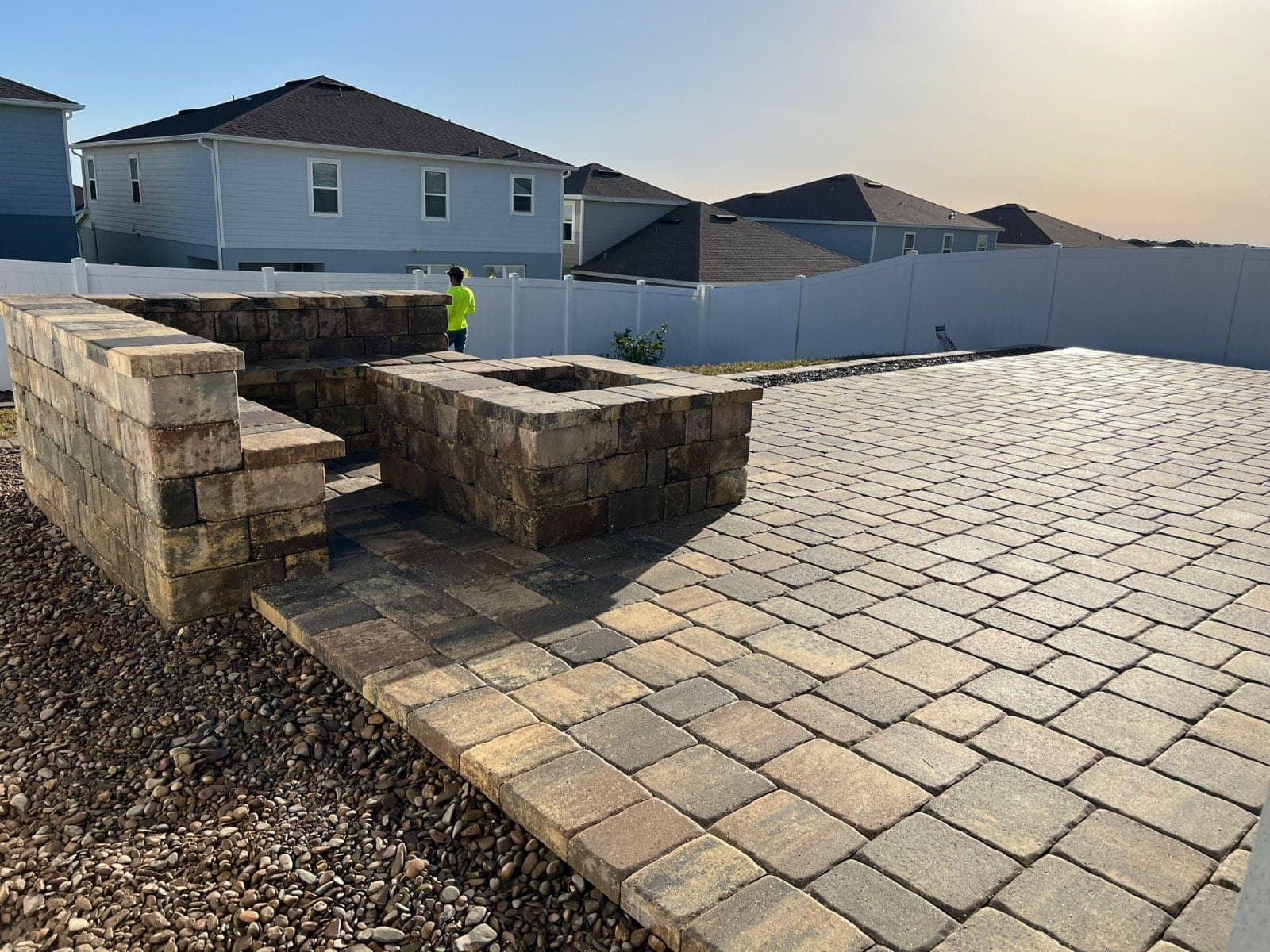
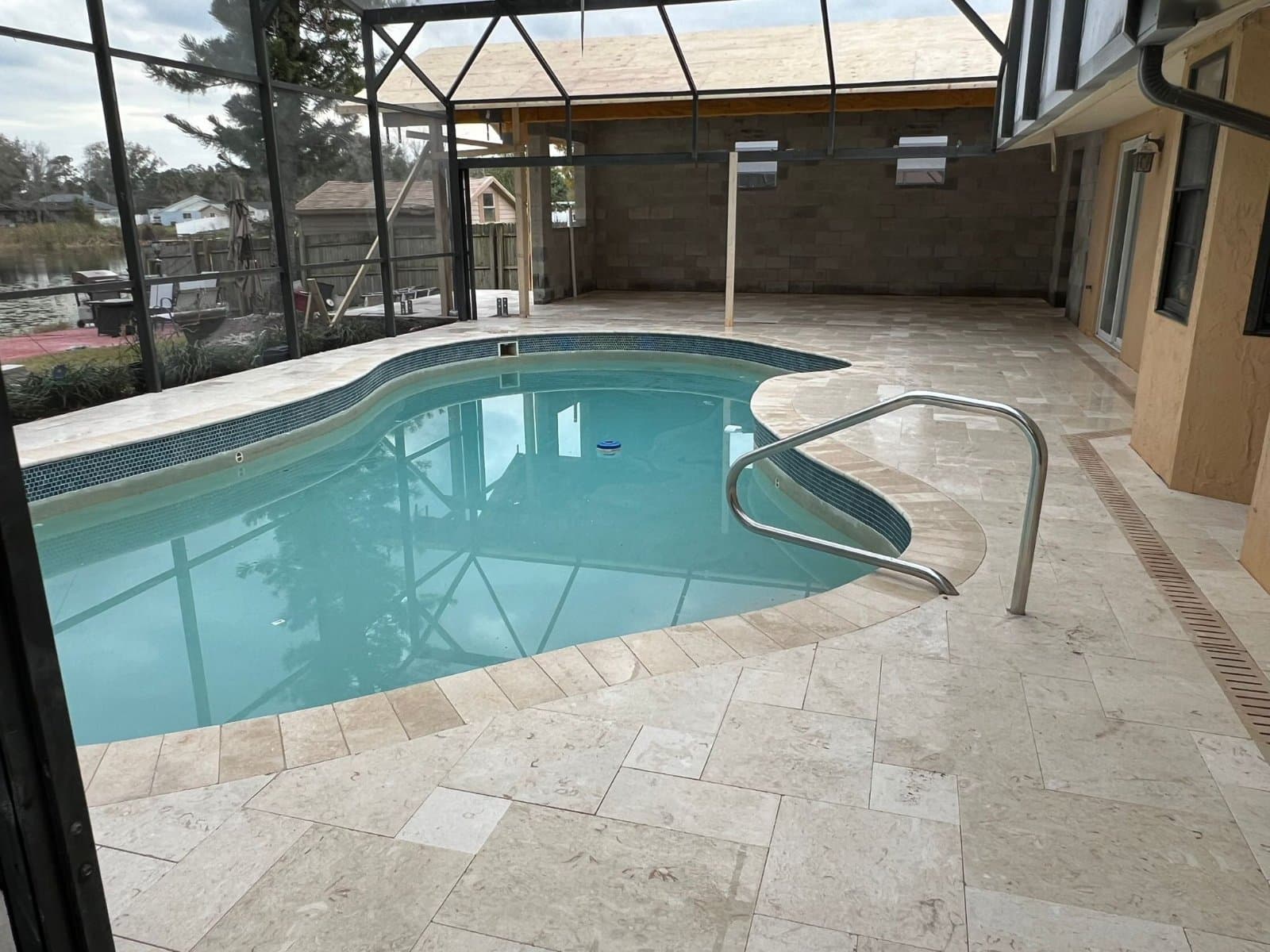
Patios cost $12 to $18 per square foot. Pool decks cost $14 to $20. Root barriers along oak-tree zones add $8 to $12 per linear foot. Clay-soil drainage-layer base in western DeLand adds $3 to $5 per square foot for the extra excavation and drainage stone.
DeLand city permits apply. Historic-district overlay zoning may affect exterior modifications. West DeLand HOAs may require design approval. We verify all regulations and handle submissions. Installation runs 3 to 5 days for driveways, 2 to 4 for patios, 4 to 6 for pool decks. Call (321) 353-7445 for your free DeLand paver estimate.