KS Solutions installs brick pavers in Sanford, FL for homeowners across Seminole County's seat city where the brick-paved streetscapes along First Street set a standard for hardscape quality that few Central Florida downtowns can match, the Sanford Riverwalk connects 26 miles of Lake Monroe waterfront trail to the Coast to Coast system, and the neighborhoods ranging from the National Register Historic District's Victorian homes to the modern 417-corridor subdivisions each demand a different design approach. Call (321) 353-7445 for a free estimate.
Pavers in a City That Already Appreciates Brick
Brick paver installation in Sanford carries a visual context that most Florida cities don't provide. The multimillion-dollar downtown streetscape project paved First Street and Sanford Avenue with brick, widened sidewalks, and planted mature trees, creating one of Central Florida's most attractive walkable districts. Residents who stroll those streets daily have already developed an eye for what quality hardscape looks like, which means a paver driveway or patio on a Sanford home gets evaluated against a public-infrastructure standard rather than just against the neighbor's builder-grade concrete slab.
Henry Shelton Sanford purchased 12,000 acres on the southern shore of Lake Monroe in the 1870s and laid out the town as "The Gateway City to South Florida." After the Big Freeze of 1894-95 destroyed the citrus groves, local farmers pivoted to celery, earning Sanford the "Celery City" nickname while shipping millions of dollars of product down the St. Johns River. That agricultural-era grit and adaptability still runs through the city's character, and homeowners here tend to invest in outdoor improvements that perform and endure rather than chasing trends that fade after one season.
Sanford's population has grown past 67,000 and continues climbing at over one percent annually as young families and professionals discover that the walkable downtown, the waterfront trail system, and the craft-brewery-and-gallery scene along First Street deliver an urban lifestyle at prices Orlando can't match. Paver-finished outdoor spaces position homes competitively in a market where buyers paying attention to curb detail are the ones writing the strongest offers.
Materials for Sanford's Architectural Range
Tumbled concrete pavers
in warm earth tones complement the Victorian and Craftsman homes in Sanford's Historic District (listed on the National Register of Historic Places since 1976). The weathered texture and muted color range feel right alongside century-old porches, original brickwork, and towering oak canopy without introducing the bright, modern-looking surfaces that would clash with the district's established character.
Clean-lined interlocking concrete pavers
in herringbone driveway patterns serve the newer subdivisions along the 417 corridor and south of downtown where contemporary and transitional home designs call for surfaces with crisp edges and uniform color. Large-format units in 18-by-18 or 24-by-24 sizes create the minimalist aesthetic that newer-construction homeowners are after. Charcoal, slate, and cool-gray tones coordinate with the darker exterior palettes trending on the corridor's recent builds.
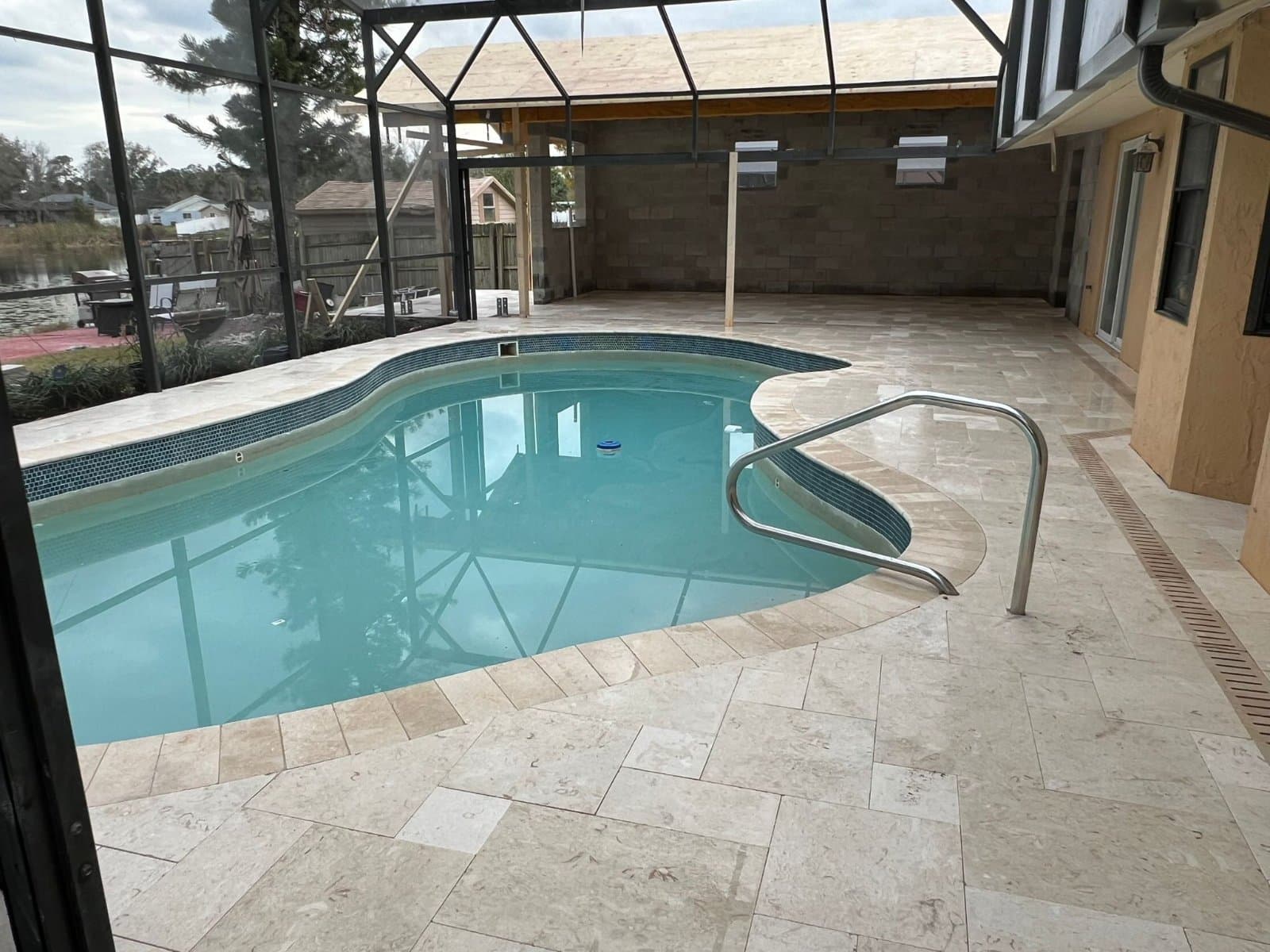
Travertine pavers
handle Sanford pool decks and lakefront patios where barefoot comfort and heat management drive the material selection. Cream and ivory tones brighten the outdoor space. Tumbled French patterns create visual depth. Bull-nose coping rounds the pool edge transition. A breathable sealer blocks moisture and chloride penetration without sealing the stone's pores shut.
Flagstone
suits Sanford garden paths and stepping-stone routes through the mature landscape beds that frame older homes along Mellonville Avenue and the lakefront corridors. Irregular edges and earth-tone surfaces blend into mulch borders and fern plantings, connecting the home's maintained landscape to the natural waterfront vegetation along the lake without introducing a geometric formality that would feel out of place in a garden setting.
Base Construction Near the St. Johns River Floodplain
Sanford's subsurface conditions vary sharply between the lakefront neighborhoods and the higher-ground properties south of downtown. Lots close to Lake Monroe and the St. Johns River floodplain sit on organic soils (peat, decomposed vegetation, muck) that compress under load over time. Building a paver base directly on top of this organic material produces a surface that settles as the underlying peat collapses, creating dips and depressions that no surface repair permanently corrects.
KS Solutions excavates through the organic horizon on Sanford lakefront properties until the bore reaches stable mineral sand or clay beneath the muck layer. Geotextile fabric caps the corrected subgrade. Crushed limestone builds in compacted lifts above the fabric, each one vibrated and probe-tested before the next layer arrives. On lots where the water table sits close to the surface during the wet season, KS Solutions installs a drainage aggregate sublayer that channels rising groundwater laterally rather than allowing it to soften the structural base from below.
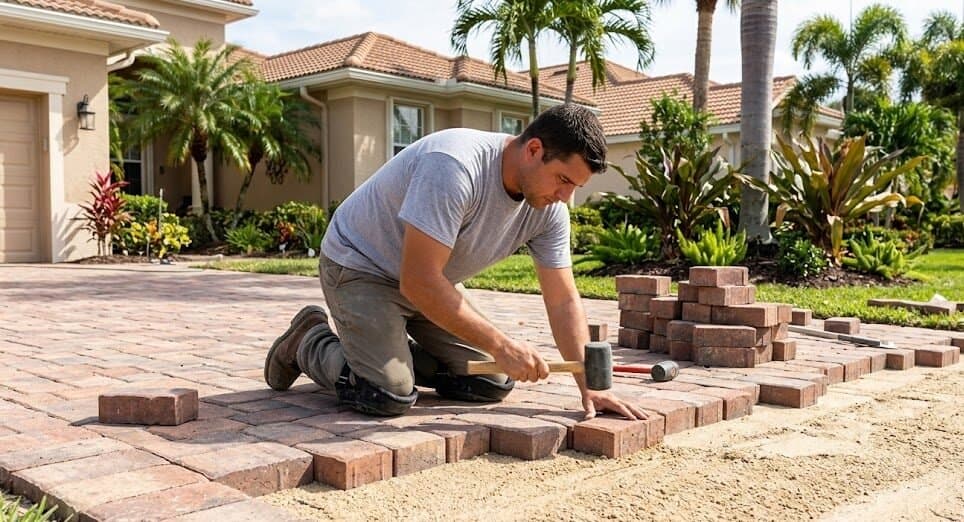
Higher-ground Sanford properties south of downtown and along the 417 corridor sit on the sandy substrate common to Seminole County. This sand drains fast but provides minimal lateral resistance to base movement under vehicle weight. Standard base construction runs 10 to 12 inches for driveways and 8 to 10 inches for patios. A one-inch bedding layer of coarse washed sand creates the paver seating surface. Polymeric sand fills the joints after final compaction, hardening into a flexible bond that resists ant tunneling and weed germination while draining rainwater naturally.
Pool Decks and Outdoor Living on Lake Monroe
Sanford's waterfront location and year-round swimming climate put pools on a large percentage of residential lots. Pool decks here absorb 10-plus months of continuous use, which means the surface accumulates more foot traffic, UV hours, and chemical splashout per year than a deck in a four-season climate where the pool shuts down in October.
Travertine with tumbled finishes and French pattern layouts delivers the thermal comfort and wet-surface grip Sanford pool decks require. The stone stays walkable in July when darker alternatives hit temperatures that send swimmers scrambling for sandals. Salt-system pools deposit a chloride film on the surrounding deck every time splash water evaporates, and a penetrating sealer rated for salt environments blocks that chloride from etching the stone surface over repeated cycles.
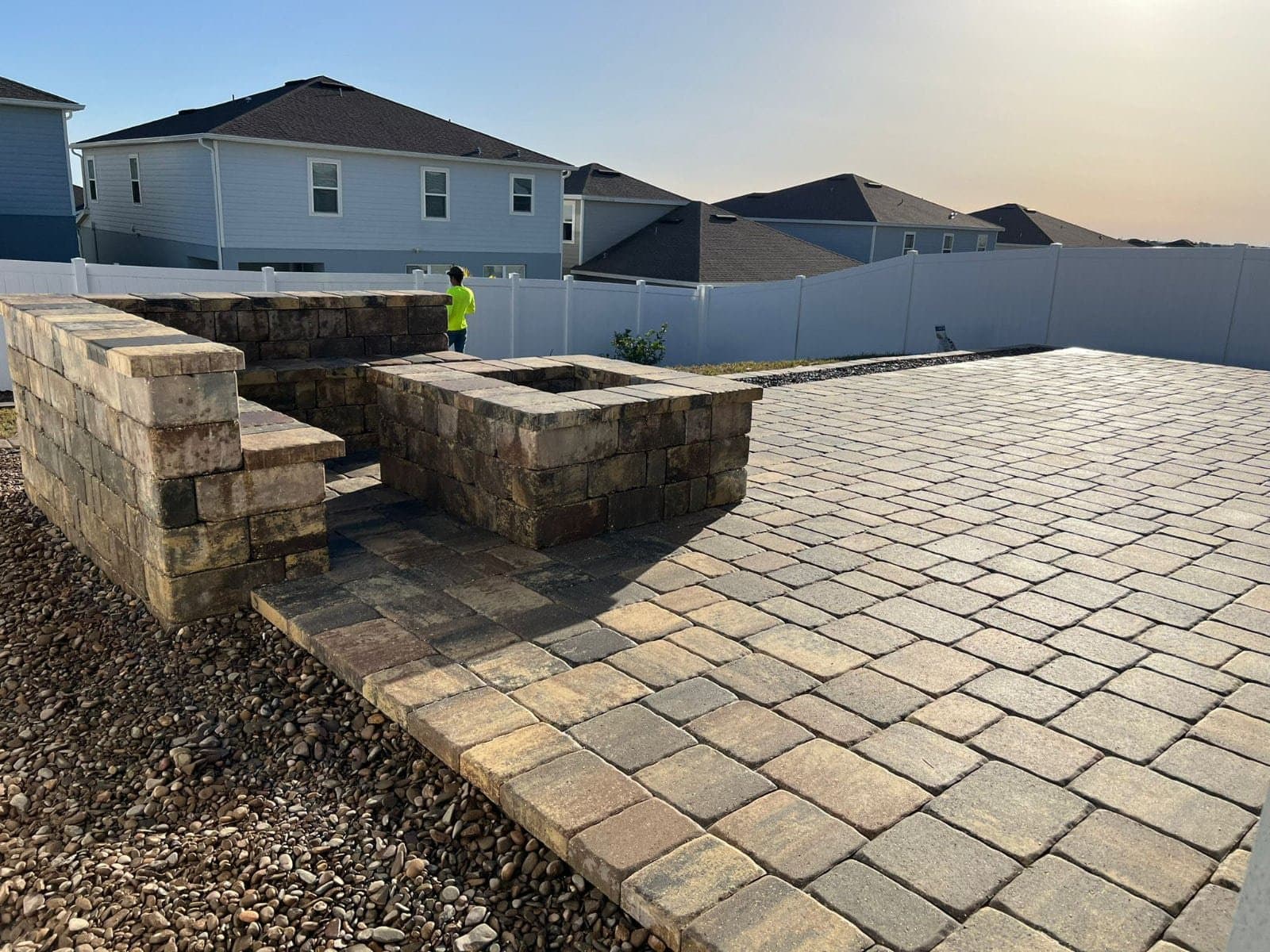
Outdoor kitchen floors on Sanford properties use sealed concrete pavers or porcelain tile that resist grease absorption and clean with a hose. Fire pit surrounds use heat-rated pavers in the immediate perimeter. Seat walls built from matching paver material provide built-in gathering space around the fire zone. Walkways connecting the driveway to the front entry and the patio to the pool coordinate with the primary surface through color and border matching to unify the outdoor footprint. On lakefront Sanford properties where the patio faces Lake Monroe and the Riverwalk trail passes within view, the paver layout positions the primary entertaining zone for the water view and the sunset angle rather than defaulting to the builder's standard rear-wall orientation. These Lake Monroe-facing patios get daily visual evaluation from Riverwalk joggers, cyclists, and dog walkers who pass at close enough range to notice the difference between quality paver work and a stained concrete slab, which means the investment in finished hardscape carries curb-appeal value from both the street side and the waterfront side simultaneously.
(321) 353-7445Get Immediate Service
Sanford Permits, Historic District Rules, and HOA Navigation
The City of Sanford's building department handles permits for hardscape projects that increase impervious surface coverage or alter the lot's drainage pattern. Properties within the Sanford Residential Historic District face additional architectural review requirements administered by the Historic Preservation Board. Material selections, colors, and design approaches on historic-district lots must be consistent with the neighborhood's established character. KS Solutions reviews the historic-overlay guidelines before proposing materials and prepares the documentation the Preservation Board requires for approval.
Newer Sanford subdivisions along the 417 corridor and south of downtown carry HOA covenants with architectural review requirements governing paver material, color, and pattern. KS Solutions identifies which regulatory layers apply to your lot during the consultation and handles all filings: city permits, historic-board submittals, and HOA architectural packets run in parallel so administrative timelines overlap rather than stack end-to-end.
Underground utility locates through 811 precede every Sanford paver project. The city's layered infrastructure (original Victorian-era water and sewer mains, mid-century utility upgrades, and newer 417-corridor services) carries the locate risk that any community with multiple construction eras presents. Mature oak roots on historic-district lots add a secondary subsurface concern. The century-old live oaks lining Mellonville Avenue, Magnolia Avenue, and the residential streets surrounding Fort Mellon Park send lateral roots through the upper 12 inches of soil at diameters that can lift pavers or crack rigid edge restraints if the root trajectory isn't redirected during installation. KS Solutions installs root-deflection barriers along the tree-facing edge of the paver base where root proximity threatens the installation zone.
From Consultation to Finished Pavers in Sanford
Every Sanford paver project starts with a free on-site consultation where our project manager walks the property, measures the proposed installation area, probes the subsurface for organic soil or sand conditions, evaluates drainage flow toward Lake Monroe, photographs the lot, and reviews any historic-district or HOA guidelines. Duration: 25 to 40 minutes.
Your written proposal arrives within 48 hours. Every material, aggregate component, edging type, sealer product, and labor phase appears as its own priced line. Manufacturer spec sheets and color samples accompany the bid. The proposal identifies which Sanford permits, historic-board reviews, and HOA approvals the project requires.
Installation runs three to six working days depending on scope and soil conditions. Excavation, organic-soil removal (where needed), geotextile placement, and aggregate compaction fill the first phase. Paver laying, cutting, edge restraint anchoring, polymeric sand application, optional sealer, and final plate compaction complete the second phase. The project wraps with a walkthrough verifying pattern alignment, joint fill depth, drainage pitch, and edge stability. All construction debris loads onto our trailer. Call (321) 353-7445 to start your Sanford paver project.