Commercial Turf Is a Different Product, Not a Bigger Order
An HOA board or a school facilities director who calls three turf companies will usually get three quotes for residential turf with a bigger square footage number on top. That is the wrong product, and the difference does not show up in year one. It shows up in year four, when a playground surface that was never rated for impact attenuation fails an inspection, or when a common-area lawn that was installed with residential infill starts holding odor in the August heat.
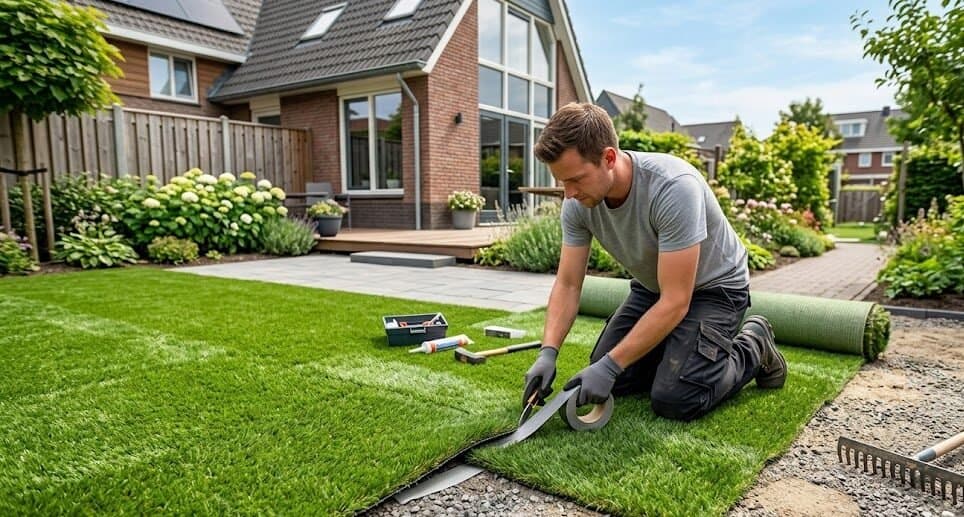
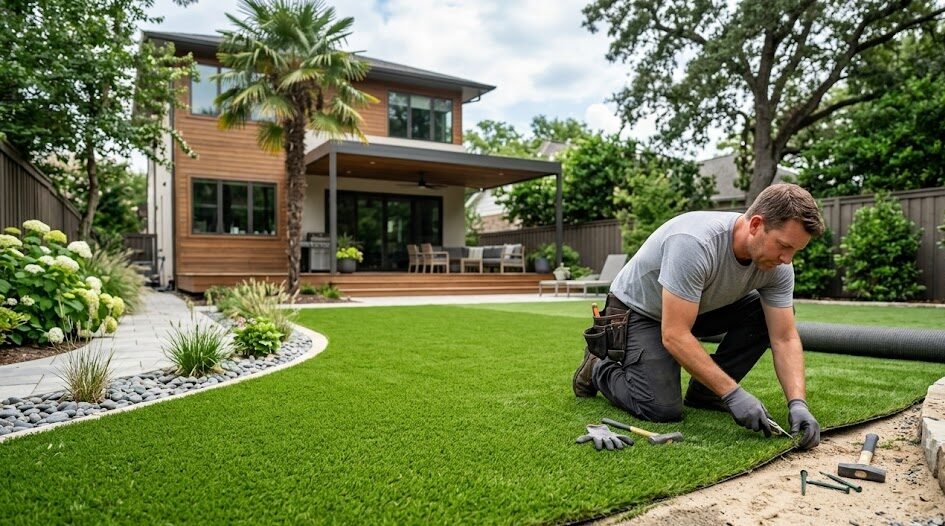
Commercial and institutional turf differs from residential turf in four measurable ways: face weight and fiber construction built for far higher traffic, a shock pad and surfacing system tested to a published standard, a drainage design sized for Florida rainfall rather than a suburban backyard, and documentation that an inspector, a risk manager or an insurance carrier can actually read.
This guide covers what HOAs, schools, municipalities and commercial properties in Central Florida should specify, what the real standards say, what it costs in 2026, and where these projects go wrong. KS Solutions installs commercial and residential systems across Central Florida, and the service detail sits under artificial turf installation.
ASTM F1292: The Standard That Decides Playground Turf
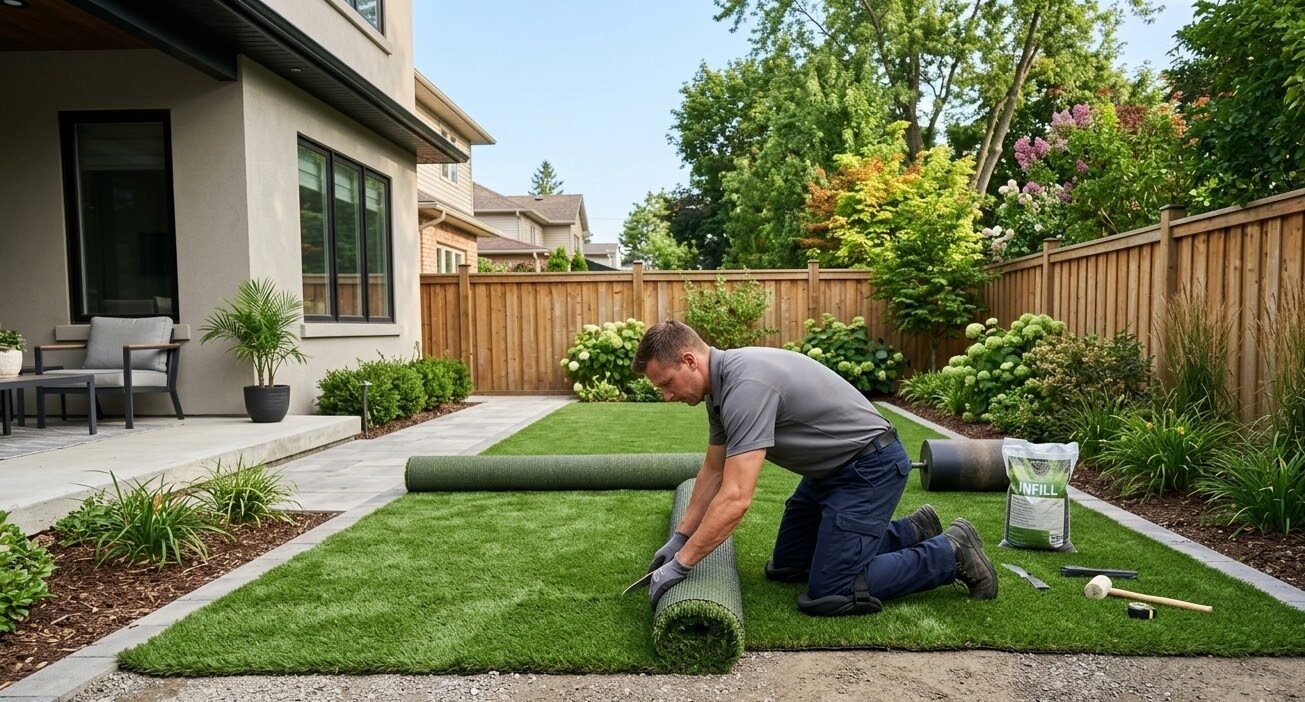
If turf is going anywhere near playground equipment, one standard governs the entire specification, and it is not optional in practice even where it is not written into local code.
ASTM F1292 is the impact attenuation standard for surfacing materials within the use zone of playground equipment. It tests two values by dropping an instrumented headform, shaped to mimic a child's head, onto the surface from specified heights. For a surface to comply, G-max must stay at or below 200 and HIC must remain at or below 1,000 at the tested height. G-max measures peak deceleration at impact; a value above 200 means the surface cannot adequately protect against life-threatening head injury. HIC, the Head Injury Criterion, evaluates injury potential from the acceleration-time history of the impact, and a value above 1,000 indicates unacceptable risk.
Those two numbers produce the third number that actually appears on a spec sheet: Critical Fall Height, the maximum fall height at which the surface still passes. Most rated systems carry a CFH around 8 feet. The compliance rule is simple and absolute: the surface's critical fall height must meet or exceed the fall height of the equipment it sits under. A 10-foot deck height over an 8-foot-rated surface is a non-compliant playground regardless of how new the turf looks.
This is why playground-rated turf is a system, not a carpet. The rating comes from a shock pad beneath the turf, typically a foam or rubber mat of specified thickness and density, and swapping that pad for a thinner one to hit a budget number changes the rating and voids the compliance claim. Any bid for playground turf should state the pad product, its thickness, and the tested critical fall height of the assembled system.
ASTM F1951 and Accessibility
The second standard applies to any playground or accessible route, and it is the one HOAs forget until someone asks.
ASTM F1951 determines the accessibility of surface systems under and around playground equipment. It uses a wheelchair work test method, measuring the work required to propel a test wheelchair or standard crutch tips across the surface on a reference and on a specified slope, which quantifies the firmness and stability of a surface used as an accessible route or clear ground space.
Synthetic turf performs well here, and this is a genuine advantage over loose-fill surfacing. Engineered wood fiber and rubber mulch shift under a wheel and require constant grooming to stay compliant at the transitions. Turf installed over a compliant padding system provides a firm, stable surface that most mobility devices navigate easily and that resists slipping when wet, which in Central Florida is a meaningful share of the year.
The related reference document is the Consumer Product Safety Commission's Public Playground Safety Handbook. It is not a legal code, but it is the practical guide that designers, schools, municipalities, inspectors and insurance carriers rely on for protective surfacing, use zones, equipment spacing, maintenance and inspection. If your insurer asks how the playground was specified, that handbook plus ASTM F1292 and F1951 test documentation is the answer they want.
What Commercial Turf Costs in Florida in 2026
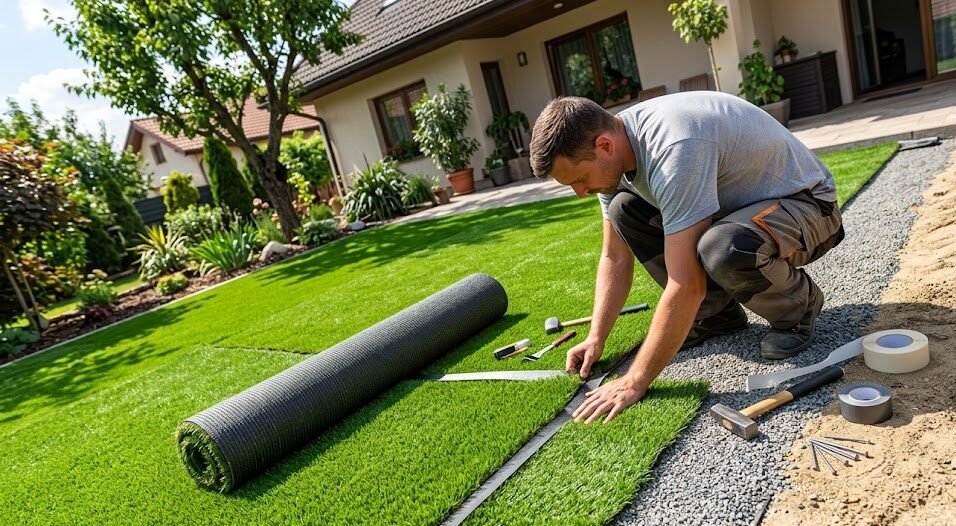
Commercial pricing spreads much wider than residential because the applications are genuinely different. Useful 2026 ranges:
- General commercial and institutional landscape turf, $8 to $18 per square foot installed. Common-area lawns, medians, entry features, courtyards and amenity spaces. The spread reflects turf quality, base depth and site access.
- Playground systems with rated shock pad, $10 to $18 per square foot installed. The pad and the testing documentation are what separate this from the line above.
- Premium sports and specialized commercial systems, $18 to $27 per square foot. Athletic fields, high-traffic dog areas with flush systems, and installations with engineered drainage or complex substructure.
Two structural facts about that pricing. First, labor is a large share, commonly $10 to $18 per square foot on complex installs, which is why site access matters so much on a commercial job. A courtyard reachable only through a building is not the same job as an open field. Second, a full turf system runs roughly $3 to $4 per square foot above plain turf, and that increment buys the infill, the additional labor and the engineered components. A bid that comes in below the range is usually pricing the carpet and not the system.
Compare that against the alternative honestly. Sod has a lower installed cost and a recurring one: mowing, irrigation water, fertilization, pest control and periodic replacement of worn areas. On a high-traffic HOA common area or a school entry, sod does not simply cost more to maintain, it fails visually in the traffic lanes and gets replaced on a cycle. The full ten-year comparison for Florida conditions is worked out in artificial turf vs sod in Florida.
(321) 353-7445Get Immediate Service
Drainage: The Florida-Specific Failure Point
Nearly every commercial turf failure in Central Florida traces back to water, and almost none of them trace back to the turf.
Florida's rainfall pattern is not gentle and constant, it is intense and seasonal, and a system sized for average rainfall floods during a normal summer afternoon. On a commercial site the water also arrives from places a backyard never sees: roof downspouts, parking lot sheet flow, irrigation overspray from adjacent landscape beds, and hardscape that concentrates runoff into a single corner.
What a competent commercial specification addresses:
- Base permeability and depth. The compacted aggregate base carries the load and moves the water. Under-compacting to save time produces settlement; over-compacting the wrong material produces a pan that holds water. Both are common.
- Perforated drain lines where the site collects. On a flat Central Florida site with a low corner, surface percolation alone is not a drainage plan.
- Turf backing perforation rate. Backings vary widely in flow rate, and pet or high-traffic areas need the higher-flow options.
- Shock pad drainage. A pad without adequate flow-through becomes the impermeable layer in an otherwise permeable assembly, which is a failure mode unique to playground systems.
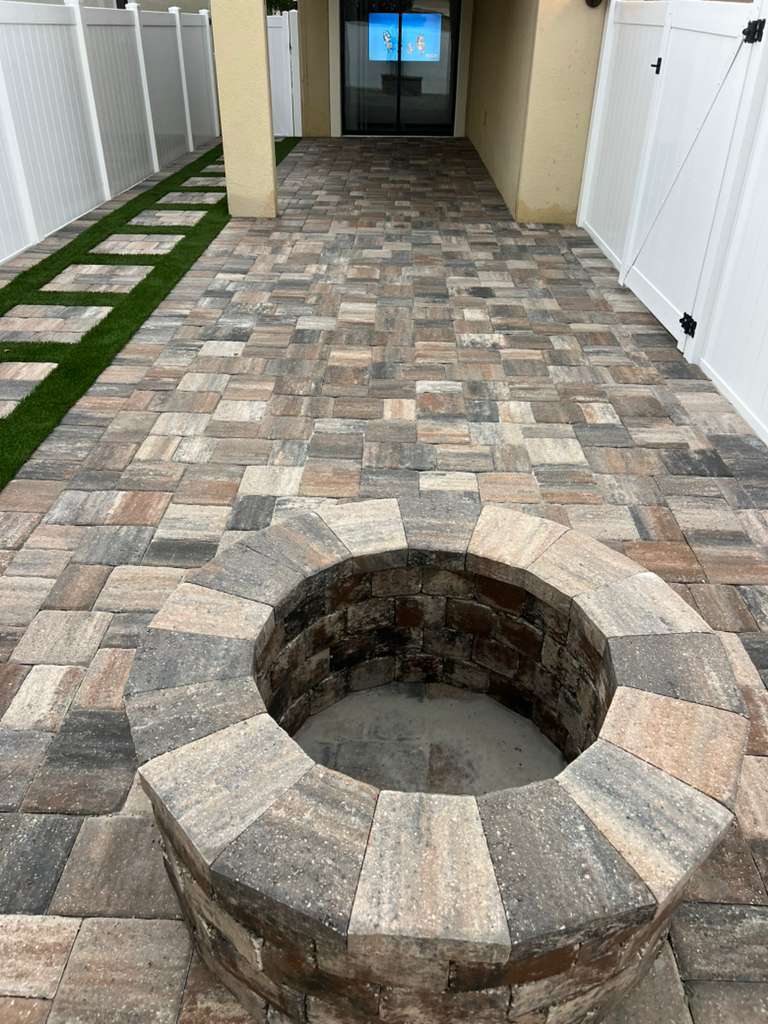
- Edge and transition detailing. Where turf meets pavers, concrete or a bed, the edge is both the trip hazard and the drainage detail. This is where paver work and turf work have to be coordinated rather than sequenced, which is why combined brick paver installation and turf scopes usually detail better than two separate contractors.
Infill: The Line Item HOAs Get Wrong
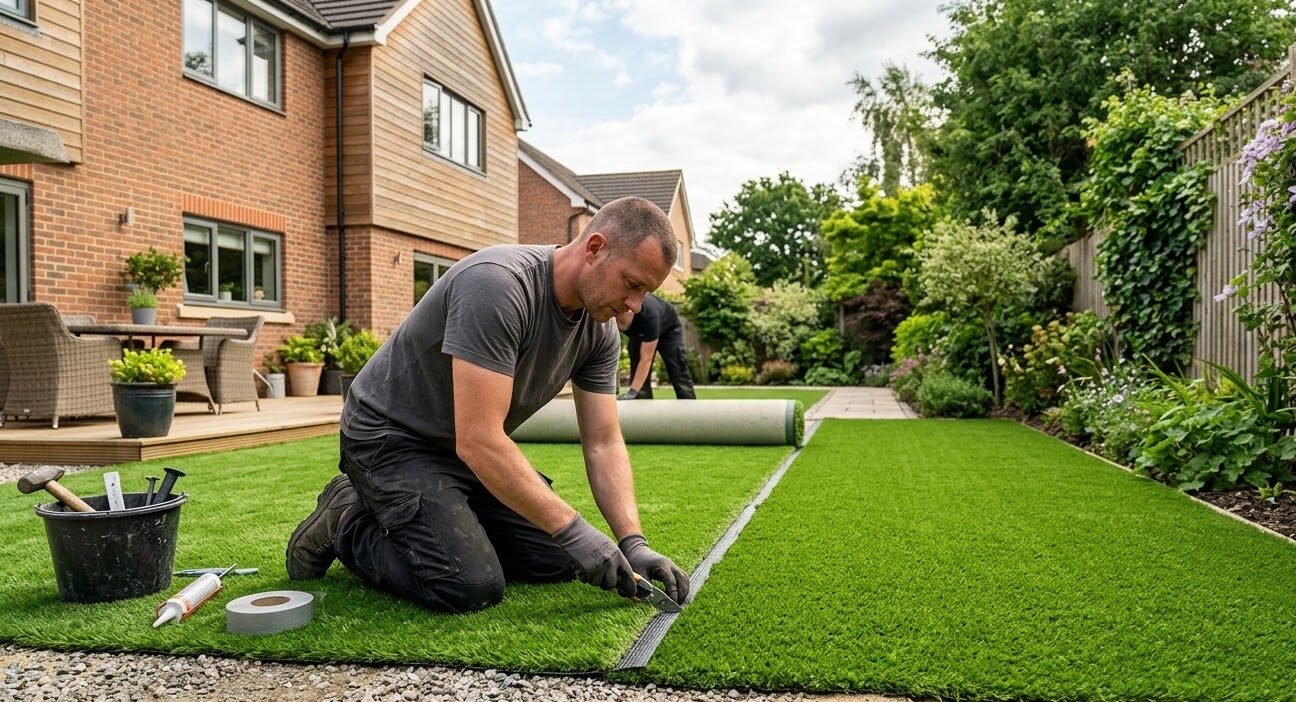
Infill is the material brushed into the turf between the fibers, and on a commercial job it does three things: it holds the fibers upright under traffic, it ballasts the system, and it manages odor and temperature.
Rounded silica sand is the workhorse and the right default for most commercial landscape areas. Where the application involves animals, whether that is an HOA dog park, a pet relief area at a multifamily property, or a veterinary or boarding facility, an antimicrobial-coated infill is the specification that keeps the space usable. The mechanism matters: odor in a turf installation comes from bacteria acting on residue trapped in the infill, so the fix is a coated infill combined with a flow-through backing and a rinse routine, not more product sprayed on top. The full treatment of pet-area design is in pet-friendly artificial turf in Florida.
Two commercial-specific notes. Crumb rubber infill still shows up in bids and remains a recurring conversation with parent groups and boards, so if the site is a school or a playground, expect to answer for it and consider specifying an alternative before it becomes a public meeting. And on any sunny Florida installation, infill choice and color affect surface temperature; lighter-colored and coated infills run cooler, and shade structures do more for surface temperature than any infill product on the market.
Traffic Rating: Face Weight, Pile Height and Fiber Shape
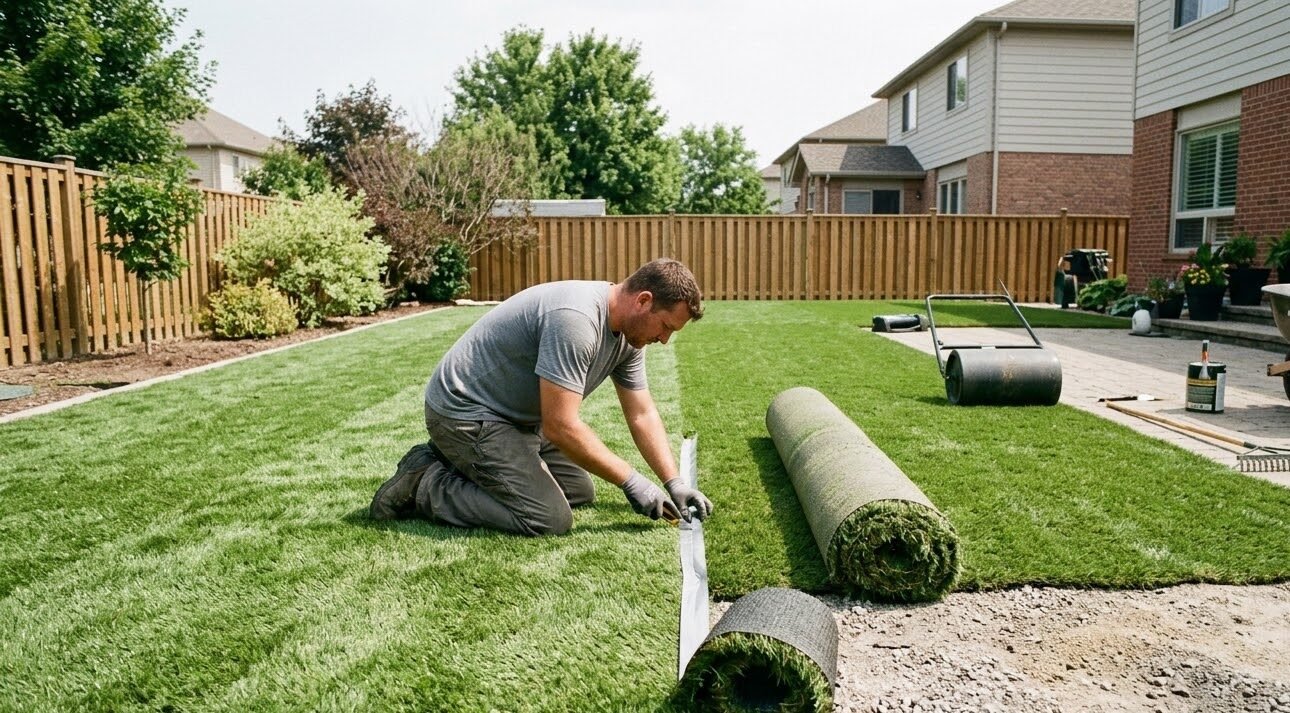
The three specification numbers that predict how a commercial installation looks in year five:
- Face weight. Ounces of yarn per square yard, excluding backing. Higher face weight means more fiber to distribute wear. Residential landscape products sit lower on this scale than products intended for institutional traffic, and this is the single most common downgrade hidden in a low bid.
- Pile height. Longer is not better under traffic. Tall piles lay over and mat in walkways. Commercial traffic areas generally want shorter piles that recover, while low-traffic display areas can carry a taller, more natural look.
- Fiber shape and resilience. Shaped fibers, meaning profiles such as S, C, W or diamond cross sections rather than flat ribbons, resist matting because the geometry itself resists folding. In a heavy-traffic entry or courtyard, fiber shape does more for appearance in year five than face weight alone.
Ask every bidder for the manufacturer's product data sheet with face weight, pile height, fiber type and backing specified. If a bid names no product, it is not comparable to a bid that does, and boards routinely compare them as though they were.
How an HOA or School Should Run the Procurement
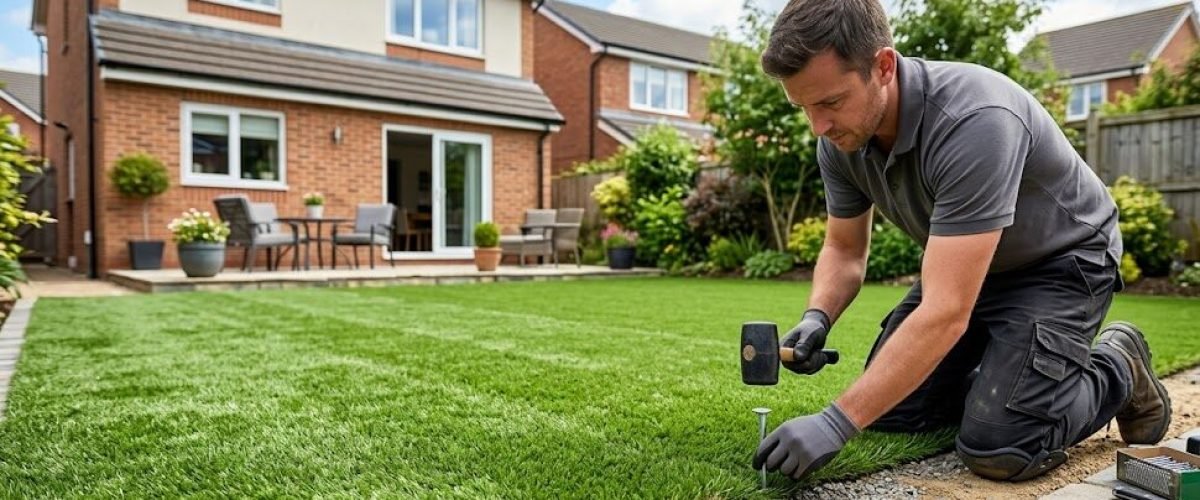
The technical specification is only half of a successful commercial turf project. The other half is running a process that produces comparable bids and a defensible decision.
- Write one specification and send it to everyone. Square footage, base depth, product data sheet requirements, infill type and rate, drainage approach, edge detail, and for playgrounds the required critical fall height. Bids priced against one document are comparable; bids priced against three different ideas are not.
- Require the fall height calculation in writing for playgrounds. Ask for the equipment fall height, the proposed system's tested critical fall height, and the pad specification that produces it.
- Verify license and insurance directly. Certificate of insurance naming the association or district, and an active license, confirmed with the carrier rather than as a forwarded file.
- Ask for local commercial references you can visit. Turf photographs beautifully on install day. What matters is what a four-year-old installation on a comparable traffic level looks like now, in this climate.
- Settle the warranty question explicitly. Manufacturer warranties on fiber and workmanship warranties on installation are different instruments with different terms and different exclusions. Get both in writing and read what voids them, because improper drainage and unauthorized infill changes commonly do.
- Plan the maintenance before you buy. Commercial turf is low maintenance, not no maintenance: periodic power brooming to stand fibers back up, debris removal, infill top-off in traffic lanes, and rinsing in pet areas. Boards that budget zero for this are the boards disappointed at year three.
Where Commercial Turf Is Actually the Right Call
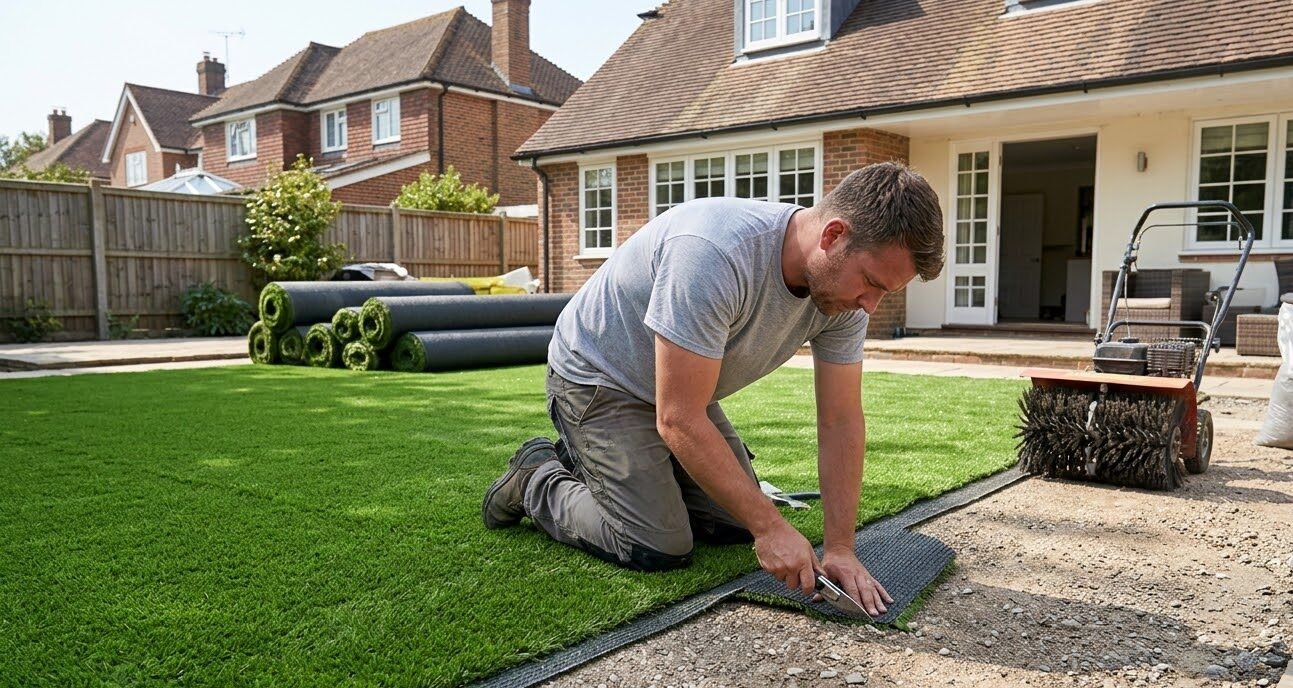
Turf is not the answer for every commercial square foot, and the honest version helps boards spend better. It earns its cost in five situations:
- High-traffic areas where sod cannot survive. Entry lawns, courtyard walking lines, amenity centers, clubhouse surrounds. Anywhere a traffic lane has already worn into the sod is a place turf pays back.
- Shaded areas where grass will not establish. Under mature oaks and on north-facing building sides, replacing failed sod annually is a recurring cost with a predictable outcome.
- Irrigation-constrained sites. Water restrictions and rate structures are a real budget line for Central Florida properties with large common areas.
- Playgrounds and pet areas. Where the surface has a compliance requirement or a sanitation requirement, an engineered system beats a natural one on both counts.
- Medians, slopes and hard-to-mow geometry. The recurring cost of turf here is not the grass, it is sending a crew with equipment to a place where mowing is awkward and hazardous.
Where it is usually not the right call: large open detention or retention areas, sites where the underlying drainage problem has not been fixed, and any area where the board wants turf primarily to avoid addressing an irrigation system that is failing for other reasons. Turf on top of a drainage problem is an expensive way to hide it for eighteen months.
Getting a Real Number for Your Property
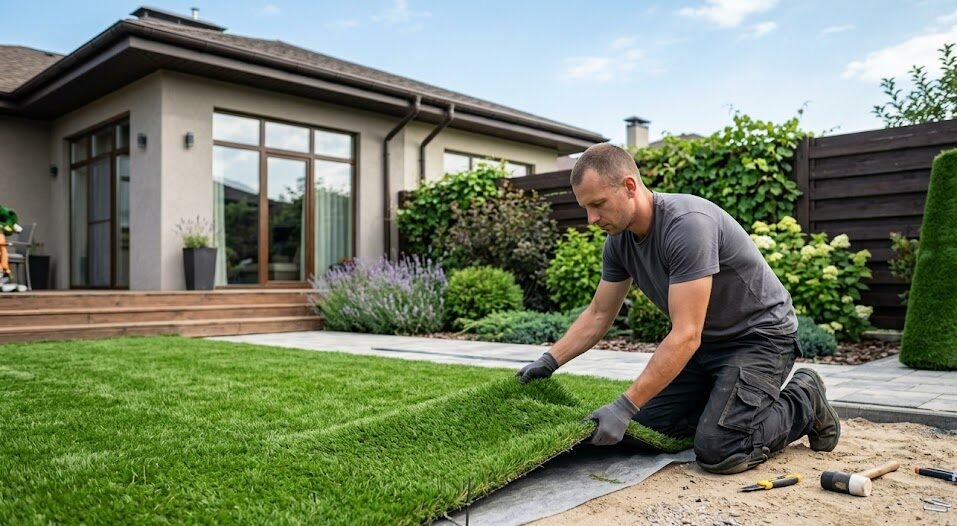
Commercial turf pricing is site-driven, and the variables that move it most are access, base condition, drainage requirements and whether the surface carries a compliance rating. A 6,000 square foot HOA common area on an open site and a 6,000 square foot school playground with an 8-foot fall height requirement are not the same project even at identical square footage.
KS Solutions installs pavers, fence and turf across Central Florida, with commercial and HOA work throughout the Orlando and Polk County corridors. Local project detail is at artificial turf installation in Orlando and artificial turf installation in Lakeland, with coverage across Orlando and Lakeland. If your board or facilities team wants a written specification it can send to multiple bidders rather than three incomparable quotes, request a free estimate and we will walk the site and write it.