The Short Answer, and the Number Behind It
November through March is the cheapest and most reliable window to install pavers in Central Florida. That is not a marketing season, it is a rainfall pattern, and the rainfall pattern is documented.
Tampa averages about 46.3 inches of rain a year, and roughly 70 percent of it falls during the May through October wet season. Orlando runs a little wetter at about 51 inches annually, and the distribution is just as lopsided: June averages around 8.1 inches while November, the driest month, averages about 1.4 inches. That is a nearly six-fold difference between the wettest stretch of the year and the driest, falling on the same crews doing the same work.
Hold that number in your head, because everything else in this article is downstream of it. A paver installation is not a roof, where a crew can work between showers. It is an excavation, a compacted aggregate base, and a bedding layer, and every one of those steps has a moisture requirement.
Why Rain Changes the Job and Not Just the Schedule
The part of a paver installation that decides whether it lasts twenty years or sinks in three is the part nobody sees. Here is where water gets in the way.
- Excavation: digging out a driveway or patio in saturated soil produces mud rather than a clean subgrade. Wet spoil is heavier to haul, it tracks across the yard, and the bottom of the excavation gets churned by the machine instead of staying intact.
- Subgrade compaction: soil compacts properly within a moisture range. Too dry and it will not knit together. Too wet and it pumps, meaning the plate compactor pushes a wave of saturated soil ahead of it and never achieves density. Saturated subgrade cannot be fixed by running the compactor longer.
- Base aggregate: the crushed base needs to be placed and compacted in lifts. A base that gets rained on between lifts holds water in a layer that should be draining, and the compaction test that would have caught it usually is not being run on a residential driveway.
- Bedding sand and laying: a saturated bedding layer will not screed to a consistent depth, and pavers set on inconsistent bedding telegraph every variation into the finished surface within a year.
- Joint sand: polymeric sand needs a dry window to activate and cure. Rain on uncured polymeric sand is the single most common cause of the hazing and washout that shows up on new installs, which we covered in detail in our guide on polymeric sand in Florida.
Notice that only the last one is really about the finish. The rest are about the structure, and structural shortcuts taken in the wet season do not announce themselves until the second or third year. That is the actual risk being priced into a summer job.
The Off-Season Discount Is Real, but Nobody Publishes a Rate
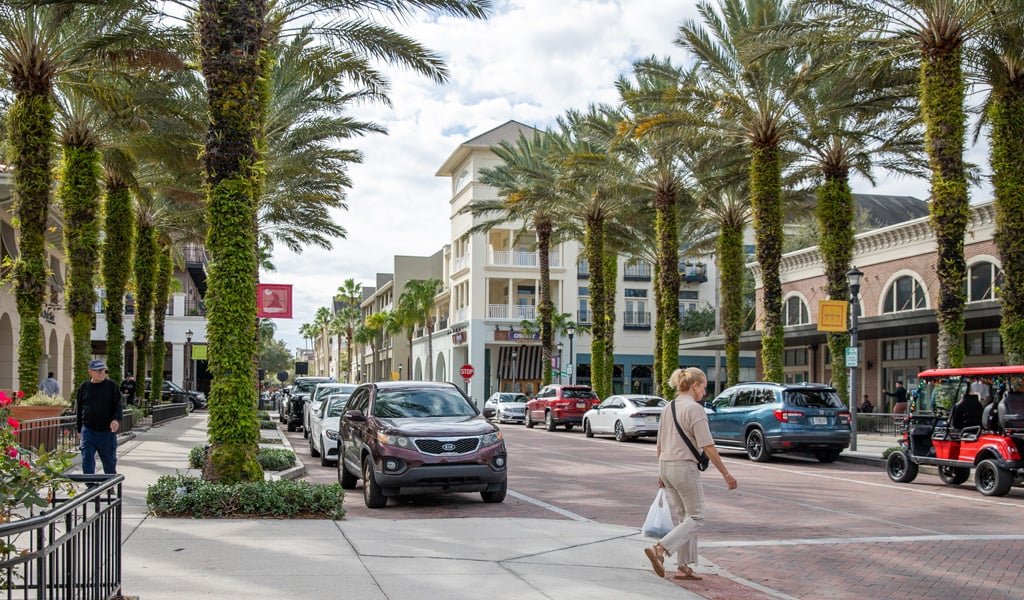
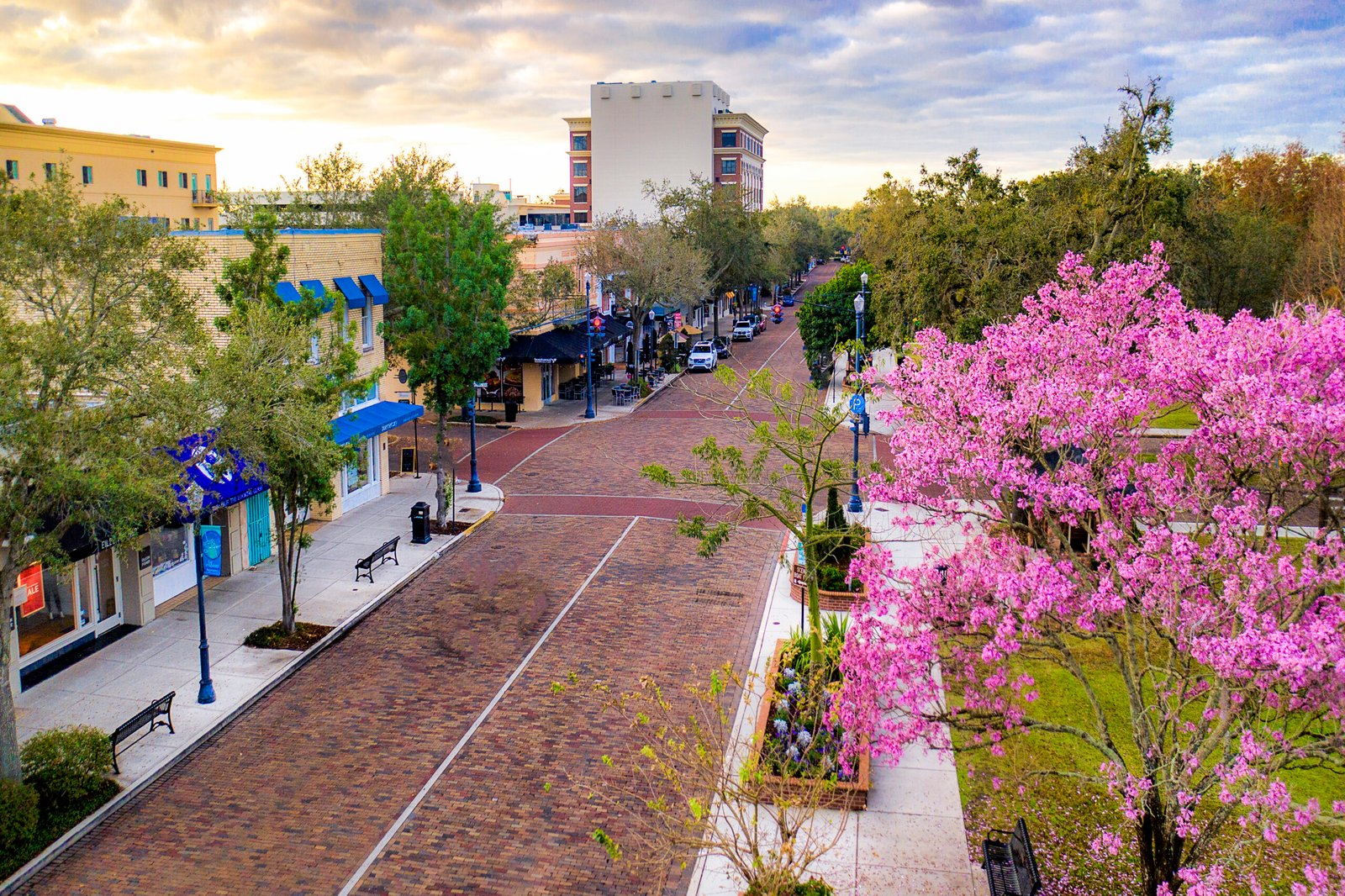
Contractors across Florida commonly describe off-season savings in the range of 5 to 15 percent on labor, and some will say more late in the fall. Treat that as a description of market behavior, not a posted rate, because it is not one. No reputable hardscape company publishes a seasonal price sheet, and any number quoted in an article, including this one, is a report on what people say rather than a discount you can claim.
What is genuinely different in the off-season is more useful than a percentage anyway:
- Crew availability. In the dry season, a company's best crew is more likely to be the crew on your job rather than whoever was free.
- Lead time. The gap between signing and starting shrinks, sometimes from many weeks to a couple.
- Price stability. A quote written in January is less likely to carry contingency for weather delay, because the delay risk is genuinely lower.
- Attention. A crew not racing a storm front does better edge work, and edge restraint is where most residential installs fail first.
If you want a straightforward way to think about it: in the wet season you are paying a risk premium, and in the dry season you are not. Whether the contractor calls that a discount or simply a lower price is a matter of vocabulary.
The Cost of Peak Season That Never Shows on the Quote
Spring is the busiest hardscape season in Central Florida, and it is busy for an understandable reason: the weather is beautiful, people are outside, and the backyard suddenly looks like a project. The result is that the demand peak and the good weather arrive together, and the price reflects it.
The real peak season cost is usually not the line item, it is the wait. A job booked in March may not start until May, which puts the install into the front edge of the wet season, which is exactly what you were trying to avoid. The homeowner did everything right and still ended up with a rainy-season pour because the calendar moved underneath them.
The fix is boring and effective: book earlier than feels necessary. A contract signed in November for a January start is a completely different conversation than a contract signed in March hoping for April.
(321) 353-7445Get Immediate Service
Month by Month, What You Are Actually Buying
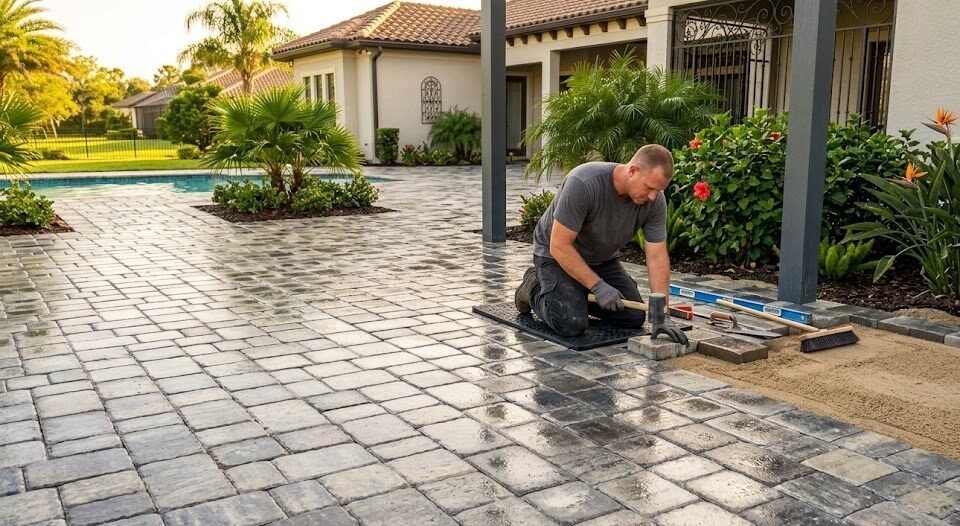
The seasons are not four equal blocks. Here is the practical read on the Central Florida year.
- November through January: the best combination available. Lowest rainfall, coolest working temperatures, and the softest demand of the year. November in particular averages the least rain of any month in Orlando. The one caveat is the holidays, which compress the working calendar in late December.
- February and March: still dry, still comfortable, but demand is climbing as spring approaches. Good conditions, thinner discounts, lead times starting to stretch.
- April and May: peak demand meeting the end of the dry season. May is the transition month, and the back half of it can already behave like the wet season. This is the window where you are most likely to pay a premium and still get a weather delay.
- June through September: the wet season at full strength, overlapping with hurricane season, which runs June 1 through November 30. June alone averages around 8.1 inches in Orlando. Work absolutely happens in these months, but schedules slip, and the quote should reflect the added risk rather than pretend it away.
- October: the turn. Rainfall drops off through the month and demand has not recovered yet. Often the single best value month of the year for a homeowner who is paying attention.
If you want one sentence to act on: October and November are the sweet spot, and if you cannot make those, aim for January.
When Waiting Costs More Than It Saves
A seasonal discount is worth something, and it is not worth everything. There are situations where scheduling around the calendar is the wrong call, and it is worth being honest about them.
- An active trip hazard. Settled or lifted pavers at a walkway or entry are a liability now, not in November. That is a repair, not a project, and it should happen when you notice it. Most of these are localized, and paver repair rather than replacement is usually the right scope.
- Water moving toward the house. If a failing driveway or patio is directing runoff at the foundation, waiting through a wet season is precisely the wrong sequence.
- A house going on the market. The listing calendar wins. A finished driveway during showings is worth more than a percentage saved on the install.
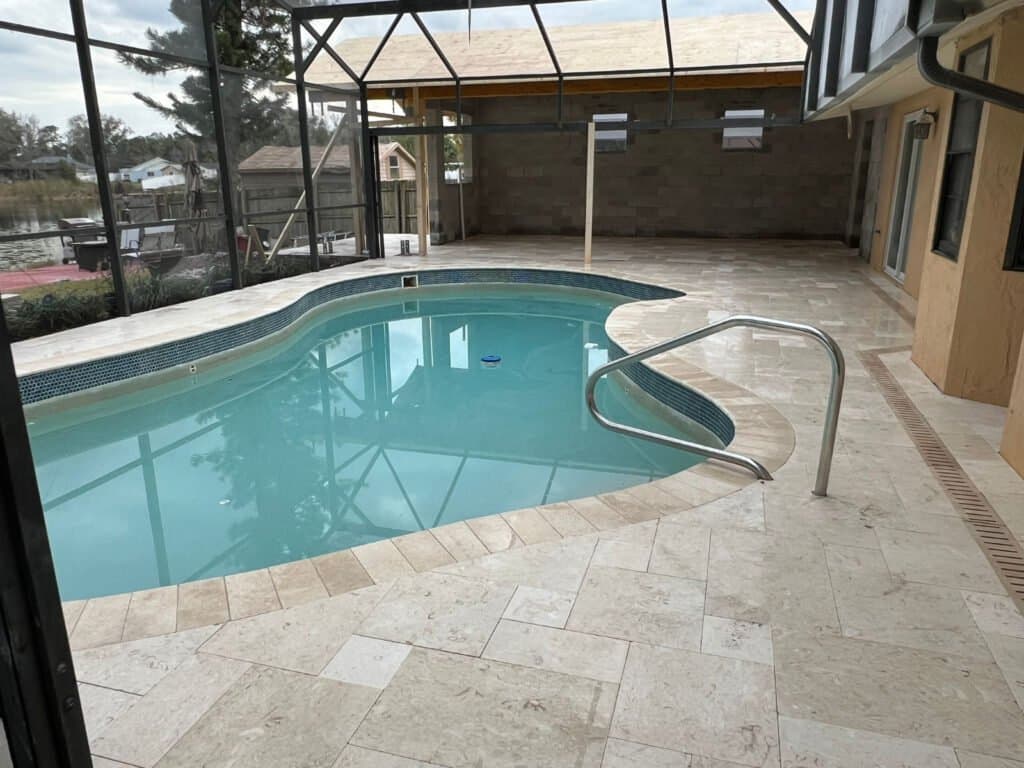
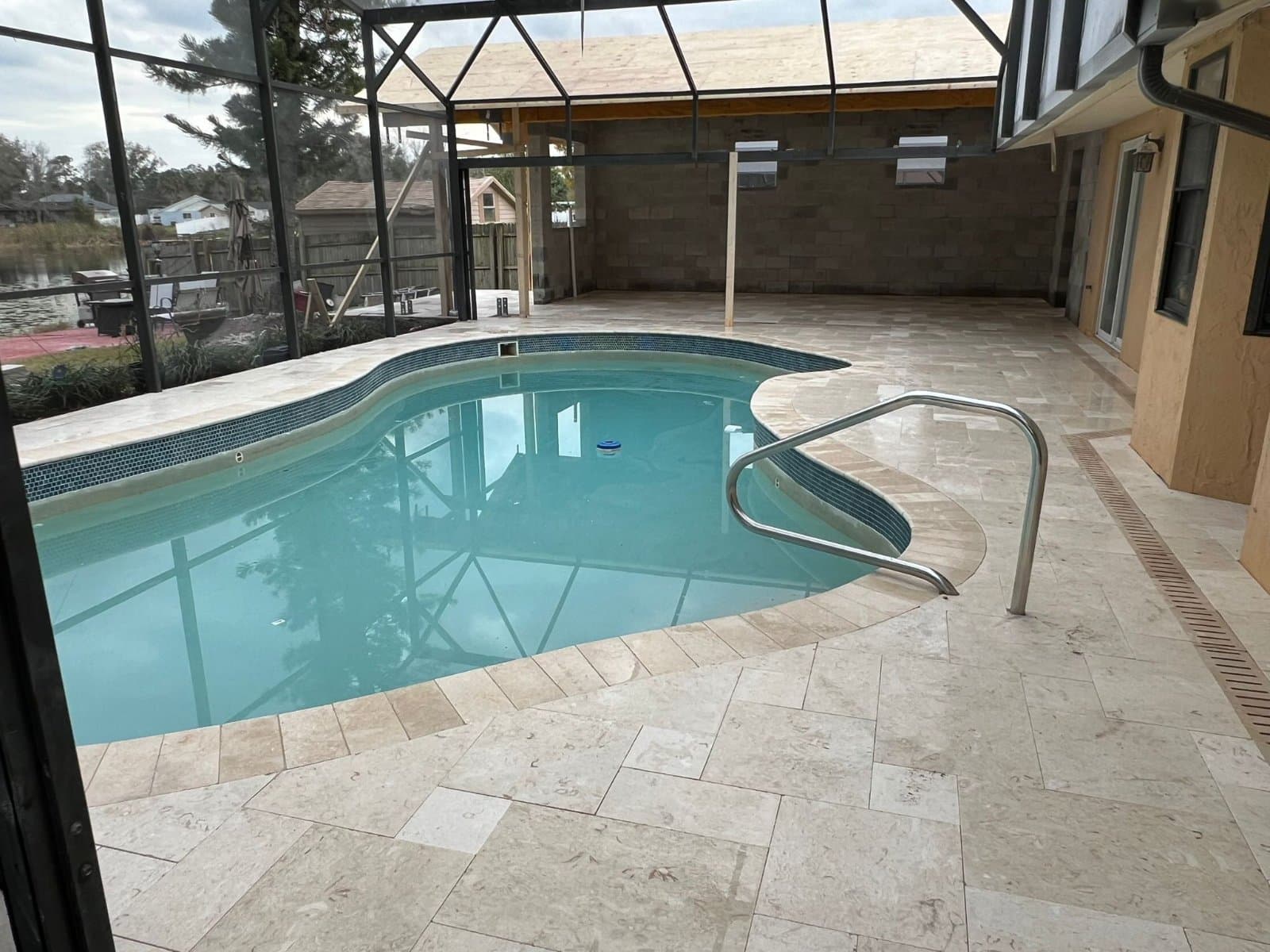
- A pool or addition already in progress. Hardscape has to follow the other trades. Sequencing beats seasonality every time.
- An HOA deadline. If a compliance letter has a date on it, that date is the schedule.
Everything else, including the driveway you have been thinking about for two years and the patio you want before next summer, is a candidate for dry-season scheduling.
How to Get Off-Season Pricing Without Getting Off-Season Work
The risk with any slow-season discount is that the discount is real and the work is not. A few things separate a genuine value window from a company just trying to keep a truck busy.
- Ask what the base depth is, in inches, in writing. A dry season quote and a wet season quote should specify the same base. If the cheap quote is cheap because the base is thinner, the season had nothing to do with it.
- Ask who is running the job. Off-season is when good crews have capacity. That is the advantage. Confirm you are getting it.
- Ask about the joint sand and the cure window. A contractor planning around a dry window for polymeric sand is a contractor thinking about year three.
- Get the edge restraint detail. Edges fail first on residential installs, regardless of month.
- Do not accept a discount for prepayment. Seasonal pricing and payment schedule are separate conversations, and mixing them is a warning sign.
The seasonal question and the quality question are independent. A cheap winter install done on four inches of base where six was needed will fail on exactly the same schedule as a cheap summer one.
What Does Not Change with the Season
It is worth being clear about the limits of this, because seasonality gets oversold.
Material cost does not move meaningfully with the calendar. Concrete pavers, travertine and porcelain are priced by the manufacturer and the distributor, and a January pallet does not cost less than a July pallet. Since materials are a large share of an installed price, the portion of your quote that can flex seasonally is smaller than a headline percentage suggests. Our breakdown of brick paver cost in Florida walks through where the money actually goes in an installed price.
Permits and HOA approvals do not accelerate in the off-season either, and in some municipalities the review queue is unaffected by hardscape demand entirely. Build the approval time into your calendar separately from the install time.
Base depth, compaction standards and drainage design do not change either. A patio that needs slope away from the house in June needs the same slope in January. Anyone offering a seasonal shortcut on the structure is not offering a discount.
The Booking Calendar That Actually Works
Put it together and the plan is simple enough to write on a card. Decide on the project in late summer, while the wet season makes the current surface look its worst and the motivation is high. Get quotes in September. Sign in October for an October through December start, when rainfall is dropping and demand has not turned over yet. If that window closes, aim for January rather than waiting for spring, because spring is where price and delay meet.
And if the driveway is actively failing or someone is tripping on it, ignore all of the above and handle it now. The calendar is an optimization, not a rule.
KS Solutions installs pavers across Central Florida, including Orlando, Lakeland and Winter Haven, and books the dry-season calendar well before it fills. If you are weighing a driveway, patio or pool deck, the brick paver installation page covers scope and materials, and homeowners in the metro can start from paver installation in Orlando. If part of the yard is a drainage problem rather than a paving problem, artificial turf sometimes solves it better than hardscape does.