KS Solutions installs custom fencing in DeLand. Call (321) 353-7445 for your free estimate.
Fence Installation in DeLand: Heritage-Appropriate and Modern Fencing Across the Volusia County Seat
Fence installation in DeLand, FL spans a community where the fencing needs and design expectations change block by block across a city that contains 100-year-old Craftsman bungalows, Stetson University campus-adjacent homes, and contemporary subdivisions on the western growth frontier all within the same municipal boundary. The Historic Garden District's Victorian and Mediterranean Revival properties demand fence styles that reference the architectural periods the homes represent. The university-area properties need fencing that handles the pedestrian and vehicle traffic density that 4,700 Stetson students generate in the surrounding neighborhoods. And the west DeLand subdivisions need the standard vinyl and aluminum privacy-and-pool fencing that family-oriented communities across Central Florida require.
DeLand's approximately 41,000 residents include the diverse demographic mix that a county seat with a university, a historic downtown, and active residential growth produces: young professionals commuting along I-4, Stetson faculty and staff, retirees in the established neighborhoods, and families in the newer western communities. Each demographic brings different fencing priorities, and the contractor serving DeLand needs to deliver period-appropriate ornamental fencing for the historic district and basic vinyl privacy for the subdivision backyard with equal competence.
KS Solutions installs fencing throughout DeLand for properties at every point on the city's architectural and demographic spectrum. DeLand operates its own municipal building department with city fence permits. Historic-district properties may face overlay zoning that affects fence material, height, and style approvals. West DeLand subdivisions may have HOA fence standards. We verify all applicable regulations and handle every submission so the homeowner manages design decisions rather than regulatory paperwork.
Historic-District Fence Styles: Ornamental Iron and Painted Picket for DeLand's Oldest Neighborhoods
DeLand's Historic Garden District and the streets surrounding downtown carry architectural identity from the early 1900s through the 1940s, and the fence styles appropriate for these properties reference the same period. Ornamental iron fencing with spear-top finials and scrollwork between rails was the standard boundary treatment for formal Florida homes during this era, and aluminum reproductions of these period profiles provide the same visual effect with the corrosion resistance that modern powder coating delivers over real iron's rust-prone surface.
Painted wood picket fencing in white, sage, or period-specific colors serves the Craftsman bungalows and cottage-style homes where the small-town American aesthetic that DeLand's historic character embodies calls for the traditional front-yard boundary that picket fencing represents. The picket fence at 36 to 42 inches defines the front yard without blocking the facade view that the home's architectural details present to the street. The paint color should reference the home's trim color or the period-appropriate palette the homeowner has established for the exterior.
DeLand's historic-overlay zoning may specify approved fence types, maximum heights, and acceptable materials within the designated historic zones. These specifications protect the neighborhood's visual character by preventing contemporary materials or styles that would look anachronistic alongside the period architecture. A vinyl privacy fence on a property flanked by two 1925 bungalows with ornamental iron fencing would disrupt the streetscape continuity that the overlay zoning is designed to maintain.
KS Solutions researches DeLand's overlay zoning requirements for every historic-district project before recommending materials. If the homeowner's preferred material conflicts with the overlay's approved options, we identify the closest approved alternative that achieves the homeowner's functional goal within the regulatory framework. The conversation happens during the consultation rather than after the material has been ordered and the rejection arrives from the city's review.
Stetson University Area: Fencing for Pedestrian-Heavy Neighborhoods With Campus-Adjacent Traffic
The residential blocks surrounding Stetson University's campus experience pedestrian and bicycle traffic volumes that standard suburban neighborhoods don't face. Students walking and cycling to class cross through these neighborhoods on established routes that pass directly in front of and alongside residential properties. This through-traffic creates fencing considerations unique to the university zone: front-yard fencing needs to withstand the occasional bicycle collision, gate hardware faces higher daily cycle counts from delivery drivers and visitors using the property as a shortcut between campus destinations, and the visual presentation of the fence along a pedestrian route gets evaluated by a larger daily audience than a fence on a dead-end residential street.
We design Stetson-area DeLand fences with the increased durability that university-adjacent traffic demands. Post spacing tightens to 6 feet from the standard 8 to handle the impact loads that bicycles and skateboards create when riders lose control on the adjacent sidewalk and contact the fence. Gate hardware uses commercial-grade components rated for higher cycle counts than residential hardware provides because the gate on a campus-adjacent property gets used 3 to 4 times more daily than the same gate on a quiet suburban lot would.
Privacy fencing on Stetson-area properties provides the visual screening that campus-adjacent homeowners want from the constant flow of pedestrians passing their backyards during class-change periods. A homeowner whose rear fence borders a sidewalk that 200 students cross between 9:50 and 10:10 AM every Monday, Wednesday, and Friday has a different privacy motivation than a homeowner whose rear fence faces another residential backyard. The campus-adjacent homeowner needs a fence that screens not just the neighbor but the crowds.
KS Solutions installs Stetson-area DeLand fences with the campus-adjacent durability and privacy specifications that this unique neighborhood context requires. The university's academic calendar also affects project scheduling: installing a fence along a campus walking route during the summer break when pedestrian traffic drops by 80 percent produces less disruption than installing during the fall semester when the crew shares the sidewalk with 4,700 students moving between classes.
Oak Root Conflicts Along DeLand's Tree-Canopied Fence Lines
DeLand's live oak canopy runs densest through the historic districts and the established neighborhoods east of downtown, where 50 to 80-year-old trees spread root systems that cross every property boundary and occupy every potential fence post location within the canopy's drip line. A fence line running 100 feet through one of these oak-dense DeLand blocks may encounter root material at 8 to 12 of the 13 to 17 post locations the run requires, making root accommodation the dominant engineering challenge on the entire project.
We probe each planned post position with a steel rod before augering, shifting posts 12 to 24 inches when the probe encounters root material. The panel span between adjacent posts adjusts to accommodate each shift, producing slightly irregular post spacing that the eye doesn't register because the continuous fence panel surface is what observers track rather than the distances between the posts supporting it. On fence lines where root encounters are nearly continuous, the entire layout may shift from the originally planned alignment, following a path that threads between root zones rather than cutting through them.
DeLand's tree ordinance protects mature oaks above specified trunk diameters, and cutting major roots to install fence posts may violate the ordinance while also threatening the tree's stability and health. Surface-mounted post brackets bolted to concrete pads poured on top of the root zone provide the alternative anchor method when burial is impractical across multi-post sections. The visible pad at each post base can be concealed with mulch or accepted as the necessary accommodation that protecting the canopy requires.
KS Solutions has installed hundreds of linear feet of fencing through DeLand's oak-canopied neighborhoods using the probe-shift-accommodate method that root protection demands. The experience accumulated from these projects means our crew recognizes root indicators during the probe process and adjusts post placement efficiently rather than discovering each root as a surprise that slows the installation while the solution gets improvised on-site.
(321) 353-7445Get Immediate Service
West DeLand Subdivision Privacy and Pool Fencing
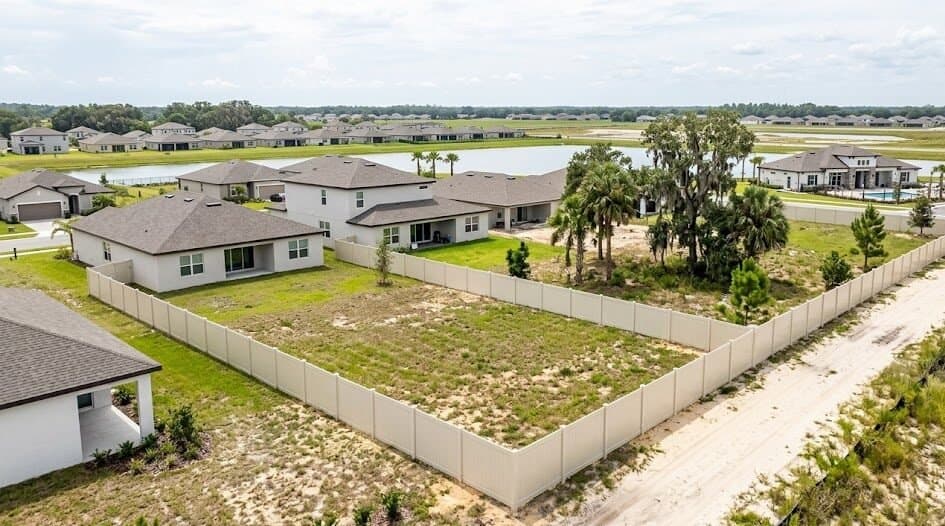
DeLand's western subdivisions house the families who moved from the Orlando metro area seeking lower housing costs and the small-city quality of life that DeLand's historic character provides. These newer communities need the standard residential fencing, vinyl privacy and aluminum pool barriers, that family households with children and pets require across every Central Florida subdivision. The fencing priorities here are practical: enclose the backyard quickly after closing so the kids can play and the dogs can run, install the pool barrier before the pool passes its final inspection, and choose a material the HOA approves without spending weeks on architectural review revisions.
Vinyl privacy at 6 feet in white, tan, or gray satisfies most west DeLand HOA fence specifications and provides the zero-maintenance performance that families with I-4 commutes appreciate. The tongue-and-groove panel construction blocks sightlines completely from installation day through the product's 20-year lifespan without the gaps that wood boards develop as they shrink during dry periods. The smooth interior surface prevents the splinter injuries that rough-sawn wood creates when children press against fence panels during active play.
Pool barriers on west DeLand family homes use aluminum at code-compliant 48-inch height with self-closing, self-latching gates. The open picket design provides the house-to-pool visibility that parents need for indoor monitoring. We install commercial-grade hydraulic gate closers rather than residential spring hinges because the daily cycle count that family pool properties generate wears through spring mechanisms within 2 to 3 years. The hydraulic closers maintain consistent closing force for 8 to 10 years before needing replacement.
KS Solutions handles west DeLand subdivision fence projects with the fast-track process that move-in urgency demands. We research the HOA's fence standards before the design consultation, present only approved options during the visit, prepare the architectural review application the same day, and schedule installation immediately after approval. For families who closed on the house last week and need the backyard enclosed this month, the gap between first call and finished fence should be measured in days, not months. Call (321) 353-7445 for your free DeLand fence estimate.
Fence Costs for DeLand's Historic, University, and Suburban Properties
Fence installation in DeLand costs $18 to $55 per linear foot depending on material, the period-appropriate design requirements historic-district projects carry, and the campus-adjacent durability specifications university-area properties need. The range reflects the diversity of DeLand's housing stock: a painted wood picket fence on a Garden District cottage and a heavy-duty vinyl privacy fence on a west DeLand family home serve the same city but different design and functional mandates.
Ornamental aluminum in period-appropriate profiles for historic districts costs $28 to $48 per linear foot. Painted wood picket for cottage and bungalow front yards costs $22 to $38 per foot with two-coat exterior paint system. Vinyl privacy at 6 feet for west DeLand subdivisions costs $26 to $42 per foot. A 140-foot backyard runs $3,640 to $5,880.
Aluminum pool barriers with commercial hydraulic gate hardware cost $28 to $50 per foot. A 55-foot pool enclosure runs $1,540 to $2,750. Campus-adjacent durability upgrades with tighter post spacing and commercial gate hardware add $4 to $8 per linear foot. Root-zone surface-mounted post brackets add $40 to $80 per affected post.
DeLand city permits required. Historic-overlay zoning may restrict materials in designated districts. West DeLand HOAs require fence approval. We verify all regulations and handle submissions. Installation runs 2 to 4 days for standard projects. Call (321) 353-7445 for your free DeLand fence estimate.


