KS Solutions installs custom fencing in Daytona Beach. Call (321) 353-7445 for your free estimate.
Fence Installation in Daytona Beach: Corrosion-Resistant Fencing for Volusia County's Atlantic Coast Properties
Fence installation in Daytona Beach, FL operates in a salt-air corrosion environment that no inland Florida community experiences. This Volusia County coastal city of roughly 75,000 residents sits directly on the Atlantic Ocean, and the salt particles carried inland by the ocean breeze attack every metal component in a fence installation: hinges, latches, screws, brackets, post caps, and the steel core inside standard chain link mesh. A fence built with inland-rated hardware in Daytona Beach will show rust staining on adjacent surfaces within 18 months, develop corroded latch mechanisms that fail to operate within 3 years, and lose structural integrity at fastener points within 5 to 7 years as the salt eats through the protective coating that inland conditions would have preserved for 20.
Daytona Beach's neighborhoods range from beachside high-rise corridors along A1A to established mainland communities like Pelican Bay, LPGA International, and the Midtown corridor west of the Intracoastal Waterway. The salt exposure decreases with distance from the ocean but remains meaningful even on mainland properties 3 to 5 miles from the shore because the prevailing easterly breeze carries salt particles across the full width of the city during onshore wind days. Fence material and hardware specifications should match the salt exposure the property's specific distance from the ocean produces.
KS Solutions installs fencing throughout Daytona Beach using corrosion-resistant materials and marine-grade hardware that the Atlantic coast environment demands. The city operates its own municipal building department with city fence permits required. Height limits, setback requirements, and flood-zone considerations apply depending on the property's location within the city. LPGA International, Pelican Bay, and other HOA communities have additional design standards we verify and manage. We handle all permit and HOA submissions.
Marine-Grade Aluminum vs Standard Aluminum: The Difference Salt Air Exposes
Standard residential aluminum fencing uses 6063-T5 alloy with a powder coat finish adequate for inland environments where salt isn't a factor. On Daytona Beach's coast, the salt particles that deposit on the powder coat surface create micro-abrasions as wind drives the crystals across the finish, gradually wearing through the protective layer to expose the aluminum beneath. Once exposed, the aluminum develops the white oxide pitting that characterizes salt-damaged metal: rough, chalky patches that spread across the fence surface and discolor any adjacent material the oxide runs onto during rain.
Marine-grade aluminum fencing uses the same 6063 alloy but with a thicker powder coat application rated for AAMA 2604 or 2605 salt-spray resistance standards. The thicker coating withstands the micro-abrasion from salt crystals for 15 to 20 years rather than the 5 to 8 years that standard coating provides before wearing through. The marine-grade product costs $4 to $8 more per linear foot than standard aluminum, and the cost difference is the price of 10 to 15 additional years of maintenance-free appearance in the salt environment that standard coating can't deliver.
Gate hardware on Daytona Beach aluminum fences deserves particular attention because hinges and latches are the components most exposed to salt concentration. Rainwater washes salt deposits downward through the fence profile, and the hardware at the bottom of the gate catches the concentrated salt-water runoff from the entire gate leaf above. We install stainless steel 316 hardware on every Daytona Beach aluminum fence gate. The 316 stainless designation specifies the molybdenum content that distinguishes marine-grade stainless from the 304-grade stainless that inland environments handle but that salt air defeats within 3 to 5 years.
KS Solutions specs marine-grade aluminum and 316 stainless hardware on every Daytona Beach fence installation within 3 miles of the ocean. Properties further inland may not need the full marine specification because the salt concentration decreases with distance, but we evaluate each property's exposure rather than applying a distance-based cutoff that may underprotect a mainland lot sitting in an unobstructed wind corridor that channels salt further inland than adjacent lots shielded by buildings or tree cover.
Vinyl Privacy Fencing: The Corrosion-Proof Material That Salt Air Can't Attack
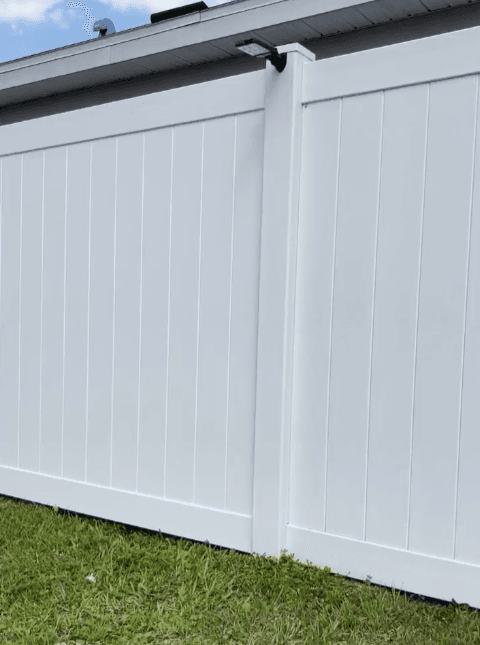
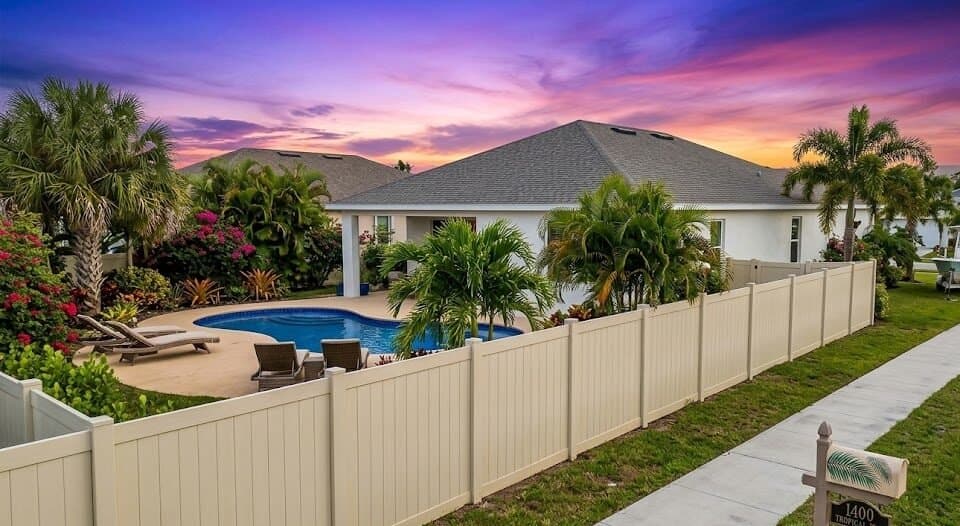
Vinyl privacy fencing provides Daytona Beach homeowners with the one fence material that salt air literally cannot corrode because PVC plastic contains no metal components for salt to attack. The posts, rails, and panels are all manufactured from the same vinyl compound, and the connection hardware within the panel assembly is UV-stabilized PVC rather than metal. The only metal in a standard vinyl fence installation is the screws or brackets at the post base where the post connects to the concrete footing, and these should be stainless steel on coastal installations.
The corrosion immunity that vinyl provides is particularly valuable for Daytona Beach's beachside properties where salt spray deposits directly onto outdoor surfaces daily. A wood fence on a beachside lot absorbs the salt moisture into its grain, which accelerates the fungal decay process by providing the moisture that decay organisms need while simultaneously weakening the wood fiber's natural resistance. An aluminum fence on the same lot fights corrosion at every fastener point and eventually develops the white oxide pitting that the salt attacks produce. Vinyl on the same lot rinses clean with a garden hose after a salt-spray event and shows zero cumulative damage from 20 years of daily salt exposure.
The aesthetic concern that some Daytona Beach homeowners raise about vinyl, that it looks too plastic or too suburban for the coastal setting, has been addressed by current-generation products that include textured finishes, wood-grain embossing, and color options beyond the basic white that dominated earlier vinyl lines. Tan and gray vinyl panels with subtle grain texture complement the stucco and concrete-block architecture that defines Daytona Beach's mainland neighborhoods without the maintenance obligation that real wood would impose in the salt environment.
KS Solutions recommends vinyl as the primary privacy fence material for every Daytona Beach property within 5 miles of the ocean because the corrosion elimination it provides outweighs the aesthetic arguments for wood or composite in a salt environment where those materials face degradation that vinyl doesn't. Beyond 5 miles from the shore, the salt exposure drops enough that composite and properly treated wood become practical alternatives whose aesthetic advantages can be evaluated without the corrosion concern dominating the decision.
Hurricane-Rated Post Depth and Wind-Zone Fence Engineering
Daytona Beach's coastal position places the city in a wind zone where the building code's design criteria include sustained wind speeds above 130 mph for the most exposed beachside properties and 120 mph for mainland locations. These wind speeds exceed what any inland Florida city's code requires, and the fence post depth, concrete volume, and panel attachment methods must handle the forces these winds produce on the fence's flat panel surface.
A 6-foot privacy fence in a 130 mph wind zone experiences approximately 30 pounds of force per square foot of panel surface. A 100-foot run of 6-foot fence catches 600 square feet of wind, producing 18,000 pounds of total lateral force distributed across the posts supporting those panels. Each post bears its proportional share, and the footing must resist the resulting overturning moment without allowing the post to pivot in the saturated coastal sand that hurricane rainfall produces simultaneously with the wind loading.
We set Daytona Beach fence posts at 36 inches minimum depth in beachside wind zones and 30 to 34 inches on the mainland, with concrete footing diameters of 12 inches rather than the standard 8-inch bore that inland installations use. The deeper setting and wider footing create the bearing surface needed to resist the overturning forces that hurricane winds produce in sand that may be fully saturated from the storm's rainfall at the exact moment the peak winds arrive. The worst-case loading scenario, maximum wind speed on a fully saturated subgrade, is the condition the post specification must handle because that's what hurricanes deliver.
KS Solutions engineers every Daytona Beach fence to the wind zone the property's specific location designates. A beachside lot in the highest wind zone gets the deepest posts and widest footings. A mainland lot 4 miles from the shore in a lower wind designation gets specifications matched to that zone's requirements. The specification follows the code rather than applying the maximum standard everywhere, which would over-engineer mainland properties, or the minimum standard, which would under-protect coastal ones.
(321) 353-7445Get Immediate Service
Pool Barriers for LPGA International, Pelican Bay, and Mainland Daytona Beach Communities
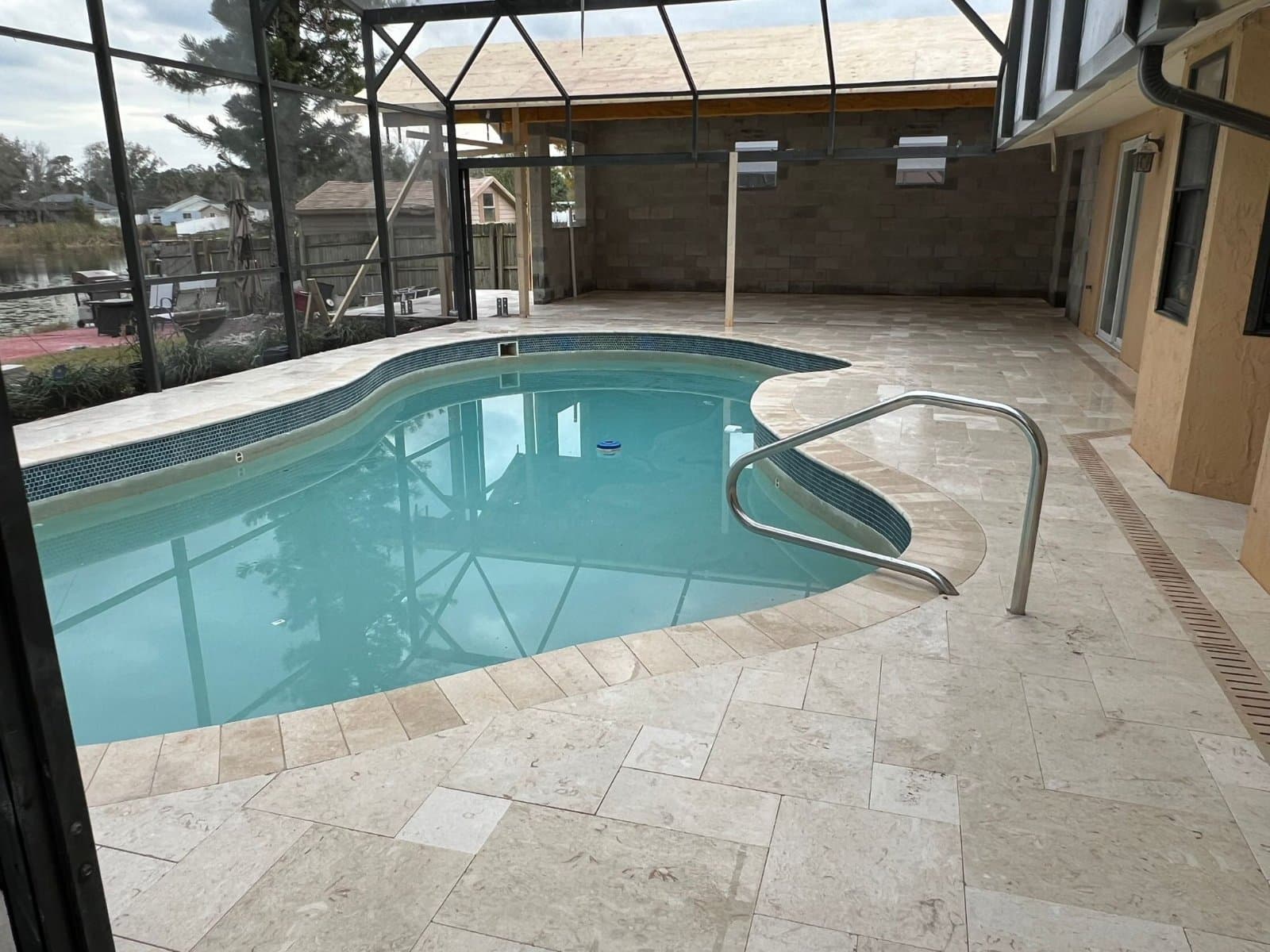
Swimming pools across Daytona Beach's residential neighborhoods require barriers meeting Florida Building Code: 48-inch minimum height, self-closing and self-latching gates, 54-inch pool-side latch position, and maximum 4-inch openings. On coastal properties, the pool barrier material must also resist the salt exposure that the property's distance from the ocean produces. An aluminum pool fence using standard inland hardware will develop corroded hinges and latches that fail to self-close properly within 3 years of coastal installation, which means the barrier becomes non-compliant through hardware failure rather than structural damage.
Marine-grade aluminum pool barriers with 316 stainless hardware provide the dual compliance that Daytona Beach pool fences need: meeting the building code's safety specifications while also resisting the corrosion that salt air produces on unrated components. The marine-grade powder coat handles the chlorine-rich splash zone around the pool and the salt-laden air from the ocean without the finish degradation that standard coating develops, keeping the barrier code-compliant and visually acceptable for the 15 to 20-year service life the homeowner expects.
LPGA International and Pelican Bay, two of Daytona Beach's most prominent HOA communities, have specific pool barrier style requirements that we verify before recommending a product. These communities may specify approved profiles, acceptable colors, and required ornamental details that narrow the product selection beyond what the building code alone dictates. We submit the pool barrier application with both the building code compliance documentation and the HOA design approval package so both review processes run concurrently rather than sequentially.
KS Solutions tests every Daytona Beach pool gate from three opening angles, 90, 45, and 15 degrees, verifying self-closing and self-latching from each position. We also verify that the stainless hardware operates smoothly without the resistance that salt buildup creates on lower-grade components after the first season of coastal exposure. A gate that passes the three-angle test on installation day should continue passing it for years because the marine-grade hardware resists the salt-driven degradation that causes standard hardware to stiffen and eventually fail to close. Call (321) 353-7445 for your free Daytona Beach fence estimate.
Fence Costs for Daytona Beach's Coastal Residential Properties
Fence installation in Daytona Beach costs $22 to $55 per linear foot depending on material, wind-zone engineering, and whether marine-grade specifications apply based on the property's distance from the ocean. The coastal premium of $4 to $10 per foot over comparable inland installations reflects the marine-grade aluminum coating, stainless steel 316 hardware, deeper hurricane-rated post footings, and the corrosion-resistant materials that Atlantic coast conditions demand.
Vinyl privacy at 6 feet costs $28 to $45 per linear foot with stainless base hardware. A 140-foot backyard runs $3,920 to $6,300. Marine-grade aluminum ornamental at 4 to 5 feet costs $30 to $50 per foot with AAMA 2604/2605 rated coating. A 120-foot boundary runs $3,600 to $6,000. Marine-grade aluminum pool barriers with 316 stainless gate hardware cost $35 to $55 per foot. A 55-foot pool enclosure runs $1,925 to $3,025.
Hurricane-rated post specifications at 36-inch depth with 12-inch bore add $6 to $10 per post over standard inland specs. Chain link in vinyl-coated galvanized mesh costs $14 to $22 per foot. Composite privacy with stainless fasteners costs $38 to $55 per foot for mainland properties beyond the primary salt zone.
Daytona Beach city permits required. LPGA International, Pelican Bay, and other HOA communities require design approval. Beachside properties face flood-zone and wind-zone requirements. We handle all permits and submissions. Installation runs 2 to 5 days for standard projects. Call (321) 353-7445 for your free Daytona Beach fence estimate.