KS Solutions installs artificial turf in St. Cloud, FL for homeowners across Osceola County's Friendly City where the population tripled past 59,000 since 2000, East Lake Tohopekaliga's trophy-bass shoreline frames the northern skyline, and the sandy Osceola County substrate drains irrigation water so fast that builder-installed St. Augustine never stays green long enough to justify the thousands spent trying to keep it alive between the five dormancy months and the three chinch bug months that Florida biology imposes on every natural lawn. Call (321) 353-7445 for a free estimate.
Year-Round Green in The Friendly City's Growth Boom
Artificial turf installation in St. Cloud addresses the lawn problem that every homeowner in this booming Osceola County city eventually confronts. The sandy substrate beneath the newer subdivisions stretching south and east toward Harmony drains sprinkler water vertically before turfgrass roots grab a meaningful drink. Chinch bugs colonize the drought-stressed blades every August. Fungal diseases thrive in the humidity that 50-plus inches of annual rainfall wrings from the atmosphere onto every outdoor surface. And from November through February, the entire lawn goes dormant and tan while the native lakeside vegetation framing East Lake Toho stays green because it evolved for these exact conditions and the builder's imported sod did not.
The annual bill for fighting this losing biology on a typical quarter-acre runs $2,400 to $4,000 when the mowing contract, supplemental irrigation, sprinkler repairs, four fertilizer rounds, two insecticide treatments, and the periodic re-sod that pest damage forces every couple of years are combined. Over 15 years, that's $36,000 to $60,000 for a surface that disappoints five months out of twelve every single calendar cycle.
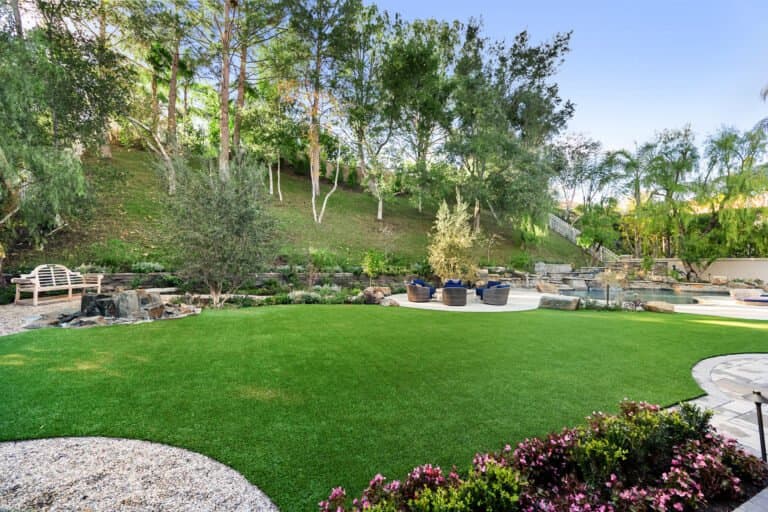
Synthetic turf wipes out the entire recurring expense with a single installation whose fiber holds its color through dormancy season, drought restrictions, and the monsoon downpours that turn natural-grass yards into standing-water fields when the sandy substrate can't process the volume fast enough. The front yard stays green in January listing photos. The backyard stays firm for pool parties. And the chemical runoff that natural grass sends through the porous sand into the groundwater feeding East Lake Toho stops permanently on the day the sod comes out.
The Union Army veterans who founded this city in 1911 built a retirement colony on the principle that every property should contribute to the community's collective presentation. A century later, that principle still holds: neighbors evaluate each other's yards, the downtown Heritage Museum corridor maintains its Spanish Revival appearance, and the lakefront trail attracts daily foot traffic that scrutinizes every waterfront property at slow-pass walking speed. Synthetic turf keeps the front yard aligned with that collective standard 365 days per year rather than falling below it for five months while the homeowner waits out dormancy and hopes the chinch bugs don't make the spring recovery even slower.
Turf Products for Lakefront and Subdivision Living
Residential lawn fiber
in a four-tone green blend with brown thatching covers front yards and primary backyard zones with a surface that replicates maintained Floratam from the street. The multi-color construction avoids the flat monochrome that budget products display and passes visual inspection at both walking speed (when neighbors stroll past on the sidewalk) and the slow drive-by speed that prospective buyers use to evaluate listings in a market where families relocating from Orlando compare properties side by side.
Pet relief fiber
with antimicrobial Zeofill infill and 30-inch-per-hour perforated-backing drainage serves the dog-heavy household base. The Zeofill granules neutralize ammonia before odor registers. The backing clears rinse water almost instantly. On compact subdivision lots where the pet pad sits within view of the screened lanai, that processing speed determines whether the evening cookout smells like grilled burgers or wet dog.
Putting green fiber
converts unused side yards or backyard corners into private practice surfaces with consistent ball speed. The bass-fishing culture around East Lake Toho suggests an outdoor-recreation demographic that also includes golfers, and backyard putting greens are a popular add-on for residents who play the Osceola County courses regularly.
Play-safe fiber
on ASTM F1292-rated impact foam delivers fire-ant-free, sandbur-free play zones beneath swing sets and climbing structures. Families who chose this city for the school system and the community character appreciate the immediate improvement: no more ant bites, no more sandbur spines tracked through the house, and no more mud-caked shoes after afternoon rainstorms.
Base Construction on Sandy Osceola County Ground
Sandy Osceola County substrate drains vertically at exceptional speed, which actually benefits turf performance: rainwater passes through the perforated backing and into the sand almost instantly during the heaviest thunderstorms. But the same rapid drainage means the sand provides minimal lateral support for the aggregate base under foot traffic and furniture weight. Without a properly engineered stone platform between the sand and the turf, the surface develops ruts and depressions within months.
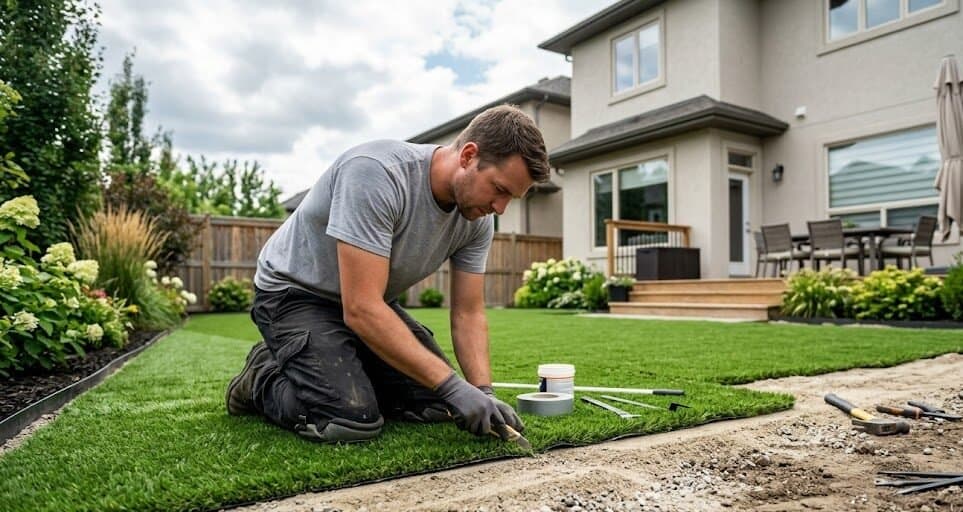
KS Solutions strips all organic material from the installation zone down to bare mineral sand. The exposed surface gets moisture-conditioned and vibrated flat. Stabilization fabric prevents sand migration into the imported stone. Two to three inches of crushed limestone stack in compacted lifts above the fabric, each one vibrated and probe-checked. On lakefront East Lake Toho lots where the water table rides higher than inland properties, a drainage aggregate sublayer beneath the standard limestone channels upward-migrating groundwater laterally before it softens the structural base from below.
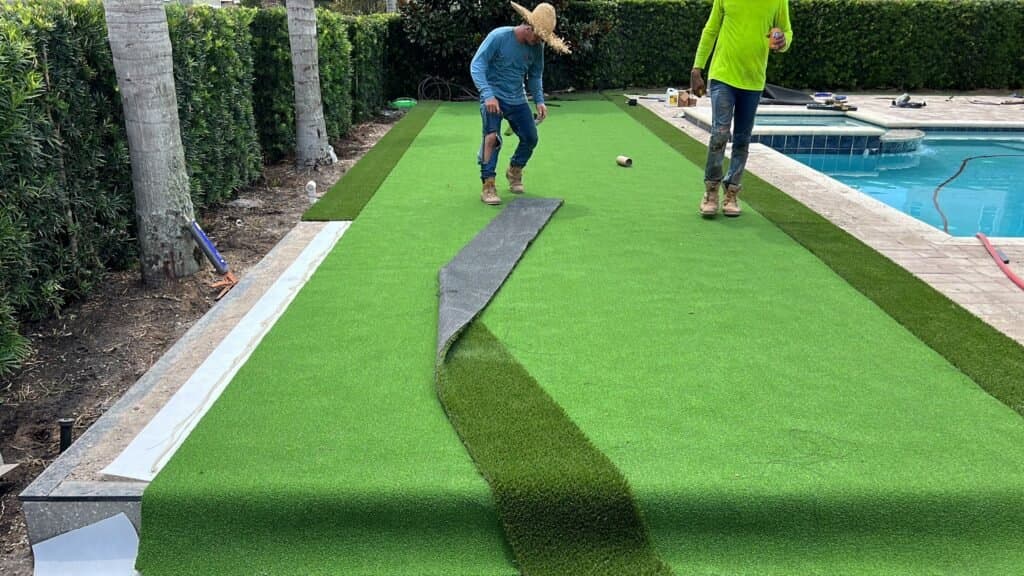
Turf panels roll across the finished aggregate, bond at seam edges with industrial adhesive tape, receive perimeter spike anchoring, and take zone-appropriate infill (silica sand for lawn areas, Zeofill for pet pads, fine silica for putting greens). The completed surface handles the daily foot traffic, pet activity, play-equipment impact, and patio furniture weight that the homeowner's family generates without developing low spots or visible wear paths across the installation's multi-decade lifespan.
Protecting East Lake Toho's Bass Fishery from Lawn Chemicals
East Lake Tohopekaliga's reputation as one of Florida's premier largemouth bass fisheries (tournament anglers come from across the country for the trophy-sized fish) depends on water quality that supports a healthy aquatic food chain. Every granule of fertilizer and every ounce of insecticide applied to residential sod on the surrounding lots percolates through the porous sandy soil during the next thunderstorm and enters the groundwater feeding the lake as dissolved nitrogen, phosphorus, and pesticide residue. Those nutrients fuel the algal growth that threatens the water clarity bass anglers and boaters depend on.
Synthetic turf cancels that chemical pipeline on installation day. No nitrogen. No phosphorus. No insecticide. No herbicide. Every residential yard that converts from natural sod to synthetic fiber removes one more pollution source from the lake system that defines the city's recreational identity and supports property values across every lakefront and lake-adjacent neighborhood.
Irrigation elimination parallels the chemical savings. A quarter-acre of natural sod absorbs 20,000 to 30,000 gallons of sprinkler water annually. That volume shoves the household's monthly bill into the upper tiers of the utility rate structure. Shutting off the sprinkler zones serving converted turf areas drops both the gallon total and the per-gallon cost on indoor water still running through the meter. Call KS Solutions at (321) 353-7445 to discuss turf for your property.
(321) 353-7445Get Immediate Service
Monthly Care for Busy Friendly City Families
Families who chose this city for the schools, the lake access, and the community character reflected in Veterans Park and the downtown festivals didn't move here to spend Saturday mornings behind a lawn mower. Synthetic turf replaces the weekly mowing routine with a handful of brief monthly tasks that take less time than the drive from the driveway to the boat ramp on East Lake Toho.
Blow pollen and storm debris off the surface every week or two with a cordless blower. Brush the daily-use pathways (front door approach, lanai slider, grill station, dog's evening circuit) once monthly with a stiff broom against the blade direction. Fifteen seconds per corridor. Annual infill check: press a fingertip between fibers at a few spots; if you feel backing before granules, spread a bag of matching product with a drop spreader. Twelve minutes of total monthly effort covers the typical residential lot easily.
Dog households: hose-rinse the relief pad every couple of warm-weather days, enzyme cleaner once per quarter. KS Solutions runs annual professional maintenance visits that cover infill measurement, power grooming, edge inspection, and drainage verification in one appointment.
Permits, HOA Rules, and Installation Timeline
Most turf installations don't trigger City building permits because the perforated backing qualifies as permeable ground cover. Lakefront East Lake Toho properties may face additional setback rules and stormwater restrictions protecting the lake's water quality and bass habitat. KS Solutions identifies all applicable regulatory layers during the consultation and handles any documentation the city requires.
Newer subdivisions (including communities near Harmony and along Canoe Creek Road) carry HOA covenants that may require architectural review before landscape modifications proceed. KS Solutions prepares sample boards with the proposed turf product, color, and blade profile alongside a site plan marking the conversion boundaries. Most HOA committees welcome synthetic turf because it eliminates the dormant-brown lots that drag down winter curb appeal across the subdivision and reduces community irrigation demand. Older downtown neighborhoods and the lakefront corridors generally operate without HOA governance.
On-site work runs two to three working days for standard residential conversions. Putting green contours or lakefront drainage sublayer work may add a day. The total timeline from consultation to finished surface typically runs three to six weeks including any HOA review and city processing. Every project wraps with a surface walkthrough verifying seam bonds, infill depth, perimeter anchoring, and cut-edge quality. Call (321) 353-7445 to start your turf project.