KS Solutions provides expert brick paver installation in Winter Park, FL. From Park Avenue storefronts to lakefront estates along Lake Virginia, we've built a reputation for quality hardscaping that matches this city's refined character. Call (321) 353-7445 for your free estimate.
Why Winter Park's Historic Brick Streets Demand Pavers That Match the Neighborhood
Brick paver installation in Winter Park carries a responsibility that doesn't exist in most Central Florida cities. Founded in 1881 by Loring Chase and Oliver Chapman, Winter Park built its identity around Mediterranean and Spanish Revival architecture, tree-lined boulevards, and the original brick streets that still define entire neighborhoods today. When you install a new driveway or patio here, it has to feel like it belongs alongside those century-old brick roads, the iron gates of Rollins College, and the storefronts lining Park Avenue. Anything that looks mass-produced or out of place will draw attention from neighbors and possibly from the city's architectural review board.
Winter Park's roughly 32,000 residents maintain some of the highest property values in Orange County. Lakefront homes along Lake Virginia, Lake Osceola, and Lake Maitland regularly sell above $2 million. Even modest homes in College Quarter and Hannibal Square carry valuations that reflect the city's prestige. At these price points, a basic stamped concrete driveway isn't just an aesthetic mismatch. It's a missed opportunity to protect and increase your investment in a market where buyers pay close attention to exterior details.
KS Solutions selects paver products that complement Winter Park's existing architectural vocabulary. We work with tumbled-edge pavers that replicate the weathered look of the city's original brickwork, travertine that echoes the Mediterranean facades along Park Avenue, and custom-colored concrete pavers that blend with the warm earth tones prevalent in Winter Park's historic districts. Every installation starts with a site visit where we photograph your home's exterior, note the surrounding streetscape, and recommend materials that look like they've always been there.
Architectural Review and Permit Requirements in Winter Park's Historic Districts
Winter Park is one of the few Central Florida cities where your driveway project may need approval from both the Building Department and the Historic Preservation Board. Properties within the city's locally designated historic districts, including sections near Park Avenue, along Interlachen Avenue, and throughout older neighborhoods east of the railroad, fall under design guidelines that govern exterior modifications down to material selection and color palette.
The Historic Preservation Board reviews proposed changes for compatibility with the surrounding historic context. For paver installations, this means your material choice, pattern, color, and border treatment all get evaluated against the neighborhood's existing character. Bright white concrete pavers or highly polished surfaces that don't appear in the historic context will likely face pushback. Tumbled brick in traditional reds, warm grays, and sand tones passes review consistently because these materials align with Winter Park's original brick-street heritage.
Even outside the historic districts, Winter Park's standard building permit process applies to paver projects that change impervious surface coverage or modify drainage. The city's Community Development Department processes residential permits and wants to see site plans documenting the project area, drainage direction, and stormwater management approach. Properties near the city's chain of lakes face stricter stormwater review because runoff entering the lake system affects water quality for the entire connected chain.
KS Solutions prepares all Winter Park permit applications and historic review submissions. We draft site plans, select materials that align with historic guidelines, photograph the streetscape context, and present a submission package that addresses every review criterion. We've learned what Winter Park's reviewers prioritize, and our applications reflect that experience. Standard permits process in 5 to 10 business days. Historic review may add 2 to 4 weeks depending on the board's meeting schedule.
Lakefront Estate Pavers: Building Around Winter Park's Mature Live Oaks and Root Systems
Winter Park's lakefront estates along Lake Virginia, Lake Osceola, Lake Berry, and Lake Mizell sit beneath canopies of live oaks that are 80 to 150 years old. These trees define Winter Park's character, and removing them for a hardscape project isn't just an aesthetic loss. The city's tree protection ordinance makes it illegal to remove or significantly damage protected trees without approval. Any paver installation near a protected tree must work around the root system, not through it.
Live oak roots spread horizontally, often extending 2 to 3 times the canopy radius. A tree with a 40-foot canopy may have roots reaching 80 to 120 feet from the trunk. On Winter Park's compact lakefront lots, that means roots run beneath driveways, patios, walkways, and pool decks. Poured concrete fights these roots and loses. The roots lift the slab, crack it, and continue growing. Within 5 to 10 years, the concrete surface is buckled and broken, and fixing it means either cutting the roots, which damages the tree, or replacing the concrete, which the roots will break again.
Interlocking pavers accommodate root growth because they're not a single rigid plane. Individual pavers rise slightly as roots push upward, and the affected section can be lifted, the base re-graded, and the pavers re-laid without disturbing the root system or replacing any materials. This repair takes a few hours and costs a fraction of concrete replacement. For a Winter Park property with $50,000 worth of protected live oaks shading the driveway, pavers are the only hardscape option that protects both your investment in the trees and your investment in the surface.
KS Solutions uses air excavation to expose root locations before designing the paver layout on Winter Park properties with mature trees. We map the root zone, adjust base depths to avoid cutting or compressing major roots, and build the paver surface to float over the root system rather than pin it down. This approach keeps Winter Park's protected oaks healthy while delivering a driveway or patio that performs for decades.
Driveway and Motor Court Pavers for Baldwin Park and Windsong Properties
Baldwin Park, built on the former Naval Training Center site, brought a new wave of residential development to Winter Park's eastern side. The neighborhood's New Urbanist design features narrow streets, front porches, and attached garages accessed through rear alleys. Driveway pavers in Baldwin Park need to handle the tight turning radii of alley-accessed garages while matching the community's carefully controlled architectural palette of muted earth tones and traditional materials.
Baldwin Park's architectural review committee maintains strict standards for exterior modifications. Paver submissions require specific product identification including manufacturer, product line, color, and pattern. The committee compares proposed materials against the existing palette visible on the street. Products that introduce colors or textures not already present in the immediate block face additional scrutiny. We've completed enough Baldwin Park projects to know which products pass review efficiently and which ones trigger extended review cycles.
Windsong, another premier Winter Park neighborhood, features larger lots and custom homes where motor courts and circular driveways make a strong first impression. These larger paver areas require precise grading to direct stormwater away from garage entries and front doors. A 1,200 to 2,000 square foot motor court needs multiple drainage zones because a single slope direction won't move water effectively across that distance. We integrate low-profile channel drains at transition points to intercept water before it pools against the home's foundation.
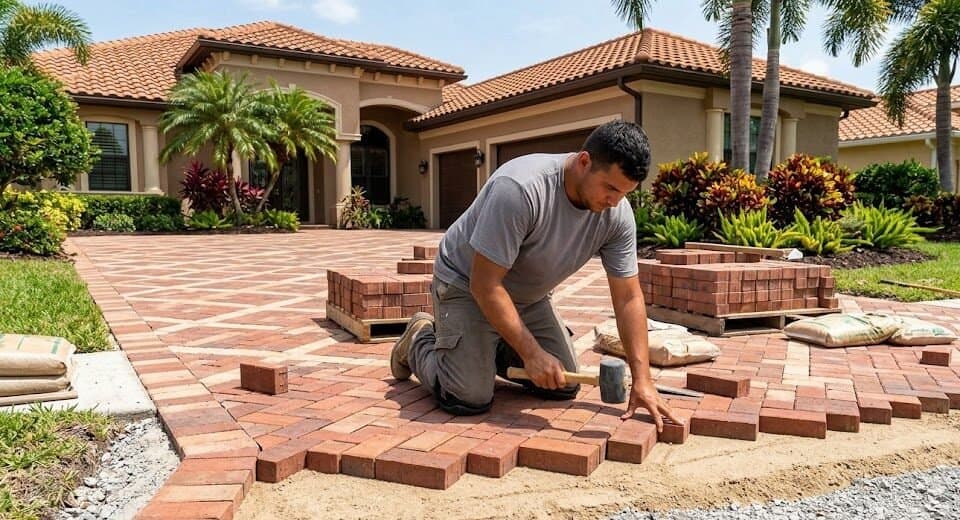
KS Solutions builds Winter Park driveways with a minimum 10-inch excavation. Geotextile fabric separates the sandy Orange County subsoil from the structural base. Six inches of compacted crushed limestone creates the load-bearing layer, topped with 1 inch of leveling sand. For motor courts and high-traffic areas, we specify 80mm thick pavers in 45-degree herringbone patterns that distribute vehicle weight more evenly and resist shifting under turning tires. Every Winter Park driveway includes edge restraint anchored with 12-inch galvanized spikes to prevent lateral paver migration.
(321) 353-7445Get Immediate Service
Pool Decks and Outdoor Living Spaces Near Kraft Azalea Garden and Mead Botanical Garden
The Winter Park Scenic Boat Tour has shown visitors the city's lakefront beauty since 1938, and homeowners along those same lakes expect their backyards to impress just as much. Pool decks overlooking Lake Virginia, entertaining patios tucked behind Spanish Revival homes near Rollins College, and fire pit terraces shaded by heritage oaks are standard expectations here. Pavers tying these spaces together aren't decoration. They're the foundation of an outdoor lifestyle that defines how Winter Park residents actually live.
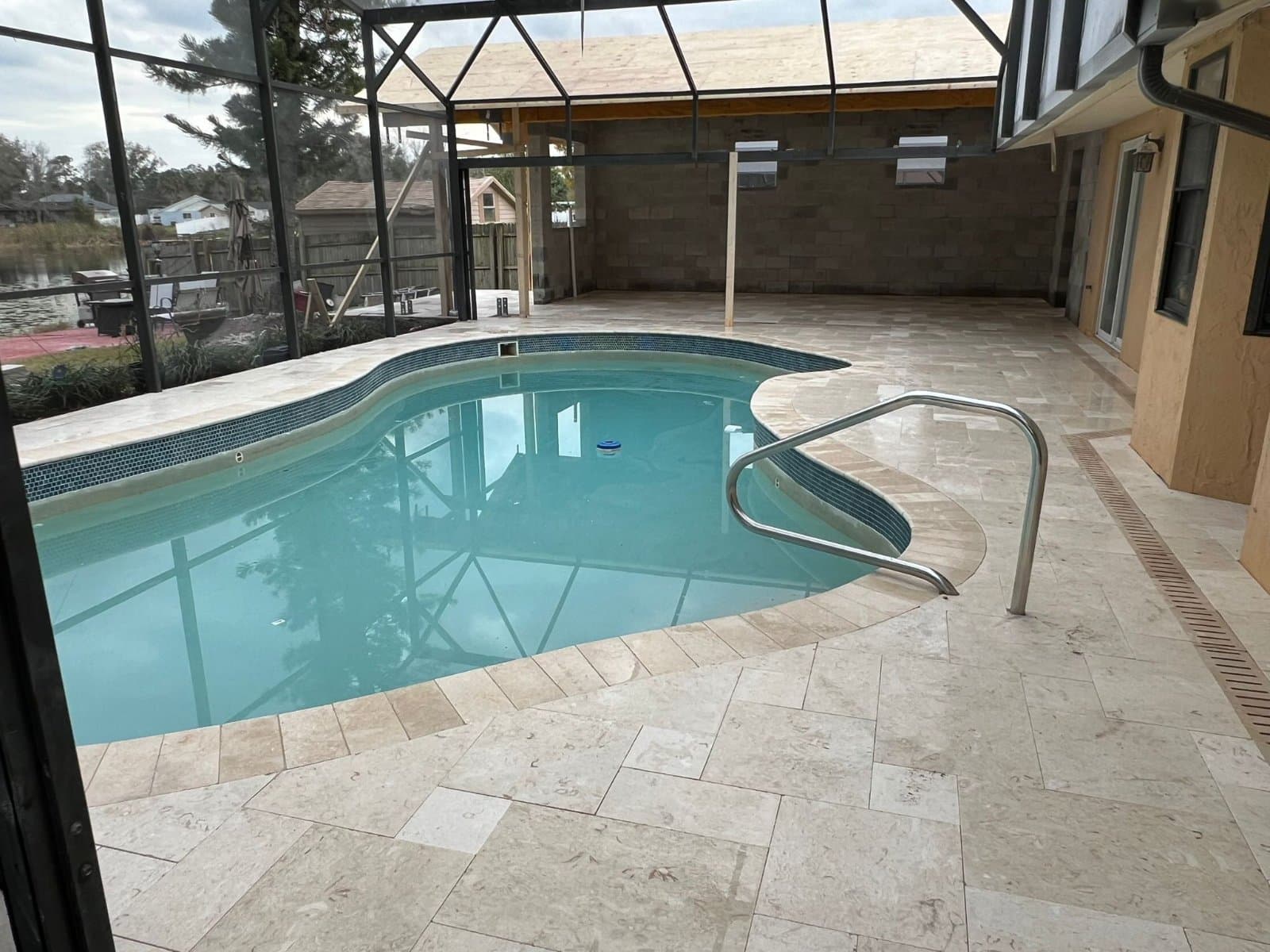
Travertine in French pattern layout remains the top pick for Winter Park pool surrounds because each piece varies slightly in tone and texture, creating an organic surface that looks handcrafted rather than manufactured. Ivory and honey tones stay comfortable for bare feet through the long swimming season, and the natural stone texture grips wet skin better than any sealed manufactured product. For covered lanais and screened pool enclosures common on Winter Park's lakefront lots, travertine's natural variation looks particularly striking under diffused light where manufactured pavers can appear flat and repetitive.
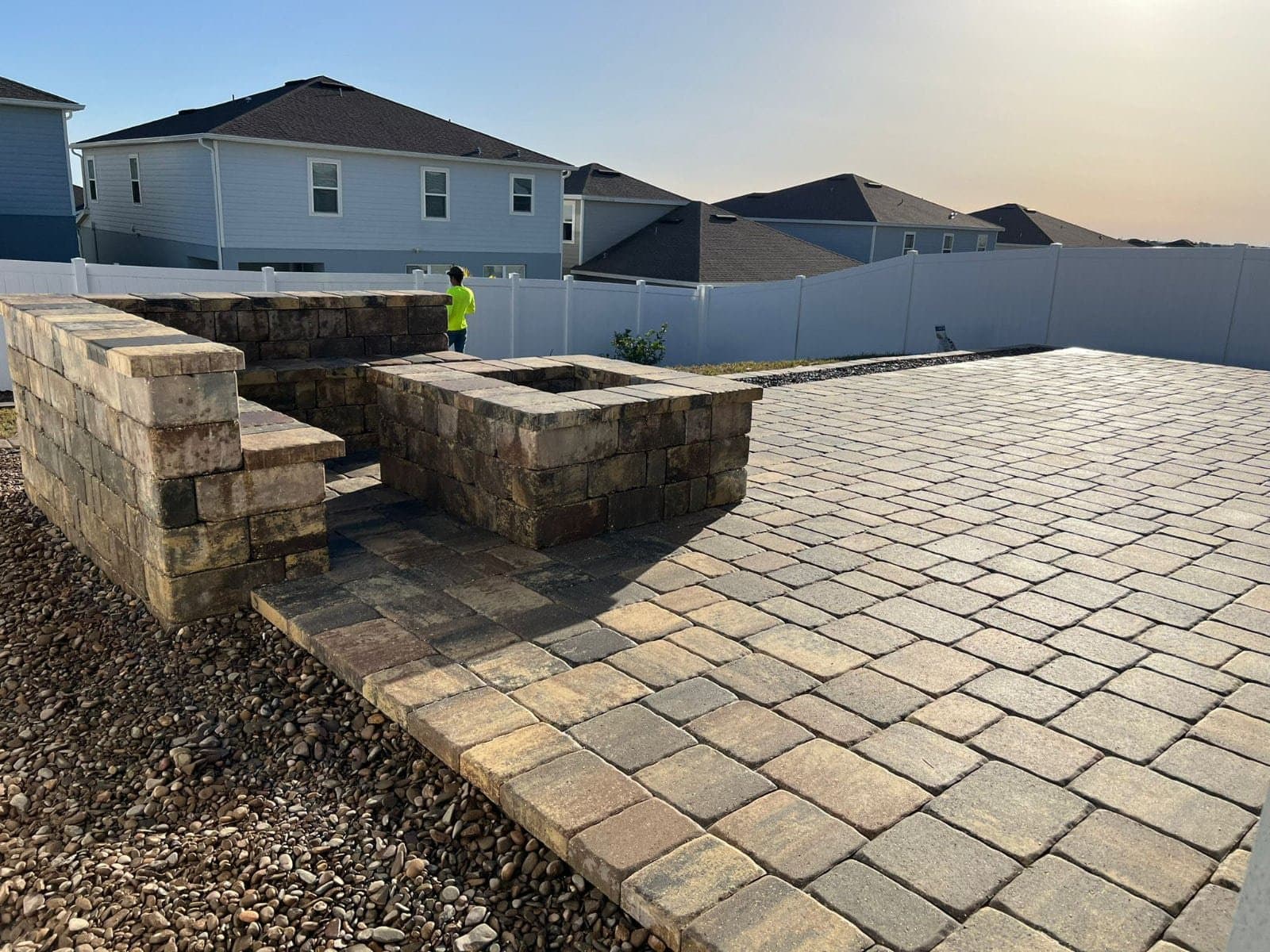
Fire pit terraces on Winter Park properties need materials rated for direct thermal contact. Porcelain pavers within the immediate fire zone resist repeated heating without spalling, cracking, or changing color over hundreds of fires. Beyond the heat zone, tumbled brick pavers transition the fire pit area into the broader patio surface. This two-material approach separates functional requirements from aesthetic ones, putting performance products where heat demands it and design-forward products where guests actually notice them.
KS Solutions treats every Winter Park outdoor project as a grading challenge first and a design project second. The sandy Orange County soil beneath these properties shifts with moisture changes, and a poorly graded patio sends storm runoff toward the house foundation or into the pool. We establish independent drainage planes for each entertainment zone, route water through concealed channel drains at transition points, and confirm positive flow away from all structures before laying a single paver. The finished surface looks effortless, but the engineering underneath is what keeps it performing through decades of Florida weather.
Paver Materials and Pricing for Winter Park's Premium Market
Material selection for Winter Park homes starts with a question most other cities never ask: will this pass the Historic Preservation Board? The answer shapes every product recommendation we make. Homes along Interlachen Avenue, near Rollins College, and throughout the older neighborhoods between Park Avenue and Lake Virginia sit within review zones where exterior materials must harmonize with the surrounding architectural fabric. Even on properties outside historic districts, Winter Park buyers expect hardscaping that belongs in a city known for its taste.
Tumbled clay brick pavers at $16 to $22 per square foot installed are Winter Park's signature driveway material. They reference the original brick roads the city has preserved for over a century, age gracefully under live oak canopy shade, and satisfy every historic review criterion we've encountered. The tumbled manufacturing process chips and rounds each edge, producing a surface that looks like it was laid decades ago. Warm reds, terracotta blends, and weathered gray selections all complement the Mediterranean and Spanish Revival homes predominant throughout the city.
Travertine from Turkish and Mexican quarries at $20 to $30 per square foot installed remains the prestige material for Winter Park pool surrounds and front entries. Each stone carries unique veining and fossil impressions that mass-produced concrete cannot replicate. We source travertine in honed, tumbled, and brushed finishes depending on the application. Honed for indoor-to-outdoor transitions where a polished look matters. Tumbled for pool decks needing maximum grip. Brushed for walkways where you want texture without roughness. Sealing every 2 to 3 years prevents tannin stains from the live oak leaves that blanket every Winter Park property from October through March.
Winter Park project investment ranges: lakefront driveway replacement with demolition of failed concrete costs $18 to $28 per square foot ($9,000 to $16,800 for two-car standard, $24,000 to $56,000 for circular motor courts). Covered lanai and pool deck projects run $16 to $30 per square foot using travertine. Walkways connecting front entry to rear garden cost $14 to $22 per square foot. Expect 4 to 7 working days for residential driveways, 7 to 10 days for multi-zone outdoor living projects. Historic Preservation Board review adds 2 to 4 weeks. Call (321) 353-7445 to schedule your Winter Park property assessment.