
Brick Paver, Fence & Artificial Turf Services in Wilbur By The Sea, FL
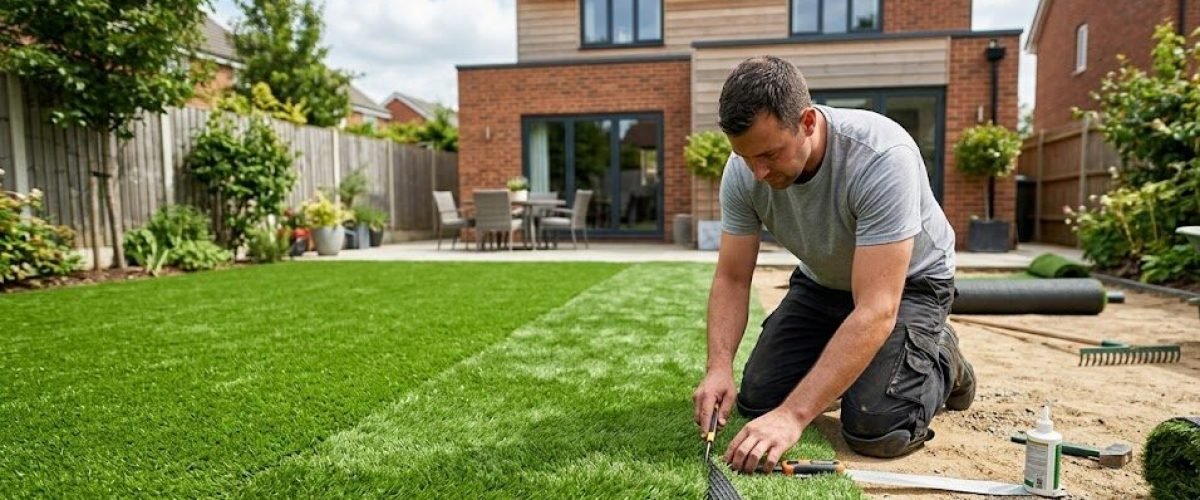
Wilbur By The Sea homeowners choose KS Solutions for reliable paver and fence work. Call (321) 314-2569 for a quote.
Coastal Brick Paver and Fence Services for Wilbur-by-the-Sea Residents
Wilbur-by-the-Sea is one of the most distinctive residential communities in Volusia County. This narrow strip of land between the Atlantic Ocean and the Halifax River sits about seven miles south of Daytona Beach, and at its tightest point, the peninsula measures just 800 feet from ocean to river. Roughly 550 people live here full time, and the community has no condos or hotels. It’s all single-family homes, from original 1913 cottages to modern beachfront builds. KS Solutions provides brick paver and fence services in Wilbur-by-the-Sea, FL, with a focus on materials and methods that hold up in a saltwater environment. We handle driveways, walkways, patios, pool decks, privacy fences, ornamental fences, and custom hardscaping for properties that face conditions most inland contractors have never dealt with. Salt air, wind-driven sand, storm surge exposure, and a high water table all shape the way we approach work in this community.
Founded in 1912 by Jacob W. Wilbur, a developer from Brookline, Massachusetts, this area was originally a winter retreat for New Englanders. About 25 cottages went up in the first few years, along with a 50-room hotel for seasonal visitors. Today the community is governed by the Wilbur Improvement Association, and the 1913 Wilbur Boathouse on Wilbur Bay serves as the social hub for potlucks, holiday gatherings, and community events. It’s a tight-knit neighborhood where people know each other, and outdoor spaces are a genuine part of daily life. The work we do here needs to match both the lifestyle and the environment.
Paver Installations Built to Handle Salt Air, Sand, and Coastal Weather
Coastal installations are a different animal than inland work. The salt content in the air alone is enough to break down certain materials faster than you’d expect. Concrete pavers with iron-rich aggregates can develop rust staining within a few years of exposure. Cheap polymeric sand washes out after a couple of strong nor’easters. And anything set on an inadequate base will shift, sink, or heave as the water table rises and falls with the tides and storms. In Wilbur-by-the-Sea, we don’t have the luxury of cutting corners on materials or base prep. The ocean is literally a few hundred feet away from most properties.
For driveways, we use marine-grade base preparation methods. That means a minimum 6 inches of compacted aggregate (limerock or recycled concrete) over geotextile fabric, with the fabric acting as a separation layer between the sandy subgrade and the structural base. The geotextile prevents the fine beach sand from migrating into the aggregate and weakening it over time. In areas where the water table is especially high (some lots along South Peninsula Drive sit just a few feet above sea level), we increase the base depth and sometimes add a drainage layer of clean washed stone beneath the aggregate to allow groundwater to pass through without destabilizing the base.
Paver selection matters just as much as the base. We recommend porcelain pavers, natural travertine, or high-quality concrete pavers with low-iron aggregates for Wilbur-by-the-Sea properties. Porcelain pavers are a newer option that performs exceptionally well in coastal settings. They’re virtually non-porous, so they don’t absorb salt water, don’t stain from rust or algae, and they clean up with just a rinse. They’re also lighter than concrete or stone, which can be an advantage on lots with soft subgrade. Travertine remains a strong choice for pool decks and patios because of its thermal properties and natural appearance. And for homeowners who prefer a more traditional paver look, we source concrete pavers specifically rated for coastal exposure.
Walkways in Wilbur-by-the-Sea often connect the house to the beach access, the driveway to the front porch, or the main living area to a river-side dock or deck. Sand tracking is a real consideration. We set walkway pavers with tight joints and high-performance polymeric sand that resists washout from foot traffic and rain. We also install sand-catch transitions at the beach end of walkways, usually a slightly wider paver pad where residents can rinse off before stepping onto the main walk. It’s a small detail, but it keeps the joints clean and extends the life of the installation.
Driveway design in Wilbur-by-the-Sea is different from what you would plan for an inland neighborhood. Lots are typically narrow and deep, so driveways tend to be shorter but may need to accommodate multiple vehicles side by side rather than in a line. We design driveway layouts that maximize parking capacity within the lot width while maintaining adequate turning space. For homes with garages set back from the road, a flared apron at the street entry gives drivers a wider target and reduces the chance of driving off the paver edge onto the lawn. The apron ties into the main driveway field with a border course that defines the transition.
Paver sealing is something we discuss with every coastal client. A quality paver sealer adds a layer of protection against salt absorption, UV fading, and staining from organic debris like sea grape leaves and palm fronds. For coastal properties, we recommend a penetrating sealer rather than a film-forming sealer. Penetrating sealers soak into the paver material and protect from within without changing the surface texture or creating a slippery film when wet. Film-forming sealers can peel in high-humidity environments and require reapplication more frequently. We apply sealer after the polymeric sand has fully cured, typically 24 to 48 hours after installation.
Fencing Solutions for a Narrow Peninsula Between Ocean and River
Fencing in Wilbur-by-the-Sea has to account for the community’s unique geography. Properties here are narrow relative to their length, and many lots extend from the ocean side to the river side (or close to it). Wind exposure is significant. Salt-laden air blows in off the Atlantic on most days, and during storms, wind speeds can exceed what inland properties experience by a wide margin. A fence built with standard inland specifications will deteriorate faster here. Wood rots sooner, hardware corrodes quicker, and posts loosen in the sandy substrate if they’re not set deep enough.
Aluminum fencing is often the best choice for ocean-facing properties in Wilbur-by-the-Sea. Powder-coated aluminum doesn’t rust, doesn’t rot, and doesn’t corrode in salt air. It’s also low profile visually, which matters in a community where views of the ocean or the Halifax River are a big part of the property’s value. We install aluminum fencing with stainless steel or marine-grade fasteners rather than standard zinc-plated hardware. The cost difference is small, but the lifespan difference is significant. Regular zinc-plated screws and brackets will show corrosion within 12 to 18 months in a direct coastal setting. Stainless steel lasts decades.
Wood privacy fences are still an option for properties on the river side or interior lots where salt exposure is slightly less intense. We use pressure-treated Southern Yellow Pine with a ground-contact rating and recommend sealing the fence with a marine-grade exterior stain within 6 months of installation. Cedar is another option that performs reasonably well in coastal environments because of its natural oil content. For maximum durability, composite fencing from manufacturers like Trex or SimTek gives you the appearance of wood with the weather resistance of a synthetic material. Composite doesn’t rot, warp, or splinter, and it holds its color without staining or painting. The upfront cost is higher, but the total cost of ownership over 20 years is often lower than wood because you skip the refinishing cycles.
Post installation in Wilbur-by-the-Sea requires extra depth. We set posts a minimum of 30 inches deep in concrete footings, and for corner posts, end posts, and gate posts, we go to 36 inches. The sandy soil here provides almost no lateral support on its own, so the footing is carrying the full load. We also taper the concrete footing below grade so it acts as an anchor against wind uplift. After Hurricane Nicole in 2022 caused major damage along this stretch of coast, including homes collapsing into the ocean, several homeowners in the area replaced fences that had blown down or been undermined by storm surge. We installed a number of those replacement fences and learned firsthand what works and what doesn’t in this location.
Wind screens and privacy panels designed for high-wind coastal zones are another option we install in Wilbur-by-the-Sea. These are typically aluminum-framed panels with either louvered slats or perforated infill that allow wind to pass through rather than catching it like a solid panel would. They provide partial privacy and wind reduction without the structural loading that makes solid fences risky in exposed locations. For oceanfront properties where full privacy fencing would be impractical due to wind exposure, these panels offer a solid middle ground. They also work well as pool enclosure barriers in locations where a solid fence would be at constant risk of wind damage.
Fence repairs are a regular part of our coastal work. Storm damage is more frequent and more severe along the beachfront than it is inland, and fence sections that fail need to be replaced quickly for security, pool code compliance, and property line definition. We stock common fence materials and can respond to repair calls within a few days in most cases. For aluminum fencing, individual panels and posts are standardized and interchangeable, so a damaged section can be swapped without affecting the rest of the run. For wood fences, we match the board width, profile, and finish as closely as possible to the existing fence so the repair blends in visually.
Pool Decks, River-Side Patios, and Outdoor Gathering Spaces
Many homes in Wilbur-by-the-Sea have pools, and given the proximity to the beach, pool decks see constant use from spring through fall. The deck surface needs to be slip-resistant when wet, cool enough to walk on barefoot in July, and tough enough to resist chlorine damage and salt exposure simultaneously. Travertine checks all three boxes. Its naturally porous surface provides grip, its light color reflects heat rather than absorbing it, and it holds up well to both pool chemicals and ambient salt. We install travertine pool decks in French pattern layouts, which use a combination of four sizes arranged in a non-repeating pattern that creates visual interest without the rigidity of a single-size grid.
Porcelain pavers are gaining popularity for pool decks in coastal areas, and for good reason. They offer the slip resistance and thermal performance of travertine with even better resistance to staining and moisture absorption. The near-zero porosity means salt water doesn’t penetrate the surface, so you don’t get the efflorescence (white salt deposits) that can appear on natural stone or concrete after repeated exposure. If aesthetics and minimal maintenance are your priorities, porcelain is worth the investment.
River-side patios are one of the unique features of living in Wilbur-by-the-Sea. The Halifax River runs along the western edge of the community, and properties with river frontage often have docks, seawalls, or bulkheads. A paver patio on the river side creates an outdoor living area that takes advantage of sunset views, river breezes, and direct water access. We grade these patios carefully to direct stormwater away from the home and toward the river without creating erosion at the shoreline. In some cases, we integrate the patio edge with an existing seawall cap for a smooth transition from the paved area to the waterfront.
The Wilbur Boathouse on Wilbur Bay is a central part of community life here. It’s where neighbors gather, and it sets a tone for what outdoor spaces can be in this kind of setting. Whether you’re building a small patio for morning coffee with a view of the Intracoastal or a larger entertaining area with a built-in grill, bar seating, and a fire feature, the goal is to extend your living space outside in a way that’s functional and durable in a coastal climate. We design these spaces to drain properly, withstand wind and salt, and look great without requiring constant maintenance.
Drainage design on a narrow peninsula like Wilbur-by-the-Sea requires particular care. With the Atlantic on one side and the Halifax River on the other, there is very little room for stormwater to go. We grade every paver installation to direct water toward permeable areas, drainage swales, or catch basins rather than toward the street, the neighbor, or the foundation. For patios and pool decks, a gentle 2% slope away from the structure is standard. For driveways, we pitch toward the property edge where possible and incorporate channel drains at the garage threshold if the grade dictates it. Getting the drainage right on the first pass prevents the kind of standing water and erosion problems that are expensive to fix after the fact.
Outdoor showers are a common feature in beachside homes, and the pad underneath them needs to be built for constant water exposure. We install paver pads for outdoor showers using the same marine-grade base preparation we use for pool decks, with a center drain or a slight pitch toward a drainage point. The pavers around the shower area get extra attention to joint quality because sand and salt water are constantly washing across the surface. A shower pad done right lasts for years without settling, ponding, or growing mold in the joints. A shower pad done cheaply turns into a muddy, uneven mess within a couple of seasons.
Dock and seawall transitions are another area where our work intersects with other coastal construction. Many properties in Wilbur-by-the-Sea have docks or seawalls along the Halifax River, and the paver patio or walkway needs to connect cleanly to these structures. We coordinate with marine contractors to make sure the paver edge and the dock or seawall cap meet at the right height and with the right joint detail. A gap between the paver field and the seawall cap collects debris and creates a trip hazard. A paver that overlaps the seawall cap can crack if the seawall shifts. The right approach is a controlled expansion joint with flexible sealant that accommodates movement between the two structures.
Dealing with Erosion, Storm Damage, and Coastal Construction Challenges
Wilbur-by-the-Sea sits within a 16.6-mile stretch of coastline that the Florida Department of Environmental Protection has designated as critically eroded. That classification affects everything from insurance to construction permitting. Coastal erosion is driven by natural sand drift, sea-level rise, and the effects of seawall armoring and upland development. For homeowners, it means that the ground between your home and the ocean is not as stable or permanent as it might seem. Hardscape installations on the ocean side of properties need to be designed with this reality in mind.
We don’t install pavers on actively eroding bluffs or in areas where the dune line is retreating. That’s a losing proposition. But for properties with stable, established lot areas set back from the erosion zone, we design paver installations with removability in mind. Interlocking pavers set on a compacted base with polymeric sand joints can be taken up, the base re-graded, and the pavers relaid if the grade shifts over time. This flexibility is one of the biggest advantages of pavers over poured concrete in a coastal setting. A poured slab that cracks or settles from erosion-related ground movement has to be demolished and replaced. Pavers can be salvaged and reused.
Storm preparation is another consideration. We recommend that homeowners in Wilbur-by-the-Sea avoid placing loose outdoor furniture, planters, and lightweight decorative elements on paver patios during hurricane season unless they can be quickly moved indoors. The pavers themselves are heavy enough to stay in place through all but the most extreme storm surge events. But the items sitting on them become projectiles in high winds. For fence installations, we build with the understanding that a direct-hit hurricane may cause damage regardless of how well the fence is constructed. Our goal is to minimize damage and make repairs straightforward. Using standard panel widths, readily available materials, and consistent post spacing means that a damaged section can be replaced without rebuilding the entire run.
We’ve worked on properties in Wilbur-by-the-Sea, Daytona Beach Shores, Ponce Inlet, and along South Atlantic Avenue from New Smyrna Beach up through Ormond Beach. The coastal conditions vary somewhat from one area to the next, but the underlying principles are the same: use corrosion-resistant materials, build deeper and stronger bases, and design for the reality that the ocean is a powerful and unpredictable neighbor. The lessons from Hurricane Nicole in 2022, when homes along this very stretch of coast collapsed into the sea, reinforced what we already knew. Building to a higher standard isn’t optional here. It’s the only approach that makes sense.
Permitting in a coastal zone has its own set of requirements. Wilbur-by-the-Sea is unincorporated Volusia County, so building permits go through the county office rather than a city hall. But properties within the Coastal Construction Control Line (CCCL), which includes most of the ocean-side lots in this community, may need additional review from the Florida Department of Environmental Protection before construction begins. This review process can add time to the project timeline, and some construction activities may be restricted during sea turtle nesting season (May through October). We factor all of these requirements into our project planning so there are no surprises once the work starts. If a permit is needed, we handle the application. If CCCL review is required, we prepare the documentation and submit it on your behalf.
Why Wilbur-by-the-Sea Homeowners Trust KS Solutions
Coastal hardscaping and fencing require a contractor who understands the environment, not just the materials. Most paver and fence companies in Central Florida do the majority of their work inland, where conditions are more forgiving. They know how to set pavers on clay and sand, but they haven’t dealt with tidal water tables, salt corrosion, or wind loads that exceed standard engineering assumptions. KS Solutions has direct experience working on beachside and waterfront properties in Volusia County. We know which materials hold up, which base designs perform, and which shortcuts lead to callbacks. That experience is built into every estimate, every material recommendation, and every installation we complete.
We’re also realistic with homeowners about expectations. A wood fence on an ocean-facing lot is going to need more maintenance than one in DeLand or DeBary. A paver driveway 200 feet from the high-tide line is going to face conditions that the same driveway in Deltona wouldn’t encounter. We don’t oversell or understate the challenges. Instead, we give you an honest assessment of what each material and design choice means for long-term performance, and we let you make the informed decision.
We maintain a clean, professional job site throughout every project. Materials are staged neatly, debris is swept at the end of each workday, and all waste is hauled away when the project is complete. In a tight-knit community like Wilbur-by-the-Sea where homes sit close together, keeping the work area tidy is not just courtesy. It is a practical necessity. Construction debris, paver dust, and sand can easily blow onto a neighbor property or into a pool if it is not managed properly. We control it from day one.
Our warranty covers both materials and labor. Paver manufacturers typically offer 25-year or lifetime structural warranties on their products, and our labor warranty covers the installation itself. If a paver shifts, a fence post loosens, or a joint fails due to workmanship within the warranty period, we come back and make it right at no cost. For coastal properties where the conditions are harder on materials and installations than anywhere inland, that warranty backing gives you real protection and peace of mind.
Scheduling works the same way for coastal projects as it does for our inland work. We commit to a start date, communicate proactively about any weather delays, and give you a realistic timeline at the start rather than an optimistic one that slips. Coastal projects sometimes take a day or two longer than equivalent inland jobs because of the additional base preparation and material handling requirements. We build that into the estimate so the timeline reflects reality from the beginning. There are no surprise extensions or vague excuses about supply delays. You get a schedule, and we hold ourselves to it.
Color and material selection for a beachside property follows different rules than an inland home. Salt air and constant UV exposure fade colors faster, so lighter paver tones that show less fading over time are generally the better choice. Travertine in ivory or cream tones looks virtually the same at year ten as it did at installation. Dark-colored concrete pavers, on the other hand, can fade noticeably within three to five years of direct coastal exposure. For fencing, powder-coated aluminum in black or bronze holds its color well because the coating is baked on and UV-stabilized. Wood fences need resealing every two to three years in a coastal setting versus every four to five years inland. We factor these maintenance realities into our material recommendations so you can make a fully informed choice.
For homeowners in Wilbur-by-the-Sea and the surrounding beachside communities of Volusia County, KS Solutions offers free on-site consultations. We’ll evaluate your property, discuss your goals, and provide a detailed written proposal that includes material options, layout drawings, timelines, and pricing. There’s no obligation and no pressure. Call KS Solutions to set up your visit. We’ll work around your schedule and come prepared to give you real answers about what your property needs.
Related Services in Wilbur By The Sea, FL
- Brick Paver Installation Services – Learn more about our driveway, patio, and pool deck paver work.
- Fence Installation Services – Explore our vinyl, aluminum, wood, and chain link fencing options.
- Artificial Turf Installation Services – Details on our synthetic lawn, pet turf, and play area products.
Frequently Asked Questions
Brick paver costs in Wilbur By The Sea typically range from $12 to $25 per square foot installed, depending on the paver type, pattern complexity, and site preparation needed. A standard driveway runs between $8,000 and $18,000, while a patio usually falls between $3,500 and $10,000. KS Solutions provides free estimates for all Wilbur By The Sea projects, so call (321) 314-2569 for exact pricing on your property.
Permit requirements in Wilbur By The Sea depend on your local jurisdiction and fence height. Fences under 6 feet in most of Volusia County generally do not require a building permit, but fences over 6 feet, masonry walls, and fences near easements or property lines may need one. Many Wilbur By The Sea HOA communities also require architectural approval before installation. KS Solutions handles the permitting process for you.
Quality artificial turf installed by KS Solutions in Wilbur By The Sea typically lasts 15 to 20 years with proper maintenance. Central Florida’s intense UV exposure and heavy summer rainfall are the main wear factors, but modern turf products include UV stabilizers that resist fading. We use commercial-grade turf with strong drainage backing designed specifically for Florida conditions.
Yes. KS Solutions provides brick paver installation, fence installation, artificial turf, and preventive maintenance services throughout Wilbur By The Sea and the surrounding Volusia County area. Our crews work in Wilbur By The Sea regularly and understand the local soil conditions, HOA requirements, and building codes that affect outdoor projects here. Call (321) 314-2569 for a free estimate.
A typical paver patio installation in Wilbur By The Sea takes 3 to 5 days depending on size, site conditions, and design complexity. Larger projects like pool decks or driveways may take 5 to 7 days. KS Solutions handles all site preparation, base compaction, paver laying, and joint sanding in one continuous process. Weather delays from afternoon storms are common in Central Florida, and we plan our schedules around them.
Get a Free Estimate in Wilbur By The Sea, FL
SCHEDULE AN APPOINTMENT
Top-Rated by Homeowners: Your Trusted Choice for Outdoor Transformations.
Last updated: March 19, 2026