
Brick Paver, Fence & Artificial Turf Services in Lake Parker Park Area, FL
Homeowners near Lake Parker Park trust KS Solutions for pavers and fences done right. Call (321) 314-2569 today.
Brick Paver and Fence Services Built for the Lake Parker Park Area
If you live near Lake Parker and you’ve been putting off that driveway project or thinking about a new fence for the backyard, you’re not alone. Homeowners across the Lake Parker Park area deal with the same sandy Polk County soil, the same summer storms, and the same question: who actually does this work the right way? KS Solutions provides professional brick paver and fence services in Lake Parker Park Area, FL, and we’ve spent years learning what works (and what doesn’t) in this part of Lakeland. The neighborhoods around Lake Parker sit on some of the sandiest ground in the city. That matters a lot more than most people realize when you’re laying pavers or setting fence posts. So before you call just anyone, it helps to understand what makes this area different and why the details matter so much here.
Lake Parker is the largest lake in Lakeland at 2,272 acres, and the surrounding area has grown steadily over the past several decades. The park itself opened its first phase back in 1978, built as a free play and passive recreation area on the western shore of the lake. The name goes back to Streaty Parker, a pioneer settler who first called this part of Polk County home. There was even a rival town called Acton on the south side of the lake at one point, complete with its own church and railroad depot. Acton burned down under suspicious circumstances and was gone by 1906, but the lake carried on and became one of the defining features of North Lakeland. Homes in this part of town sit close to I-4 and US Route 92, which makes the area convenient but also means properties get a fair amount of road noise and visibility. A well-built fence does double duty here, handling both privacy and curb appeal. And because so many of these homes have generous lot sizes compared to newer subdivisions, there’s real opportunity to do something impressive with the outdoor space. Patios, walkways, driveways, pool decks, fire pit areas, outdoor kitchens. We’ve built all of it for homeowners right here in the Lake Parker Park area.
KS Solutions isn’t a franchise and we aren’t a handyman service that happened to pick up a paver saw. We’re a dedicated hardscaping and fencing company that understands Central Florida construction from the ground up. Literally. The ground is where every good project starts, and it’s also where most bad projects go wrong. We’ve seen too many paver installations that looked great for six months and then started shifting, sinking, or growing weeds through every joint. That happens when installers skip steps. It doesn’t happen on our jobs. We bring the right equipment, the right materials, and a crew that’s done this hundreds of times in conditions identical to what your property presents.
Why Sandy Soil Near Lake Parker Changes Everything About Paver Installation
Most of Polk County sits on sandy soil, but the area immediately surrounding Lake Parker tends to be even sandier than average because of its proximity to the lake and the natural drainage patterns that feed into it. Sand moves. It shifts. It erodes during heavy rain. And in the summer months, Lakeland gets rainfall that can exceed 1.81 inches during peak storm days in August. The wet season runs roughly from June through September, and during those months, afternoon thunderstorms roll through like clockwork. That water has to go somewhere, and if your paver base isn’t prepared correctly, it goes right under your driveway or patio and starts washing material out from underneath. Over time, you end up with sunken spots, cracked joints, and pavers that rock back and forth when you walk on them.
We handle this with a multi-layer base system that’s been proven in sandy Florida conditions. First, we excavate to the proper depth. For a standard patio in this area, that means going down about 8 to 10 inches below the finished grade. For driveways that handle vehicle traffic, we go deeper, sometimes 12 inches or more depending on the soil conditions we find once we start digging. Then we bring in compacted crushed limerock as the primary base layer. Limerock binds together when it’s compacted, and it creates a stable platform that sand alone never will. We compact it in lifts, meaning we add a few inches at a time and run the plate compactor over each layer before adding the next. This builds density from the bottom up and eliminates air pockets that could cause settling later.
On top of the limerock goes a layer of bedding sand, screeded perfectly flat using pipe rails and a straightedge. The bedding sand fills the small irregularities in the limerock surface and gives the pavers a uniform surface to rest on. Then the pavers go down in the chosen pattern, followed by polymeric sand swept into the joints. The polymeric sand hardens when it’s activated with water, and it locks the pavers together while still allowing water to drain through. It also resists weed growth and ant intrusion, which are two of the most common complaints homeowners have about older paver installations that used regular joint sand.
This isn’t just our preference. It’s what the Interlocking Concrete Pavement Institute recommends for loose, sandy conditions. But you’d be surprised how many installers around Lakeland skip the limerock entirely and set pavers on a sand-only base. It saves them money on materials, and it looks fine on day one. Six months later, you’ve got pavers that wobble when you step on them and joints that have opened up wide enough for weeds to push through. We don’t cut that corner. And we won’t apologize for spending the extra time and material to do it the right way. The difference between a paver installation that lasts five years and one that lasts twenty-five years is almost entirely in the base preparation, and that’s where we put our effort.
The other thing about sandy soil near Lake Parker is edge drainage. Because sand drains quickly, water tends to follow the path of least resistance, which often means it channels along the edges of hardscaped surfaces. Without proper edge restraints and grading, water runs along the border of your patio and undercuts the base from the sides. We install heavy-duty aluminum or concrete edge restraints on every job, staked into the ground at regular intervals so they don’t shift over time. And we grade the surrounding soil so water moves away from the pavers rather than alongside them. We also create subtle slopes within the paver surface itself (usually about a quarter-inch per foot) so standing water drains off the surface before it has a chance to pool. Small details. Huge impact over the life of the installation.
Fence Installation That Holds Up to Lakeland’s Storms and Humidity
Fence posts in sandy soil need to go deep. That’s the single most important factor in whether your fence survives a tropical storm or folds over like a card table. Around the Lake Parker area, we dig post holes to a minimum of 30 inches deep and 12 inches in diameter. For taller fences or gates, we go to 36 inches. Each post goes into a generous pour of concrete, and we widen the bottom of the hole into a bell shape so the concrete forms an anchor below grade. That keeps the post from rocking or pulling out when wind loads push against the fence panels. We also slightly crown the top of the concrete footing so rainwater runs away from the post instead of pooling around the base. It’s a small step that prevents moisture from sitting against the post and accelerating corrosion or rot at the ground line, which is the most vulnerable point on any fence post.
But depth is only part of the equation. Lakeland’s relative humidity stays between 71 and 79 percent for most of the year, and in the summer it pushes into the low 80s regularly. That kind of persistent moisture is brutal on wood. We’ve seen cedar fences around Lake Parker that started showing signs of rot within three years because they weren’t properly treated or sealed after installation. The bottom rails catch the most moisture since they sit closest to the ground and get hit with splash-back from rain. If a customer wants wood, we make sure to use pressure-treated lumber rated for ground contact on all posts and bottom rails, and we apply a waterproof sealant after the fence is complete. We also recommend that homeowners re-seal their wood fences every two to three years to maintain the moisture barrier.
But honestly, we steer most Lake Parker homeowners toward vinyl or aluminum fencing because those materials handle the humidity without any of the ongoing maintenance headaches. Vinyl fencing has come a long way from the flimsy white panels you might remember from ten or fifteen years ago. The commercial-grade vinyl we install is thick, reinforced with metal channels in the posts and rails, and it won’t yellow, warp, or crack in Central Florida’s UV exposure. It comes in a range of colors and styles now, from traditional white to tan, gray, and even wood-grain textures that mimic the look of real wood without any of the upkeep. Aluminum fencing is another strong option, especially for homes near the lake where you want to maintain a view while still defining your property line. Aluminum doesn’t rust, it holds its powder-coated finish for decades, and it looks sharp with virtually zero maintenance. We carry multiple aluminum profiles, from simple flat-top designs to more decorative options with spear tops and finials.
We also install chain link fencing for customers who need a practical, budget-friendly solution. Around Lake Parker, chain link is common for side and rear yards, dog runs, and enclosing large lots where the cost of vinyl or aluminum would be prohibitive. It’s not glamorous, but a well-installed chain link fence with a vinyl coating lasts a long time and serves its purpose without any fuss. We tension every run properly, cap every post, and make sure gates swing and latch correctly. We offer chain link in green, black, and brown vinyl coatings that blend in with the surroundings much better than bare galvanized wire. Even on a chain link job, the details matter.
For properties that sit right along the main roads near Lake Parker (Granada Street, Lake Parker Drive, the US 92 corridor), privacy is usually the main concern. Six-foot privacy fencing with no gaps between the boards makes a real difference in how livable the backyard feels. We’ve installed hundreds of privacy fences in this part of Lakeland, and the feedback from customers is always the same: they wish they’d done it sooner. It cuts down road noise, it keeps the yard enclosed for kids and dogs, and it gives you a space that actually feels like yours. Board-on-board construction, where the pickets overlap each other on alternating sides of the rail, provides total privacy while still allowing air to pass through. That matters during hurricane season because a solid fence catches wind like a sail, while board-on-board construction reduces the wind load and makes the fence more likely to survive high gusts.
Paver Driveways, Patios, and Pool Decks for Lake Parker Homes
The homes in the Lake Parker Park area span a wide range of ages and styles. You’ll find ranch-style homes from the 1960s and 70s sitting alongside newer construction from the 2000s and 2010s. Some streets have block homes with carports. Others have stucco homes with two-car garages and screened-in pools. That variety means there’s no single paver style or color that works for every property. And that’s one of the things we enjoy about working in this neighborhood. Every project is a little different, and we get to tailor the design to each home’s character rather than repeating the same cookie-cutter installation over and over.
For driveways, we typically recommend interlocking concrete pavers in a herringbone pattern. Herringbone is the strongest interlock pattern, and it distributes the weight of vehicles evenly across the surface so no individual paver takes more stress than its neighbors. This prevents the shifting and spreading that you sometimes see with running bond or stacked bond patterns on driveways. For homeowners who want a more traditional look, we also offer clay brick pavers in running bond or basket weave patterns. Brick has a warmth and texture that concrete pavers can’t quite replicate, and it pairs especially well with the older ranch homes you see around Lake Parker. The color deepens over time as the brick ages, and it develops a patina that looks better with each passing year rather than worse.
Patio projects are where the design options really open up. We can do simple rectangular patios using a single paver style, or we can get more creative with curved borders, inlaid patterns, contrasting accent bands, and integrated features like fire pits or built-in seating walls. A lot of Lake Parker homeowners have big backyards that face the lake or face the park, and they want an outdoor living area that takes advantage of that view and that space. We work with each customer to figure out the size, shape, and layout that makes sense for their property and their budget. Sometimes that means a modest 200-square-foot patio off the back door. Sometimes it means a 600-square-foot outdoor living area with distinct zones for cooking, dining, and lounging. We’ve done both and everything in between.
Pool decks are another major category of work for us in this area. Quite a few homes around Lake Parker have pools, and the existing concrete pool decks on older homes are often cracked, stained, or just plain ugly after thirty or forty years of Florida sun and chlorine splash. We can overlay those with pavers in many cases, which saves the cost of full demolition and disposal. The key is that the existing concrete needs to be structurally stable. Hairline cracks and surface wear are fine. But if the slab has heaved, settled unevenly, or broken into large separate pieces, overlay isn’t the right approach and we’ll be honest about that. Travertine pavers are a popular choice for pool decks because they stay cool underfoot even in direct sunlight, thanks to their natural porosity and light color. They also have a natural, elegant look that dresses up the whole pool area. We also install thin overlay pavers (sometimes called Holland stones) that go directly over the existing concrete surface with a bonding layer. It’s faster, less disruptive, and the results are outstanding when the concrete underneath is in decent shape.
Walkways and stepping stone paths round out our paver services. These might seem like small projects, but they make a big impact on how a property looks and flows. A paver walkway from the driveway to the front door instantly upgrades curb appeal and gives visitors a clear, attractive path to the entrance. A stepping stone path through the backyard connecting the patio to the garden, the pool, or the fire pit area creates a sense of intention and design that bare grass or mulch paths just can’t match. We lay stepping stones on a compacted base with polymeric sand joints just like we do full paver surfaces, so they stay level and stable rather than sinking into the sandy soil over the first few rainy seasons.
Permits, HOA Rules, and How KS Solutions Works in the Lake Parker Park Area
Polk County and the City of Lakeland each have their own regulations around fencing and hardscaping, and the Lake Parker area falls within Lakeland city limits. For fences, Lakeland generally requires a building permit for any fence over a certain height, and there are setback requirements that dictate how far your fence must be from the property line, sidewalks, and right-of-way. Corner lots have additional restrictions because the city wants to maintain sight lines for traffic safety. A fence on a corner lot typically can’t exceed three or four feet in the front yard and side yard setback areas. We handle the permit process for our customers as part of our service, but it’s worth knowing upfront that permits add a few days to the timeline and a small fee to the budget.
Paver installations don’t always require a permit in Lakeland, but there are exceptions. If you’re significantly changing the grading of your lot or if the project involves stormwater management (like adding a large impervious surface near a drainage easement), you may need approval from the city’s stormwater management division. Properties close to Lake Parker sometimes have additional environmental considerations because of the lake’s designation as a 2,272-acre Fish Management Area by the Florida Fish and Wildlife Conservation Commission. There are wetland buffers that surround portions of the shoreline, and construction activity within those buffers requires extra permits and possibly mitigation. We check all of this before we start work so there aren’t surprises midway through the project.
Some neighborhoods around Lake Parker have homeowners associations, and some don’t. For the ones that do, HOA rules often specify fence styles, heights, colors, and materials. They might also have opinions about paver colors or driveway layouts, and a few HOAs require architectural review board approval before any exterior work begins. We’ve dealt with dozens of HOA boards across Polk County, and we know how to submit project plans that get approved without a lot of back and forth. If you send us your HOA guidelines, we can design around them from the start rather than finding out after the fact that something doesn’t comply. That saves time, money, and frustration for everyone.
Something else that’s specific to properties near the lake: the city has easements along portions of the Lake Parker shoreline for maintenance, water management, and public trail access. The Lake-to-Lake Trail, for instance, runs through the park and connects through downtown Lakeland ending at Lake John. There are also three public boat ramps on Lake Parker (the city ramp off Lake Parker Avenue, the FWC ramp off US 92 at Sertoma Park, and a county ramp on the east shore off Lake Parker Drive), and the areas around these access points have additional setback and easement requirements. If your property backs up to one of these easements, there will be limits on how close you can build. We survey the property boundaries and identify any easements during our initial site visit so we can plan the layout accordingly.
And if your property sits along the Forest Path (a 0.66-mile trail that circles the original park and parallels the Lake Parker shoreline) or the Water Path (a 0.84-mile trail that winds through the park’s wetland hardwood forest), you probably get foot traffic from joggers, dog walkers, and families using the trails. Lake Parker Park also has soccer fields, pickleball courts, tennis courts, shuffleboard, lawn bowling, and a playground, so the park draws visitors year-round. A solid fence along that boundary isn’t just a nice-to-have. It’s practically a necessity for privacy and security. We’ve installed plenty of fences for homes in exactly that situation, and we always make sure the fence line respects the easement while still giving the homeowner maximum privacy and enjoyment of their property.
Every project starts with a free on-site consultation. We come out to your property, walk the area where the work will happen, take measurements, and talk through your goals and budget. This isn’t a high-pressure sales pitch. It’s a working conversation where we figure out what you want, what the property needs, and how to get both of those things aligned. We bring material samples so you can see and touch the pavers or fence materials in person, right there in your yard where the light and surroundings give you an accurate sense of how they’ll look once installed. Colors look different outdoors than they do in a showroom, and we want you to make a confident decision based on real conditions, not a picture on a screen.
After the consultation, we put together a detailed written estimate that breaks down every cost: materials, labor, base preparation, permits, and cleanup. We don’t bury fees in fine print, and we don’t hit you with change orders for things we should have accounted for upfront. The price we quote is the price you pay, assuming the scope doesn’t change. If something unexpected comes up during excavation (an old buried sprinkler line, a tree root, fill dirt that needs to be hauled out and replaced with proper base material), we talk to you about it before we do anything that affects the cost. You’ll never get a bill for work you didn’t approve.
On installation day, we show up on time with the crew, the materials, and the equipment. We protect your existing plants, driveway, and property as much as possible during the work. Plywood goes down on sod to prevent ruts from wheelbarrows and equipment. Material staging stays confined to the smallest area that’s practical. At the end of the job, we clean up everything. No leftover paver pieces in the grass. No concrete splatter on the house. No torn-up sod that we leave for you to deal with. The job isn’t done until the property looks better than when we arrived, not just in the area we worked on, but everywhere our crew touched.
We also provide a written warranty on both materials and labor. Paver installations carry a workmanship guarantee that covers settling, shifting, and joint failure caused by improper installation. The pavers themselves are backed by the manufacturer’s warranty, which typically covers structural integrity and color retention. Fences carry a similar labor warranty, and materials like vinyl and aluminum come with manufacturer coverage that ranges from 15 years to lifetime depending on the product and manufacturer. If something goes wrong that’s our responsibility, we come back and fix it. Period. No runaround, no finger-pointing, no “that’s normal settling” excuses. We stand behind our work because we know the work is done right.
If you’re ready to talk about your project, give us a call at KS Solutions and we’ll set up a time to come out and take a look. We serve the entire Lake Parker Park area and surrounding neighborhoods in North Lakeland, including properties along Granada Street, Lake Parker Drive, and the US 92 corridor.
Related Services in Lake Parker Park Area, FL
- Brick Paver Installation Services – Learn more about our driveway, patio, and pool deck paver work.
- Fence Installation Services – Explore our vinyl, aluminum, wood, and chain link fencing options.
- Artificial Turf Installation Services – Details on our synthetic lawn, pet turf, and play area products.
Frequently Asked Questions
Brick paver costs in Lake Parker Park Area typically range from $12 to $25 per square foot installed, depending on the paver type, pattern complexity, and site preparation needed. A standard driveway runs between $8,000 and $18,000, while a patio usually falls between $3,500 and $10,000. KS Solutions provides free estimates for all Lake Parker Park Area projects, so call (321) 314-2569 for exact pricing on your property.
Permit requirements in Lake Parker Park Area depend on your local jurisdiction and fence height. Fences under 6 feet in most of Polk County generally do not require a building permit, but fences over 6 feet, masonry walls, and fences near easements or property lines may need one. Many Lake Parker Park Area HOA communities also require architectural approval before installation. KS Solutions handles the permitting process for you.
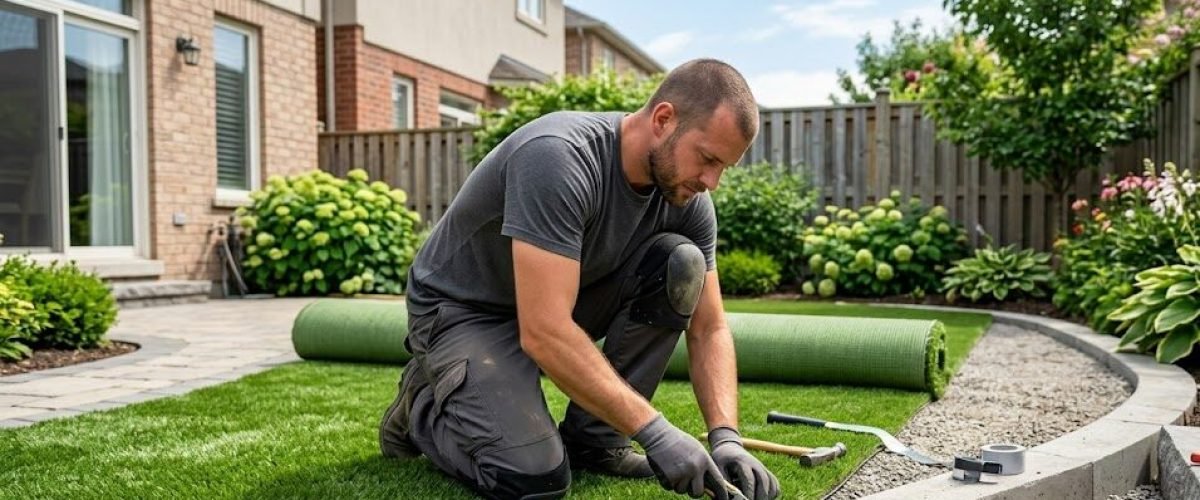
Quality artificial turf installed by KS Solutions in Lake Parker Park Area typically lasts 15 to 20 years with proper maintenance. Central Florida’s intense UV exposure and heavy summer rainfall are the main wear factors, but modern turf products include UV stabilizers that resist fading. We use commercial-grade turf with strong drainage backing designed specifically for Florida conditions.
Yes. KS Solutions provides brick paver installation, fence installation, artificial turf, and preventive maintenance services throughout Lake Parker Park Area and the surrounding Polk County area. Our crews work in Lake Parker Park Area regularly and understand the local soil conditions, HOA requirements, and building codes that affect outdoor projects here. Call (321) 314-2569 for a free estimate.
A typical paver patio installation in Lake Parker Park Area takes 3 to 5 days depending on size, site conditions, and design complexity. Larger projects like pool decks or driveways may take 5 to 7 days. KS Solutions handles all site preparation, base compaction, paver laying, and joint sanding in one continuous process. Weather delays from afternoon storms are common in Central Florida, and we plan our schedules around them.
Get a Free Estimate in Lake Parker Park Area, FL
SCHEDULE AN APPOINTMENT
Top-Rated by Homeowners: Your Trusted Choice for Outdoor Transformations.
Last updated: March 23, 2026