
Artificial Turf Installation in College Park, FL
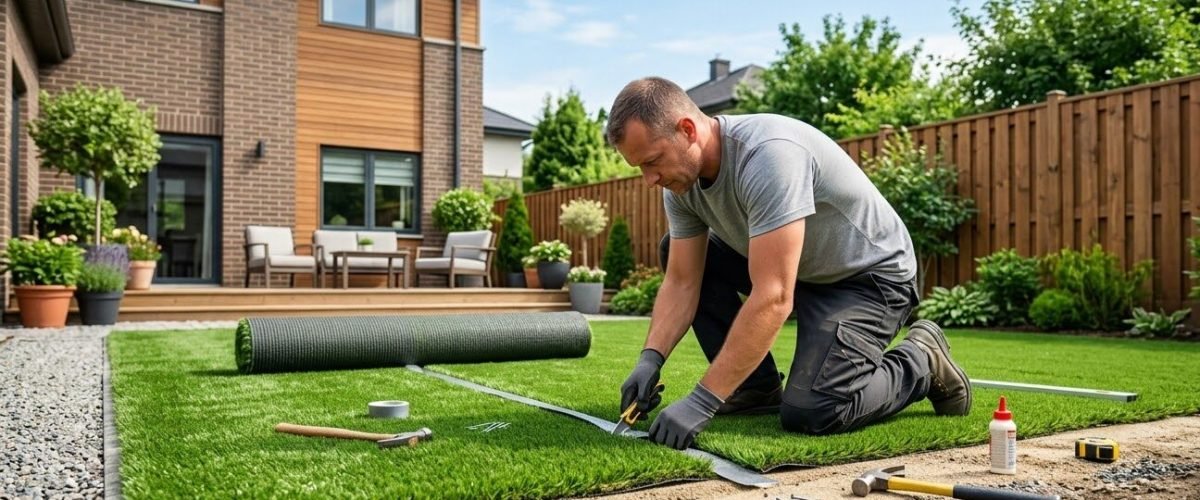
KS Solutions installs artificial turf in College Park. Call (321) 314-2569 for your free estimate.
Artificial Turf in College Park: Green Lawns Under Century-Old Oaks on Orlando’s Most Coveted Urban Lots
Artificial turf installation in College Park, FL gives homeowners in one of Orlando’s most architecturally significant neighborhoods the consistently green lawn appearance that the mature oak canopy overhead makes impossible to maintain with natural grass. The live oaks that line College Park’s streets, many planted 60 to 80 years ago when the original subdivisions were developed in the 1920s and 1930s, now spread canopies that block 70 to 90 percent of direct sunlight from reaching ground level. St. Augustine grass needs a minimum of 4 hours of direct sun daily, and the heavily shaded yards along the streets near Dubsdread Golf Course and Edgewater Drive receive 1 to 2 hours of filtered light at best, producing the thin, patchy turf that defines the College Park lawn struggle.
The shade problem intensifies because College Park’s compact lots concentrate the canopy coverage over a smaller area than suburban properties would spread it across. A 5,000-square-foot lot under two mature oaks has virtually no direct-sun lawn area, while the same trees on a 15,000-square-foot suburban lot would shade only a portion. The compact lot means the entire lawn lives in shade, and the homeowner’s options reduce to either removing the trees that make the lot valuable or accepting a lawn that never looks healthy. Synthetic turf provides the third option: keeping the trees and the green lawn simultaneously.
KS Solutions installs artificial turf throughout College Park for homeowners who value the oak canopy more than the struggling grass beneath it. The neighborhood falls within the City of Orlando’s jurisdiction. Orlando’s tree protection ordinances safeguard the mature canopy, and our installation methods work within and around root zones without damaging the trees that define College Park’s character. The College Park Neighborhood Association doesn’t restrict turf installation, and no formal HOA governs exterior modifications on most properties, though deed restrictions may apply on some lots.
Root-Safe Base Construction Under College Park’s Protected Canopy
Building a turf base within the root zone of protected oaks requires methods that standard turf installers don’t use because standard installation assumes 4 to 6 inches of unrestricted excavation depth. College Park’s mature oak roots sit 2 to 6 inches below the surface across entire yards, leaving zero room for standard excavation without cutting through the root network. An installer who approaches a College Park yard the same way they’d approach a treeless suburban lot will damage roots that Orlando’s ordinance protects and that the homeowner values for the canopy they produce.
We reduce excavation depth to 2 to 3 inches in heavily rooted College Park yards and build a proportionally adjusted base that works within the vertical space the roots leave available. The reduced base depth means less aggregate, which provides less structural support, but the trade-off is acceptable for residential turf surfaces that support foot traffic rather than vehicles. A 2-inch aggregate layer compacted over geotextile fabric provides the drainage and stability that residential walking and play demand without excavating into the root zone that the trees need intact.
The turf surface on College Park’s root-constrained installations follows the gentle undulation of the root contours beneath it. Rather than fighting for flatness that root removal would be the only way to achieve, we let the turf drape over the root topography and create the natural-looking surface variation that real lawns under mature trees always display. A dead-flat turf surface under a massive oak would look artificial not because of the turf product but because real grass under real trees is never perfectly flat. The root-following contour actually enhances realism.
KS Solutions hand-excavates every College Park turf installation beneath protected trees, using shovels and rakes rather than excavation equipment that can’t distinguish between soil and root tissue. The hand excavation costs more in labor hours, but it’s the only method that gives the crew the tactile feedback to feel root surfaces before cutting into them. A machine operator doesn’t know they’ve hit a root until the blade has already sliced through it.
Small-Lot Pet Turf for College Park’s Dog-Owning Urban Households
College Park’s compact lots create a pet turf dynamic that differs from suburban dog yards because the dog uses a smaller area more intensely. A 2,000-square-foot backyard used by one medium-sized dog concentrates every bathroom trip, every burst of energy, and every anxious fence-line patrol into a space where the per-square-foot usage intensity is 3 to 4 times what the same dog would create on a suburban half-acre. Natural grass can’t survive this concentration. The burn spots from repeated urination in the same location, the bare paths along the fence line, and the compacted dirt areas near the back door all develop faster and cover a proportionally larger share of the total yard on a compact lot.
We install pet turf in College Park yards using 50 to 60-ounce face weight product with 1-inch pile height and drainage perforations at 3-inch intervals. The fiber density handles the concentrated daily use without the matting that lighter products develop along the patrol paths dogs create. The short pile passes liquids through to the drainage layer quickly, which matters on compact lots where the neighbor’s fence line is 15 feet from the turf surface and any odor carries across the property boundary within seconds on a warm day.
ZeoFill antimicrobial infill is standard on every College Park pet installation because the close proximity of neighbors in this urban setting makes odor control a neighbor-relations issue, not just a comfort preference. The zeolite mineral absorbs ammonia naturally and prevents the bacterial growth that produces the sour smell untreated pet surfaces develop during warm months. A weekly hose rinse flushes the surface and reactivates the infill’s absorption properties.
KS Solutions designs College Park pet turf installations to cover the full yard area the dog accesses rather than creating a designated pet zone within a larger natural grass yard. On compact College Park lots, a separated pet zone would leave the remaining natural grass area too small to maintain effectively while the pet zone boundary becomes a visual dividing line that makes the yard look fragmented. Full-yard turf in a pet-grade product keeps the entire surface uniform, functional, and easy to clean.
Narrow Side Yard and Courtyard Turf for College Park’s Unused Spaces
College Park’s lot configurations create narrow side yards, 3 to 6 feet wide and 40 to 80 feet long, that receive almost no sunlight because the house on one side and the fence or neighbor’s wall on the other block the sun for all but 30 to 60 minutes daily. Natural grass in these corridors dies within the first growing season after installation and never returns because the light deficit is permanent. The dead grass gives way to bare dirt that becomes a mud trail during rain, and the homeowner either ignores the space or fills it with gravel that looks industrial in a neighborhood where every surface carries aesthetic expectations.
Synthetic turf in these narrow corridors transforms eyesore passages into clean, green connections between the front and back yards. The turf handles the shade that killed the grass, drains faster than the bare dirt it replaces, and provides a clean surface for the foot traffic that uses the side yard as a pathway to the backyard gate. The narrow width requires precision cutting to fit the turf panels exactly between the house wall and the fence without gaps on either side that would show the base material beneath.
Courtyard spaces on some College Park properties, particularly the renovated bungalows with side-entry garden courts, present similar shade and size constraints that turf resolves. A 10 by 15-foot courtyard enclosed by walls and fence on three sides receives minimal direct light but serves as a visible garden room from the home’s interior windows. Turf in these courtyards provides the green surface that living ground cover can’t maintain in deep shade, and the clean appearance viewed through the window every day justifies the relatively modest investment in a small-area installation.
KS Solutions templates every College Park narrow-space installation with string lines before cutting turf panels. The template captures the exact width at multiple points along the corridor because house walls and fence lines rarely run perfectly parallel over 40 to 80-foot lengths. A panel cut to the width at one end may be 2 inches too wide or too narrow at the other. The point-by-point template ensures the turf fits precisely from end to end without the gaps or bunching that generic-width cuts produce in spaces that aren’t perfectly uniform.
Impervious Surface Considerations for Turf on Compact College Park Lots
Artificial turf with a permeable backing and aggregate drainage base drains water through the surface into the soil below rather than generating stormwater runoff. This drainage behavior positions turf favorably under the City of Orlando’s impervious surface calculations that limit the percentage of each lot covered by non-permeable surfaces. On College Park’s compact lots where the house, driveway, and walkway already consume most of the allowed impervious coverage, converting the lawn to permeable turf avoids pushing the property into the over-coverage zone that would trigger variance requirements for any additional hardscape the homeowner wants to build.
The open-graded aggregate base beneath College Park turf installations stores rainwater temporarily during heavy downpours, releasing it into the sandy subsoil over hours rather than channeling it across the surface as runoff. This storage-and-release behavior actually improves the property’s stormwater performance compared to natural grass, which generates surface runoff once the soil reaches saturation during intense rain events. On compact lots where every square foot of surface contributes to the neighborhood’s stormwater load, the improved drainage behavior benefits both the individual property and the community drainage system.
For College Park homeowners planning a full outdoor improvement that combines turf, pavers, and possibly a pool addition, the turf conversion’s permeable classification may free up the impervious coverage budget that the paver and pool surfaces consume. We calculate the total impervious coverage for every College Park project that involves multiple surface types, ensuring the combination stays within Orlando’s limits without requiring variances that add processing time and uncertainty to the project timeline.
KS Solutions coordinates College Park turf installations with any concurrent paver or pool deck projects to optimize the impervious surface calculation across all surfaces. Installing the turf first and documenting its permeable classification before submitting paver permits creates a record showing that the turf area doesn’t count against the property’s impervious coverage, which maximizes the available coverage budget for the hardscape surfaces that do count.
Turf Costs for College Park’s Compact Urban Properties
Artificial turf installation in College Park costs $10 to $16 per square foot depending on product type, root-zone construction complexity, and the space-specific cutting precision that narrow corridors and courtyards demand. The compact lot sizes keep total project square footage moderate, which means the per-square-foot rate matters more than on suburban properties where lower rates apply across larger areas.
Front yard installations under oak canopy of 200 to 400 square feet cost $2,000 to $6,400. Backyard installations of 300 to 600 square feet cost $3,000 to $9,600. Pet-grade full-yard turf with ZeoFill infill costs $11 to $16 per square foot. Narrow side yards of 100 to 300 square feet cost $1,000 to $4,800. Courtyard spaces of 80 to 200 square feet cost $800 to $3,200.
College Park homeowners spending $150 to $250 monthly on lawn care, irrigation, and re-sodding for natural grass that the shade keeps killing save $1,800 to $3,000 annually with turf. The time savings on compact lots where mowing takes 15 to 20 minutes but setup and cleanup take another 30 adds up to 40 to 50 hours annually that the homeowner reclaims for the neighborhood walks, Dubsdread rounds, and Edgewater Drive dining that attracted them to College Park in the first place.
City of Orlando regulations apply. No formal HOA on most properties. Root-zone hand excavation adds $3 to $5 per square foot in heavily rooted areas. Installation runs 1 to 3 days for most College Park properties. Call (321) 314-2569 for your free College Park turf estimate.
Related Services in College Park, FL
- Brick Paver Installation in College Park, FL – Custom driveways, patios, pool decks, and walkways built on compacted aggregate bases.
- Fence Installation in College Park, FL – Vinyl, aluminum, and wood fencing for privacy, pool barriers, and pet containment.
- All KS Solutions Services in College Park, FL – Overview of every service we offer across College Park properties.
- Artificial Turf Installation Services – Details on our synthetic lawn, pet turf, and play area products.
Frequently Asked Questions
Synthetic turf doesn’t need sunlight, so it looks identical under dense oak shade as in full sun. College Park’s heavily shaded yards receive only 1 to 2 hours of filtered light, well below the 4 hours St. Augustine grass needs. The turf follows the natural root contours beneath it, creating realistic surface variation that matches what real grass under real trees looks like.
Front yards cost $2,000 to $6,400 for 200 to 400 square feet. Backyards run $3,000 to $9,600 for 300 to 600 square feet. Pet-grade turf with antimicrobial infill costs $11 to $16 per square foot. Side yards and courtyards run $800 to $4,800. Root-zone hand excavation adds $3 to $5 per square foot. Annual savings of $1,800 to $3,000 from eliminated lawn care.
We hand-excavate with shovels rather than machines, reduce base depth to 2 to 3 inches in heavily rooted areas, and lay geotextile fabric between the aggregate and root zone. No roots are cut. The turf surface follows root contours naturally, which enhances realism since real lawns under mature trees are never perfectly flat.
Yes. ZeoFill antimicrobial infill absorbs ammonia naturally and prevents bacterial odor. This is critical on College Park’s compact lots where neighbors sit 15 to 25 feet apart. A weekly hose rinse refreshes the surface. We install pet-grade turf across the full yard rather than creating a separate pet zone, keeping the compact lot’s appearance unified.
Turf with permeable backing and aggregate base drains water into the soil rather than generating runoff. This favorable classification under Orlando’s impervious surface rules means turf conversion may free up coverage budget for pavers or pool additions on compact lots where the house and driveway already consume most of the allowed impervious coverage.